Can You Bring Coffee Beans On A Plane – Travel Rules Explained
You can bring coffee beans on a plane in both carry-on and checked bags since they’re solid food items with no liquid restrictions. Pack them in airtight, sealed containers or original packaging to stay fresh and speed up TSA checks.
Make sure to declare large amounts or unroasted beans at customs to avoid issues. Proper storage protects flavor during travel and afterward. Keep your coffee accessible and neatly packed for smooth screening.
Discover how to handle quantities, customs, and gear for hassle-free coffee travel. It’s easier than you think when you’re prepared!
Can You Bring Coffee Beans on a Plane?
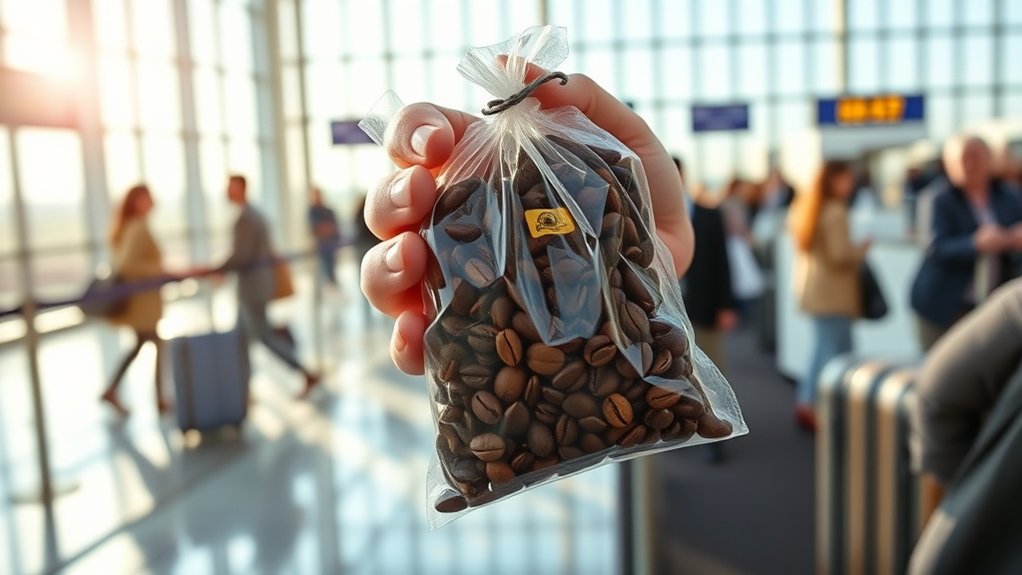
Although airport security can be strict, you can bring roasted coffee beans on a plane in both your carry-on and checked bags since they’re considered solid food items.
Whether you’re passionate about coffee farming or keen to experiment with brewing techniques, packing your favorite beans lets you enjoy fresh coffee wherever you go.
To avoid delays, store your beans in airtight, sealed containers or their original packaging. This helps maintain freshness and eases security checks.
While there’s generally no limit on quantity, carrying large amounts might trigger extra screening.
Crossing international borders? It’s smart to declare your coffee beans at customs to prevent issues.
What Are TSA Rules for Coffee Beans in Carry-On and Checked Bags?
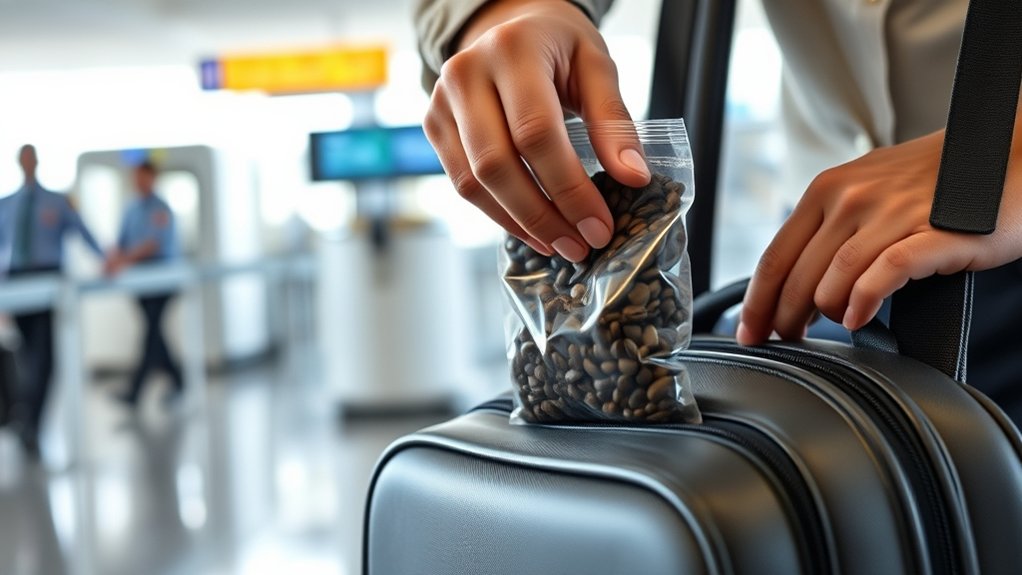
You can bring both roasted and ground coffee beans in your carry-on or checked bags—there aren’t any specific quantity limits.
To make the security screening go more smoothly, it’s best to keep your coffee in its original sealed packaging or an airtight container.
Just be ready, though, because TSA officers might want to inspect your coffee or ask you to separate the beans during the process.
Allowed Coffee Forms
When bringing coffee beans on a plane, knowing TSA rules can save you time and hassle at security. The TSA allows both roasted coffee beans and ground coffee in your carry-on and checked bags since they’re considered solid food items. This means your carefully roasted beans, whether whole or ground, are generally hassle-free to bring along.
Because coffee beans aren’t liquids, you won’t face the usual restrictions, making coffee storage simple. Keep in mind, carrying large quantities might trigger extra screening, so packing wisely helps.
Also, ready-to-drink coffee bottles must follow the 3.4-ounce liquid rule and fit in your quart-sized bag.
Packaging Recommendations
Knowing which coffee forms TSA allows is just the start. How you pack your beans can make a big difference at security checkpoints. Use airtight, durable packaging materials like resealable bags or original sealed bags to keep your coffee fresh and easy to inspect.
Clear labeling on containers helps TSA quickly identify the contents, which speeds up the screening process. If you’re packing coffee in checked luggage, cushion the bags with clothing to prevent crushing or spills.
Security Screening Tips
Although TSA permits roasted coffee beans in both carry-on and checked bags, following specific security screening tips can make your experience smoother. Keep your coffee beans in original, sealed, or airtight packaging materials to ease inspection. Large quantities might attract extra scrutiny, so organize clearly and label your bags.
You may need to remove coffee bags for separate screening. Proper packaging and neat presentation speed up the process, letting you focus on enjoying your trip and the aroma of freshly roasted coffee.
| Tip | Description | Benefit |
|---|---|---|
| Coffee Bean Roasting | Use roasted beans only, no liquids | Avoids liquid restrictions |
| Packaging Materials | Seal in airtight or original packaging | Simplifies security checks |
| Quantity Limits | Carry reasonable amounts | Prevents extra screening |
| Separate Screening | Remove beans if requested by TSA | Speeds up security line |
| Clear Labeling | Label coffee bags visibly | Helps TSA identify contents |
How Do International Flights Affect Bringing Coffee Beans?
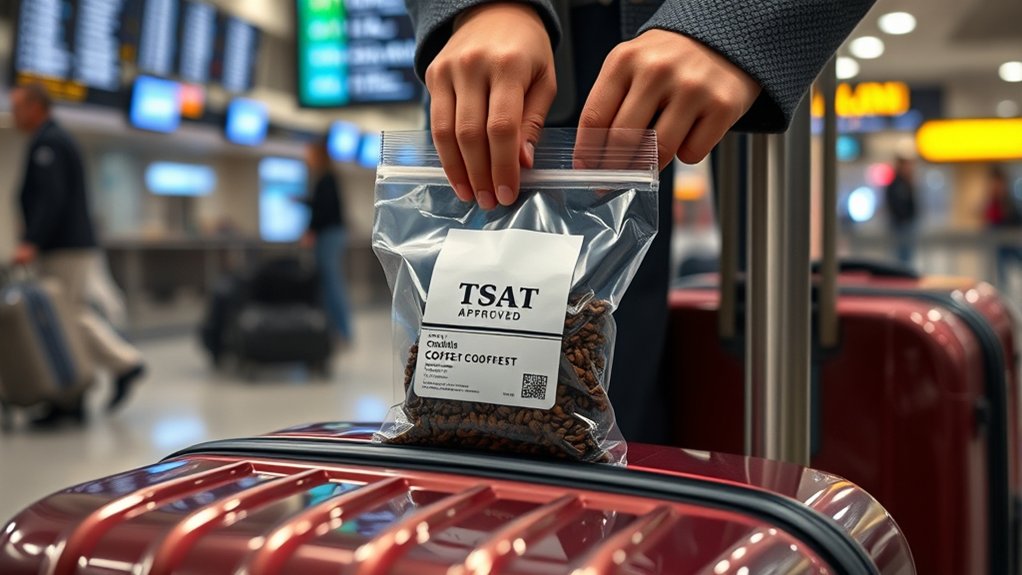
When you’re flying internationally with coffee beans, it’s important to declare them at customs, especially if you have unroasted beans or a large quantity. Some countries have strict rules and might even ban unprocessed beans altogether to protect their local agriculture.
Customs Declaration Requirements
Since international flights often involve crossing multiple borders, you’ll need to declare coffee beans at customs, especially if you’re carrying large amounts or unroasted green beans. Different countries enforce strict rules to prevent pests and diseases. So, failing to declare your beans can lead to fines or confiscation.
Some require a phytosanitary certificate to prove your green beans are pest-free. Before packing, check your destination’s customs regulations carefully.
Also, if you’re bringing roasted beans, consider coffee sifting to remove debris and maintain bean freshness. This can impact inspections.
Being upfront about your coffee helps avoid delays and legal issues. It ensures a smoother journey for both you and your prized beans. Always declare to stay compliant and protect your coffee’s quality.
Destination Country Restrictions
Because international flights cross multiple borders, you’ll need to understand how destination countries regulate coffee bean imports. Different nations enforce varying local import laws, especially regarding unroasted or green coffee beans. These are often restricted to prevent pests and plant diseases.
For example, the EU frequently bans unprocessed plant products, including certain coffee beans, to uphold strict pest restrictions. Before you pack your coffee beans, research your destination’s specific rules carefully. You might have to declare your beans at customs and even pay duties or taxes.
Ignoring these regulations can lead to confiscation, fines, or delays when you arrive. Staying informed guarantees your coffee beans arrive safely and without hassle. That way, you can enjoy your favorite brew no matter where you land.
Importing Unroasted Beans
Understanding destination country restrictions naturally leads to thinking about the specifics of importing unroasted coffee beans on international flights. Since these beans come directly from the coffee farm and haven’t been roasted yet, they’re often subject to strict agricultural quarantine laws.
Many countries ban or limit unroasted beans to prevent pests and diseases. So, you must check customs rules carefully and declare unroasted beans to avoid fines or confiscation. Some nations allow imports if you provide a phytosanitary certificate.
| Aspect | Consideration |
|---|---|
| Coffee Type | Unroasted (green) beans |
| Regulations | Often banned or restricted |
| Documentation | Phytosanitary certificate required |
| Risks | Fines, confiscation, delays |
| Advice | Always declare at customs |
Are There Quantity Limits or Customs Declarations for Coffee Beans?
Although you can usually bring roasted coffee beans for personal use without declaring them, carrying large quantities might require you to declare them at customs. Coffee import regulations vary by country, and customs duty limits often dictate how much you can bring in duty-free.
To avoid issues, keep these tips in mind:
To avoid issues, follow key tips for smooth customs clearance when carrying coffee beans.
- Check your destination’s customs rules before traveling.
- Declare coffee beans if you exceed the allowed quantity.
- Be aware that unroasted beans usually face stricter restrictions or bans.
- Failure to declare can lead to fines, confiscation, or delays.
Sticking to these guidelines helps you navigate customs smoothly and enjoy your coffee without hassle. Always research customs duty limits to ensure compliance and a stress-free trip.
How Should You Pack Coffee Beans to Keep Them Fresh and Protected?
Once you’ve checked customs regulations and packed an appropriate quantity of coffee beans, the next step is making sure they stay fresh and intact during your journey.
For ideal coffee bean storage, use airtight, high-quality containers with one-way valves. These let gases escape and prevent bloating.
Choose durable, moisture-proof packaging like foil bags or hard canisters. This will shield your beans from humidity and crushing.
Be sure to label your packaging clearly with “Roasted Coffee Beans” and the weight. This helps with security checks.
Avoid overfilling bags, and keep the beans away from liquids to prevent leaks or damage.
Finally, cushion your coffee containers inside your luggage with soft clothing or padding. This protects them from impacts and keeps the freshness and quality intact throughout your trip.
How to Prepare Coffee Beans for Airport Security Screening?
When preparing coffee beans for airport security screening, pack them in airtight, resealable bags or keep them in their original packaging to make inspections smoother. Doing so helps preserve the aroma and freshness from coffee roasting while preventing spills. Keep your beans easily accessible in your carry-on, so security can quickly check without delays.
Organize your bag to separate coffee beans from electronics or liquids. This makes X-ray scans clearer and avoids confusion with bean grinding equipment.
To prepare your coffee beans effectively:
- Use clear, labeled packaging to identify contents instantly
- Place beans near the top of your carry-on for easy access
- Avoid mixing with powders or ground coffee to reduce inspection time
- Be ready to remove or separate beans if requested by TSA agents
This approach makes screening simpler and guarantees your coffee arrives fresh and secure. It’s all about making the process easy for you and the security staff.
Will TSA Officers Inspect or Open Sealed Coffee Bean Bags?
Because TSA officers prioritize security, they may open sealed coffee bean bags if they spot anything suspicious or if the packaging is large, unmarked, or unusual.
While sealed packaging often helps speed up inspection procedures, it doesn’t guarantee your coffee bags won’t be swabbed or manually checked.
Sealed packaging can speed inspections but doesn’t ensure coffee bags won’t be swabbed or checked manually.
During screening, officers might test the beans for explosive residues or other substances to ensure safety.
If you’re carrying significant quantities, expect additional scrutiny, even if the bags remain sealed.
Ultimately, TSA officers decide whether to open or inspect your coffee beans based on security protocols and the appearance of the packaging.
To minimize hassle, use properly sealed and original packaging. This makes the inspection process smoother and reduces the chances of your coffee bags being opened.
Can You Bring Brewed or Ready-to-Drink Coffee on a Plane?
You can definitely bring brewed or ready-to-drink coffee on a plane. Just keep in mind that the usual liquid restrictions still apply.
So, if your coffee is over 3.4 ounces, it needs to go in your checked luggage.
For smaller amounts, they can fit right in your carry-on’s liquid bag.
Also, be prepared for the TSA to inspect your coffee. They might ask you to open your travel mug or separate your liquids during the screening process.
It’s all pretty standard, so nothing to worry about!
Liquid Restrictions Apply
Although coffee lovers might crave their favorite brewed or ready-to-drink coffee during travel, strict liquid restrictions apply at airport security. Whether it’s a bottled cold brew or coffee with added flavorings, these liquids must comply with the 3.4 oz (100 ml) limit in your carry-on.
Larger containers need to go in checked luggage or a clear, quart-sized bag for screening.
Remember, brewing equipment isn’t subject to liquid rules, but your coffee beverages are.
Keep in mind:
- Ready-to-drink coffee counts as a liquid and faces volume limits
- Coffee flavorings mixed in your drink don’t exempt it from restrictions
- You may need to separate coffee liquids during security checks
- Exceeding limits can lead to confiscation
Stay prepared to avoid delays and keep your caffeine fix hassle-free!
Packing And Screening
Carrying brewed or ready-to-drink coffee through airport security means following specific packing and screening rules. Since brewed coffee counts as a liquid, you’re limited to 3.4 oz (100 ml) per container in your carry-on.
Use secure, transparent, resealable containers, like travel-friendly coffee accessories, to pack your coffee. Place them inside a quart-sized bag for smooth screening.
Larger amounts might trigger extra inspections or manual checks. If you’re flying internationally, check the destination’s rules because some countries restrict bringing in brewed coffee to avoid pests or contamination.
To skip hassle, consider consuming your coffee before security or packing it in checked luggage. Whether you’re a coffee brewing enthusiast or just need your caffeine fix, knowing these rules keeps your travel smooth and your coffee safe.
What Travel Coffee Gear Should You Bring for Brewing on the Go?
When planning to brew coffee on the go, selecting the right travel gear makes all the difference. To enjoy fresh coffee wherever you are, bring compact, efficient travel accessories designed for easy coffee brewing. Choose gear that fits your style and space needs without complicating your journey.
Consider packing these essentials: a manual portable coffee grinder for fresh grounds anywhere, compact brewing devices like AeroPress or collapsible pour-over sets, and lightweight, travel-sized electric kettles to heat water (packed in checked luggage).
Don’t forget reusable, spill-proof travel mugs with built-in filters for convenient brewing and drinking.
With these smart choices, you’ll stay energized and savor quality coffee throughout your travels. It makes your journey smoother and way more enjoyable.
How Can You Avoid Delays When Traveling With Coffee Beans?
To breeze through security with your coffee beans, pack them in airtight, clearly labeled containers so inspectors can quickly identify them. Keep your beans in your carry-on, near the top, making it easy to remove if TSA asks. Avoid cluttering your bag because clear X-ray images speed up screening.
Since coffee bean roasting and coffee plant cultivation vary worldwide, declare your coffee at customs during international travel to prevent delays or confiscation. Carrying the original packaging helps prove its origin and contents.
If you have larger quantities or ground coffee, be ready to separate these items for inspection. Following these tips ensures smoother security checks and lets you enjoy your coffee without hassle, whether it’s freshly roasted beans or a souvenir from your favorite coffee plant cultivation region.
How to Store and Enjoy Coffee Beans After Your Flight?
Although your coffee beans have safely made it through your flight, how you store them afterward plays a crucial role in preserving their flavor and aroma. Proper coffee storage guarantees you enjoy every cup with the rich taste you expect.
Storing your coffee beans properly after travel is key to preserving their rich flavor and aroma.
To keep that flavor locked in, use airtight, opaque containers. They protect your beans from light and moisture, which can really mess with the taste.
Store your coffee in a cool, dry place away from direct sunlight.
For long-term storage, resealable bags or vacuum-sealed containers work best.
Also, label your containers to keep different beans organized and easy to find.
Remember to enjoy your beans within a few weeks and grind them just before brewing.
This simple care routine keeps your coffee fresh and flavorful after travel.
Tips for Traveling With Coffee Beans in Different Climates
Since climate can greatly impact the freshness of your coffee beans during travel, taking the right precautions is super important. Use climate-specific storage and temperature regulation techniques to keep your beans fresh no matter what the weather is like.
In hot, humid climates, airtight, moisture-proof containers are your best friend because they prevent mold. Insulated bags also help keep the temperature just right.
For cold climates, pack your beans with insulating materials to avoid sudden temperature swings that can affect flavor. Vacuum-sealed or nitrogen-flushed packaging is another great option since it extends the shelf life of your beans.
| Climate Type | Storage Tip |
|---|---|
| Hot & Humid | Airtight, moisture-proof containers |
| Hot & Sunny | Avoid direct sunlight exposure |
| Cold | Use insulating padding |
| All Climates | Vacuum-sealed or nitrogen-flushed |
Following these tips will make sure your coffee beans stay flavorful throughout your journey.
Frequently Asked Questions
Can Flavored or Infused Coffee Beans Be Brought on a Plane?
You can bring flavored or infused coffee beans on a plane if you keep the coffee bean packaging sealed and original. This helps security checks, letting you enjoy in-flight coffee brewing without hassle or delays.
Just make sure the packaging is intact and unopened. That way, you won’t have any issues getting through security. It’s pretty straightforward!
Are There Restrictions on Bringing Coffee Beans From Specific Countries?
Yes, you’ll face packaging regulations and customs declarations when bringing coffee beans from certain countries. Failing to comply could mean confiscation or fines. So, always check the specific rules of your destination before packing those beans in your luggage.
It’s better to be safe than sorry, right? A little research can save you a lot of hassle at the border.
How Do Organic or Specialty Coffee Beans Affect Travel Rules?
Organic or specialty coffee beans don’t change travel rules much. Just focus on proper bean packaging and secure coffee storage.
Always check your destination’s regulations to avoid issues, especially with unroasted or green beans. It’s better to be safe than sorry when bringing coffee along!
Can Coffee Beans Trigger Allergies or Sensitivities During Security Checks?
Don’t judge a book by its cover. Coffee bean packaging and aroma detection can trigger sensitivities during security checks.
If you’re highly sensitive, handling beans might cause reactions. So, it’s a good idea to take precautions to avoid discomfort or allergic responses. Better safe than sorry, right?
Is It Allowed to Bring Coffee Grounds Instead of Whole Beans on a Plane?
Yes, you can bring coffee grounds instead of whole beans. Just make sure your coffee bean packaging is airtight and resealable to ease airport security procedures. This helps you avoid delays or extra inspections during your travel.
It’s really all about making things easier for the security staff and yourself. So, pack smart and enjoy your coffee wherever you go!
Conclusion
You absolutely can bring coffee beans on a plane. Just don’t treat them like fragile treasures or forbidden contraband! Follow TSA rules, pack smart, and declare when needed to avoid airport drama.
With the right gear, you’ll brew barista-quality coffee anywhere, even in the wildest climates. So go ahead, pack your beans like a pro and sip your way through every flight.
Missing your morning coffee? That’s practically a travel emergency!