Can You Drink Coffee Creamer By Itself – Safety And Nutrition Facts
You can drink coffee creamer by itself, but it’s important to be cautious. Creamers often contain added sugars, fats, and artificial additives that provide limited nutrients. They could cause digestive discomfort or weight gain if consumed in excess.
Improper storage raises spoilage risks, which may lead to illness. If you have allergies or blood sugar concerns, it’s best to avoid drinking it solo.
Explore further to understand its safety, nutritional impact, and smart usage tips.
What Is Coffee Creamer Made Of?
Although coffee creamer is designed to enhance the flavor and texture of your coffee, it’s important to understand what it’s made of before consuming it on its own. Typically, coffee creamer contains a base of water, sugar or sweeteners, and dairy or dairy alternatives.
Coffee creamer enhances coffee’s flavor and texture but contains water, sweeteners, and dairy or dairy alternatives.
Dairy creamers often use milk solids or cream, while non-dairy creamers rely on plant-based oils, such as coconut or almond oil, combined with emulsifiers and stabilizers.
Furthermore, coffee flavoring agents are added to mimic or enhance coffee’s taste, contributing to the overall sensory experience.
Some creamers also include thickeners like carrageenan or cellulose gum to improve texture.
Knowing these ingredients helps you assess suitability based on dietary preferences or restrictions. It also ensures you make informed choices when selecting creamers with or without dairy alternatives.
Can You Safely Drink Coffee Creamer Alone?
You might be wondering if it’s safe to drink coffee creamer all by itself. Well, it does give you calories and fats, so it’s not just empty stuff.
But here’s the thing—if you drink a lot of it, you could end up taking in too much sugar and saturated fat. That’s when it might start to affect your health in a not-so-great way.
Nutritional Content Overview
Since coffee creamer is mainly meant to be an additive instead of a drink on its own, its nutritional content is pretty concentrated. This means it mightn’t support balanced hydration or nutrition when you consume it by itself.
You’ll find creamers made to boost flavor and go well with different brewing methods, but their nutrient profile is pretty limited. Usually, creamers have sugars, fats, and additives, which pack in calories but don’t add much to hydration.
Here are some key nutritional points to keep in mind:
High sugar and saturated fat can lead to extra calorie intake without giving you essential nutrients.
Also, creamers have little protein and fiber, so they don’t really help with sustained energy or keeping you full.
Sometimes, they’re fortified with vitamins or minerals, but that’s usually not enough to replace what you’d get from whole foods.
Potential Health Risks
When consumed alone, coffee creamer can pose several health risks because of its concentrated ingredients. High levels of sugar, unhealthy fats, and additives might lead to weight gain, increased cholesterol, and blood sugar spikes if you drink it straight. Plus, artificial flavors and preservatives could cause digestive discomfort or allergic reactions in sensitive people.
Coffee creamer has cultural significance as a coffee companion, but drinking it by itself ignores its intended use and nutritional balance.
Also, consuming too much contributes to environmental impact since the production and disposal of creamer packaging generate waste and carbon emissions.
Knowing these risks helps you make better choices. To stay safe, it’s best to enjoy coffee creamer as it’s meant to be used—not as a standalone drink.
Recommended Consumption Guidelines
Understanding the health risks associated with drinking coffee creamer alone highlights the importance of following recommended consumption guidelines. While it’s tempting to enjoy creamer by itself, moderation is key to avoiding excess sugar, fat, and additives.
To safely incorporate creamer into your routine, consider these tips:
Limit creamer intake to small servings to balance calories and minimize digestive discomfort.
Experiment with flavor combinations alongside your preferred brewing methods to enhance taste without overusing creamer.
Choose creamers with simpler ingredient lists and lower sugar content to reduce potential health risks.
Health Effects of Drinking Coffee Creamer Straight
How does drinking coffee creamer straight affect your health? Consuming creamer alone can lead to increased calorie and sugar intake without the balancing effects of coffee’s antioxidants. While flavor combinations and brewing techniques enhance your coffee experience, drinking creamer by itself lacks these benefits.
It may also contribute to weight gain or blood sugar spikes. So, it’s something to be mindful of if you’re sipping it frequently.
| Aspect | Effect | Note |
|---|---|---|
| Calories | High | Can contribute to weight gain |
| Sugar Content | Elevated | May cause blood sugar spikes |
| Nutritional Value | Limited without coffee | Lacks antioxidants and caffeine |
Although enjoying creamer enhances coffee, drinking it straight doesn’t provide the same health benefits. It could negatively impact your nutrition if consumed often.
When to Avoid Drinking Coffee Creamer Alone
You should probably avoid drinking coffee creamer alone if you have allergies or sensitivities to its ingredients since that can trigger some unwanted reactions.
Also, a lot of creamers have high sugar content, which isn’t great for your health if you consume too much.
And if you’re lactose intolerant, having creamer by itself might upset your stomach because of the dairy in it.
Allergies And Sensitivities
When should you steer clear of drinking coffee creamer by itself? If you have allergies or sensitivities, it’s really important to be careful. Coffee creamers often contain dairy, soy, or nuts. These are common allergens that can trigger adverse reactions.
Also, some flavor variations include artificial additives or preservatives. These might irritate sensitive digestive systems. Plus, if coffee creamer isn’t stored properly, it can promote bacterial growth, which increases the risk of foodborne illness.
So, consider avoiding drinking coffee creamer alone if you experience lactose intolerance or dairy allergies. Or if you’re sensitive to artificial flavors or preservatives. It’s also wise to be cautious if you have a compromised immune system or concerns about storage hygiene.
Being mindful of these things helps you enjoy coffee creamer safely. Always check ingredient lists and storage instructions to keep risks from allergies and sensitivities to a minimum.
High Sugar Content
Why consider the sugar content before drinking coffee creamer alone? High sugar levels in many creamers can lead to excessive calorie intake and blood sugar spikes.
If you’re sensitive to sugar or managing your weight, drinking creamer by itself isn’t ideal. Some flavor variations contain added sugars that increase the total sugar content markedly.
Here’s a quick look at sugar content and storage tips for common creamers:
| Creamer Type | Approximate Sugar per Serving | Storage Tips |
|---|---|---|
| Dairy-based Original | 2-3 grams | Refrigerate after opening |
| Flavored Variations | 5-8 grams | Store in cool, dry place |
| Non-Dairy Creamers | 3-6 grams | Keep sealed to maintain freshness |
Check labels carefully and choose low-sugar options if you plan to drink creamer alone.
Lactose Intolerance Concerns
Beyond sugar content, lactose intolerance is another important factor to think about before drinking coffee creamer alone. If you’re sensitive to lactose, traditional dairy-based creamers can cause digestive discomfort like bloating, cramps, and diarrhea.
To minimize these risks, consider choosing lactose-free or plant-based creamers. They offer a wide variety of flavors without triggering symptoms.
Also, make sure to follow proper storage tips to prevent spoilage. Spoiled creamer can make digestive issues worse if you consume it.
And don’t forget to read labels carefully. Flavored or sweetened creamers might’ve hidden lactose you want to avoid.
Dairy vs Non-Dairy Coffee Creamers: Drinking Alone
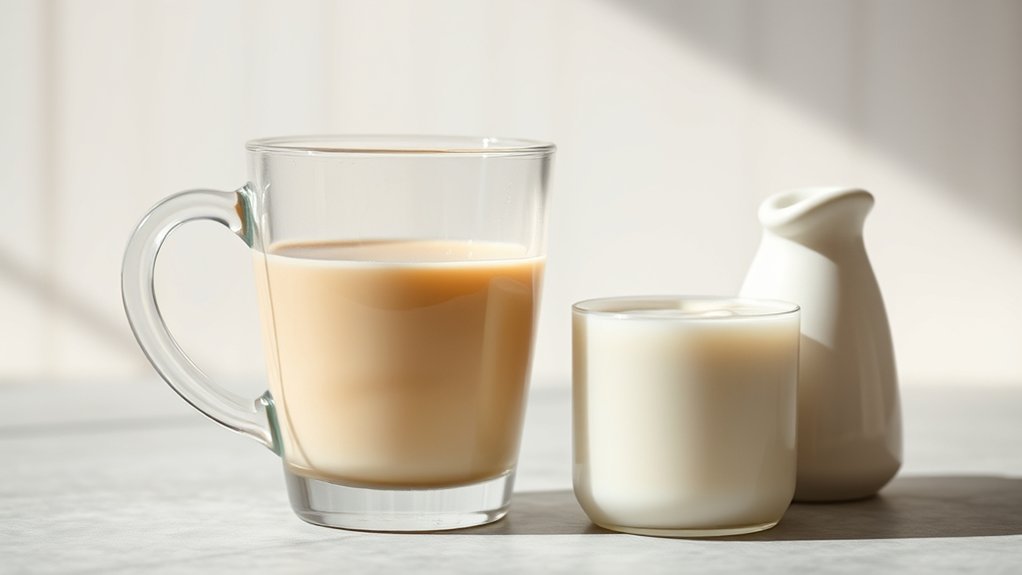
Although coffee creamers are mainly designed to enhance your beverages, you might wonder if drinking them alone is a good idea. Dairy and non-dairy creamers differ quite a bit in flavor and texture, which affects how they taste when you drink them on their own.
Dairy creamers usually have a richer, creamier taste because of the milk fats. They go well with cultures that love dairy-based products.
On the other hand, non-dairy creamers are often made from plant oils and additives, giving them a lighter profile. These might be better if you’re lactose intolerant or prefer vegan options.
That said, drinking either type by itself can feel overly sweet or heavy since they’re meant to balance coffee’s bitterness, not to be drinks on their own.
Knowing your cultural tastes and dietary needs can help you decide if having creamer solo works for you.
What Nutrients and Calories Are in Coffee Creamer?
How many calories and nutrients do you actually get from coffee creamer? Generally, coffee creamer provides limited nutritional value, mainly contributing calories from fats and carbohydrates. Its role in flavor combinations and brewing techniques enhances your coffee experience but doesn’t significantly impact your nutrient intake.
Here’s what to expect per typical serving:
- Calories: Usually between 20-40, depending on the type and brand.
- Macronutrients: Small amounts of fat, often saturated fat, with minimal protein.
- Micronutrients: Trace vitamins or minerals, if any, unless fortified.
Creamers vary widely, whether dairy or non-dairy, so nutritional content can shift. While they enrich your coffee’s taste and texture, don’t rely on creamers as a nutrient source. Instead, focus on how they complement your brewing techniques and flavor combos for the best cup.
Sugar and Additives in Straight Coffee Creamer
You should know that straight coffee creamer often has a lot of added sugar, which can really add up in your daily intake.
Plus, it usually contains things like stabilizers, emulsifiers, and artificial flavors to keep the texture and taste just right.
Knowing what’s in your creamer can help you make smarter choices when you decide to have it on its own.
Sugar Content Levels
Since coffee creamer often contains added sugars and flavoring agents, its sugar content can be surprisingly high when consumed straight. You mightn’t realize that these sugar levels markedly impact both taste and nutritional intake. Understanding this helps you make informed choices, especially if you’re adjusting flavor combinations or experimenting with brewing methods.
Here are key points about sugar content in straight coffee creamer:
- Sugar amounts vary widely depending on the creamer’s flavor combinations, with sweeter varieties containing up to 5 grams or more per tablespoon.
- Consuming creamer alone concentrates sugar intake, unlike dilution in brewed coffee, which balances sweetness.
- Regular consumption of high-sugar creamer may contribute to increased calorie intake, affecting overall diet quality.
Being aware of these factors ensures you use creamer responsibly within your dietary needs.
Common Additive Types
What exactly goes into straight coffee creamer beyond just sugar? Besides sweeteners, many creamers contain additives like emulsifiers, stabilizers, and thickeners. These help maintain texture and consistency.
Common additives include mono- and diglycerides, carrageenan, and cellulose gel. These ingredients influence the flavor profiles by ensuring smoothness and preventing separation when mixed with hot coffee.
You should also consider preservatives, which extend shelf life but may affect taste subtly. When storing creamer, keep it refrigerated after opening and tightly sealed to minimize exposure to air. This helps prevent flavor and texture from degrading.
Understanding these components helps you better assess whether drinking creamer alone suits your taste and dietary preferences. It also ensures you consume it safely.
Can Drinking Coffee Creamer Alone Work in Your Diet?
Although coffee creamer can add flavor and richness to your beverage, relying on it alone as part of your diet isn’t advisable. Coffee creamers are designed to complement coffee, enhancing flavor variations created by different brewing techniques, not to replace balanced nutrition.
Drinking creamer by itself provides limited essential nutrients and often includes added sugars or fats that may impact your health if consumed excessively.
Think about these points before making creamer a dietary staple: Creamers lack proteins, fiber, and essential vitamins. Many contain added sugars or oils, which can increase your calorie intake.
Also, creamer alone won’t satisfy hunger or provide lasting energy.
For a healthy diet, use coffee creamer as an enhancer, not a meal replacement. It’s best to enjoy it alongside nutritious foods rather than on its own.
Tips for Enjoying Coffee Creamer Without Coffee
If you want to enjoy coffee creamer without coffee, you can explore creative ways to incorporate it into your diet. Start by sampling different creamer varieties to find one that suits your taste, whether it’s vanilla, caramel, or hazelnut. These flavors can enhance smoothies, oatmeal, or even baked goods, adding a subtle coffee flavor without the caffeine.
You can also chill coffee creamer and use it as a creamy base for iced desserts or shakes. When consuming creamer alone, keep an eye on portion sizes to manage calorie intake. Many creamers contain added sugars and fats, so it’s good to be mindful.
Alternatives to Coffee Creamer for a Creamy Drink
Exploring ways to enjoy creamy beverages without relying solely on coffee creamer can broaden your options for delicious drinks. If you’re looking for alternative beverages that deliver richness and satisfy your palate, why not experiment with a few different choices? Each one offers unique flavors that complement a variety of tastes.
For example, almond or oat milk provides a naturally creamy texture. They pair really well with spices like cinnamon or vanilla, adding a nice twist to your drink.
Greek yogurt smoothies are another great option. Blending Greek yogurt with fruits creates a thick, creamy drink that’s rich in protein—perfect if you want a nutritious boost.
Coconut milk brings a slightly sweet, tropical flavor to the table. It works great in both hot and cold drinks, adding depth without the need for dairy.
Give these alternatives a try and see which one you like best!
Frequently Asked Questions
Can Coffee Creamer Spoil if Left Unrefrigerated?
Yes, coffee creamer can spoil if left unrefrigerated, especially dairy-based types. You’ll notice changes in flavor preservation as the creamer develops an off taste and smell.
Shelf life shortens considerably without refrigeration, increasing bacterial growth risks.
For non-dairy creamers, spoilage is less likely but still possible over time. To maintain quality and safety, always store coffee creamer as the packaging recommends, usually in the fridge after opening.
It’s better to be safe than sorry when it comes to keeping your creamer fresh!
How Should Coffee Creamer Be Stored After Opening?
You should store coffee creamer in the refrigerator immediately after opening to extend its shelf life and preserve flavor versatility. Keeping it chilled slows bacterial growth and maintains its creamy texture. This helps ensure it stays safe and tasty for longer.
Always seal the container tightly to prevent contamination. Proper refrigeration is key to enjoying your creamer’s full range of flavors while avoiding spoilage or off-tastes.
Just keep it cold and sealed, and you’re good to go!
Is Coffee Creamer Safe for Pets to Consume?
Pet parents, please proceed with prudence! Coffee creamer isn’t safe for pets because it can be toxic and contains ingredients that just aren’t good for them.
Many creamers have dairy, sugars, and artificial additives that might upset your pet’s digestive system or cause allergies.
Always think about your pet’s dietary needs and stick to water or treats that your vet approves.
If you’re ever unsure, just check with your veterinarian.
Keeping your furry friend healthy and happy is way more important than taking a chance with coffee creamer.
Can Coffee Creamer Be Used in Baking Recipes?
Yes, you can use coffee creamer in baking recipes. It offers excellent flavor enhancement, adding richness and subtle creaminess to cakes, muffins, and cookies.
Its baking versatility lets you substitute it for milk or cream, enhancing moisture and texture.
Just keep in mind the creamer’s sweetness and flavor profile, as these can impact the final taste.
Using coffee creamer thoughtfully can really elevate your baked goods with minimal effort and delicious results. Give it a try next time you bake!
Does Coffee Creamer Contain Any Allergens Besides Dairy?
Yes, coffee creamer can contain allergens besides dairy. If you have dairy allergies, you should be cautious.
But also watch for other ingredient sensitivities like soy, nuts, or gluten, depending on the brand.
Many creamers use additives or flavorings that might trigger reactions.
Always check the ingredient list carefully to avoid unexpected allergens.
If you’re unsure, opt for allergen-free or plant-based creamers designed to minimize risks.
Conclusion
Drinking coffee creamer alone isn’t a magic elixir. It’s more like a rich drizzle on a plain canvas. While it’s safe in small sips, it’s packed with sugars and additives that can tip your health scales if you have too much.
Think of it as a creamy accent, not a standalone meal. Balance is key. Enjoy it thoughtfully, and you’ll savor the flavor without sacrificing nutrition or well-being.