
Are Lattes Hot Or Cold – Temperature Differences Explained
You can enjoy lattes hot or cold, each offering a unique taste experience. Hot lattes blend espresso with steamed milk and microfoam at 155°F to 165°F, creating a creamy, rich flavor.
Iced lattes use cold milk and ice, bringing out brighter coffee notes with a lighter, invigorating feel. Milk temperature shapes the texture and sweetness you’ll taste. If you want to know how to perfect each style and keep your latte just right, there’s more to explore.
What Exactly Is a Latte and How Is It Made
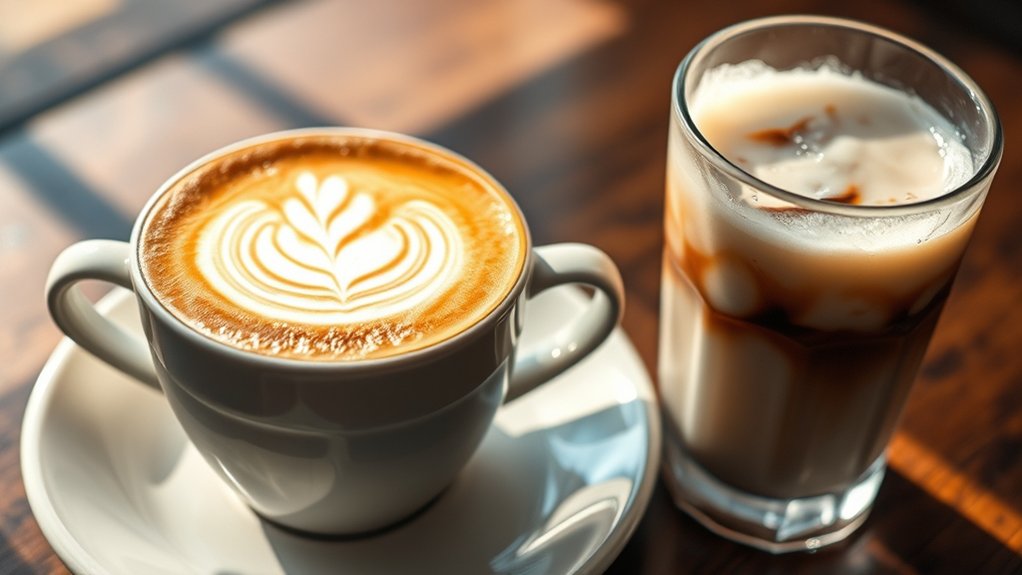
A latte combines a shot of espresso with steamed milk, topped by a thin layer of milk foam to create a smooth texture.
When you make a latte, you start by pulling a shot of espresso, which gives the drink its rich, concentrated coffee flavor.
Then, you add steamed milk, usually in a ratio of one part espresso to three parts steamed milk, for a creamy balance.
The steamed milk is aerated with a steam wand to produce microfoam, essential for that velvety texture you expect.
While traditional lattes use steamed milk, you can also enjoy iced versions where espresso is poured over cold milk and ice, preserving the latte’s signature taste in a revitalizing way.
Are Lattes Traditionally Served Hot or Cold? Understanding Latte Origins
Though you might see lattes served cold in many cafes today, they originated in Italy as a hot beverage made with espresso and steamed milk.
Traditionally, hot lattes include milk foam, which gives them a creamy texture you won’t find in iced lattes.
The espresso coffee is brewed hot, and the steamed milk is heated to around 150 to 165 degrees Fahrenheit, enhancing the rich flavor and aroma.
While hot lattes remain the classic choice, the rise of cold coffee trends has made iced lattes increasingly popular.
These iced versions swap steamed milk for cold milk and ice, offering a revitalizing alternative.
Understanding these origins helps you appreciate why lattes are traditionally served hot but now enjoy versatile variations.
How Temperature Affects Latte Flavor and Texture

When you enjoy a hot latte between 155°F and 165°F, the steamed milk’s creamy microfoam enhances the coffee’s rich oils while masking bitterness. This creates a smooth, velvety experience.
In contrast, an iced latte uses cold milk and ice, resulting in a revitalizing texture that highlights brighter coffee flavors. Temperature plays an essential role in how you perceive your latte’s taste and mouthfeel.
| Aspect | Hot Latte |
|---|---|
| Temperature | 155°F – 165°F |
| Milk Texture | Creamy microfoam |
| Flavor Profile | Smooth, rich, less bitter |
| Sensory Impact | Velvety, warming |
| Aspect | Iced Latte |
| Temperature | Cold |
| Milk Texture | Light, chilled |
| Flavor Profile | Bright, pronounced |
| Sensory Impact | Invigorating, crisp |
The Ideal Temperature Range for Hot Lattes
You want your hot latte served between 155 and 165°F. Hitting around 160°F is really the sweet spot for both flavor and texture.
When it comes to brewing espresso, around 200°F is ideal because it extracts the best taste.
Now, heating the milk gently is just as important. It prevents scalding and helps keep that creamy microfoam perfect.
Timing plays a big role too—getting the espresso and milk temperatures just right ensures your latte tastes perfect every time.
Optimal Serving Temperatures
Although many factors influence your latte’s taste, serving it at the right temperature makes a big difference. For hot coffee lovers, the ideal serving temperatures for a latte range between 155 to 165°F, with 160°F often hitting the sweet spot.
Going above 165°F risks scalding the milk, which can spoil the flavor.
While iced coffee is served cold, hot lattes demand careful temperature control to balance espresso’s brewing temperature, typically around 200°F, with steamed milk.
Preheating your mug helps keep your latte warm longer, ensuring every sip stays enjoyable.
Timing the espresso shot and milk steaming precisely also plays a key role in achieving that perfect serving temperature, so your latte tastes just right without being too hot or lukewarm.
Milk Heating Guidelines
Because milk temperature directly shapes your latte’s flavor and texture, steaming it within the ideal range of 150 to 165°F is crucial.
When you heat milk too hot, above 165°F, you risk scalding it, which brings a burnt taste and ruins the smooth texture you want.
Properly steamed milk at this temperature range creates microfoam, giving your latte that creamy, velvety mouthfeel.
Avoid boiling milk, as it can separate and negatively impact the latte’s overall quality.
Monitoring the temperature closely guarantees the milk complements the espresso perfectly without overpowering it.
Espresso Temperature Impact
When you brew espresso at around 200°F, you reveal the rich flavors that make a hot latte truly satisfying. Maintaining the right espresso temperature is key to extracting the full taste from your high-quality beans.
For hot lattes, aim to serve them between 155°F and 165°F, with 160°F hitting the sweet spot for flavor and drinkability.
Brewing your espresso and steaming milk simultaneously helps keep the temperature consistent, preventing your milk from scalding and ruining the texture.
Using a high-quality espresso machine with precise temperature control guarantees you hit these ideal temperatures every time.
Avoid single-boiler machines if you want reliable results, as they often struggle to maintain the perfect balance needed for great hot lattes.
What Makes Iced Lattes Different From Hot Lattes?
When you switch from a hot latte to an iced one, the temperature of the milk changes everything. Hot lattes use steamed milk and foam, which gives them that warm, creamy texture you love.
On the other hand, iced lattes mix espresso with cold milk and ice, so you get a totally different vibe — cooler and more refreshing.
So, it’s not just about the temperature; the ingredients create distinct textures and flavors.
Knowing these little differences helps you appreciate how each version brings its own unique taste to the table.
Milk Temperature Effects
Although both hot and iced lattes start with espresso, the temperature of the milk you use dramatically changes the drink’s texture and flavor. Hot lattes use steamed milk, creating a creamy texture and microfoam that softens the coffee’s bitterness.
Cold lattes rely on chilled milk, which keeps the flavor sharper and offers a revitalizing creaminess without froth. This difference in milk temperature shapes how you experience each latte.
| Aspect | Hot Lattes |
|---|---|
| Milk Temperature | Steamed (warm) |
| Texture | Creamy with microfoam |
| Flavor | Smooth, less bitter |
| Aspect | Cold Lattes |
| Milk Temperature | Chilled |
| Texture | Smooth, no froth |
| Flavor | Sharper, revitalizing |
Ingredient Composition Differences
The temperature and texture differences you notice between hot and iced lattes stem largely from their ingredient compositions.
Hot lattes blend espresso with steamed milk and milk foam, creating a creamy texture and richer coffee tastes.
In contrast, iced lattes mix espresso with cold milk and ice, skipping steamed milk and foam. This absence changes the texture, making iced versions feel lighter and less frothy. Ice cubes also cool the drink and gradually dilute it, altering the coffee tastes over time.
While hot lattes maintain a consistent warmth between 155-165°F, iced lattes don’t have a fixed ideal temperature and depend on personal preference.
Understanding these ingredient composition differences helps you appreciate how hot and cold lattes deliver distinct sensory experiences.
Why Do Some Consumers Prefer Iced Lattes to Hot?

Why do many people reach for iced lattes instead of hot ones? You might find iced lattes more revitalizing, especially when the weather’s warm. Cold beverages just feel like a natural choice then.
The cold milk in iced lattes enhances creaminess and changes the flavor profile, appealing to different personal taste preferences.
Plus, the rise of cold coffee trends has made iced lattes feel modern and versatile.
Some consumers even prefer iced options because hot drinks at certain places, like 7Brew, don’t always meet their expectations.
Ultimately, your choice depends on how you experience flavor and aroma. Iced lattes offer a unique sensory experience that might suit your preferences better than a hot latte.
How Milk Temperature Influences Latte Flavor and Texture
When you choose hot milk for your latte, you release a sweeter, creamier flavor and a smooth, velvety texture that cold milk simply can’t match. Hot milk, steamed to 150-160°F, creates microfoam that enhances both mouthfeel and visual appeal.
Cold milk, meanwhile, keeps a fluid texture, offering invigorating creaminess without changing the latte flavor. Milk temperature directly influences the release of aromatic compounds, shaping your sensory experience.
| Milk Temperature | Texture | Flavor Impact |
|---|---|---|
| Hot Milk | Velvety, smooth | Sweeter, creamier |
| Steamed Milk | Microfoam-rich | Enhanced aroma |
| Cold Milk | Fluid, light | Invigorating, balanced |
Understanding milk temperature helps you craft the perfect latte experience.
How to Keep Your Latte Hot at Home and On-the-Go
Keeping your latte at the ideal temperature enhances the flavor and texture you’ve just crafted with steamed milk or cold creaminess. To keep your latte hot at home, preheat your mug with hot water before pouring in espresso and steamed milk.
Brewing espresso and steaming milk simultaneously also helps maintain maximum warmth.
A foam layer on top acts as insulation, slowing heat loss while preserving that rich, creamy texture. When you’re on the go, a good thermal cup is essential to keep your latte hot longer, locking in heat and flavor.
For colder days, consider ordering an extra shot of espresso. It not only boosts warmth but adds additional flavor, making your latte even more satisfying.
Whether hot or cold, these tips guarantee your latte stays just right.
Popular Latte Variations Around the World
Across five continents, lattes take on unique forms that reflect local tastes and traditions. In Italy, the classic Caffè Latte is served hot, blending espresso and steamed milk for a creamy texture.
Lattes around the world showcase diverse flavors, blending local traditions with the comforting harmony of espresso and milk.
Australia’s Flat White, a close cousin, features a higher coffee-to-milk ratio and velvety microfoam, always served hot.
In the US, the iced latte combines regular coffee with cold milk and ice, perfect for warm days.
Sweden’s Kaffe Latte switches between hot and cold coffee, often spiced or flavored, showing regional creativity.
Vietnam offers a unique twist with its cold coffee egg latte, mixing egg yolk, sugar, and condensed milk over espresso.
No matter where you are, the latte is served in ways that celebrate both hot and cold coffee traditions worldwide.
Making the Perfect Hot or Cold Latte
To make the perfect hot latte, you’ll want to focus on brewing espresso and steaming milk to just the right temperatures.
Oh, and don’t forget to keep your cup warm too—it really makes a difference.
Now, when it comes to iced lattes, it’s all about finding the right balance between espresso, cold milk, and ice so it suits your taste perfectly.
Let’s dive into some techniques that’ll help you master both styles with ease.
Hot Latte Preparation
Crafting the perfect hot latte starts with pulling a rich shot of espresso brewed at around 200°F to capture its full aroma and flavor. Next, steam your milk gently, avoiding boiling to preserve the creamy texture.
Combine the espresso shot with steamed milk, aiming for the ideal temperature range of 155°F to 165°F. Preheat your cup with hot water to keep the latte warm longer, and top it with milk foam to add creaminess and insulation.
| Step | Key Detail |
|---|---|
| Espresso Shot | Brew at ~200°F |
| Steamed Milk | Heat gently, no boiling |
| Combining | Mix at 155°F – 165°F |
| Cup Preparation | Preheat cup with hot water |
| Final Touch | Add milk foam for warmth |
This method guarantees a perfectly balanced hot latte every time.
Iced Latte Techniques
How do you make an iced latte that stays bright and rejuvenating? Start by brewing espresso at about 200°F, then let it cool slightly. This step preserves the espresso’s bold flavor profile without overpowering bitterness.
Next, pour the espresso over cold milk and ice. No steamed milk or foam here, just smooth, creamy cold milk. This method keeps iced lattes invigorating and highlights the espresso’s distinct notes, unlike hot lattes where heat can mask flavors.
Remember, personal taste matters; some prefer their iced lattes a bit less chilled for a richer experience.
Frequently Asked Questions
Can Lattes Be Made With Non-Dairy Milk Alternatives?
Yes, you can definitely make lattes with non-dairy options like almond, soy, oat, or coconut milk. Each choice changes the flavor profiles, so you get nuttier, creamier, or unique tastes.
You’ll notice frothing techniques vary too. Some non-dairy milks froth better than others.
Also, you need to watch the temperature impact carefully since overheating can spoil the texture or cause separation, affecting your latte’s quality.
How Does Caffeine Content Vary Between Hot and Iced Lattes?
You’ll find caffeine content between hot and iced lattes stays pretty consistent since both use similar espresso shots.
However, serving temperature can affect caffeine absorption. Iced lattes might hit you faster because you drink them quicker.
Brewing methods remain the same, so the caffeine amount doesn’t change, but the flavor profile can shift with temperature, making iced lattes taste crisper and hot ones richer.
Your preference influences the final experience more than caffeine levels.
What Equipment Is Best for Frothing Milk at Home?
For frothing milk at home, your best bet depends on your needs. A steam wand offers precise control over milk temperature and texture, making it ideal if you want professional frothing techniques.
If you’re on a budget, handheld frothers are quick and easy frothing alternatives. A French press can also work well.
Induction milk frothers combine heating and frothing in one, giving you convenience without sacrificing quality. Compare equipment based on your space and style!
Are There Health Benefits Specific to Hot Versus Cold Lattes?
Picture your latte as a seasonal symphony. Hot lattes warm you like a cozy blanket, aiding digestion and releasing richer flavor profiles that boost relaxation.
Cold lattes, crisp as a summer breeze, offer hydration and lighter nutritional differences, perfect for warmer days.
You’ll find hot drinks may spark metabolism, while cold ones refresh without heaviness.
How Long Can You Store a Prepared Latte Before Drinking?
You can store a prepared latte for up to 1 hour in a thermal container to keep it warm.
But ideally, you should drink it within 30 minutes to enjoy the best flavor.
If you need to store it longer, refrigerate the latte for up to 24 hours.
Just keep in mind the texture might change.
To preserve the flavor, avoid reheating above 165°F.
Higher temperatures can scald the milk and alter the taste.
Conclusion
Whether you’re savoring a steamy hot latte that warms your hands on a chilly morning or sipping a revitalizing iced latte that cools you down in the sun, each temperature brings its own magic. Imagine the creamy swirl of milk blending perfectly with rich espresso, whether steaming or chilled.
Embrace your mood and moment because lattes aren’t just drinks; they’re experiences you can tailor to your taste, hot or cold.