How To Use A Coffee Grinder – Beginner Tips For Better Brewing
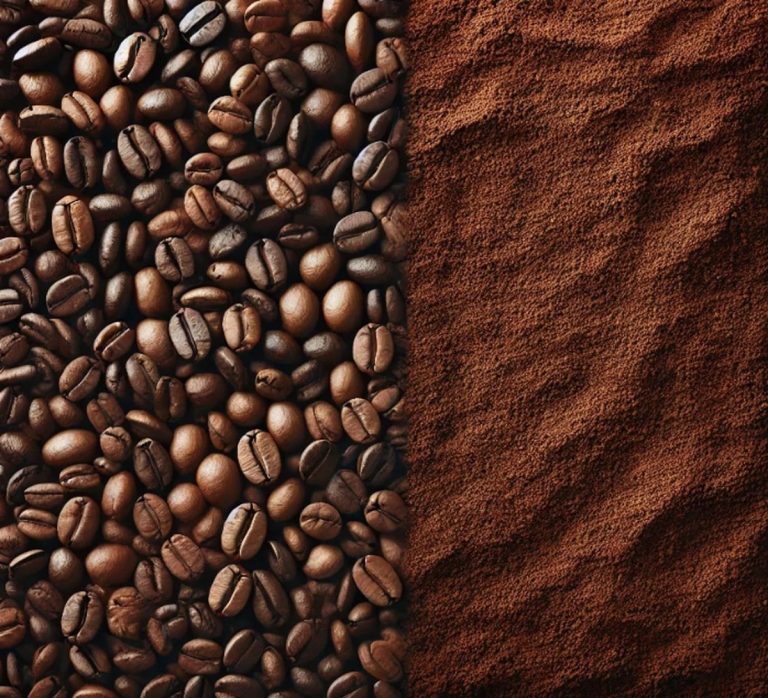
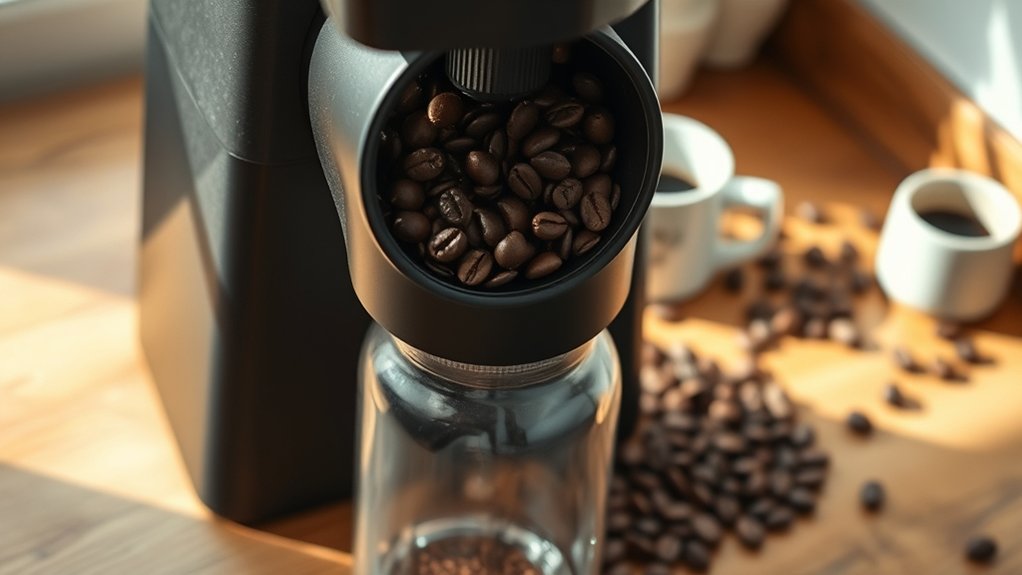
To brew better coffee, grind your beans fresh just before brewing to preserve their flavorful oils. Choose a burr grinder for consistent, adjustable grinds that suit your brewing method. Go finer for espresso and coarser for French press.
Measure beans precisely with a scale, store them airtight, and clean your grinder regularly to avoid stale tastes and clogging. Troubleshoot issues like static or noise with simple adjustments.
Keep these basics in mind and you’ll quickly improve your coffee routine with even more tips ahead. It’s easier than you think once you get the hang of it!
Why Fresh Grinding Beats Pre-Ground Coffee
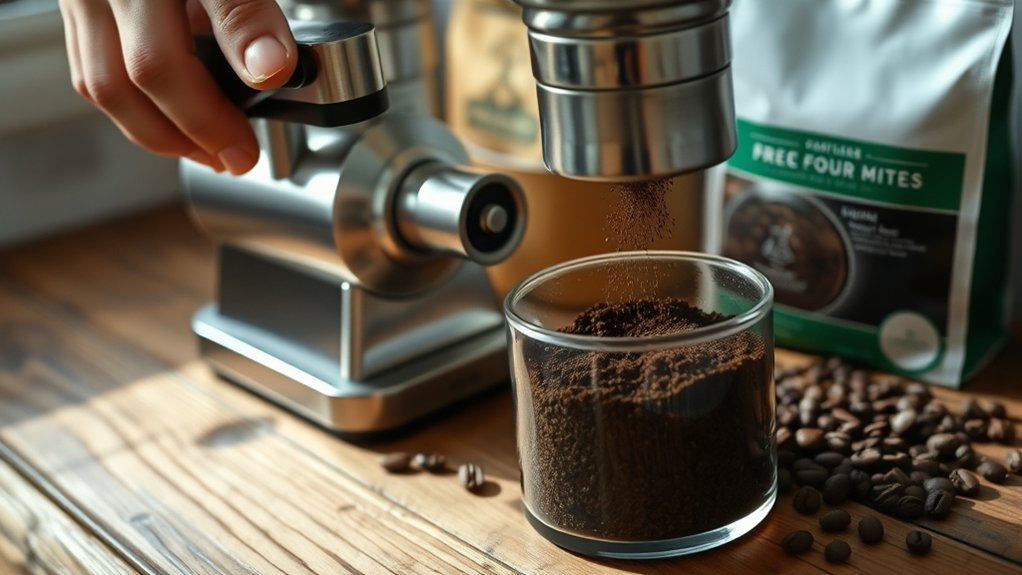
Although pre-ground coffee offers convenience, grinding your beans fresh preserves the essential oils and aromas that start to dissipate as soon as the beans are ground. When you grind right before brewing, you unlock the full spectrum of coffee flavor, resulting in a richer, more vibrant cup.
Pre-ground coffee loses volatile compounds quickly, leading to a flat, stale taste. You might notice grinder noise when you start fresh grinding, but it’s a small trade-off for superior freshness. That sound signals your coffee beans breaking down, releasing those precious oils that create the depth and complexity you crave.
How to Choose Between Blade and Burr Coffee Grinders
You’ll find that blade grinders are affordable and quick, making them perfect for simple, everyday use. They get the job done without much fuss.
Burr grinders, on the other hand, offer a more consistent grind size and better flavor control. These are ideal if you’re serious about your coffee and want to get the most out of your beans.
Knowing these differences really helps when it comes to picking the grinder that matches your brewing style.
Blade Grinder Advantages
Why might you choose a blade grinder over a burr grinder? Blade grinders offer simplicity and affordability, making them a great starting point if you’re new to grinding your coffee beans. They’re compact, easy to use, and perfect for quickly grinding small amounts without fuss.
While blade grinders don’t provide the uniform grind size of burr grinders, you can still preserve bean freshness by grinding just before brewing. This helps maintain coffee flavor, especially if you adjust grinding time to avoid overheating the beans.
If you value convenience and budget over precision, a blade grinder lets you enjoy freshly ground coffee without a steep learning curve or investment. It’s a practical choice for casual brewers who want a fresh cup without extra complexity.
Burr Grinder Benefits
When you want more control over your coffee’s flavor and consistency, a burr grinder stands out as the superior choice. Unlike blade grinders, burr grinders crush beans uniformly. This helps preserve coffee bean freshness and unlock richer aromas.
Here’s why you should consider one:
- Consistent grind size: Ensures even extraction, improving taste and texture.
- Adjustable settings: Lets you fine-tune grind size for different brewing methods.
- Less grinder noise: Typically quieter than blade models, making your morning routine smoother.
- Reduced heat generation: Protects coffee oils by grinding slowly, preserving flavor integrity.
Choosing a burr grinder means investing in quality that enhances your daily brew. It gives you a fresher, more flavorful cup every time.
Why Grind Size Matters for Flavor and Extraction
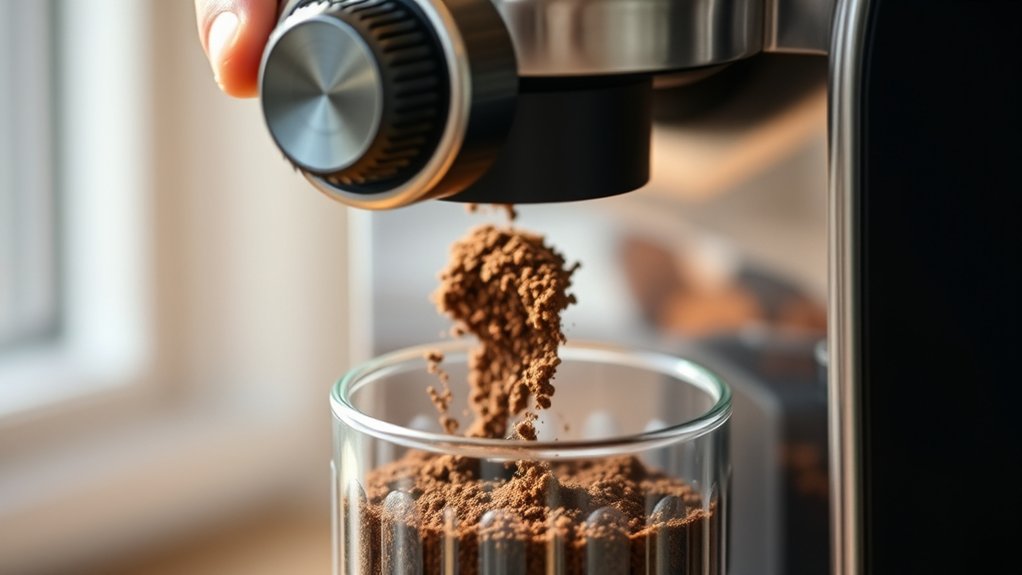
Although grind size might seem like a minor detail, it plays a crucial role in shaping the flavor and extraction of your coffee. The size of your grounds directly affects extraction efficiency.
Too coarse, and water passes through quickly, under-extracting flavors. Too fine, and it slows down, causing over-extraction and bitterness.
By adjusting grind size, you control how much flavor the water extracts, influencing the overall flavor profile. Different brewing methods require specific grind sizes to optimize extraction efficiency and highlight desirable notes.
Mastering grind size lets you reveal the full potential of your beans, achieving a balanced cup every time.
Measuring Coffee Beans for Consistent Coffee Grinding
Since consistency is key to brewing great coffee, measuring your coffee beans accurately guarantees each grind delivers the same strength and flavor. To achieve this, follow these steps:
- Use a digital scale for precise measurement, aiming for about 18-20 grams per 12-ounce cup.
- Store your coffee beans properly in airtight containers to preserve freshness and maintain uniform grind quality.
- Weigh the beans before grinding to avoid surprises that affect taste and strength.
- Minimize grinder noise by grinding only the measured amount at a time, reducing motor strain and preserving flavor.
Doing this might seem a bit extra at first, but trust me, it really helps keep your coffee tasting just right every time. Plus, it makes the whole process feel a bit more like a ritual, which is pretty satisfying.
Give it a try and see how consistent your coffee gets!
How to Set Your Grinder for the Perfect Grind
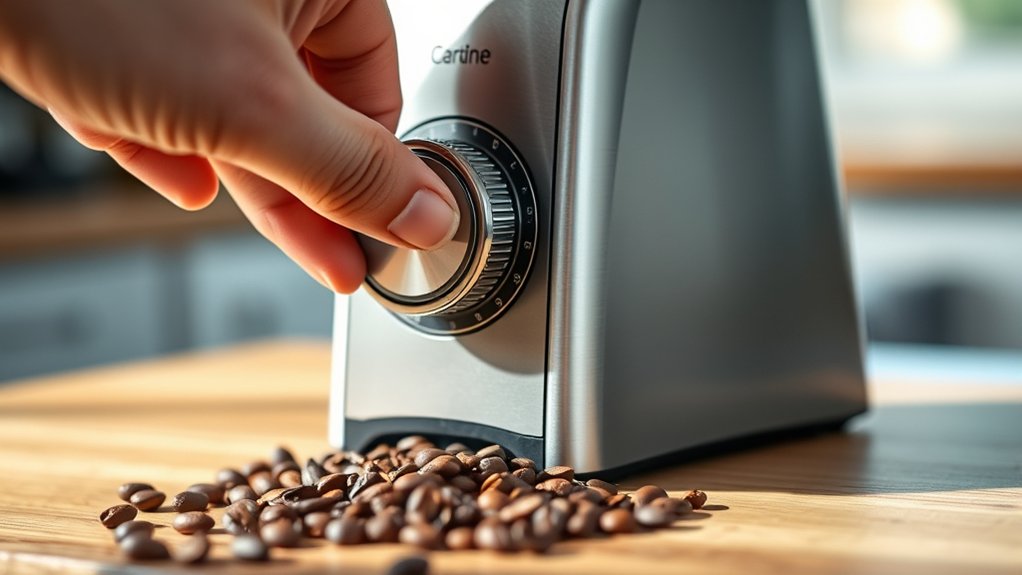
You’ll want to start by picking the grind size that fits your brewing method. For example, go coarse if you’re using a French press, and fine if you’re making espresso.
After that, tweak the settings until you get a consistent particle size. This consistency really makes a difference because it directly affects how the flavors come through.
Nail this balance, and your coffee will go from just good to truly exceptional.
Grind Size Settings
When dialing in your grinder, understanding grind size settings is vital because they directly influence extraction and flavor. The right grind size ensures balanced coffee flavor and optimal grind uniformity, which prevents over or under-extraction.
Here’s how to set it correctly:
- Identify your brewing method. Espresso requires fine grinds, while French press needs coarse.
- Adjust the grinder dial gradually, noting changes in grind size.
- Aim for consistent particle size to enhance grind uniformity and extraction balance.
- Test brew and tweak until the coffee flavor matches your preference—smooth and rich or bright and acidic.
Mastering grind size settings puts you in control of your coffee’s taste. It really unlocks its full potential with every cup.
Adjusting Grind Consistency
Although dialing in your grind size is essential, adjusting grind consistency guarantees each particle is uniform. This directly impacts extraction quality and flavor clarity.
To achieve this, first check your grinder’s burr alignment and cleanliness. Even minor misalignments create uneven particles. Use a consistent dosing method to avoid fluctuations in grind time, which can alter particle size distribution.
If your grinder offers micro-adjustments, fine-tune them gradually while testing the brewed coffee for flavor nuances. Uniform grind consistency ensures balanced extraction, highlighting subtle notes in your beans rather than bitterness or sourness caused by over- or under-extraction.
How to Grind Coffee Beans Without Making a Mess
How can you grind coffee beans without scattering grounds all over your counter? Start by setting up a clean workspace. Clear clutter to avoid stray grounds mixing with other items. Then follow these steps:
- Use a container or bowl beneath the grinder to catch excess grounds.
- Fill your grinder with the right amount of beans. Avoid overfilling because that leads to spills.
- Grind slowly and steadily. This not only controls mess but also helps reduce grinder noise.
- After grinding, immediately transfer grounds to your brewing device. Wipe down your grinder and counter right away.
Proper coffee bean storage also helps keep beans dry and less likely to stick together. This reduces mess during grinding.
These simple practices make for a cleaner, quieter coffee prep. Plus, they let you focus on brewing better coffee.
Fixing Common Coffee Grinding Problems
If your coffee grounds aren’t turning out as expected, you’re not alone. Many enthusiasts face common grinding issues that can affect flavor and brewing consistency. Poor grind size, static cling, and excessive noise can frustrate your morning routine.
To fix these, consider your coffee bean storage. Keep beans airtight and cool to preserve freshness and grind quality. For grinder noise reduction, placing a mat underneath or grinding in short bursts helps. Adjust grind settings gradually to avoid uneven grounds.
| Problem | Solution |
|---|---|
| Inconsistent grind | Calibrate your grinder settings |
| Static cling | Use a metal container or damp cloth |
| Loud grinder noise | Add noise-dampening mat |
| Stale beans | Improve coffee bean storage |
Address these to enjoy smoother, richer coffee every time.
How to Clean and Maintain Your Coffee Grinder
To keep your coffee grinder performing at its best, you’ll want to clean it regularly—ideally after every few uses. It’s not just about wiping down the outside; there’s a bit more to it than that.
You’ll need to follow some specific steps to get rid of residue and prevent buildup inside the grinder.
Cleaning Frequency Tips
Although you might be enthusiastic to grind your next batch of beans, regular cleaning is essential to keep your coffee grinder performing at its best.
Proper cleaning frequency prevents stale oil buildup and reduces grinder noise, ensuring fresh, consistent grounds.
Follow these tips to maintain peak performance:
- Clean your grinder after every use if you change coffee types frequently to avoid flavor contamination.
- If you use the same coffee regularly, a deep clean every 1 to 2 weeks is enough.
- Wipe exterior surfaces daily, especially around coffee storage areas, to prevent residue buildup.
- Inspect and clean burrs or blades monthly to keep grinding efficient and reduce noise caused by debris.
Sticking to this routine supports better coffee flavor and helps your grinder last longer.
Grinder Maintenance Steps
When you want your coffee grinder to deliver consistent, fresh grounds every time, regular maintenance is a must. Start by unplugging the grinder and removing any leftover beans to prevent stale flavors from affecting your brew. Proper coffee bean storage also helps reduce residue buildup inside the grinder.
Clean the burrs or blades with a soft brush and wipe the hopper to avoid oils accumulating. This not only improves grinder noise reduction but extends its lifespan.
| Step | Action | Frequency |
|---|---|---|
| Empty & Brush | Remove beans, brush burrs | After each use |
| Wipe Hopper | Clean with a damp cloth | Weekly |
| Deep Clean | Use grinder cleaner pellets | Monthly |
| Check Parts | Inspect for wear/damage | Quarterly |
Quick Tips for Coffee Grinding on the Go
Whether you’re camping, traveling, or just away from your kitchen, having the right approach to coffee grinding on the go can really change your brewing game. Travel brewing calls for convenience but without giving up on quality.
Mastering coffee grinding on the go elevates your travel brews—convenience meets quality wherever you are.
Portable grinders are definitely your best friends here. They make it easy to enjoy fresh grounds no matter where you are.
Here are some quick tips to help you get the most out of your grinding wherever you go:
- Choose a compact, durable portable grinder that fits your travel style. It should be easy to carry and tough enough to handle your adventures.
- Pre-measure your coffee beans before you head out. This speeds up grinding and helps keep things less messy.
- Clean your grinder regularly, even when you’re on trips. Keeping it clean means your coffee will always taste fresh and pure.
- Adjust your grind settings before you go. Making manual adjustments outdoors can be tricky, so it’s best to set them up ahead of time.
How Grind Size Varies by Brewing Method
Since each brewing method extracts flavors differently, adjusting your grind size is essential to achieving the best cup.
For espresso, you’ll want a fine grind to allow quick extraction under pressure, while French press calls for a coarse grind to prevent over-extraction and sediment.
Drip coffee uses a medium grind, balancing extraction and flow rate.
Your coffee bean selection also impacts grind choice. Darker roasts might require a slightly coarser grind to avoid bitterness, while lighter roasts benefit from finer grinds to highlight acidity.
Don’t forget, your grinder noise can hint at grind consistency. Unusual sounds might mean uneven particles.
Frequently Asked Questions
Can I Grind Coffee Beans for Espresso With a Blade Grinder?
You can grind coffee beans for espresso with a blade grinder, but it’s not ideal. Blade grinders chop beans unevenly, which makes it tough to get the consistent fine grind you need for espresso. This inconsistency can affect both extraction and flavor.
If you’re serious about espresso, you’ll want a burr grinder because it produces uniform grounds.
That said, if a blade grinder is all you’ve got, you can still make it work. Just pulse carefully and check your grind often to get as close as possible.
How Long Do Coffee Beans Stay Fresh After Grinding?
Think of ground coffee like a fleeting melody. Its bean freshness starts fading quickly. Once you grind your beans, aim to use them within 15 to 30 minutes for the best flavor.
Grind timing is essential. The moment you break the beans’ surface, oxygen begins to steal those aromatic oils.
To keep your cup vibrant, grind just before brewing. That way, each sip captures the coffee’s full, fresh essence.
Does Altitude Affect the Coffee Grinding Process?
Yes, altitude impacts the coffee grinding process because air pressure and humidity change with elevation.
At higher altitudes, lower air pressure can affect how your grind size interacts with extraction. This might mean you need to adjust the grind finer or coarser to keep the flavor balanced.
You’ll want to experiment with grind size more carefully if you’re brewing at different altitudes.
That way, you can make sure your coffee stays consistent and delicious every time. It’s all about finding what works best for your specific environment.
Can I Use a Manual Grinder Instead of an Electric One?
Yes, you can definitely use a manual grinder instead of an electric one. Manual and electric grinders mainly differ in convenience and speed, but manual grinders give you more control over grind size.
Just remember that grinder maintenance is essential. Clean your grinder regularly to avoid buildup that affects flavor.
Manual grinders are portable, quieter, and often more affordable. They’re great for beginners who want precision without relying on electricity.
What’s the Best Way to Store Ground Coffee for Freshness?
Think of ground coffee preservation like guarding treasure from air and light. For the best coffee storage, keep your grounds in an airtight container, away from heat, moisture, and sunlight.
Store it in a cool, dark place like a pantry, not the fridge because that adds moisture.
By sealing your coffee tightly and limiting exposure, you’ll lock in flavor and freshness.
This way, every brew tastes as vibrant as when you first ground those beans.
Conclusion
Now that you know why fresh grinding matters and how to nail the perfect grind size, you’re just one step away from transforming your coffee routine. But here’s the secret: mastering your grinder isn’t about perfection. It’s about experimenting and adjusting to your taste.
So, grab those beans, tweak your settings, and get ready to reveal flavors you never knew existed. Your best cup is waiting. Are you ready to brew it?