How Many Tablespoons Per Cup Of Coffee – Measurement Guide
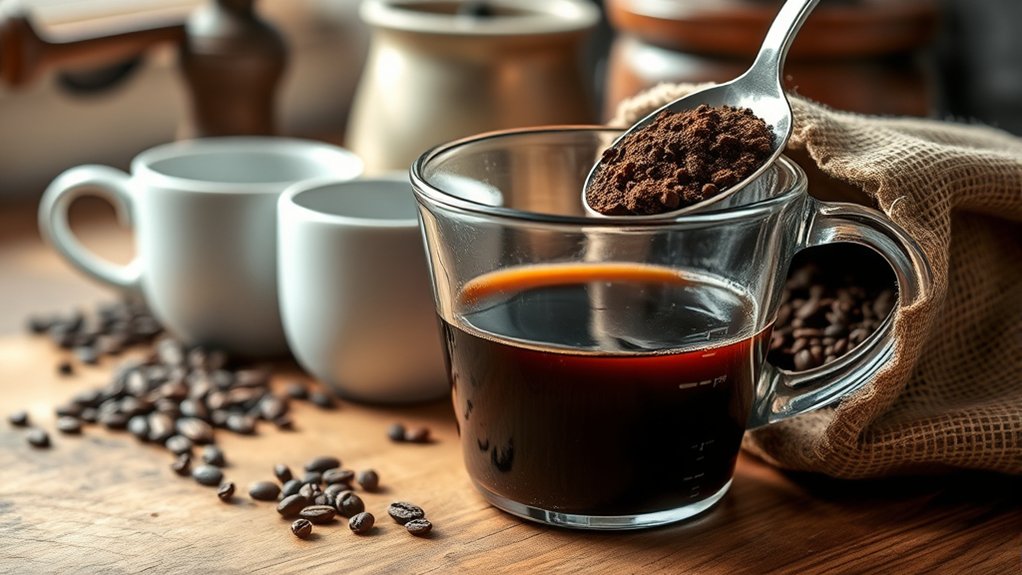
You’ll want about 1 to 2 tablespoons of ground coffee per 6-ounce cup, adjusting based on your taste and cup size. One tablespoon usually weighs around 5 grams, but grind size and roast level can affect this. Use a digital scale for precise measurement and avoid common mistakes like overfilling spoons.
Fine-tune your brew by slightly increasing or decreasing amounts for strength. Keep your measurements consistent, and you’ll guarantee a great cup every time. There’s more to mastering the perfect brew, so don’t be afraid to experiment a little!
Why Measuring Coffee Tablespoons Per Cup Matters
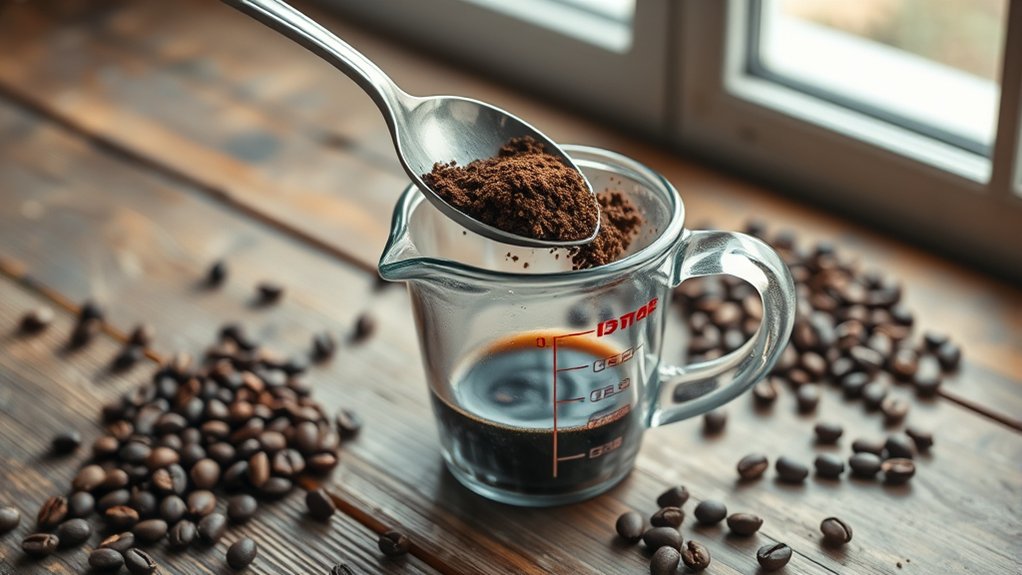
Although it might seem minor, measuring coffee tablespoons per cup plays a crucial role in ensuring a consistent flavor, aroma, and strength with every brew you make. When you measure precisely, you balance the coffee-to-water ratio, which optimizes extraction and enhances overall quality.
Proper measurement prevents over- or under-extraction that can ruin your cup’s taste, especially when combined with factors like brewing temperature.
Consistency in tablespoons lets you reproduce your preferred flavor every time, even as you adjust variables like coffee storage conditions or brewing temperature.
Inconsistent measuring leads to unwanted flavor variations, making it harder to control your coffee’s profile.
The Standard Tablespoons of Coffee Per 6-Ounce Cup
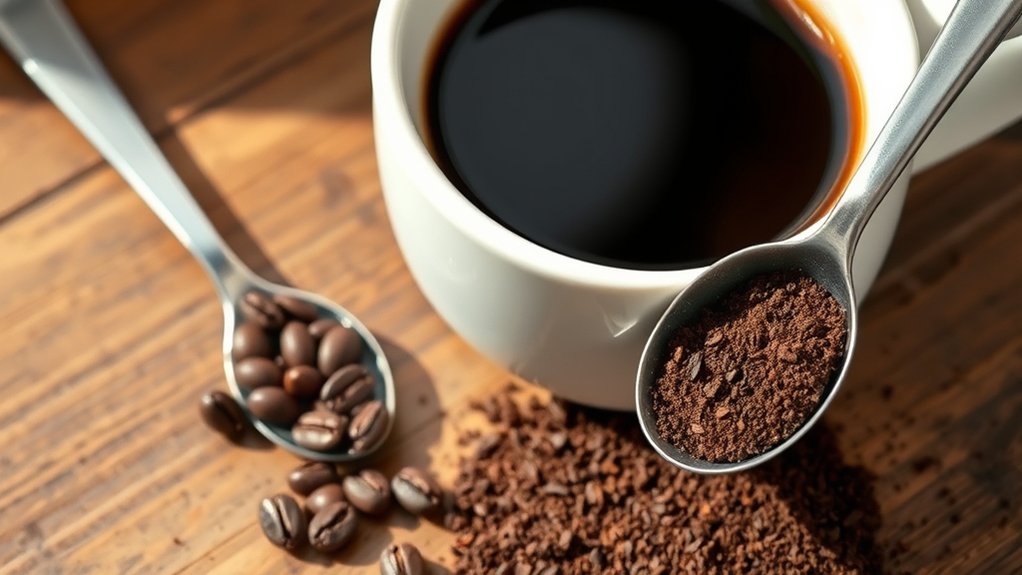
Getting your coffee-to-water ratio right means knowing how many tablespoons of coffee to use per cup. For a standard 6-ounce cup, the typical range is 1 to 2 tablespoons of ground coffee. Using 1 tablespoon produces a milder brew, while 2 tablespoons intensify the flavor.
Many baristas prefer 1.5 tablespoons for a balanced taste. Remember, coffee storage impacts freshness, which in turn influences flavor extraction at your brewing temperature. Freshly stored coffee grounds ensure consistent results with your measured tablespoons.
Adjust the amount based on your taste and the brewing temperature you use, as hotter water extracts flavor more efficiently. By mastering this standard measurement, you optimize your cup’s strength and enjoy a consistently satisfying coffee experience every time.
How to Convert Tablespoons of Coffee to Grams Accurately
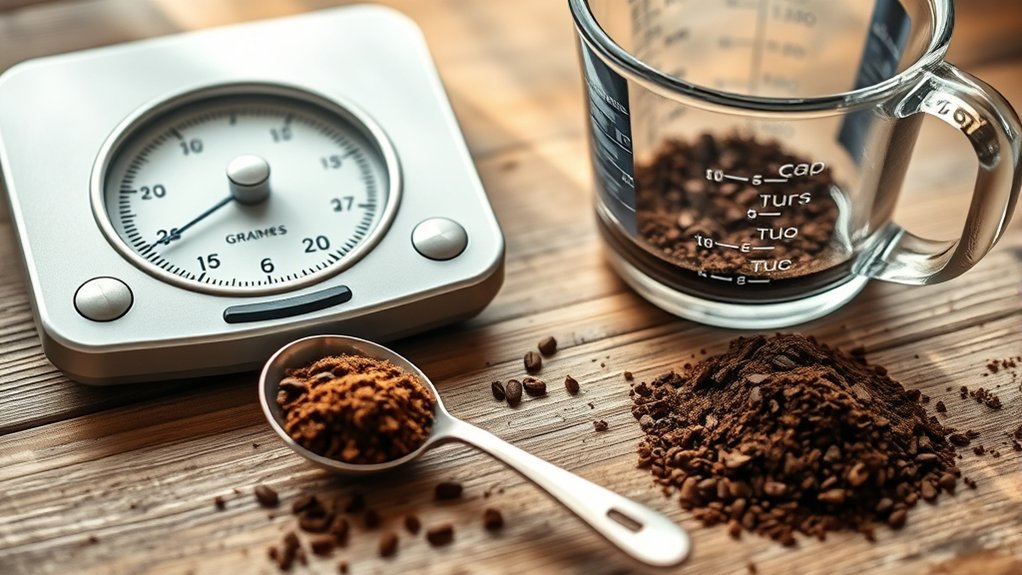
To convert tablespoons of coffee to grams accurately, just multiply the number of tablespoons by about 5 grams—that’s the average weight of one tablespoon.
But keep in mind, grind size and bean density can affect this weight, so your measurement might vary a bit.
For the most consistent and precise results, using a digital scale is definitely the way to go.
Tablespoons To Grams
One tablespoon of coffee grounds usually weighs around 5 grams, but this can vary based on grind size and bean type. To brew consistently, converting tablespoons to grams is essential, especially when fine-tuning coffee extraction and adjusting brewing temperature for ideal flavor.
Use these tips to improve your conversions and brewing precision:
- Measure coffee with a digital scale, not just tablespoons
- Remember 1 tablespoon roughly equals 5 grams, but check grind density
- Adjust grams to control coffee strength and extraction
- Use standardized weight to maintain consistent brewing temperature
- Convert tablespoons to grams to replicate recipes accurately
Taking a little extra time to weigh your coffee can make a big difference. It helps you dial in the perfect cup every time, no matter the beans or method you’re using. So, grab that scale and start experimenting!
Factors Affecting Weight
How much does your coffee actually weigh per tablespoon? It varies due to several factors affecting weight. Grind size plays a key role. Finer grinds pack denser, weighing closer to 6 grams per tablespoon, while coarser grinds are lighter, around 4.5 grams.
Bean density also matters. It’s influenced by coffee storage conditions that affect moisture content. Your brewing equipment can impact how you measure, too. Some scoops hold different volumes, making volume less reliable.
To convert tablespoons to grams accurately, use a digital scale for consistency. Knowing your coffee’s exact weight per tablespoon guarantees you maintain flavor and strength across brews.
How to Adjust Coffee Tablespoons for Larger or Smaller Cups
To adjust coffee tablespoons for different cup sizes, just start by calculating the volume precisely and then scale your coffee amount accordingly.
A good rule of thumb is to use between 1 and 2 tablespoons per 6 ounces of water. From there, you can tweak the strength to match your personal taste.
This way, whether you’re brewing a small cup or a large mug, you’ll get a consistent flavor every time. It’s pretty simple once you get the hang of it!
Calculating Coffee For Volume
Wondering how to adjust your coffee tablespoons when brewing different cup sizes? Start by knowing that a standard 6-ounce cup uses 1 to 2 tablespoons of coffee. You can scale this amount based on your cup size. Just multiply the tablespoons by your cup’s ounces divided by six.
This method works regardless of coffee bean origins or brewing temperature. Those factors influence flavor but not volume.
To calculate precisely:
Use 1–2 tablespoons per 6 ounces as your baseline. For an 8-ounce cup, multiply by 8/6. For a 12-ounce cup, multiply by 12/6.
Experiment with slight adjustments for personal taste. Also, consider weighing grounds for accuracy.
This approach guarantees consistent flavor and strength across any cup size.
Strength Adjustment Tips
Once you’ve calculated the base amount of coffee tablespoons for your cup size, you can fine-tune the strength to match your preference.
For larger cups, increase tablespoons proportionally. For example, use 3 tablespoons for 12 ounces instead of 2 for 6 ounces.
For smaller cups or milder coffee, reduce tablespoons slightly below the standard. Try experimenting by adding half or full tablespoons for a bolder flavor.
Just remember, increasing grounds often means you might need to adjust brew time to prevent bitterness.
Always consider your personal taste and make gradual changes to find your ideal balance.
Also, be sure to store your coffee properly to keep it fresh. And keep your brewing temperature consistent to get the best flavor.
These factors together help you craft coffee strength that suits your cup perfectly.
Scaling Ratios Accurately
Although adjusting coffee tablespoons might seem straightforward, scaling ratios accurately requires attention to both cup size and your preferred strength. To keep your brew consistent, measure your coffee grounds precisely, especially when adjusting for larger or smaller cups. Remember, using the standard 1–2 tablespoons per 6 ounces guideline helps maintain balance.
Your coffee bean storage impacts freshness, so always use fresh grounds for best results. Also, brewing temperature affects extraction, so keep that consistent as you scale.
Adjust tablespoons proportionally to cup size (e.g., 8 oz = 1.33–2.67 tbsp). Use a digital scale for precise measurements. Standard scoops hold 2 tablespoons, which is great for quick adjustments.
Modify ratios slightly based on taste preference. Store beans properly to preserve flavor during scaling.
Tablespoons of Coffee for Popular Brewing Methods
When you want to brew the perfect cup, measuring the right amount of coffee grounds is vital. The coffee bean origins and brewing temperature influence extraction, but sticking to proper tablespoons per cup guarantees consistency across methods.
| Brewing Method | Tablespoons per Cup |
|---|---|
| Drip Coffee | 1 to 2 tbsp per 6-ounce cup |
| French Press | 2 tbsp per 4-ounce serving |
| Pour-Over | 1.5 tbsp per 6-ounce cup |
| Espresso | ~1.5 tbsp (7-9 grams) per shot |
| Coffee Scoop | Holds 2 tbsp grounds |
You can always adjust measurements depending on how strong you like your coffee or what kind of roast you’re using. For example, lighter roasts from high-altitude origins may need a bit more grounds. Also, keeping the brewing temperature around 195 to 205°F really helps bring out the best flavors.
How Grind Size Affects Tablespoons of Coffee Measurements
The amount of coffee you measure in tablespoons interacts closely with grind size to shape your brew’s flavor and strength. Grind consistency plays a vital role. Finer grinds increase surface area, extracting more flavor per tablespoon, while coarser grinds yield milder coffee, often needing extra tablespoons.
Pay attention to brewing temperature, as it influences extraction. Hotter water extracts more quickly, especially with fine grinds. Over-extraction and bitterness can occur if you use too fine a grind without adjusting tablespoon amounts.
Coarser grounds, common in French press or cold brew, generally require more coffee to reach desired strength.
- Finer grinds = stronger extraction per tablespoon
- Coarser grinds = milder flavor, more tablespoons needed
- Grind consistency affects extraction uniformity
- Brewing temperature impacts flavor extraction rate
- Adjust grind size to fine-tune strength without changing volume
How Roast Level Influences Coffee Tablespoon Measurements
You’ll notice that dark roast beans are less dense than light roast ones, so you’ll need slightly more tablespoons to get the same strength.
Light roasts pack more mass per volume, which means fewer tablespoons often do the trick.
Roast Level Density
Three key factors influence how roast level affects your coffee tablespoon measurements: bean density, volume changes during roasting, and weight variations per scoop. Roast level density varies significantly due to coffee bean origin and roasting intensity, both impacting how much coffee fits in a tablespoon.
Dark roast beans expand more, lowering density and weight per scoop compared to denser light roasts. This affects how you adjust measurements to maintain consistent strength, especially when pairing with suitable brewing temperature.
Dark roast beans weigh less per tablespoon than light roasts. Light roasts’ higher density means more grams per scoop. Roasting causes bean expansion, reducing density.
Volume-based measures may underestimate dark roast amounts. Adjust tablespoons according to roast to balance flavor and strength.
Understanding this guarantees accurate, repeatable coffee preparation.
Measuring Dark Vs. Light
How does roast level change the way you measure your coffee by tablespoon? Dark roast beans are less dense, so a tablespoon weighs less than light roast grounds. This means using the same tablespoon for both can alter your coffee flavor and brewing temperature effects.
Light roasts need slightly more grounds to match the strength of dark roasts. Adjusting tablespoons based on roast guarantees a balanced, consistent brew.
| Roast Level | Density | Tablespoons per Cup |
|---|---|---|
| Dark | Less dense | 1 to 1.5 |
| Light | More dense | 1.5 to 2 |
| Result | Flavor & Temp | Balanced & precise |
This approach helps you control coffee flavor while optimizing brewing temperature for the best cup. It’s a simple tweak that makes a big difference in your daily brew.
Coffee Scoops vs. Tablespoons: Which Should You Use?
Although coffee scoops offer a quick way to measure grounds, using tablespoons gives you greater precision and control over your brew. This precision helps you fine-tune your coffee flavor and maintain the ideal brewing temperature.
Scoops vary in size and usually hold about 2 tablespoons, which can lead to inconsistent strength.
Tablespoons allow you to measure approximately 5 grams per scoop, making your coffee preparation more consistent.
- A standard scoop equals about 2 tablespoons
- Tablespoons provide more accurate measurement than scoops
- Scoops are convenient but can vary in volume
- Precise tablespoons improve coffee flavor control
- Consistency in brewing temperature depends on measurement accuracy
Choosing tablespoons lets you optimize your coffee every time. It’s a simple switch that really makes a difference!
Adjusting Tablespoons for Stronger or Milder Coffee
When you want a stronger or milder cup, adjusting the tablespoons of coffee per 6-ounce serving makes all the difference. Increasing to 1.5 or 2 tablespoons intensifies the flavor, while reducing below 1 tablespoon softens it. Tweaking by just 0.5 tablespoons can notably change your brew’s strength.
Remember, personal preference should guide your adjustments, and experimenting helps find your ideal balance. Also, consider your brewing temperature; hotter water extracts more flavor, so you might need fewer tablespoons for a strong cup.
Your taste leads the way; experiment and adjust for perfect strength, factoring in water temperature.
Proper coffee storage is essential too. Keeping beans airtight preserves freshness, ensuring consistent taste.
For larger mugs, scale tablespoons proportionally to maintain flavor intensity. By managing these factors, you control your coffee’s strength precisely, crafting every cup to suit your taste perfectly. It’s all about finding what works best for you!
Avoid These Common Coffee Tablespoon Measurement Mistakes
If you want consistent coffee strength, you need to avoid common tablespoon measurement mistakes. Using a standard tablespoon without considering grind size or bean density leads to varying coffee content. This inconsistency affects extraction, especially if brewing temperature isn’t ideal.
Improper coffee storage can also change bean density, which further skews measurements. So, it’s not just about the spoon, but also how you store and prepare your beans.
Here are some key mistakes to watch out for:
- Overfilling tablespoons, which causes bitter, over-extracted coffee
- Under-measuring, resulting in weak, flavorless brews
- Ignoring grind size and packing density differences
- Not leveling off the tablespoon for accuracy
- Relying solely on volume instead of weighing grounds
Tips for Accurate and Consistent Coffee Measurement
To achieve accurate and consistent coffee measurement, you need to rely on precise tools like a digital kitchen scale rather than volume-based scoops. Weighing about 5 grams of coffee grounds per 6-ounce cup ensures uniformity and prevents variability caused by inconsistent scoop sizes. Always measure before brewing to maintain precision.
Consistency in your measuring tool, whether a scale or a specific tablespoon, helps reproduce your preferred flavor every time. Regularly calibrate your scale and document your coffee-to-water ratios to refine your process.
Beyond measurement, proper coffee storage preserves freshness, which directly impacts flavor and extraction.
Also, maintain the ideal brewing temperature, as fluctuations can alter taste and strength. Following these tips will elevate your brewing precision and deliver consistently excellent coffee.
It’s all about paying attention to the details so you can enjoy your perfect cup every time.
Quick Tablespoon-to-Cup Coffee Measurement Reference Chart
Accurately measuring coffee grounds doesn’t have to be complicated. Using a quick tablespoon-to-cup coffee measurement reference chart helps you maintain measurement accuracy and consistent coffee flavor every time. Here’s a simple guide to get you started:
- 6-ounce cup: 1 to 2 tablespoons of ground coffee
- 8-ounce mug: 1.33 to 2.67 tablespoons, adjusted by strength preference
- Ratio: 1 tablespoon per 3 to 4 ounces of water for balanced flavor
- Always use the same tablespoon size for uniform strength
- Refer to the chart for easy conversions and brewing precision
This chart ensures you control coffee flavor by standardizing your measurements. It makes each brew reliably delicious without guesswork.
Frequently Asked Questions
Can I Use Tablespoons to Measure Coffee for Espresso?
You can use tablespoons to measure coffee grind for espresso, but it’s less precise. Variations in grind density affect brew strength, so weighing grounds guarantees consistent results and better control over your espresso’s flavor.
Using a scale might seem like extra work at first, but it really helps you nail the perfect shot every time. Tablespoons can give you a rough idea, but if you want to get serious about espresso, a scale is the way to go.
How Does Water Temperature Affect Coffee Tablespoon Measurements?
If you measure coffee tablespoons at 200°F, water density slightly decreases, but it won’t change your scoop size. Temperature effects influence extraction speed and flavor, not the actual coffee grounds measurement you use for each cup.
Are There Health Benefits to Measuring Coffee Precisely?
You’ll enjoy health benefits by measuring coffee precisely, as it guarantees brewing consistency and preserves coffee freshness. This balance helps control caffeine intake, reduces bitterness, and minimizes overconsumption risks.
All of this supports a healthier, more mindful coffee experience. It’s a simple step that can make a big difference in how you enjoy your daily cup.
Can I Reuse Coffee Grounds Measured in Tablespoons?
Reusing coffee grounds measured in tablespoons is like trying to squeeze water from a dry sponge. Once brewed, ground freshness fades. Coffee storage won’t restore flavor, leaving you with a weak, bitter cup every time.
Honestly, it’s better to start fresh each time. Your taste buds will thank you. Plus, fresh grounds bring out the best in every brew.
Does Altitude Impact the Amount of Coffee per Tablespoon?
Yes, altitude impacts coffee bean density, so a tablespoon might hold different amounts of grounds. For better measurement accuracy, you’ll need to adjust your volume measurements since high-altitude beans can be denser or lighter.
It’s a bit like how air feels thinner up high. The beans change too, which means you might need to tweak how much coffee you use. Just keep an eye on the grind and density when measuring.
Conclusion
Measuring your coffee tablespoons per cup is as essential as tuning a guitar before a gig. It guarantees your brew hits just the right note every time. By following the standard measures and adjusting for cup size or strength, you’ll avoid bitter or weak coffee.
Remember, consistency is key, so use accurate tools and avoid common mistakes. With these tips, you’ll enjoy perfectly balanced coffee that suits your taste, cup after cup.