Can You Make Espresso With Regular Coffee – Methods And Tips
You can make espresso-style coffee with regular beans by using a fine grind and brewing methods like AeroPress or Moka pot that apply pressure. Keep water between 195°F and 205°F, and aim for a coffee-to-water ratio around 1:2 for a rich, concentrated shot.
Fresh beans and consistent tamping help prevent sour or weak flavors, while techniques like pre-infusion can create crema without an espresso machine. Try these tips, and you’ll soon perfect your espresso alternative at home.
What Is Espresso and How Does It Differ From Regular Coffee?
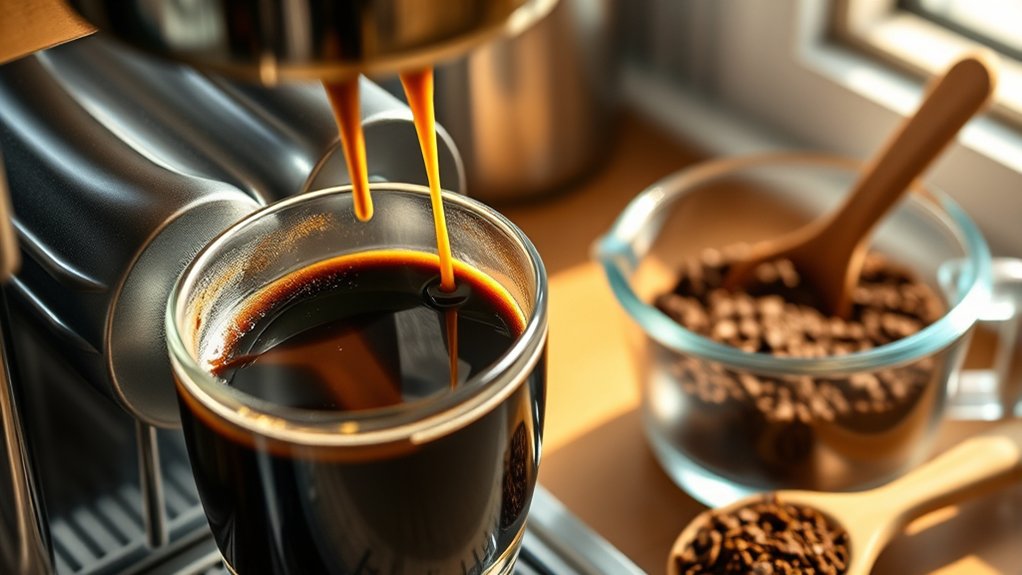
Espresso is a concentrated coffee brewed by forcing hot water through finely ground coffee under high pressure, usually around 9 to 10 bars. This brewing method extracts a bold flavor profile and produces a thick crema on top.
Unlike regular coffee, which is made with coarser grounds and longer brewing times, espresso uses a very fine grind and a short extraction time of 20–30 seconds. You’ll notice that espresso’s rich, velvety texture stands out compared to the lighter body of drip or French press coffee.
Espresso’s fine grind and brief extraction create a rich, velvety texture unlike regular coffee’s lighter body.
Also, espresso requires specialized equipment to maintain the necessary high pressure, whereas regular coffee can be brewed with simpler devices.
Understanding these differences helps you appreciate what makes espresso unique.
Can You Use Any Coffee Bean for Espresso?
While the brewing method defines much of espresso’s character, the choice of coffee bean plays a big role in shaping its flavor. You can use any coffee bean for espresso, making this brewing method highly versatile.
Although traditionally medium to dark roasts are favored for their lower acidity, you can experiment with any roast to find what suits your taste. Beans labeled as “espresso” often have longer Maillard development, which helps flavor extraction when brewing under pressure.
To get the best from any coffee, focus on using high-quality coffee beans and dialing in the correct grind size, which should be very fine and powdery. This guarantees ideal extraction and a rich espresso experience regardless of the bean you choose.
Why Grind Size Matters for Espresso
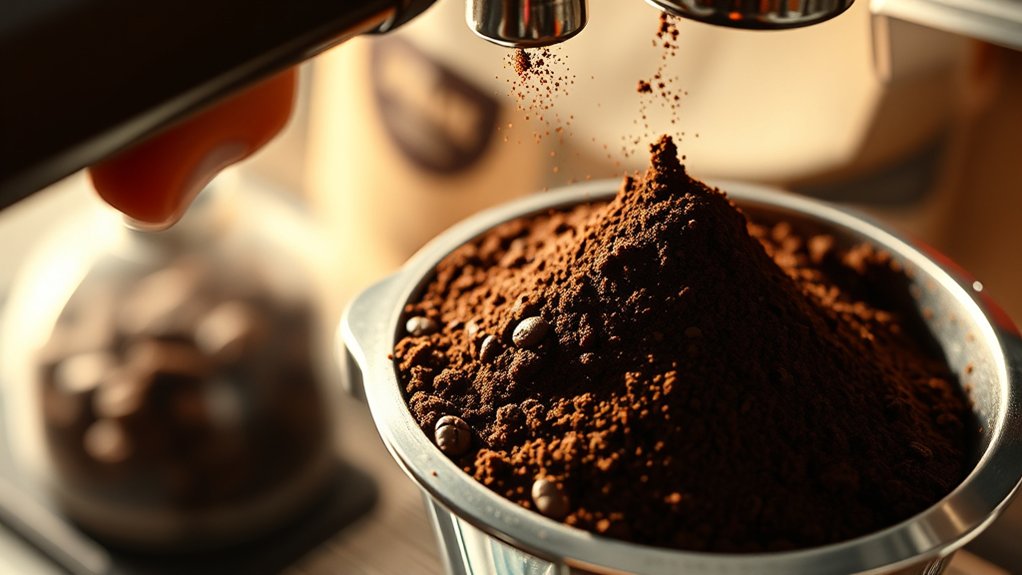
Because grind size directly influences how water interacts with coffee grounds, getting it right is essential for brewing a balanced espresso. You need a fine grind to increase surface area, which helps build the right pressure and flow during extraction. This pressure, usually around 9 bars, is critical for producing a rich espresso shot.
If your grind size is too coarse, water flows too quickly, shortening extraction timing and leading to sour, under-extracted flavors.
On the other hand, a consistent, uniform fine grind prevents channeling, ensuring even extraction and balanced flavor.
Remember, adjusting grind size means you might need to tweak brewing time or coffee-to-water ratios to keep your espresso shot tasting just right.
Mastering grind size is key to perfect espresso every time.
How to Mimic Espresso Using an AeroPress
To mimic espresso with your AeroPress, start by using a fine grind. This helps guarantee a strong extraction.
When you’re pressing, make sure to apply firm and steady pressure. This way, you can get the right concentration in about 20-30 seconds.
Following these steps will help you create a rich, espresso-like brew without needing an espresso machine.
Grind Size Importance
Achieving espresso-like results with an AeroPress starts with grinding your coffee beans to a fine consistency, roughly the size of table salt. The grind size is vital because it affects how the coffee grounds interact with water under pressure in this brew method.
If the coffee grounds are too coarse, the water will flow through too quickly, resulting in weak flavor. Too fine, and you risk over-extraction or clogging. To mimic espresso at home, aim for a grind size that allows you to press firmly for 20-30 seconds, extracting rich oils and bold flavors.
Properly ground coffee guarantees ideal extraction and helps replicate the intense profile of espresso despite the AeroPress’s lower pressure compared to traditional machines.
Getting the grind size right is fundamental for a satisfying espresso alternative.
Pressing Technique Tips
Mastering the pressing technique on your AeroPress is key to extracting a rich, espresso-like shot. Since espresso requires precise pressure, you need to grind the coffee finely and use hot water around 200°F.
Pour about a cup of water (3.5 ounces) over 2 tablespoons of coffee. Then, apply consistent, firm pressure on the plunger, taking 20-30 seconds to mimic espresso extraction.
| Step | Detail | Tip |
|---|---|---|
| Grind | Fine, table salt consistency | Guarantees density |
| Water Temp | ~200°F | Optimizes extraction |
| Coffee-to-Water | 1:15 ratio | Use 2 tbsp coffee, 3.5 oz water |
| Pressing | Firm, steady pressure | Extracts max flavor |
This pressing technique maximizes aroma and flavor, making your AeroPress brew espresso-like.
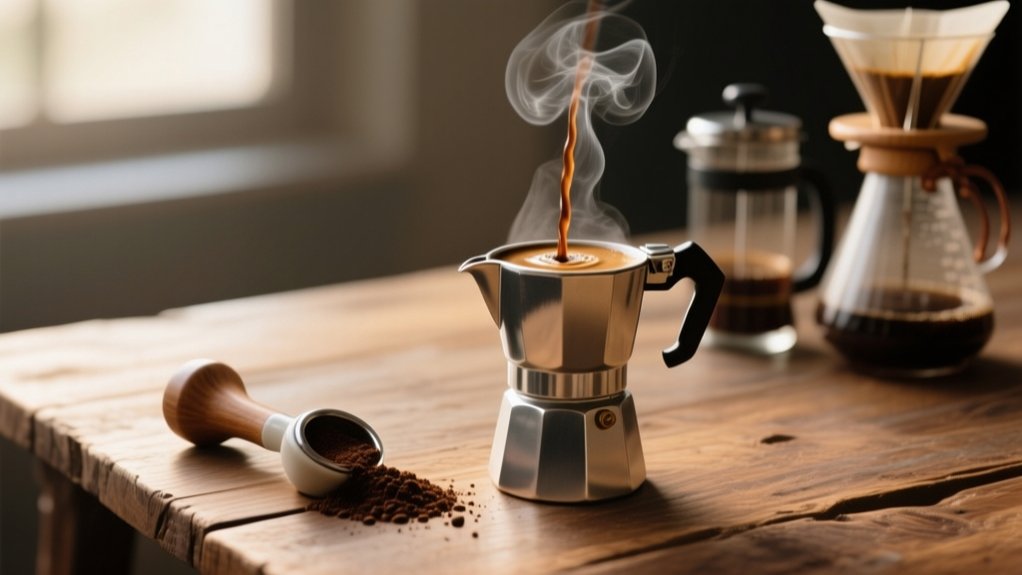
Brewing Espresso-Like Coffee With a Moka Pot
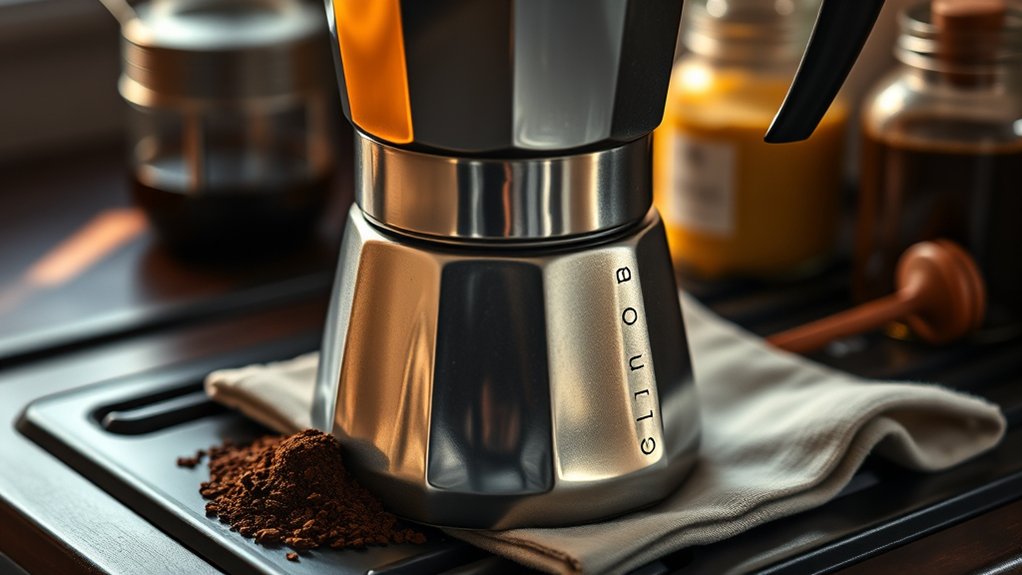
You can brew a strong, espresso-like coffee using a Moka pot by filling it with water and finely ground coffee.
Then, just heat it up until you hear that familiar hissing sound. This method creates a rich, thick brew that’s perfect for espresso-style drinks.
With a few simple steps, you’ll really enhance your coffee’s flavor and enjoy a bold cup every time.
It’s pretty easy once you get the hang of it!
Moka Pot Brewing Basics
While a Moka pot doesn’t reach the high pressure of an espresso machine, it brews a strong, concentrated coffee by forcing boiling water through finely ground beans.
You can make espresso without expensive equipment by using a Moka pot, which delivers a concentrated shot with rich flavor.
Start by filling the bottom chamber with about 3 ½ ounces of water and add 2 tablespoons of finely ground coffee to the filter basket.
Use medium to dark roast coffee for the best results, as it enhances the depth and robustness of the brew.
Heat the pot on medium until the coffee foams and expands, signaling that the brewing is complete.
This method produces a bold, espresso-like coffee that’s perfect for your daily caffeine fix.
Enhancing Coffee Flavor
Although a Moka pot doesn’t reach espresso machine pressure, you can still release richer flavors by tweaking how you brew.
For enhancing coffee flavor and crafting espresso without an espresso machine, focus on quality ingredients and careful technique.
Use 20-22 grams of freshly roasted, dark roast coffee for bold taste. Grind your coffee finely but not too powdery to avoid clogging.
Fill the bottom chamber with 3 ½ fluid ounces of water just below boiling to optimize extraction.
Listen for the hissing sound to know when the brew is ready.
Making Strong Espresso Alternatives With a French Press
Three simple steps can help you create a strong espresso alternative using a French press. First, make sure to use a fine grind and about 2 tablespoons of coffee.
Next, bloom your grounds by adding a splash of hot water (just below 200°F) and wait 30 seconds. Then, pour in the rest of the water and steep for 4 minutes before pressing down slowly.
This method extracts a concentrated brew, perfect for strong espresso alternatives.
| Step | Coffee Amount | Water Temperature |
|---|---|---|
| Grind | Fine | |
| Coffee | 2 tbsp (10-12g) | |
| Bloom | Splash of water | ~200°F (just below) |
| Steep | 4 minutes | |
| Press | Slow plunger press |
Using a French press this way lets you make a great espresso-style cup without an espresso machine.
How to Adjust Water Temperature and Coffee Ratio
Now that you’ve mastered making a strong espresso alternative with a French press, you can fine-tune your brew by adjusting the water temperature and coffee ratio.
Getting these right is key to brewing espresso-style coffee that suits your taste. Here’s how to adjust for the best flavor profile:
Keep water temperature between 195°F and 205°F to extract rich flavors without bitterness.
Use a coffee-to-water ratio around 1:2 for a concentrated, espresso-like strength.
Adjust the coffee grounds amount to influence strength.
Use more for boldness and less for mildness.
Measure precisely with a scale to maintain consistency and easily tweak your brew.
How to Create Rich Crema Without an Espresso Machine
Creating rich crema without an espresso machine is entirely possible when you use finely ground coffee and a brewing method that applies pressure, like a Moka pot or AeroPress.
To create rich crema, start with good quality, fresh coffee beans roasted for espresso.
Use filtered water and experiment with a coffee-to-water ratio close to 1:2 for a concentrated brew that enhances crema formation.
Pre-infuse your grounds with a small amount of hot water to release oils, then gently agitate during extraction to incorporate air, promoting that velvety crema texture.
These steps guarantee your chosen brewing method maximizes crema even without an espresso machine, letting you enjoy a rich, flavorful cup at home.
Common Mistakes When Making Espresso at Home
Mastering the art of espresso at home takes more than just the right grind or brewing method. It requires attention to common pitfalls that can affect the final cup. Avoid these mistakes to improve your espresso:
Using a grind size that’s too coarse leads to under-extraction, making your espresso weak and watery.
Applying inconsistent tamping pressure causes uneven extraction; aim for a firm, level tamp of about 30 pounds.
Brewing with water outside the 195°F to 205°F range can spoil flavor and extraction.
Neglecting coffee freshness by using stale beans dulls the taste; grind fresh just before brewing.
Also, keep extraction time between 20-30 seconds to guarantee a balanced shot.
Being mindful of these factors helps you craft a better espresso every time.
Experiment to Find Your Perfect Espresso Alternative
Although traditional espresso requires specific equipment, you can experiment with different beans, grind sizes, and brewing methods to craft a satisfying espresso alternative at home.
Start by trying medium to dark roast beans, which bring out deep, rich flavors even when making espresso without an espresso machine.
Focus on a fine, consistent grind size to enhance extraction. Use brewing tools like the AeroPress or Moka pot, adjusting your coffee-to-water ratio to about 1:2 for a concentrated brew.
Keep water temperature between 195°F and 205°F to capture espresso’s boldness.
Taste-test various combinations and monitor extraction time to dial in the perfect espresso alternative tailored to your preferences.
With patience and experimentation, you’ll find the perfect espresso experience without traditional equipment.
Frequently Asked Questions
Can I Use Instant Coffee to Make an Espresso Alternative?
Yes, you can use instant coffee brands to create an espresso alternative, but it won’t perfectly match espresso flavor profiles.
By adjusting instant coffee recipes and brewing techniques comparison, you can boost coffee strength variations for a richer taste.
Dissolve 1-2 teaspoons in hot water to mimic espresso’s intensity.
While it’s convenient, instant coffee lacks the crema and oils of true espresso, so it’s best for quick fixes rather than specialty coffee lovers.
How Long Can I Store Brewed Espresso-Like Coffee?
You can store brewed espresso-like coffee up to one week in the fridge, but for best flavor retention, consume it within 30 minutes.
Use airtight containers to minimize oxidation and light exposure.
Cool your brew quickly by placing it in the fridge right after brewing.
When reheating, do it gently to avoid bitterness.
Following these brew storage tips, cooling techniques, and reheating guidelines will help maintain your coffee’s aroma and taste longer.
Does Water Quality Affect the Taste of Homemade Espresso Alternatives?
Doesn’t the quality of water shape every sip you take? Yes, water quality directly affects the taste of your homemade espresso alternatives.
High water hardness and mineral content can create bitterness, while improper brewing temperature ruins extraction.
Using effective filtration methods removes impurities and chlorine, enhancing taste perception.
By controlling these factors, you guarantee a balanced, flavorful cup every time.
Can I Froth Milk Without an Espresso Machine?
Yes, you can froth milk without an espresso machine by using alternative tools like a handheld frother, French press, or even a jar with a lid.
Milk frothing boosts flavor, especially when you control the temperature. Heat the milk to about 150°F.
Frothing techniques such as vigorous whisking or pumping air into the milk create creamy foam.
This lets you enjoy rich coffee drinks without needing specialized equipment.
What Are the Best Cups for Serving Espresso Alternatives?
Wondering which espresso cup types truly elevate your experience? Start with small demitasse cups holding 2 to 3 ounces for authentic serving sizes.
Choose ceramic or porcelain for excellent heat retention to keep your drink warm without burning your hands.
If you prefer larger servings, 4 to 6-ounce cups from AeroPress or Moka pot methods work well.
Don’t forget design aesthetics; unique shapes and elegant finishes make every sip feel special and indulgent.
Conclusion
You might be surprised to learn that 54% of coffee drinkers enjoy espresso for its bold flavor and quick caffeine kick. Even without an espresso machine, you can get close using regular coffee beans and methods like AeroPress or a Moka pot.
Just remember to adjust your grind size, water temperature, and coffee ratio. Keep experimenting—you’ll find the perfect espresso alternative that suits your taste and satisfies your coffee cravings at home.