Do Coffee Beans Expire – Shelf Life And Storage Tips
Coffee beans don’t exactly expire but gradually lose freshness and flavor, especially after 2-4 weeks post-roast. You’ll notice stale aroma and dryness when they age. Dark roasts fade faster than light ones.
To preserve quality, store beans in airtight, opaque containers away from heat, light, and moisture. Ideally, keep them in a cool, dark place. Freezing can help if done right.
Understanding these key factors will improve how long your coffee beans stay fresh and flavorful. It’s all about keeping them protected from elements that speed up aging. With the right storage, you can enjoy better coffee for longer.
What Does Coffee Bean Expiration Really Mean?
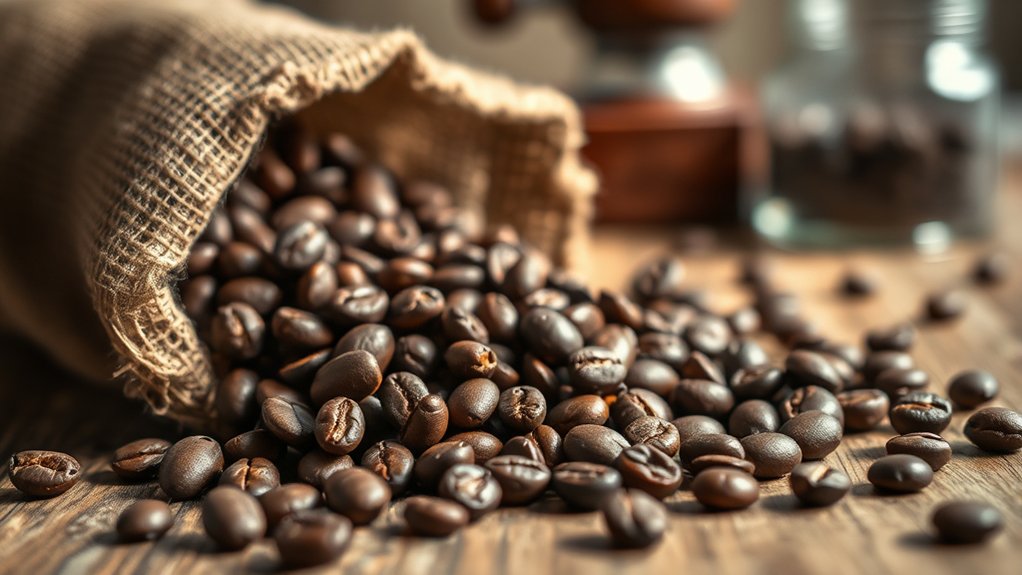
The expiration of coffee beans doesn’t mean they become unsafe to consume. Instead, it marks the point when their flavor and aroma begin to decline noticeably.
During coffee cultivation and coffee processing, beans develop complex flavors that degrade over time. Exposure to air, light, heat, and moisture speeds up this breakdown, reducing quality.
Although “best-by” dates show peak freshness, they don’t mean the beans are spoiled. Even after expiration, the beans are safe but brew a dull, flat coffee that lacks the vibrant characteristics you want.
Knowing this helps you see that expiration is about sensory decline, not safety risk. If you manage storage well after processing, you can slow flavor loss and keep the coffee’s essence longer, even though natural degradation happens after cultivation and processing.
How Long Do Coffee Beans Stay Fresh After Roasting?
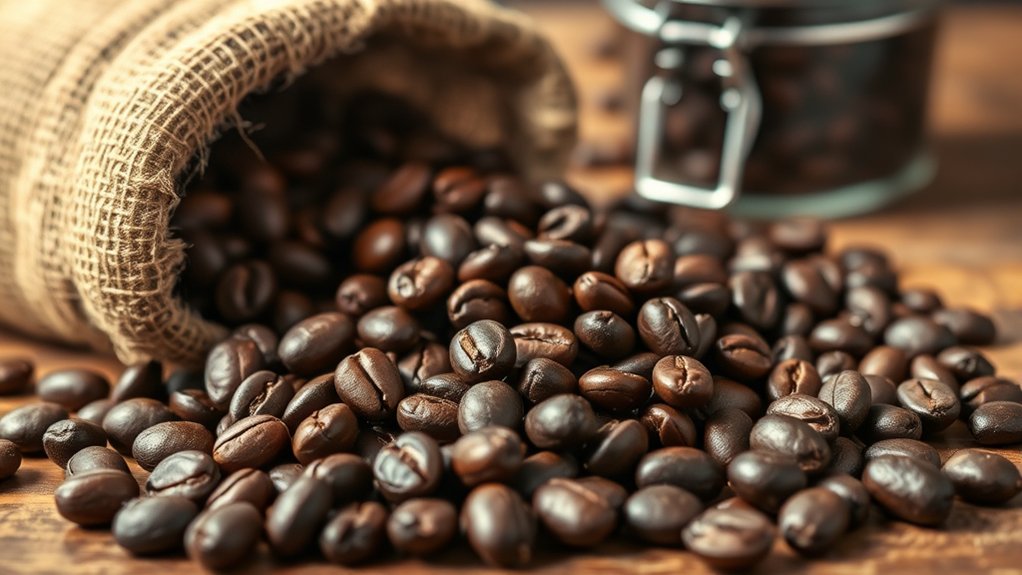
Understanding that coffee bean expiration relates to flavor degradation rather than safety, you might wonder how long beans retain their freshness after roasting. Coffee bean roasting initiates a peak flavor window typically within 4-14 days.
Whole beans keep their excellent flavor for about 3-4 weeks when stored airtight and away from light. Ground coffee loses flavor faster, usually within 1-2 weeks, because it’s exposed to more oxygen.
After 2-4 weeks, beans become noticeably stale with diminished aroma and taste. Proper storage helps slow down flavor decline, but it doesn’t stop it entirely.
| Coffee Form | Freshness Duration |
|---|---|
| Whole Beans | 3-4 weeks (ideal) |
| Ground Coffee | 1-2 weeks |
| Peak Flavor Time | 4-14 days post-roast |
How Your Roast Level Changes Coffee Freshness
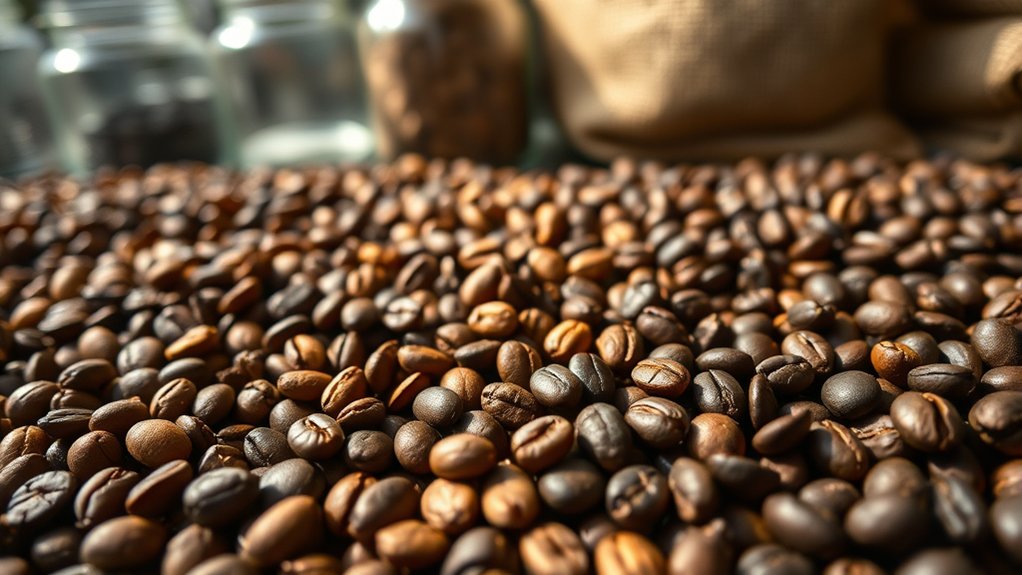
You’ll notice that your roast level really changes how long your coffee stays fresh.
Dark roasts tend to oxidize faster because they’ve a more porous structure. That means they often go stale within just 1-2 weeks.
On the other hand, lighter roasts can hold onto their flavor for about 3-4 weeks.
Knowing these differences can help you figure out the best way to store your coffee and when to enjoy it for the freshest taste.
Roast Level Impact
Because roast level directly affects the bean’s structure and chemical composition, it plays a crucial role in determining how quickly coffee loses its freshness. Dark roasts develop more cracks, increasing oxygen exposure, which speeds up oxidation and staling. This porous structure means the flavor fades and aroma disappears faster than with lighter roasts.
Light roasts have fewer cracks, so they hold onto those aromatic oils longer, keeping the coffee fresher for a longer time. Medium roasts sit somewhere in the middle, offering a balance between freshness and flavor stability.
| Roast Level | Freshness Impact |
|---|---|
| Light | Best flavor preservation, superior aroma retention |
| Medium | Moderate flavor preservation and aroma retention |
| Dark | Reduced flavor preservation, rapid aroma loss |
Knowing these differences can really help you pick and store your beans to keep that fresh taste just right.
Freshness Duration Differences
Roast level considerably influences how long your coffee beans stay fresh after roasting. Light roasts retain flavor preservation and aroma longevity better than darker roasts due to their lower porosity and slower oxidation rate.
Because dark roasts have higher surface oil content and increased porosity, they oxidize faster, causing ideal flavor to degrade within 1-2 weeks post-roast.
Medium roasts fall in between but still lose aromatic qualities more rapidly than light roasts.
Interestingly, green, unroasted beans have the longest shelf life, often exceeding two years when stored properly, regardless of roast.
Understanding these freshness duration differences helps you choose the right roast based on how quickly you’ll consume your beans.
That way, you can make sure you get the most flavor and aroma out of your coffee experience. It’s all about picking what works best for your coffee habits.
Why Proper Storage Is Crucial for Coffee Bean Freshness
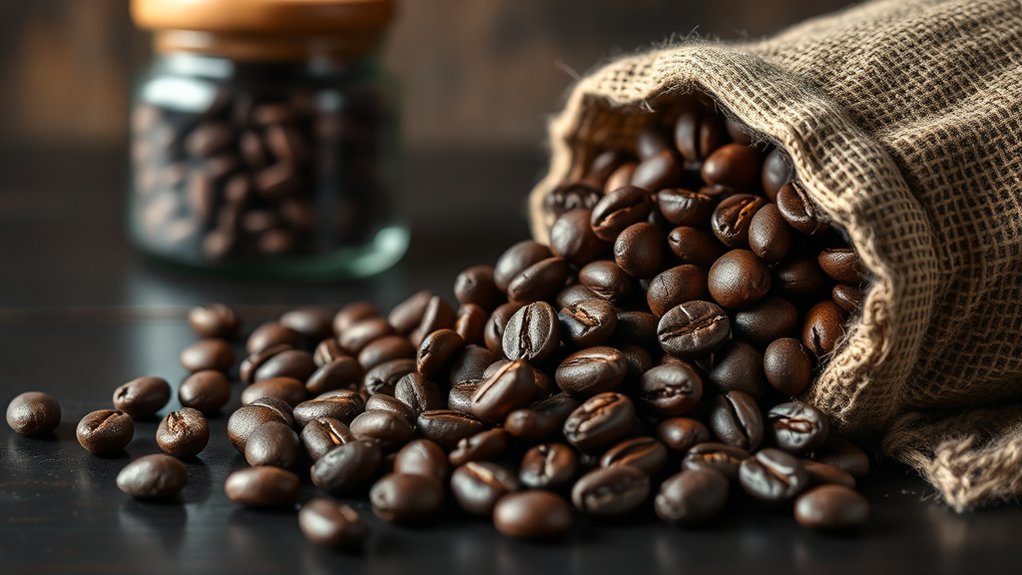
You’ll want to store your coffee beans in airtight, opaque containers. This helps keep oxygen and light out, both of which can make your coffee go stale faster.
See, oxygen causes oxidation, which breaks down those tasty flavor compounds. And light? It speeds up chemical reactions that mess with the quality of your beans.
Impact Of Oxygen
How does oxygen impact the freshness of coffee beans? Oxygen triggers oxidation, which quickly deteriorates flavor and aroma after roasting. When coffee beans are exposed to air, their surface oils react with oxygen, becoming rancid and dull.
To keep your coffee fresh, you need to limit oxygen exposure by using proper packaging.
Here are some key points to think about:
- Oxygen exposure starts oxidation, causing flavor loss within 1-2 weeks after roasting.
- The oils in coffee beans break down when oxidized, hurting both aroma and taste.
- Airtight containers help reduce oxygen contact, preserving those complex aromatic compounds.
- Good packaging slows down rancidity and significantly extends the shelf life of your beans.
Knowing how oxygen affects coffee shows why airtight storage is so important for keeping beans fresh longer.
Effects Of Light
Although oxygen plays a major role in coffee bean degradation, exposure to light, especially UV rays, also speeds up the breakdown of essential oils and compounds. Light exposure triggers oxidation effects that speed up the staling process. This causes your coffee beans to lose flavor and aroma prematurely.
To keep your coffee fresh, you need to minimize light-induced chemical reactions. Storing beans in opaque containers or light-sensitive packaging like foil or opaque glass jars works well. These dark storage environments help stop oxidation and greatly extend shelf life.
If you ignore light exposure, you risk faster flavor deterioration, even if oxygen is controlled. So, proper storage that blocks light is really important. It helps maintain the delicate balance of compounds that give coffee its distinctive taste and aroma.
Best Airtight Containers for Storing Coffee Beans
When preserving the freshness of coffee beans, selecting an airtight container with specific features is crucial. Proper coffee packaging and storage techniques directly affect bean longevity by limiting exposure to oxygen, moisture, and light.
Selecting airtight containers is essential for preserving coffee bean freshness by limiting oxygen, moisture, and light exposure.
Consider these container types:
- Glass jars with rubber gaskets and one-way valves prevent oxygen and moisture infiltration.
- Vacuum-sealed bags efficiently remove excess air, ideal for long-term storage.
- Stainless steel or ceramic canisters with tight-fitting lids create a durable, odor-proof environment.
- Opaque containers block light exposure, reducing oxidation and staling.
Choosing containers that combine these features ensures maximum protection.
Ideal Temperature and Location to Store Coffee Beans
You want to keep your coffee beans in a cool, dark spot where the temperature stays between 60-70°F (15-21°C). This helps slow down oxidation and keeps the flavor fresh.
Try to avoid places near heat sources like ovens or spots with direct sunlight. These can speed up the beans’ breakdown and cause moisture to build up.
A pantry or a cabinet away from windows and appliances usually works best. These stable environments help your beans stay fresh for longer.
Optimal Storage Temperature
Since temperature plays a crucial role in preserving coffee beans’ freshness, you should store them between 60°F and 70°F (15°C and 21°C) to minimize oxidation and flavor loss. Maintaining this range preserves the aromatic oils essential for ideal coffee pairing and brewing techniques.
Consider these key points: Avoid temperatures above 75°F (24°C), as heat accelerates flavor degradation.
Also, try to prevent temperature fluctuations to reduce condensation and moisture buildup.
Use airtight containers to shield beans from environmental changes.
And make sure to store beans in a cool, dark place away from heat sources like ovens or direct sunlight.
This way, your coffee will stay fresh and tasty for longer.
Best Coffee Storage Locations
Where should you store coffee beans to maintain their peak freshness? The ideal location is a cool, dark place with a stable temperature between 60-70°F (15-21°C). This environment slows oxidation, preserving the distinctive flavors across diverse coffee plant varieties.
Avoid heat sources like ovens or direct sunlight because they degrade beans’ quality quickly. Use opaque, airtight containers to block light and moisture. This is essential for maintaining the integrity of beans tailored for specific brewing methods.
Pantry shelves or cabinets away from windows and appliances offer the best conditions. Refrigeration generally harms beans due to moisture and temperature swings unless you have a vacuum-sealed bag for long-term storage.
Avoiding Heat And Light
Selecting the right storage location plays a significant role in preserving coffee beans, but controlling exposure to heat and light directly impacts their longevity. Different coffee plant varieties contain unique aromatic oils sensitive to temperature and light, which affects flavor during brewing techniques.
To maximize freshness, follow these guidelines:
- Store beans between 60-70°F (15-21°C) to slow oxidation and maintain flavor integrity.
- Keep beans away from direct sunlight to prevent degradation of flavor compounds.
- Avoid proximity to heat sources like ovens or heating vents, which accelerate staling.
- Use opaque, airtight containers to shield beans from UV rays and moisture fluctuations.
Keeping things cool and dark really makes a difference in how long your coffee stays fresh. It’s all about protecting those delicate flavors from heat and light.
How Grinding Timing Affects Coffee Bean Freshness
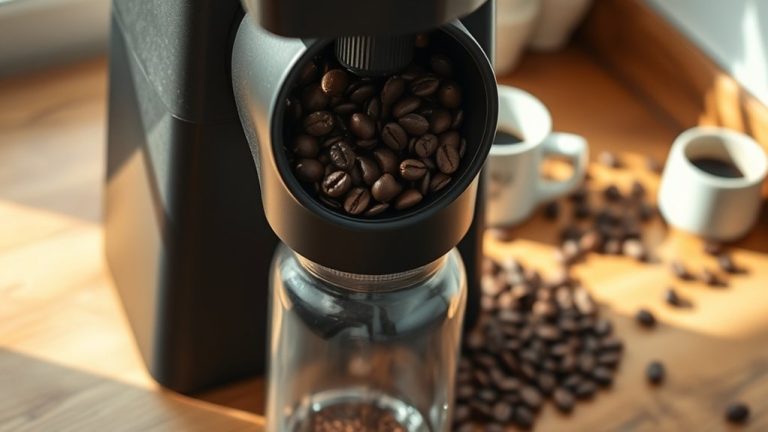
Although grinding coffee beans may seem like a simple step, the timing of this process critically impacts the freshness and flavor of your brew. Grinding timing directly influences aroma preservation, as ground coffee begins to lose its freshness within minutes due to rapid oxidation.
When you grind beans immediately before brewing, you minimize exposure to oxygen, which degrades aromatic compounds essential for flavor.
Pre-ground coffee, even stored airtight, stales faster because its increased surface area accelerates oxidation. Evidence shows significant flavor loss occurs within hours after grinding, so grinding only the amount needed for each brew ensures maximum aroma preservation.
Can You Freeze Coffee Beans Without Losing Flavor?
If you want to extend the freshness of your coffee beans beyond their typical shelf life, freezing can be an effective method when done correctly. Freezing helps preserve bean freshness and coffee aroma, but only under strict conditions.
Consider these key points:
Use airtight, vacuum-sealed containers to prevent odor absorption and moisture exposure. Freeze only the quantity you plan to use soon. Avoid repeated thawing and refezing.
Allow beans to reach room temperature before opening the container to minimize condensation. Freezing is especially beneficial in humid climates for maintaining coffee aroma over 3-4 months.
How to Freeze and Thaw Coffee Beans for Best Flavor
When you freeze coffee beans, you need to store them in airtight, moisture-proof containers to keep their flavor and avoid freezer burn. Using the right packaging is super important because moisture or odors can mess up the beans’ quality no matter how well they were roasted.
It’s a good idea to divide beans into small portions before freezing. This way, you only thaw what you need and don’t keep exposing the rest to moisture, which can speed up flavor loss.
When it’s time to thaw, let the container sit at room temperature without opening it right away. This helps prevent condensation from forming inside.
For the best flavor, try to use frozen beans within 3-4 months. If you freeze them longer, the delicate aromas developed during roasting might start to fade.
And remember to always reseal containers tightly after each use. That way, you keep moisture and odors out, preserving the nuanced flavors that come from careful roasting.
Signs Your Coffee Beans Are Too Old to Enjoy
Proper storage techniques like freezing can substantially slow down the degradation of coffee beans, but even the best methods can’t preserve freshness indefinitely. Recognizing when coffee beans are too old to enjoy is vital for maintaining flavor preservation.
Consider these signs:
- A dull, flat aroma signals a loss of freshness after coffee bean roasting.
- Beans that look dry, pale, or lack surface oils are showing signs of oxidation.
- Stale, musty, or sour smells usually suggest mold or spoilage.
- Brewed coffee that tastes flavorless, dull, or bitter is a result of flavor degradation.
These indicators reflect chemical changes that happen as beans age, which reduces their sensory quality. If you notice any of these signs, it’s time to replace your beans.
That way, you can keep enjoying the robust flavors that come from expert coffee bean roasting.
Is It Safe to Drink Coffee Beans Past Their Peak?
Although coffee beans past their peak won’t pose a direct health risk, you’ll notice a significant decline in flavor and aroma quality. This degradation happens because of oxidation and the loss of volatile compounds developed during coffee bean harvesting. These compounds are what shape coffee flavor profiles.
Unless mold develops, which usually happens in humid conditions, old beans remain safe but produce flat, stale brews. So, you won’t get the best taste, but it’s not dangerous to drink.
| Factor | Effect on Beans |
|---|---|
| Coffee bean harvesting | Determines initial freshness |
| Oxidation | Loss of aroma and flavor |
| Storage conditions | Risk of mold growth if humid |
| Mold presence | Unsafe, discard immediately |
| Flat taste | Safe but diminished flavor profile |
If your beans smell musty or sour, it’s best to toss them out. That way, you stay safe even if the flavor isn’t as good.
Top Tips to Keep Your Coffee Beans Fresh Longer
To preserve the freshness of your coffee beans, you should store them in airtight, opaque containers placed in cool, dark environments. This helps minimize exposure to oxygen and light, both of which speed up staling.
Store coffee beans in airtight, opaque containers in cool, dark places to prevent staling from oxygen and light.
Maintaining ideal bean freshness is key to preserving coffee flavor. So, follow these evidence-based tips:
- Purchase small amounts frequently to consume within 2-4 weeks after roasting. That’s the period when beans are at their freshest.
- Avoid refrigerating or freezing beans unless they’re vacuum-sealed. If you do freeze them, only freeze small portions to prevent moisture and odor absorption.
- Grind beans immediately before brewing to keep the volatile oils that are critical for coffee flavor.
- Regularly check your beans for dull aroma or dryness. If they’ve lost their oils or have off-odors, it’s time to discard them.
Stick to these simple practices, and you’ll noticeably extend your bean freshness and enjoy better coffee every time.
Frequently Asked Questions
Can Flavored Coffee Beans Expire Faster Than Regular Ones?
Yes, flavored coffee beans expire faster due to quicker flavor retention loss and accelerated bean aging. You’ll notice diminished aroma and taste sooner, especially if the beans aren’t stored airtight.
It’s really important to protect them from air, light, and heat exposure to keep them fresh longer. Otherwise, the flavors fade way quicker than with regular beans. So, keeping them sealed tight makes a big difference.
Do Coffee Beans Lose Caffeine Potency Over Time?
You won’t experience caffeine degradation from bean aging because caffeine remains chemically stable over time. While aging affects flavor and aroma, the caffeine potency in coffee beans stays largely consistent regardless of how long you store them.
How Does Altitude Affect Coffee Bean Freshness?
Altitude influence slows bean aging by reducing temperature and humidity, preserving freshness longer. You’ll notice high-altitude beans stay denser and resist oxidation better.
On the other hand, low-altitude beans age faster because of warmer, more humid environments. It’s pretty interesting how much altitude plays a role in keeping your coffee fresh!
Are Single-Origin Beans More Perishable Than Blends?
You’d think single-origin beans spoil the moment you open them! Due to delicate coffee roasting and specific bean packaging, they’re more perishable than blends.
Proper storage slows flavor loss, but they still demand quicker consumption for peak freshness. So, if you want to enjoy their best taste, it’s good to use them up sooner rather than later.
Can Moisture Content in Beans Impact Shelf Life?
Yes, moisture absorption in beans directly impacts shelf life by accelerating mold development and oxidation. You’ll notice faster spoilage and flavor loss if beans aren’t stored dry and airtight. This compromises both freshness and safety.
Conclusion
You want your coffee beans to deliver that rich, aromatic burst with every brew. By understanding how roast levels and airtight storage slow down staleness, you maintain that fresh, vibrant flavor locked in.
Freezing beans properly extends their life without sacrificing quality. Remember, when your beans lose their shine and aroma, it’s time to refresh.
With these precise steps, you guarantee each cup tastes as lively as the first, every single time.