How Much Caffeine Is In Chocolate Covered Espresso Beans – Caffeine Facts And Guide
Each chocolate-covered espresso bean packs about 10 to 20 mg of caffeine, depending on the coffee bean type and chocolate coating. Dark chocolate and Robusta beans tend to boost caffeine more than milk chocolate and Arabica beans.
Eating 5 to 10 beans gives you a quick energy lift similar to a cup of coffee, but watch your intake to avoid jitters. If you want to explore safe limits, health benefits, and creative ways to enjoy them, there’s more to discover.
What Are Chocolate-Covered Espresso Beans?
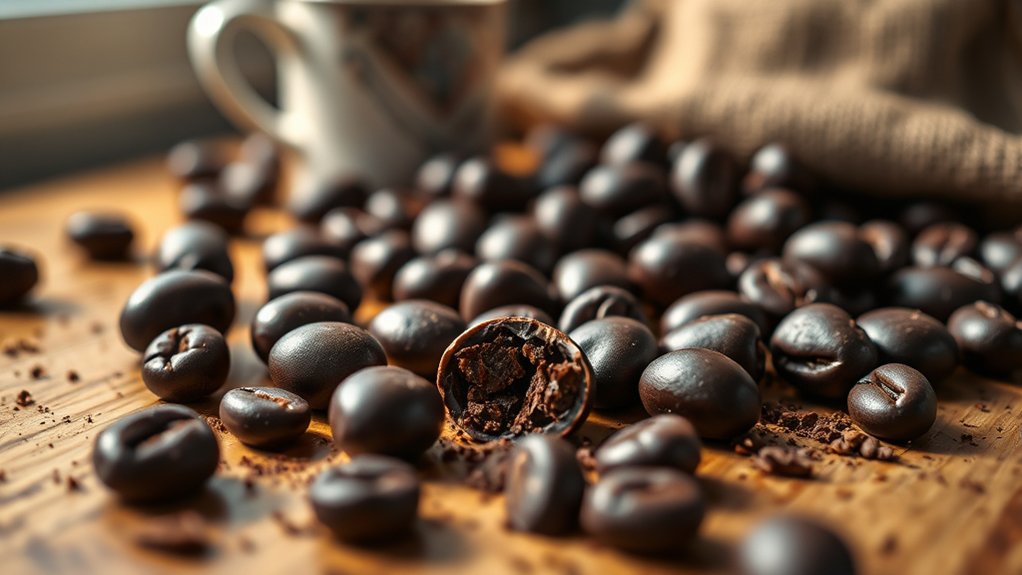
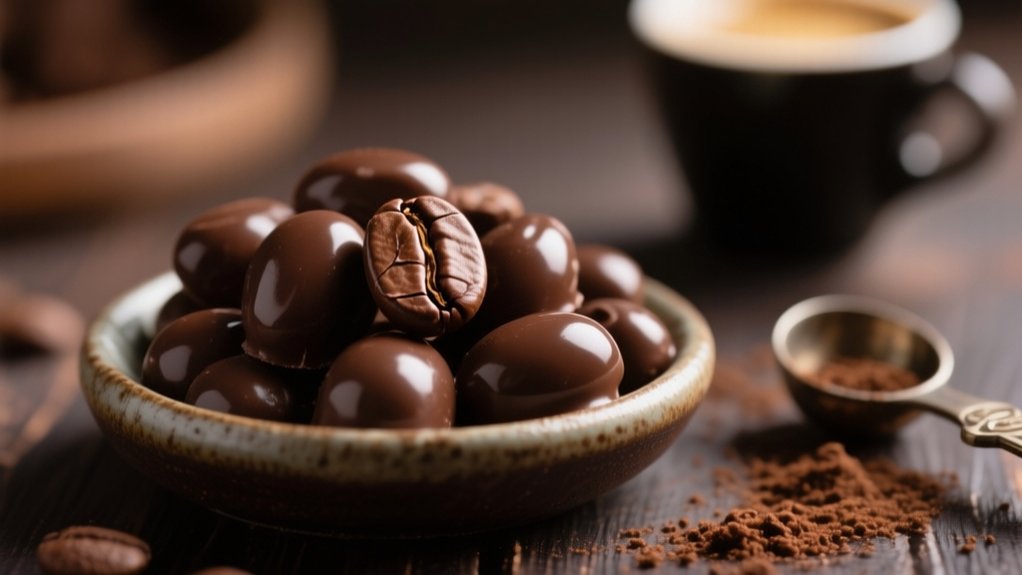
Chocolate-covered espresso beans combine the rich flavors of whole-roasted coffee beans with a coating of dark, milk, or white chocolate. When you enjoy chocolate-covered espresso beans, you get a tasty mix of coffee’s boldness and chocolate’s sweetness.
Dark chocolate varieties are especially popular because of their health benefits and richer flavor. These bite-sized snacks offer a quick energy boost, thanks to the caffeine content from both the espresso bean and the chocolate coating.
Dark chocolate-covered espresso beans deliver rich flavor, health benefits, and a quick caffeine-fueled energy boost.
To keep your caffeine intake in check, it’s best to stick to a serving size of 5-10 beans.
Whether you prefer dark, milk, or white chocolate, chocolate-covered espresso beans provide a delicious way to enjoy a little pick-me-up with added flavor and some health perks.
Caffeine Content in Chocolate-Covered Espresso Beans
Although the caffeine content can vary, you can expect each chocolate-covered espresso bean to contain roughly 10-20 mg of caffeine. This amount depends on the coffee bean type and the chocolate coating, with whole espresso beans delivering the bulk of the caffeine.
Since a single espresso bean contains about 6-12 mg, the chocolate adds a small caffeine boost, with dark chocolate providing more than milk chocolate.
Eating 10-15 chocolate-covered espresso beans can give you a potent energy boost, comparable to a cup of brewed coffee.
Keep in mind, the caffeine content may fluctuate based on factors like roast level and bean variety.
Monitoring your daily caffeine intake is essential, especially if you enjoy these tasty treats as a quick pick-me-up throughout the day.
How Chocolate Type Influences Caffeine Levels
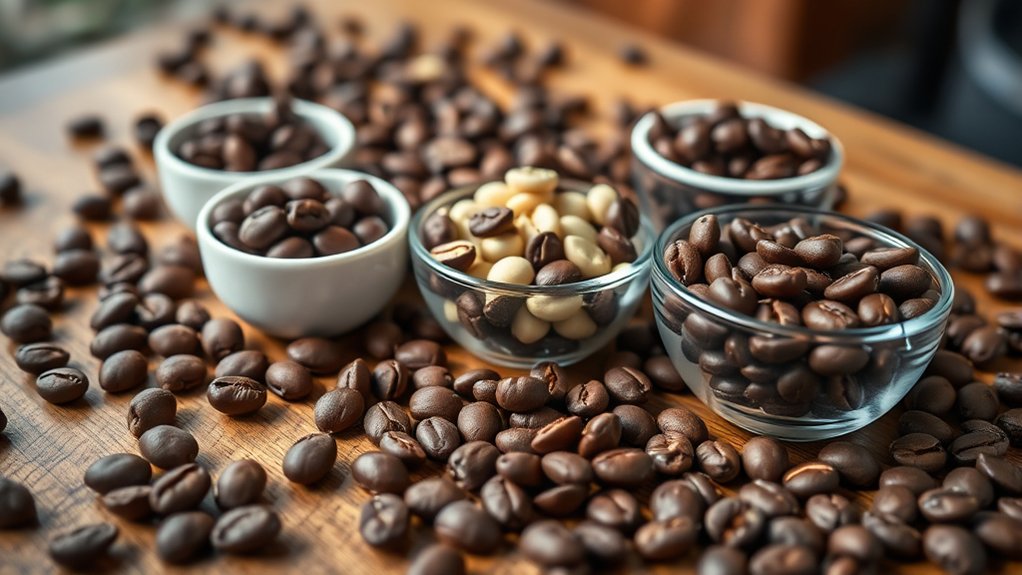
You’ll notice that dark chocolate has about twice the caffeine of milk chocolate because it has more cacao in it.
Milk chocolate gives you a gentler caffeine boost, while white chocolate has little to none.
Dark Chocolate Caffeine Content
When you choose dark chocolate, you’re opting for a higher caffeine content compared to milk chocolate. Dark chocolate contains about 12 mg of caffeine per ounce, which is roughly double that of milk chocolate. This caffeine content can vary depending on the cacao percentage. The higher the cacao, the stronger the caffeine kick.
When it comes to chocolate covered espresso beans, dark chocolate enhances the total caffeine you get. Each bean delivers 6-12 mg from the espresso and an additional amount from the dark chocolate coating, totaling around 10-20 mg of caffeine per piece.
Beyond caffeine, dark chocolate offers notable health benefits including higher antioxidant content, making these treats both energizing and beneficial for your wellness.
Milk Chocolate Versus Dark
Since the type of chocolate directly affects caffeine content, choosing between milk and dark chocolate can change your energy boost. When you pick chocolate-covered espresso beans, here’s what you should know:
- Dark chocolate contains about 12 mg of caffeine per ounce, double the roughly 6 mg in milk chocolate, so it delivers a stronger energy boost.
- The richer flavor and higher cacao percentage in dark chocolate not only enhance caffeine content but also increase antioxidant content, making it a healthier choice.
- Milk chocolate’s higher sugar and fat content lowers caffeine levels, so chocolate-covered espresso beans with milk chocolate coating have slightly less caffeine.
Understanding these differences helps you select the best chocolate-covered espresso beans to match your caffeine needs and flavor preferences.
White Chocolate And Caffeine
Beyond the differences between milk and dark chocolate, white chocolate offers a unique profile regarding caffeine content. Unlike dark and milk chocolate, white chocolate contains minimal caffeine, about 1-2 mg per ounce, because it lacks cocoa solids, the main source of caffeine.
When you enjoy chocolate-covered espresso beans coated in white chocolate, the caffeine content mainly comes from the espresso beans themselves, which provide 6-12 mg per bean.
So, while white chocolate adds sweetness, it doesn’t contribute much to your caffeine boost compared to milk or dark chocolate.
If you’re after a stronger caffeine hit, dark chocolate-covered espresso beans are a better choice due to their higher caffeine content.
White chocolate gives you flavor without significant caffeine, making it ideal if you want less caffeine in your treat.
Total Caffeine Per Chocolate-Covered Espresso Bean
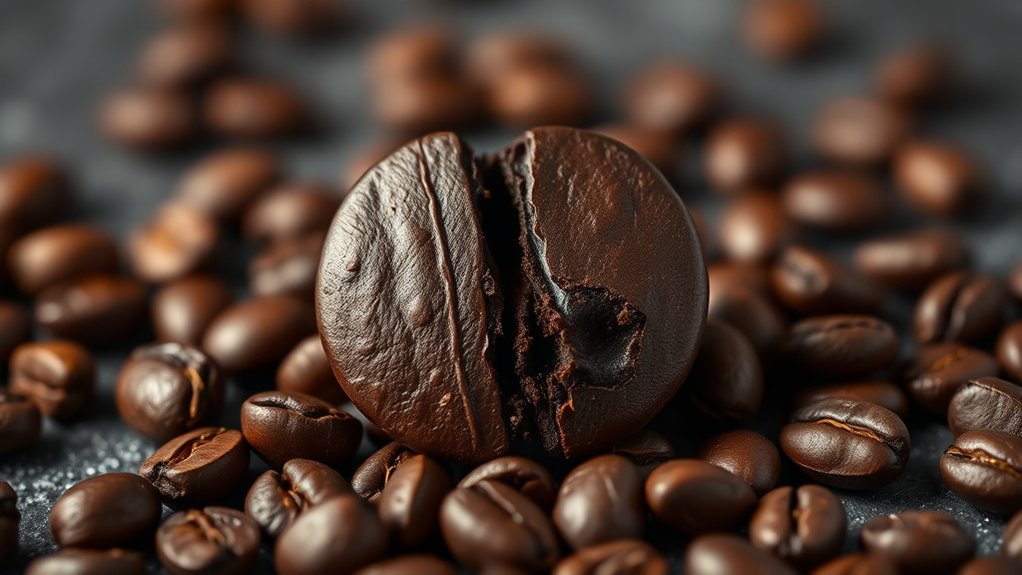
You’ll find that each chocolate-covered espresso bean has between 10 and 20 mg of caffeine.
It really depends on the type of coffee bean and the chocolate coating used. The roast level and the kind of chocolate both play important roles in how much caffeine is packed into each little treat.
Knowing these details can help you get a better idea of just how much caffeine you’re actually consuming with every bite.
Caffeine Content Range
Although caffeine content can vary, each chocolate-covered espresso bean usually packs between 10 and 20 mg of caffeine. This amount depends on both the espresso bean and chocolate type. Understanding the caffeine content helps you gauge your energy boost accurately.
Here’s a quick breakdown:
- A single espresso bean contains 6 to 12 mg of caffeine, influenced by roast and bean variety.
- Dark chocolate adds about 12 mg of caffeine per ounce, while milk chocolate contributes roughly 6 mg.
- Eating 10-15 chocolate-covered espresso beans delivers 120 to 180 mg of caffeine, similar to one or two cups of coffee.
Bean Type Influence
The type of coffee bean plays a significant role in the caffeine content of chocolate-covered espresso beans.
When you consider bean type influence, Arabica beans typically deliver 6-9 mg of caffeine per bean, while Robusta beans pack a stronger punch with 10-12 mg.
If you choose lightly roasted beans, you’ll get higher caffeine levels since roasting less breaks down caffeine.
The caffeine content in chocolate-covered espresso beans also depends on the chocolate used. Dark chocolate adds about 1-3 mg, boosting overall caffeine levels compared to milk chocolate.
Chocolate Coating Effects
Since the chocolate coating adds its own caffeine, each chocolate-covered espresso bean delivers a total of about 10 to 20 mg of caffeine. The chocolate coating effects greatly influence the overall caffeine content.
Here’s how it breaks down:
- Roasted coffee beans contribute 6 to 12 mg of caffeine per bean, depending on the type.
- Dark chocolate adds approximately 1 to 3 mg of caffeine per coating, boosting the total caffeine content.
- Milk chocolate contributes less caffeine, around 1 mg, resulting in a milder caffeine boost.
Benefits of Caffeine in Chocolate-Covered Espresso Beans
When you need a quick energy boost, chocolate-covered espresso beans deliver caffeine and antioxidants in a compact, tasty form. Each bean provides a caffeine boost that sharpens your cognitive function, helping you stay alert and focused.
The dark chocolate coating adds more than flavor. It’s packed with antioxidants that may reduce inflammation and support overall health.
Dark chocolate coating delivers antioxidants that help reduce inflammation and promote overall health.
Eating chocolate-covered espresso beans also promotes mood elevation, thanks to the combined effects of caffeine and the endorphin release triggered by dark chocolate.
Plus, the fiber in whole espresso beans aids digestion and helps moderate caffeine absorption, reducing the chance of jitters.
With just a handful of these beans, you get a convenient, flavorful alternative to coffee that keeps your energy steady and your mind clear throughout the day.
Side Effects of Excess Caffeine From Espresso Beans
If you consume too many chocolate-covered espresso beans, you might experience jitters, anxiety, and restlessness. Excessive caffeine intake can quickly add up since each bean contains 10-20 mg of caffeine. Eating more than 5-10 beans may push you past safe limits.
If you have caffeine sensitivity or anxiety disorders, even moderate amounts can trigger stronger side effects. Watch your overall caffeine intake from all sources to prevent negative reactions.
Common side effects of too much caffeine from espresso beans include:
- Increased heart rate and sleep disturbances, especially for those sensitive to caffeine.
- Heightened anxiety and restlessness, worsening symptoms of anxiety disorders.
- Gastrointestinal discomfort caused by caffeine combined with sugar upsetting your stomach.
Being mindful helps you enjoy espresso beans without these unwanted effects.
Safe Daily Consumption of Chocolate-Covered Espresso Beans
While chocolate-covered espresso beans offer a tasty caffeine boost, you should keep your daily intake within safe limits to avoid negative effects. For healthy adults, the recommended daily caffeine limit is 400 mg, which equals about 30-40 chocolate-covered espresso beans.
Since individual caffeine sensitivity varies, start with 5-10 beans to gauge your tolerance. Pregnant women and those with health concerns should consult with a healthcare provider before including these beans in their diet.
To guarantee safe daily consumption, avoid consuming all your caffeine at once. Spacing out intake helps prevent spikes and crashes.
Best Times to Enjoy Chocolate-Covered Espresso Beans
Why choose specific times to enjoy chocolate-covered espresso beans? Timing matters because their caffeine content can disrupt your sleep if you indulge too late. Here are the best times to savor them:
- Mid-morning energy boost: Eating 5-10 beans provides 50-200 mg of caffeine, perfect for a quick pick-me-up after breakfast.
- Before workouts: Their caffeine content can enhance workout performance by fueling your body with fast energy.
- Paired with brewed coffee: Combining them amplifies caffeine effects, delivering an invigorating experience.
To avoid jitters, space out consumption instead of eating them all at once.
Stick to morning or early afternoon to enjoy chocolate-covered espresso beans without compromising your rest or focus later in the day.
Fun Ways to Enjoy Chocolate-Covered Espresso Beans
You can really boost your coffee break by pairing chocolate-covered espresso beans with a fresh cup of coffee for a rich mocha twist.
It’s like a little pick-me-up that feels indulgent and satisfying.
Want to mix things up? Try sprinkling a bit of sea salt or chili powder on the beans.
It adds a surprising flavor kick that totally wakes up your taste buds.
Or, if you’re feeling creative, toss them into desserts or snack mixes.
You’ll get that awesome crunch and bold coffee taste in a whole new way.
It’s a fun way to enjoy these tasty treats beyond just snacking!
Flavor Pairing Ideas
When you pair chocolate-covered espresso beans with a rich, dark roast coffee, you reveal a mocha-like flavor that intensifies your coffee experience.
These flavor pairing ideas help you explore the rich chocolate and balance the bitterness in delightful ways.
Try these:
- Sprinkle sea salt or chili powder on chocolate-covered espresso beans for a sweet and savory crunch that adds depth to the textures and flavors.
- Enjoy them alongside a creamy latte or glass of milk to soften the coffee’s bitterness with smooth sweetness.
- Combine the beans with nuts like almonds or hazelnuts to create a satisfying mix of textures and flavors that elevate each bite.
These simple pairings bring out the best in chocolate-covered espresso beans, enhancing your snacking and coffee moments.
Creative Serving Suggestions
Pairing chocolate-covered espresso beans with complementary flavors reveals new dimensions of taste, but there’s more fun to be had in how you serve them.
Try them as a pre-workout snack to get a quick energy boost before hitting the gym.
You can also explore flavor variations by selecting beans infused with sea salt, cinnamon, or chili powder for something unique.
Use crushed chocolate-covered espresso bean pieces as a dessert topping to add crunch and a mocha twist to ice cream or yogurt.
For coffee pairing, enjoy them with a fresh cup of brew to enhance both flavors.
Finally, consider assembling gourmet gift ideas by filling jars with assorted chocolate-covered espresso beans—a perfect treat for any coffee lover.
Comparing Caffeine in Chocolate-Covered Espresso Beans and Other Coffee Products
How does the caffeine content in chocolate-covered espresso beans stack up against other coffee products? A single chocolate-covered espresso bean contains 10-20 mg of caffeine, surpassing the 6-12 mg in a whole roasted coffee bean.
When comparing to a cup of brewed coffee, which has about 95 mg of caffeine, here’s what you need to know:
- Eating 8-10 chocolate-covered espresso beans can match the caffeine levels in one cup of brewed coffee.
- Dark chocolate provides roughly 12 mg of caffeine per ounce, while milk chocolate adds about 6 mg, influencing the total caffeine content.
- Consuming 20 beans yields caffeine levels equal to or higher than a full cup of coffee, offering a potent energy boost.
This combo from the bean and chocolate enhances alertness distinctly.
Frequently Asked Questions
Can Chocolate-Covered Espresso Beans Help Improve Athletic Performance?
Yes, chocolate-covered espresso beans can improve your athletic performance by providing a quick energy boost through efficient caffeine absorption.
They help with endurance enhancement and mental focus, making workouts feel easier and more productive.
Using timing strategies, like consuming them 30-60 minutes before exercise, maximizes benefits. Stick to dosage recommendations to avoid jitters.
Plus, their antioxidant content acts as a recovery aid, reducing inflammation and supporting faster muscle repair.
Do Chocolate-Covered Espresso Beans Affect Sleep Quality Differently Than Coffee?
You might be surprised. Chocolate-covered espresso beans can disrupt your sleep differently than coffee. Because you consume the whole bean, caffeine metabolism speeds up, impacting your sleep cycles more intensely.
Your individual tolerance matters. Combining dark chocolate effects with caffeine can heighten anxiety levels.
Timing your consumption is essential; eating them late risks restless nights.
Stick to moderation guidelines, or you’ll find your sleep quality suffers more than with a regular cup of coffee.
Are Chocolate-Covered Espresso Beans Suitable for Children or Teenagers?
Chocolate-covered espresso beans aren’t ideal for children or teenagers due to their caffeine sensitivity and high sugar content.
Even small serving sizes can cause jitteriness or sleep issues.
While some enjoy their bold flavor, you might want to reflect on alternative snacks with health benefits and lower caffeine.
Always follow consumption guidelines and consult a healthcare provider to guarantee safety.
Prioritize snacks that suit their age and taste preferences without risking overconsumption.
How Should Chocolate-Covered Espresso Beans Be Stored for Best Freshness?
To keep your chocolate-covered espresso beans fresh, use airtight packaging options and store them at an ideal temperature between 60-68°F.
Avoid moisture by not refrigerating, since it can cause chocolate bloom.
Control light exposure by keeping them in a dark place, away from direct sunlight and heat sources.
Following these storage methods extends their shelf life to 3-6 months, preserving taste and texture perfectly.
Can Chocolate-Covered Espresso Beans Trigger Allergies or Intolerances?
Worried chocolate-covered espresso beans might cause allergy symptoms? They can, especially if you have nut allergies or ingredient sensitivity to dairy or soy.
Even if you tolerate dark chocolate well, cross reactivity issues might still trigger reactions.
Plus, caffeine intolerance can worsen digestive discomfort.
If you struggle with lactose intolerance or dark chocolate reactions, be cautious.
Always check labels carefully and consult your healthcare provider before indulging in these treats.
Conclusion
Now that you know how much caffeine is packed into chocolate-covered espresso beans, you can enjoy them smartly without overdoing it. They offer a tasty boost that’s both energizing and satisfying, especially when you pick the right type of chocolate.
So, why settle for a boring caffeine fix when you can have a delicious treat that wakes you up? Remember, moderation is key to enjoying their benefits safely every day.