Is Coffee Creamer Milk – Differences Explained
Coffee creamer isn’t milk; it’s mostly made from vegetable oils, sugars, and additives, lacking the natural proteins and lactose found in milk. Milk has a thinner texture, complete proteins, and essential nutrients like calcium.
Creamers often add sweetness and a creamier mouthfeel with artificial flavors. They tend to have a longer shelf life and suit lactose intolerance better.
If you want to understand their nutritional, environmental, and dietary impacts in detail, there’s more to explore.
What’s the Difference Between Coffee Creamer and Milk?
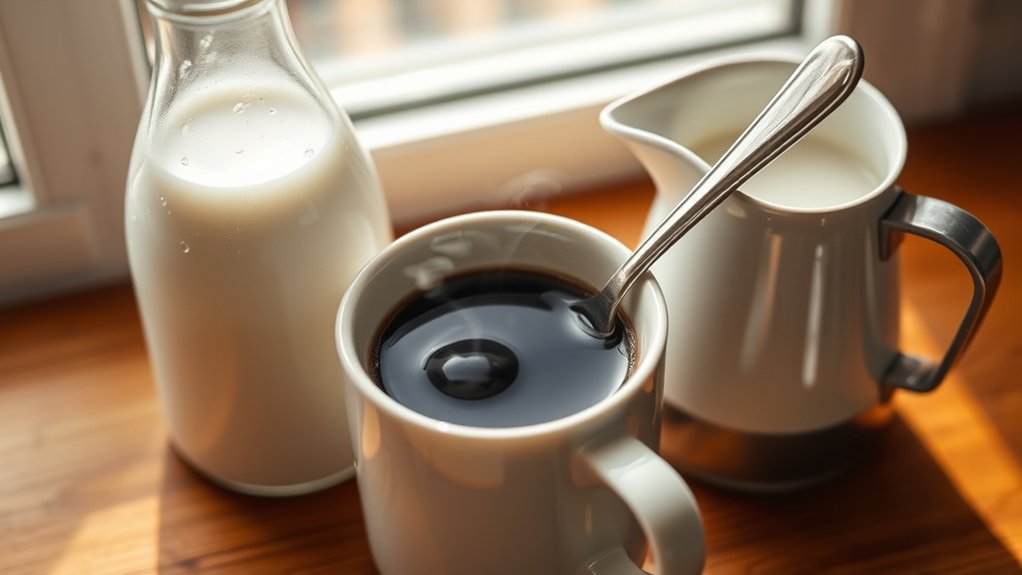
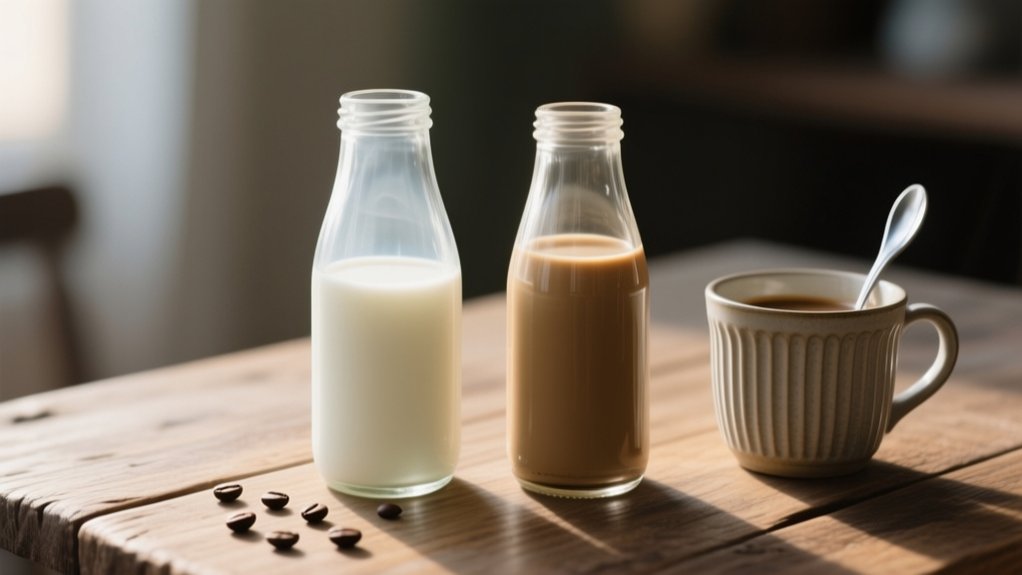
Although both coffee creamer and milk are common additives to coffee, they differ markedly in composition and nutritional value. Coffee creamers primarily contain vegetable oils and sugars, lacking protein, while milk and cream provide natural protein and lactose.
Milk typically offers 1-2 grams of protein per serving, whereas commercial creamers often have none. Furthermore, milk has a lower glycemic index due to lactose, contrasting with creamers that may include high-fructose corn syrup or artificial sweeteners.
Milk provides natural protein and a lower glycemic index, unlike many commercial creamers with added sweeteners.
You’ll notice milk’s texture is thinner, while coffee creamers have a higher oil-to-water ratio, resulting in a denser mouthfeel.
In addition, coffee creamers generally have a longer shelf life than milk, especially non-dairy varieties, which can last up to a month beyond their best-by date.
Understanding these distinctions helps you make informed choices between coffee creamers, milk, and cream.
Main Ingredients in Coffee Creamer vs. Milk
You’ll notice that coffee creamers mainly contain vegetable oils and added sugars.
On the other hand, milk offers natural dairy proteins and lactose. Because of this difference in dairy content, milk provides nutrients like calcium, which creamers don’t have.
Plus, creamers often include artificial additives and sweeteners, unlike the simple, natural makeup of milk.
Core Ingredient Differences
When comparing coffee creamer and milk, you’ll notice their core ingredients differ a lot in composition and nutritional profile. Milk is a natural dairy product made mostly of water, animal fats, proteins, and lactose.
Coffee creamer, on the other hand, contains vegetable oils, sugars, and artificial flavors, and it doesn’t have any protein. These differences affect their nutritional and functional properties, which can influence your choice.
| Ingredient Type | Milk | Coffee Creamer |
|---|---|---|
| Fat Source | Animal fats | Hydrogenated vegetable oils |
| Protein Content | 1-2 grams per serving | 0 grams |
| Sweetening Agents | Lactose | Sugars, sugar alcohols, artificial sweeteners |
| Storage Requirement | Refrigerated, short shelf life | Shelf stable, long shelf life |
Dairy Content Comparison
Since coffee creamer and milk serve similar purposes in your cup, understanding their dairy content clarifies key differences. Whole milk is a natural dairy product providing calcium, protein, and animal fats. It contains lactose, a natural sugar, and requires refrigeration due to its perishable nature.
In contrast, coffee creamers often rely on vegetable oils instead of dairy fats, making them non-dairy or low in dairy content. They typically lack protein and use added sugars or artificial sweeteners rather than lactose. This fundamental divergence means creamers don’t offer the nutritional benefits of whole milk.
Furthermore, creamers tend to have a longer shelf life without refrigeration, unlike milk.
Additives and Sweeteners
Although both coffee creamer and milk aim to enhance your beverage, their main ingredients differ significantly in additives and sweeteners. Coffee creamers typically contain vegetable oils and various additives such as artificial flavors, stabilizers, and sodium caseinate, a milk protein derivative. These additives adjust texture and shelf life but are absent in pure milk, which contains no such enhancements.
Regarding sugar content, commercial creamers often include added sugars or high-fructose corn syrup, increasing glycemic impact. In contrast, milk’s natural sugar, lactose, has a lower glycemic index and no added sweeteners.
Some creamers use sugar alcohols or artificial sweeteners to reduce calories, which further distinguishes their composition from milk’s natural sweetness. Understanding these differences helps you make informed choices about what you add to your coffee.
How Coffee Creamer and Milk Affect Flavor and Texture
Because coffee creamers have a higher oil-to-water ratio than milk, they create a denser texture and a creamier mouthfeel in your beverage. Unlike milk, which contains about 3-4% fat, creamers often use hydrogenated oils that influence flavor and texture distinctly.
You’ll notice that:
- Creamers add sweetness and rich flavor profiles absent in milk.
- Milk’s lactose offers a cleaner finish with lower glycemic impact.
- Artificial flavors in creamers can overshadow coffee’s natural taste.
- Heavy cream provides an even thicker texture than standard creamers.
- Milk dilutes coffee more, resulting in a lighter mouthfeel.
When you choose between cream, heavy cream, or milk, you’re balancing texture and flavor intensity to suit your preference precisely.
Nutritional Comparison: Milk vs. Coffee Creamer
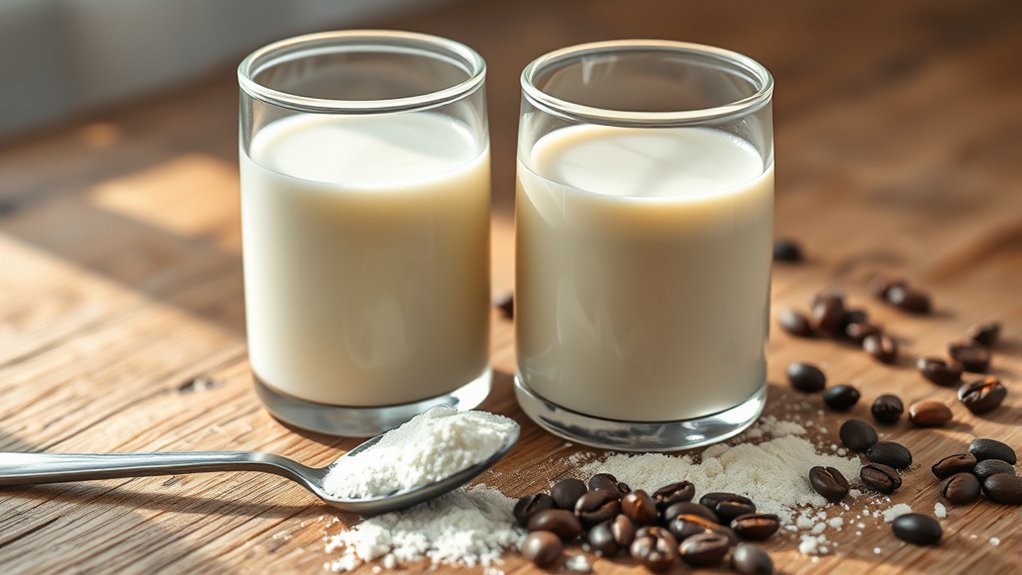
You’ll notice that milk provides about 1-2 grams of complete protein per serving, while coffee creamers usually have little to none.
Also, the sugar in milk, which is mainly lactose, has a lower glycemic index compared to the high-fructose corn syrup or artificial sweeteners often added to creamers.
Plus, milk’s natural animal fats are quite different from the hydrogenated vegetable oils commonly found in commercial creamers, and this affects the overall quality of the fat.
Protein And Sugar
When comparing protein and sugar content, milk stands out as a complete protein source, offering 1-2 grams of protein per serving. Most commercial coffee creamers, on the other hand, contain no protein.
Milk’s sugar comes from lactose, a natural sugar with a lower glycemic index. This is unlike many creamers that rely on sucrose or high-fructose corn syrup. This difference affects how your body processes sugar and energy.
- Milk provides natural protein; creamers usually don’t
- Lactose in milk has a lower glycemic impact than added sugars
- Coffee creamers often contain added sugars or artificial sweeteners
- Milk’s sugar is naturally occurring, contributing to balanced nutrition
- Some functional creamers use MCT oil for energy without added sugars
This highlights milk’s superior nutritional profile regarding protein and sugar.
Fat Quality Differences
Although both milk and coffee creamers add fat to your beverage, their fat quality differs greatly, influencing nutrition and digestion.
Milk contains animal fats with a fat content typically between 1% and 4%, providing complete proteins and essential nutrients.
In contrast, many commercial coffee creamers use hydrogenated vegetable oils, which may introduce unhealthy trans fats due to processing.
These fats can affect digestion differently than milk’s slightly alkaline composition, which can neutralize coffee’s acidity.
Some creamers incorporate MCT oil, converting quickly into ketones for rapid energy, unlike milk fats that metabolize more slowly.
Furthermore, the fat content in creamers is often higher but less nutritious.
Understanding these differences helps you make informed choices about how fat sources impact your health when adding creaminess to coffee.
Shelf Life and Storage Tips for Milk and Creamer
Shelf life plays an essential role in deciding between milk and coffee creamer for your daily brew. Milk requires refrigeration and typically lasts 1-2 weeks.
Coffee creamers offer greater flexibility with longer shelf lives and varied storage needs. To optimize shelf life and storage, consider these tips:
- Refrigerate milk promptly to prevent spoilage.
- Store non-dairy liquid creamers in a cool, dry place; refrigeration is optional.
- Keep powdered creamers sealed tightly to preserve flavor for up to six months.
- Choose creamers with preservatives for extended usability without refrigeration.
- Align your selection with how quickly you consume the product to minimize waste.
These storage tips help maintain freshness and convenience. They guide you toward the best option for your coffee routine.
Which Is Best for Dietary Restrictions and Lactose Intolerance?
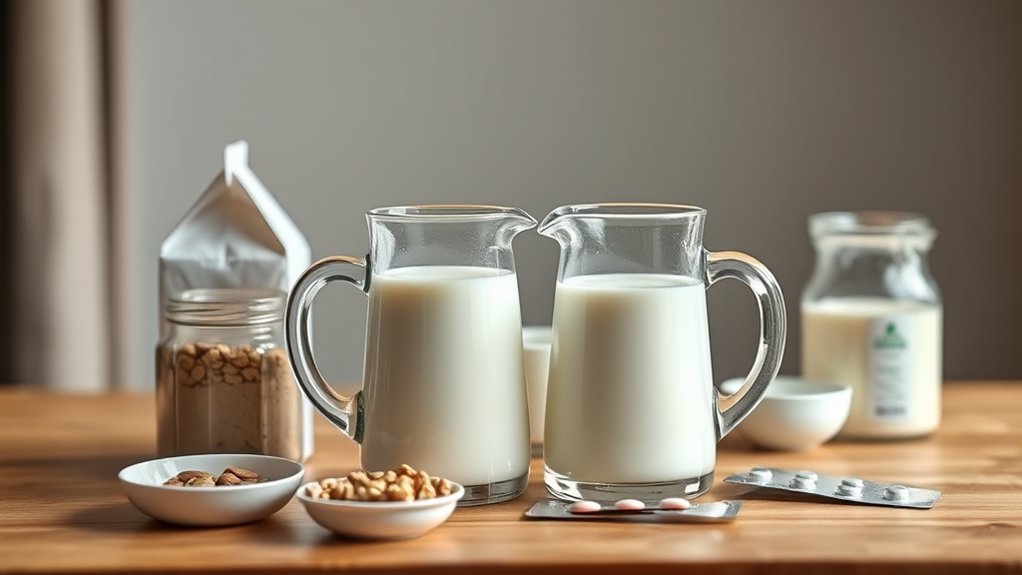
Choosing between milk and coffee creamer also depends heavily on your dietary needs and sensitivity to lactose. If you’re lactose intolerant, coffee creamers, often dairy-free and plant-based, offer a safer option for your morning coffee.
Traditional milk contains lactose, which may cause discomfort unless you select lactose-free milk. Furthermore, creamers like Morning Fresh Dairy’s half & half blend provide lactose-free taste, though with minimal protein. For low-carb or keto diets, creamers with MCT oil outperform milk due to lower sugar content.
| Aspect | Milk | Coffee Creamer |
|---|---|---|
| Lactose Content | Contains lactose | Usually lactose-free |
| Protein | Complete protein | Minimal to none |
| Dietary Suitability | Not suitable if lactose intolerant | Suitable for lactose intolerant |
Environmental Impact of Using Milk Compared to Creamer
When you compare the environmental impact of milk and coffee creamer, plant-based creamers clearly have an advantage.
Choosing your morning cup additions wisely can reduce your carbon footprint. Dairy milk production demands substantial resources, while many creamers, especially coconut-based, require less.
Opting for plant-based creamers, like coconut, can significantly lower your morning beverage’s environmental impact.
Consider these factors:
- Dairy milk emits 1.2-1.5 kg CO2 equivalents per liter
- Plant-based creamers often produce considerably lower emissions
- Milk production consumes over 1,000 liters of water per liter produced
- Creamers typically use less land and energy in their supply chain
- Switching to creamers reduces greenhouse gases linked to dairy farming
When to Choose Coffee Creamer or Milk for Your Morning Coffee
Although both coffee creamer and milk serve to enrich your morning coffee, your choice should align with your taste preferences and nutritional needs.
If you want to enhance flavor with sweetness or variety, coffee creamer is suitable, especially if you prefer dairy-free options or functional benefits like quick energy from MCT oil creamers.
Conversely, if you seek a more neutral taste and nutritional value, milk offers complete proteins, natural sugars, and calcium.
Milk slightly dilutes the coffee’s richness but supports dietary goals requiring protein and lower additives.
Consider your diet: low-carb plans favor creamers, while those needing carbs or calcium should choose milk.
Ultimately, your preferred cup of coffee depends on balancing flavor enhancement with nutritional priorities.
Frequently Asked Questions
Can Coffee Creamer Be Used in Recipes Other Than Coffee?
Yes, you can use coffee creamer as a baking substitute and flavor enhancer. It works well in recipes like cakes, muffins, and pancakes, adding richness and sweetness.
You can also incorporate it into creamy sauces, soups, or desserts such as puddings and frostings to boost flavor and texture.
Its versatility helps you create creamier smoothies or indulgent savory dishes, making it a practical alternative to milk or cream in many recipes.
How Do Coffee Creamers Affect Coffee Brewing Equipment?
Coffee creamers often leave coffee residue because of their oil and sugar content. This residue can build up inside your machine and reduce brewing efficiency by clogging filters and espresso components.
That leads to slower extraction and inconsistent flavor. You’ll need to clean your equipment more frequently to prevent this buildup.
Ignoring it can cause long-term damage. So, maintaining a thorough cleaning routine helps preserve your machine’s performance and guarantees your coffee tastes fresh every time.
Are There Any Common Allergens in Coffee Creamers?
Allergens in coffee creamers can be like hidden traps in a maze.
Dairy alternatives often include sodium caseinate, a milk protein that can trigger allergies.
You’ll find flavor varieties containing soy, nuts, and gluten, depending on the brand.
Some creamers also use artificial ingredients that might cause sensitivities.
To avoid reactions, you must carefully read labels and check for cross-contamination risks, especially if you have specific allergies or intolerances.
Do Coffee Creamers Contain Preservatives or Artificial Colors?
Yes, many coffee creamers contain preservatives to guarantee shelf stability, preventing spoilage over time. They often include artificial colors to enhance visual appeal, especially in flavored varieties.
When you choose a creamer, pay close attention to ingredient sourcing, as some use non-dairy components like sodium caseinate derived from milk proteins.
Opting for brands emphasizing natural ingredients can help you avoid unnecessary additives and maintain cleaner ingredient sourcing standards.
Can Coffee Creamer Freeze or Be Frozen Safely?
Yes, you can freeze coffee creamer safely using proper freezing methods, like portioning liquid creamer into ice cube trays.
However, be aware that freezing often causes texture changes, such as separation or graininess, due to disrupted emulsification.
When thawed, shake or stir the creamer well to restore consistency.
Powdered creamers don’t need freezing since they last longer.
Always leave space in containers for expansion to avoid damage during freezing.
Conclusion
When it comes to choosing between coffee creamer and milk, it’s clear each has its own perks and pitfalls. You’ll want to weigh flavor, nutrition, and dietary needs carefully before making your pick.
Remember, you can’t judge a book by its cover. What seems like a simple swap might change your coffee experience more than you expect.
Ultimately, the best choice depends on what suits your taste and lifestyle best.