Who Invented Iced Coffee – History And Origins Explained
You can thank French soldiers in 1840 Algeria for inventing iced coffee when they created mazagran, a sweet, cold brew to stay refreshed during battle. Iced coffee soon appeared in 19th century America, helped by Boston’s ice trade, which made cold drinks widely available.
Around the world, unique iced coffee traditions developed, and today major brands like Starbucks have made it a staple. Keep exploring to discover how iced coffee evolved into the global favorite it is now.
The Origins of Iced Coffee: Mazagran’s Story

While you might think iced coffee is a modern invention, its roots stretch back to 1840 Algeria. French soldiers created a cold, sweetened coffee called mazagran during the Battle of Mazagran because they didn’t have milk.
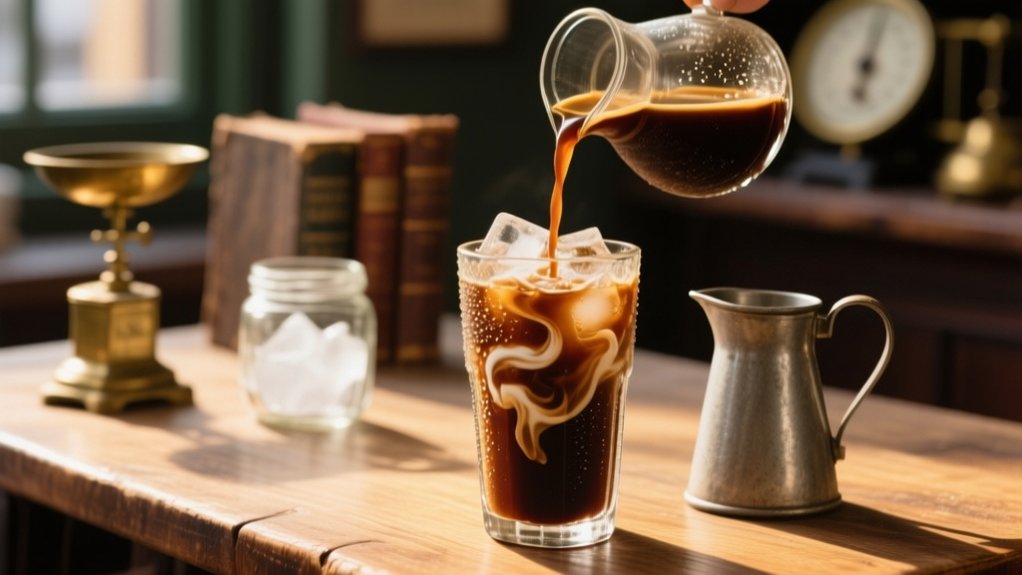
This invigorating beverage featured coffee served cold in tall glasses, offering a novel way to enjoy coffee in harsh conditions.
Coffee served cold in tall glasses, providing a refreshing twist for tough environments.
Mazagran’s story marks a significant chapter in the history of iced coffee, influencing how cold coffee drinks evolved worldwide.
The original recipe inspired variations that used sweetened condensed milk, like Vietnam’s popular version, showing the drink’s adaptability.
Early Mentions of Iced Coffee in 19th Century America
Although iced coffee is often associated with modern trends, its presence in 19th century America dates back to the 1830s. Early recipes appeared in publications like Godey’s Lady’s Book.
You’d find iced coffee gaining attention in New Orleans by 1839, as noted in the Times-Picayune. By 1840, New York saloons served it, signaling the rising popularity of iced coffee.
Increased ice availability helped coffee houses blend cold brew coffee with invigorating techniques similar to ice cream making. The Joint Coffee Trade Publicity Committee later boosted its status in the 1920s, embedding iced coffee deeply into American culture.
| Year | Event |
|---|---|
| 1830s | Recipes in Godey’s Lady’s Book |
| 1839 | New Orleans mentions in Times-Picayune |
| 1840 | Iced coffee in New York saloons |
| 1830s | Rise in ice availability |
| 1920s | Promotion by Joint Coffee Trade Publicity Committee |
How Boston’s Ice Trade Helped Iced Coffee Take Off

You mightn’t realize it, but Boston’s ice trade, started by Frederic Tudor, played a huge role in making iced coffee popular.
As ice shipments spread, coffee shops began offering cold drinks to meet new demand.
Ice Trade Origins
Because Frederic Tudor pioneered the ice trade in Boston starting in 1806, iced coffee found the perfect environment to flourish. Tudor harvested ice from local ponds and shipped it to warmer regions, linking ice availability to coffee cultivation areas like Martinique.
This innovation transformed Boston’s beverage culture, with coffee houses becoming key clients enthusiastic to serve chilled coffee.
Thanks to the ice trade, iced coffee grew accessible and popular by the 1830s, allowing you to enjoy cold coffee year-round. Tudor’s ice trade expanded iced coffee’s reach beyond Boston.
Boston’s coffee houses drove demand for consistent chilled coffee. The trade connected cold storage with coffee-growing regions, enhancing beverage culture.
Boston’s Ice Export
Frederic Tudor’s ice trade didn’t just supply Boston. It reached far beyond, sending blocks of ice to the Caribbean and other warm regions. Thanks to Tudor, the Boston ice trade made ice widely available, allowing coffee houses to serve iced coffee regularly.
This accessibility boosted iced coffee’s popularity in both Boston and distant markets.
| Aspect | Impact |
|---|---|
| Location | Boston and Caribbean |
| Key Figure | Frederic Tudor |
| Main Product | Ice blocks |
| Result | Rise of iced coffee popularity |
You can see how Tudor’s innovation in ice export transformed coffee culture. It made iced coffee a revitalizing favorite far beyond Boston’s borders.
Impact On Coffee
As ice became more accessible in Boston thanks to the booming ice trade, coffee houses seized the opportunity to serve chilled beverages that captivated customers. You’d find iced coffee popping up as a cool alternative to hot drinks, fueled by Frederic Tudor’s ice shipments.
This cold beverage quickly gained popularity, especially as Bostonians embraced coffee over tea during the American Revolution. The availability of ice revolutionized how you could enjoy coffee, turning it into a versatile drink for all seasons.
Consider how the ice trade impacted iced coffee in Boston:
- It enabled coffee houses to experiment with cold coffee recipes, attracting diverse clientele.
- It supported the rise of iced coffee as a patriotic beverage choice.
- It created a foundation for iced coffee’s nationwide popularity.
Iced Coffee Traditions Around the World
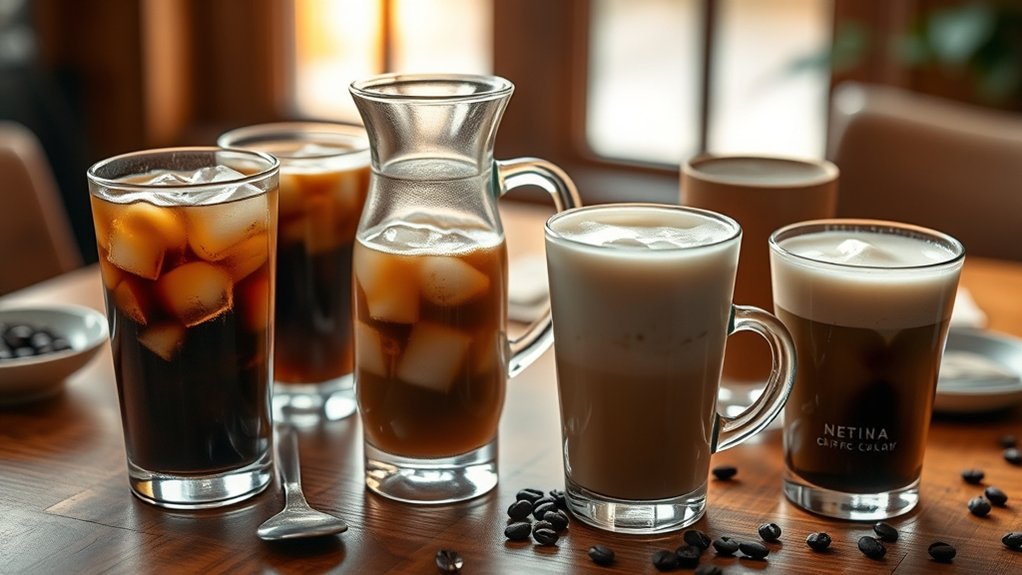
How do different cultures enjoy their iced coffee? You’ll find unique variations worldwide. In Algeria, mazagran offers sweetened cold coffee in tall glasses.
Japan’s Dutch coffee slowly drips cold water over grounds for up to 24 hours, creating rich flavors. Germany’s eiskaffee blends cold coffee with ice cream, turning it into a dessert treat.
Australia prefers iced coffee with milk and syrup, popularized by brands like Farmers Union. Greece’s frappé, made by shaking instant coffee, water, and sugar, delivers a frothy, invigorating drink.
| Country | Iced Coffee Tradition |
|---|---|
| Algeria | Mazagran: sweetened cold coffee |
| Japan | Dutch coffee: slow cold drip |
| Germany | Eiskaffee: coffee with ice cream |
| Australia | Iced coffee with milk and syrup |
Why the Greek Frappé Is a Classic Iced Coffee Favorite
Because it was invented in 1957 by Dimitris Vakondios at the Thessaloniki Fair, the Greek frappé stands out as an invigorating and frothy iced coffee favorite.
You start with instant coffee, water, and sugar, shaking them vigorously to create a rich foam. Served over ice, this smooth beverage refreshes you, especially in warm climates.
The frappé’s name comes from the French word “frapper,” meaning “to beat,” highlighting its unique preparation. It’s a cornerstone of Greek coffee culture, often enjoyed with milk or a sprinkle of cocoa.
Here’s why you’ll love the Greek frappé:
- It combines instant coffee and water into a light, frothy texture.
- You can customize it easily with milk or sugar.
- It’s a symbol of Greek coffee culture, popularized globally after 2004.
Japan’s Iced Coffee: Cold Brew and Kyoto-Style Techniques
When you experience Japan’s iced coffee, especially the Kyoto-style, you’ll notice its distinct smoothness and rich flavor. This comes from a slow cold brew process. It drips water over coffee grounds for up to 24 hours, extracting complex tastes while making the coffee less acidic.
Rooted in a 1600s tradition initially for tea, Kyoto-style brewing coffee has influenced global coffee culture. It offers a sweeter, smoother alternative to hot brewing.
| Aspect | Kyoto-Style Cold Brew | Traditional Iced Coffee |
|---|---|---|
| Brewing Time | Up to 24 hours | Minutes |
| Taste Profile | Less acidic, smooth, rich | Often bitter, more acidic |
| Coffee Grounds | Coarser grind, slow extraction | Finer grind, quick extraction |
How Starbucks and Fast Food Chains Popularized Iced Coffee
Although iced coffee had been enjoyed for centuries, Starbucks transformed it into a mainstream sensation in the U.S. by introducing the Frappuccino in 1995. This blended coffee beverage combined milk and ice, boosting Starbucks’ market presence after acquiring Coffee Connection, the Frappuccino’s originator.
You’ve likely noticed how Dunkin Donuts quickly jumped on iced coffee trends, claiming to be America’s number one retailer for iced coffee by 2010. Fast-food chains like McDonald’s and Burger King also started to sell iced coffee in the early 2000s, expanding availability.
Together, these brands helped iced coffee become a staple coffee beverage. Key factors include:
- Starbucks’ innovation and aggressive marketing
- Dunkin Donuts’ strategic positioning in the iced coffee market
- Fast-food chains’ broad distribution channels increasing accessibility
Factors Driving Iced Coffee’s Global Popularity
Iced coffee’s global popularity has soared thanks to several key factors you can easily spot in everyday life. Early marketing campaigns, like the one in the 1920s U.S., emphasized iced coffee’s invigorating appeal, setting the stage for widespread interest.
Convenient packaging, such as Japan’s canned iced coffee introduced in 1969, made cold coffee beverages more accessible and portable. Fast-food chains further fueled this trend by making iced coffee a staple menu item.
Japan’s canned iced coffee and fast-food chains made cold coffee convenient and a daily go-to.
You’ll notice consumer preference shifting strongly toward cold coffee beverages, especially among millennials seeking richer flavors. The global cold brew market’s rapid growth, projected at a 25.1% CAGR through 2025, highlights your increasing demand for innovative iced coffee options.
Together, these factors drive iced coffee’s worldwide popularity every day.
Emerging Trends Shaping the Future of Iced Coffee
As you explore the world of chilled coffee, you’ll notice emerging trends that are reshaping its future. The cold brew market is booming, with a projected CAGR of 25.1% by 2025. This growth is driven by your growing preference for convenient, ready-to-drink coffee beverages.
Coffee shops are experimenting with innovative brewing methods like Kyoto-style slow drip, enhancing iced coffee’s flavor beyond traditional hot brewing techniques. You’ll find packaged iced coffee disrupting sales, proving that convenience and taste go hand in hand.
The rise of portable, flavorful iced coffee options appeals especially to millennials. Coffee shops are diversifying offerings with new iced coffee variations and flavors.
Innovative brewing methods are redefining the cold brew market’s potential. These trends guarantee iced coffee stays fresh and exciting for you.
What’s Next for Iced Coffee: Innovations and Growth
You’re going to notice iced coffee changing rapidly. New brewing techniques, like nitrogen infusion, are making the experience even more exciting with unique flavors.
The market is growing fast, too, bringing you plenty of ready-to-drink options that fit perfectly into your busy lifestyle.
And as more people crave iced coffee, you can bet there will be even more innovation and variety showing up at your local coffee shops and stores.
Emerging Brewing Techniques
While the demand for invigorating coffee beverages keeps rising, innovative brewing techniques are reshaping how you enjoy iced coffee. Emerging brewing techniques like nitro cold brew infuse nitrogen to give your drink a creamy, frothy texture without dairy.
Specialty coffee shops push boundaries by blending botanicals and spices, creating unique iced coffee experiences. Automated cold brew systems streamline production, making coffee concentrate more accessible and consistent.
Nitro cold brew offers a smooth, velvety mouthfeel without added cream. Automated systems boost efficiency for large-scale cold brew production.
Flavor experimentation in specialty coffee shops introduces bold new iced coffee options. These innovations guarantee your iced coffee stays exciting, fresh, and tailored to your taste, reflecting the dynamic growth of cold brew culture.
Market Expansion Trends
Because consumer tastes keep evolving, the iced coffee market is expanding rapidly, with a projected CAGR of 25.1% reaching $1.63 billion by 2025.
You’ll notice that innovations in cold brew techniques are making iced coffee smoother and more accessible.
Brands like Starbucks and Dunkin’ keep expanding their menus, targeting younger consumers with new flavors and ready-to-drink options in convenient cans and bottles.
This market expansion responds directly to rising consumer demand for quick, delicious coffee on the go.
Plus, sustainability plays a bigger role now. Companies focus on eco-friendly packaging and ethically sourced beans to appeal to conscious buyers like you.
As iced coffee grows, expect more innovation balancing flavor, convenience, and environmental responsibility.
Frequently Asked Questions
What Type of Coffee Beans Are Best for Iced Coffee?
You’ll want to choose Arabica coffee beans for iced coffee because their flavor profiles offer smooth, sweet notes that shine in cold brew methods.
Opt for medium to dark roast levels to balance brewing techniques and prevent dilution from ice.
Consider coffee bean origins like Ethiopia or Colombia, known for fruity or chocolatey nuances, which match regional preferences.
Freshly ground beans enhance your iced coffee’s taste, making every sip vibrant and enjoyable.
How Can I Make Iced Coffee at Home Without It Getting Watered Down?
Picture sipping a perfectly chilled glass of iced coffee, bursting with rich flavor and no watery aftertaste.
To avoid dilution, brew double-strength coffee using precise brewing ratios, or try cold brew techniques for a smooth, concentrated base.
Freeze coffee ice cubes to keep your drink flavorful as they melt.
Experiment with milk alternatives chilled beforehand to enhance creaminess without watering down your cup.
These flavor infusion methods and serving suggestions guarantee your iced coffee stays deliciously bold.
Is Iced Coffee Healthier Than Hot Coffee?
You’ll find iced coffee benefits include lower acidity and often higher antioxidants, making it gentler on your stomach and possibly healthier.
The caloric comparison favors iced coffee if you skip sugary creamers.
Its caffeine levels usually match hot coffee, so you get the same energy boost.
Plus, iced coffee’s hydration effects can be better since cooler serving temperatures encourage you to drink more.
Flavor profiles vary, but both are delicious in their own way.
Can Iced Coffee Be Made With Espresso Instead of Brewed Coffee?
Yes, you can definitely make iced coffee with espresso instead of brewed coffee. Using espresso extraction techniques gives your drink a bold, concentrated flavor that stands up well to ice.
Try iced coffee variations like iced lattes or americanos, pairing espresso with milk alternatives like oat or almond milk for smoothness.
What Are Popular Sweeteners and Flavorings for Iced Coffee?
You’ll find popular sweeteners for iced coffee include flavored syrups like vanilla extract and caramel, which add sweetness and depth.
Many enjoy adding sweet cream or dairy alternatives such as almond or oat milk for creaminess.
Don’t forget chocolate drizzle for a rich twist or spice blends like cinnamon to enhance flavor complexity.
These options let you customize your iced coffee just how you like it, sweet, creamy, or with a spicy kick.
Conclusion
You’ve just sipped through iced coffee’s rich history, from Mazagran’s cool beginnings to today’s global buzz. Like an invigorating breeze on a hot day, iced coffee blends tradition with innovation, keeping your taste buds dancing.
As you enjoy your next chilled cup, remember it’s more than a drink; it’s a story swirling with culture, creativity, and endless possibilities. So, get ready, because iced coffee’s future is as bright and bold as your favorite brew.