
How Much Creamer To Put In Coffee – Ratios And Taste Tips
Start with about one tablespoon of creamer per six ounces of coffee, then adjust gradually to suit your taste. For lighter brews, use less to preserve delicate flavors. Stronger coffee can handle more creamer to balance bitterness.
Smaller cups need less, while larger ones call for more to maintain creaminess. Experiment with types, from dairy to plant-based. Add flavored creamers cautiously so you don’t mask the coffee’s character.
Keep exploring to find the perfect balance for your brew. It’s all about what tastes best to you!
Finding Your Perfect Creamer-to-Coffee Ratio

Although everyone’s taste buds differ, finding your perfect creamer-to-coffee ratio starts with understanding how much creaminess and sweetness you enjoy in your cup.
When you focus on coffee brewing, consider how strong or mild your coffee is. This affects how much creamer you’ll want to add.
If you prefer a lighter, creamier texture, milk frothing can enhance that experience by adding air and smoothness before mixing in creamer.
Try frothing your milk separately and then combining it with your brewed coffee to see how it changes the balance.
Measuring the Right Creamer Amount for Coffee
When you measure the right amount of creamer for your coffee, you guarantee a perfect balance that enhances flavor without drowning the brew. Start by considering the coffee brewing method you use, as stronger brews like espresso demand less creamer than drip coffee.
Next, identify your creamer type, whether dairy, plant-based, or flavored varieties. Each one impacts texture and taste differently. Use a standard measuring spoon or a small jug to add creamer gradually, starting with one tablespoon per eight ounces of coffee.
Taste as you go to find your ideal richness. Remember, precision helps you avoid over-creaming, which can mask coffee’s natural notes.
How Cup Size Changes Your Creamer Needs
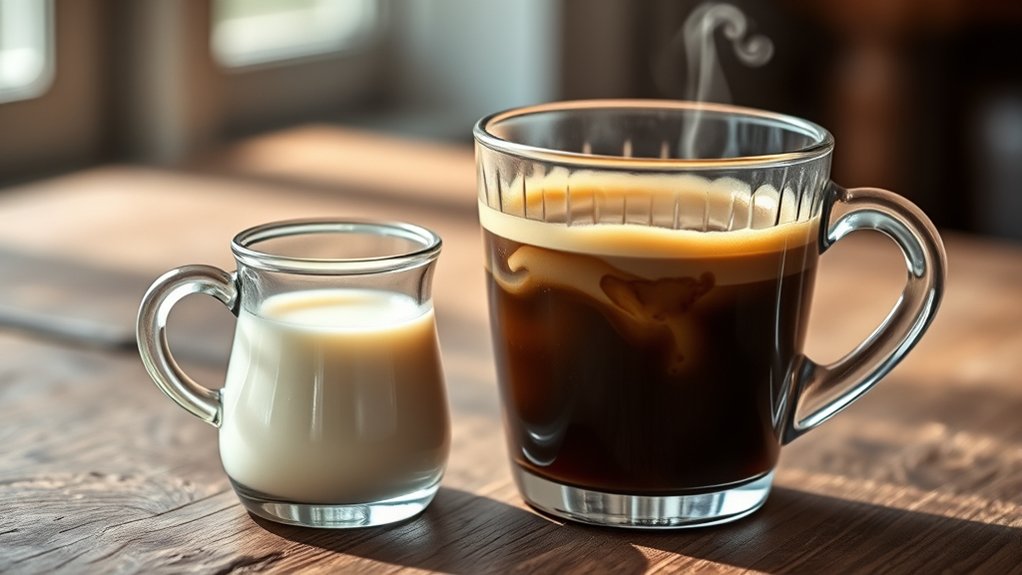
When you use a small cup, you’ll need less creamer to get the right flavor balance. It makes sense, right? A little goes a long way in a smaller cup.
On the other hand, if you’re using a larger cup, you’ll want to add more creamer to keep that perfect taste. It’s all about making sure every sip tastes just right.
Small Cups, Less Creamer
Since smaller cups hold less coffee, you’ll need less creamer to achieve the perfect balance of flavor and creaminess. When you use small cups, less creamer is essential to avoid overpowering your coffee’s taste, especially during your morning routines.
Here’s how to adjust:
- Start with a single teaspoon of creamer for every 4 ounces of coffee in your small cup.
- Stir well and taste before adding more; small cups amplify flavors quickly.
- If you prefer a lighter flavor, reduce creamer to half a teaspoon.
- Remember, small cups mean less volume, so less creamer keeps your brew smooth without masking the coffee’s natural notes.
Adapting your creamer amount to small cups helps make your morning coffee just right every time. It’s a simple tweak, but it makes a big difference!
Large Cups, More Creamer
Although larger cups hold more coffee, they also require a greater amount of creamer to maintain a balanced flavor and creamy texture. When you increase your cup size, you’ll want to adjust your creamer accordingly to avoid a bitter or overly acidic taste.
Coffee acidity can become more pronounced in bigger servings, so adding the right amount of creamer helps smooth out that sharpness.
Keep in mind, though, that using more creamer also increases creamer calories, which might affect your daily intake. To find your perfect ratio, start by adding creamer in small increments, tasting as you go.
This way, you control both flavor and calorie intake while ensuring your coffee remains just right, no matter the cup size.
Best Creamer-to-Coffee Ratios for Balanced Flavor
You’ll want to start with a standard creamer-to-coffee ratio, like one to two tablespoons per cup. This is a good starting point to find a balanced flavor.
Then, you can adjust the amount based on how strong your coffee is and the type of creamer you use. Some creamers add more richness or sweetness than others, so it really depends on your personal preference.
Understanding these factors helps you customize each cup to your perfect taste.
Standard Creamer Ratios
When aiming for a balanced flavor in your coffee, the right creamer-to-coffee ratio makes all the difference. To get it just right, consider these standard creamer ratios:
Start with 1 tablespoon of creamer per 6 ounces of coffee for a light, smooth taste. Use 2 tablespoons per 6 ounces if you prefer a creamier, richer flavor. Adjust gradually, adding too much at once can overpower your coffee’s natural notes.
Also, keep creamer storage in mind. Fresh creamer enhances flavor, so avoid long storage after opening.
Adjusting For Coffee Strength
Since coffee strength varies widely, from light and mild to bold and intense, you’ll want to adjust your creamer amount accordingly to keep a balanced flavor.
If your coffee brewing method yields a strong brew, try using a bit more creamer. You can also experiment with creamer alternatives like almond or oat milk to soften the intensity without overpowering the taste.
| Coffee Strength | Creamer Amount |
|---|---|
| Light | 1-2 tablespoons |
| Medium | 2-3 tablespoons |
| Bold | 3-4 tablespoons |
Start light with your creamer and increase gradually until you find that perfect harmony. Just remember, your creamer should complement, not mask, the unique coffee notes from your brewing method.
Creamer Types And Impact
Although choosing the right creamer might seem simple, it can dramatically change your coffee’s flavor and texture. Understanding creamer chemistry helps you pick the best option for your taste. Dairy creamers add richness and a creamy mouthfeel, while dairy alternatives like almond or oat milk offer lighter, nuttier profiles.
Here’s how different creamers impact your brew:
- Whole milk balances creaminess and coffee’s boldness (try 1:4 ratio).
- Heavy cream intensifies richness, use sparingly (1:8).
- Almond or oat milk adds subtle sweetness and light texture (1:3).
- Flavored creamers boost sweetness and aroma but can overpower.
Feel free to experiment with these ratios to find your perfect balance, considering both creamer chemistry and your preference for dairy alternatives. It’s all about what tastes best to you!
Adjusting Creamer Amounts by Coffee Brew Strength
Because the strength of your coffee influences its bitterness and intensity, you’ll want to adjust the amount of creamer accordingly. When you brew a strong coffee, its bold flavors and higher acidity can overwhelm subtle creamer notes. So, adding a bit more creamer helps balance the taste.
Conversely, lighter brews usually need less creamer to avoid diluting the delicate flavors. Keep in mind that your coffee brewing method impacts strength, so experiment with ratios to find your ideal balance.
Also, proper creamer storage is essential to maintain freshness and flavor consistency. This way, each addition complements your brew perfectly.
How Different Coffee Creamers Affect Taste and Texture
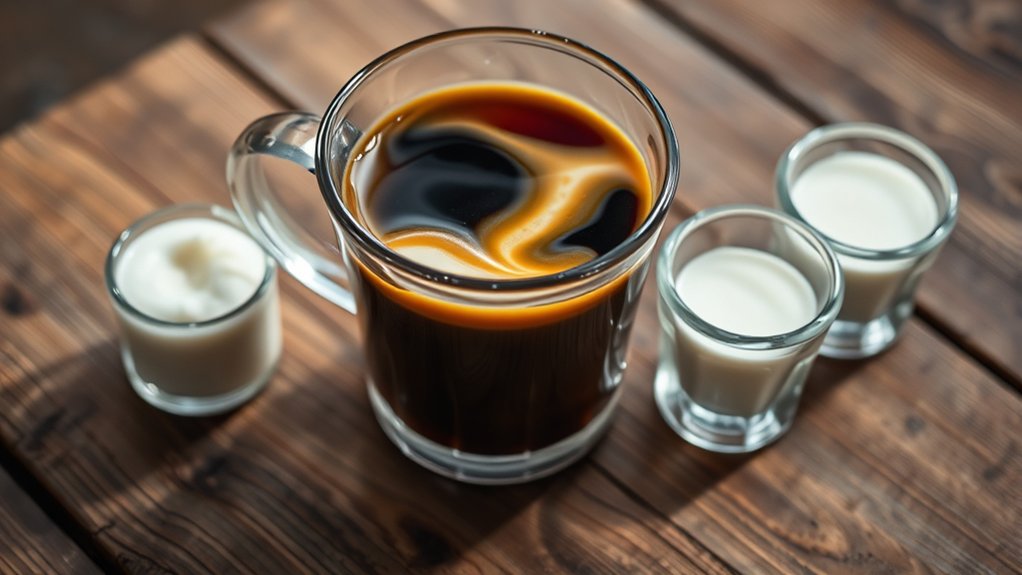
You’ll notice that different creamers bring unique flavor profiles to your coffee—everything from sweet and nutty to rich and buttery.
Plus, the texture can change too, making your cup feel either silky smooth or a bit thicker.
Knowing these differences really helps you pick the creamer that best suits your taste and the kind of coffee experience you want.
Flavor Profiles Comparison
When you add creamer to your coffee, it doesn’t just change the color. It transforms the entire flavor and texture experience.
Understanding flavor pairing and creamer origins helps you pick the perfect match for your brew. Here’s how different creamers compare:
- Dairy Creamers – Rich and creamy, they enhance coffee’s natural flavors without overpowering them.
- Nut-Based Creamers – Almond or cashew creamers add subtle nuttiness, complementing darker roasts.
- Coconut Creamers – Lend a tropical sweetness, ideal for light or fruity coffee blends.
- Plant-Based Blends – Oat or soy creamers offer smooth texture and mild flavors, balancing bitterness.
Texture Variations Impact
Beyond flavor, the texture your creamer adds can change how you experience each sip of coffee. Milk frothing creates a light, airy mouthfeel, while heavier creamers offer a rich, velvety sensation.
If you prefer creamer alternatives like almond or oat milk, expect a thinner, sometimes slightly grainy texture that affects the coffee’s body differently. Choosing the right creamer impacts not just taste but how smooth or thick your coffee feels.
| Creamer Type | Texture Impact | Milk Frothing Ability |
|---|---|---|
| Dairy Creamer | Thick, velvety | Excellent |
| Plant-Based Creamer | Light, sometimes grainy | Moderate |
| Powdered Creamer | Smooth, sometimes chalky | Limited |
Give different creamers a try to find the perfect balance of taste and texture for your coffee.
How to Use Creamer to Tame Bitterness and Boost Flavor
Although coffee’s natural bitterness can be off-putting, adding creamer helps soften those harsh notes and highlight the drink’s underlying flavors. To make the most of your creamer and improve your coffee experience, consider these tips:
- Match your creamer’s fat content with your coffee brewing method. Richer creamers pair well with bold brews, while lighter options suit milder ones.
- Use milk pairing techniques. Try whole milk or half-and-half to balance bitterness without overpowering flavor.
- Add creamer gradually, tasting as you go, to avoid masking delicate coffee notes.
- Experiment with flavored creamers that complement your coffee’s profile, like vanilla for medium roasts or caramel for dark roasts.
Give it a try and see what works best for you!
Why Too Much Creamer Can Hide Your Coffee’s Best Flavors
Adding creamer can definitely improve your coffee’s taste, but pouring in too much can quickly overpower the drink’s unique flavors.
When you add an excessive amount, the rich notes and subtle aromas that make your coffee special get masked. This means you miss out on the complexity and character that the beans provide.
Instead, you want to enhance, not hide, those natural qualities. If you find traditional creamers too heavy, exploring creamer alternatives like plant-based or flavored options can offer a lighter touch while still boosting your coffee flavoring.
Remember, the key is balance. Use just enough creamer to complement your coffee without drowning its essence.
This way, every sip highlights your brew’s best qualities.
How to Customize Creamer Levels for Your Palate
When you want your coffee to taste just right, adjusting the amount of creamer to suit your palate is essential. Understanding creamer chemistry helps you balance creaminess without overpowering the coffee’s natural flavor.
Plus, cultural preferences often influence how much creamer feels “just right” for you.
Here’s how to customize:
- Start small, add creamer in teaspoons, tasting as you go.
- Note how creamer chemistry affects texture and sweetness at different levels.
- Consider your cultural background and usual coffee style for guidance.
- Adjust gradually over multiple cups to find your perfect ratio.
Choosing Creamer Alternatives and Adjusting Ratios
If you’re looking to switch up your coffee routine, exploring creamer alternatives can open up new flavor possibilities while catering to dietary needs. Dairy alternatives like almond, oat, or coconut milk offer unique textures and subtle sweetness that can transform your cup.
When adjusting ratios, start with a smaller amount, about one to two tablespoons, and increase gradually to avoid overpowering your coffee’s natural flavor.
You can also experiment with flavor infusions such as vanilla, cinnamon, or hazelnut creamers to add depth without extra calories. Keep in mind that some dairy alternatives have thinner consistencies, so you might need slightly more to achieve the creaminess you want.
Frequently Asked Questions
Can I Use Creamers in Iced Coffee Without Altering the Ratio?
You can use creamers in iced coffee without changing the usual iced coffee ratios. Just keep in mind that creamer flavor combinations might impact the taste more than the amount.
Since iced coffee tends to be more diluted with ice, start with your regular ratio. Then adjust based on sweetness or flavor intensity.
Try experimenting with different creamers to find the perfect balance. You want something that complements your brew without overpowering it.
How Long Does Creamer Stay Fresh Once Added to Coffee?
Don’t count your chickens before they hatch. Once you add creamer to your coffee, it’s best to drink it within two hours. The shelf life shortens drastically because bacteria can grow quickly at room temperature.
To keep your coffee tasting fresh longer, store any leftover in the fridge and heat it up before drinking.
Avoid leaving creamer-mixed coffee out, or you risk sour flavors and spoilage.
Are There Health Benefits to Using Dairy vs. Non-Dairy Creamers?
You’ll find dairy benefits like calcium, vitamin D, and protein that support bone health and muscle function.
Plus, dairy creamers often have fewer additives, making them a cleaner option.
However, non-dairy creamers might contain added sugars, oils, and preservatives, which some consider non-dairy drawbacks.
If you’re lactose intolerant or vegan, non-dairy is better despite these drawbacks.
Does Temperature Affect How Creamer Blends With Coffee?
Yes, temperature influence plays a big role in how creamer blends with coffee. When your coffee is hotter, the creamer’s consistency thins out, mixing smoothly and evenly.
If the coffee’s cooler, the creamer might stay thicker and separate more, making it harder to blend well.
To get the best texture and flavor, add creamer while your coffee’s still hot.
This way, you’re sure to get a creamy, consistent cup every time.
Can Flavored Creamers Change the Caffeine Absorption Rate?
Flavored creamers don’t substantially change caffeine absorption in your body. While flavor interaction can alter how you perceive the taste, caffeine metabolism stays mostly unaffected.
Your liver processes caffeine the same way, whether you add vanilla or hazelnut creamer.
Conclusion
So, you want your coffee to taste like a creamy masterpiece, not a dairy disaster? Remember, too much creamer turns your brew into a milkshake impostor, hiding all those bold coffee notes you actually paid for.
Start small, taste often, and adjust like a seasoned barista. Your perfect cup deserves respect, not a creamer avalanche.
After all, you’re here to enjoy coffee, not audition for a role in “Creamer: The Overload.”