Is Coffee Vegan – Ingredients And Dietary Facts Explained
Yes, coffee itself is naturally vegan since it’s made from plant-based beans and roasted using just heat. However, additives like creamers, syrups, or flavorings might contain animal ingredients like dairy or honey. So, it’s important to check labels carefully.
Using plant-based milk and verified vegan products can keep your coffee completely vegan. If you want to guarantee your coffee stays cruelty-free and learn practical tips for selecting or ordering vegan-friendly brews, keep exploring these key facts.
What Makes Coffee Itself Naturally Vegan

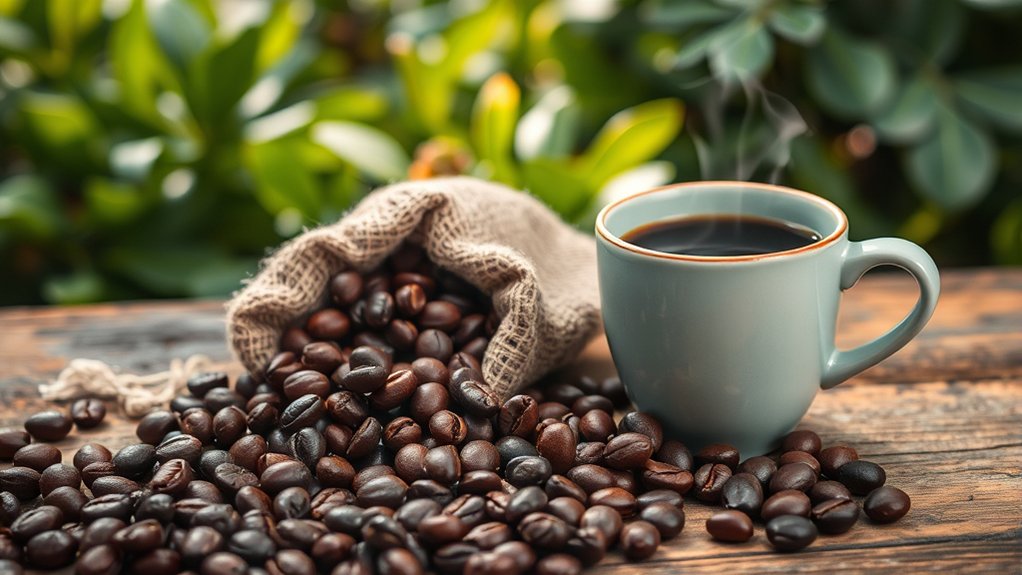
Why is coffee itself considered naturally vegan? It’s because coffee beans come directly from plants, making coffee a plant-based product. During coffee bean cultivation, the beans are harvested from coffee cherries without involving any animal products.
Coffee beans come straight from plants, making coffee a naturally plant-based and vegan-friendly beverage.
The natural caffeine sources found in coffee are compounds synthesized by the coffee plant itself as a defense mechanism, not derived from animals. When you brew coffee, you’re simply extracting these plant-based compounds.
No animal ingredients are involved in this primary process, so pure coffee remains vegan.
Understanding this helps you see that the core ingredient, coffee beans, is inherently free from animal exploitation. That makes black coffee a safe choice for vegans who care about their diet’s ethical and environmental impact.
What Additives Can Sneak Animal Products Into Your Coffee?
Although pure coffee is naturally vegan, many additives commonly used in coffee preparations can introduce animal products. For example, some flavorings and syrups may contain animal-derived enzymes. These enzymes are used to enhance texture or shelf life but originate from animal sources.
Furthermore, dairy-based stabilizers are often added to creamers or whipped toppings. They help maintain consistency but make these products non-vegan. These additives aren’t always clearly labeled, so checking ingredient lists is vital if you want to avoid animal products.
Even low-fat or non-dairy options might include such stabilizers or enzymes. By staying informed about these hidden ingredients, you can better navigate coffee choices.
That way, you can ensure your drink aligns with your vegan lifestyle and avoid unintended animal product consumption.
Are Your Favorite Creamers Actually Vegan?
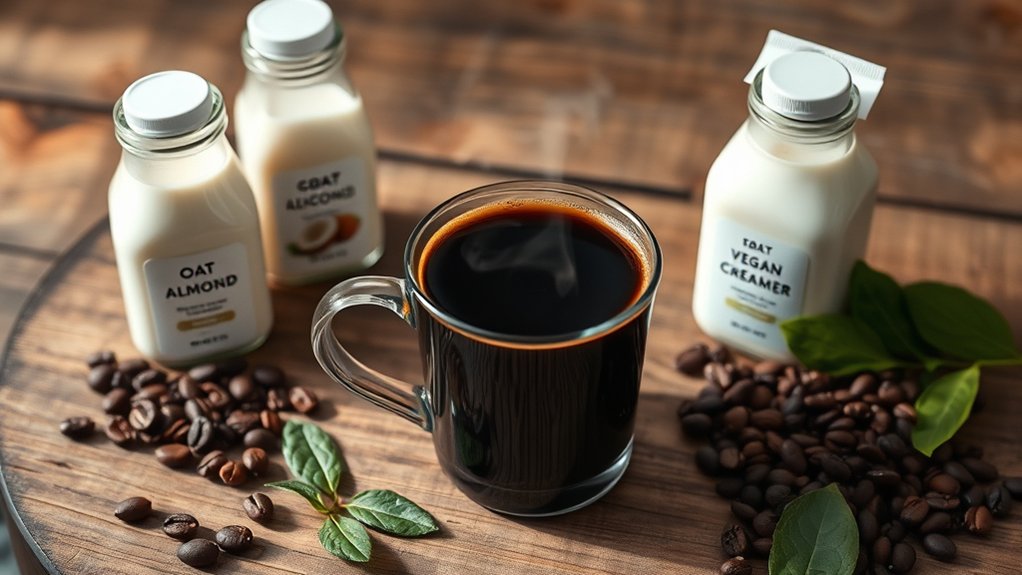
How can you be sure your favorite creamer fits a vegan diet? Many creamers contain dairy or other animal-derived ingredients, so it’s essential to check labels carefully. Plant-based creamers made from almond, soy, oat, or coconut milk are reliable vegan options.
Keep in mind that coffee bean cultivation itself is typically vegan, but some brands may add non-vegan additives in processing. Look for products with vegan coffee certifications, which verify that both the beans and added ingredients meet vegan standards.
Coffee beans are usually vegan, but check for certifications to avoid non-vegan additives in processing.
These certifications can give you confidence that your creamer aligns with your dietary choices. By choosing certified vegan creamers, you support ethical sourcing and avoid hidden animal products.
This way, your coffee routine stays fully plant-based and cruelty-free. It’s a simple step that makes a big difference!
Which Sweeteners Won’t Break Your Vegan Streak?
When you’re picking sweeteners for your coffee, it’s a good idea to go for natural options like maple syrup, agave, or organic cane sugar. These are usually vegan-friendly, so they fit nicely with your lifestyle.
Just watch out for processed sugars, though. Some of them might be refined with bone char, which isn’t vegan.
And don’t forget to check the labels carefully—sometimes there are hidden animal-derived ingredients like lactose or honey sneaking in.
Being aware of these details helps you keep your coffee delicious and totally in line with your vegan values.
Natural Vegan Sweetener Options
What natural sweeteners can you use without compromising your vegan lifestyle? Opt for sweeteners derived from plants, like maple syrup or agave nectar, which are free from animal products.
Organic beans, often used in herbal infusions, can complement your coffee without added sugars. These natural options enhance flavor while aligning with vegan principles.
| Sweetener | Vegan Status |
|---|---|
| Maple Syrup | 100% plant-based |
| Agave Nectar | Derived from agave plant |
| Coconut Sugar | Made from coconut palm |
Each sweetener offers unique flavors and nutritional benefits. Choosing organic, plant-sourced options ensures you avoid animal-derived additives. This supports both your health and ethical choices.
Keep herbal infusions in mind for added complexity without compromising vegan integrity.
Avoiding Animal-Derived Additives
Although many sweeteners seem vegan-friendly at first glance, some contain animal-derived additives that can break your vegan streak. For example, refined sugar is often processed with bone char, a product from animal bones, making it non-vegan.
When choosing sweeteners for your coffee, especially after coffee fermentation and bean roasting processes have preserved natural flavors, you’ll want to avoid those filtered through animal products.
Opt for alternatives like organic cane sugar, maple syrup, agave nectar, or coconut sugar, which typically don’t involve animal-derived agents.
Checking labels or confirming with manufacturers helps verify no hidden additives are present.
Staying informed about sweetener processing supports your vegan lifestyle without compromising the rich taste developed during coffee fermentation and bean roasting.
Do Coffee Flavors and Syrups Contain Animal Ingredients?

You might think coffee syrups are vegan since they usually have sugar, water, and flavorings. But actually, some of them sneak in animal-derived ingredients like honey, dairy, or shellac.
It’s a bit tricky because labels might say “natural flavors,” which can sometimes hide non-vegan stuff. So, it’s really important to read the ingredient lists carefully.
Staying informed makes it easier to pick syrups that fit your vegan lifestyle.
Common Syrup Ingredients
How can you be certain that the syrups and flavors added to your coffee are vegan-friendly? Most common coffee syrups contain ingredients like sugar, water, natural or artificial flavors, and preservatives, which are typically plant-based. However, the source of these ingredients matters.
For example, some sugar is processed with bone char, which isn’t vegan. When considering coffee roasting and bean sourcing, these steps usually don’t impact syrup ingredients directly but emphasize transparency in production.
Flavors might sometimes include dairy derivatives, so checking labels or asking baristas is essential. Popular syrups like vanilla, caramel, and hazelnut are often vegan but not always guaranteed.
To be confident, you should verify ingredient lists or choose brands that explicitly label their syrups as vegan. This way, you ensure your coffee stays aligned with your dietary choices.
Hidden Animal-Derived Additives
Understanding the ingredients in syrups is a good start, but some animal-derived additives can remain concealed in coffee flavors and syrups. Certain flavorings may contain animal byproducts, such as natural flavor extracts derived from dairy or other animal sources.
Moreover, some syrups use glycerin, which can be plant-based or animal-derived. Without clear labeling, you might unknowingly consume animal ingredients. To avoid this, always check for certifications or contact manufacturers regarding ethical sourcing practices.
Choosing brands that explicitly state vegan-friendly or plant-based ingredients helps ensure no hidden animal byproducts are present. Being vigilant about these additives is essential if you want your coffee to align with vegan principles and ethical sourcing standards.
This way, you can enjoy your coffee without compromising your dietary values.
Why Some Instant Coffees Aren’t Truly Vegan
Although instant coffee seems like a straightforward vegan option, some brands include animal-derived additives that might surprise you. During coffee processing, additives such as milk proteins or bone char can be used to improve flavor or clarify the product. These ingredients often go unnoticed because they aren’t always clearly listed on labels.
Without explicit vegan certification, it’s difficult to confirm whether an instant coffee is free from animal-derived substances. Vegan certification programs rigorously examine every stage of production to guarantee no animal ingredients or cross-contamination occurs.
How to Pick Truly Vegan Coffee Brands and Products
When choosing truly vegan coffee brands and products, you need to scrutinize ingredient lists and production methods closely. Focus on coffee bean sourcing and ethical farming practices, making sure there are no animal-derived additives or cross-contamination.
Certifications like Fair Trade or Organic often point to ethical farming, but you should double-check vegan labeling specifically. Transparent brands usually share their processing details, which helps you avoid hidden non-vegan ingredients like milk powder or honey.
| Factor | What to Look For |
|---|---|
| Coffee Bean Sourcing | Single-origin, traceable farms |
| Ethical Farming | Fair Trade, organic certifications |
| Additives | No dairy, honey, or animal enzymes |
| Processing | Vegan-certified or allergen-free facilities |
| Packaging | Eco-friendly, vegan-certified |
Easy Vegan Coffee Recipes You Can Make at Home
Since you know how to select vegan coffee brands, you can easily elevate your coffee experience by trying simple, delicious vegan coffee recipes at home.
Start with freshly roasted coffee beans to maximize flavor and caffeine content, as roasting levels directly affect both. Light roasts retain more caffeine, while dark roasts offer a bolder taste.
Brew your coffee using methods like pour-over or French press for a clean, rich cup.
Add plant-based milk alternatives such as almond, oat, or soy milk to keep it vegan while enhancing creaminess.
For extra flavor, try blending in natural sweeteners like maple syrup or cinnamon.
These easy adjustments let you enjoy a fully vegan coffee tailored to your taste and caffeine needs without compromising quality or ethics.
Give it a try and see how simple it’s to make your daily coffee ritual even better!
Tips for Ordering Vegan Coffee at Cafés
When you’re ordering coffee at cafés, try choosing plant-based milks like almond, oat, or soy to keep your drink vegan.
Just a heads up—some additives, like honey or certain flavor syrups, mightn’t be vegan-friendly. So, it’s a good idea to double-check those.
Also, don’t hesitate to clearly communicate your dietary preferences. That way, you can be sure your coffee meets your vegan standards without any surprises.
Choosing Plant-Based Milks
Although many cafés default to dairy milk, you can easily request plant-based alternatives to keep your coffee vegan. Choosing the right milk complements plant-based brewing methods and respects ethical coffee bean sourcing.
When ordering, consider these common options:
- Oat milk: Creamy texture, froths well, and sustainably sourced.
- Almond milk: Light flavor, lower calories, but check for added sweeteners.
- Soy milk: High protein and widely available, though some prefer less processed options.
Don’t hesitate to ask baristas about their plant-based milk choices and preparation methods to avoid cross-contamination.
Avoiding Non-Vegan Additives
Selecting plant-based milks is a great start, but making sure your coffee stays vegan means paying close attention to additives that might sneak in during preparation. Many cafés add non-vegan ingredients like dairy-based creamers, honey, or flavored syrups containing animal-derived components.
To avoid this, choose places that focus on plant-based brewing methods. This helps reduce the risk of cross-contamination. Also, prioritize cafés that practice ethical coffee sourcing since they usually have clearer ingredient transparency and vegan-friendly protocols.
Always check if additives like whipped cream or sweeteners contain animal products. For example, some sweeteners, like confectioner’s sugar, may be processed using bone char.
Being vigilant about these details means you can enjoy your coffee confidently, supporting both ethical sourcing and strictly vegan options without giving up taste or quality.
Communicating Dietary Preferences
How can you guarantee your coffee order stays vegan at busy cafés? Start by clearly communicating your dietary preferences to the barista.
Many cafés source beans from sustainable farming, reflecting ethical coffee cultivation practices, but additives can vary.
To ensure your coffee remains vegan, specify plant-based milk alternatives like almond, oat, or soy. Also, ask about sweeteners and syrups, confirming they contain no animal derivatives.
And don’t forget to request no whipped cream or honey toppings since those aren’t vegan.
Being proactive helps prevent misunderstandings and supports cafés committed to sustainable farming.
Remember, clear communication not only safeguards your vegan lifestyle but encourages cafés to adopt more ethical, transparent sourcing and ingredient choices.
Don’t hesitate to ask questions—your informed choices promote both personal health and sustainable coffee cultivation.
Common Myths About Vegan Coffee: Busted!
When you delve into the world of vegan coffee, you’ll quickly encounter several myths that can cloud your understanding. One common misconception is that coffee roasting involves animal products. But roasting simply uses heat. No animal-derived ingredients are involved.
Another myth suggests that caffeine content varies drastically between vegan and non-vegan coffees. However, caffeine levels depend more on the coffee bean type and brewing method, not its vegan status.
Some believe that all coffee additives are vegan by default. But sweeteners, creamers, or flavorings can contain animal-derived ingredients. So, you need to check labels carefully.
Understanding these facts helps you make informed choices without falling for false claims. Ultimately, pure coffee beans and proper roasting make coffee inherently vegan unless additives say otherwise.
Frequently Asked Questions
Can Coffee Farming Impact Animal Habitats?
Yes, coffee farming can impact animal habitats. When you clear forests for coffee plantations, you contribute to habitat destruction, which threatens local wildlife.
But here’s the good news: shade-grown coffee practices support wildlife preservation by maintaining tree cover and biodiversity. Choosing sustainably farmed coffee helps protect habitats and supports ecosystems.
Is Coffee Production Environmentally Sustainable?
Don’t assume all coffee production harms the environment; many farms prioritize sustainability. By choosing coffee with organic certification, you support methods that avoid harmful pesticides and promote biodiversity.
Plus, sustainable coffee producers use water conservation techniques to cut down on water waste. These practices help keep soil healthy and protect local ecosystems.
So, your coffee habit might be more eco-friendly than you think.
Look for these certifications to make sure your coffee supports environmental sustainability. It’s a simple way to enjoy your cup while caring for the planet.
How Does Caffeine Affect Vegan Athletes?
Caffeine’s performance benefits can boost your endurance, focus, and energy during workouts, making it valuable for vegan athletes. It stimulates your central nervous system, enhancing alertness and reducing perceived effort.
When it comes to recovery, caffeine may help reduce muscle pain and inflammation after exercise, which can speed up how fast you bounce back. But remember, moderation is key. Too much caffeine might mess with your sleep, and good sleep is crucial for muscle repair.
Are Coffee Cups and Packaging Eco-Friendly?
Coffee cups and packaging aren’t always eco-friendly, but you can make better choices. Many traditional cups aren’t recyclable because of plastic linings. So, recycling coffee waste can be tricky.
Look for brands using compostable packaging made from plant-based materials. These break down more easily and reduce landfill waste. Choosing compostable options really helps.
Also, properly recycling coffee grounds makes a difference. By doing these things, you help minimize environmental impact and support sustainable coffee consumption. It’s all about making smarter choices!
Can Vegan Coffee Help With Ethical Consumerism?
Choosing vegan coffee is like planting a seed in a garden of ethical consumerism. When you pick brands committed to ethical sourcing and fair trade practices, you support farmers who work under fair conditions and protect the environment.
This conscious choice helps build a more just supply chain.
It also ensures your daily cup aligns with your values. So yeah, vegan coffee can definitely boost your impact as an ethical consumer. It’s a small change that makes a big difference.
Conclusion
Now that you know plain coffee is naturally vegan, isn’t it easier to enjoy your daily cup without worry? Just watch out for hidden animal ingredients in creamers, sweeteners, and syrups. Choosing truly vegan brands and making simple swaps lets you savor coffee guilt-free.
With these facts, you can confidently order or brew vegan coffee every time. Remember, staying informed is key to keeping your coffee both delicious and ethical.