What Is Filtered Coffee – Brewing Process And Benefits
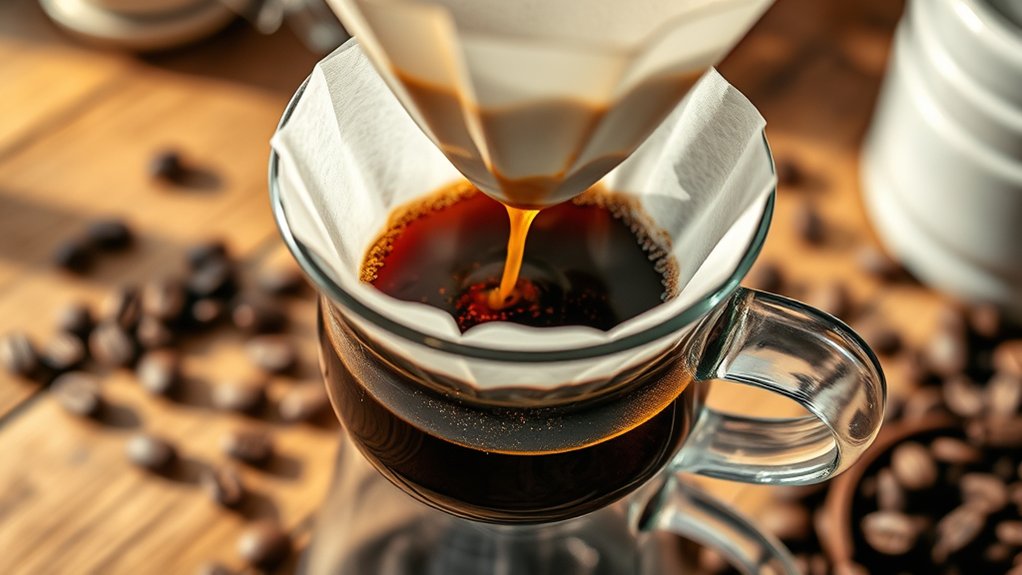
Filtered coffee brews by passing hot water through coffee grounds held in paper, metal, or cloth filters. These filters separate oils and sediments, giving you a clean, vibrant cup. You get to control things like grind size, water quality, and temperature (195°F–205°F) to really bring out those delicate flavors and keep bitterness at bay.
This method makes a smooth, bright, and nuanced brew with less sediment. Plus, it comes with health benefits like a lower risk of high cholesterol. Keep experimenting, and you’ll find plenty of tips to perfect your filtered coffee experience.
What Is Filtered Coffee and How Does It Differ?
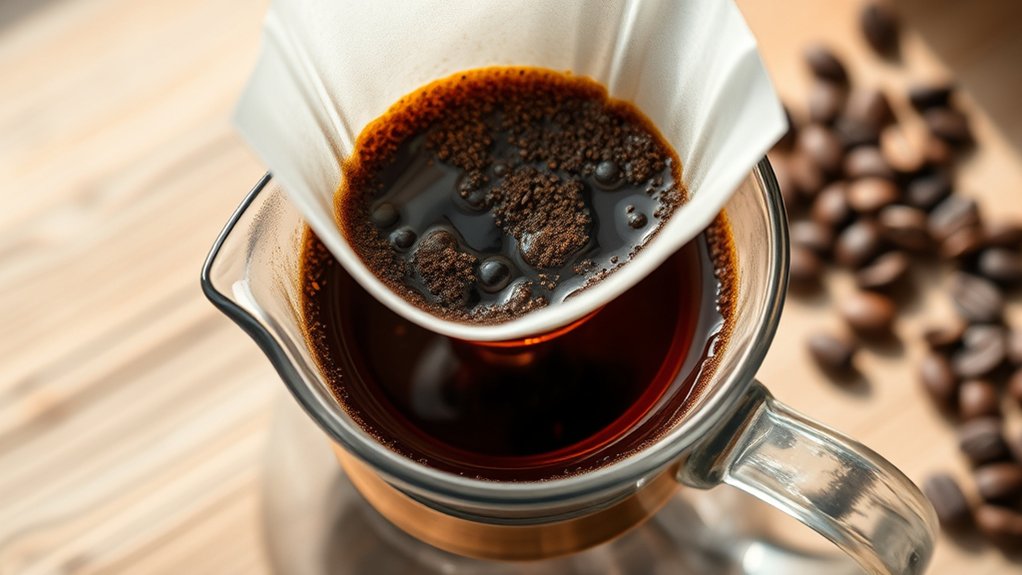
What makes filtered coffee stand out from other brewing methods? It’s all about clarity and control. When you brew filtered coffee, you’re using a paper or metal filter to separate the grounds from the liquid, which highlights delicate flavors tied to coffee bean origins.
This process lets you appreciate subtle notes from Ethiopian florals or Colombian chocolaty undertones without the bitterness found in other methods. You’ll also notice that brewing time plays a pivotal role; it usually takes between 3 to 5 minutes, allowing ideal extraction without over-extracting bitter compounds.
Unlike espresso or French press, filtered coffee offers a cleaner cup with pronounced clarity. It’s perfect when you want to explore the nuanced characteristics of different beans through a straightforward, controlled brewing process.
Why Filtered Coffee Tastes Smoother and Cleaner
Because filtered coffee passes through a fine paper or metal filter, it removes most of the oils and fine particles that can make other brews taste heavy or gritty. This filtration process enhances clarity, allowing you to experience a smoother texture and a cleaner finish in each sip.
The careful control of brewing duration plays a vital role, as it extracts balanced flavors without over-extracting bitter compounds.
As a result, the coffee aroma remains bright and inviting, free from the muddiness often found in unfiltered methods.
When you brew filtered coffee, you get a crisp, refined cup that highlights subtle flavor notes and preserves the coffee’s natural brightness.
This makes your daily ritual both satisfying and flavorful.
Essential Gear for Brewing Filtered Coffee
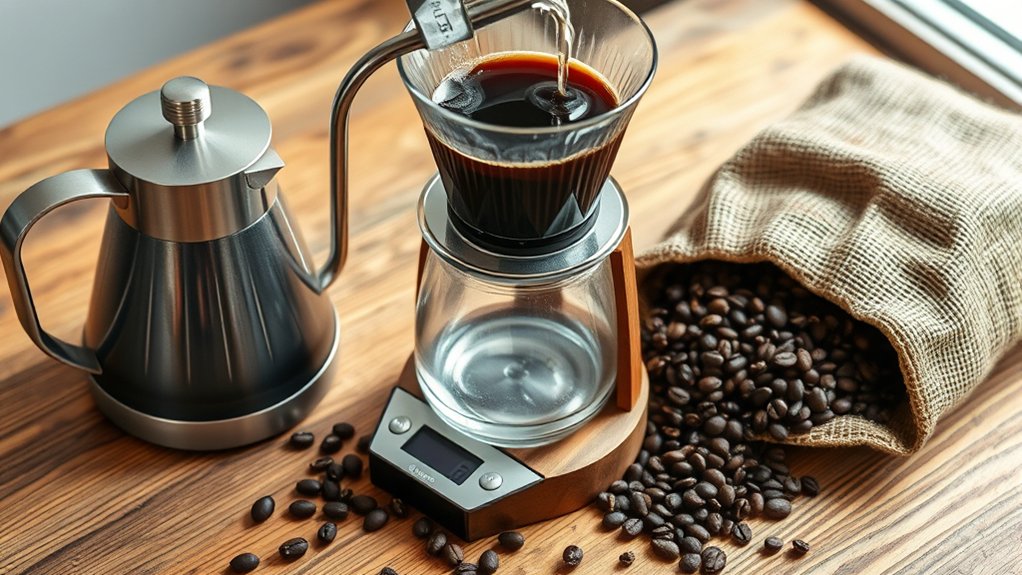
The smooth and clean profile of filtered coffee owes much to the tools you choose for brewing. Selecting quality brewing equipment guarantees you extract the best flavors from beans sourced directly from the coffee farm. Precise control over water temperature, grind size, and filtration impacts your cup’s clarity and balance.
Essential gear includes a reliable grinder, a pour-over dripper or automatic brewer, and a gooseneck kettle for steady pouring.
| Gear Type | Purpose | Key Feature |
|---|---|---|
| Grinder | Uniform grind size | Adjustable settings |
| Pour-over Dripper | Controlled extraction | Compatible with filters |
| Gooseneck Kettle | Precise pouring speed | Narrow spout design |
Investing in quality brewing equipment really elevates your filtered coffee experience from farm to cup. It’s worth taking the time to choose tools that help you brew consistently great coffee.
Choosing the Best Coffee Beans for Filtered Brewing
When selecting coffee beans for filtered brewing, you should prioritize those with bright acidity and complex flavor profiles that shine through a clean extraction. The coffee bean origin plays a vital role. Beans from East Africa often offer fruity and floral notes, while Central American beans provide balanced sweetness and clarity.
Consider these factors:
- Coffee Bean Origin: Choose origins known for vibrant, nuanced flavors.
- Roast Level: Opt for a light to medium roast to preserve delicate acidity and aromatic complexity.
- Freshness: Freshly roasted beans maintain essential oils that enhance flavor.
Filtered brewing highlights subtle nuances, so pick beans that showcase distinct characteristics without overpowering bitterness. This approach guarantees your cup delivers a crisp, refined taste. It really helps you make the most of the brewing process.
Grinding Coffee for Filtered Coffee Brewing
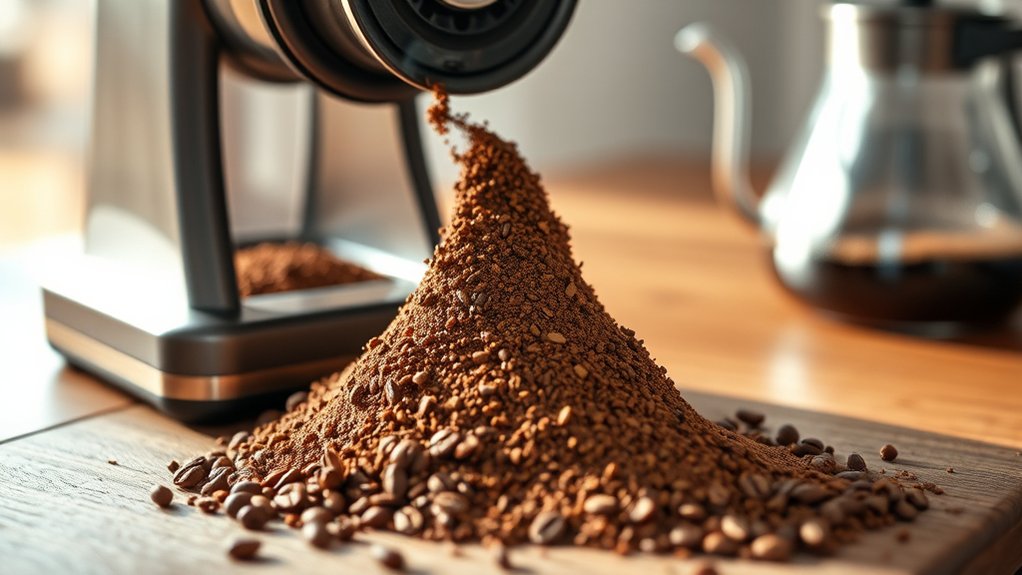
Selecting the right grind size plays a major role in bringing out the flavors of your chosen coffee beans.
For filtered coffee brewing, you want a medium grind, coarser than espresso but finer than French press. This coffee grind allows water to flow evenly through the grounds, extracting balanced flavors without bitterness or under-extraction.
If your grind size is too fine, the brew may become over-extracted and bitter. Too coarse, and it’ll taste weak or sour.
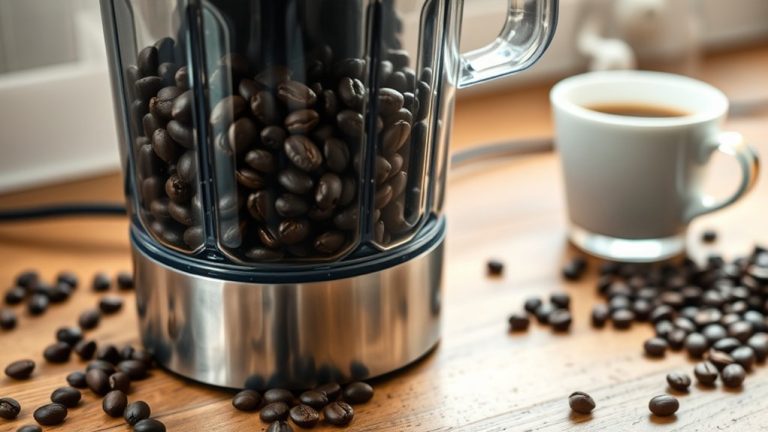
To achieve consistency, use a burr grinder rather than a blade grinder, as it produces uniform particles essential for proper extraction.
Adjusting your grind size slightly can help you tailor your filtered coffee’s strength and clarity.
This way, you ensure each cup highlights your beans’ unique characteristics perfectly.
Step-by-Step Filtered Coffee Brewing Guide
You’ll start by picking the right coffee beans and filter that match your taste and brewing style.
After that, it’s all about following some precise brewing steps to get the best flavors—without any bitterness or weak spots.
Along the way, I’ll share handy tips to help you nail a consistently balanced and aromatic cup every single time.
Choosing Coffee And Filter
Although many factors influence the final taste, choosing the right coffee beans and filter plays a crucial role in crafting a perfect cup of filtered coffee. Start by selecting fresh beans. Bean freshness dramatically impacts flavor, so buy whole beans and grind them just before brewing.
Proper coffee storage is essential. Keep beans airtight and away from light and moisture to preserve their aroma.
Next, consider the filter type:
- Paper filters capture oils, producing a clean, bright cup.
- Metal filters allow more oils, resulting in a richer body.
- Cloth filters offer a balance, filtering fine grounds while retaining some oils.
Your choice will shape your coffee’s texture and clarity, so pick based on your taste preference for the ideal experience.
Brewing Techniques And Tips
When you master the brewing technique, you unleash the full potential of your filtered coffee’s flavor and aroma. Start by selecting freshly roasted beans. The roasting level directly influences taste complexity.
Grind the beans just before brewing to preserve the nuances developed during coffee fermentation and roasting. Use a precise coffee to water ratio, typically 1:15, to balance strength and clarity.
Pour hot water (195–205°F) evenly over the grounds in slow, circular motions to ensure uniform extraction. Maintain a steady bloom phase for 30–45 seconds to release carbon dioxide, a byproduct of fermentation, which enhances flavor.
Control your pouring speed and total brew time, around 3 to 4 minutes, to avoid bitterness or sourness. With attention to these steps, your filtered coffee will be rich, balanced, and aromatic.
Give it a try—you’ll notice the difference in every cup!
Common Filtered Coffee Brewing Mistakes to Avoid
You’ll want to avoid overpacking the filter because it can restrict water flow and lead to uneven extraction. It’s a common mistake, but easy to fix once you know.
Also, using water that’s too hot or too cold can mess with the brewing balance and affect the flavor clarity.
Overpacking The Filter
Because overpacking the filter restricts water flow, it disrupts the extraction process and leads to uneven brewing. When you overpack the filter, water struggles to pass through the coffee grounds, causing inconsistent coffee extraction.
This results in a brew that’s either overly bitter or weak in flavor. To avoid this common mistake, here are a few tips:
- Measure your coffee grounds accurately, sticking to recommended ratios.
- Gently level the grounds without compressing them tightly.
- Make certain the filter isn’t overloaded; leave enough space for water to flow freely.
Incorrect Water Temperature
Although water temperature might seem like a minor detail, it plays a crucial role in extracting the full spectrum of flavors from your coffee grounds. Using water that’s too hot can scorch the grounds, resulting in bitter, harsh notes. On the other hand, water that’s too cool won’t extract enough, leaving your coffee weak and underdeveloped.
To achieve ideal brewing consistency, aim for a temperature between 195°F and 205°F (90°C to 96°C). This range ensures balanced extraction and highlights your coffee’s nuanced flavors without over-extracting unwanted bitterness.
Measuring or controlling water temperature precisely helps you avoid common pitfalls and consistently brew a clean, flavorful cup.
Paying close attention to water temperature guarantees that every batch of your filtered coffee delivers the quality you expect and deserve. It’s one of those small details that really makes a difference in your daily brew.
How Water Quality and Temperature Affect Flavor
When brewing filtered coffee, the quality and temperature of your water play vital roles in shaping the final flavor. Both water mineralization and coffee temperature influence extraction, affecting taste and aroma. Here’s how to optimize them:
Water quality and temperature are key to perfect coffee extraction and flavor balance.
First, water mineralization. Balanced minerals, especially calcium and magnesium, enhance flavor extraction. Too few minerals produce flat coffee. Too many cause bitterness.
Next, coffee temperature. Aim for 195 to 205°F (90 to 96°C). Lower temperatures under-extract and result in sour notes. Higher temps over-extract and cause bitterness.
Finally, consistency matters. Use filtered water with stable mineral content. Keep precise temperature control so each cup delivers a rich, balanced profile. Easy, right?
Health and Taste Benefits of Filtered Coffee
Filtered coffee not only delights your palate but also offers distinct health advantages that set it apart from other brewing methods. Its paper filter traps diterpenes, compounds linked to raising cholesterol, making your cup heart-friendlier compared to unfiltered brews.
You’ll also appreciate that filtered coffee typically contains a moderate caffeine content, providing a balanced energy boost without excessive jitters. Proper coffee storage plays a vital role here. Keeping your beans airtight and away from heat preserves both flavor and antioxidant properties essential to health benefits.
Moreover, the clear, clean taste of filtered coffee allows you to savor nuanced flavor notes without bitterness or sediment. By choosing filtered coffee, you enjoy a beverage that’s simultaneously gentle on your system and rich in satisfying, refined taste. It’s a win-win!
Experimenting With Filters and Brewing Styles for Filtered Coffee
You can totally change up your filtered coffee experience by trying out different types of filters—like paper, metal, or cloth. Each one gives the coffee a unique taste.
Then, have some fun with brewing techniques too. Whether it’s pour-over, drip, or cold brew, each method pulls out different flavors.
Types Of Coffee Filters
A variety of coffee filters can considerably influence the flavor and clarity of your brew. Choosing the right filter depends on factors like coffee bean origin and filter material durability, both of which shape extraction and taste.
Here are three common types:
1. Paper Filters
Known for their disposable convenience and ability to trap oils, they produce a clean, bright cup. This highlights nuanced flavors from distinct coffee bean origins.
2. Metal Filters
Durable and reusable, metal filters let more oils through. This offers a fuller body and richer texture but less clarity.
3. Cloth Filters
Combining the benefits of paper and metal, cloth filters provide balanced clarity and mouthfeel. But they require careful maintenance to guarantee longevity.
Experimenting with these filters helps you tailor your filtered coffee experience precisely to your taste preferences. Give them a try and see what works best for you!
Brewing Techniques Explored
Exploring different brewing techniques can dramatically change how your choice of filter interacts with coffee grounds and water. When experimenting, consider the coffee bean origin. Light roasts from high-altitude regions often benefit from slightly lower brewing temperatures around 195°F, which helps preserve delicate floral notes.
Darker beans, on the other hand, release richer flavors at temperatures closer to 205°F. Adjusting your brewing style—whether pour-over, drip, or cold brew—affects extraction time and clarity.
For example, a medium-coarse grind suits a Chemex with a thicker paper filter, enhancing body while reducing sediment. Meanwhile, metal filters allow more oils to pass through, emphasizing texture.
Flavor Profiles Comparison
How do different filters and brewing methods shape the flavor profile of your filtered coffee? Each choice influences flavor pairing and aroma enhancement in its own way, letting you tailor your cup to your taste.
- Paper Filters: These trap oils and sediments, producing a clean, bright cup that highlights fruity and floral notes. They’re perfect for delicate flavor pairing.
- Metal Filters: These allow more oils through, resulting in a fuller body with richer, earthier flavors. You’ll notice an intensified aroma, too.
- Cloth Filters: They strike a balance by filtering fine particles while keeping some oils. This creates a smooth, nuanced profile with subtle sweetness.
Trying out different filters and brewing styles helps you discover which flavor nuances and aromas resonate best with your palate. It’s a great way to refine your filtered coffee experience.
Frequently Asked Questions
Can I Use Filtered Coffee Grounds for Gardening?
Yes, you can use filtered coffee grounds for gardening. They’re great for coffee composting because they add nitrogen, enriching your compost pile and boosting soil health.
When you practice grounds recycling, you reduce waste and improve your garden’s fertility.
Just mix the grounds with other organic materials to balance moisture and nutrients. Avoid using too many grounds directly, as they can compact and hinder water flow.
It’s all about finding the right balance to keep your garden thriving.
How Long Can Brewed Filtered Coffee Be Stored Safely?
Like a fresh breeze, brewed filtered coffee stays at its best for up to 12 hours at room temperature. To keep your coffee tasting great, store it in an airtight container.
If you want to extend its life, pop it in the fridge, where it can last 2-3 days. Just avoid leaving it on a hot plate because heat ruins the flavor fast.
Using proper storage techniques helps preserve the aroma and taste, so you can enjoy every sip.
What Is the Environmental Impact of Using Paper Filters?
Using paper filters does create waste, but you can reduce that waste by choosing unbleached, compostable options. When you compost used filters and coffee grounds, you support recycling waste naturally. This turns it into nutrient-rich soil.
Avoiding single-use plastic filters and recycling paper packaging can further lessen your environmental impact. By managing your coffee routine thoughtfully, you actively contribute to reducing waste.
It’s a simple way to promote a more sustainable brewing habit.
Are There Any Cultural Traditions Linked to Filtered Coffee?
Coffee rituals tied to filtered coffee are like threads weaving cultures together. You’ll find rich cultural significance in places like Sweden, where “fika” turns filtered coffee into a social pause, or in Ethiopia, where brewing methods highlight community bonds.
These traditions aren’t just about the drink; they celebrate connection, mindfulness, and heritage. When you brew filtered coffee, you’re tapping into centuries of cultural rituals that honor more than just flavor.
Can Filtered Coffee Help With Caffeine Sensitivity?
Yes, filtered coffee can help with caffeine sensitivity by reducing caffeine absorption. The paper filter traps some of the coffee oils and compounds that increase caffeine’s effects, making your body absorb caffeine more gradually.
This slower absorption helps with sensitivity management, preventing sudden jitters or crashes. If you’re sensitive to caffeine, choosing filtered coffee lets you enjoy the taste while minimizing uncomfortable side effects.
Conclusion
Now that you know the ins and outs of filtered coffee, why settle for anything less? With the right beans, grind, and equipment, you can brew a smoother, cleaner cup that highlights every nuanced flavor.
Paying attention to water quality and avoiding common mistakes guarantees your coffee tastes consistently exceptional. So, are you ready to elevate your coffee experience and enjoy all the health and taste benefits filtered brewing offers?
Give it a try. You won’t regret it.