Can You Put Honey In Coffee – Benefits And Taste Guide
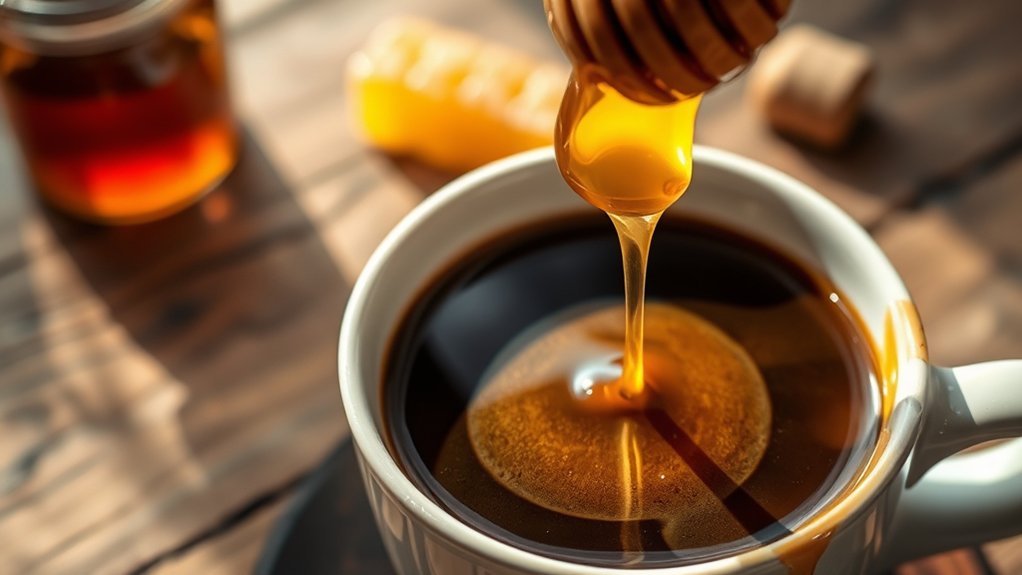
You can definitely put honey in coffee to enhance its flavor and add health benefits. Honey dissolves well in hot coffee, offering natural sweetness along with antioxidants, vitamins, and enzymes that sugar lacks.
Different honey types, like acacia or manuka, bring unique floral or earthy notes that complement various coffee profiles. Just use honey moderately to avoid overpowering your brew.
If you want to optimize taste and effects, understanding honey’s nuances and preparation tips will help you get the most from this sweetener.
Can You Put Honey in Coffee? What You Need to Know

Although many people default to sugar, you can put honey in coffee as a natural sweetener that not only dissolves well in hot liquid but also offers added antioxidants and trace nutrients missing from regular sugar.
Honey sweetens coffee naturally while adding antioxidants and nutrients absent in regular sugar.
When you stir honey into freshly brewed hot coffee, its compounds dissolve efficiently, preserving beneficial antioxidants linked to honey harvesting methods that maintain purity.
Proper coffee storage also matters. Keeping your coffee beans sealed and fresh ensures the honey’s unique floral notes, especially from varieties like Manuka or acacia, complement rather than clash with the coffee’s flavor.
Using honey harvested with minimal processing retains these nutrients, enhancing the coffee’s health benefits.
This evidence-based approach shows honey isn’t just a sweetener but a functional addition, provided you manage coffee storage and opt for quality honey harvesting practices.
Comparing Honey’s Sweetness to Sugar in Coffee
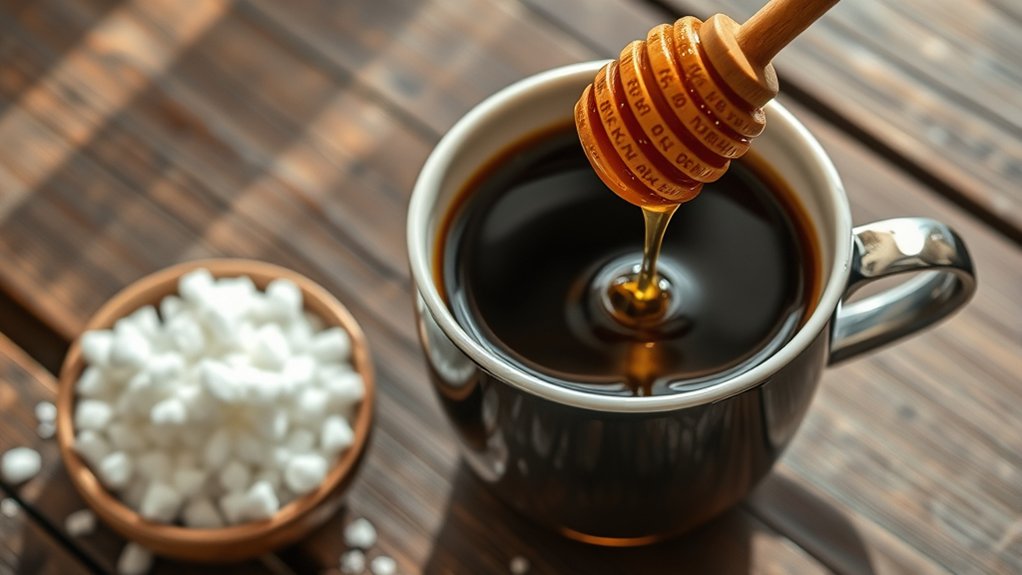
When you choose honey as a sweetener for your coffee, understanding how its sweetness compares to sugar can help you adjust your recipe effectively. Honey’s sugars, mainly glucose and fructose, are processed faster by the body, making honey taste sweeter than sugar’s disaccharides. This means you can use less honey to match the sweetness level you’d get from sugar.
However, honey contains about 21 calories per teaspoon, slightly more than sugar’s 16 calories, so keep that in mind. Also, honey flavor is more complex and intense, which can alter your coffee’s taste profile.
Compared to sugar, honey has a lower glycemic index, resulting in a gentler blood sugar impact.
How Much Honey Should You Add to Your Coffee
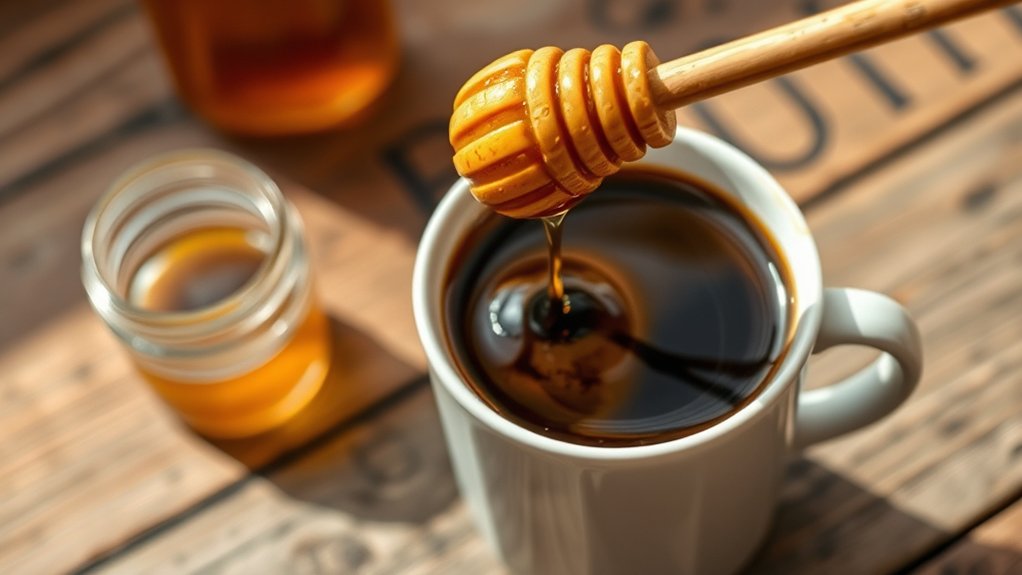
Since honey is sweeter than sugar, you typically only need about one teaspoon per 8-ounce cup of coffee to get just the right sweetness. When you think about honey pairings and coffee brewing, precise measurements help keep the coffee’s natural flavor while adding a gentle honey touch.
Here’s how to approach it:
- Start with one teaspoon to keep things balanced without overpowering the coffee’s profile.
- Adjust gradually based on your taste, especially if you like it a bit less sweet.
- Avoid going over two teaspoons to stop the flavors from getting too strong and to limit extra sugar.
- If you want a more noticeable honey flavor, you can use up to one tablespoon, but watch out for the added calories.
This way, you make sure the flavors blend well and keep that delicate balance that’s so important in coffee and honey pairings.
Tips for Mixing Honey Smoothly Into Hot and Cold Coffee
To preserve honey’s beneficial enzymes and guarantee smooth blending, you should let hot coffee cool to about 140°F before stirring in honey. This careful temperature control supports coffee preservation by preventing enzyme degradation and preserves honey fermentation benefits.
Stir vigorously until the honey fully dissolves, ensuring even sweetness without clumps.
For cold coffee, whisk honey with a small amount of warm water or milk first, creating a liquid syrup that mixes smoothly. Use about one teaspoon per 8-ounce cup, adjusting gradually to avoid overpowering coffee’s natural flavor.
This method balances honey fermentation’s delicate compounds with coffee preservation needs, delivering a consistent, enjoyable taste.
Following these precise steps guarantees smooth integration of honey in both hot and cold coffee. It’s all about finding that perfect balance to keep the flavors just right and the benefits intact.
Give it a try and enjoy your coffee with a natural, sweet twist!
Health Benefits of Using Honey Instead of Sugar
Although both honey and sugar serve as sweeteners, honey offers distinct health advantages that make it a superior choice. When you opt for honey over sugar in your coffee, you gain more than just sweetness.
For starters, honey harvesting supports bee conservation, which is really important for maintaining biodiversity and ecological balance. Plus, honey contains trace vitamins, minerals, and antioxidants that sugar just doesn’t have, so it adds a bit more nutritional value.
On top of that, honey has antimicrobial and anti-inflammatory properties that can boost your immunity and promote digestive health. This is especially true with compounds like MGO found in Manuka honey.
And the best part? Honey provides fewer empty calories and has a lower glycemic index, which means it has a gentler impact on your blood sugar levels.
How Honey Affects Blood Sugar and Energy From Coffee
Choosing honey over sugar doesn’t just add nutrients and support bee conservation. It also influences how your body handles blood sugar and energy levels.
Honey’s lower glycemic index compared to sugar means it causes a gentler rise in blood glucose, promoting better blood sugar regulation when added to coffee.
The glucose in honey provides a quick energy boost, while its fructose metabolizes more slowly. This helps sustain energy stability without sharp spikes or crashes.
That balance is great for keeping your energy steady throughout the day.
However, remember that honey still contains calories and sugars. So, using it in moderation is essential to avoid any negative effects on blood sugar control.
What Honey Does to Your Coffee’s Flavor and Aroma
When you add honey to your coffee, you introduce a range of complex flavors that can transform the drink’s profile. Honey fermentation contributes unique floral aroma compounds that meld with coffee’s natural scent. Here’s what to expect:
Adding honey to coffee creates complex, floral flavors that beautifully enhance the drink’s natural aroma and depth.
- Enhanced sweetness that subtly shifts the coffee’s inherent flavor without overwhelming it.
- Introduction of floral, caramel, or fruity notes depending on the honey variety.
- A smooth, velvety mouthfeel due to honey’s rich, thick texture.
- Potential earthy or medicinal undertones from specific honeys, like Manuka, that influence aroma.
Keep in mind, honey’s strong flavor can sometimes mask delicate coffee nuances, especially in darker roasts. Using honey thoughtfully allows you to balance these effects and explore new sensory dimensions in your cup.
Which Types of Honey Work Best in Coffee
You’ll find that mild honey varieties like acacia work great in coffee because they enhance the flavor without covering up those subtle notes you love.
On the other hand, stronger honeys like buckwheat are perfect if you want to bring out bolder, richer flavors.
It’s really all about comparing flavor profiles to find the best match for your favorite coffee roast. That way, you can get the perfect balance of taste every time.
And if you’re feeling adventurous, specialty honeys like manuka add a unique twist and extra complexity, especially in darker or specialty brews.
Mild Honey Varieties
Although honey comes in many varieties, mild types like acacia and clover work best in coffee because they add sweetness without overpowering the brew’s delicate flavors. When selecting honey for your coffee, consider these options for ideal honey pairings and ease of honey storage:
- Acacia honey dissolves quickly, preserving subtle floral notes without masking the coffee’s nuances.
- Clover honey provides a clean, light sweetness suitable for diverse coffee profiles.
- Orange blossom honey introduces a gentle citrus aroma, enhancing medium roasts without overwhelming them.
- Raw, unfiltered honey retains enzymes and mild flavors, offering a natural sweetness with health benefits.
Choosing mild honeys ensures a balanced taste experience while simplifying honey storage by avoiding crystallization and maintaining consistency. It’s a simple way to keep your coffee sweet and smooth without any fuss.
Flavor Profiles Comparison
Since different honeys bring distinct flavor profiles, selecting the right type can markedly enhance your coffee experience. For effective honey pairing, choose acacia honey with delicate, fruity beans to subtly amplify floral notes without overpowering.
Buckwheat honey’s dark, molasses-like flavor complements bold roasts, such as French or espresso blends, adding depth.
Orange blossom honey’s citrus brightness works best with medium roasts, providing fresh, aromatic flavor enhancement.
Manuka honey, with its rich, earthy, medicinal undertones, suits strong coffee varieties that can balance its intensity.
While infused honeys like lavender or vanilla introduce nuanced seasonal notes, they’re more specialized and reserved for distinctive coffee blends.
Specialty Honeys Benefits
What makes certain honeys stand out when paired with coffee? The answer lies in their unique flavor profiles and health benefits. These qualities enhance coffee without overwhelming it.
Thinking about honey pairings carefully lets you tailor your brew’s taste. Plus, you get to support bee conservation by choosing sustainable sources.
Here are four specialty honeys that work best in coffee:
- Acacia honey offers a light, floral note that complements delicate coffees.
- Buckwheat honey adds a dark, molasses-like richness perfect for bold blends.
- Orange blossom honey introduces citrus brightness, enhancing medium roasts.
- Manuka honey provides earthy complexity and antioxidants, ideal for strong espresso.
Picking these honeys elevates your coffee experience. At the same time, it promotes mindful bee conservation practices.
Is Manuka or Specialty Honey a Good Choice for Coffee?
You’ll find that Manuka and specialty honeys bring unique flavor profiles that can either enhance or overpower your coffee, depending on the roast. So, it really comes down to how bold your coffee is and what kind of taste you’re going for.
Also, choosing ethically sourced honey isn’t just about flavor—it guarantees purity and supports sustainable practices. That’s a win-win, adding value beyond just taste.
The key is to match the honey’s characteristics with your coffee to get the most out of both flavor and health benefits. It’s all about finding that perfect balance.
Unique Flavor Profiles
How does the choice of honey influence your coffee’s flavor profile? Selecting the right honey can really change how your coffee tastes. It’s all about finding the perfect flavor pairing and boosting the sensory experience in your brew. Here are some things to think about:
Manuka honey has earthy, slightly medicinal notes that work great with strong, dark roasts. It adds a nice layer of complexity.
Then there are specialty honeys like orange blossom or lavender, which bring floral and fruity hints. These are perfect for lighter beans.
Manuka’s unique floral and mineral tones also help enrich more complex coffee profiles, giving you layered flavors to enjoy.
Plus, since honey types vary in flavor intensity, you can match them precisely with your coffee’s strength, whether you like it mild or bold.
Using high-quality, specialty honey really lifts your coffee’s aroma and flavor complexity. It offers a sensory experience that’s tailored to your taste and the style of coffee you prefer.
Ethical Honey Sourcing
Pairing your coffee with Manuka or specialty honey not only enhances flavor but also raises questions about ethical sourcing. Manuka honey is produced through sustainable farming practices that prioritize honey bee health and environmental conservation.
Many specialty honeys offer traceability from hive to jar, ensuring transparency and quality. This helps you make informed choices.
Ethical producers avoid harmful chemicals like glyphosate, antibiotics, and GMOs, supporting natural beekeeping methods.
Plus, certified B Corp honey brands show a commitment beyond product quality. They focus on social and environmental sustainability too.
By choosing ethically sourced honey such as Manuka, you support regional beekeepers and sustainable farming.
This way, your coffee ritual aligns with responsible consumption. It makes Manuka a good choice if you care about both taste and ethical impact.
When Honey Might Not Be the Sweetener for You
Why might honey not be the ideal sweetener for your coffee? Despite its natural appeal, honey can present challenges depending on your preferences and health considerations. Consider these factors before choosing honey over sweetener alternatives.
Honey’s strong flavor may overpower delicate coffee profiles, disrupting perfect coffee pairing. Its added sugars and calories might conflict with weight management or specific dietary goals.
If you have allergies to bee products or pollen sensitivities, honey could trigger adverse reactions.
Also, honey’s effect on blood glucose can be problematic for diabetics or those monitoring sugar intake.
Evaluating these points helps you determine if honey aligns with your taste and health needs or if a different sweetener suits your coffee better. It’s all about what works best for you.
How Honey Adds Nutrients to Your Coffee
While honey may not suit every palate or dietary need, it offers more than just sweetness when added to your coffee. As a natural sweetener produced by the honey bee, honey contains trace amounts of vitamins, minerals, enzymes, and antioxidants that subtly enhance coffee’s nutritional profile.
Even in small quantities, honey contributes polyphenols and flavonoids, boosting your antioxidant intake.
Unlike refined sugar, honey provides B vitamins and vitamin C, supporting overall health. Raw honey retains enzymes and bioactive compounds that may aid digestion and immune function.
Although the nutrient boost is minimal due to typical serving sizes, honey still offers a slight advantage over processed sweeteners when you want to add flavor and nutrients to your coffee.
Honey Coffee Recipes to Try at Home
Because honey dissolves easily and offers diverse flavor profiles, you can experiment with it in various coffee preparations to enhance both taste and nutritional value.
Applying precise brewing techniques and coffee art principles helps you achieve consistent results. Try these honey coffee recipes at home:
- Add one teaspoon of honey to hot coffee, stirring until fully dissolved for a natural sweetness boost.
- Use distinct honey varieties like acacia or manuka to highlight floral or earthy flavor notes, enriching your coffee’s complexity.
- Stir honey into cold brew, allowing it to sit briefly to infuse sweetness evenly without disrupting the cold extraction process.
- Mix honey with whipped cream or milk before adding it to brewed coffee, creating a creamy, honey-laced whipped coffee experience.
These methods showcase honey’s versatility while preserving ideal flavor and nutritional benefits. Give them a try and see which one becomes your favorite!
Frequently Asked Questions
Can Honey in Coffee Help With Allergy Relief?
You might find honey in coffee offers mild allergy relief by acting as a natural sweetener with anti-inflammatory properties. Its flavor enhancement complements coffee, while antioxidants potentially support your immune system.
That said, the evidence remains largely anecdotal, so it’s not a guaranteed remedy. But hey, enjoying your coffee with a touch of honey can be a tasty way to possibly get some extra benefits.
Does Honey Alter the Caffeine Content in Coffee?
No, honey doesn’t alter the caffeine content in your coffee. It simply adds a bit of sweetness and enhances the flavor. This means you get a smoother taste without changing the actual caffeine level.
The caffeine concentration is still determined by the beans you use and how you brew your coffee. So, feel free to sweeten your cup with honey without worrying about caffeine changes.
Is Honey Coffee Safe for Toddlers or Young Children?
You shouldn’t give honey coffee to toddlers because of safety concerns and the effects of caffeine.
When it comes to child nutrition, it’s best to talk with a pediatrician first. Caffeine and sugar can be harmful to young children’s developing systems and overall health.
How Does Honey in Coffee Affect Dental Health?
When it comes to dental health, honey in coffee can be a bit of a double-edged sword. It may cause tooth decay and enamel erosion if you don’t brush properly. That’s because its sugars feed harmful bacteria that produce damaging acids.
Can Honey Coffee Be Used as a Pre-Workout Drink?
Yes, you can use honey coffee as a pre-workout drink. Its flavor pairing balances sweetness and bitterness. Plus, honey offers a natural sweetening alternative that provides sustained energy.
This can help enhance focus and performance during exercise without relying on processed sugars. So, it’s a tasty and effective option before you work out. Give it a try and see how it works for you!
Conclusion
Just like the wise alchemist who transforms simple elements into gold, you can elevate your coffee by swapping sugar for honey. It’s not just about sweetness. It’s about adding nutrients and unique flavors backed by science.
While honey isn’t perfect for every palate or brew, its health benefits and smooth taste make it a worthy experiment. So, next time you brew, consider honey. It’s a natural enhancer that turns your cup into a small daily ritual of wellness.