

Can You Make Instant Coffee With Cold Water – Preparation Tips
Yes, you can make instant coffee with cold water by using freeze-dried granules, which dissolve more quickly and evenly. Start by mixing 1-2 teaspoons of coffee with a small amount of water to create a concentrated paste. Then stir vigorously while gradually adding the rest.
This method prevents clumps and grit, resulting in a smoother texture and balanced flavor. Proper technique guarantees minimal sediment and improved aroma. Want to take it further? Explore advanced tips to perfect your cold coffee preparation.
Which Instant Coffee Works Best With Cold Water
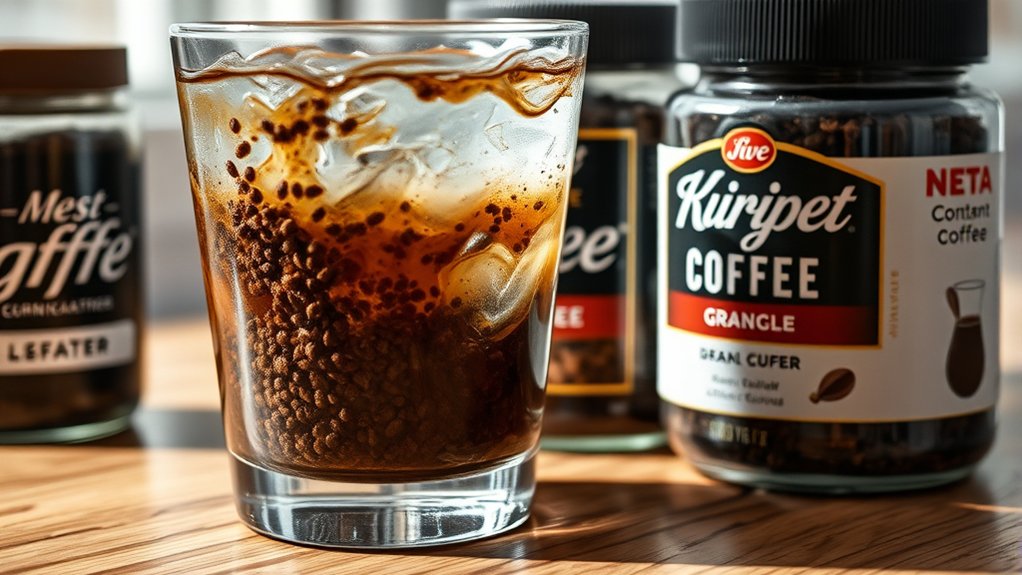
When you want instant coffee to dissolve quickly and evenly in cold water, choosing freeze-dried granules is key. These granules come from a coffee bean grinding process that preserves flavor and maximizes solubility, unlike coarser spray-dried particles.
Freeze-dried instant coffees, like Nescafé Rich or Intense, have finer, porous granules that reduce clumping and sediment, making for a smooth blend.
Freeze-dried instant coffees feature fine, porous granules that minimize clumping and sediment for a smooth, even blend.
This better solubility also helps keep the caffeine content consistent in your cold brew, so you get a reliable caffeine hit every time.
Specialty instant coffees made for cold drinks use optimized grinding and freeze-drying techniques to dissolve quickly and deliver a balanced flavor.
Going for these high-quality instant coffees means you’ll end up with a grit-free, well-extracted drink when mixed with cold water.
It makes your coffee prep both faster and way more satisfying.
How to Make Smooth Instant Coffee With Cold Water

To make smooth instant coffee with cold water, start by making a concentrated coffee paste. Use about 1-2 teaspoons of freeze-dried instant coffee and just a little bit of cold water. This helps stop the coffee from clumping and makes sure the granules dissolve completely, so you won’t get any gritty bits in your drink.
Choosing the right instant coffee really matters here.
Also, stirring vigorously is key to getting that silky, well-blended texture you want. Give it a good mix, and you’ll have a smooth cup of coffee in no time!
Creating Coffee Paste
How can you achieve a perfectly smooth instant coffee using cold water? Begin by creating a concentrated coffee paste. Use 1-2 teaspoons of freeze-dried instant coffee, preferable for its superior solubility, and a tablespoon of cold water. Stir vigorously, pressing granules against the glass side to break clumps, ensuring complete dissolution.
This paste method, facilitated by proper coffee storage to maintain freshness, prevents gritty textures often caused by uneven granule dispersion. Next, gradually add your remaining cold water, stirring continuously to maintain an even, grit-free mixture.
Using appropriate brewing equipment, like a sturdy glass and a reliable spoon, supports this process. Preparing a coffee paste first guarantees a consistent, smooth instant coffee experience with cold water every time. It’s a simple trick that really makes a difference in taste and texture.
Give it a try and enjoy your perfectly smooth cup!
Choosing Instant Coffee
Why does the type of instant coffee you choose matter so much for cold water preparation? Because solubility and texture vary a lot between freeze-dried and spray-dried granules.
Freeze-dried instant coffee dissolves more easily, which helps reduce clumping and sediment. That’s super important for a smooth cold brew.
You’ll also want to think about the coffee bean roasting level. Lighter roasts often keep more caffeine, which boosts both flavor and strength when you brew with cold water.
It’s best to pick high-quality, finely ground instant coffee or specialty blends made for cold beverages. These usually have additives that improve solubility and taste.
Brands like Nescafe Rich or Maxwell House have finer textures and lighter granules, which means you get a consistent, grit-free drink.
Why Creating a Coffee Paste Prevents Grit
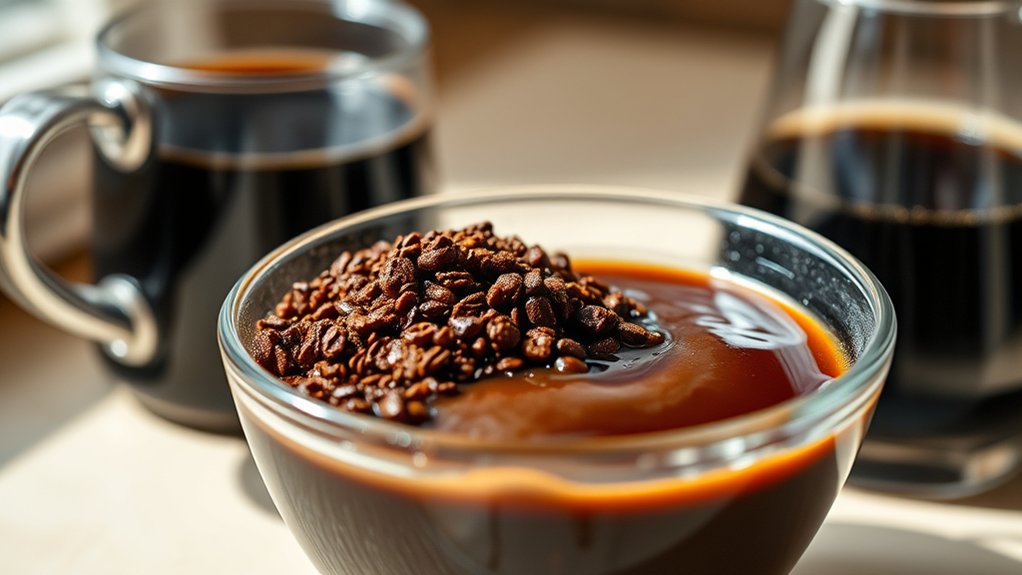
Although it might seem quicker to add instant coffee directly to cold water, creating a coffee paste first considerably reduces grittiness by breaking down granules early on. This initial step guarantees full hydration of coffee particles, preventing clumps and sediment in your drink.
While brewing temperature influences coffee aroma, forming a paste balances dissolution efficiency regardless of water warmth.
By preparing a coffee paste, you:
- Break down granules for smoother texture
- Promote even distribution of coffee particles
- Enhance coffee aroma by controlled extraction
- Minimize gritty sediment typical in cold water mixes
Using a paste is particularly effective with freeze-dried instant coffee, as it dissolves more consistently, delivering a clean, grit-free experience. This method refines your cold brew’s texture without compromising aroma or strength.
How Cold Water Affects Instant Coffee Flavor
Mastering the preparation of instant coffee paste sets the stage for understanding how water temperature shapes your coffee’s flavor. When you dissolve instant coffee in cold water, the temperature impact slows extraction, reducing the release of coffee aroma and flavor compounds.
This results in a milder, less intense profile with diminished acidity and bitterness.
Compared to hot water, cold water yields a weaker, less complex flavor, producing a smoother mouthfeel by minimizing chalkiness.
While the slower extraction limits robustness, it offers an invigorating experience that emphasizes subtlety over strength.
Recognizing how cold water affects instant coffee flavor helps you adjust expectations and preparation techniques for a balanced cup tailored to your taste preferences.
Best Liquids for Dissolving Instant Coffee: Milk vs. Water
How do different liquids impact the dissolution of instant coffee? The choice between milk and water really affects how well instant coffee dissolves and changes the flavor you get in the end.
Water, especially when it’s hot, dissolves coffee granules much better, giving you a smooth and even extraction.
Milk, on the other hand, especially when it’s cold, can cause clumping and grit if you just mix it directly without any prep. So, it’s not always the best idea to pour cold milk straight into your instant coffee.
Here are some things to keep in mind for the best dissolution:
- Hot water’s higher temperature helps the granules dissolve quickly and easily.
- If you’re using cold water, you’ll want to stir thoroughly or even make a paste first to keep things smooth.
- Mixing instant coffee directly with cold milk often leads to clumps and uneven flavor.
- A better way is to dissolve the coffee in water first, then add milk afterward. This keeps the coffee’s flavor and texture just right.
Starting with water helps you get the most out of your instant coffee before you add milk. It’s a simple trick that makes a big difference!
How to Sweeten Cold Instant Coffee Without Grit
Once you’ve successfully dissolved your instant coffee, the next step is achieving a smooth sweetness without messing up the texture. Since cold brewing temperature limits sugar’s solubility, directly adding granulated sugar or honey often ends up gritty and uneven.
Instead, try making a simple syrup by heating equal parts sugar and water until it’s fully dissolved. Then, blend that into your cold coffee. This way, you get uniform sweetness without any graininess.
Alternatively, liquid sweeteners like flavored syrups or stevia drops dissolve instantly and keep the texture smooth.
Also, keep in mind the coffee bean origin, since beans from different regions can affect how the sweetness balances with the flavors.
Just remember to add your sweetener after the coffee has dissolved and stir it well to keep everything consistent. This precise approach guarantees a clean, grit-free sweetened cold instant coffee.
Quick Fixes for Gritty or Weak Cold Instant Coffee
If your cold instant coffee turns out gritty or weak, there are a few easy tweaks you can try to improve its texture and flavor fast. The type of coffee beans used affects how well it dissolves and tastes, so picking finer, freeze-dried granules can help cut down on grit. Plus, the equipment you use to brew can change how well the coffee extracts, even with instant.
Here are some quick fixes to try:
Make a smooth coffee paste by dissolving the instant coffee in a small bit of hot water before adding cold water. You can also up the amount of instant coffee or throw in a shot of concentrated coffee if your brew feels weak. Stirring well or pressing the granules against the glass can break up any clumps.
Choosing finer granules also makes a big difference—they dissolve easier, leaving less sediment and giving you a better mouthfeel. These simple steps can really boost the flavor and texture when making cold instant coffee.
Give them a go and see how much better your coffee turns out!
How to Customize Your Cold Instant Coffee Flavors
You can easily customize your cold instant coffee by picking the sweeteners that suit your taste—whether that’s flavored syrups or liquid options. It’s all about finding what works best for you.
Plus, adding a pinch of spices or a splash of fruit extracts can bring in some unique flavor layers without making things complicated.
And don’t forget about milk or creamer choices! Trying different types lets you play around with the texture and richness until it’s just right for you.
Sweetening Options Explained
Although cold instant coffee can sometimes resist dissolving sweeteners evenly, using flavored syrups or liquid sweeteners guarantees a smooth and consistent sweetness throughout your drink. The coffee bean origin and brewing temperature play subtle roles in how sweetness balances with flavor nuances.
To customize your cold instant coffee effectively, consider these sweetening options:
- Dissolve sugar in warm water before adding to ensure clump-free sweetness.
- Use simple syrup (1:1 sugar-to-water ratio, simmered for 5 minutes) for consistent integration.
- Adjust sweetener quantity after mixing to match your personal taste without affecting solubility.
- Incorporate sweetened creamers or flavored syrups like vanilla or caramel to complement specific flavor profiles.
These methods guarantee your cold coffee achieves an ideal balance, enhancing flavor clarity despite the challenges of cold water preparation.
Give them a try and find what works best for your perfect cup!
Flavor Enhancements Ideas
When enhancing your cold instant coffee, incorporating flavored syrups like vanilla, caramel, or hazelnut instantly elevates its aroma and sweetness profile. You can also add spices such as cinnamon or nutmeg to complement the natural notes derived from the coffee plant. This offers a warm, aromatic depth that’s often missing in typical cold brewing temperatures.
Flavor concentrates and fruit-infused syrups provide even more room for customization. They help amplify or diversify the taste complexity, making your coffee uniquely yours.
| Enhancement Type | Flavor Profile | Effect on Cold Coffee |
|---|---|---|
| Flavored Syrups | Sweet, aromatic | Increases sweetness and richness |
| Spices | Warm, spicy | Adds depth and complexity |
| Fruit Extracts | Invigorating, tangy | Introduces bright, novel flavors |
These options let you tailor your coffee’s character exactly how you like it.
Milk And Cream Choices
Building on flavor enhancements like syrups and spices, adjusting the milk or cream components lets you refine the texture and taste of your cold instant coffee even more. Since brewing temperature affects solubility, start by making a coffee paste with cold water before adding milk or cream. This helps you avoid any grit in your drink.
Think about how different coffee bean varieties’ flavor profiles work with your dairy choice for balanced results. You can customize your drink by choosing from a few options.
You might go for plant-based milks like almond, soy, or oat if you have dietary preferences or just want unique flavors. Flavored creamers like vanilla or caramel add sweetness without extra sugar. Heavy cream or half & half can give you a velvety, luxurious mouthfeel.
Also, try adding milk gradually after dissolving the instant coffee to keep things smooth. This technique guarantees a refined, tailored cold coffee experience.
How to Make Trendy Whipped Coffee Foam (Dalgona Style)
If you want to create the trendy whipped coffee foam known as Dalgona, start by mixing equal parts instant coffee, sugar, and cold water. Typically, one tablespoon each works perfectly.
Use a handheld frother or whisk to beat the mixture vigorously for 2-3 minutes until stiff, airy peaks form.
Achieving the right texture is key. The foam should be thick and mousse-like, holding its shape when spooned.
Spoon this whipped coffee over cold milk or iced coffee to create a visually striking layered drink. It’s a really appealing example of coffee art.
Unlike traditional brewing, this method uses cold water, so you don’t have to worry about brewing temperature. Yet, it still delivers rich flavor and texture.
For some variety, consider adding vanilla or cocoa to customize your Dalgona foam.
Tips for Storing and Preparing Cold Instant Coffee Ahead
Although cold instant coffee is quick to prepare, planning ahead can make things a lot easier and help keep the flavor consistent. Unlike traditional brewing with coffee beans, instant coffee lets you whip up a concentrate that stores well and tastes just right every time.
To get the best out of your cold instant coffee, here are some handy tips:
- Make a concentrated coffee paste using instant coffee and just a little cold water. Then pop it in the fridge in an airtight container, and it’ll keep for up to a week.
- Freeze any leftover coffee in ice cube trays. These coffee cubes chill your drinks fast without watering down the flavor.
- Keep your pre-made cold coffee in sealed containers and try to drink it within 24 to 48 hours for the freshest taste.
- If you like your coffee sweet or flavored, add simple or flavored syrups before storing to lock in that sweetness and depth.
Give these a try and enjoy your cold instant coffee with less hassle and more flavor!
Cold Brew vs. Instant Coffee With Cold Water: Which to Choose?
How do you decide between cold brew and instant coffee made with cold water? It really depends on what you value most—flavor, convenience, or how you like to prepare your coffee.
Cold brew means soaking coarsely ground coffee in cold water for 12 to 24 hours. This slow process pulls out a richer, smoother, and less acidic taste because of the low temperature and long steeping time.
But keep in mind, cold brew takes some planning ahead and you have to store the coffee properly to keep it fresh.
On the other hand, instant coffee with cold water dissolves super fast. It gives you a milder and less complex flavor, which is great if you want coffee right away without any wait.
So, if you care about depth and texture and don’t mind spending time prepping and storing, cold brew is the way to go.
But if you want something quick and easy with simpler storage needs, instant coffee with cold water is your best bet.
Bonus Tips for Stirring and Mixing to Avoid Clumps
To avoid clumps when preparing cold water instant coffee, start by stirring the granules vigorously in a small amount of cold water. This helps break them up before you add more liquid.
You can even use a whisk or a handheld frother to mix things better and get a smooth texture.
As you keep adding water, make sure to stir continuously. This way, the coffee dissolves evenly, and you won’t end up with those stubborn lumps.
It’s a simple trick that makes a big difference!
Effective Stirring Techniques
When you stir instant coffee in cold water gradually, you allow the granules to dissolve evenly, which considerably reduces clumping. This careful approach preserves the coffee aroma and enhances flavor extraction.
Choosing the right stirring utensils matters too; a whisk or handheld frother ensures a uniform mix without gritty residue.
Use a vigorous, circular motion to break down granules effectively. To optimize your technique, consider these tips: Begin by mixing a small amount of hot water to loosen clumps before adding cold water.
Use stirring utensils designed for thorough blending, like a whisk or frother. Employ a steady, circular stirring motion to maximize dissolution.
Let the coffee sit briefly, then stir again to dissolve stubborn granules fully. These techniques guarantee a smooth, aromatic coffee experience.
Give them a try and enjoy your coffee just the way you like it!
Preventing Coffee Clumps
Although stirring instant coffee in cold water can be challenging, using specific techniques helps you prevent clumps effectively. Start by using fine, freeze-dried instant coffee powder. It dissolves more evenly and keeps the coffee aroma and caffeine content intact.
Try making a concentrated coffee paste by mixing the powder with a small amount of cold water before adding more liquid. This method cuts down lumps a lot. Add coffee gradually while stirring continuously to stop granules from settling and clumping.
For best results, whisk vigorously or use a handheld frother to break down granules thoroughly. These simple steps ensure smooth dissolution, so you get the most aroma and caffeine from your cold brew.
In the end, you’ll enjoy a consistent, flavorful cup without any clumps to fuss over.
Frequently Asked Questions
Can Instant Coffee Made With Cold Water Be Used in Baking Recipes?
Yes, you can use instant coffee made with cold water in baking recipes. Just adjust your brewing methods a bit to create a concentrated paste. This helps keep the flavor balanced.
Cold water tends to bring out milder coffee notes compared to hot brewing techniques. So, making that concentrated paste is key to getting the right taste. It’s a simple tweak but makes a difference!
Is Instant Coffee With Cold Water Safe for People Sensitive to Caffeine?
Instant coffee made with cold water isn’t safer for caffeine sensitivity since decaffeination methods, not water temperature, reduce caffeine.
You should monitor your intake carefully and consult a healthcare provider if you have caffeine sensitivity concerns. It’s always better to be cautious when it comes to caffeine.
How Long Does Instant Coffee Made With Cold Water Stay Fresh?
Like catching a fleeting sunrise, your instant coffee’s shelf life lasts up to 24 hours refrigerated in an airtight container.
For ideal freshness, follow storage tips: consume quickly and avoid reheating or prolonged room temperature exposure.
Can I Use Flavored Instant Coffee With Cold Water?
You can use flavored instant coffee with cold water, but expect muted flavor enhancement and slight texture modification. Stir well or create a coffee paste with hot water first to improve dissolution and bring out richer flavors effectively.
It’s a simple trick that really makes a difference. Mixing the coffee with a little hot water before adding cold water helps it dissolve better. This way, you get a fuller taste and smoother texture in your cold brew.
Does Cold Water Instant Coffee Require Different Storage Than Hot-Prepared Coffee?
A stitch in time saves nine: you should use airtight storage containers and maintain proper temperature control for cold water instant coffee. Unlike hot-prepared coffee, it needs quicker consumption and stricter refrigeration to preserve freshness and safety.
Basically, cold water instant coffee is a bit more delicate. So, keeping it chilled and sealed tight helps keep it tasting great and safe to drink. Hot-prepared coffee doesn’t usually require such strict storage.
Conclusion
Just like a barista perfecting their craft, you can master instant coffee with cold water by choosing the right blend and technique. Creating a smooth, grit-free cup starts with making a paste and careful stirring, much like sculpting a masterpiece.
Whether you prefer milk or water, or even trendy whipped foam, these tips guarantee flavor and texture shine. With a bit of preparation, your cold instant coffee will rival any café brew.