Can You Put Protein Powder In Hot Coffee – Mixing Tips Explained
You can put protein powder in hot coffee, but adding it directly to boiling coffee causes clumping and a gritty texture because of heat-induced denaturation. To avoid lumps, first mix the powder with cold liquid. Then gradually stir in warm coffee or use a blender for a smooth, frothy consistency.
Choose collagen peptides or whey isolate for the best results. Try to avoid plant proteins if you want less grit. Also, keep your protein scoop moderate to maintain a good texture.
Want to make your protein coffee perfect? There are plenty of tips to help you get it just right!
Can You Put Protein Powder in Hot Coffee?

Although you can add protein powder to hot coffee, doing so directly often leads to clumping because the heat causes the proteins to denature and coagulate.
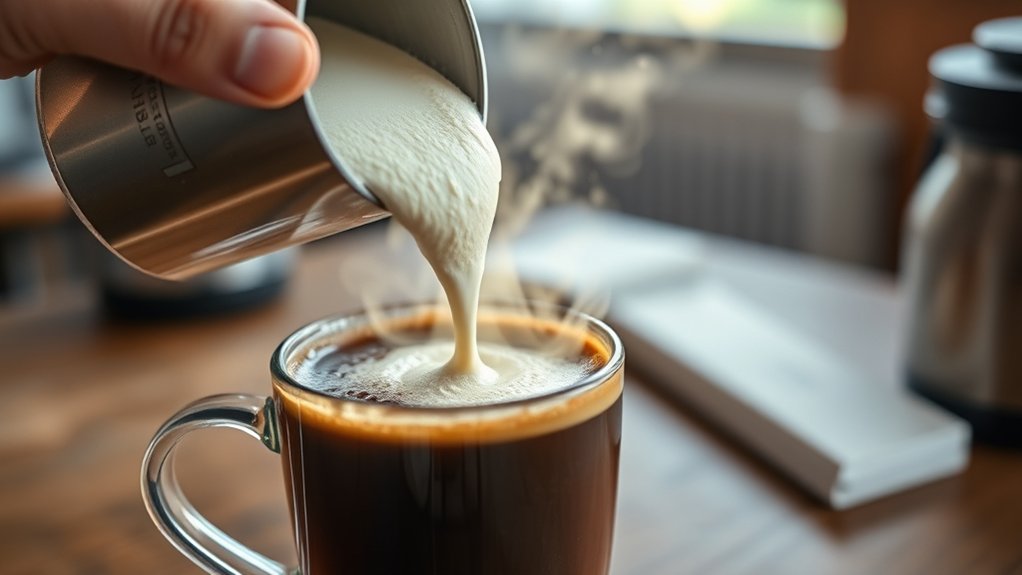
To get a smooth mix and better flavor, try mixing the protein powder with cold water or milk first. Then, slowly combine this mixture with your hot coffee.
This way, you avoid lumps and keep a nice texture. Using a blender or a hand frother can help make the blend even smoother. It ensures the protein dissolves evenly without messing up your coffee’s flavor.
Also, letting your coffee cool down a little before adding the protein powder really helps keep things smooth.
These simple steps make sure you enjoy both the nutritional boost and the great taste of your protein-enriched hot coffee.
Why Protein Powder Clumps in Hot Coffee
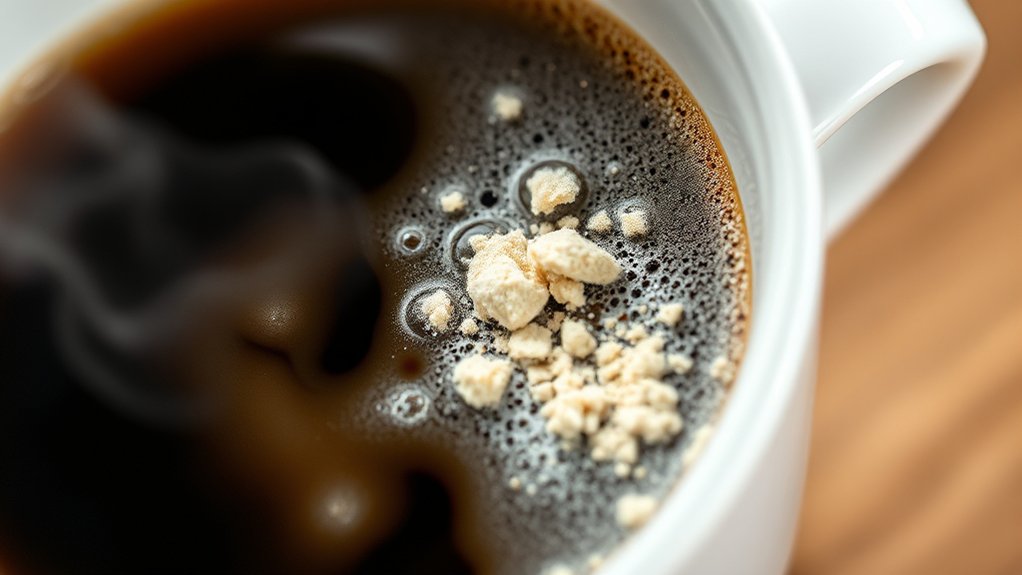
When you add protein powder directly into hot coffee, the heat causes the proteins to denature and unfold. This makes them stick together instead of dissolving smoothly. Protein stability decreases because they’re sensitive to heat, so the proteins lose their natural structure and clump.
Rapid temperature changes cause the molecules to coagulate quickly, kind of like how eggs solidify when cooked. As a result, the proteins tangle and form lumps rather than dispersing evenly.
- Proteins unfold and expose sticky sites
- Molecules rapidly coagulate in boiling coffee
- Solubility drops due to altered protein structure
- Clumps form as proteins solidify before dissolving
Knowing this can help you avoid clumps by managing the temperature and how you mix the powder.
What Heat Does to Your Protein Powder: And Texture
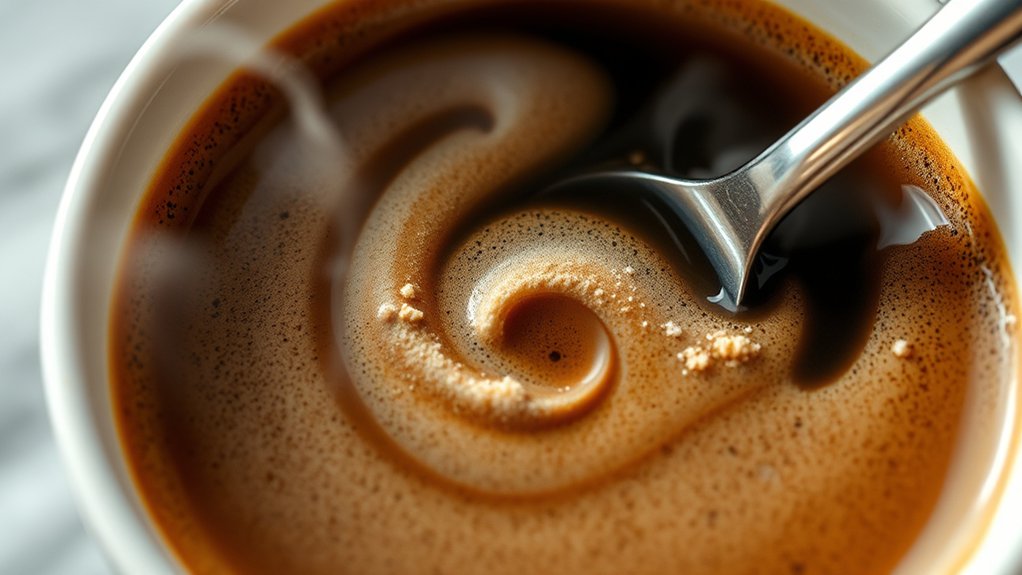
When you add protein powder straight into hot coffee, the heat makes the protein molecules unfold and stick together. This causes clumps to form. It’s a process called denaturation, and it changes the texture, making it gritty or kind of like cottage cheese.
Protein Denaturation Effects
Because heat causes proteins in powder to unfold and lose their native structure, a process called denaturation, you’ll notice changes in texture when you add protein powder to hot coffee. This unfolding alters the protein structure, affecting solubility and texture but doesn’t compromise the nutritional stability or amino acid content.
Denatured proteins may clump or form a cottage-cheese-like consistency, especially if the coffee is very hot. Heat mainly impacts the physical properties rather than the protein’s nutritional value.
Here’s what denaturation can cause:
- Protein molecules unfolding and bonding differently
- Clumping or thickening in your coffee
- Reduced solubility, leading to gritty or chalky bits
- A change in mouthfeel without losing protein quality
Knowing this helps you manage your expectations when mixing protein powder in hot beverages.
Texture Changes In Coffee
Although protein powder adds nutritional value to your coffee, heat considerably alters its texture by causing the proteins to unfold and clump together. This denaturation changes the mouthfeel, creating a cottage-cheese-like texture without affecting the caffeine content or coffee aroma.
Pouring protein directly into boiling coffee speeds up clumping, making the drink gritty. To avoid this, add protein powder to cooled coffee or blend thoroughly for a smooth mix. Reheating protein-infused coffee worsens texture problems.
| Factor | Effect on Texture | Impact on Nutrients |
|---|---|---|
| High Heat | Clumping, gritty texture | No loss of caffeine content |
| Rapid Mixing | Increased coagulation | Protein remains intact |
| Proper Technique | Smooth mouthfeel | Retains coffee aroma |
Cold-First Method: Mixing Protein Powder in Coffee
To prevent clumping and guarantee a smooth texture, you start by mixing your protein powder with cold water or milk before adding hot coffee. This cold-first method helps the protein dissolve fully without denaturation, preserving its nutritional benefits and enhancing the flavor.
Once you have a lump-free mixture, slowly pour in hot coffee, stirring gently to maintain smoothness. This approach works especially well with powders like collagen peptides, which can clump in hot liquids.
Imagine a creamy, velvety coffee with no lumps. Protein powder blending seamlessly in cold milk. Then, a gradual infusion of steaming coffee that keeps the texture just right.
You get a richer flavor profile without any bitterness. Using this method, you enjoy delicious, smooth protein coffee without needing a blender.
Blender Method for Smooth Protein Coffee
If you want an even smoother, frothier protein coffee, the blender method is a great technique to try. By blending slightly cooled hot coffee with protein powder for 10-15 seconds at high speed, you guarantee complete dissolution and prevent clumping or coagulation.
Removing the blender lid insert helps avoid pressure buildup from steam, protecting your blender from damage.
This method enhances ingredient compatibility, allowing the protein to integrate seamlessly with your coffee’s flavor and texture. Plus, the blending process creates a frothy, café-style beverage that preserves the nutritional benefits of your protein powder without compromising taste.
Adding Protein Powder to Boiling Coffee: Is It Safe?
You probably don’t want to add protein powder straight into boiling coffee. The intense heat makes it clump up and lose that nice, smooth texture.
Now, while the heat does change the protein’s structure a bit, it doesn’t actually take away its nutritional benefits. It just affects how it feels and dissolves.
Protein Clumping Risks
Although adding protein powder directly to boiling coffee might seem convenient, it causes rapid denaturation of the protein, resulting in clumping and a grainy texture. When exposed to temperatures above 140°F (60°C), protein molecules unfold and stick together, forming insoluble lumps that compromise flavor enhancement and disrupt nutritional balance.
To keep your coffee smooth and nutritious, avoid mixing protein powder into boiling coffee. Here’s what clumping looks like:
- Grainy, uneven texture floating in your cup
- Lumps that resist stirring or dissolving
- Reduced absorption of protein’s nutritional benefits
- Altered flavor, masking the coffee’s natural notes
For the best experience, add protein powder to lukewarm coffee or blend it thoroughly to preserve both taste and nutrition. It’s a simple step that really makes a difference!
Heat Impact on Protein
When protein powder meets boiling coffee, the intense heat causes its structure to denature rapidly. This results in clumping and a grainy texture that can affect your drinking experience. Heat impacts protein stability by unfolding protein molecules, which triggers foam formation and texture changes.
But don’t worry, this doesn’t reduce the nutritional value or amino acid profile of the protein. To avoid clumps, add protein powder to cooled or slightly warm coffee instead. Proper mixing, like blending with cold liquid first, helps maintain smoothness.
| Factor | Effect on Protein | Recommendation |
|---|---|---|
| Boiling coffee | Rapid denaturation | Avoid direct addition |
| Slightly warm coffee | Moderate denaturation | Safer for mixing |
| Cold liquid | Maintains stability | Best for initial mixing |
| Foam formation | Increased with heat | Control by temperature |
| Nutritional content | Unchanged | Protein remains effective |
Flavor Profiles: How Protein Powder Changes Your Coffee Taste
Since protein powders come in various types and flavors, they can noticeably alter the taste of your coffee. Understanding flavor pairing helps you enhance the aroma and overall experience.
Chocolate protein powder adds rich mocha notes, while vanilla creates a sweet, latte-like flavor.
Unflavored or lightly flavored powders preserve your coffee’s natural profile, offering subtle aroma enhancement. Collagen peptides are tasteless but require proper mixing to avoid off-flavors.
Consider these flavor effects when mixing protein into your coffee:
- Chocolate: deep, dessert-like mocha aroma
- Vanilla: smooth, sweet, café latte vibe
- Unflavored: preserves original coffee taste
- Artificially sweetened: risks overly sweet or chemical flavors
Which Protein Powders Work Best in Coffee
You’ll find collagen peptides work best in hot coffee because they dissolve smoothly without clumping.
Whey and beef protein can also blend well, but you might need to mix them carefully or use slightly cooler temperatures to avoid any texture issues.
It’s a good idea to choose unflavored or mildly flavored powders. That way, you keep the coffee’s natural taste and reduce the chance of getting any gritty bits, which often happen with plant-based proteins.
Best Protein Types
Although many protein powders exist, not all work well in hot coffee. You need powders that maintain protein stability under heat and offer effective flavor masking to complement coffee’s taste. Collagen peptides excel here, dissolving easily without clumps and being virtually tasteless.
Whey protein isolate can work if you blend it thoroughly but tends to clump if added directly. Beef protein isolate also dissolves smoothly, supporting protein stability in hot beverages.
Plant-based proteins, such as pea or rice, often have gritty textures and stronger flavors, making them less ideal.
Consider these options for the best coffee mix:
- Collagen peptides: tasteless and smooth
- Whey protein isolate: requires blending
- Beef protein isolate: dissolves well in heat
- Unflavored or lightly flavored powders (vanilla, mocha) for subtle flavor masking
Flavor Compatibility
Choosing the right protein powder for your coffee goes beyond how well it dissolves. It also comes down to flavor compatibility. Unflavored or lightly flavored powders like vanilla or mocha offer ideal flavor pairings. They blend smoothly without overpowering your coffee’s natural taste.
Collagen peptides rank high for aroma enhancement since they’re tasteless and dissolve easily in hot coffee.
Whey protein adds a mild milky note, which can complement coffee but slightly alters its profile.
On the other hand, plant-based proteins such as pea or rice often bring earthy flavors that may clash with or dominate your coffee’s aroma.
To preserve your coffee’s essence, avoid intense flavored powders with artificial sweeteners. Instead, opt for subtle, natural flavors that enhance rather than mask your brew.
Mixing Texture Tips
When mixing protein powder into your hot coffee, texture plays an essential role in the overall experience. Choosing the right protein powder impacts both flavor pairing and texture enhancement. Collagen peptides work best since they dissolve seamlessly, leaving your coffee smooth.
Whey protein can clump unless you blend it well or mix it with cold water first. Plant-based proteins often create a gritty, chalky mouthfeel, which may detract from your coffee’s enjoyment. So, it’s worth considering what kind of protein you use.
To improve texture, try these tips: Use a blender or immersion blender for a frothy, uniform consistency. Mix protein powder with cold liquid before adding hot coffee.
Opt for collagen peptides to avoid lumps. And if you prefer a silky texture, it might be best to avoid plant-based powders. These strategies help make sure your coffee stays delicious and smooth.
How Much Protein Powder to Add for Smooth Coffee
To achieve a smooth texture in your hot coffee, start by adding one scoop (26-30 grams) of protein powder for every 8-12 ounces of coffee. This amount balances ideal protein absorption and maximizes nutritional benefits without compromising the coffee’s consistency.
Using more than one scoop can make your drink thick and chalky, which hinders smooth mixing and enjoyment.
If you’re new to adding protein powder, try half a scoop first and gradually increase to avoid clumps and overwhelming the flavor.
For best results, mix the powder with a small amount of cold liquid before stirring it into your hot coffee. This method ensures better blending and enhances the overall texture while supporting your dietary protein needs efficiently.
Mistakes to Avoid When Mixing Protein in Coffee
Although adding protein powder to your coffee is a great way to boost nutrition, you need to avoid common mistakes that lead to clumping and an unpleasant texture. Temperature and mixing methods directly affect your coffee’s smoothness and flavor combinations.
For best results, don’t pour protein powder into boiling coffee; let it cool slightly to prevent rapid coagulation.
Also, avoid using just a spoon to stir—it often creates lumps. Limit yourself to one scoop per cup to keep the texture even.
Avoid adding protein powder to boiling hot coffee. Don’t exceed one scoop per cup for balanced texture.
Refrain from stirring protein powder directly with a spoon. Use blending or add protein to cooled coffee before mixing.
Adjust your brewing techniques and mixing approach for a smooth, enjoyable protein coffee experience.
Protein Coffee’s Role in Your Fitness Routine
Since combining protein with caffeine offers both muscle-building nutrients and a stimulating boost, protein coffee can play a strategic role in your fitness routine. This protein pairing delivers high-quality amino acids that support muscle recovery and reduce soreness, helping you bounce back faster after workouts.
The caffeine synergy not only enhances alertness but also improves workout performance by stabilizing blood sugar and providing sustained energy. If you’re juggling a busy schedule, protein coffee conveniently helps you meet daily protein goals without extra meals.
Plus, its ability to promote satiety supports weight management by curbing appetite and reducing calorie intake. Incorporating protein coffee into your routine guarantees you get both the recovery benefits and the energy boost needed to stay consistent and efficient in your fitness journey.
Making Iced Protein Coffee: Tips for Cold Protein Drinks
When you want a revitalizing way to enjoy protein coffee, making it iced can be a perfect choice. Start by brewing your coffee using precise brewing techniques, then let it cool to room temperature or chill it in the fridge.
To avoid clumps, mix protein powder with a small amount of cold water or milk first, creating a smooth slurry. Combine this with your cooled coffee and shake or blend vigorously for 10-15 seconds to achieve a frothy, consistent texture.
For a creamy touch, add ice before blending. Serve immediately and give it a quick stir if it sits. This method not only maintains great flavor but also lets you enjoy coffee art in a refreshing, cold protein drink.
- Chilled, smooth coffee base
- Protein slurry preventing clumps
- Frothy, creamy texture with ice
- Immediate serving for peak flavor
Frequently Asked Questions
Can Protein Powder Affect the Caffeine Absorption in Coffee?
Yes, protein powder can affect caffeine absorption by slowing digestion. This interaction delays peak blood caffeine levels, so you’ll experience a more sustained energy boost rather than an immediate spike.
That happens because protein takes longer to digest, which means caffeine is absorbed more gradually. So, instead of a quick jolt, your energy comes on smoother and lasts longer. It’s kind of like a steady release instead of a fast burst.
Is It Better to Use Whey or Plant-Based Protein in Coffee?
You’ll find whey protein better for coffee because it changes the texture more smoothly and has a neutral flavor that blends well. It just mixes in without any fuss, which makes your coffee taste just right.
Plant-based options, on the other hand, have a more earthy taste and can be a bit gritty. They’re a great choice if you’re vegan, but they do need a bit more blending to get the texture just right in your coffee. It’s worth the extra effort if you’re looking for a plant-based boost.
How Long Does Protein Coffee Stay Fresh After Mixing?
Your protein coffee stays fresh for about 1-2 hours at room temperature. This helps preserve the flavor enhancement and texture modification.
If you want it to last longer, refrigerate it. That can extend freshness up to 24 hours. Just keep in mind, the texture might change a bit, but you can fix that by giving it a good shake before drinking.
Can Adding Protein Powder to Coffee Impact Digestion?
Yes, adding protein powder to coffee can impact digestion. Its texture changes might cause bloating or gas.
But if you think about flavor compatibility and mix it properly, you’ll minimize discomfort. That way, you can enjoy a smoother, more digestible drink.
Are There Specific Brands of Protein Powder Designed for Coffee?
You won’t find many protein powders specifically designed for coffee, but brands like Vital Proteins and Optimum Nutrition offer options with good flavor compatibility and texture consistency.
These make them essential for blending smoothly into hot coffee. It’s all about finding a powder that doesn’t clump or change the taste too much.
Conclusion
So, yes, you *can* toss protein powder into your hot coffee. Just don’t expect it to behave like a barista’s dream. Clumps and weird textures are the price of convenience unless you play it smart with cold-first mixing or a blender.
Think of it as a science experiment in your mug. A little patience and technique turn chaos into creamy gains. Remember, even your coffee needs a little TLC to fuel your fitness goals properly.