How To Clean Mr Coffee Maker – Easy Cleaning Instructions
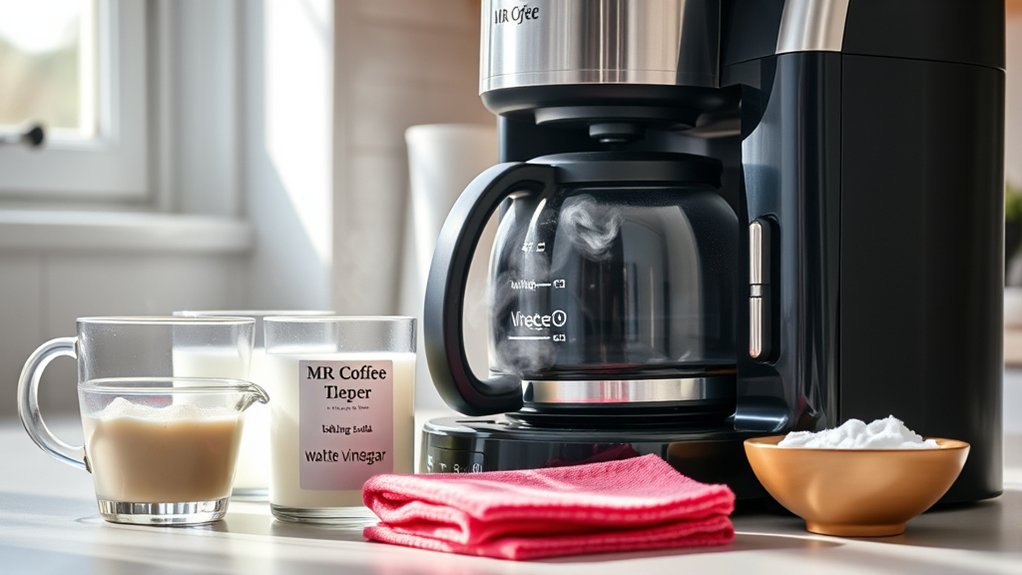
To clean your Mr. Coffee maker, first unplug it and let it cool down. Then, remove and empty the carafe, filter basket, and reservoir.
Next, descale the machine by running a cycle with equal parts vinegar and water. Let it sit for about 30 minutes before flushing it with clean water cycles.
Clean the pot by soaking it in vinegar and using a soft brush to scrub. Make sure to regularly discard coffee grounds and rinse all parts thoroughly.
Always follow the manufacturer’s guidelines and inspect the parts routinely. If you want more detailed steps or troubleshooting tips, keep exploring essential maintenance advice.
How To Clean Your Mr Coffee Maker: What You Need
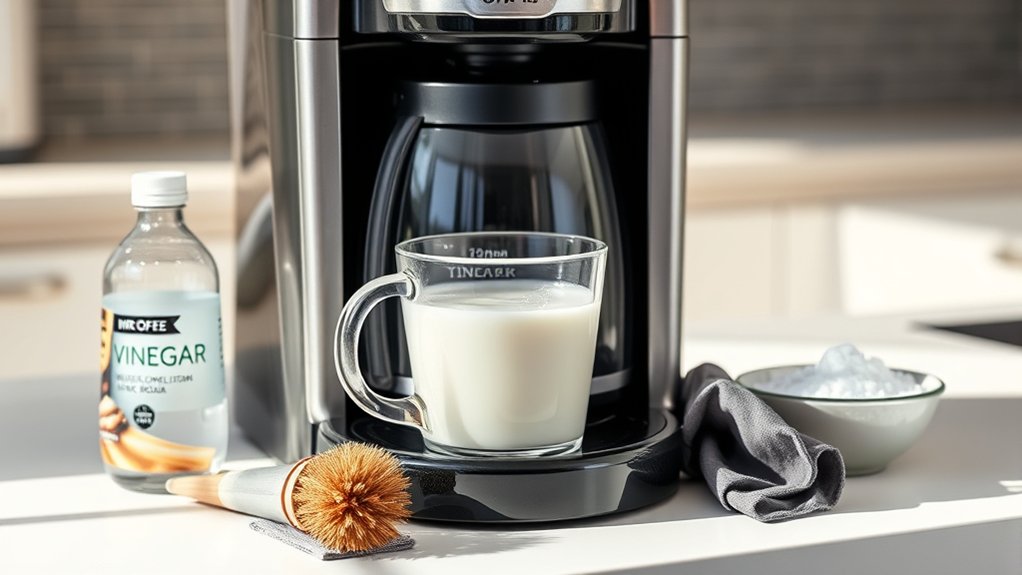
Before you begin cleaning your Mr. Coffee maker, gather the essential supplies to guarantee efficient appliance maintenance. You’ll need white vinegar, which acts as a natural descaling agent to remove mineral buildup from coffee brewing components.
Start cleaning your Mr. Coffee maker by gathering white vinegar and essential supplies for effective maintenance.
Also, have a mild dish soap on hand to clean detachable parts like the carafe and filter basket.
Use a soft cloth or sponge to avoid scratching surfaces. A toothbrush or small brush helps reach tight spots.
Prepare clean water for rinsing after descaling.
Avoid harsh chemicals that can damage your coffee maker’s internal mechanisms.
Having these items ready streamlines the cleaning process, prolongs your appliance’s lifespan, and maintains ideal coffee brewing performance.
Proper preparation ensures thorough, safe maintenance without unnecessary delays or damage.
How To Prepare Your Mr Coffee Maker For Cleaning
Before you start cleaning, it’s a good idea to gather all the supplies you’ll need, like a soft cloth, some mild detergent, and a brush.
Once you have everything ready, make sure to unplug your Mr. Coffee maker and let it cool down completely. This helps avoid any electrical hazards.
Next, go ahead and remove the carafe, filter basket, and any other parts that can be taken off.
Don’t forget to empty them first! This way, you can give each piece a thorough cleaning without any mess.
Gather Necessary Cleaning Supplies
Although cleaning your Mr. Coffee maker may seem straightforward, gathering the necessary supplies guarantees ideal coffee flavor and maintains brewing speed.
Start with white vinegar or a commercial descaling solution to dissolve mineral buildup inside the machine. You’ll also need mild dish soap for cleaning removable parts like the filter basket and carafe.
Prepare a soft sponge or cloth to avoid scratching surfaces. A small brush or toothbrush helps reach tight areas, ensuring thorough cleaning.
Have a clean water source ready to rinse components effectively.
Avoid harsh chemicals that can damage internal parts or alter coffee flavor.
Unplug And Cool Down
Once you’ve gathered your cleaning supplies, make certain to unplug your Mr. Coffee maker from the power source. This step is essential for safety and prevents any electrical hazards during cleaning.
After unplugging, allow the machine to cool down completely. Hot internal components can cause burns or damage cleaning tools. Cooling also ensures residues from the last brew, including leftover coffee grind oils affected by water hardness, settle and are easier to remove.
Do not rush this phase; wait at least 15-20 minutes. Avoid touching any metal parts until the unit is cool to the touch. Proper unplugging and cooling prepare your Mr. Coffee maker for effective cleaning without risking injury or equipment damage.
Remove And Empty Components
After the machine has cooled down safely, you can begin removing the detachable parts for cleaning. Start by taking out the water reservoir, carafe, filter basket, and any other removable components. Empty all residual water and coffee grounds completely to prevent buildup and bacterial growth.
Regular component maintenance is essential. Clean these parts after every brew or at the recommended cleaning frequency specified in your Mr Coffee Maker manual. Use warm, soapy water and a non-abrasive sponge to scrub each component thoroughly, then rinse and dry them before reassembling.
Avoid submerging electrical parts. Properly maintaining these components prolongs the machine’s lifespan and guarantees ideal brewing performance.
Following this step methodically prepares your coffee maker for deeper cleaning and keeps it hygienic and efficient.
Vinegar Vs. Commercial Cleaners: Which Is Best For Your Mr Coffee?
You’ll want to compare vinegar and commercial cleaners based on how well they remove mineral buildup from your Mr Coffee maker. It’s important to think about how safe each option is too, especially when it comes to the parts inside your machine.
Plus, don’t forget to consider the cost and how easy each cleaner is to use. That way, you can figure out which one fits best with your routine.
Cleaning Effectiveness Comparison
Two popular methods dominate the cleaning process for your Mr. Coffee maker: vinegar and commercial cleaners.
Vinegar effectively dissolves mineral deposits and is readily available, preserving coffee flavor by removing buildup without harsh chemicals. However, its acidic nature requires thorough rinsing to avoid residual taste.
Commercial cleaners are specifically formulated to target tough stains and scale, ensuring deep cleaning and supporting appliance longevity by preventing corrosion. They often contain surfactants and descaling agents that vinegar lacks, providing a more controlled cleaning action.
When using either method, follow the manufacturer’s guidelines to optimize effectiveness.
Vinegar offers a cost-efficient, natural approach, while commercial cleaners deliver precision and enhanced performance.
Choosing between them depends on your priority: natural maintenance or specialized cleaning for sustained coffee flavor and Mr. Coffee’s long-term durability.
Safety And Appliance Impact
While both vinegar and commercial cleaners effectively remove buildup from your Mr. Coffee maker, you need to weigh safety precautions and appliance longevity. Vinegar is acidic and natural but may degrade internal seals if used excessively. Commercial cleaners are formulated for coffee machines, minimizing risk but require careful handling due to chemicals.
Consider these points:
- Always unplug the machine before cleaning to avoid electrical hazards.
- Use recommended dilution ratios to prevent damage.
- Rinse thoroughly after cleaning to eliminate residues.
- Avoid abrasive scrubbing to protect internal components.
- Follow manufacturer guidelines to maintain warranty and extend appliance longevity.
Choosing the right cleaner depends on balancing effective descaling with safety measures that preserve your Mr. Coffee maker’s function and lifespan. It’s all about finding what works best for you while keeping your machine safe and running smoothly.
Cost And Convenience Factors
Although both vinegar and commercial cleaners effectively descale your Mr. Coffee maker, a cost analysis reveals some clear differences. Vinegar is much cheaper, often costing less than a dollar per cleaning cycle. That makes it a budget-friendly choice for regular use.
Commercial cleaners cost more, usually between $5 and $10 per bottle. But since they’re concentrated, you mightn’t need to use them as often.
When it comes to convenience, vinegar is easy to find and doesn’t require any special handling. However, it can leave behind a lingering smell, so you might need to rinse your machine a bit more.
Commercial cleaners often come with quick-dissolving formulas and neutralizers that cut down cleaning time and reduce aftertaste. So, if low cost and easy access are your main priorities, vinegar is probably your best bet.
But if you want something more convenient with minimal odor, going for commercial cleaners makes sense.
How To Descale Your Mr Coffee Maker
Since mineral buildup can impair your Mr. Coffee maker’s performance, descaling is essential to maintain coffee flavor and machine longevity. Regular descaling removes calcium deposits that clog internal components, ensuring ideal water flow and heating efficiency.
Follow these steps to descale correctly:
- Fill the water reservoir with a mixture of equal parts white vinegar and water.
- Run a complete brewing cycle without coffee grounds.
- Let the machine sit for 30 minutes to dissolve mineral deposits.
- Run two to three cycles with clean water to rinse out vinegar residue.
- Wipe down accessible parts and dry thoroughly before next use.
Perform this process every 1 to 3 months, depending on water hardness. Proper descaling preserves your machine’s functionality and guarantees consistently rich coffee flavor.
How To Clean The Coffee Pot And Filter Basket
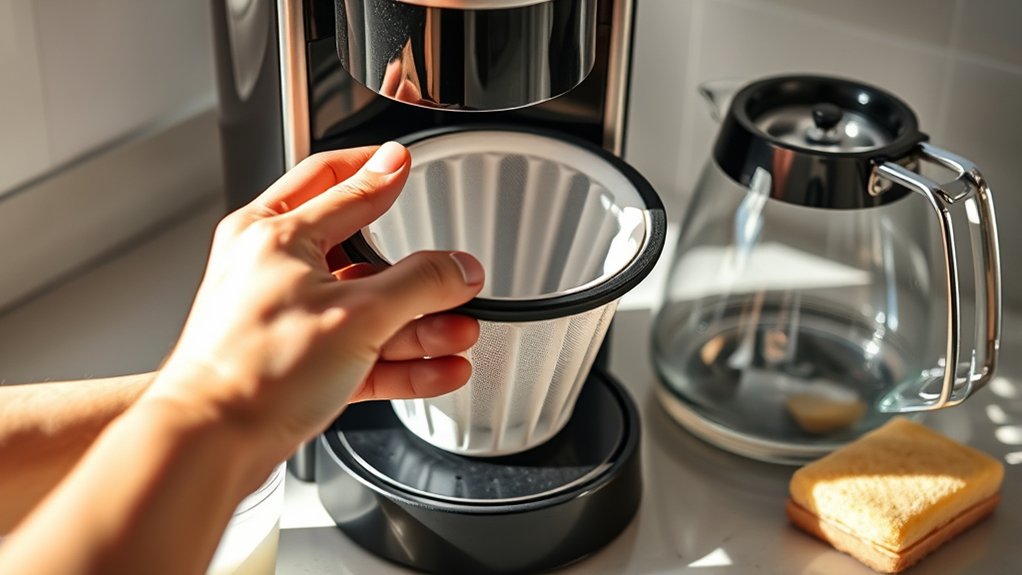
You’ll want to clean the coffee pot regularly to get rid of stains and avoid any buildup. It really helps keep your coffee tasting fresh.
And don’t forget about the filter basket—it needs regular attention too so water flows properly and your coffee tastes just right.
Just follow a few simple steps to clean both parts thoroughly without causing any damage.
Cleaning The Coffee Pot
Several essential steps guarantee your coffee pot and filter basket remain clean and free of buildup. Residue from coffee beans and oil can impair flavor and affect brewing temperature, so thorough cleaning is crucial.
Start by emptying the pot and rinsing with warm water.
Use a mixture of equal parts white vinegar and water to dissolve mineral deposits and coffee stains. Let it sit for 15 minutes, then scrub with a soft brush or sponge. Rinse thoroughly to remove any vinegar taste.
Remove and discard used coffee grounds promptly. Avoid abrasive scrubbers that damage surfaces. Clean after every brewing cycle for peak taste.
Inspect for cracks or discoloration regularly. Dry completely before reassembling to prevent mold.
These steps ensure consistent coffee quality and prolong your pot’s lifespan. Taking a little extra time to clean your coffee pot really pays off in the long run!
Maintaining The Filter Basket
How often should you clean the filter basket to maintain ideal brewing performance? For best filter maintenance, clean the basket after every use. Residual coffee grounds can clog the mesh, impairing water flow and affecting flavor extraction.
Start by removing the basket from the machine. Rinse it under warm water and use a soft brush to dislodge any trapped grounds. Avoid harsh detergents since they might leave residues.
For a deeper clean, soak the basket in a solution of equal parts white vinegar and water for about 15 minutes. Then, rinse it thoroughly.
Regular cleaning helps prevent buildup that can cause mold or bitter tastes.
Keeping the filter basket clean ensures your Mr Coffee Maker brews efficiently. This way, you get fresh, balanced coffee every time without clogging or any drop in performance.
How Often Should You Clean Your Mr Coffee Maker?
Cleaning your Mr Coffee maker at least once a month guarantees peak performance and prolongs its lifespan. Regular maintenance prevents mineral buildup, which can degrade water quality and negatively impact coffee flavor.
Depending on your usage and water hardness, you may need to adjust the cleaning frequency.
Think about how often you use it. If you brew coffee every day, you’ll probably want to clean it more often.
Also, hard water speeds up mineral deposits, so that’s another factor to keep in mind.
Pay attention to the taste of your coffee. If it starts tasting bitter or off, that’s a good sign it’s time for a cleaning.
And if you notice any visible residue inside the machine, don’t wait to clean it.
Finally, always check your manufacturer’s recommendations. They’ll have specific guidelines for your model that can help you keep your coffee maker in top shape.
Tips To Keep Your Mr Coffee Maker Fresh Between Cleanings
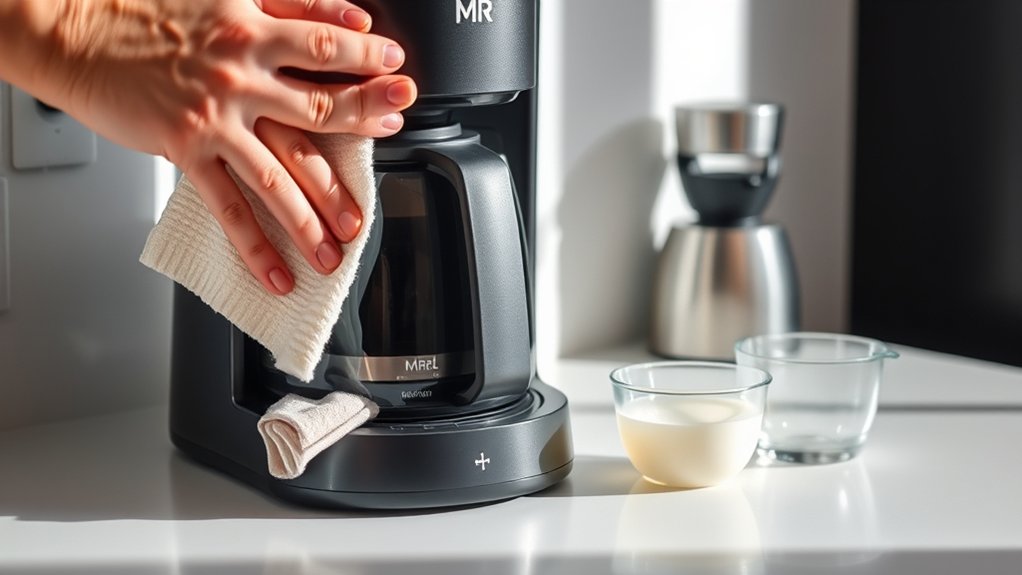
To maintain your Mr Coffee maker’s freshness between deep cleanings, you should regularly rinse removable parts with warm water and wipe down the exterior with a damp cloth. This prevents residue buildup that can degrade coffee flavor.
Regularly rinsing removable parts and wiping the exterior keeps your Mr Coffee maker fresh and flavorful.
After each use, discard used coffee grounds promptly to avoid stale odors affecting future brews.
Run a cycle with just water once a week to flush out lingering oils that slow brewing speed.
Confirm the water reservoir stays clean by emptying and drying it daily to inhibit mold growth.
Store your coffee maker in a dry environment and keep the lid open when not in use to allow airflow.
These steps preserve excellent coffee flavor and maintain consistent brewing speed until your next thorough cleaning. It’s a simple routine that really makes a difference in how your coffee tastes and how well your machine works over time.
How To Fix Common Cleaning Problems With Mr Coffee
Although regular maintenance helps, you might encounter issues like mineral buildup, clogged spray heads, or persistent odors in your Mr Coffee maker. To resolve these problems, follow these precise steps to restore the best coffee brewing performance:
Descale using a mixture of equal parts white vinegar and water to dissolve mineral deposits. Clean spray heads with a soft brush or toothpick to remove clogs affecting water distribution. Rinse thoroughly after descaling to eliminate vinegar residues that cause odors.
Use filtered water to reduce mineral buildup and improve water filtration efficiency. Regularly clean removable parts with warm soapy water to prevent mold and bacterial growth. These simple steps can keep your coffee maker running smoothly and your coffee tasting great.
When To Replace Parts On Your Mr Coffee Maker
Knowing when to replace key components of your Mr Coffee maker guarantees peak performance and longevity. Start by inspecting the water filtration system. Replace the water filter every 60 days or after brewing 60 cycles to maintain ideal water quality and prevent mineral buildup.
The coffee brewing basket and carafe lid should be replaced if you notice cracks or warping. These defects can affect brewing efficiency and safety. So, keep an eye out for any damage there.
If you detect unusual noises or inconsistent brewing temperatures, check the heating element. Replace it if you find it’s faulty.
Also, regularly examine the power cord and switches for wear or damage. Replace them promptly to avoid electrical hazards.
Timely part replacements ensure your Mr Coffee maker continues delivering consistent, high-quality coffee brewing results. It’s really worth staying on top of these checks!
Why You Should Clean Your Mr Coffee Maker Regularly
Regularly cleaning your Mr Coffee maker prevents mineral buildup and coffee residue from messing with brewing performance and flavor quality. Over time, water hardness causes scale deposits that restrict water flow and reduce heating efficiency. This directly affects how consistent your coffee turns out.
Neglecting maintenance can make your machine run slower and cause weird off-flavors in your coffee. So, it’s really worth keeping it clean.
To keep your coffee maker working its best, focus on these areas:
- Remove calcium and magnesium scale from internal parts
- Get rid of coffee oil residues that can change the taste
- Make sure water flows properly for steady brewing temperature
- Prevent bacteria from growing in water reservoirs
- Help extend the lifespan of heating elements and seals
Taking a little time to clean regularly will make your coffee taste better and your machine last longer. It’s a simple step that pays off every morning!
Frequently Asked Questions
Can I Use Bleach to Clean My Mr Coffee Maker?
You shouldn’t use bleach cleaning on your Mr. Coffee maker, as it can damage internal components and leave harmful residues. Instead, opt for vinegar or specialized coffee machine cleaners. These options are much safer and effective.
If you do consider bleach, make sure to follow strict safety precautions. Dilute it heavily, rinse thoroughly multiple times, and make sure no bleach smell remains. But honestly, it’s usually not worth the risk.
Manufacturers typically advise against bleach because it can cause corrosion and health risks. So, it’s best to just avoid it altogether and stick with safer cleaning methods.
Is It Safe to Run the Coffee Maker Without Coffee Grounds?
You’ve heard “better safe than sorry,” and that definitely applies here. Running your Mr Coffee Maker without coffee grounds is generally safe and won’t harm the machine’s safety features.
However, doing this repeatedly can cause overheating or damage the heating element since grounds help regulate temperature. So, stick to using this method only for cleaning cycles with water or vinegar.
Avoid regular brewing without grounds if you want to keep your machine running smoothly and lasting longer. It’s all about maintaining ideal performance and longevity.
How Do I Troubleshoot if My Mr Coffee Maker Won’T Brew?
If your Mr. Coffee maker won’t brew, first check for clogged coffee grounds blocking the filter or water line.
Make sure the water reservoir is full and seated correctly.
Verify the brewing temperature; if it’s too low, the machine mightn’t activate properly.
Clean any mineral buildup with a descaling solution.
Finally, inspect the power source and reset the machine by unplugging it for a minute before trying again.
Sometimes, a quick reset is all it takes to get things working again.
Don’t forget to give those parts a good look over—they might be the simple fix you need!
Can I Clean My Mr Coffee Maker in the Dishwasher?
You shouldn’t put your Mr. Coffee maker’s main components in the dishwasher because they aren’t designed for dishwasher safety and could get damaged. Instead, clean removable parts like the filter basket and carafe by hand with warm, soapy water.
Try to keep up with regular cleaning—ideally every 1 to 3 months—to prevent buildup. It really helps keep your coffee tasting great and your machine running smoothly.
Also, always check your model’s manual for specific instructions. That way, you’ll make sure you’re taking proper care of your coffee maker and avoid voiding the warranty.
What Type of Water Is Best for Brewing Coffee in Mr Coffee?
Water quality is the backbone of your brewing taste. Think of it as the canvas for your coffee masterpiece. For the best results in your Mr. Coffee, use filtered or bottled water with low mineral content and no strong odors.
Avoid hard or tap water, as minerals and chlorine can alter flavor and damage your machine. Using clean, fresh water every time guarantees ideal extraction.
This means you’ll get a richer, more balanced cup with each brew.
Conclusion
Keeping your Mr. Coffee maker clean is like tuning a finely crafted instrument. It guarantees every brew hits the perfect note. By regularly descaling and scrubbing your machine and its parts, you’ll prevent buildup that dulls flavor and performance.
Follow these precise steps to maintain peak functionality and savor fresh, delicious coffee every time. Remember, a well-maintained coffee maker isn’t just clean, it’s your daily ritual perfected with care.