
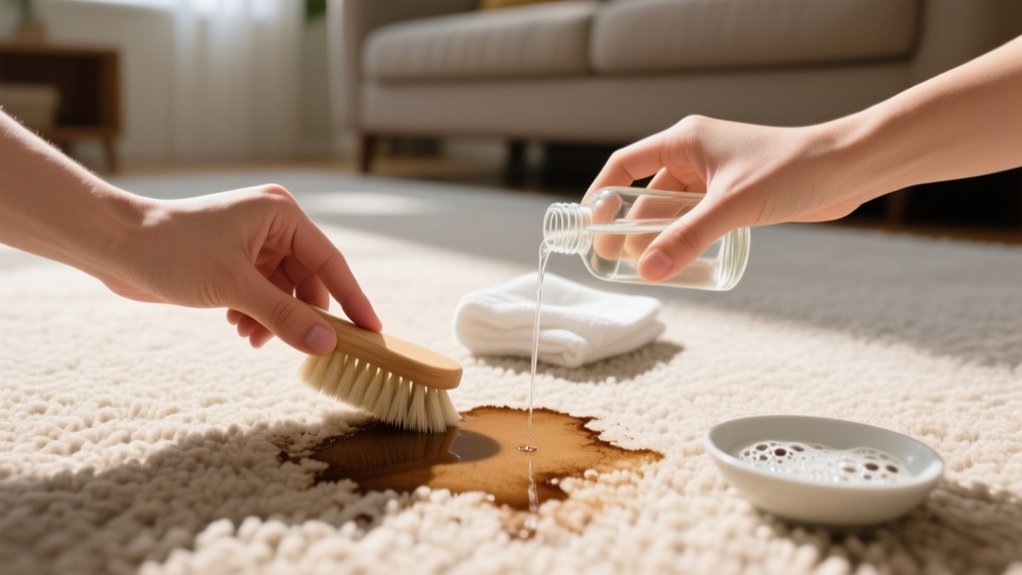
How To Get Old Coffee Stains Out Of Carpet – Proven Removal Tips
To get old coffee stains out of your carpet, start by mixing 1 tbsp liquid dish soap with 1 tbsp white vinegar in 2 cups warm water and gently blot the stain. Avoid rubbing.
For stubborn spots, try a baking soda and hydrogen peroxide paste, testing first on a hidden area. Remember, synthetic carpets tolerate stronger cleaning than natural fibers like wool.
If stains persist or cause odors, professional help might be needed. Explore deeper techniques and solutions to fully restore your carpet’s look.
Step-by-Step Coffee Stain Removal Guide
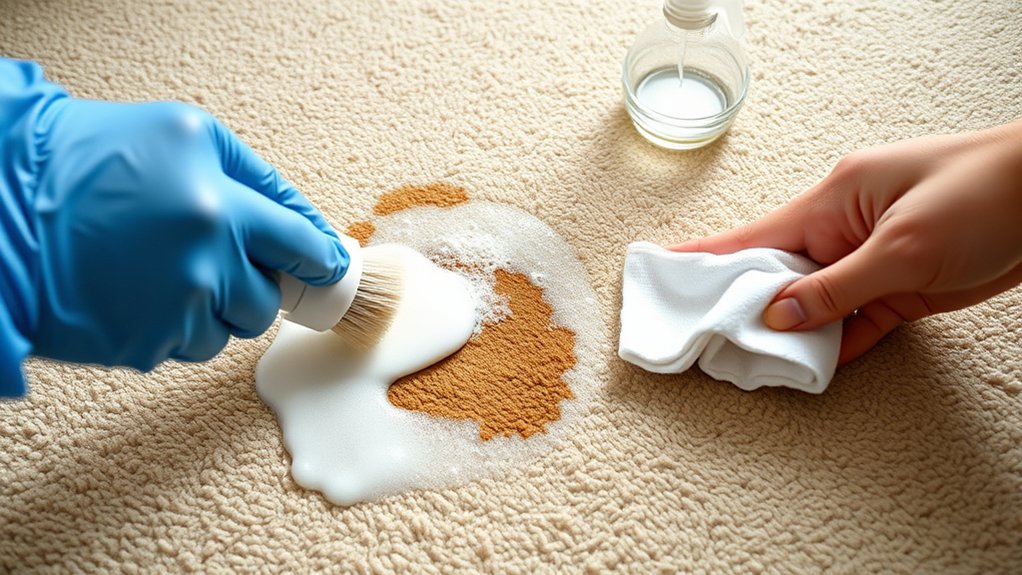
To tackle an old coffee stain on your carpet, start by blotting the area with a clean cloth to soak up any remaining liquid. Avoid rubbing, as that will only spread the stain.
Blot old coffee stains gently with a clean cloth—rubbing only spreads the mess.
For fresh or old coffee stains, prepare a cleaning solution by mixing one tablespoon of liquid dish soap, one tablespoon of white vinegar, and two cups of warm water.
Apply this solution gently, then blot the stain to lift it.
If stubborn coffee stains remain, apply a paste of hydrogen peroxide and baking soda. Let it sit for 10-15 minutes before blotting again.
Always rinse the treated area with a cloth dampened in cold water to remove residue, then blot dry.
For delicate carpets or persistent stains, seek professional cleaning to prevent damage and guarantee thorough removal.
Homemade Solutions That Work on Coffee Stains
Although commercial cleaners can be effective, homemade solutions provide a cost-efficient and accessible way to tackle coffee stains on your carpet.
Mix one tablespoon of liquid dish soap with one tablespoon of white vinegar in two cups of warm water. Apply this solution using a clean cloth, blotting gently to break down the stain without spreading it.
For stubborn coffee stains, apply a paste of baking soda and hydrogen peroxide directly, leaving it for 10-15 minutes before blotting gently.
You can also use lemon juice combined with salt to lift stains, but rinse thoroughly to avoid carpet discoloration.
Furthermore, sprinkling baking soda helps absorb moisture and odors.
Always test any homemade solution on a hidden area first to protect your carpet’s fibers and color.
Commercial vs. Natural Coffee Stain Cleaners
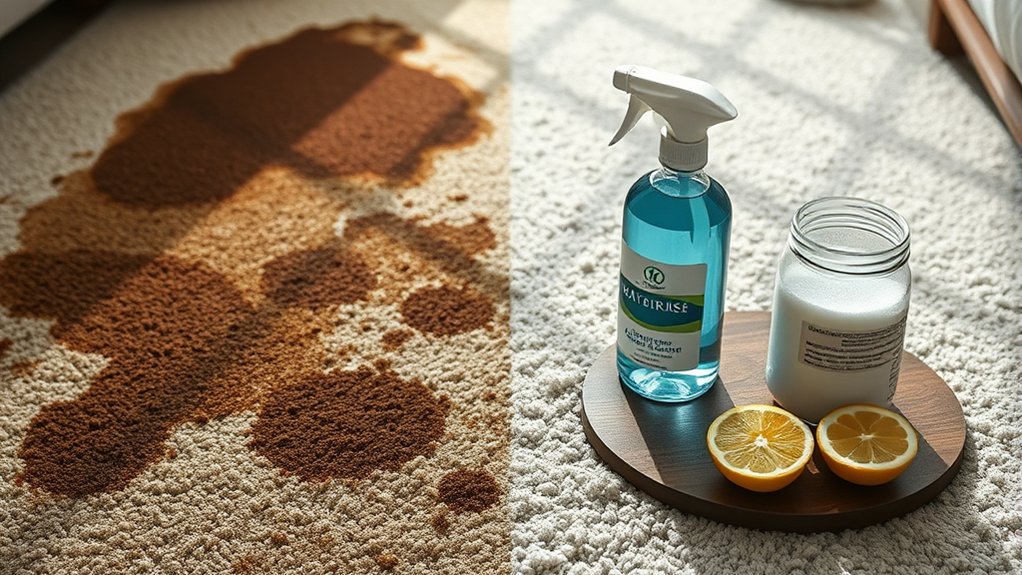
You’ll find that commercial cleaners tackle tough coffee stains faster because they use strong enzymes.
But here’s the catch—they often contain chemicals that can harm the environment.
On the other hand, natural cleaners are gentler and eco-friendly, which is great.
The downside? They usually need to be applied multiple times to get the same level of effectiveness.
Effectiveness Comparison
When tackling old coffee stains, commercial stain removers often outperform natural solutions because they contain specialized enzymes and surfactants designed to break down tough residues at a molecular level.
Their effectiveness is particularly higher on deeply set stains compared to natural cleaners, which work best on light stains and may require repeated applications.
For example, OxiClean’s concentrated formula lifts older coffee marks more efficiently than vinegar and baking soda mixtures.
Moreover, commercial products often provide tailored stain removal methods suited to various carpet types, ensuring the best results, while natural options lack this precision.
Consider these points when choosing your approach:
- Commercial stain removers target stains at a molecular level for thorough cleaning
- Natural cleaners excel with light stains but struggle with older, set-in coffee marks
- Carpet type influences which stain removal method will work best
Environmental Impact
The environmental impact of coffee stain cleaners varies considerably between commercial and natural options. Commercial solutions often contain synthetic chemicals that harm indoor air quality and aquatic life when they enter water systems.
In contrast, natural ingredients like white vinegar and baking soda are biodegradable and environmentally friendly. They reduce pollution and carbon footprint. Choosing natural cleaning methods limits your exposure to volatile organic compounds (VOCs) and supports sustainability.
Here’s a brief comparison:
| Aspect | Commercial Cleaners | Natural Cleaners |
|---|---|---|
| Ingredients | Synthetic chemicals | White vinegar, baking soda |
| Biodegradability | Low | High |
| Water Pollution | Potentially harmful | Minimal |
| Carbon Footprint | High (production & packaging) | Low |
| Health Impact | VOC emissions, respiratory risks | Environmentally friendly |
Switching to natural solutions helps protect your health and the environment.
Preventing Carpet Damage When Cleaning Coffee Stains
Three key practices can help you prevent carpet damage while cleaning coffee stains.
First, always blot up as much coffee as possible with a clean cloth instead of rubbing. Rubbing can spread the stain and damage fibers.
Next, test any cleaning methods on a hidden area to verify they won’t cause damage or discoloration.
Finally, work carefully from the outside toward the center of the stain to prevent spreading.
Use absorbent materials to remove excess liquid without soaking the carpet. Blot gently with a clean cloth to protect carpet fibers.
Schedule regular professional cleanings to maintain carpet integrity and tackle stubborn stains.
Following these steps helps you remove stains effectively while preserving your carpet’s appearance and longevity.
How Carpet Types Affect Coffee Stain Removal
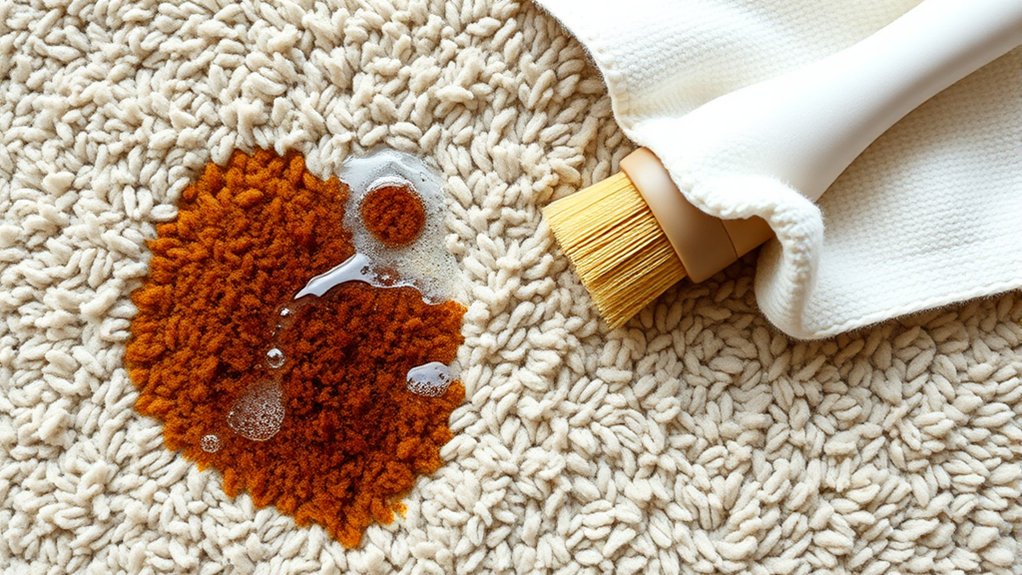
You’ll find that synthetic carpets like nylon handle coffee stains better and respond well to home cleaning.
On the other hand, natural fibers such as wool absorb stains quickly and need gentler, often professional care.
Cotton blends soak up coffee deeply, which makes removal more difficult and usually requires repeated treatments.
Synthetic Versus Natural Fibers
Since carpet fiber type directly influences how coffee stains behave, knowing whether your carpet is synthetic or natural is essential for effective stain removal.
Synthetic carpets like nylon and polyester resist coffee stains better due to lower absorption and stain-resistant treatments.
Natural fibers such as wool and cotton absorb coffee quickly, making stains tougher to remove and increasing the risk of discoloration.
Synthetic carpets tolerate a wider range of cleaning methods, allowing more aggressive solutions.
Natural fibers require gentle cleaning to prevent damage and worsening discoloration.
Prompt action is critical on natural carpets to avoid permanent stains, especially on light colors.
Understanding your carpet’s fiber type guides you in choosing the right cleaning method to effectively remove coffee stains without causing harm.
Stain Absorption Differences
Understanding the fiber type gives you a foundation, but how your carpet actually absorbs coffee plays a major role in stain removal.
Different carpet materials show distinct stain absorption differences.
Synthetic carpets, like nylon and polyester, resist stains better, making cleanup after a coffee spill simpler.
Wool carpets absorb coffee quickly, so you’ll need gentle cleaning to prevent damage.
Cotton blends soak up coffee deeply, complicating removal efforts.
Stain-resistant carpets repel liquids but aren’t foolproof. Prompt action is critical.
Plush carpets hide stains within their base layers, causing delayed discoloration.
For all types, a tablespoon of white vinegar mixed with water can help lift old stains effectively.
Tailor your approach based on your carpet type to tackle coffee stains efficiently and avoid permanent damage.
Why Old Coffee Stains Are So Hard to Remove
Although fresh coffee stains can often be treated quickly, old coffee stains become stubborn because tannins and sugars form strong bonds with carpet fibers over time.
These tannins that give coffee its color seep deep, causing set-in stains that resist stain lifts. The removal process becomes tougher as hot coffee penetrates fibers, and additives like milk introduce proteins and fats, complicating cleanup.
Light-colored carpets show these stains more prominently, making prompt action essential.
Keep in mind:
- Set-in stains attract dirt, darkening their appearance and embedding further into carpet fibers.
- Tannins and sugars chemically bind with fibers, reducing the effectiveness of typical cleaning agents.
- Proteins and fats from milk-based coffee cause odors and complicate stain lifts.
Understanding these challenges helps you tackle stubborn stains effectively.
When to Call a Professional for Coffee Stain Removal
When repeated efforts to remove coffee stains fail, it’s time to contemplate professional help. Knowing when to call a professional is essential, especially if old coffee has deeply penetrated your carpet fibers.
DIY methods often can’t tackle stains that have set over time or caused discoloration and sour odors.
Professional carpet cleaning uses expert methods and advanced techniques designed to reach deep into the fibers without damaging delicate materials like wool or silk.
If your carpet holds sentimental or monetary value, cleaning services with specialized treatments guarantee safe and effective stain removal.
Trusting professionals not only restores your carpet’s appearance but also prevents permanent damage, making expert intervention the best choice for persistent or severe coffee stains.
Frequently Asked Questions
Can Coffee Stains Cause Permanent Carpet Discoloration?
Yes, coffee stains can cause permanent carpet discoloration if you don’t act quickly.
Stain setting factors like heat influence and fabric types impact how deeply stains embed.
Employing quick response and effective stain prevention techniques helps. Use natural stain removers or specialized carpet cleaning methods promptly.
If stains set, professional cleaning services may be necessary.
Ignoring stains allows tannins and pigments to bond permanently, making removal tough or impossible.
Are Coffee Stain Removers Safe for Pets and Children?
You should always choose pet safe cleaners and child safe products for carpet maintenance to avoid harmful residue effects.
Eco friendly options with natural ingredients work best across carpet types, minimizing risks.
Using proper cleaning methods helps prevent stains without exposing your family to toxins.
Always test solutions first and guarantee good ventilation.
Prioritize stain prevention by addressing spills promptly and selecting cleaners designed specifically for safe, effective carpet care.
How Long Should I Wait Before Cleaning a Coffee Stain?
Think of a coffee stain like a shadow creeping deeper into your carpet fibers. You shouldn’t wait more than 24 hours before using stain removal techniques.
Immediate cleaning methods, like blotting gently with cold water and applying homemade solutions, work best before the stain setting time locks it in.
Remember, fabric types react differently, so adjust water temperature effects accordingly.
If it’s stubborn, consider professional cleaning options to restore your carpet fully.
Can Coffee Stains Be Removed From Carpet Padding?
Yes, you can remove coffee stains from carpet padding, but it depends on how long the stain has set and the type of carpet padding materials.
Use stain removal techniques that target both carpet fibers and padding without oversaturating, so the cleaning solution stays effective.
Different types of coffee may affect how severe the stain is, so it’s best to act fast.
If odors or stains stick around, you might want to consider replacing the padding.
Follow carpet care tips to prevent stains and protect your investment.
Does the Coffee Type Affect Stain Removal Difficulty?
Don’t assume all coffee stains behave the same. Coffee type greatly impacts removal difficulty. High coffee acidity and color intensity in dark roasts penetrate carpet fibers deeper, especially in delicate fabric types.
Additives like cream increase stain size and stickiness, demanding stronger cleaning methods.
Older stains worsen as they bond with fibers. You’ll need tailored approaches depending on stain age, coffee additives, and carpet fibers to effectively tackle those stubborn spots.
Conclusion
Old coffee stains can be tough. Studies show that 80% of spills left untreated become permanent. Acting quickly is key, but even aged stains aren’t hopeless with the right methods.
By choosing the proper cleaner and considering your carpet type, you can effectively restore your carpet’s look. If stains persist, don’t hesitate to call a professional.
Your proactive care makes all the difference in keeping your carpet spotless and damage-free.