
Is Coffee Kosher – Dietary Guidelines And Facts
You can enjoy coffee as kosher if you stick to certified brands and watch for additives. Plain coffee beans are naturally kosher, but roasting, flavorings, and syrups may compromise that status without proper certification. Always check for reliable kosher symbols and use kosher-approved equipment to avoid contamination.
Milk or creamers should also be kosher-certified. Following these guidelines guarantees your coffee meets dietary laws. Understanding these details will help you confidently choose and prepare kosher coffee.
What Does Kosher Mean for Food and Drink?
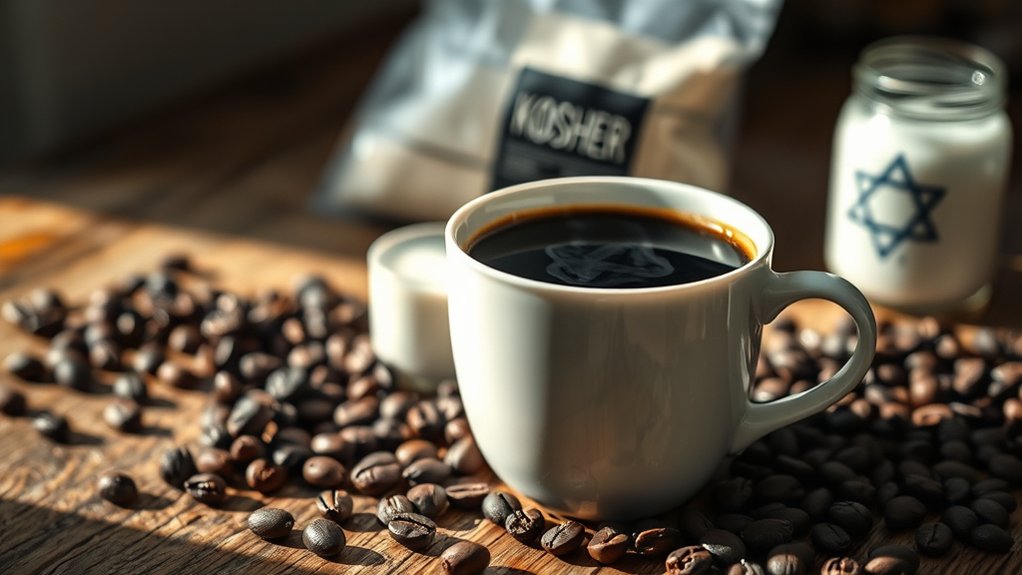
What exactly does kosher mean when it comes to food and drink? Kosher signifies compliance with Jewish dietary laws, ensuring products meet strict standards from sourcing to preparation.
Kosher means adhering to Jewish dietary laws, maintaining strict standards from sourcing to preparation.
When you handle kosher food or drink, such as coffee, you have to consider every step, including coffee brewing and coffee storage. Equipment used for brewing must be kosher-certified or dedicated exclusively to kosher products to prevent cross-contamination.
Similarly, storing coffee properly is essential to maintain its kosher status. It should be kept separately from non-kosher items and in sealed containers to avoid any interaction.
Understanding kosher guidelines means you’re attentive to the origin, processing, and handling of your food. This ensures it aligns with religious requirements and maintains integrity throughout your coffee experience.
Is Plain Coffee Naturally Kosher?
You might think plain coffee is naturally kosher since it’s just roasted beans. But actually, the way it’s processed and the possible additives can change that.
So, it’s important to look for reliable kosher certification to be sure it meets dietary standards.
Also, watch out for cross-contamination during packaging or production, which could affect its kosher status.
Ingredients And Processing
Although coffee beans themselves come from a natural source, understanding their kosher status means looking at both the ingredients and the processing methods involved. Most plain coffee beans are inherently kosher since they come from coffee plants without any added non-kosher substances.
But the risk comes up during processing, like roasting, flavoring, or packaging. Non-kosher additives or shared equipment might contaminate the product.
Brewing coffee usually just involves water and ground beans, so the brewing process itself doesn’t affect kosher status. Still, you want to make sure the beans haven’t been treated with any non-kosher flavorings or additives.
For pure, unflavored coffee, the ingredients and processing generally keep kosher integrity intact—just be sure to check sourcing and production methods carefully.
Kosher Certification Importance
Understanding the ingredients and processing methods gives you a solid foundation. But ensuring coffee’s kosher status goes beyond that. While plain coffee beans are naturally kosher, variations in roasting and packaging can affect certification.
Kosher certification guarantees adherence to strict standards. It preserves coffee flavor and respects kosher dietary laws. Plus, it considers brewing techniques that might introduce non-kosher elements.
| Factor | Impact on Kosher Status |
|---|---|
| Coffee Beans | Naturally kosher if unflavored |
| Roasting Equipment | Must avoid cross-contamination |
| Added Flavors | Require kosher certification |
| Packaging Materials | Should be certified kosher |
You should always look for reliable kosher symbols to confidently enjoy coffee without concerns about its kosher integrity.
Potential Cross-Contamination Risks
While plain coffee beans are inherently kosher, potential cross-contamination risks during processing can compromise their status. During coffee roasting, equipment might be shared with non-kosher products, leading to accidental mixing.
You should be aware that additives or flavorings applied after roasting can also introduce non-kosher elements. Even though caffeine content itself is unrelated to kosher status, any chemical treatments affecting caffeine extraction must be monitored for kosher compliance.
If you’re strict about kosher observance, relying solely on plain, unflavored coffee without certification may be risky. To verify your coffee remains kosher, seek products with reliable kosher certification.
This guarantees that all stages, from coffee roasting to packaging, adhere to kosher standards and avoid cross-contamination.
This vigilance protects your dietary integrity without compromising taste or caffeine quality.
What Additives Affect Coffee’s Kosher Status?
Since additives can change what’s in your coffee, it’s important to check exactly what goes into your cup to know if it’s kosher. Some additives, like milk or creamers, can affect kosher certification, especially if they’ve non-kosher ingredients. Even stabilizers or emulsifiers in creamers need a closer look.
Also, how you store and brew your coffee can indirectly impact its kosher status. For example, if you keep coffee near non-kosher items or use shared equipment without proper koshering, there’s a risk of cross-contamination.
Flavored additives are another factor, though we’re not diving into those here. To keep things kosher, always read ingredient labels carefully. Make sure your brewing tools are either kosher-certified or cleaned thoroughly following kosher rules.
Staying vigilant like this helps keep your coffee kosher every time.
Are Flavorings and Syrups in Coffee Kosher?

You should know that not all flavorings and syrups in coffee are automatically kosher. Some of the additives you find might include non-kosher ingredients or use processing methods that affect their kosher status.
Common Kosher Flavorings
Because flavorings and syrups can contain non-kosher ingredients, it’s essential to verify their certification before adding them to your coffee. When selecting common kosher flavorings, look for those with reliable kosher certification symbols. This way, you can be sure they meet strict dietary standards.
Popular kosher flavor enhancers include vanilla, caramel, and hazelnut syrups made from permissible ingredients. These complement the coffee bean origin, preserving the authentic taste while enhancing flavor.
Natural extracts and plant-based additives are often preferable since they reduce the risk of non-kosher components. By choosing certified kosher flavorings, you maintain the integrity of your coffee’s flavor profile and stay within dietary guidelines.
Always check product labels and certification agencies to confirm kosher status before use. It’s a small step that makes a big difference!
Non-Kosher Additive Risks
Although many flavorings and syrups enhance your coffee’s taste, they can also introduce non-kosher ingredients that compromise dietary adherence. Non-kosher additives, such as animal-derived emulsifiers or alcohol-based flavorings, often lurk in these products. Without careful scrutiny, you risk consuming items that violate kosher laws.
Furthermore, cross-contamination risks arise when flavorings or syrups are processed or stored alongside non-kosher substances. Even trace amounts can render your coffee non-kosher.
To maintain strict compliance, you must verify ingredient sources and manufacturing processes.
Avoid assumptions based solely on product labeling, as non-kosher additives are sometimes undisclosed. By understanding these risks, you ensure that every cup aligns with your kosher dietary standards and preserves the integrity of your coffee experience.
Certification Importance Explained
Ensuring your coffee remains kosher goes beyond just knowing the ingredients. It’s also about the importance of having proper certification.
During coffee processing, things like flavorings and syrups might be added, which can affect whether it stays kosher if they aren’t certified.
You should always look for reliable certification symbols on the packaging. These marks confirm that the entire production process, including any added ingredients, meets kosher standards.
Without these certifications, you could end up consuming products with non-kosher elements or that were processed on non-kosher equipment.
Certification symbols give you assurance and transparency. They help guide your choices in a clear way.
What Milk and Creamers Can You Use in Kosher Coffee?
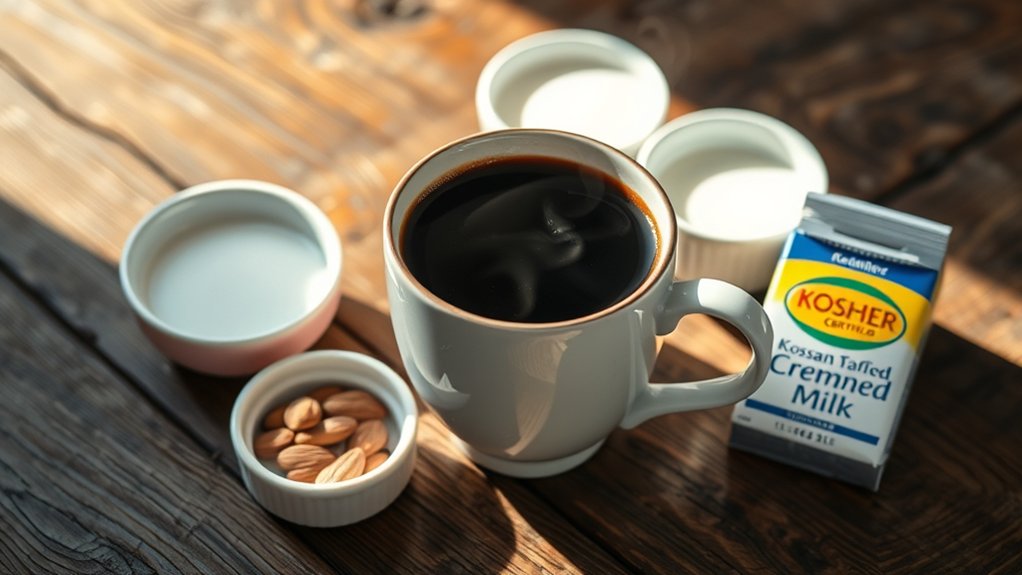
When choosing milk or creamers for your kosher coffee, you need to take into account their kosher certification and whether they align with dietary laws. Only dairy products with reliable kosher certification are suitable, ensuring they contain no non-kosher additives or derivatives.
Choose only milk or creamers with trustworthy kosher certification to ensure compliance with dietary laws.
If you prefer non-dairy creamers, select those explicitly labeled kosher, as some plant-based options may include questionable ingredients.
Keep in mind that the coffee bean origins and coffee brewing methods don’t affect milk or creamer choice, but they do impact overall kosher considerations.
You can use kosher-certified cow’s milk, almond, soy, or oat creamers—just verify certification.
Avoid mixing meat-based products with dairy in your coffee to comply fully with kosher dietary laws, maintaining the integrity of your kosher coffee experience.
How Does Coffee Preparation Affect Kosher Status?
Choosing the right milk or creamer is just one part of maintaining your coffee’s kosher status. You also need to consider how coffee roasting impacts kosher certification. Only beans roasted under kosher supervision guarantee compliance.
Brewing equipment plays a vital role too. If the machines are used for non-kosher products or aren’t koshered properly, your coffee’s status may be compromised. Make sure the brewing equipment is either dedicated to kosher use or thoroughly cleaned according to kosher standards before use.
Even minor cross-contamination during preparation can affect kosher adherence. By controlling both coffee roasting sources and the cleanliness or exclusivity of your brewing equipment, you ensure that every cup you serve remains fully kosher.
This keeps everything aligned with your dietary guidelines and religious requirements.
Which Coffee Brands Are Certified Kosher?
Although many coffee brands offer kosher options, not all carry reliable certification. When choosing, focus on brands that clearly label their products with recognized kosher symbols.
Popular certified brands include Strauss, Elite, and Café Joe, which maintain strict supervision across coffee bean varieties and roasting processes.
These brands ensure that no non-kosher additives or processing aids compromise the product. Furthermore, certified brands often consider brewing methods, advising on kosher-compliant equipment to prevent cross-contamination.
Remember, certifications cover both the raw coffee beans and the production environment, so selecting a trusted brand simplifies adherence to kosher guidelines.
How to Verify Kosher Certification on Coffee Products
To verify kosher certification on coffee products, start by getting familiar with common kosher symbols. These little marks on the packaging let you know the product has been checked and approved according to kosher dietary laws.
Next, it’s important to know which certification agencies are trusted. Not all symbols carry the same weight, so looking up the certifying agency can help you feel confident that the coffee truly meets kosher standards.
Identifying Kosher Symbols
Recognizing kosher symbols on coffee packaging is essential for making sure the product meets dietary requirements. When you check for these symbols, you confirm that the coffee bean sourcing and brewing methods comply with kosher standards.
These symbols show there’s strict supervision throughout the production process, from harvesting to packaging. So, you can trust the coffee is made following kosher rules.
Look for these key indicators on your coffee:
- Certified kosher symbols, like a “U” inside an “O” or a “K” with a circle
- Clear labeling that tells you if the coffee is dairy or pareve (neutral)
- Extra info on the packaging about kosher supervision or any restrictions
Checking these details helps you enjoy your coffee without any worries!
Trusted Certification Agencies
Once you spot kosher symbols on coffee packaging, you’ll want to confirm their authenticity by checking which certification agency issued them. Trusted agencies such as the Orthodox Union (OU), OK Kosher, and Star-K are widely recognized for rigorous standards that cover every step, from coffee brewing to coffee storage.
These agencies guarantee that equipment and facilities meet strict kosher guidelines, preventing cross-contamination.
When verifying certification, visit the agency’s official website to cross-check the product’s kosher status. This step is essential because counterfeit or outdated symbols can appear on packaging.
By relying on reputable certification agencies, you can be confident your coffee complies with kosher dietary laws throughout processing, brewing, and storage.
This not only supports your dietary needs but also gives you peace of mind.
Reading Product Labels
How can you confidently verify that your coffee product meets kosher standards? Start by carefully reading the product labels. Kosher certification symbols show that the coffee roasting and bean sourcing processes follow kosher dietary laws.
When you look at the labels, focus on a few key points. First, look for recognized kosher certification logos from trusted agencies. Also, check if the label says the bean sourcing and coffee roasting stages are supervised.
Don’t forget to review the ingredient list. Sometimes additives or flavorings can affect the kosher status, so it’s good to be thorough. That way, you can be sure your coffee fits your kosher needs.
Can You Use Kosher Equipment to Brew Coffee?
Although the coffee beans themselves may be kosher, using kosher equipment to brew coffee is essential to maintain dietary compliance.
Even if the beans undergo kosher coffee roasting, the brewing equipment must be kosher-certified or thoroughly cleaned to avoid cross-contamination with non-kosher substances. You should confirm equipment cleaning follows strict kosher guidelines, especially if the same machine handles dairy or non-kosher items.
Residual oils from previous brews can compromise kosher status, so meticulous cleaning is non-negotiable. If you use a shared coffee maker, verify its kosher certification or clean it yourself before brewing.
By maintaining kosher equipment, you protect the integrity of your coffee and adhere to dietary laws without compromising flavor or quality.
This attention to detail is key for practicing kosher coffee preparation correctly. It’s all about keeping things clean and kosher, so you can enjoy your coffee worry-free.
Tips for Enjoying Kosher Coffee When You’re Out
When you’re out and about, finding kosher coffee can be a bit challenging. But with the right approach, you can enjoy your brew without compromising your dietary standards. Prioritize places that clearly label their coffee as kosher or have reliable certification.
Coffee brewing methods can vary, so it’s good to double-check that any additives or equipment used follow kosher guidelines. If you’re ever unsure, sticking to black coffee is usually the safest bet.
Also, think about how you store your coffee when traveling. Using airtight containers helps keep it fresh and prevents any cross-contamination.
Here are some key tips for enjoying kosher coffee while you’re out:
- Verify kosher certification or ask about coffee brewing practices.
- Choose simple brews without non-kosher additives.
- Bring your own coffee storage to keep quality and kosher integrity intact.
Following these tips means you can confidently savor kosher coffee wherever you go.
Frequently Asked Questions
Can Coffee Be Consumed During Jewish Holidays?
Yes, you can drink coffee during Jewish holidays. Just make sure any coffee brewing follows kosher guidelines. This is especially important if you’re using machines shared with non-kosher items.
Also, avoid coffee flavorings that contain non-kosher ingredients, like certain creamers or syrups. This helps you stay in line with the rules while enjoying your drink.
If you pay attention to these details, your coffee will be both delicious and appropriate for holiday observance. Always check certification labels to feel confident about your choices.
Is Instant Coffee Treated Differently in Kosher Laws?
About 70% of instant coffee products undergo kosher processing certification. When it comes to instant coffee, you’ll find kosher laws treat it more carefully than regular coffee beans.
That’s because instant coffee often involves additional ingredients or processing aids, which mightn’t be kosher.
You need to check for reliable kosher certification on the packaging to verify the entire production process complies with kosher standards. This is different from plain brewed coffee, which generally doesn’t require as much scrutiny.
Are Decaffeinated Coffees Subject to Kosher Certification?
Yes, decaffeinated coffees usually require kosher certification because the decaffeination process can involve additives or equipment shared with non-kosher products.
You’ll want to check certification requirements carefully, as some methods use solvents or flavorings that may not meet kosher standards.
Always look for reliable kosher symbols on decaf coffee packaging to verify compliance, especially if you follow strict dietary laws.
This guarantees the coffee’s kosher status throughout processing.
Does Kosher Coffee Impact Health or Dietary Restrictions?
As you sip your morning brew, imagine the careful coffee processing steps ensuring purity, much like a finely tuned orchestra. Kosher coffee, verified by certification, meets strict dietary laws without altering the coffee’s natural essence.
It doesn’t impact your health differently than non-kosher coffee. Instead, it guarantees adherence to kosher standards, helping you maintain your dietary restrictions confidently.
Ultimately, kosher certification assures quality and compliance, not health changes. So, you can enjoy your coffee knowing it meets the standards you trust.
Can Coffee Substitutes Like Chicory Be Considered Kosher?
Yes, coffee substitutes like chicory can be considered kosher, as long as their processing and flavoring methods meet kosher standards. You’ll want to make sure no non-kosher additives or equipment were involved in making them.
Since chicory is plant-based, it generally fits with kosher guidelines. But it’s always best to check for proper certification to be sure.
Look for reliable kosher certification to confirm these substitutes meet your dietary needs. It’s the safest way to know you’re good to go.
Conclusion
Now that you know plain coffee is naturally kosher but additives can change the game, the real question remains: are you checking labels and certifications closely enough? Don’t let hidden ingredients or uncertified equipment sneak into your cup. Stay vigilant, verify every detail, and only choose trusted brands and kosher-certified products.
Your daily coffee ritual deserves nothing less, because when it comes to kosher, every detail counts. Will you take the extra step?