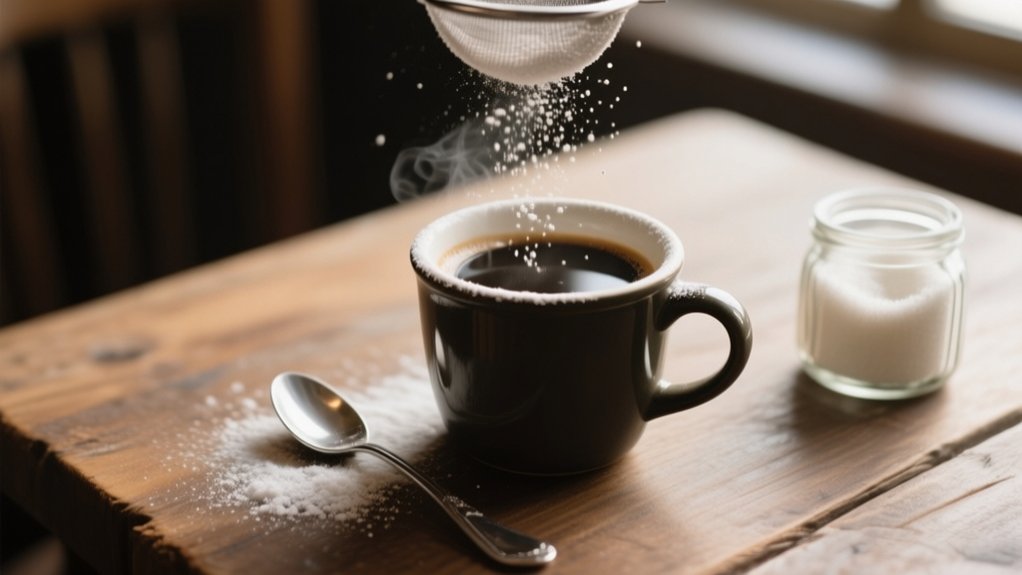
Can You Use Powdered Sugar In Coffee – What To Expect
You can use powdered sugar in coffee for faster dissolution and a smoother texture compared to granulated sugar. It melts quickly, but its cornstarch content might slightly alter flavor and mouthfeel if not fully dissolved.
To avoid chalkiness, mix it thoroughly or dissolve it in hot water first. Powdered sugar offers adequate sweetness, but be mindful of similar calorie content to regular sugar.
If you explore further, you’ll uncover tips on improving taste and creative coffee uses.
Can You Sweeten Coffee With Powdered Sugar?
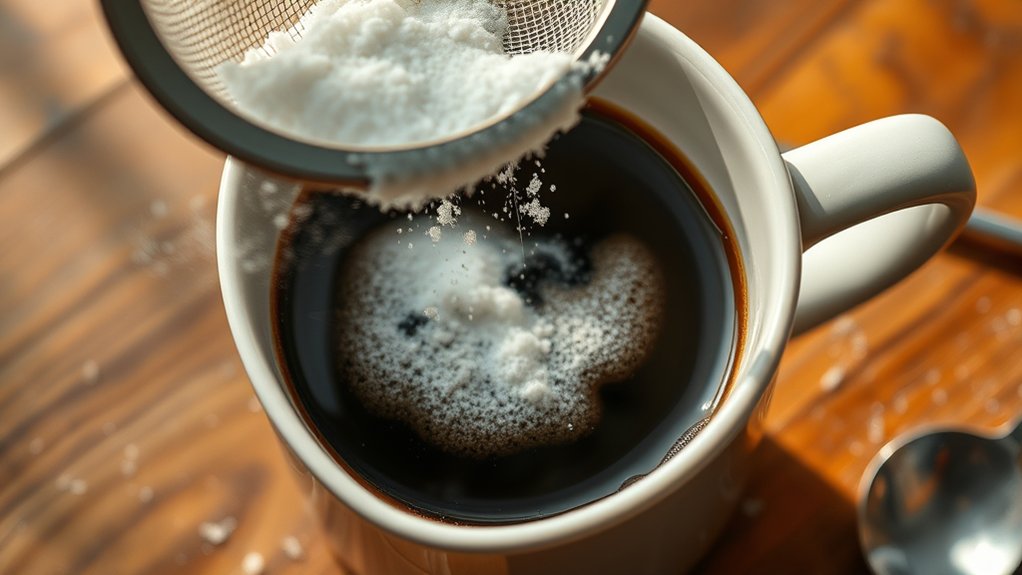
How well does powdered sugar work as a sweetener for your coffee? Powdered sugar, being finely ground granulated sugar, dissolves faster, making it effective for sweetening coffee quickly.
When you add it, you’ll notice a smoother texture compared to granulated sugar because it integrates more evenly.
However, remember that powdered sugar contains cornstarch, which may slightly alter your coffee’s flavor and mouthfeel if it doesn’t dissolve completely.
Powdered sugar’s cornstarch can subtly change your coffee’s taste and texture if not fully dissolved.
Also, a quarter cup of powdered sugar equals the sweetness of two tablespoons of granulated sugar, so you’ll need to adjust quantities accordingly.
While powdered sugar can sweeten coffee efficiently, some might prefer liquid sweeteners for an even smoother blend.
But powdered sugar remains a viable alternative when you want fast dissolution and adequate sweetness.
What Is Powdered Sugar And How Does It Compare To Granulated Sugar For Coffee?
Powdered sugar differs from granulated sugar mainly in texture and composition, which directly affect how it behaves in coffee.
Powdered sugar is finely ground granulated sugar with added cornstarch to prevent clumping, so it dissolves faster in liquids.
It’s slightly sweeter than granulated sugar, so you’ll need less to get the same sweetness. For example, about 1/4 cup powdered sugar equals 2 tablespoons granulated sugar. This makes powdered sugar handy if you want a smoother texture and quicker mixing.
However, powdered sugar might leave some residual sweetness if it doesn’t fully dissolve.
Compared to granulated sugar, it has a different dissolution profile and sweetness intensity, which changes both taste and texture in your coffee. Knowing these differences helps you pick the best sweetener for your taste.
Dissolving Powdered Sugar In Coffee: How Well Does It Work?
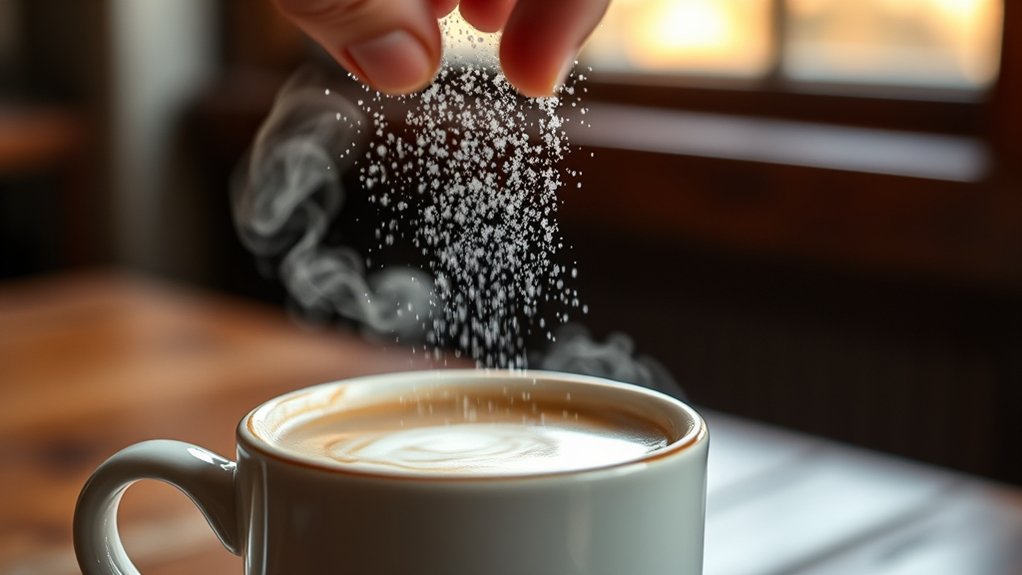
Although powdered sugar dissolves more quickly in hot liquids than granulated sugar, you need to mix it thoroughly to prevent any undissolved particles from settling and affecting your coffee’s texture.
Powdered sugar contains cornstarch, which can lead to a chalky mouthfeel if not completely dissolved.
When you add powdered sugar directly to coffee, especially if it’s not boiling hot, some residue may remain.
To optimize how well powdered sugar dissolves in coffee, consider first dissolving it in a small amount of boiling water or milk before mixing it into your cup.
This step minimizes texture issues and guarantees a consistent sweetness without residue.
How To Substitute Powdered Sugar For Granulated Sugar In Coffee
When you want to replace granulated sugar with powdered sugar in your coffee, adjusting the quantity is essential to maintain the desired sweetness. Use about 1/4 cup of powdered sugar to substitute for 2 tablespoons of granulated sugar, as powdered sugar is finer and dissolves more quickly.
Because powdered sugar contains cornstarch, it may affect texture if not fully dissolved. To guarantee a smooth blend, dissolve powdered sugar in boiling water or milk before adding it to brewed coffee.
This approach prevents graininess and leverages powdered sugar’s rapid dissolving properties, enhancing sweetness without granules settling.
How Powdered Sugar Affects Coffee Flavor
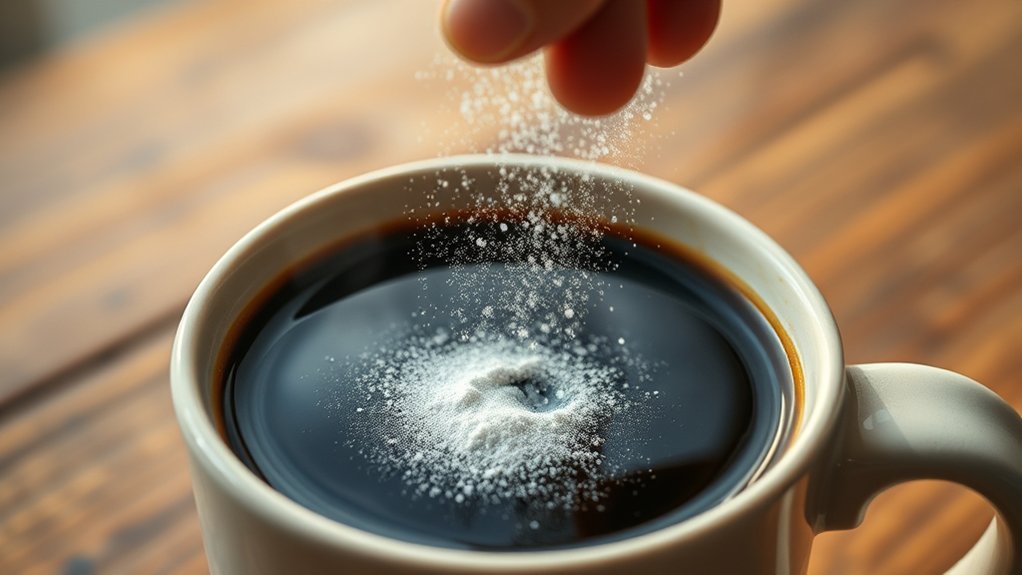
Three key factors influence how powdered sugar affects your coffee’s flavor: its rapid dissolution, subtle sweetness increase, and cornstarch content.
Powdered sugar dissolves faster than granulated sugar, which means it integrates smoothly, enhancing the coffee flavor without graininess.
Its slightly higher sweetness level allows you to use less, maintaining balance and avoiding overpowering sweetness.
However, many powdered sugars contain cornstarch to prevent clumping. This addition can subtly alter the coffee flavor and mouthfeel, especially if the sugar doesn’t fully dissolve.
The fine powder also contributes to a creamier texture, refining the overall drinking experience.
Texture Issues With Powdered Sugar In Hot Drinks And How To Fix Them
You might’ve noticed that powdered sugar sometimes leaves a gritty residue or a sweet puddle in your coffee. That happens because it contains cornstarch, which is added to prevent clumping.
To avoid this, try dissolving the powdered sugar completely in boiling liquid before mixing it into your drink.
Another option is to make your own powdered sugar without cornstarch at home. It’s pretty simple and can make a big difference.
Or, if you want an even smoother texture, go for liquid sweeteners like simple syrup—they dissolve much better in hot beverages and won’t leave that gritty feeling behind.
Powdered Sugar Dissolving Challenges
Although powdered sugar is a convenient sweetener, its cornstarch content often prevents it from dissolving completely in hot coffee. This leaves a sweet residue at the bottom.
The cornstarch, added to prevent clumping, can cause a chalky texture and uneven sweetness that you’ll notice especially in simpler drinks.
Even extra-fine powdered sugar may not dissolve fully, resulting in a grainy mouthfeel if not blended thoroughly.
When you add powdered sugar directly to coffee, the dissolution issue becomes apparent as undissolved particles settle.
These challenges highlight that the cornstarch interferes with complete solubility.
Understanding this helps you recognize why powdered sugar behaves differently than granulated sugar in hot beverages.
It also prepares you to explore alternatives or methods that improve its integration into your coffee.
Solutions For Texture Problems
When powdered sugar’s cornstarch causes graininess in your hot coffee, dissolving it first in boiling water or milk can markedly improve texture and flavor integration.
Texture problems in hot drinks often arise from undissolved cornstarch or settling sugar. To fix these issues, try the following:
- Dissolve powdered sugar completely in a small amount of boiling liquid before adding it to your drink.
- Stir vigorously to prevent sugar settling and avoid a sweet residue at the bottom.
- Use homemade powdered sugar without cornstarch to eliminate graininess.
- Consider liquid sweeteners like simple syrup or honey for smoother texture in hot drinks.
These methods address the cornstarch-induced graininess and enhance the overall smoothness when using powdered sugar.
Making Homemade Powdered Sugar For Coffee
Since store-bought powdered sugar often contains cornstarch, which can affect your coffee’s texture and flavor, making your own powdered sugar at home offers a smoother alternative. To create homemade powdered sugar, blend granulated sugar in a food processor for 30 to 60 seconds until fine.
This powder dissolves easily in hot coffee, avoiding residue and providing a smoother texture without chalkiness.
| Aspect | Store-Bought Sugar | Homemade Powdered Sugar |
|---|---|---|
| Cornstarch Content | Contains cornstarch | No cornstarch |
| Texture in Coffee | Can be grainy or chalky | Smooth, dissolves easily |
| Sweetness Level | Standard | Slightly sweeter |
Store your homemade sugar airtight to maintain its quality.
Comparing Liquid Sweeteners And Powdered Sugar For Coffee
When you add liquid sweeteners like honey or agave syrup to hot coffee, they dissolve completely. This means you get a smooth texture without any graininess.
On the other hand, powdered sugar contains cornstarch, which can sometimes leave a chalky aftertaste if it doesn’t fully dissolve. That can affect both the flavor and the mouthfeel.
So, when you think about ease of use and flavor consistency, liquid sweeteners usually give you more reliable results.
Plus, they let you customize your coffee just the way you like it more easily than powdered sugar.
Dissolving Characteristics Comparison
Although powdered sugar dissolves faster than granulated sugar in hot coffee, it doesn’t blend as seamlessly as liquid sweeteners like simple syrup. When you add powdered sugar, its cornstarch content can leave a slight residue if not fully dissolved, affecting texture.
In contrast, liquid sweeteners integrate uniformly without graininess or residue. Here’s what to expect:
- Powdered sugar dissolves quicker than granulated sugar but may leave a chalky feel due to cornstarch.
- Granulated sugar takes longer to dissolve, especially in cooler coffee.
- Liquid sweeteners blend instantly, providing consistent sweetness and smooth texture.
- Adjust powdered sugar quantity since it’s slightly sweeter than granulated sugar.
Understanding these differences helps you choose the right sweetener for an ideal coffee experience.
Flavor Impact Differences
While powdered sugar dissolves quickly and adds immediate sweetness to your coffee, its cornstarch content can introduce a subtle chalky flavor. This might alter the overall taste experience. Unlike granulated sugar, which may take longer to dissolve, powdered sugar offers a smoother texture but risks leaving residue if not mixed well.
Liquid sweeteners, on the other hand, blend seamlessly and preserve pure flavor without any chalkiness.
| Sweetener Type | Flavor Profile | Texture Impact |
|---|---|---|
| Powdered Sugar | Slight chalkiness due to cornstarch | Smooth but can leave residue |
| Granulated Sugar | Neutral, classic sweetness | Grainy if not fully dissolved |
| Liquid Sweeteners | Pure, enhances natural flavors | Completely smooth |
Choose based on your flavor preference and texture tolerance for your coffee.
Convenience And Usage
Choosing between powdered sugar and liquid sweeteners for your coffee involves more than just flavor.
It’s about how each sweetener performs regarding convenience and usability. Powdered sugar dissolves quickly in hot coffee, offering convenience if you need immediate sweetness.
However, you must add it slowly and stir thoroughly to avoid residue from cornstarch.
Liquid sweeteners like honey or agave syrup integrate seamlessly, providing a smoother mouthfeel without extra stirring.
Consider these points:
- Powdered sugar dissolves faster than granulated sugar but requires careful stirring.
- Cornstarch in powdered sugar can affect texture if not fully dissolved.
- Liquid sweeteners blend effortlessly, enhancing convenience.
- Simple syrup offers a homemade, perfectly dissolving alternative.
Choose based on your preference for convenience and texture.
Health Considerations When Choosing Powdered Sugar For Coffee
Because powdered sugar contains roughly the same calories as granulated sugar, about 387.2 calories per 100 grams, you’ll need to monitor your intake carefully to avoid negative health effects. Excessive sugar consumption, including powdered sugar, can cause energy crashes and increase diabetes risk.
Also, powdered sugar contains cornstarch, which may affect your coffee’s texture and flavor. Practicing moderation is key to balancing sweetness with health considerations.
| Aspect | Powdered Sugar | Health Impact |
|---|---|---|
| Calories | ~387.2 per 100g | Similar to granulated sugar |
| Additives | Contains cornstarch | May alter texture/flavor |
| Dissolution Speed | Dissolves quickly | Can leave sweet residue |
| Health Risks | Excessive consumption | Energy crashes, diabetes risk |
Choose alternatives if you want fewer calories and lower glycemic effects.
Creative Ways To Use Powdered Sugar In Coffee Recipes
You can really step up your coffee game by using powdered sugar in different recipes. It’s great because it sweetens your drink and also improves the texture. Since powdered sugar dissolves super quickly, you won’t get that grainy feel like with regular sugar.
Just keep in mind, it’s sweeter than granulated sugar, so you might want to use a little less.
One fun idea is to whip it together with instant coffee to create a creamy, fluffy topping. Or, you can mix it into whipped cream to add a smooth, rich layer on top of your coffee.
Either way, it makes your cup feel a bit more special!
Powdered Sugar Coffee Recipes
Although many sweeten their coffee with granulated sugar, powdered sugar offers distinct advantages that elevate your coffee experience. Its fine texture dissolves quickly, enhancing flavor without grit.
Here are four powdered sugar coffee recipes to try:
- Dalgona Coffee: Whip powdered sugar with instant coffee and hot water for a fluffy, creamy topping.
- Coffee Glaze: Combine powdered sugar, brewed coffee, and vanilla extract for a smooth, sweet drizzle.
- Iced Coffee Sweetener: Dissolve powdered sugar in hot coffee before adding ice to avoid grainy texture.
- Flavored Coffee: Mix powdered sugar with cocoa or extracts to create customized taste profiles.
These recipes show just how versatile powdered sugar is, improving coffee’s texture and sweetness efficiently.
Give them a try and enjoy a smoother, sweeter cup every time.
Sweetening Techniques With Powdered
Three effective sweetening techniques with powdered sugar can transform your coffee experience by enhancing sweetness and texture without compromising flavor.
First, use powdered sugar to sweeten hot drinks by dissolving it in a small amount of hot water or milk before adding it to your coffee. This prevents graininess and guarantees smooth integration.
Second, when sweetening cold beverages, such as iced coffee, remember that powdered sugar can dissolve in cold liquids more readily than granulated sugar. But pre-mixing it with a little liquid helps avoid residue.
Third, incorporate powdered sugar in coffee recipes like Dalgona coffee to add sweetness and promote a fluffy, visually appealing texture.
Adjust quantities carefully, as powdered sugar is sweeter by volume. Use roughly one-quarter cup to match two tablespoons of granulated sugar’s sweetness.
Enhancing Coffee Texture
When you incorporate powdered sugar into your coffee recipes, it quickly dissolves and creates a smoother, more refined texture than granulated sugar. This fine sugar enhances your coffee’s mouthfeel without leaving a gritty residue.
To enhance texture effectively, consider these creative uses:
- Substitute granulated sugar with powdered sugar at a 1/4 cup to 2 tablespoons ratio for consistent sweetness and smoother texture.
- Whip powdered sugar into Dalgona coffee to achieve the signature light, fluffy foam.
- Blend powdered sugar into hot coffee to enhance sweetness while preserving the beverage’s natural complexity.
- Use powdered sugar in coffee-based glazes or frostings to maintain a delicate texture that complements pastries.
Frequently Asked Questions
Can Powdered Sugar Cause Clumping in Cold Coffee?
Yes, powdered sugar can cause clumping in cold coffee because it contains cornstarch that doesn’t dissolve well at low temperatures.
To avoid this, use clumping prevention techniques like dissolving the sugar in hot water first or opting for powdered sugar alternatives without cornstarch.
For cold coffee recipes, consider using simple syrup or granulated sugar, which blend more smoothly and prevent that unpleasant texture.
This helps ensure a consistent sweetness throughout your drink.
Is Powdered Sugar Gluten-Free for Coffee Sweetening?
Powdered sugar’s purity provides a perfect, gluten-free profile for coffee sweetening. You can confidently choose it without gluten concerns, as most brands use cornstarch, another gluten-free additive, preventing cross-contamination.
This choice offers subtle sweetness, enhancing flavor profiles without overpowering. While it lacks direct health benefits, powdered sugar remains a safe, simple sweetening alternative.
Just check labels for gluten-free certification to guarantee your coffee stays clean and clear of allergens.
How Does Powdered Sugar Affect Coffee’s Caffeine Absorption?
Powdered sugar doesn’t affect coffee’s caffeine absorption, so you won’t notice changes in how caffeine impacts you.
However, its sweetness level can subtly alter the flavor profile, making the coffee taste smoother and sweeter.
The fine texture helps it dissolve quickly, enhancing the overall experience without leaving graininess.
Ultimately, powdered sugar modifies taste and mouthfeel but leaves caffeine absorption unchanged, so your caffeine intake and effect remain consistent.
Can Powdered Sugar Replace Sugar in Iced Coffee?
Imagine you’re in a Victorian parlor, stirring iced coffee with a silver spoon. Yes, you can replace granulated sugar with powdered sugar, but taste comparison shows it dissolves faster and affects sweetness levels more quickly.
Use proper mixing techniques to avoid graininess since powdered sugar contains cornstarch. Adjust quantities—about a quarter cup powdered sugar equals two tablespoons granulated.
For smooth consistency, consider simple syrup as a superior alternative in iced coffee.
Does Powdered Sugar Impact Coffee’s Calorie Count Differently?
Powdered sugar doesn’t impact your coffee’s calorie count differently in a significant way. The caloric comparison shows it contains about the same calories as granulated sugar per serving.
However, its higher sweetness level means you might use less, subtly reducing calories.
Furthermore, powdered sugar’s finer texture enhances the flavor profile by dissolving faster, improving sweetness distribution without adding extra calories.
Conclusion
You can definitely sweeten your coffee with powdered sugar, and it dissolves faster than granulated sugar, almost like magic in your cup. While it may slightly alter the flavor and texture, powdered sugar is a reliable substitute if you’re in a pinch.
Just be mindful of added cornstarch in store-bought versions. Ultimately, choosing powdered sugar won’t make or break your brew, but it’s a handy option to have when you want quick, smooth sweetness.