What Color Is Coffee – Shades, Variations And Facts
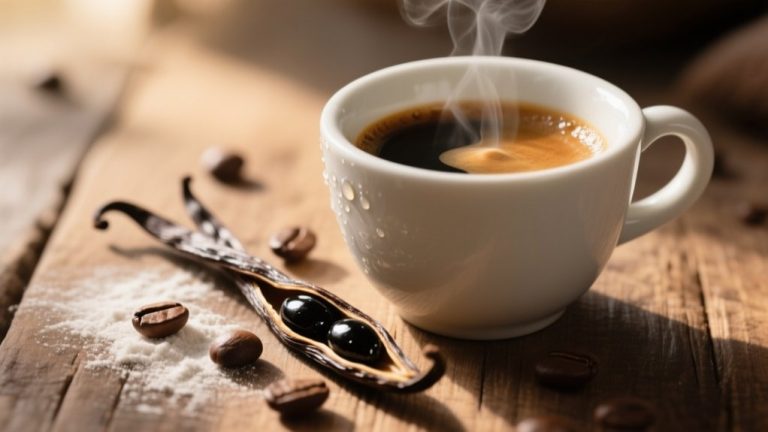
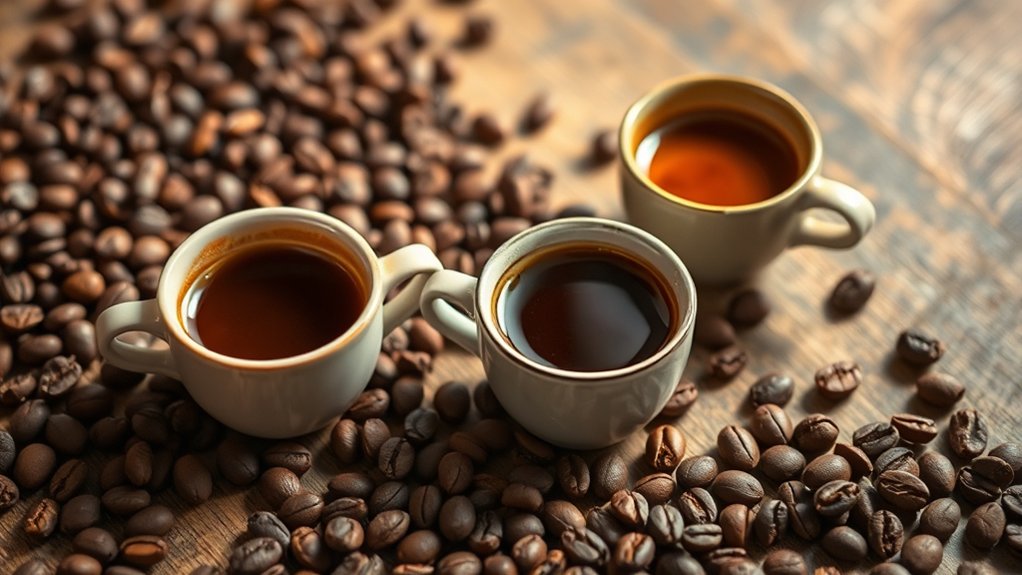
Coffee color ranges from light brown to almost black, reflecting its roast level and origin. Light roasts appear pale and dry with bright acidity. Medium roasts show balanced caramel tones and slight oiliness. Dark roasts are deep brown to black with oily surfaces and stronger bitterness.
Additives like milk lighten coffee’s shade. Visual cues hint at flavor and freshness but don’t tell the whole story. Exploring these nuances will deepen your understanding of coffee’s complex character. It’s pretty fascinating once you start paying attention!
Why Coffee Color Reveals Roast and Flavor
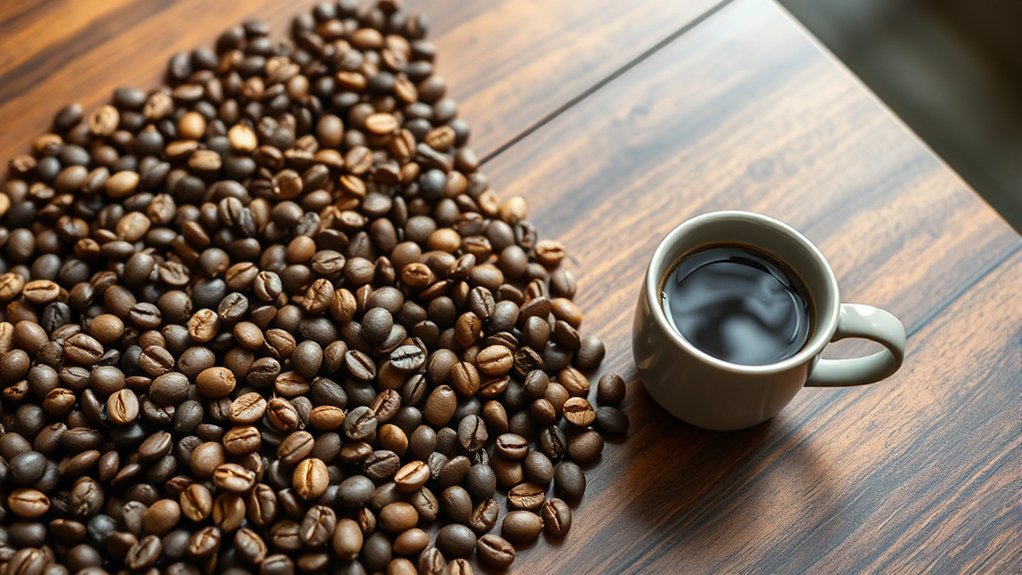
Although you mightn’t realize it, the color of coffee beans provides essential information about their roast level and flavor profile. When coffee beans are harvested, they start green and change color during roasting. These color shifts indicate chemical changes that affect the taste.
Light roasts keep more of the bean’s original greenish hue and acidity. Darker roasts turn deep brown, showing caramelization and bitterness. Knowing these color cues helps you guess the flavor intensity before brewing.
Also, coffee packaging plays a big role in preserving these color traits. Proper packaging limits exposure to oxygen and light, which prevents color fading and flavor loss.
How Coffee Roast Levels Affect Its Color
You’ll notice that light roasts keep a lighter, more reddish-brown color because they’re roasted for a shorter time.
Then, medium roasts develop a nice, balanced brown tone as the sugars caramelize and the oils begin to come to the surface.
When it comes to dark roasts, they turn almost black since they’re exposed to heat for longer, which also gives them that glossy, oily look.
Light Roast Characteristics
When coffee beans undergo a light roast, they retain much of their original color, resulting in a pale brown shade that reflects minimal roasting time and lower temperatures. You’ll notice that the beans’ inherent characteristics, influenced by coffee bean genetics, remain prominent because the roasting process hasn’t masked them with darker pigments.
The precise control offered by modern roasting equipment allows you to halt the roast before the Maillard reaction deepens the color considerably. This approach preserves the beans’ acidity and unique flavor notes, directly tied to their genetic makeup.
Light roasts emphasize clarity and brightness, revealing subtle nuances otherwise lost in darker roasts. Understanding these factors helps you appreciate the delicate balance between roast level, bean origin, and equipment used to achieve the ideal light roast color.
Medium Roast Appearance
Moving beyond the pale hues of light roast, medium roast coffee beans develop a richer, medium-brown color that signals a longer roasting duration and higher heat exposure. This color results from Maillard reactions intensifying, balancing acidity and body.
When you work with medium roast beans, you’ll notice their surface remains mostly dry, preserving essential oils pivotal for coffee art techniques like latte designs.
Proper bean storage is essential here. Exposure to air or moisture can dull the beans’ vibrant color and affect flavor integrity.
Medium roasts offer a versatile palette for baristas and enthusiasts, combining visual appeal with balanced taste.
Understanding this roast level’s coloration helps you appreciate the precise control roasters apply to achieve both aesthetic quality and prime flavor extraction. It’s pretty cool how much goes into getting that perfect medium roast!
Dark Roast Coloration
How does the color of coffee beans transform as they reach a dark roast? As roasting progresses, beans shift from medium brown to deep, almost black shades. This transformation results from Maillard reactions and caramelization breaking down sugars and organic compounds.
The darker coloration means the beans have been exposed to high heat for longer. This reduces acidity but makes the bitterness stronger. You’ll notice the coffee aroma becomes more robust and smoky, sometimes with hints of chocolate or burnt caramel.
Dark roasts develop oils on their surface, so they look glossy compared to lighter roasts. When brewing, it’s a good idea to lower the brewing temperature a bit to avoid over-extraction. This helps keep the flavor balanced despite the dark roast’s boldness.
Understanding these color changes can really help you get the most flavor and aroma when you prepare your coffee. It’s all about adjusting your method to match the roast.
Differences Between Light and Medium Roasts
Although both light and medium roasts come from the same coffee beans, their roasting times and temperatures considerably affect their flavor profiles and color. When you consider coffee bean harvesting and coffee storage techniques, maintaining bean quality is essential before roasting.
Light roasts preserve more of the bean’s original characteristics. They often show brighter acidity and a lighter color. Medium roasts develop a balanced flavor with moderate acidity and a richer body because they’re roasted longer.
| Aspect | Light Roast | Medium Roast |
|---|---|---|
| Roasting Time | Shorter | Moderate |
| Color | Light brown | Medium brown |
| Flavor Profile | Bright, acidic | Balanced, fuller |
| Oil on Surface | Dry | Slight sheen |
| Bean Density | Higher | Slightly reduced |
This difference helps you decide based on what flavor you like best.
Understanding Dark Roast Colors
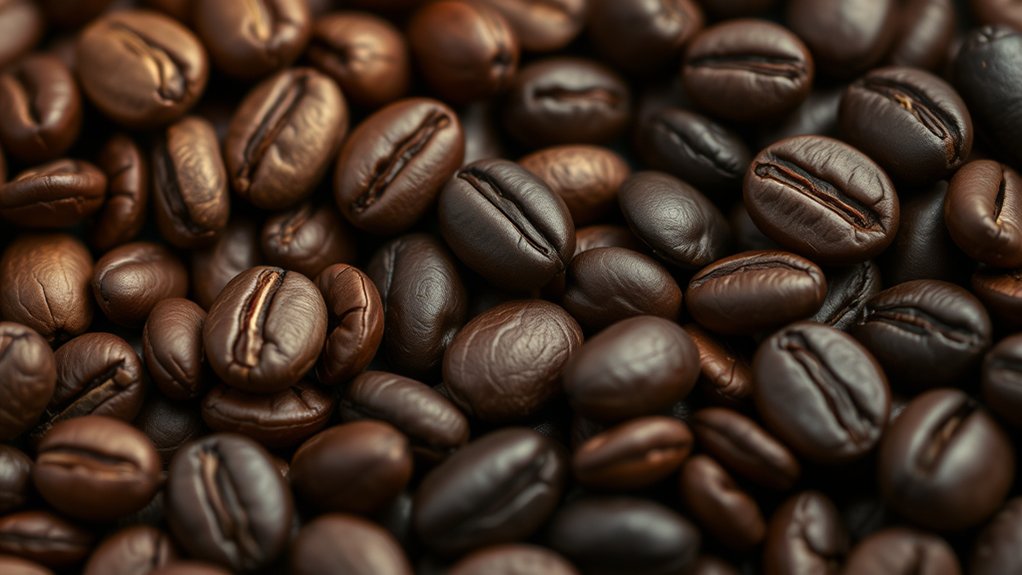
You’ll notice dark roasts come in a range of deep browns to almost black shades. This depends a lot on how long and how hot the beans are roasted.
When you understand these factors, it’s easier to spot subtle color differences that hint at changes in flavor and strength.
If you pay close attention to things like how oily the surface looks and how dark the beans are, you can get a better sense of the roast profile before you even brew.
It’s kind of like reading the beans’ story just by looking at them.
Dark Roast Color Spectrum
When examining dark roast coffee, you’ll notice its color varies along a distinct spectrum that reflects roasting intensity and bean development. This spectrum ranges from deep mahogany to almost black, showing how the roasting process transforms the bean’s physical and chemical properties. Understanding this variation helps you appreciate how coffee bean genetics influence the final hue, as certain beans respond differently to heat.
Plus, sustainable farming practices impact bean quality, which subtly affects the roast’s color depth.
Key insights include:
- The progression from dark brown to oily black signals increased caramelization and oil migration.
- Genetic traits dictate how a bean’s surface and internal compounds change during roasting.
- Sustainable farming enhances bean consistency, contributing to predictable color outcomes in dark roasts.
Knowing this helps you gauge roast quality and flavor potential more effectively.
Factors Influencing Roast Shades
Because several variables interact during roasting, the shades of dark roast coffee can vary considerably. Coffee bean genetics play a crucial role; different varieties respond uniquely to heat, influencing caramelization and Maillard reactions that determine color depth.
Even beans from the same region can show distinct shades due to genetic differences affecting sugar and moisture content.
Furthermore, roasting equipment influence can’t be overlooked. Drum roasters provide consistent heat and airflow, creating uniform dark tones.
Air roasters often produce lighter or more uneven coloring because of rapid temperature changes.
Additionally, roasting profiles—temperature, duration, and airflow—interact with these factors, further diversifying roast shades.
Understanding these elements helps you grasp why dark roasts aren’t just uniformly black but exhibit a complex range of hues tied to both bean origin and roasting technology.
Visual Cues Of Darkness
Although dark roast coffee often looks uniformly black at first glance, subtle visual cues reveal important differences in roast levels and quality. When you take a closer look at the beans, you’ll notice variations in sheen and surface texture. These relate directly to how long and hot the beans were roasted.
These differences also connect to things like when the coffee beans were harvested and how they were stored after roasting. For example, if the beans aren’t stored properly, their surface oiliness can dull. That’s a sign they might be stale, even if they still look dark.
Key visual cues include:
- Surface oil presence: Shows how roasted the beans are and how fresh they remain
- Bean uniformity: Reflects how consistent the harvesting and processing were
- Color depth variation: Points to slight differences in roasting intensity and storage conditions
Knowing these signs helps you judge dark roast coffee quality beyond just the color.
How Coffee Bean Origins Affect Color
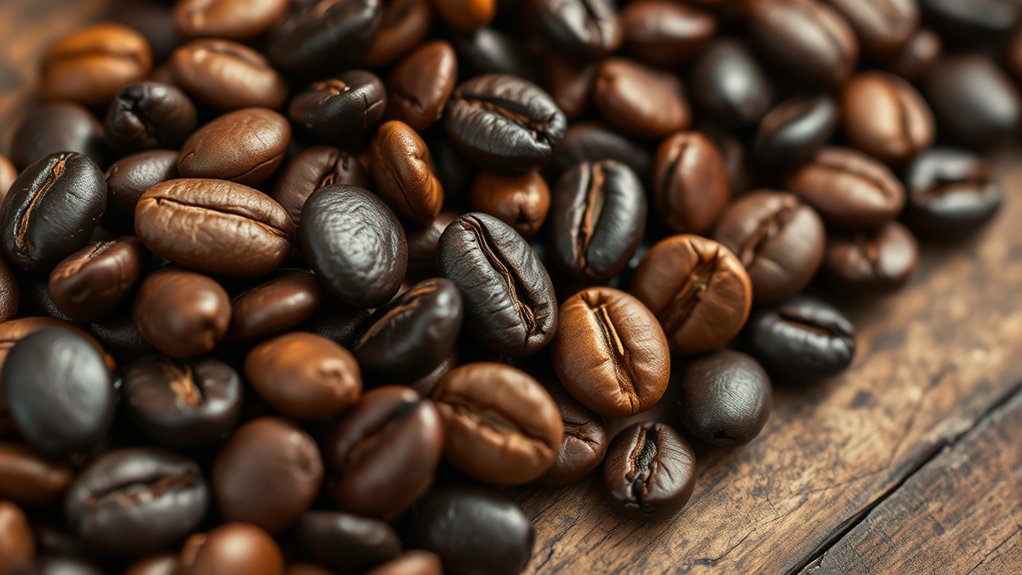
How does the origin of a coffee bean influence its color? The geographic location where coffee bean cultivation occurs directly impacts the bean’s inherent characteristics, including color. Factors like soil composition, altitude, and climate create distinct environmental conditions that affect the bean’s development.
When you consider harvesting and processing methods typical to each region, you’ll find additional color variations emerge. For example, beans from high-altitude regions often develop denser, harder seeds with a lighter greenish hue before roasting.
Processing techniques, such as washed versus natural, alter the bean’s moisture content and surface texture, which influences its pre-roast color.
Understanding these origin-specific factors helps you predict the natural color spectrum of coffee beans. It reveals how cultivation and post-harvest handling intricately shape their appearance before roasting.
How Brewing Methods Change Coffee’s Color
You’ll notice that brewing time directly affects coffee’s color because it changes how much is extracted.
And water temperature? That’s important too—higher temperatures usually make the brew darker.
Plus, the grind size matters since it controls how quickly the compounds dissolve, which then affects the final color you get.
Brewing Time Impact
Because brewing time directly influences extraction levels, it considerably alters coffee’s color. When you adjust brewing duration, you change how much pigment and soluble compounds dissolve, shifting the hue from light amber to deep brown. Shorter brew times yield lighter colors, while extended times produce darker, richer shades.
However, the impact of brewing time also depends on coffee storage and bean freshness. Stale beans or improper storage can mute color intensity despite longer extraction.
Consider these factors:
- Over-extraction darkens coffee but may cause bitterness and mask freshness.
- Under-extraction results in lighter color and can highlight acidity and subtle flavors.
- Fresh beans release more vibrant pigments, making color changes more apparent with time adjustments.
Understanding brewing time’s role helps you predict and control your coffee’s visual and flavor profile. It’s pretty handy when you want to nail that perfect cup every time.
Water Temperature Effects
Water temperature plays a crucial role in determining coffee’s color by controlling the rate at which compounds extract from the grounds. Higher temperatures typically yield a darker, richer hue due to increased solubility of pigments and oils. Conversely, cooler water produces lighter, more acidic brews with subtler tones.
Your choice of brewing method directly influences temperature, which impacts the color outcome.
Proper coffee packaging and storage are essential to preserve these color-affecting compounds. Exposure to oxygen or moisture can alter extraction efficiency and skew color consistency.
| Water Temperature | Extraction Rate | Coffee Color | Brewing Methods |
|---|---|---|---|
| 195–205°F (90–96°C) | Fast | Dark, rich | Drip, French Press |
| 175–185°F (79–85°C) | Moderate | Medium, balanced | Pour-over, AeroPress |
| Below 175°F (79°C) | Slow | Light, acidic | Cold Brew |
| Variable | Variable | Variable | Espresso |
Grind Size Influence
Although grind size might seem like a minor detail, it considerably influences coffee’s color by affecting extraction rates and the balance of compounds drawn from the grounds. Finer grinds expose more surface area, accelerating extraction and often deepening the brew’s color.
On the other hand, coarser grinds slow this process, resulting in lighter hues.
You also have to consider coffee bean genetics because inherent pigment and oil content shape how color shows up during brewing.
Plus, brewing vessel styles like French press, espresso machine, or pour-over interact uniquely with grind size. They change exposure time and agitation, which then influences color intensity.
To better understand grind size’s impact, focus on:
- How particle size affects extraction speed and pigment release
- The interaction between grind size and brewing vessel design
- Variations in color linked to different coffee bean genetics
Why Coffee Color Hints at Flavor Profiles
When you examine coffee’s color, you’re actually looking at a visual map of its flavor profile. The coffee bean genetics shape the natural hues and compounds influencing taste. At the same time, coffee storage conditions affect oxidation and color shifts, which subtly alter flavor.
Darker beans often hint at bolder, more bitter tones, while lighter ones preserve acidity and floral notes. It’s pretty interesting how much you can tell just by looking at the color.
| Coffee Color | Flavor Profile | Influencing Factors |
|---|---|---|
| Light Brown | Bright, acidic | Genetic traits, minimal roast |
| Medium Brown | Balanced, sweet | Moderate roast, stable storage |
| Dark Brown | Bold, bitter | Extended roast, oxidation |
How Milk and Additives Change Coffee’s Appearance
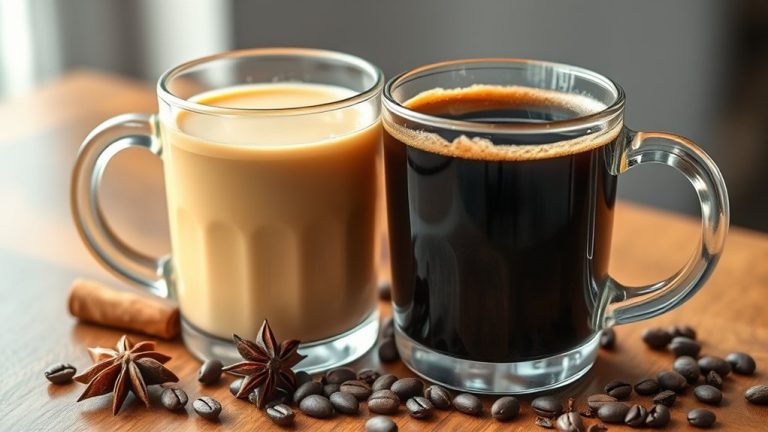
Adding milk and other additives transforms coffee’s appearance by changing its color, opacity, and texture. When you add milk, the dark, nearly opaque coffee shifts to lighter shades of brown or beige. This depends on how much and what type of milk you use.
Sugar, syrups, or creamers can further affect translucency and hue. These changes can also influence how you perceive freshness. That ties back to coffee packaging and storage because sealed packaging preserves the original color and flavor.
Exposure to air or light can dull them, making additives stand out more visually.
Think about how milk proteins scatter light, creating a creamy, opaque look. Sweeteners dissolve and can slightly brighten or darken tones. Creamers change the viscosity, adding texture that you can see on the coffee’s surface.
Understanding these effects helps you appreciate your coffee’s appearance even more.
Coffee Color Myths You Should Know
Understanding how milk and additives change coffee’s appearance sets you up to spot some common myths about its color. You might think darker coffee always means stronger flavor. But actually, the roast level and where the beans come from have a bigger say in taste.
Also, coffee packaging can be pretty misleading. Just because the bag is lighter doesn’t mean the roast inside is lighter. And if you don’t store your coffee right—like if it’s exposed to air or moisture—it can lose its color and freshness. That doesn’t mean the roast level has changed, though.
| Myth | Reality |
|---|---|
| Dark coffee is always bitter | Bitterness depends on roast and brewing method |
| Lighter color = weak coffee | Strength varies with bean type and grind size |
| Packaging color shows roast | Packaging designs rarely reflect actual roast |
| Storage doesn’t affect color | Poor storage fades color, impacting freshness |
Knowing these facts helps you get a better sense of what coffee color really means.
How to Choose Coffee by Color and Roast
Although coffee color can offer clues about roast level, you need to take into account multiple factors to choose the right brew for your taste. Roast color ranges from light to dark, but relying solely on visual cues can mislead you because packaging and lighting affect perception.
Instead, check the coffee packaging for roast descriptions and origin details that influence flavor profiles. Also, consider your brewing temperature since it has a big impact on extraction and taste.
To refine your choice, review roast level descriptions on coffee packaging for accurate insights. Match brewing temperature to roast type: lower temps suit light roasts, higher temps fit dark roasts.
And don’t be afraid to experiment with grind size and brewing time to balance flavor intensity.
Combining these elements helps you pick coffee that really matches what you like.
Frequently Asked Questions
Does Coffee Color Affect Its Caffeine Content?
You’ll find that coffee color doesn’t directly affect caffeine content; instead, it’s tied to the coffee roasting process and bean varieties.
Darker roasts appear bolder but often have slightly less caffeine because roasting reduces caffeine marginally.
Lighter roasts retain more caffeine since they’re roasted for a shorter time.
However, differences are minimal, and the coffee bean variety plays a bigger role in caffeine levels than the color you see.
Can Coffee Color Indicate Freshness?
You can often tell coffee freshness by its color; freshly roasted beans typically have a medium brown shade. Studies show that coffee bean roasting darkens beans up to 20% more as freshness declines.
If beans look overly dark or oily, they might be stale due to poor coffee storage conditions, like exposure to air or moisture.
How Does Grind Size Impact Coffee Color?
Grind size directly affects coffee color by influencing extraction and grind consistency. Finer grinds expose more surface area, leading to darker, richer brews, especially at ideal brewing temperatures. Coarser grinds extract less, resulting in lighter-colored coffee.
If your grind consistency varies, uneven extraction alters color and flavor. Adjusting grind size and maintaining stable brewing temperature helps control the coffee’s color intensity and clarity.
This way, you get a balanced cup every time.
Is Coffee Color Linked to Acidity Levels?
You’ll notice coffee color isn’t directly tied to acidity levels but reflects coffee roasting and bean origin.
Imagine a deep amber brew versus a light golden pour; the lighter roast often preserves higher acidity, giving a brighter flavor.
Darker roasts develop richer hues but reduce acidity, mellowing the taste.
Does Decaffeinated Coffee Have a Different Color?
Decaffeinated coffee doesn’t have a drastically different color, but subtle variations exist due to coffee bean genetics and processing methods. The decaffeination process can slightly alter the bean’s chemical composition, affecting the final brew’s hue.
Brewing temperature effects also play a role. Hotter water extracts more pigments, potentially deepening the color.
Conclusion
You might think darker coffee always means stronger flavor, but that’s not the whole story. Roast level influences color and taste, yet origin and processing also play big roles.
By understanding how color relates to roast and bean type, you can better predict flavor profiles and choose coffee that suits your palate. Don’t just rely on appearance. Use color as one tool among many to enjoy your perfect cup.