
Is Coffee An Energy Drink – Key Differences Explained
Coffee isn’t exactly an energy drink, though both boost your energy with caffeine. Coffee offers about 95 mg per cup and delivers a steadier, longer-lasting energy, backed by antioxidants and nutrients that support health.
Energy drinks often pack more caffeine and added sugars, causing quick spikes and crashes, plus potential jitters and health risks. If you want to understand how their effects, ingredients, and benefits differ and how to switch safely, keep exploring these key distinctions.
Key Differences Between Energy Drinks and Coffee
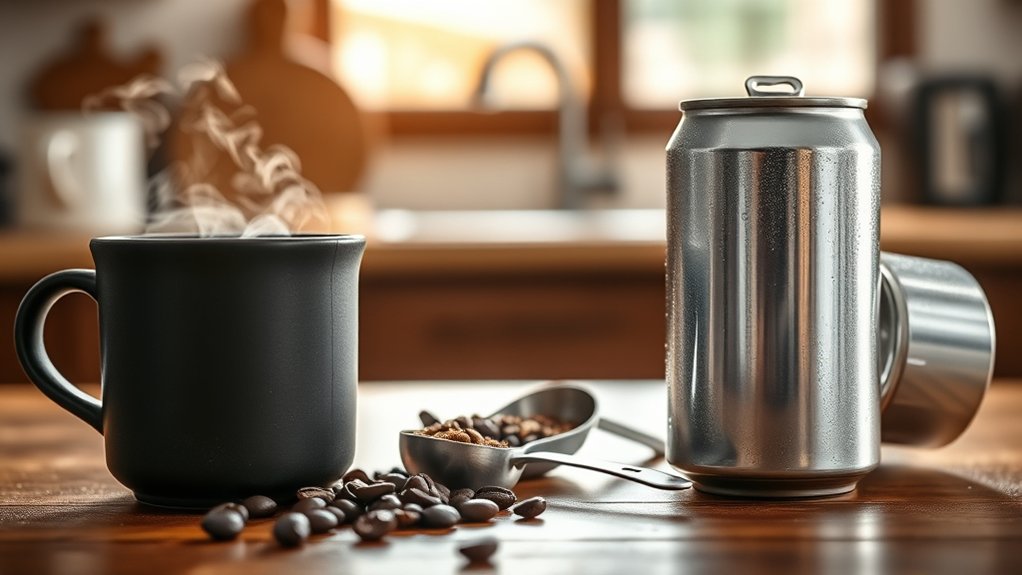
While both coffee and energy drinks provide a caffeine boost, they differ markedly in composition and effects.
When comparing Coffee vs Energy Drinks, the caffeine content varies considerably. Coffee usually offers about 95 mg per 8-ounce cup, while energy drinks range from 70 to over 200 mg.
Coffee delivers caffeine gradually, promoting sustained energy. Energy drinks often cause a quick spike followed by a crash due to high sugar levels.
Coffee is rich in antioxidants and linked to health benefits like reduced Type 2 diabetes risk.
In contrast, energy drinks contain added sugars and artificial ingredients, raising concerns about their long-term health effects.
How Caffeine Levels Compare in Coffee and Energy Drinks
You’ll find that an 8 oz cup of coffee usually contains about 95 mg of caffeine.
On the other hand, energy drinks often pack 160 to 200 mg or even more per serving.
Coffee releases caffeine gradually, so it gives you a steady, sustained energy boost.
Energy drinks, however, deliver a quicker, stronger jolt because of their higher caffeine content and added stimulants.
Knowing these differences can help you pick the right kind of boost without any unexpected side effects.
Caffeine Content Differences
Because caffeine levels vary widely, it’s important to understand how coffee and energy drinks compare in their caffeine content. An 8 oz cup of coffee typically contains about 95 mg of caffeine, providing a moderate and steady boost.
In contrast, energy drinks often pack between 160 to 200 mg in a 16 oz can, with some brands exceeding 300 mg. Energy shots can be even more concentrated, delivering up to 200 mg in just 2 oz.
This higher and more variable caffeine content means energy drinks can give you a quick jolt but may lead to crashes, especially due to added sugars.
From a health perspective, coffee’s gradual caffeine release generally supports sustained energy better than most energy drinks.
Effects of Caffeine Source
When you compare caffeine sources, coffee and energy drinks differ not only in amount but also in how quickly the caffeine affects your body. An 8-ounce cup of coffee contains about 95 mg of caffeine, delivering a gradual, steady boost that supports sustained mental clarity.
In contrast, energy drinks contain concentrated caffeine levels ranging from 80 to over 200 mg per serving, with some energy shots packing up to 200 mg in just 2 ounces. This concentrated caffeine causes rapid spikes in energy but can lead to quick crashes, especially due to added sugars and stimulants.
Your caffeine intake from coffee or energy drinks influences how long and how smoothly you experience alertness, with coffee typically offering a more stable effect compared to the volatile energy highs from many energy drinks.
Why Coffee’s Natural Ingredients Are Healthier Than Energy Drink Additives
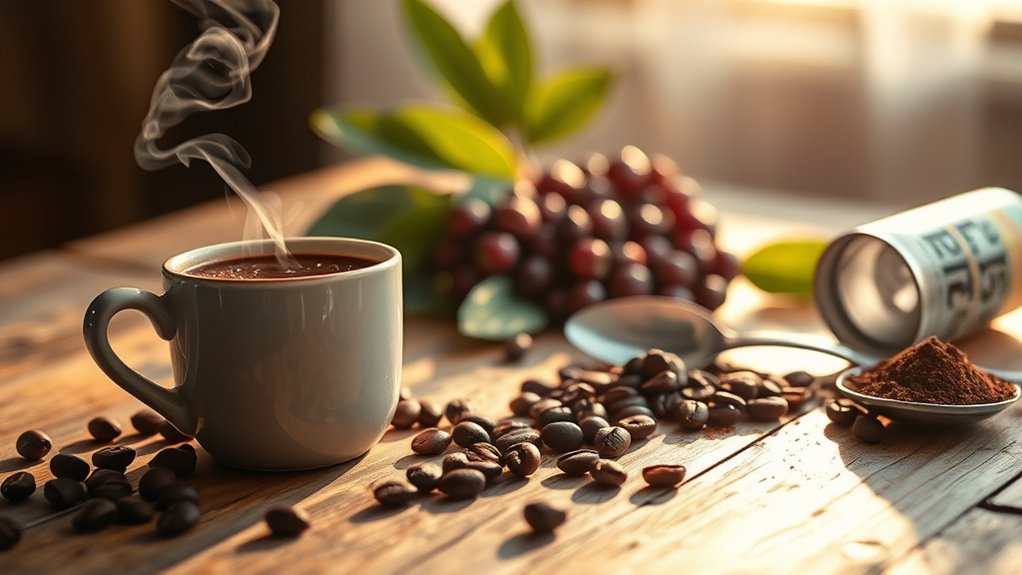
Although both coffee and energy drinks aim to boost your alertness, coffee’s natural ingredients make it a healthier choice.
Coffee consists solely of roasted beans and water, providing a clean source of caffeine without the added sugars and synthetic additives common in energy drinks.
These drinks often contain artificial ingredients like taurine and ginseng, which lack proven health benefits.
Coffee’s rich antioxidants help combat oxidative stress and inflammation, supporting overall health.
Additionally, caffeine from coffee is released gradually, avoiding the rapid energy spikes and crashes that energy drinks can cause due to their high sugar content.
Regular coffee consumption has even been linked to a 25% lower risk of type 2 diabetes, while energy drinks’ added sugars may contribute to weight gain and related health issues.
How Sugar and Sweeteners Impact Your Energy and Health
If you rely on energy drinks for a quick boost, you might be unaware of how their high sugar content affects your energy and health.
Energy drinks usually contain excessive sugar levels that cause rapid energy spikes, followed by crashes that leave you feeling drained.
Artificial sweeteners, often used as sugar substitutes, may seem harmless but can disrupt your gut microbiome and increase cravings for sugary foods.
This pattern contributes to potential health risks like obesity, Type 2 diabetes, and heart disease.
In contrast, coffee typically contains no added sugars and can be naturally sweetened with low-calorie options like stevia.
- High sugar levels in energy drinks cause unstable energy and mood swings
- Artificial sweeteners may worsen sugar cravings
- Excess sugar intake surpasses recommended daily limits easily
- Long-term consumption links to serious health conditions
Health Benefits of Coffee vs. Energy Drinks
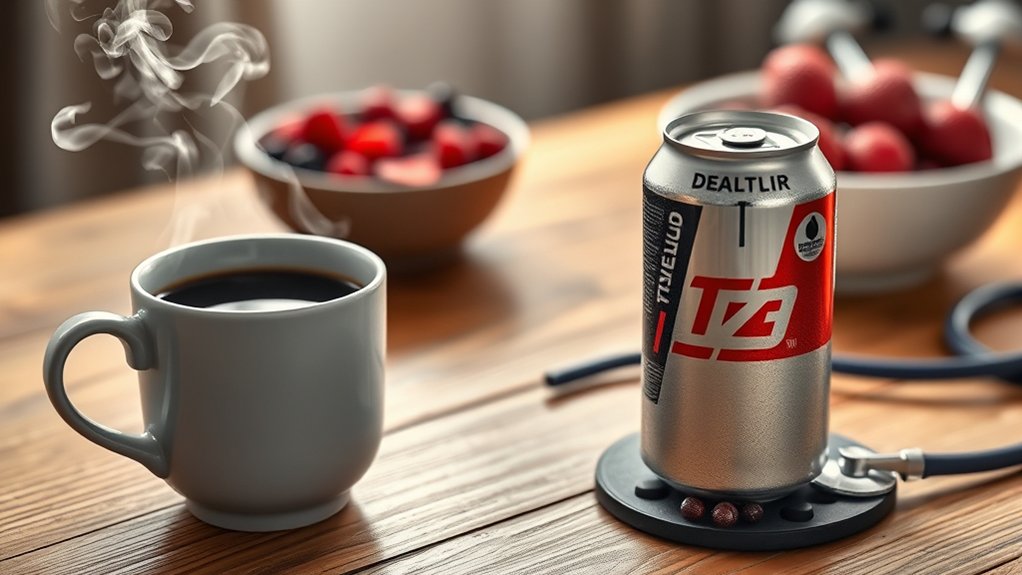
You’ll find that coffee is packed with antioxidants and essential nutrients that support long-term health. It even helps lower the risk of chronic diseases.
On the other hand, energy drinks often rely on added sugars and artificial ingredients. Plus, there’s limited evidence showing they offer lasting health benefits.
Knowing these differences can really help you make smarter choices for sustained energy and overall wellness.
Antioxidants and Nutrients
While both coffee and energy drinks boost alertness, coffee stands out for its rich antioxidants and essential nutrients like niacin, riboflavin, potassium, and magnesium.
These antioxidants help reduce oxidative stress and inflammation, supporting overall health.
Unlike energy drinks, which often contain added sugars and artificial ingredients, coffee offers these health benefits without extra calories when consumed plain.
Research links regular coffee consumption to a 25% lower risk of type 2 diabetes, highlighting its positive impact on metabolic health.
Energy drinks lack extensive evidence backing similar benefits, making coffee a more reliable source of antioxidants and nutrients.
- Coffee contains essential nutrients such as niacin and magnesium
- Antioxidants in coffee improve insulin sensitivity
- Energy drinks often have high sugar and artificial additives
- Coffee’s health benefits are supported by extensive research
Long-Term Health Effects
Because coffee contains antioxidants and essential nutrients, it offers long-term health benefits that energy drinks often lack. Research shows regular coffee consumption can reduce your risk of Type 2 diabetes by 25% and may protect against heart disease and neurodegenerative disorders.
In contrast, energy drinks typically contain high sugar levels and synthetic ingredients, which provide little to no proven long-term health effects.
While coffee can improve your cognitive function and mood when consumed moderately, energy drinks often cause short-term energy spikes followed by crashes and increased anxiety.
Be aware that adding sugars or artificial sweeteners to coffee may negate these benefits.
Side Effects More Common With Energy Drinks Than Coffee
Although both coffee and energy drinks contain caffeine, energy drinks tend to cause side effects more often due to their higher caffeine content and added ingredients.
Energy drinks can have up to 300 mg of caffeine per can, compared to about 95 mg in an 8-ounce cup of coffee.
This elevated caffeine level, combined with synthetic stimulants and high sugar, increases the risk of side effects. You may notice more frequent jitters, anxiety, and rapid heartbeat with energy drinks. They also tend to raise blood pressure more considerably and cause insomnia.
Here are some common side effects more associated with energy drinks than coffee:
- Increased blood pressure and heart palpitations
- Higher incidence of anxiety and irritability
- Greater risk of digestive issues and energy crashes
- Potential for dependency and withdrawal symptoms
Choosing Coffee or Energy Drinks for Different Activities
When you need steady, sustained focus for activities like studying or driving, coffee often works better because of its gradual caffeine release. Coffee contains about 95 mg of caffeine per 8 oz cup, providing daily energy without sharp spikes.
Energy drinks deliver up to 160 mg caffeine per 16 oz can, offering a quick boost ideal for short, physical tasks but risking energy crashes from high sugar levels. Your choice depends on the activity type and how you handle caffeine.
| Activity Type | Best Choice |
|---|---|
| Sustained Focus | Coffee |
| Short Physical Tasks | Energy Drinks |
| Athletic Performance | Coffee |
Coffee supports endurance, while energy drinks may cause jitters or digestive upset.
Safe Ways to Switch From Energy Drinks to Coffee
If you want to shift from energy drinks to coffee safely, start by gradually replacing one energy drink each day with a cup of coffee. This approach lets your body adjust to changes in caffeine intake and helps reduce the risk of withdrawal symptoms.
Begin by slowly swapping one energy drink daily for coffee to ease caffeine changes and prevent withdrawal.
Choose lower-caffeine options like light roast coffee, which typically contains about 95 mg of caffeine per 8 oz, compared to energy drinks that can exceed 200 mg. Swapping high-sugar energy drinks for coffee can also help prevent weight gain and stabilize your energy levels.
To make the adjustment easier:
- Experiment with different coffee styles like cold brew or espresso
- Sweeten coffee naturally with stevia or almond milk
- Monitor your body’s reaction to reduced caffeine and sugar
- Replace energy drinks gradually to avoid energy crashes
Frequently Asked Questions
Can Coffee and Energy Drinks Be Mixed Safely?
You can mix coffee and energy drinks, but it’s not generally safe because it can spike your caffeine intake beyond recommended limits.
While coffee offers antioxidants and nutrients, energy drinks often contain added sugars and artificial ingredients.
Combining them might amplify jitters, anxiety, and heart rate issues.
If you want to try flavor combinations, do so cautiously and keep an eye on how your body reacts to avoid negative health effects.
How Do Coffee and Energy Drinks Affect Sleep Patterns?
Caffeine metabolism varies, so both coffee and energy drinks can disrupt your sleep duration, especially if consumed late. Your individual tolerance affects how much caffeine impacts you.
Regular coffee drinkers may experience fewer withdrawal effects and less sleep disruption.
Energy drinks often spike alertness faster, worsening sleep latency.
To protect your sleep, avoid caffeine within six hours of bedtime. Also, monitor how your body responds to different sources for better rest quality.
Are There Age Restrictions for Consuming Energy Drinks?
Yes, you’ll find age guidelines for energy drinks in many countries to protect you from health risks linked to high caffeine levels.
These regulatory measures often set minimum ages at 16 or 18 and enforce caffeine limits to reduce anxiety and sleep problems, especially in minors.
While the U.S. lacks federal restrictions, some retailers impose their own.
It’s wise to check local rules and understand the risks before consuming energy drinks.
What Are the Environmental Impacts of Coffee vs. Energy Drink Production?
Think of coffee and energy drink production as two rivers shaping the land differently.
Coffee farming often demands high water usage and can increase pesticide impact, especially without sustainable farming practices. This raises its carbon footprint.
Energy drinks usually use less land but may cause water pollution during ingredient processing.
Can Coffee or Energy Drinks Cause Dehydration?
You won’t usually get dehydrated from coffee or energy drinks if you consume them moderately. Their caffeine content can increase urination, but hydration levels often stay stable since the liquid makes up for this loss.
However, individual tolerance varies. Excessive intake, especially of sugary energy drinks, might risk dehydration.
To minimize health effects, balance these beverages with plenty of water, particularly if you’re active or in hot environments.
Conclusion
You might think coffee and energy drinks are the same, but their differences matter more than you realize. Coincidentally, coffee’s natural caffeine and antioxidants offer a healthier boost, while energy drinks often load you with sugar and additives that can cause unwanted side effects.
So, if you want sustained energy without the crash, choosing coffee could be your smarter, evidence-backed option, especially when switching from energy drinks to a cleaner, more balanced pick-me-up.