How Much Caffeine In Chocolate Covered Coffee Beans – Caffeine Guide
You’ll find about 10 to 20 milligrams of caffeine in each chocolate-covered espresso bean, combining caffeine from both the coffee bean and the chocolate coating. Dark chocolate adds more caffeine than milk chocolate, while the coffee bean itself contributes roughly 6 to 12 milligrams.
Eating 5 to 10 beans gives you a caffeine boost similar to a small coffee. If you want to understand how types, benefits, and serving sizes impact your intake, there’s more to explore.
What Chocolate-Covered Espresso Beans Are Made Of
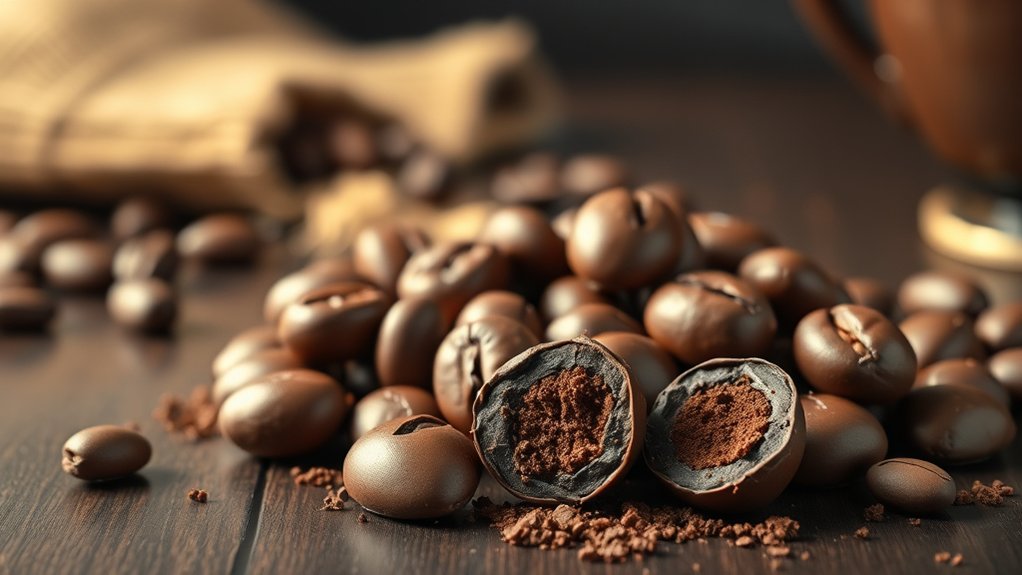
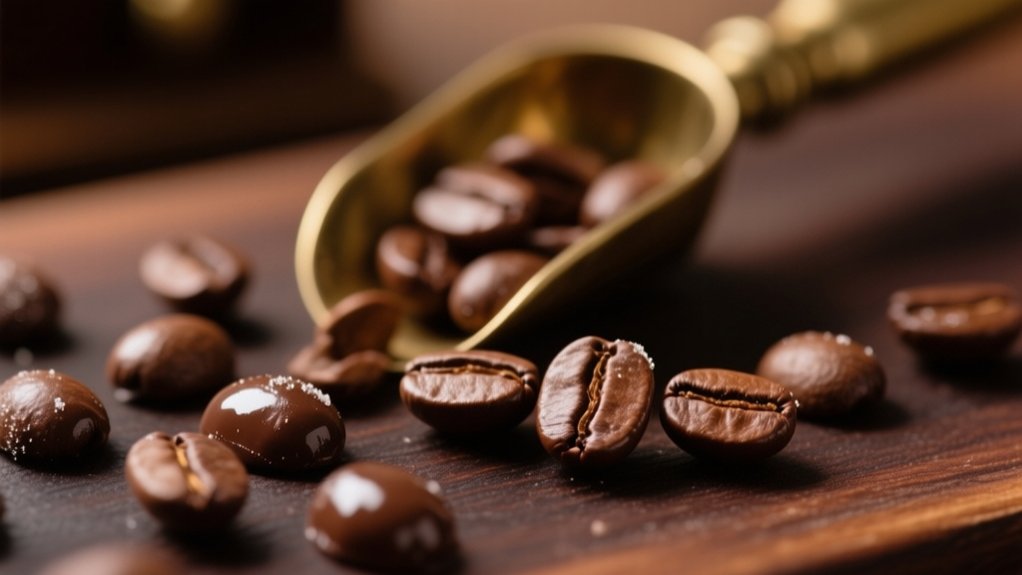
Although you might think chocolate-covered espresso beans are just a simple treat, they’re actually crafted by coating whole-roasted coffee beans with various types of chocolate.
Dark, milk, or white chocolate each adds unique flavors and caffeine levels.
These coffee beans form the core, providing a robust espresso taste. The caffeine content in chocolate-covered beans varies based on the coffee bean type and chocolate thickness.
Dark chocolate covered espresso beans stand out for their health benefits, as they contain higher cacao content and more antioxidants than milk or white chocolate varieties.
Dark chocolate covered espresso beans offer enhanced health benefits with higher cacao and antioxidant levels.
This combination not only delivers a flavorful punch but also offers a low-calorie snack option.
Understanding these components helps you appreciate the balance of flavor, caffeine, and health advantages inherent in chocolate-covered espresso beans.
How Much Caffeine Does One Chocolate-Covered Espresso Bean Contain?
How much caffeine does one chocolate-covered espresso bean actually contain? Typically, each chocolate-covered espresso bean holds about 10-20 mg of caffeine, influenced by the type of chocolate and coffee bean used.
The coffee bean inside contributes roughly 6-12 mg of caffeine, which combines with the chocolate coating’s caffeine content.
Dark chocolate-covered espresso beans tend to have more caffeine, as dark chocolate contains about 12 mg of caffeine per ounce, compared to milk chocolate’s 6 mg per ounce.
When you consume a serving size of 5-10 chocolate-covered espresso beans, you get an energy boost similar to a small cup of coffee.
Understanding the mg of caffeine per bean helps you gauge your intake and choose the right amount for your desired energy level.
How Coffee Bean and Chocolate Caffeine Combine in Espresso Beans
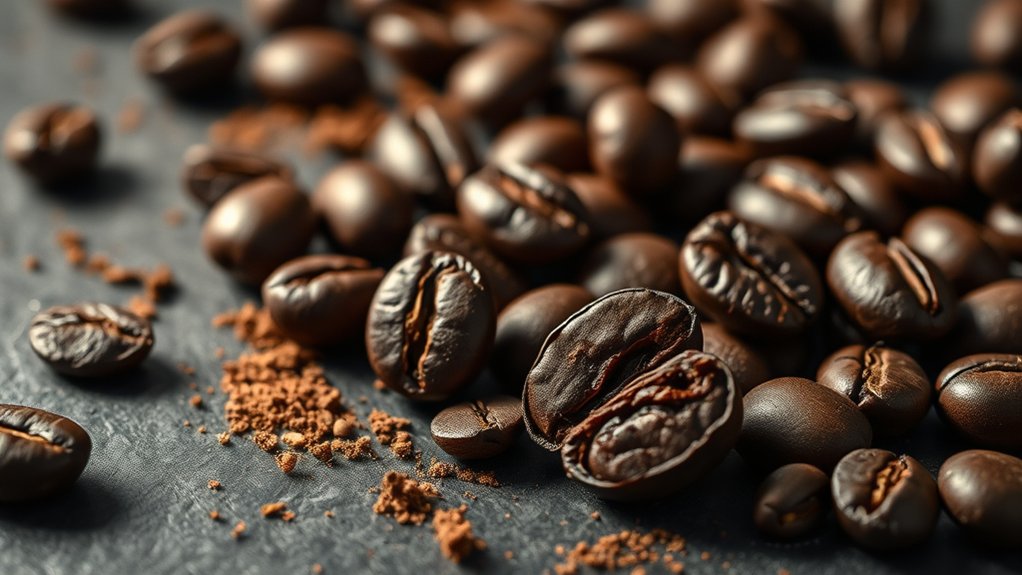
You get caffeine from both the espresso bean and the chocolate coating, which together add up to about 5-10 mg per chocolate-covered bean.
The dark chocolate actually contributes more caffeine, so it boosts the overall energy kick you get.
This combination doesn’t just make the flavor richer—it also gives you a faster, stronger caffeine hit than either the espresso or chocolate would on their own.
It’s like the best of both worlds in one little bite!
Caffeine Content Breakdown
Caffeine content in chocolate-covered espresso beans comes from both the coffee bean at the center and the chocolate coating surrounding it. Each coffee bean provides about 6-12 milligrams of caffeine, while the chocolate adds between 6 to 12 milligrams per ounce, depending on whether it’s milk or dark chocolate.
Altogether, a single chocolate covered espresso bean contains roughly 10-20 milligrams of caffeine. When you eat 5-10 of these beans, you consume caffeine equivalent to a moderate cup of coffee.
The absorption rate is faster compared to brewed coffee because the natural oils and fibers in the whole bean help deliver a quicker energy boost.
Understanding this breakdown helps you manage your caffeine intake effectively when snacking on chocolate covered espresso beans.
Flavor and Energy Fusion
The combination of coffee bean and chocolate caffeine creates a unique synergy that enhances both flavor and energy.
Chocolate-covered espresso beans deliver about 10-20 mg of caffeine per bean by combining the 6-12 mg from the espresso bean with additional caffeine from the dark chocolate coating.
This fusion produces a rich mocha-like flavor, appealing to your taste buds while providing a quick energy boost. Eating whole espresso beans maximizes caffeine absorption, with just 5-10 beans matching the caffeine in a cup of coffee.
The caffeine and sugar in the chocolate further amplify mental alertness, making these beans an efficient snack for a focused energy boost.
This blend of flavor and caffeine creates a balanced, enjoyable way to stay energized throughout your day.
Comparing Caffeine in Chocolate-Covered Beans to Brewed Coffee
When you look at the caffeine content in chocolate-covered espresso beans compared to brewed coffee, each bean has about 5 to 10 milligrams of caffeine. That’s quite a bit less than what you’d find in a typical 8-ounce cup of coffee, which usually has around 95 milligrams.
But here’s the thing: if you eat 10 to 15 of those beans, you could end up getting the same amount—or even more—caffeine than from one or two cups of coffee.
Plus, the way your body absorbs that caffeine is a bit different. The fiber and oils in the beans slow down how quickly the caffeine hits your system compared to drinking liquid coffee.
Caffeine Content Comparison
Although chocolate-covered espresso beans might seem like just a tasty treat, you should know they pack a significant caffeine punch. Each coffee bean contains about 6-12 mg of caffeine, and when coated in chocolate, a single chocolate-covered espresso bean typically contains 10-20 mg of caffeine.
In contrast, a typical cup of brewed coffee has around 95 mg of caffeine per 8-ounce serving. This means eating 8-10 chocolate-covered espresso beans can give you a caffeine boost comparable to a cup of brewed coffee.
Keep in mind that caffeine content varies depending on the type of chocolate and bean used, with dark chocolate varieties generally having higher caffeine levels.
Energy From Beans Vs. Brew
Because each chocolate-covered espresso bean contains about 10-20 mg of caffeine, much more than the 1-3 mg in a single brewed coffee bean, you can get a significant energy boost from just a handful of these beans.
Compared to brewed coffee, chocolate-covered beans deliver caffeine more directly, as consuming whole beans allows maximum caffeine absorption.
However, an 8-ounce cup of coffee contains around 120 mg of caffeine, roughly equal to 30 chocolate-covered beans. Keep an eye on your overall caffeine intake to avoid overconsumption.
Here’s what you should consider:
- Each bean contains a potent 10-20 mg of caffeine per piece.
- Coffee’s caffeine boost comes from 120 mg per cup.
- Beans offer a quicker, more intense caffeine effect.
- Sugar in chocolate enhances the caffeine boost experience.
The Benefits of Caffeine in Chocolate-Covered Espresso Beans
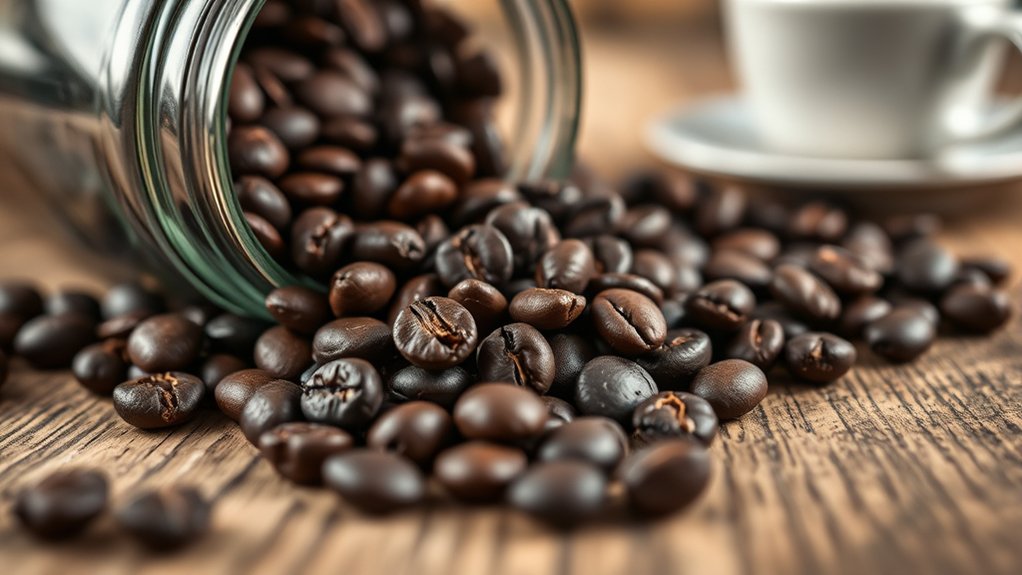
If you want a quick and effective caffeine boost, chocolate-covered espresso beans deliver about 10-20 mg of caffeine per bean. This helps to enhance your alertness and energy levels. These beans combine caffeine and sugar to improve mental focus, making them ideal for study or workouts.
Rich in antioxidants, both chocolate and espresso help combat free radicals and reduce inflammation. Dark chocolate also stimulates endorphin production, which can boost your mood. Remember, moderation is key to avoid jitters or anxiety.
| Feature | Benefit | Notes |
|---|---|---|
| Caffeine Boost | Enhances alertness | 10-20 mg per bean |
| Mental Focus Improvement | Supports concentration | Ideal for work or study |
| Antioxidants | Reduces inflammation | Protects cells |
| Mood Enhancement | Stimulates endorphins | Dark chocolate effect |
| Moderation | Prevents side effects | Avoid excessive intake |
What Happens When You Eat Too Many Espresso Beans?
If you eat too many chocolate-covered espresso beans, you might start to feel jittery, anxious, or have trouble sleeping. That’s because they can cause caffeine overload.
Just so you know, eating about 10 to 15 beans can give you as much caffeine as one or two cups of coffee. So, it’s pretty easy to go overboard without realizing it.
It helps to keep an eye on how many you’re eating and also be aware of other caffeine sources throughout your day.
That way, you can avoid those uncomfortable side effects and still enjoy your treat.
Caffeine Overload Symptoms
When you eat too many chocolate-covered espresso beans, you risk experiencing caffeine overload symptoms like jitteriness, anxiety, and heart palpitations. Each bean contains about 10-20 mg of caffeine, so eating 10-15 can push your caffeine consumption close to or beyond recommended limits, increasing these risks.
High caffeine intake may also cause sleep disturbances that disrupt your rest, especially if consumed later in the day. Other symptoms often include headaches and nausea.
Watch for these signs of caffeine overload:
- Rapid heart palpitations that feel unsettling
- Persistent jitteriness or nervousness
- Trouble falling or staying asleep
- Headaches and nausea that worsen with more caffeine
Recognizing these symptoms helps you avoid adverse effects linked to excessive caffeine from chocolate-covered espresso beans.
Managing Consumption Risks
Although chocolate-covered espresso beans offer a convenient caffeine boost, eating too many can quickly push your intake beyond safe limits. Each bean contains 5-10 mg of caffeine, so depending on the type, beans can quickly add up to 120-180 mg in just 10-15 pieces. That’s comparable to a strong cup of coffee.
To avoid jitters, anxiety, or sleep disturbances, it’s essential to monitor overall caffeine intake from all sources. Overconsumption may also cause gastrointestinal discomfort due to the combination of caffeine and sugar. If you experience symptoms or have sensitivity, consult a healthcare provider.
For a caffeine boost without the risks, try limiting your intake, especially during mid-afternoon slumps. Stay aware of how much caffeine you consume throughout the day.
Enjoying Chocolate-Covered Espresso Beans Responsibly
Since chocolate-covered espresso beans contain 10-20 mg of caffeine each, you should limit your serving size to 5-10 beans. This way, you can enjoy their flavor and caffeine boost without overdoing it.
To enjoy responsibly, monitor caffeine intake from all sources to avoid exceeding your daily limits. Consuming these beans in the morning or early afternoon helps prevent sleep disturbances while providing a quick energy boost.
Remember to:
- Stick to the recommended serving size to balance flavor and caffeine content.
- Track your total caffeine intake throughout the day.
- Enjoy chocolate-covered espresso beans alongside coffee for a richer experience.
- Avoid late-day consumption to maintain healthy sleep patterns.
Do Different Chocolate Types Change the Caffeine Content?
How does the type of chocolate affect the caffeine content in chocolate-covered espresso beans? Different chocolate varieties influence the overall caffeine levels you consume.
Dark chocolate, with its higher cacao content, typically adds more caffeine, about 12 mg per ounce, compared to milk chocolate’s 6 mg per ounce.
White chocolate contains negligible caffeine since it lacks cocoa solids.
When paired with the coffee bean inside, caffeine content varies further. For instance, robusta beans contain more caffeine than arabica beans, increasing the total caffeine levels in each chocolate-covered espresso bean, which generally ranges between 10-20 mg.
Flavoring and Pairing Chocolate-Covered Espresso Beans
Three popular chocolate varieties, dark, milk, and white, offer distinct flavor and caffeine profiles when covering espresso beans. The chocolate coating affects both the caffeine content and the overall taste experience.
When pairing chocolate-covered espresso beans, consider combining them with freshly brewed coffee to amplify the caffeine content and enhance the mocha-like flavor. You might also explore unique flavor additions such as sea salt, cinnamon, or chili powder for a creative twist.
Notice how dark chocolate intensifies bitterness, while milk and white chocolates add sweetness.
It’s a good idea to balance your snack choices to maintain a varied flavor experience and moderate caffeine intake.
Choosing the Right Serving Size of Espresso Beans
A serving size of 5 to 10 chocolate-covered espresso beans strikes a practical balance between savoring their rich flavor and managing caffeine intake. Each bean contains about 5-12 mg of caffeine, so 10 beans can provide 50-120 mg, depending on the chocolate coating.
A serving of 5 to 10 chocolate-covered espresso beans offers rich flavor with a manageable caffeine boost.
Dark chocolate varieties generally have higher caffeine content than milk chocolate, so keep that in mind when choosing your serving size.
Consuming these beans earlier in the day maximizes their energy boost without disrupting sleep.
It’s essential to monitor caffeine consumption from all sources to avoid adverse effects like jitteriness or insomnia.
Frequently Asked Questions
Are Chocolate-Covered Coffee Beans Safe for Children?
Chocolate-covered coffee beans aren’t safe for children due to their caffeine content. Even small serving sizes can exceed recommended limits for kids, affecting sleep and behavior.
While adults enjoy flavor combinations and health benefits in moderation, children should avoid them.
If you’re considering brands, choose those with clear caffeine info and always consult a healthcare provider.
Prioritize consumption moderation to protect children’s health and well-being.
Can Pregnant Women Consume Chocolate-Covered Espresso Beans?
You should limit caffeine intake during pregnancy to about 200 mg daily.
Chocolate-covered espresso beans can quickly push you over that limit, with 5-10 mg per bean.
While chocolate benefits mood and antioxidants, pregnancy guidelines stress moderation to avoid health risks like preterm birth.
Instead, consider alternative snacks low in caffeine.
Always consult your healthcare provider for personalized advice on safe caffeine consumption during pregnancy.
Do Chocolate-Covered Coffee Beans Affect Sleep Quality?
Yes, chocolate-covered coffee beans can disrupt your sleep patterns, especially if you have caffeine sensitivity.
Nighttime consumption boosts your energy levels, making it harder to relax and fall asleep. This can reduce your sleep duration and overall quality.
To minimize impact, avoid eating them late in the day and try relaxation techniques before bed. Monitoring your total caffeine intake helps maintain healthy sleep habits and supports better rest.
How Should Chocolate-Covered Coffee Beans Be Stored?
You should store chocolate-covered coffee beans in airtight containers to extend their shelf life, preserving flavor and texture.
Temperature control is key. Keep them at room temperature and avoid heat and humidity, which can cause melting or clumping.
Don’t refrigerate them because condensation harms the chocolate’s finish.
Also, check for specific brand instructions on packaging.
Proper storage methods maintain freshness up to 2-4 weeks after opening, ensuring peak taste and quality.
Are There Any Allergies Associated With Chocolate-Covered Coffee Beans?
Yes, chocolate-covered coffee beans can trigger allergic reactions due to ingredient sensitivities like dairy, nuts, or soy in the chocolate coating.
Cross contamination risks are common since many products share facilities processing allergens.
You should consider your personal tolerance and health concerns before consuming them. If you’re unsure or sensitive, opt for alternative snacks free from these allergens.
Always check labels carefully to minimize allergy risks and consult a healthcare professional if needed.
Conclusion
Craving a quick caffeine kick? Chocolate-covered coffee beans combine bold bitterness and sweet satisfaction, serving a surprising surge of caffeine. By blending bean and chocolate, they boost your buzz more than brewed coffee in smaller servings.
Remember, moderation matters. Mindful munching maximizes benefits while minimizing jitters. Whether you prefer dark, milk, or flavored chocolate, choosing the right amount keeps your energy elevated and enjoyable.
Savor smart snacking for sustained stimulation.