What Is A Blonde Roast Coffee – Explained Simply
Blonde roast coffee is lightly roasted, stopping just after the first crack at lower temperatures to preserve the beans’ natural flavors. You’ll notice a bright, fruity taste with higher acidity and slightly more caffeine than darker roasts.
It’s smoother, less bitter, and highlights origin characteristics without heavy caramelization or oiliness. This roast works best with pour-over or AeroPress methods to bring out its delicate notes.
Exploring further reveals how it compares health-wise and brewing-wise to other roasts.
What Is Blonde Roast Coffee and How Is It Different?
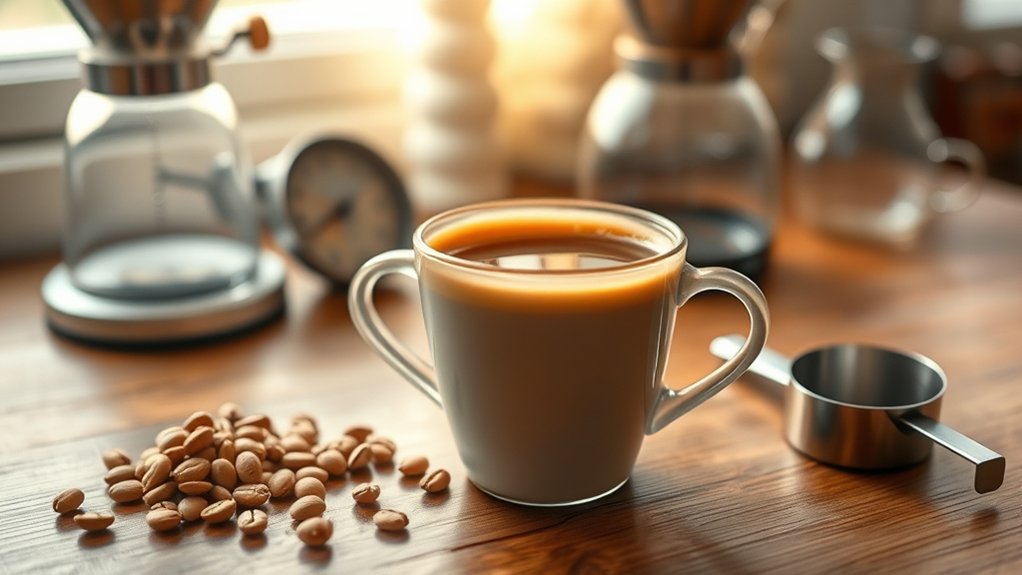
Although you might be more familiar with darker roasts, blonde roast coffee offers a distinct experience by roasting beans at a lower temperature (355-400°F) and stopping just after the first crack.
This light roast coffee preserves the beans’ unique characteristics, highlighting bright acidity and fruity notes like lemon and orange.
Light roast coffee captures bright acidity and vibrant fruity notes like lemon and orange.
Compared to medium roasts, blonde roasts provide a smoother, less bitter flavor while maintaining slightly higher caffeine content, around 95 mg per 8-ounce serving.
You’ll find brewing methods such as pour-over and espresso bring out these delicate flavors best.
Unlike darker roasts that can mask bean defects, blonde roast coffee emphasizes origin-specific qualities.
It’s ideal when you want to taste coffee’s true essence clearly and precisely.
When Are Blonde Roast Beans Pulled During Roasting?
When you roast blonde coffee beans, you pull them from the roaster just after the first crack. This is a pivotal moment when the beans release moisture and begin to expand. This stage in the roasting process typically occurs between 355°F and 400°F and lasts about 7 to 9 minutes.
The first crack marks the shift where the beans develop their unique flavor without excessive caramelization. By stopping the roast here, you preserve the bright acidity and original characteristics that define blonde roast beans.
Unlike darker roasts, these roasted coffee beans maintain a lighter color and avoid surface oil. This careful timing guarantees a delicate roast profile with minimal caramelization, capturing the essence of the coffee’s inherent qualities.
Why Blonde Roast Has a Bright, Fruity Flavor
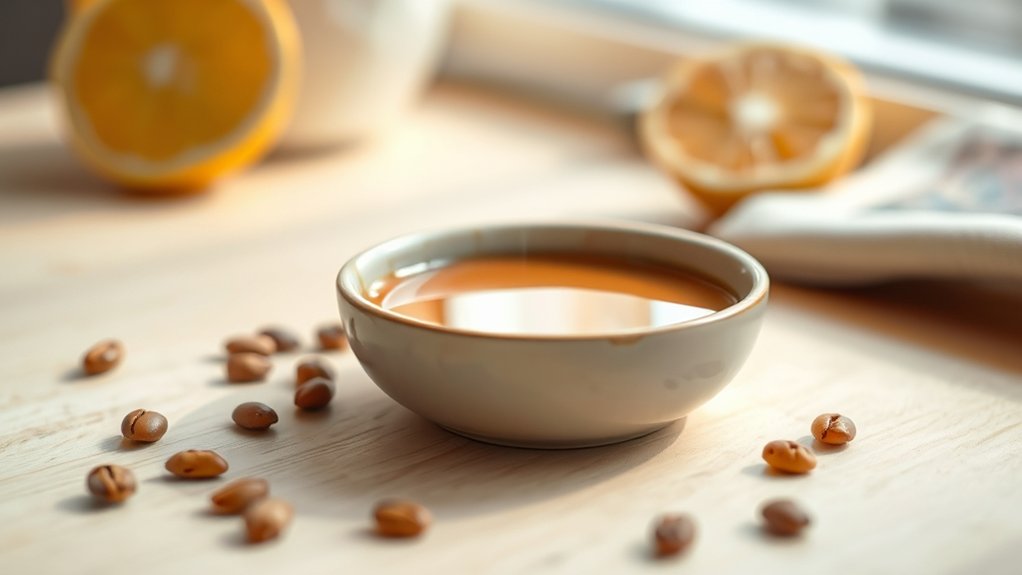
Because blonde roast coffee undergoes a shorter roasting process that halts just after the first crack, it preserves the beans’ inherent acidity and original flavor compounds. This retention is key to its bright, fruity flavor.
You’ll notice how the roasting process limits caramelization, allowing the unique fruity notes to shine, especially from Latin American beans known for their crisp acidity.
The resulting profile highlights:
- Higher acidity compared to darker roasts, enhancing brightness
- Preservation of original flavor characteristics, avoiding bitterness
- Distinct citrus and berry notes, creating a revitalizing taste
- Enhanced antioxidants, contributing to flavor complexity
How Much Caffeine Does Blonde Roast Coffee Have?
How much caffeine you get from blonde roast coffee can vary widely depending on several factors. Typically, an 8-ounce serving contains about 95 mg of caffeine, but this can range from 70 to 140 mg based on the brewing method and coffee-to-water ratio.
Caffeine in blonde roast coffee varies, usually around 95 mg per 8-ounce cup depending on brewing and ratio.
Blonde roast coffee often has slightly higher caffeine levels than darker roasts because its beans are denser. However, since blonde roasts commonly use Arabica beans, which have less caffeine than Robusta beans found in some darker roasts, caffeine content can fluctuate.
For example, Starbucks’ Veranda Blend, a blonde roast, contains 180 mg of caffeine, significantly more than their dark roast’s 130 mg.
Ultimately, the caffeine content depends on bean type, roast level, and preparation, so your brew’s strength can vary considerably.
Best Brewing Methods to Highlight Blonde Roast Coffee
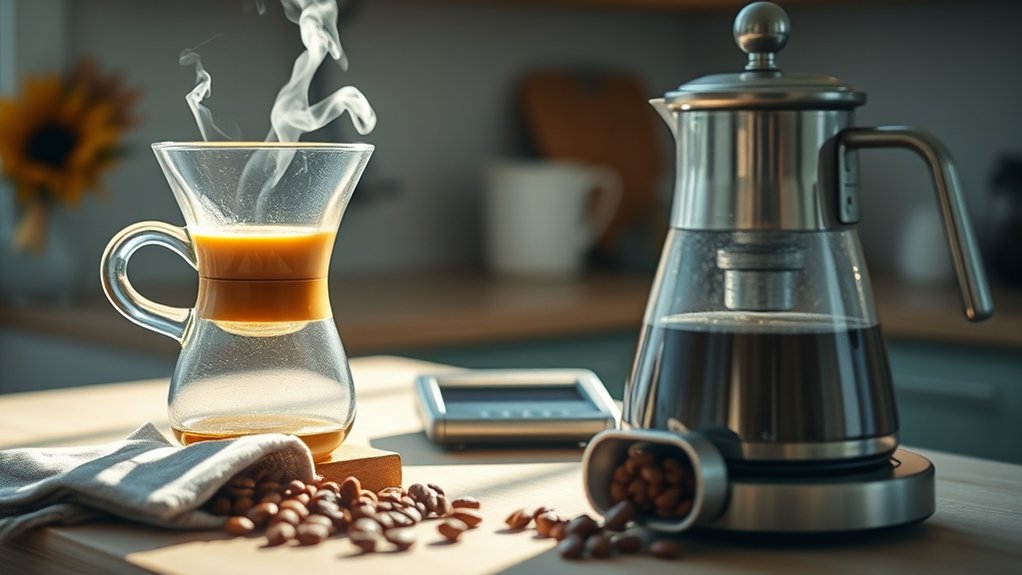
You’ll want to stick with brewing methods that really preserve the bright, delicate flavors of blonde roast coffee.
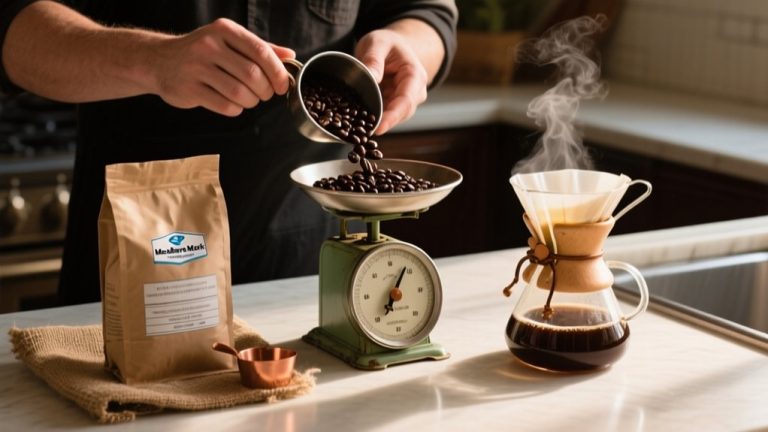
Pour over techniques like the V60 or Chemex are great choices because they give you precise control and help highlight those fruity notes and the coffee’s complexity.
The AeroPress is another solid option for the same reasons—it lets you dial in your brew to really bring out the best in the coffee.
On the other hand, you might want to skip the French Press. It tends to overwhelm the roast’s clarity and can result in muddled flavors that mask the subtlety you’re after.
Optimal Brewing Techniques
Although blonde roast coffee offers a bright and delicate flavor profile, extracting its full potential depends heavily on your brewing method. To maximize flavor complexity, consider these ideal brewing techniques:
- Use Pour Over Methods like V60 or Chemex to highlight delicate flavors with clarity.
- Try AeroPress to control brewing temperature and time precisely, balancing acidity and taste.
- Employ drip coffee makers with fresh beans and exact coffee-to-water ratios for consistent results.
- Avoid French Press, as it often muddies blonde roast’s subtle nuances.
Maintain a brewing temperature between 195°F and 205°F to preserve the coffee’s bright acidity and flavor complexity.
Choosing the right method guarantees you experience the light, nuanced character unique to blonde roast coffee.
Enhancing Flavor Clarity
When aiming to enhance flavor clarity in blonde roast coffee, selecting the right brewing method plays an essential role.
Pour Over techniques, such as V60 or Chemex, excel at highlighting the bright, delicate flavors inherent to light roasting by allowing precise control over extraction.
The AeroPress also offers versatility, enabling you to adjust brew time and temperature to balance the coffee’s fruity and floral notes effectively.
While drip coffee makers can produce satisfactory results, manual brewing methods better preserve the complex flavor profile of blonde roast coffee.
Avoid French Press for blonde roasts, as its immersion method tends to muddy delicate flavors.
Why Avoid French Press for Blonde Roast Coffee?
You’ll probably notice that using a French press with blonde roast coffee often ends up dulling the flavor clarity. That’s because the longer steeping time pulls out fine particles and oils, which can really muddy those bright, delicate notes you love.
Plus, the coarse grind leaves sediment settling right in your cup, giving it a gritty texture that hides the coffee’s natural smoothness.
Flavor Clarity Loss
Since blonde roast coffee features a delicate flavor profile with bright acidity and fruity notes, using a French press can easily muddle its clarity. The immersion brewing method leaves fine sediment and oils in the cup, which mask the nuanced flavors typical of light roasts.
To preserve flavor clarity, consider these points:
- French press retains sediment that blurs blonde roast’s crispness.
- Oils left in the brew create a heavier mouthfeel, detracting from ideal flavor.
- Brewing methods like pour-over or AeroPress filter out sediment, enhancing clarity.
- Light roasts demand techniques that highlight brightness, not body or richness.
Avoiding the French press guarantees you experience the full spectrum of blonde roast coffee’s natural characteristics without compromise.
Sediment And Texture
Although the French press extracts a rich, full-bodied cup, it also traps fine sediment and oils that can overwhelm blonde roast coffee’s delicate profile.
The sediment produced by the French press creates a gritty texture that diminishes the lighter mouthfeel you expect from blonde roasts.
This brewing method’s immersion technique extracts more oils and fine particles, which muddies the clarity and masks the coffee’s bright acidity.
Because blonde roast’s unique characteristics rely on subtle, nuanced flavors, the sediment and heavier body from a French press overshadow these qualities.
Instead, you should choose brewing methods like pour-over or AeroPress, which emphasize clarity and preserve the bright, fruity notes without introducing unwanted sediment.
This way, you can fully appreciate the nuanced profile of blonde roast coffee.
How Air Roasting Enhances Blonde Roast Coffee Flavor
When air roasting blonde roast coffee, the use of hot air circulation guarantees an even roast that preserves the beans’ delicate flavors. This method operates at lower temperatures, protecting the coffee’s natural acidity and enhancing its complex sweetness.
You’ll notice a smoother cup with a cleaner roasting environment that highlights the coffee’s unique characteristics.
Experience a smoother cup and a pristine roast that truly showcases the coffee’s distinct flavors.
Here’s why air roasting matters:
- It ensures uniform heat distribution, avoiding burnt spots.
- It maintains bright, floral, and citrus flavors by minimizing bitter compounds.
- The lower temperatures preserve the beans’ original profile, enhancing nuance.
- It creates a cleaner environment, allowing the coffee’s origin flavors to shine.
Common Misconceptions About Blonde Roast Coffee
Many coffee drinkers misunderstand blonde roast, assuming it’s weaker or overly acidic compared to darker roasts. In reality, blonde roast coffee contains the same or slightly more caffeine, thanks to its shorter roasting time.
The misconception about acidity often confuses brightness with unpleasant sourness. Acidity here signals quality beans, not discomfort. You should also know that darker roasts don’t guarantee higher quality. In fact, they can mask defects in lower-grade beans.
Blonde roast is distinct from breakfast blends, which are usually medium roasts with a more balanced flavor.
If your blonde roast tastes sour, it’s likely due to under-extraction during brewing. You can fix this by tweaking grind size or brew time.
Understanding these misconceptions helps you appreciate the true quality of blonde roast coffee.
Is Blonde Roast Coffee Healthier or Less Acidic?
How does blonde roast coffee stack up regarding health benefits and acidity? While it has higher acidity than darker roasts, its bright, fruity profile often feels easier on the stomach due to less bitterness. The shorter roasting time preserves more antioxidants, potentially enhancing health benefits. Here’s what to evaluate:
- Blonde roast coffee has increased acidity but offers a natural sweetness and lighter body.
- Higher antioxidants mean it may support your health better than darker roasts.
- Slightly elevated caffeine levels can boost alertness without a harsh aftertaste.
- Its gentler bitterness makes it easier on the stomach for many, despite acidity.
How Blonde Roast Coffee Compares to Medium and Dark Roasts
You’ll notice that blonde roast coffee delivers brighter, fruitier flavors with higher acidity compared to the balanced profile of medium roast and the bold intensity of dark roast.
It also contains slightly more caffeine because it’s roasted for a shorter time.
Plus, it offers a lighter, smoother body, which is quite different from the heavier mouthfeel you get with dark roast.
Understanding these differences can really help you pick the roast that suits your taste and caffeine preferences best.
Flavor Differences
Although blonde roast coffee is lighter in color and flavor than medium and dark roasts, it offers a unique tasting experience by preserving the beans’ natural fruity and floral notes.
You’ll notice its bright acidity and smooth mouthfeel set it apart from the balanced flavor of medium roast coffee and the bold, smoky profile of dark roast coffee.
Blonde roast coffee highlights the original characteristics of high-quality beans, unlike dark roasts that can mask defects.
To understand flavor differences:
- Blonde roast emphasizes delicate flavor notes with higher acidity.
- Medium roast balances acidity and caramelization for a rounded taste.
- Dark roast features deeper, smoky tones with diminished acidity.
- Blonde roast’s smooth mouthfeel contrasts with the fuller body of darker roasts.
Caffeine Content Comparison
Because the roasting process directly affects caffeine levels, blonde roast coffee generally contains more caffeine than medium and dark roasts. Shorter roasting preserves caffeine, making blonde roasts a less bitter option with higher energy.
Arabica beans, common in blonde roasts, have less caffeine than Robusta beans in some dark roasts; however, the roasting time is the dominant factor.
| Roast Type | Caffeine Content (mg per 8 oz) |
|---|---|
| Blonde Roast | 95 (range 70-140) |
| Starbucks Veranda Blend (Blonde) | 180 |
| Medium Roast | ~85 |
| Dark Roast | ~70-130 |
| Arabica Beans | Lower caffeine baseline |
You’ll find blonde roast coffee delivers more caffeine content than most medium and dark roasts, giving you energy without the intense bitterness.
Acidity and Body
When comparing roast levels, you’ll notice blonde roast coffee stands out with its higher acidity and lighter body. Blonde roast coffee, lighter in color, preserves brighter acidity and crisp, fruity notes that medium and dark roasts lose through extended roasting. This results in a clean, lemony aftertaste and a delicate mouthfeel.
Here’s how acidity and body differ across roasts:
- Blonde roast exhibits the highest acidity, enhancing its vibrant flavor profile.
- Its body is lighter and crisper, contrasting with the fuller, heavier body of dark roasts.
- Medium roasts offer balanced acidity and a smoother body, sitting between blonde and dark roasts.
- Despite its light body, blonde roast often contains more caffeine content due to shorter roasting times.
Who Should Choose Blonde Roast Coffee and Why?
Who benefits most from choosing blonde roast coffee? If you crave a vibrant flavor profile with citrus and floral notes, blonde roast delivers an invigorating, lively experience that acidity aficionados will admire.
You’ll also appreciate its higher caffeine content compared to darker roasts, giving you a gentle but effective boost.
If you’re new to coffee, the mild bitterness and smooth mouthfeel make blonde roast an approachable coffee that eases you into the diverse world of coffee flavors.
Health-conscious consumers find value here, too, since blonde roast retains more antioxidants, supporting your well-being without sacrificing taste.
How to Order and Enjoy Blonde Roast Coffee at Home or Cafés
Although ordering blonde roast coffee at cafés might seem straightforward, specifying your preference clearly guarantees you get the vibrant, bright flavors you expect. When you enjoy at cafés, say “blonde roast coffee” or “blonde espresso” to avoid confusion.
At home, focus on precise brewing methods like pour-over or AeroPress to release the coffee’s vibrant fruity notes.
- Use a coffee-to-water ratio near 1:15 for balanced extraction.
- Brew between 195°F and 205°F to enhance bright acidity.
- Experiment with extraction temperature to highlight the complex flavor profile.
- Add milk or cream to complement the lighter body and create a smooth texture.
These steps assure your blonde roast coffee delivers its distinctive brightness and nuanced taste every time.
Frequently Asked Questions
Can Blonde Roast Coffee Be Used in Espresso Machines?
Yes, you can use blonde roast coffee in your espresso machine. Its compatibility shines with a lighter flavor profile and higher acidity levels compared to darker roasts.
To optimize taste, adjust brewing temperature and extraction time. Shorter pulls help prevent sourness.
Blonde roast often offers higher caffeine content, so keep that in mind. Store beans airtight to maintain freshness.
Popular brands like Starbucks and Peet’s offer quality blonde roasts ideal for espresso brewing.
How Long Does Blonde Roast Coffee Stay Fresh After Roasting?
You’ll find blonde roast coffee stays fresh for about 2 to 4 weeks after roasting if you control freshness factors like oxygen, light, and humidity.
Proper storage methods, such as airtight containers in a cool, dark place, extend shelf life and preserve aroma retention.
Beyond this, its flavor profile and tasting notes fade, which diminishes the unique roast characteristics.
To maximize flavor, adjust your brewing techniques to match the coffee’s ideal freshness window.
What Is the Best Grind Size for Blonde Roast Coffee?
You don’t want to pulverize blonde roast into dust unless you’re aiming for bitterness as a flavor profile.
The best grind size is medium to medium-fine, balancing acidity levels and preserving aroma notes.
Adjust according to brewing methods: medium for pour-over, finer for AeroPress to highlight freshness tips and caffeine content.
Tailor grind size to your taste preferences, ensuring you extract bright, nuanced flavors without dulling the coffee’s lively essence.
Does Blonde Roast Coffee Pair Well With Milk or Cream?
Yes, blonde roast coffee pairs well with milk or cream and even milk alternatives. Its higher acidity levels and bright sweetness notes balance creamy textures, enhancing flavor profiles without overpowering them.
Depending on your brewing methods and temperature preferences, milk mellows the roast’s fruity characteristics, creating harmonious food pairings.
This blend reflects evolving coffee culture trends favoring nuanced, approachable flavors, making blonde roasts versatile for those seeking smooth, satisfying coffee experiences.
Are There Any Specific Bean Origins Better Suited for Blonde Roast?
Think of bean origins as musical notes shaping a symphony; Colombian, Kenyan, and Ethiopian beans excel in blonde roasts due to their unique bean characteristics.
Their bright acidity levels and distinct flavor profiles, fruity, floral, and berry-like, are enhanced by lighter roasting techniques.
Regional differences deeply influence taste comparisons, making these beans favorites among popular brands.
When you fine-tune brewing methods, these origins reveal the vibrant complexity blonde roasts promise.
Conclusion
Choosing blonde roast coffee is like catching the first light of dawn. It’s bright, invigorating, and full of subtle complexity. You’ll enjoy its fruity flavors and gentle acidity, especially if you prefer a lighter, more nuanced cup.
Whether you’re brewing at home or ordering out, blonde roast offers a distinctive experience that stands apart from medium and dark roasts. So, if you want a lively, crisp coffee, blonde roast is definitely worth your try.