How Long Does Black Coffee Last In The Fridge – Storage Guide
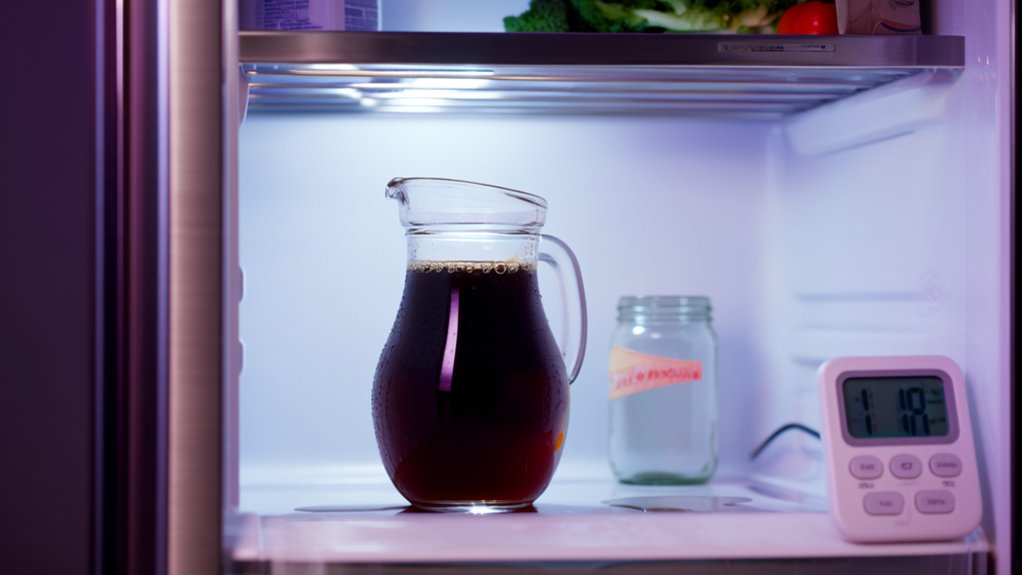
You can keep black coffee in the fridge for 3 to 4 days if you cool it to room temperature first and store it in an airtight container at or below 40°F (4°C). Its acidity slows bacterial growth, making it safe up to 42 days, though flavor starts to decline after 24 hours and worsens by two weeks.
Adding milk shortens this shelf life considerably. Proper storage and reheating methods help retain the best taste. Explore these details to optimize your coffee experience.
How Long Does Black Coffee Last in the Fridge?
How long does black coffee last in the fridge, and how can you guarantee it stays fresh? Typically, black coffee maintains ideal freshness for 3 to 4 days when stored correctly.
Black coffee stays fresh in the fridge for 3 to 4 days when stored properly.
To maximize this, cool your coffee to room temperature before refrigeration and store it in an airtight container at or below 40°F (4°C). This method slows flavor degradation, which starts noticeably after 24 hours and intensifies beyond 14 days.
While the acidity helps prevent spoilage up to 42 days, sensory cues like sour smells, unusual bitterness, or color changes signal that it’s time to discard the coffee.
Avoid adding milk or cream before storage to prevent bacterial growth.
What Affects Black Coffee’s Fridge Shelf Life?
Although black coffee can remain safe to drink for several weeks when refrigerated, its fridge shelf life depends on several key factors. The acidity of black coffee naturally inhibits bacterial growth, allowing it to stay safe for up to 42 days in the fridge.
However, flavor degradation begins after 14 days, making ideal flavor achievable only within the first 24 hours. Proper storage is essential; using an airtight container minimizes oxidation and preserves quality.
Furthermore, maintaining the fridge temperature at or below 40°F (4°C) slows both bacterial growth and flavor loss.
If you want to maximize black coffee’s shelf life and enjoy its ideal flavor, focus on acidity, temperature control, and airtight storage to prevent premature flavor degradation and maintain safety.
Is Black Coffee Safe to Drink After Refrigeration?
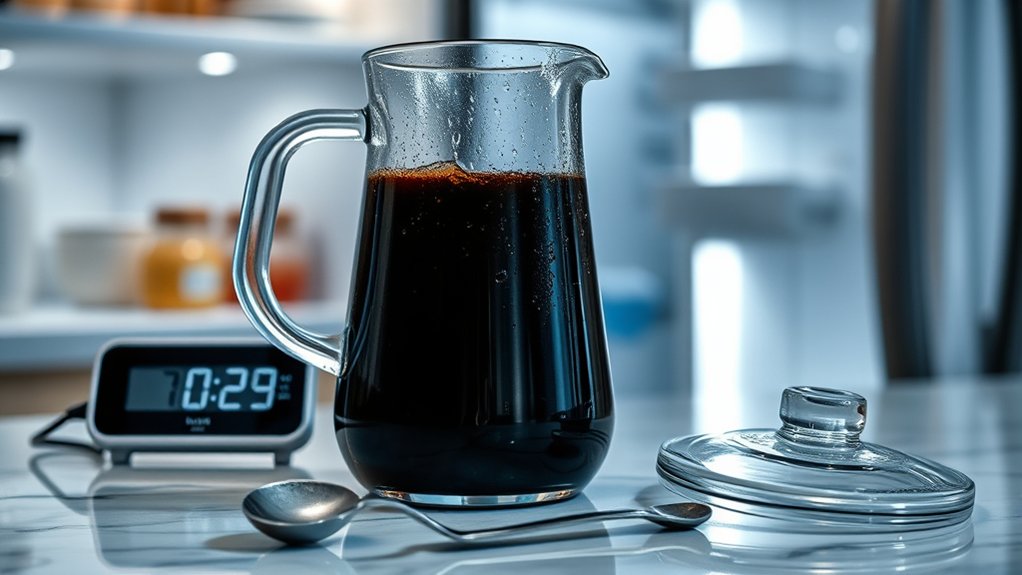
When can you safely drink black coffee stored in the fridge? Black coffee remains safe to drink for up to 42 days due to its acidity and natural antimicrobial properties, according to this storage guide.
However, flavor degradation begins around Day 14, and you should ideally consume it within 3 to 4 days for peak flavor.
After 24 hours, taste declines noticeably, and by Day 34, the sensory experience diminishes considerably, especially for hot brews.
Spoilage signs include sour off-smells or unusual bitterness, which signal flavor degradation rather than true spoilage.
Regularly check your black coffee in the fridge for these indicators to verify it’s still enjoyable.
While safe to drink beyond two weeks, prioritizing earlier consumption guarantees the best taste and minimizes flavor degradation.
How Milk or Cream Affects Coffee’s Fridge Life
When you add milk or cream to your coffee, its fridge life drops to just 1 to 2 days. That’s because dairy spoils pretty quickly.
So, you’ll want to keep an eye out for sour smells, curdling, or separation—those are clear signs it’s time to toss it.
Unlike black coffee, adding dairy speeds up flavor changes and bacterial growth.
That means it’s best to drink it sooner rather than later.
Shelf Life Reduction
Since milk and cream introduce perishable elements into black coffee, they greatly shorten its fridge life to just 1-2 days. Adding milk turns otherwise stable black coffee into a perishable food, allowing bacteria to thrive in refrigerated coffee.
To guarantee safety, consume within this timeframe and refrigerate dairy-based coffee within two hours of preparation, per USDA guidelines. This shelf life reduction makes it essential to follow proper storage practices.
| Factor | Impact on Fridge Life |
|---|---|
| Black coffee alone | Lasts up to 1-2 weeks |
| Adding milk/cream | Reduces fridge life to 1-2 days |
| Bacteria thrive | Increases spoilage risk |
| Consume within | Recommended 2 days |
This storage guide emphasizes adding milk only at serving to minimize spoilage risks and extend fridge life.
Spoilage Indicators
Adding milk or cream to your coffee speeds up spoilage, so it’s important to spot clear signs of deterioration.
Black coffee can last up to 3 to 4 days in the fridge, but coffee with milk should be consumed within 1 to 2 days because dairy spoils faster.
Spoilage signs include sour off-smells, curdling, and odd visual changes like separation or discoloration. These changes indicate bacterial growth and can pose health risks if you ignore them.
To keep your coffee fresh, avoid adding milk or cream before storing it. Instead, add them when you’re ready to drink.
Make a habit of checking your coffee’s smell and look, especially as it nears the 2-day mark.
Knowing these spoilage indicators helps you store coffee better and avoid drinking spoiled coffee that tastes bad and could be unsafe.
Best Containers for Storing Black Coffee in the Fridge
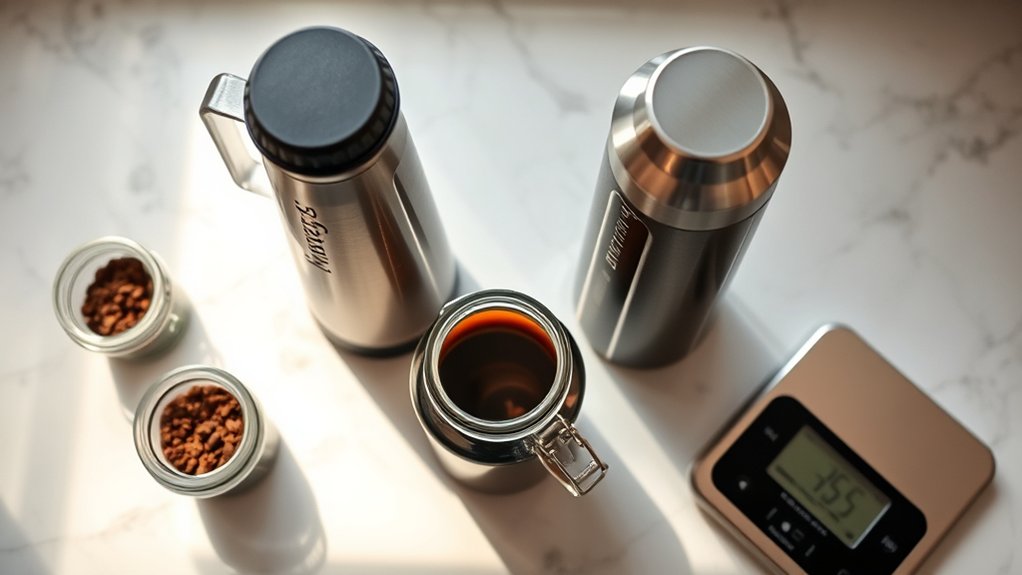
Although storing black coffee in the fridge can extend its freshness, choosing the right container is essential to preserving its flavor and quality. When storing brewed coffee, you want to maintain flavor integrity and minimize oxidation.
Storing black coffee in the fridge keeps it fresh, but selecting the right container preserves its flavor and quality.
Glass carafes are ideal because they’re non-porous, odor-free, and easy to clean. High-quality plastic containers work well for short-term storage if they’re BPA-free.
Stainless steel carafes suit short-term refrigeration but may alter taste over time. Vacuum-sealed containers excel at slowing oxidation, preserving flavor longer.
Always use airtight containers and fill them to minimize air exposure.
- Glass carafes: preserve flavor, easy to clean
- High-quality plastic containers: safe, good for short-term use
- Stainless steel carafes: short-term suitability, potential taste changes
- Vacuum-sealed containers: reduce oxidation
- Airtight containers: prevent air exposure, maintain quality
Signs Your Refrigerated Black Coffee Has Gone Bad
Recognizing when your refrigerated black coffee has gone bad is essential for both taste and safety. Key signs of spoilage include a sour smell or a vinegar-like odor, which clearly indicate the coffee is no longer safe to consume.
You should also watch for color changes and excessive separation in the liquid, which suggest chemical breakdown. An off-putting texture or visible sludge further signals spoilage.
Since flavor decline begins after 24 hours, any unusual sensory changes warrant caution. If your coffee develops a musty or fermented scent, discard immediately to avoid health risks.
To protect your well-being, always discard black coffee exhibiting these signs of spoilage. Staying vigilant guarantees you enjoy fresh coffee while preventing exposure to potentially harmful contaminants.
How to Reheat Refrigerated Coffee Without Losing Flavor
When reheating refrigerated black coffee, you should use low heat to prevent burning and preserve its delicate flavors.
Applying gradual heat around 150°F (65°C) helps avoid scalding and flavor degradation. Using a stovetop or microwave on low power is best to keep the flavor and avoid bitterness.
Adding a pinch of salt can counteract bitterness and enhance the taste.
Avoid reheating more than once to prevent losing the flavor completely. If off-flavors develop, you can repurpose the coffee in recipes like coffee smoothies instead of drinking it straight.
- Reheat slowly to maintain flavor integrity
- Use low heat to prevent scalding
- Add salt to reduce bitterness
- Limit reheating to once only
- Repurpose spoiled coffee in smoothies or baked goods
This method optimizes how to reheat refrigerated coffee without flavor loss.
Tips to Maximize Black Coffee Freshness in the Fridge
To maximize your black coffee’s freshness in the fridge, store it in an airtight container to limit oxidation and preserve flavor quality.
Before refrigerating, let your brewed black coffee cool to room temperature to prevent condensation, which can degrade taste.
Avoid added milk or sugar before refrigerating since these promote bacterial growth and accelerate spoilage. Add them only when you’re ready to consume.
Maintain your fridge temperature at or below 40°F (4°C) to slow bacterial activity and extend freshness.
Always consume refrigerated black coffee within 3-4 days for best flavor quality.
Monitor sensory indicators like off-smells or unusual bitterness, as these signal spoilage or flavor decline.
Following these evidence-based steps helps you keep your black coffee fresh and safe for consumption longer.
Frequently Asked Questions
Can I Freeze Black Coffee to Extend Its Shelf Life?
Yes, you can freeze black coffee to extend its shelf life. Using airtight storage containers or ice cube trays limits air exposure, which helps preserve flavor and retain aroma.
Proper coffee freezing maintains quality for about two weeks. Defrosting methods matter, so thaw promptly and reheat with care. Adding a pinch of salt can reduce bitterness.
Avoid freezing dairy-based brews. Brewing techniques also influence the taste of iced variations after freezing, so optimize them for the best results.
Does Brewing Method Impact Refrigerated Coffee Taste?
Yes, brewing methods greatly impact refrigerated coffee’s taste. Cold brew’s longer brewing time and lower acidity preserve the flavor profile better, slowing taste deterioration.
Espresso’s extraction method yields a more concentrated flavor but can degrade faster when stored. Proper storage containers and serving temperature also influence coffee freshness.
How Does Water Quality Affect Stored Black Coffee?
Think of water filtration as your coffee’s invisible sculptor, shaping every sip. When you use water with balanced mineral content, you optimize flavor extraction and maintain ideal coffee acidity.
Poor water quality alters brewing temperature efficiency, leading to off-tastes and a stale aroma after oxidation. This also accelerates dilution effects in storage containers.
Can Adding Sugar Before Refrigerating Change Coffee Longevity?
Yes, adding sugar before refrigerating affects coffee longevity by accelerating mold growth and altering acidity levels, which reduces shelf stability.
Sugar promotes bacterial activity, speeding the oxidation process and causing flavor changes that compromise coffee freshness.
Taste profiles degrade faster compared to unsweetened coffee.
Using airtight storage containers can help, but brewing differences still influence outcomes.
For ideal preservation, add sugar just before serving to maintain better flavor and longer shelf life.
Is Iced Coffee Made From Refrigerated Black Coffee Safe?
Think of iced coffee safety as a delicate dance where flavor preservation and health risks must stay in sync.
If you store refrigerated black coffee in airtight containers at ideal temperatures (below 40°F), its shelf life supports iced coffee use for up to 3-4 days.
Coffee oxidation can alter taste, but reheating methods and cold brew benefits help maintain nutritional content.
Always watch for sour smells, which are signs to discard and avoid health risks.
Conclusion
By storing black coffee properly in airtight containers and keeping it refrigerated, you can extend its freshness to about 3-4 days. Remember, factors like temperature fluctuations and added milk shorten its shelf life.
Always check for off smells or flavors before drinking. It’s better to be safe than sorry. With the right care, you’ll keep your coffee tasting close to fresh, ensuring each cup delivers the robust flavor you expect without compromise.