How To Make Coffee With A French Press – Simple Brewing Method Explained
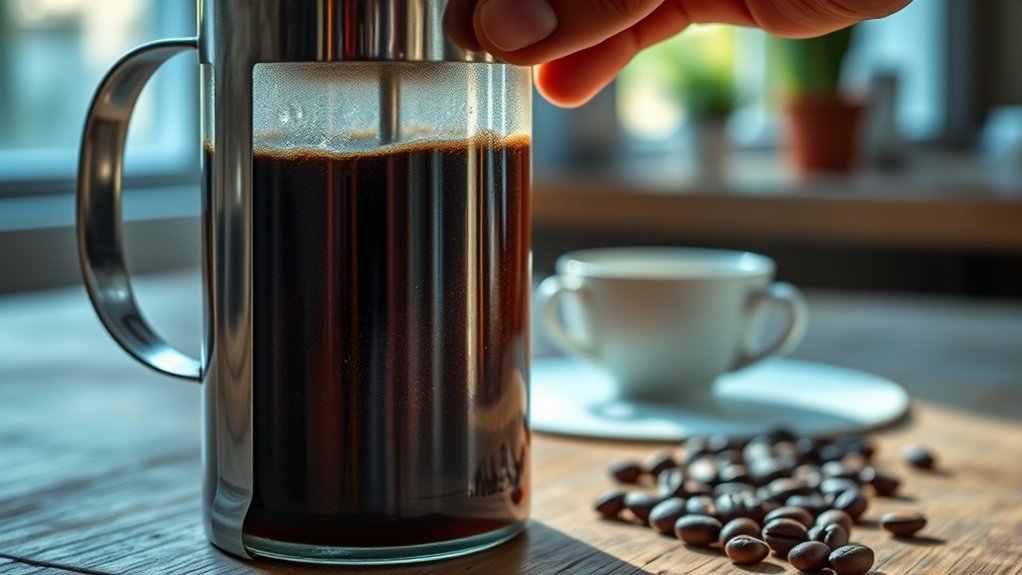
To make coffee with a French press, start by grinding fresh, medium to dark roast beans coarsely. Preheat your press, add the coffee, then pour hot water just off boiling (around 200°F) evenly over the grounds. Stir gently and steep for about four minutes.
Then, press the plunger down slowly. Pour immediately to avoid sediment and bitterness. You can adjust the grind, steeping time, or coffee amount to match your preferred strength.
Keep going, and you’ll discover expert tips and tweaks to brew the perfect cup every time. It’s all about finding what works best for you!
Benefits of Using a French Press for Coffee
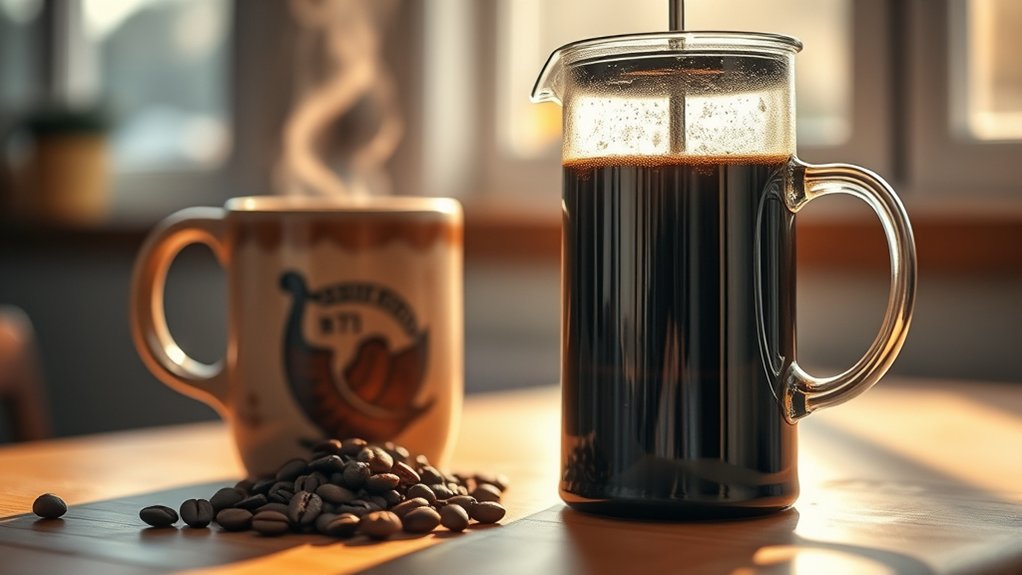
Although many brewing methods exist, using a French press offers distinct advantages that enhance your coffee experience. Rooted in a rich French press history dating back to the 1920s, this method allows you to extract fuller coffee flavor profiles by immersing grounds directly in hot water.
You’ll notice richer oils and nuanced notes preserved, unlike drip coffee filters that trap essential flavors.
Plus, a French press gives you control over steeping time, letting you tailor strength and taste precisely to your preference. Its simple design requires no electricity or paper filters, ensuring a pure, unaltered brew.
By choosing a French press, you embrace a time-tested technique that highlights your coffee’s depth and complexity. This makes each cup a more satisfying ritual. It’s really all about enjoying coffee on your terms and savoring every sip.
Give it a try—you might find it changes the way you think about your morning brew.
What You Need to Make Coffee With a French Press
To make great coffee with a French press, you’ll need a few key items. First up, the right equipment and quality coffee beans are a must.
It’s really important to choose fresh, coarsely ground beans if you want to get the best flavor.
And don’t forget about the water quality—using clean, filtered water can make a noticeable difference in your final cup.
Essential Equipment Checklist
Before you plunge into brewing, gathering the right equipment guarantees your French press coffee turns out perfectly every time. Start with a quality French press; its design directly influences extraction and coffee flavor.
Use a burr grinder to achieve a consistent coarse grind, which is essential for balanced brewing.
A reliable kettle with temperature control helps you hit the ideal brewing temperature, around 195°F to 205°F, to extract rich, nuanced flavors without bitterness.
Don’t forget a sturdy spoon or stirrer to evenly mix coffee grounds and water, plus a timer to track your steeping time precisely.
Ultimately, have a scale on hand for accurate coffee-to-water ratios, ensuring your brew’s strength stays consistent.
With these tools, you control every variable affecting your French press coffee.
Coffee Bean Selection
Once you’ve gathered the right tools, selecting the coffee beans becomes your next priority. The journey begins at the coffee plant, where the beans are carefully harvested to guarantee ideal flavor.
For a French press, choose whole beans rather than pre-ground. They retain freshness longer and allow you to grind to the coarse texture this method demands.
Pay close attention to bean roasting. Medium to dark roasts work best because they extract rich, bold flavors without becoming bitter. Light roasts can feel acidic and underdeveloped in a French press.
When possible, buy beans roasted within the last two weeks. Store them in an airtight container to preserve their aromatic oils.
Your choice here directly shapes the character of your brew, so choose wisely for the best cup.
Water Quality Importance
How does water quality influence your French press coffee? Water purity plays a crucial role in extracting the full flavor profile from your grounds. If your water contains impurities or excessive minerals, it can alter the taste, leading to bitterness or flatness.
Ideally, you want water that’s clean but also balanced in mineral content. Minerals like calcium and magnesium enhance extraction, bringing out the coffee’s complexity and sweetness. However, too much mineral content can cause over-extraction and off-flavors.
Using filtered or bottled water with moderate mineral levels will ensure your brew tastes vibrant and well-rounded. Paying attention to water quality helps you unlock the best from your French press, making each cup a satisfying experience rather than just a routine.
How to Grind Beans for French Press Coffee
Although choosing the right coffee beans is important, grinding them properly is what truly *releases* their flavor in a French press. To get the best results, focus on these key points:
- Use a coarse grind. It prevents over-extraction and keeps your coffee balanced.
- Grind just before brewing. This preserves bean freshness and maximizes aroma.
- Store beans correctly. Proper coffee storage in an airtight container away from light and heat maintains *ideal* quality.
- Avoid blade grinders. They produce uneven grounds, which can lead to inconsistent extraction.
Step-by-Step French Press Coffee Guide
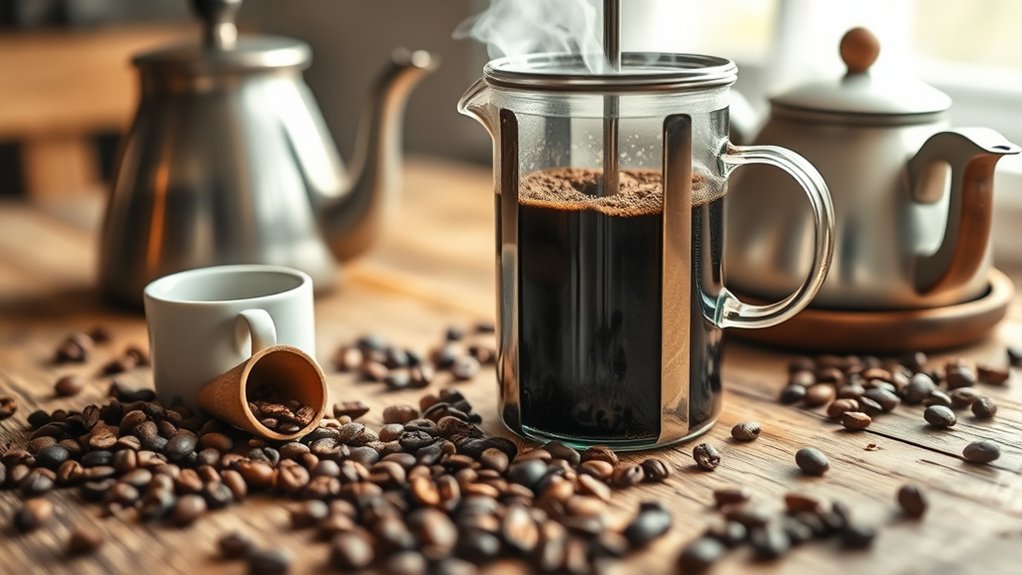
Now that you’ve ground your coffee beans just right, it’s time to move on to brewing with your French press. Start by preheating the press with hot water to maintain the ideal brewing temperature, around 195-205°F. Discard this water, then add your freshly ground coffee.
Pour hot water evenly over the grounds, saturating them fully. Place the lid with the plunger pulled up and let it steep. Remember, the brewing temperature plays a vital role in flavor extraction.
Once brewed, slowly press the plunger down to separate grounds from liquid. Serve immediately to enjoy the best taste.
For consistent quality, keep your beans in airtight containers for excellent coffee storage, protecting freshness and aroma until your next brew.
How Long to Steep French Press Coffee for Perfect Flavor
You’ll want to steep your French press coffee for about four minutes to get the best flavors without any bitterness.
If you steep it for too long, though, it can lead to over-extraction, which makes your coffee taste harsh and a bit astringent.
So, timing really plays a big role in balancing the richness and overall flavor of your brew.
Let’s dive into how that works!
Ideal Steeping Time
Since steeping time directly affects the extraction of flavors from your coffee grounds, getting it right is essential for a balanced cup. The French press history shows that this method thrives on simplicity and precision, where coffee aesthetics meet perfect timing.
To achieve the ideal steeping time, follow these guidelines:
- Steep for 4 minutes to extract rich, balanced flavors without bitterness.
- Use coarsely ground coffee to prevent over-extraction during this period.
- Stir gently after adding hot water to ensure all grounds saturate evenly.
- Press the plunger down slowly and steadily once time’s up.
Mastering these steps respects the French press tradition and enhances the visual and sensory appeal of your coffee aesthetics.
It’s all about finding that sweet spot where flavor and timing come together perfectly.
Effects of Oversteeping
Although steeping your French press coffee for too long might seem like a minor mistake, it can drastically alter the flavor profile, making your cup bitter and overly strong. Oversteeping risks include excessive extraction of tannins and oils, which leads to flavor degradation.
When you leave the grounds in contact with hot water beyond the ideal 4-minute mark, these undesirable compounds overpower the delicate coffee notes you want to enjoy.
To avoid this, you should time your steep carefully and press the plunger down promptly. If you let it steep too long, your coffee won’t just be stronger, it’ll taste harsh and unbalanced.
Mastering the right steep time guarantees you capture the full richness without falling into the trap of oversteeping risks.
How to Pour and Serve French Press Coffee
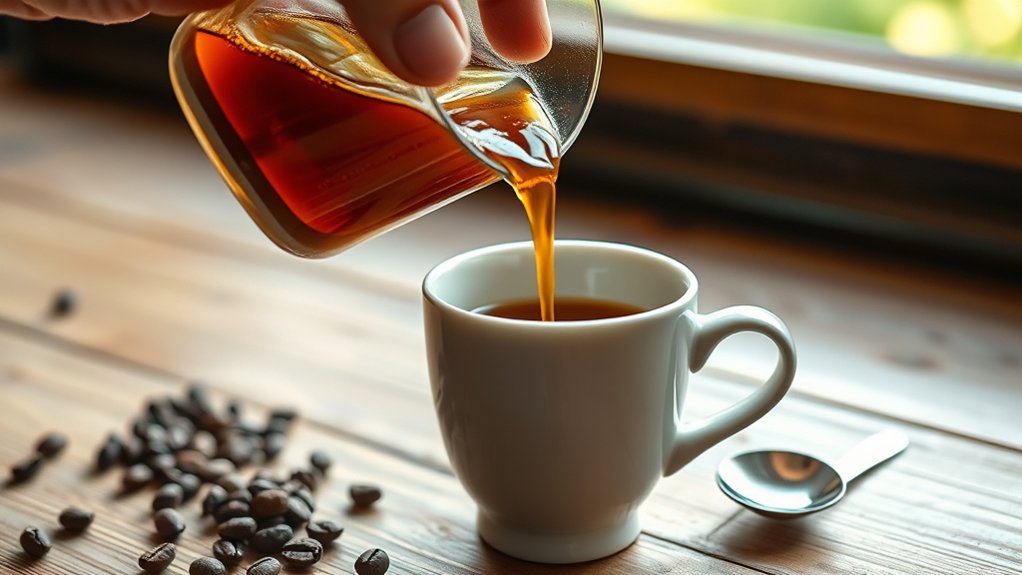
How should you pour French press coffee to preserve its rich flavor and avoid sediment? Start by making sure your brewing temperature was right, around 195-205°F. This helps extract full-bodied flavors without bitterness.
When pouring, follow these steps: Stir gently before pouring to mix the coffee grounds evenly. Then pour slowly and steadily into your cup to keep sediment from getting stirred up.
Stop pouring once you notice sediment approaching the spout. Serve immediately to enjoy the freshest taste and to savor coffee art, like latte swirls if you’re adding milk.
Pouring carefully helps keep the coffee’s texture and clarity, making your French press experience even better. Mastering this step complements your brewing skills and lets you enjoy every cup without grit or bitterness.
Common Mistakes to Avoid When Using a French Press
Even the most experienced coffee enthusiasts can slip up when using a French press, but avoiding common mistakes will elevate your brew considerably.
First, don’t leave your coffee grounds in the press after brewing; this can damage French press durability by corroding the metal filter and glass over time. Rinse it promptly to maintain its longevity.
Also, avoid using boiling water. Too hot water burns the grounds, harming coffee flavor preservation. Aim for about 200°F (93°C) instead.
Another frequent error is pressing the plunger down too quickly, which forces grounds through the mesh and results in gritty coffee. Press gently and steadily for a cleaner cup.
How to Adjust Brewing for Different Coffee Strengths
You can easily tailor your coffee’s strength by adjusting the coffee-to-water ratio and steeping time.
If you use more coffee grounds or let it steep longer, you’ll get a bolder brew.
On the other hand, using less coffee or shortening the steeping time will give you a milder cup.
Just play around with these variables until you find the perfect balance that suits your taste.
Coffee-to-Water Ratio
Although the standard coffee-to-water ratio for a French press is about 1:15, adjusting this balance lets you tailor the brew’s strength to your preference. Here’s how to fine-tune it:
- For a milder cup, try 1:17 – less coffee relative to water.
- For a stronger brew, push closer to 1:12, but avoid overpowering bitterness.
Remember, unlike espresso’s high concentration, French press coffee benefits from a balanced ratio to highlight flavor nuances.
Proper coffee storage affects extraction. Fresh, well-stored beans ensure your chosen ratio delivers peak taste.
Steeping Time Variations
When you adjust the steeping time in your French press, you directly influence the coffee’s strength and flavor profile. Shorter steeping times, around 3 minutes, yield a lighter, more delicate brew. Extending to 5 minutes extracts richer, bolder flavors.
Keep temperature control in mind. Water that’s too hot can over-extract and make the coffee bitter. Cooler water might under-extract, resulting in weak flavor.
Also, remember that freshly ground beans stored properly guarantee consistent results. Avoid stale coffee by practicing good coffee storage in airtight containers away from heat and light.
Experiment with steeping times within this range to find your perfect balance.
How to Clean and Maintain Your French Press
Since a clean French press guarantees the purest flavor and extends the life of your equipment, proper cleaning and maintenance are essential. Follow these cleaning routines and maintenance tips to keep your French press in top shape:
First, disassemble the plunger and filter after each use to rinse off coffee grounds. Then, wash all parts with warm, soapy water. Just be sure to avoid abrasive scrubbers because they can damage the mesh filter.
Disassemble and rinse your French press plunger and filter after each use, then wash gently with warm, soapy water.
For a deeper clean, soak parts weekly in a mixture of vinegar and water. This helps remove oils and residue that build up over time.
Also, make it a habit to regularly check the mesh filter for tears or buildup. Replace it as needed to keep your French press performing at its best.
Flavor Variations and Enhancements for French Press Coffee
Exploring flavor variations and enhancements can transform your French press coffee into a personalized brew that suits your taste perfectly.
To start, try experimenting with flavor infusions by adding ingredients like vanilla pods or citrus peels directly into the grounds before brewing. This subtle touch infuses your coffee with delightful, natural aromas.
For a bolder twist, consider spice additions such as cinnamon sticks, cardamom pods, or a pinch of nutmeg. These spices complement the rich, robust profile of French press coffee.
They not only add warmth but also deepen the complexity of your cup.
Just remember to adjust quantities gradually so you don’t overpower the coffee’s natural flavors.
Frequently Asked Questions
What Is the History of the French Press Coffee Maker?
You’ll find that the French press history dates back to the 1920s when Italian designer Attilio Calimani first patented this coffee brewing device. It gained popularity for its simplicity and ability to produce rich, full-bodied coffee.
Over time, the French press evolved but kept its core design, letting you steep and press coffee grounds directly. Knowing this history helps you appreciate how this method revolutionized coffee brewing worldwide.
Can I Use Pre-Ground Coffee in a French Press?
Yes, you can use pre-ground coffee in a French press, but you need to pay attention to the coffee grind size. It should be coarse to prevent over-extraction and a gritty texture.
If your pre-ground coffee is too fine, it will increase brewing time and make the coffee bitter.
For the best results, adjust your brewing time to about 4 minutes.
Also, consider buying coarse ground coffee specifically for your French press. This will help you get a smoother, more balanced cup every time.
How Does French Press Coffee Compare to Espresso?
You mightn’t know this, but espresso has about twice the caffeine concentration per ounce compared to French press coffee.
When comparing flavor profiles, French press coffee offers a bolder, richer taste with more oils and sediment, thanks to its longer brewing time, usually 4 minutes.
Espresso, brewed in under 30 seconds, creates a more intense, concentrated shot with a creamy crema.
Is French Press Coffee Healthier Than Drip Coffee?
French press coffee isn’t necessarily healthier than drip coffee, but the brewing time and method affect the coffee flavor and compounds.
Because you steep grounds longer in a French press, it extracts more oils and antioxidants, which can be beneficial.
However, it also extracts cafestol, which might raise cholesterol.
Drip coffee filters out most oils, so it’s gentler on cholesterol but may lose some antioxidants.
What Types of Coffee Beans Work Best for French Press?
You’ll get the best coffee flavor with freshly roasted, whole bean Arabica coffee when using a French press.
Beans with a medium to dark roast work well, as they bring out rich, bold flavors that the French press highlights.
Always prioritize bean freshness. Grind just before brewing to preserve essential oils and aromas.
Avoid pre-ground or low-quality beans since they can result in a flat or bitter cup.
Conclusion
By embracing the art of French press brewing, you open a world of rich, nuanced coffee experiences with ease. With just a few mindful steps, you’ll avoid common pitfalls and tailor each cup to your taste. This way, every sip becomes a gentle celebration of flavor.
Keep your press well cared for, and you’ll enjoy a consistently refined brew. It really can elevate your daily ritual into something quietly extraordinary. Give it a try—you might be surprised at how simple and rewarding it is.