What Is The Best Espresso Coffee – Top Picks And Tips
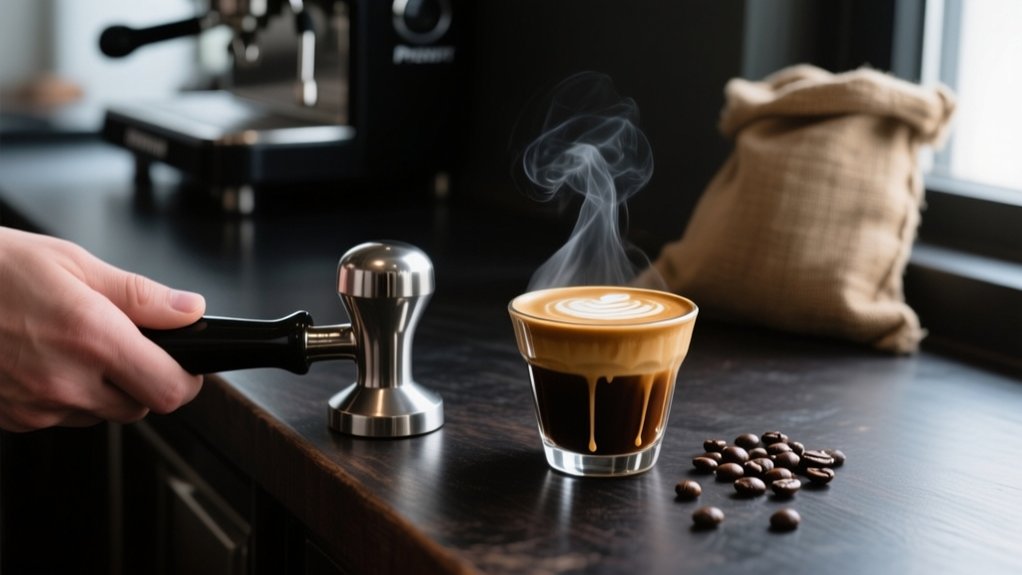
You deserve espresso coffee that delivers rich, vibrant flavor and a smooth, creamy crema every time. Choose fresh beans roasted within 2-4 weeks, grind finely like table salt, and tamp evenly at about 30 pounds for the best extraction.
Opt for quality brands like Illy or Peet’s for bold blends, or budget-friendly options like Café Bustelo. Single-origin beans highlight unique profiles, while blends offer balance.
Master these essentials, and your espresso experience will elevate effortlessly.
What Makes Espresso Coffee Different From Regular Coffee
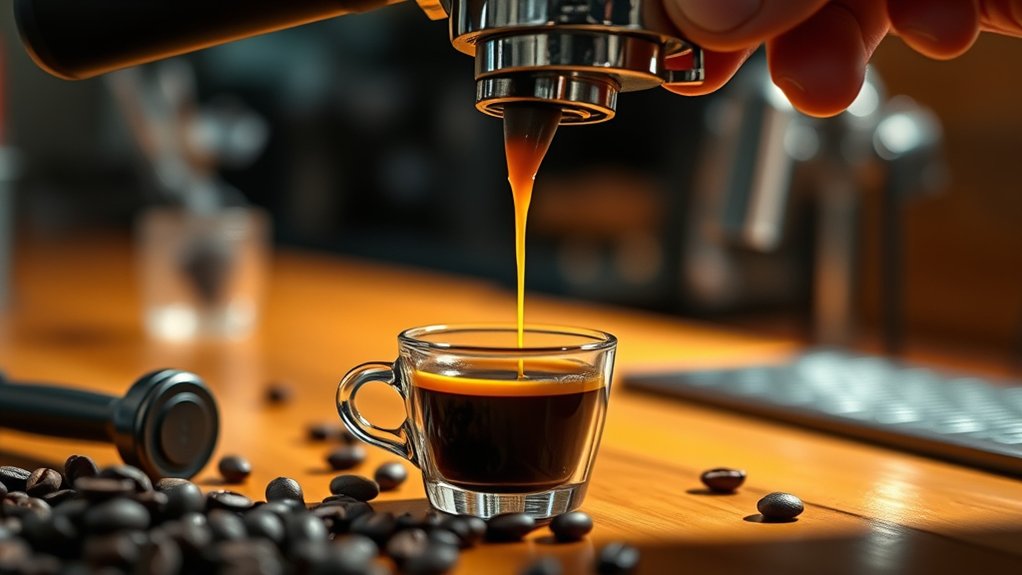
Although both espresso and regular coffee start with the same essential ingredient, coffee beans, their differences lie in grind size, brewing method, and pressure.
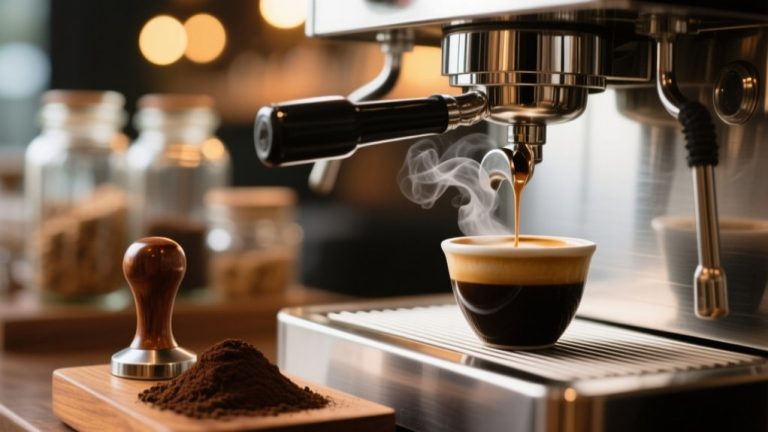
When you prepare espresso, you use a much finer grind, enabling a rapid extraction under about 9 bars of pressure. This force is far greater than typical brewing methods like drip or pour-over.
This intense extraction produces a richer, more concentrated flavor profile and a thicker consistency. One hallmark of espresso is its crema, a golden foam formed by emulsified oils and carbon dioxide, which you won’t find in regular coffee.
While espresso often features dark roast beans, it can also highlight medium or light roasts, offering diverse flavors.
Understanding these distinctions transforms your appreciation of espresso’s unique character.
How Roast Levels Affect Espresso Flavor
When you choose the roast level for your espresso beans, you directly influence the flavor, acidity, and body of your shot. Dark roast coffee, common in espresso blends, highlights bold flavors and lowers acidity, creating a balanced, intense cup.
The roasting process caramelizes sugars, producing rich, chocolatey notes prized in quality coffee. Medium roast espresso blends offer a vibrant complexity, maintaining some brightness without sacrificing depth.
Caramelized sugars create rich chocolatey notes, while medium roasts balance vibrant complexity with bright, deep flavors.
However, over-roasting can introduce unpleasant bitterness, so selecting well-roasted beans is essential for a smooth, satisfying experience.
Dark roasts also release oils that contribute to a well-developed crema, enhancing both aroma and texture.
Understanding how roast levels affect espresso flavor empowers you to craft shots that perfectly match your taste preferences.
Why Freshness Matters for Espresso Beans
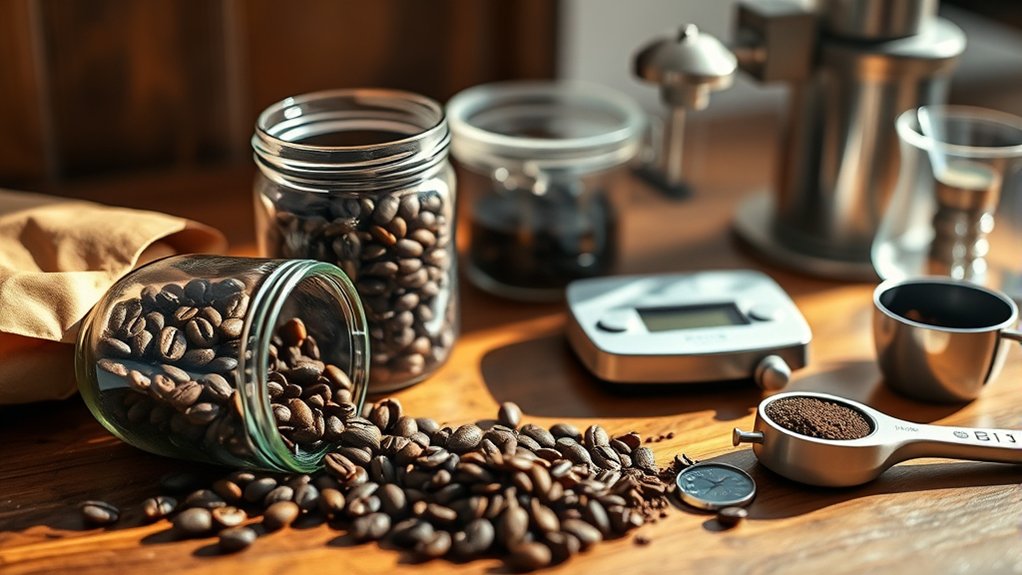
Since espresso relies heavily on extracting nuanced flavors from the beans, using fresh coffee is essential to achieving that rich, vibrant taste you expect. Freshness directly impacts your espresso’s flavor profile; beans reach peak freshness within 2-4 weeks of roasting.
High-quality roasters include roast dates on packaging, so you can select espresso beans at their freshest. Using stale coffee means losing aromatic compounds, resulting in a flat, dull shot that lacks depth.
To preserve freshness, store your beans in an airtight container away from light and heat, preventing oxidation that degrades flavor. Freshly roasted espresso beans also create a rich crema, which not only enhances visual appeal but signals a well-extracted, flavorful espresso.
Prioritizing freshness transforms every shot into a rewarding experience.
Choosing Single-Origin or Blended Espresso Beans
How do you decide between single-origin and blended espresso beans? If you crave unique, vibrant flavors, single origin espresso from regions like Ethiopia or Kenya offers bright, complex notes that stand out.
Blended espresso combines beans, often dark roasts from Sumatra and Brazil, to create a balanced, rich flavor that pairs beautifully with milk or cream.
When choosing, consider Arabica vs. Robusta. Most blends rely on 100% Arabica for smoothness, but a touch of specialty Robusta can boost crema and body.
Whether you prefer dark roasts for sweetness or medium roasts for balance, freshness matters immensely.
Trust reputable coffee roasters who roast coffee beans carefully and include roast dates, ensuring every espresso shot delivers peak flavor and aroma.
Best Store-Bought Espresso Brands to Try
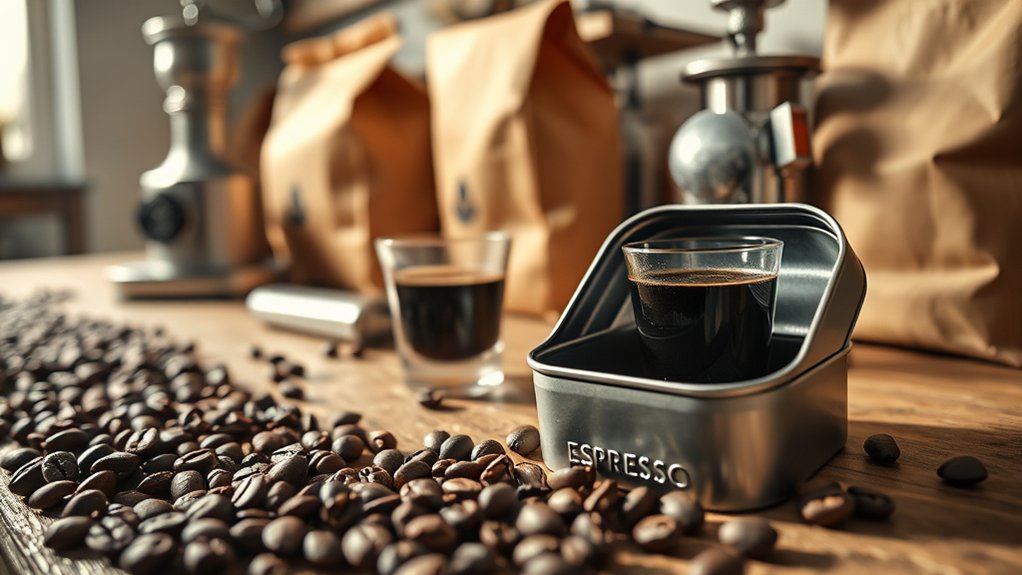
Five standout store-bought espresso brands can elevate your home brewing with distinct flavors and qualities.
If you’re after the best espresso beans, Peet’s Coffee offers bold, rich textures that satisfy both espresso and drip lovers.
Illy, a premium Italian brand, delivers consistently smooth, rich espresso blends, perfect for a refined taste.
For a bold, high-caffeine kick, Death Wish Coffee stands out as the world’s strongest coffee, ideal for power-packed shots.
On a budget, Café Bustelo provides deep, rich flavors with thick texture, making quality store coffee accessible.
Finally, Café El Aguila shines as the most affordable option, delivering thick, smooth, and flavorful espresso.
Each brand brings unique qualities, ensuring your espresso experience at home is both satisfying and diverse.
Budget-Friendly and Specialty Espresso Brands to Explore
Many budget-friendly and specialty espresso brands deliver impressive flavor without breaking the bank.
Café El Aguila, grown in El Salvador’s volcanic soil, offers thick, smooth flavor and stands out as the cheapest choice for rich espresso shots.
If you want bold intensity, try Death Wish Coffee, known as the world’s strongest coffee. It blends organic, Fair Trade beans for a robust experience.
Community Coffee’s Dark & Bold delivers a concentrated dark roast, perfect for budget-conscious lovers craving depth.
Café Bustelo, with its iconic Latin-inspired profile, balances affordability and deep flavor beautifully.
These brands prove you don’t need to overspend to enjoy specialty coffee. Exploring them lets you savor quality espresso shots while staying budget-friendly, making each cup a rewarding discovery.
Spotting Quality Espresso by Taste and Aroma
What sets a quality espresso apart lies first in its taste and aroma, offering you an immediate sensory cue to the coffee’s craftsmanship.
When you savor a well-made espresso, the rich aroma reveals freshly roasted quality beans, often with chocolate, caramel, or nutty tasting notes.
The crema, that thick golden layer atop your espresso, signals proper extraction and freshness. A balanced espresso harmonizes sweetness and acidity, delivering depth without harsh bitterness.
Remember, beans consumed within two to four weeks post-roast provide the most vibrant flavor and aroma.
Paying attention to these sensory details guarantees you’re enjoying a truly premium espresso experience crafted from quality beans, showcasing the rich flavor and aroma that define excellence in every shot.
Brewing Methods That Change Your Espresso Experience
Savoring the rich aroma and balanced flavor of quality espresso begins with understanding how your brewing method shapes that experience. Different brewing methods, from moka pots to drip machines, influence flavor balance and highlight unique coffee qualities.
Mastering grind size and temperature control guarantees peak extraction, preventing bitterness or sourness. Using freshly roasted beans and adjusting brewing ratios, typically 1:2 for espresso, further refines the taste.
Here’s a quick comparison:
| Brewing Method | Grind Size | Flavor Profile |
|---|---|---|
| Moka Pot | Fine | Concentrated, rich |
| Espresso Machine | Very Fine | Balanced, with crema |
| Drip Brew | Medium-Coarse | Smooth, less intense |
| Pour Over | Medium | Bright, nuanced |
Choose your method carefully to reveal the fullest potential of your coffee quality.
Tips for Grinding and Tamping Espresso Beans at Home
You’ll want to use a burr grinder to get a consistent, fine grind size—kind of like the texture of table salt. This really helps with the best espresso extraction.
When it comes to tamping, aim for about 30 pounds of even pressure. This makes sure your coffee puck is nice and uniform, which stops uneven flow and bitterness from creeping in.
Once you get the hang of grinding with a steady rhythm and tamping just right, you’ll see your espresso improve a lot.
Before you know it, you’ll be pulling café-quality shots right at home every time.
Optimal Grind Size
Although dialing in the perfect grind size can feel challenging, mastering it is essential for pulling a rich, balanced espresso shot. The ideal grind size for espresso resembles fine table salt. This consistency allows even extraction and reveals the coffee beans’ full flavor.
Using a quality burr grinder guarantees uniform particle size, preventing channeling and promoting balanced extraction. Always grind freshly roasted beans just before brewing to maintain vibrant flavor.
Adjusting grind size controls extraction time: finer grinds slow it down, and coarser grinds speed it up.
| Grind Size | Effect on Extraction |
|---|---|
| Too Coarse | Under-extraction, weak taste |
| Ideal (Fine) | Balanced extraction, rich shot |
| Too Fine | Over-extraction, bitter shot |
| Consistent Grind | Prevents channeling |
| Freshly Ground | Preserves aroma & flavor |
Proper Tamping Pressure
Once you’ve nailed the grind size, the next key step is applying the right tamping pressure to prepare your espresso puck. Proper tamping pressure, around 30 pounds, is essential for even extraction and avoiding channeling.
Here’s how to master it:
- Distribute coffee evenly in the portafilter to guarantee balanced saturation.
- Apply steady, level pressure with your tamp to create a smooth, flat surface.
- Maintain consistent tamping technique by keeping a firm, relaxed grip and steady posture.
- Aim for uniform resistance; too light or uneven tamping harms crema quality and consistent flavor.
Consistent Grinding Technique
Mastering consistent grinding technique is essential for pulling the perfect espresso shot every time. Use a burr grinder to achieve a consistent grind size, which is critical for even extraction.
Aim for a fine grind, similar to granulated sugar, to enhance flavor and crema. Always measure your coffee dose between 18 to 20 grams for a double shot. Tamp the grounds evenly with about 30 pounds of pressure to create a uniform puck, ensuring ideal water flow and extraction.
| Step | Key Focus | Outcome |
|---|---|---|
| Burr Grinder | Consistent grind size | Even extraction |
| Fine Grind | Texture | Rich flavor & crema |
| Coffee Dose | Accurate weighing | Precise extraction |
| Tamping Pressure | Uniform puck | Ideal water flow |
| Calibration | Grinder adjustment | Reliable consistency |
How to Store Espresso Coffee for Maximum Freshness
To keep your espresso beans fresh, go for airtight containers that block out light and seal tightly against moisture. It really makes a difference.
Then, find a cool spot to store them—somewhere between 50 and 70°F is perfect.
Try to keep them away from any heat sources because heat can speed up flavor loss.
When you control the temperature and humidity like this, you’ll hold on to those rich aromas and bold flavors that make every shot so satisfying.
Ideal Storage Containers
Although espresso coffee can lose its vibrant flavors quickly, choosing the right storage container can help you preserve its freshness longer. To keep your coffee beans bursting with flavor, select storage containers that are airtight and made from dark glass, ceramic, or stainless steel.
These materials shield your espresso coffee from light, air, and moisture, which are key culprits in flavor degradation.
Follow these guidelines for ideal storage containers:
- Use airtight containers to lock in freshness and prevent oxidation.
- Opt for vacuum-sealed bags or containers with one-way valves to release gases from freshly roasted beans.
- Store containers in a cool, dry place with a stable temperature. Avoid the fridge or freezer.
- Always check the roast date and consume within 2-4 weeks for peak flavor.
Your choice of container directly impacts how long your espresso coffee retains its rich, aromatic quality.
Optimal Temperature Range
Choosing the right storage container sets the stage for preserving your espresso’s flavor, but controlling the temperature where you keep your coffee beans plays an equally essential role.
To store espresso coffee effectively, keep your airtight container in a cool, dark spot within the ideal temperature range of 60°F to 75°F (15°C to 24°C). This range minimizes moisture exposure and prevents loss of flavor caused by heat fluctuations.
Avoid refrigerating or freezing, as moisture can degrade freshly roasted beans’ quality. Always check the roast date to guarantee you’re using the freshest beans possible.
Aim to consume coffee within two weeks of opening to savor its fullest aroma and taste.
Avoiding Moisture Exposure
Since moisture quickly deteriorates espresso’s flavor and freshness, you must store your coffee in an airtight container that blocks humidity from reaching the beans.
To avoid moisture exposure and guarantee peak freshness, follow these steps when you store espresso:
- Use airtight containers to prevent moisture and air from causing flavor degradation and staleness.
- Choose opaque containers to shield espresso beans from light that breaks down essential oils.
- Keep your container in a cool, dark place away from heat and sunlight to maintain consistent quality.
- Avoid refrigerators or freezers since condensation can introduce harmful moisture, accelerating staleness.
Budget-Friendly Espresso Options With Great Flavor
If you want great espresso without breaking the bank, there are several budget-friendly options that deliver impressive flavor and quality.
Café Bustelo stands out with its rich flavor and slightly bitter profile, perfect for those who appreciate a classic dark roast at an affordable price.
Death Wish Coffee offers a robust, high-caffeine punch without sacrificing affordability, making it ideal if you want strength and depth.
Community Coffee’s “Dark & Bold” roast brings concentrated dark roast flavors that won’t stretch your budget but will satisfy your espresso cravings.
These brands prove you don’t need to overspend to enjoy a rich, flavorful espresso experience.
Frequently Asked Questions
How Does Water Quality Impact Espresso Extraction?
Water quality directly impacts your espresso’s flavor balance by influencing extraction time and pressure consistency.
If water hardness is too high, minerals cause scale buildup, disrupting machine calibration and brew temperature control.
That throws off grind size effectiveness and coffee freshness extraction.
Using balanced, clean water guarantees your machine runs smoothly, letting you dial in grind size and extraction time precisely for ideal flavor.
Don’t underestimate water; it’s key to your espresso’s success.
Can Espresso Coffee Benefit From Decaffeinated Beans?
Yes, espresso coffee can benefit from decaf options if you prioritize bean selection and brewing techniques.
Decaf beans often retain key aroma characteristics and a rich flavor profile, making them suitable for various espresso varieties.
Tailoring your grind size and extraction time helps highlight their unique taste preferences.
Plus, choosing freshly roasted decaf brings health benefits without sacrificing complexity, letting you enjoy espresso’s depth without caffeine’s effects.
What Equipment Maintenance Is Essential for Consistent Espresso?
You know, 70% of espresso flavor inconsistencies come from poor equipment upkeep. For consistent espresso, prioritize grinder calibration to guarantee the perfect grind size.
Regular machine cleaning and portafilter care prevent oil buildup that ruins taste. Monitor water temperature and extraction time closely, using the pressure gauge to keep pressure steady.
Don’t forget to clean the steam wand and brew basket after each use. These steps keep your espresso flawless every time.
How Do Altitude and Climate Affect Coffee Bean Flavor?
You’ll find coffee terroir shapes every sip, as altitude effects and climate influence bean origin profoundly.
High elevations slow cherry ripening, enhancing acidity and complex flavor profiles.
Soil quality and processing methods further refine taste, while roasting techniques reveal those nuanced notes.
When you understand how these factors intertwine, you can appreciate how climate and altitude craft distinct espresso experiences, elevating your brewing game and flavor appreciation.
What Are Common Espresso Brewing Mistakes to Avoid?
Avoid letting your espresso shot become a ship lost at sea by mastering key factors. Control your grind size and coffee to water ratio precisely, ensuring your tamp pressure is firm and even.
Keep brew temperature steady between 195°F and 205°F, and monitor extraction time carefully.
Don’t skip machine calibration or the pre-infusion technique, and always use fresh coffee.
These steps keep your espresso balanced, flavorful, and far from bitter or sour.
Conclusion
Now that you know what makes espresso stand out, you’re ready to brew like a pro. Remember, the secret sauce lies in fresh beans, the right grind, and a steady hand when tamping.
Whether you pick single-origin gems or trusty blends, your perfect espresso is within reach. Don’t let your beans go stale; store them wisely.
With these tips, you’ll have the best cup in no time. No need to reinvent the wheel.