
What Does Mushroom Coffee Taste Like – Flavor And Texture Guide
When you sip mushroom coffee, you’ll notice a smooth, less acidic profile blending rich roasted coffee with subtle earthy and nutty undertones from varieties like Chaga and Reishi. Its silky texture comes from dual-extracted mushrooms preserving delicate oils, creating a creamy, velvety mouthfeel.
Flavors shift with mushroom types. Lions Mane adds bright citrus notes, while Reishi lends woody bitterness. Keep going to uncover how brewing methods and add-ins refine this complex, comforting beverage.
What Is Mushroom Coffee and How Does It Taste

Although mushroom coffee combines ground medicinal mushrooms like Lions Mane, Chaga, Reishi, and Cordyceps with high-quality coffee beans, it doesn’t taste like traditional mushrooms. Thanks to careful mushroom cultivation and meticulous coffee roasting, the final blend achieves a smooth, rich profile with subtle earthy, nutty undertones.
The dual extraction process enhances health benefits while minimizing the strong, medicinal flavors typical of raw mushrooms.
When you sip it, you’ll notice a softer, less acidic taste compared to conventional coffee, with a more rounded mouthfeel. This balance comes from the precise interplay between the extracted mushroom compounds and the roasted coffee’s natural flavors.
How Mushroom Coffee Compares to Regular Coffee Flavor

When you compare mushroom coffee to regular coffee, you’ll notice it offers a smoother, less acidic experience that still preserves the richness you expect from a well-roasted blend.
The mushroom coffee flavor introduces subtle earthy and nutty undertones, which add complexity without overwhelming the palate.
In a coffee aroma comparison, mushroom coffee retains the familiar roasted scent but with a gentle, rounded quality that softens harsh edges.
While traditional coffee can present sharper bitterness and acidity, mushroom coffee balances these with a mild umami depth.
This nuanced profile keeps the essence of coffee intact but invites a softer, more integrated taste experience.
Depending on the mushroom variety used, the flavor shifts slightly, yet the overall character remains close to regular coffee’s comforting richness.
Why Mushroom Coffee Tastes Less Bitter and Less Acidic
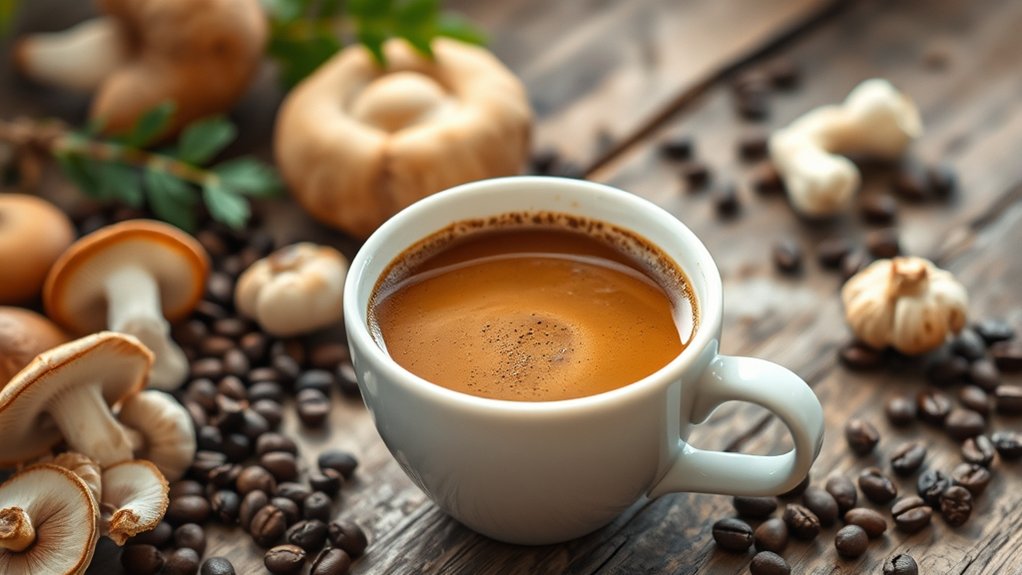
You’ll notice that mushroom coffee tastes less bitter and less acidic because the mushroom extracts work to neutralize the natural acidity found in coffee beans. This little interaction helps soften the sharp edges you usually get with regular coffee.
So, the flavor ends up smoother and more enjoyable.
When these extracts are blended in, the final cup balances a rich taste with gentle, earthy notes. That’s why the bitterness feels much less intense, making it easier on your palate.
Reduced Natural Acidity
Because mushroom coffee undergoes a dual extraction process, it contains considerably fewer natural acids than regular coffee. This directly influences its taste profile.
This reduction in acidity, combined with medicinal mushroom extracts, neutralizes the sharp bitterness you might expect from traditional brews. The earthy, umami notes from mushrooms create a smoother, more balanced flavor. It makes the coffee gentler on your palate.
Additionally, brewing methods like cold brewing or using lower temperatures further reduce acidity and enhance its mildness.
These factors not only improve taste but also contribute to notable health benefits by easing stomach discomfort often caused by high-acid coffee.
When you choose mushroom coffee, you’re embracing a thoughtfully crafted beverage that marries innovative brewing techniques with natural ingredients for a uniquely low-acid experience.
Mushroom Extract Flavor
How does mushroom coffee manage to taste less bitter and acidic despite its unique ingredients? The answer lies in the sophisticated extraction methods used to create the mushroom extract flavor.
Through a dual extraction process, producers concentrate beneficial bioactive compounds while markedly reducing the raw, earthy mushroom flavor profile. This method effectively neutralizes strong, medicinal tastes and minimizes natural acids, resulting in a smoother, less bitter cup.
By focusing on high-quality extracts, the process highlights health benefits without overwhelming your palate with traditional mushroom bitterness or earthiness. Instead, it enhances the coffee’s natural roasted notes and balances its flavor, providing a mellow, nuanced experience.
How Different Mushroom Types Shape Mushroom Coffee Flavor
Although mushroom coffee shares a common base, the choice of mushroom dramatically shapes its flavor profile. Each mushroom type, influenced by specific mushroom cultivation methods, brings distinct taste characteristics that guide flavor pairing decisions.
Chaga, for example, lends a rich, cocoa-earthiness with low acidity, creating a dark chocolate-like depth that pairs well with robust coffee blends.
Chaga offers a rich, cocoa-earthy flavor with low acidity, perfect for pairing with bold coffee blends.
Cordyceps introduces mild nuttiness and caramelized sugar hints, grounding the cup with savory warmth.
Reishi adds complexity through woody, slightly bitter, umami notes reminiscent of walnut skin, offering a layered taste experience.
Understanding these nuanced contributions helps you appreciate how mushroom cultivation impacts flavor pairing.
This way, you can select a mushroom coffee that aligns perfectly with your palate preferences and desired sensory experience.
Lions Mane: Sweet and Citrusy Notes in Mushroom Coffee
When you add Lions Mane mushroom to your coffee, you’ll notice a gentle sweetness intertwined with subtle citrusy hints that elevate the drink’s flavor complexity. This distinct profile comes from careful mushroom cultivation, which preserves those delicate aromatic compounds.
The citrus notes brighten the smooth, earthy base of mushroom coffee, creating a revitalizing balance.
When considering coffee pairing, Lions Mane’s flavor goes well with lighter roasts. It enhances their natural fruity undertones without overpowering the brew. So, if you’re new to mushroom coffee, this could be a great place to start.
Here’s what to expect:
- A mild, citrus-like aroma that reminds you of fresh oranges or tangerines.
- A harmonious taste that balances earthy richness with delicate sweetness.
- An uplifting, light flavor that’s easy on the palate.
This nuanced combination makes Lions Mane a sophisticated choice for enhancing your coffee ritual.
Cordyceps: Nutty, Savory Flavors You’ll Notice
If you appreciate the gentle sweetness and citrus brightness of Lions Mane in your coffee, Cordyceps offers a contrasting yet complementary flavor experience.
Its mild nuttiness and caramelized sugar notes introduce a savory, grounded dimension that deepens the brew’s complexity. You’ll notice subtle earthiness paired with a delicate sweetness, creating a rich flavor pairing that balances the roasted coffee’s intensity without overwhelming it.
Cordyceps also adds a smooth, umami undertone, enhancing satisfaction in each sip. Beyond flavor, the mushroom’s texture contrast subtly shifts the mouthfeel, lending a mild creaminess that complements coffee’s natural body.
This nuanced interplay makes Cordyceps an intriguing choice for those seeking a sophisticated, savory twist in their mushroom coffee ritual.
Chaga’s Rich, Cocoa-Earthy Profile Explained
While exploring mushroom coffee flavors, you’ll find Chaga stands out with its deep, rich cocoa-earthiness paired with subtle sweetness and low acidity. This profile comes from both traditional foraging techniques and modern mushroom cultivation. These methods guarantee ideal extraction of its nuanced taste.
You’ll notice a warm, comforting blend of dark chocolate and forest floor, highlighting its earthy, slightly bitter essence. There are roasted undertones that smooth out the flavor, creating a full-bodied cup without a medicinal aftertaste.
Plus, a cozy aroma that evokes roasted cacao and woody richness.
Chaga’s flavor complexity depends on careful preparation. It balances the natural bitterness with sweet, cocoa notes. Whether wild-harvested or cultivated, it offers a sophisticated, approachable mushroom coffee experience.
Reishi’s Woody Bitterness and Umami in Mushroom Coffee
Moving from Chaga’s rich, cocoa-earthy notes, Reishi brings a distinctly different character to mushroom coffee with its woody bitterness and layered umami flavors.
You’ll notice Reishi’s woody bitterness adds a subtle sharpness that balances the coffee’s natural smoothness. It grounds each sip with depth.
Its umami flavor enriches the overall profile, lending an earthy, savory complexity that makes the brew feel more full-bodied and nuanced. However, if extraction isn’t carefully managed, Reishi’s bitterness can verge on overpowering or medicinal, disrupting balance.
Fortunately, the woody and umami qualities often mellow when paired with spices or milk. This makes the distinctive taste more approachable, especially if you’re sensitive to bitterness.
Reishi’s contribution ultimately deepens mushroom coffee’s flavor, inviting you to savor its intricate, savory notes.
Why Mushroom Coffee Feels So Smooth and Creamy
You’ll notice that mushroom coffee has this wonderfully silky mouthfeel. That’s because it uses carefully dual-extracted mushroom powders that dissolve smoothly, so you don’t get any of that annoying grittiness.
Plus, ingredients like coconut milk or MCT oil often get added in to boost the creamy texture, making every sip feel rich and velvety.
When you combine all that with precise brewing, you end up with a rounded creaminess that feels both indulgent and clean on your palate. It’s a pretty great experience overall!
Silky Mouthfeel Explained
Because mushroom coffee combines high-quality coffee beans with finely extracted mushroom compounds, it delivers a uniquely silky mouthfeel that sets it apart from regular coffee. This texture contrast enriches your sensory perception, making each sip particularly smooth and creamy without overwhelming bitterness.
Three key factors create this experience:
- The dual extraction of water- and fat-soluble bioactives produces a velvety texture that coats your palate.
- Natural fats and oils from mushrooms like Reishi add depth and smoothness.
- Brewing methods such as French press or cold brew minimize grit and harsh acidity, preserving the coffee’s luxurious mouthfeel.
Together, these elements elevate the mouthfeel, engaging your senses with a refined, creamy texture that balances earthy and roasted notes seamlessly.
Mushroom Coffee Creaminess
Although mushroom coffee shares some characteristics with traditional blends, its smooth and creamy mouthfeel really stands out because of a few key factors. The dual extraction process, which comes from advanced mushroom farming techniques, captures natural oils and extracts that give it that velvety texture.
Coffee packaging also plays a big role in preserving these delicate oils, making sure every cup keeps its silky richness.
Plus, adding fats like MCT oil or coconut milk boosts the mouthfeel even more. You can also throw in ingredients like oat milk to mellow out the earthy notes and add to the creaminess.
Brewing methods like frothing and blending take this luxurious sensation up a notch.
Brewing Tips for the Best Mushroom Coffee Flavor
When brewing mushroom coffee, controlling water temperature between 175-185°F is essential to reveal its subtle earthy flavors without triggering bitterness. This temperature range preserves the delicate mushroom notes, a result of careful mushroom farming, while preventing over-extraction.
Your choice of brewing method also impacts flavor. French press or pour-over techniques enhance richness and depth, complementing the unique coffee packaging designed to maintain freshness.
To optimize your brew:
- Use fresh water heated to 175-185°F. Boiling water dulls nuances and increases bitterness.
- Stir thoroughly after brewing to evenly distribute mushroom extracts.
- Brew with a French press or pour-over to extract balanced flavors.
Paying attention to these details ensures a nuanced, flavorful cup that’s true to mushroom coffee’s signature profile. Give it a try, and enjoy the unique taste!
How Add-Ins Change the Taste of Mushroom Coffee
You’ll find that adding milk or plant-based alternatives softens mushroom coffee’s earthy bite. It creates a creamier, more approachable cup.
Then, spices like cinnamon or vanilla bring in some warmth and sweetness. They balance the natural depth without overpowering it.
Sweeteners and flavor extracts can give you subtle or bold changes. This way, you can adjust the taste to your liking while still keeping its unique character.
Popular Flavor Enhancements
Since mushroom coffee carries distinct earthy and sometimes bitter notes, adding complementary ingredients can really change up its flavor profile. You’ll find that thoughtful flavor pairings and texture improvements can make a big difference.
Consider these popular enhancements:
Milk or cream softens the earthiness while adding a creamy, dessert-like texture that feels indulgent. Spices like cinnamon or vanilla introduce warmth and highlight the coffee’s natural nuttiness and sweetness. Natural sweeteners such as honey or maple syrup mask bitterness and contribute subtle caramel or floral notes.
These additions don’t just mask flavors; they elevate and balance mushroom coffee’s complexity. This lets you tailor each cup to your taste.
Balancing Earthy Notes
Although mushroom coffee’s earthy notes define its character, you can skillfully balance these flavors by incorporating thoughtful add-ins. Flavor pairing plays a vital role in mitigating earthiness while enhancing texture. For instance, creamy milk or plant-based alternatives soften the taste and add smoothness.
Spices like cinnamon and vanilla deepen sweetness, masking residual earthiness. Sweeteners such as honey complement the earthy base without overpowering it. Cold brewing or adding ice lightens the flavor, providing invigorating texture enhancement.
| Add-In Type | Effect on Mushroom Coffee |
|---|---|
| Milk/Cream | Mellow earthiness, creamy texture |
| Spices (cinnamon, vanilla) | Sweetness boost, flavor depth |
| Sweeteners (honey, maple) | Balances earthiness, subtle sweetness |
| Flavored Syrups | Aroma complexity, taste variation |
| Cold Brew/Ice | Smooths intensity, invigorating texture |
How to Store Mushroom Coffee for Freshness
When aiming to preserve the freshness of your mushroom coffee, storing it properly plays a vital role in maintaining its flavor and health benefits. Using the right storage containers is essential to prevent moisture and air exposure, which are key factors that degrade quality.
To keep your coffee at its best, follow these steps:
- Store mushroom coffee in an airtight container to ensure moisture prevention and protect aroma.
- Keep the container in a cool, dark place away from heat and sunlight to maintain flavor and potency.
- Avoid refrigeration, as humidity can cause clumping and spoilage, compromising freshness.
Also, make sure to reseal the package tightly after each use. Try to consume your mushroom coffee within 30 days of opening for the best taste and benefits. That way, you’ll always enjoy a fresh cup!
Frequently Asked Questions
Can Mushroom Coffee Help Improve Mental Focus or Energy?
You’ll find mushroom coffee helps improve mental focus and energy through its balanced flavor profile and smooth texture compared to regular coffee. It offers steady alertness without jitters, which is a nice change if you’re sensitive to caffeine.
The subtle earthy undertones also add to the experience, supporting cognitive function in a gentle way. Overall, it’s a great option if you want clarity without feeling wired.
Are There Any Health Benefits Associated With Drinking Mushroom Coffee?
You might expect just flavor profiles and texture variations, but mushroom coffee also delivers powerful health benefits. It boosts immunity, reduces stress, and enhances focus. All while providing a unique, earthy taste and smooth, rich texture you’ll appreciate.
Is Mushroom Coffee Safe for People With Mushroom Allergies?
If you have a mushroom allergy, you should be cautious since cross reactivity concerns exist between medicinal and culinary mushrooms. It’s a good idea to consult your healthcare provider before trying any mushroom products.
Also, test small amounts first. Allergic reactions can still happen even if the mushrooms have been processed. So, better safe than sorry!
How Does Mushroom Coffee Affect Sleep Compared to Regular Coffee?
Wondering how mushroom coffee affects your sleep compared to regular coffee? Its gentler flavor profile and smoother texture reflect lower caffeine, which helps you relax without the jitters. This means you can enjoy your coffee ritual and still get better rest.
Plus, the reduced caffeine content makes it easier to wind down at night. So if you’re sensitive to caffeine, mushroom coffee might be a great alternative to regular coffee. It’s all about keeping that cozy coffee vibe without messing up your sleep.
Can Mushroom Coffee Be Used as a Substitute in Recipes Requiring Coffee?
You can substitute mushroom coffee in recipes, thanks to its culinary versatility. Its flavor comparison reveals milder, earthy notes with lower acidity. So, you’ll want to adjust sweetness or spices to balance its unique richness and subtle bitterness.
It’s a nice alternative if you’re looking to try something different or want a gentler coffee flavor. Just keep in mind that the taste won’t be exactly the same, but it can add an interesting twist to your dish.
Conclusion
Mushroom coffee offers a unique flavor experience, blending earthy, smooth notes with subtle sweetness, much like a gentle breeze carrying hints of citrus and cream. You’ll find it less bitter and acidic than regular coffee, making each sip feel velvety and balanced.
By understanding how mushroom types and brewing methods influence taste, you can customize your cup to suit your palate. Treat it thoughtfully, and mushroom coffee can transform your coffee ritual into a nuanced, satisfying journey.