Does Black Coffee Break A Fast – What You Need To Know
You can drink black coffee during fasting without breaking your fast since it has fewer than 3 calories per cup and doesn’t trigger insulin or digestion. Its caffeine boosts metabolism and fat burning while suppressing appetite, supporting your fasting goals.
Just avoid additives like milk or sugar, which add calories and break the fast. Black coffee may cause some stomach discomfort or jitters if consumed excessively.
Learn how timing, types, and moderation can enhance your fasting experience. It’s all about finding what works best for you!
What Is Intermittent Fasting and Why Does It Matter?
Although intermittent fasting has gained popularity recently, it’s a practice rooted in history that involves cycling between periods of eating and fasting to improve health. You can follow protocols like 16/8 or 5:2, which define when you eat and fast to promote weight loss and metabolic benefits.
During fasting, you typically avoid calories, but drinking black coffee is common because it contains minimal calories and won’t disrupt your fast. The coffee brewing method can influence caffeine content, which affects how your body metabolizes caffeine during fasting.
Since caffeine metabolism varies individually, black coffee may boost alertness and fat burning without breaking your fast. Understanding these basics helps you optimize intermittent fasting while making informed choices about what you consume during fasting windows.
How Many Calories Are in Black Coffee?
Since black coffee is a popular choice during fasting windows, understanding its calorie content helps you make informed decisions about your fast. An 8 oz cup of black coffee typically contains fewer than 3 calories, coming from trace proteins and oils. It has no fats, sugars, or carbohydrates, so it won’t substantially impact your fasting state.
The calorie content remains virtually unchanged regardless of the coffee brewing method you use, whether drip, espresso, or French press. This means you can enjoy your coffee without worrying about breaking your fast.
Plus, caffeine absorption happens without any added calories, so you get the stimulant effects while sticking to your fasting goals.
Does Black Coffee Affect Insulin and Blood Sugar?
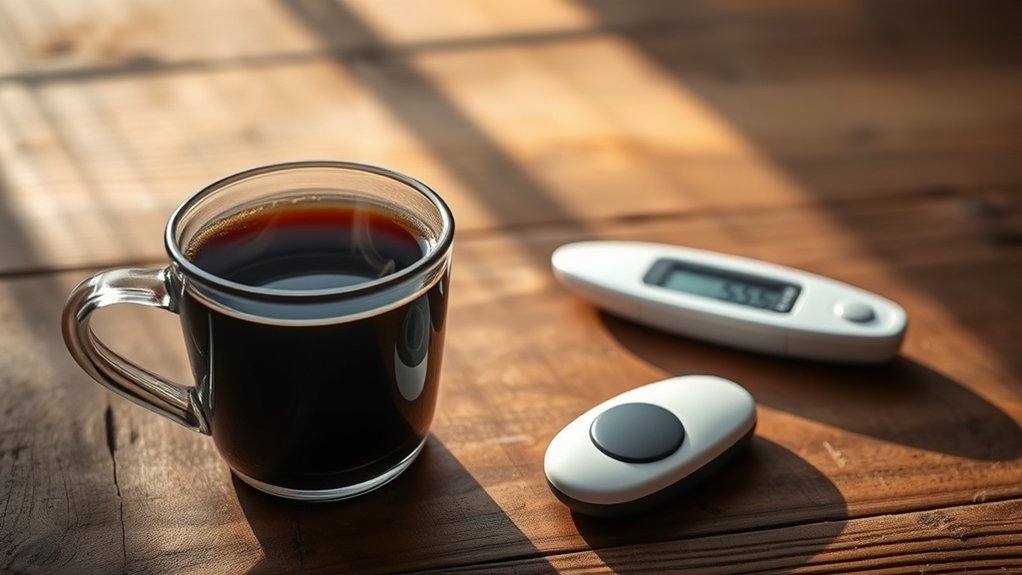
You might be wondering if black coffee has any effect on your insulin and blood sugar while you’re fasting. Well, since it has almost no carbohydrates, black coffee usually doesn’t trigger a big insulin response or cause your blood sugar to rise.
Black Coffee And Insulin
When you drink black coffee, its near absence of carbohydrates means it barely affects your blood sugar or insulin levels. Scientific studies show that black coffee doesn’t markedly stimulate insulin secretion in healthy individuals.
While caffeine in black coffee might cause a slight, temporary rise in blood glucose, it generally doesn’t trigger a large insulin response. Your caffeine tolerance can influence how your body reacts, but for most, coffee brewing methods don’t change this minimal effect on insulin.
Importantly, it’s additives like sugar or milk that raise insulin and blood sugar, not plain black coffee. So, if you’re fasting, drinking black coffee supports stable insulin levels.
It’s a smart choice to maintain metabolic balance without breaking your fast.
Blood Sugar Impact
How does black coffee affect your blood sugar and insulin levels during a fast? Thanks to its minimal calories and carbohydrates, black coffee has little impact on your insulin or blood glucose. The way you brew your coffee influences caffeine absorption, which can slightly affect metabolism but not enough to raise blood sugar markedly.
Here’s what you need to know:
- Black coffee contains under 3 calories per 8 oz, causing negligible insulin response.
- Studies confirm it doesn’t spike blood sugar in most people during fasting.
- Antioxidants in black coffee may improve insulin sensitivity over time.
Fasting Integrity And Glucose
Although some worry that black coffee might disrupt fasting, research shows it has minimal impact on insulin and blood sugar levels.
Thanks to its low calorie count, fewer than 3 calories per 8 oz cup, and the typical caffeine content from coffee brewing, black coffee doesn’t considerably stimulate insulin secretion or raise blood glucose during fasting.
The antioxidants and bioactive compounds present don’t interfere with glucose metabolism or fasting-induced insulin sensitivity.
Studies consistently show that drinking plain black coffee supports fasting integrity without impairing metabolic benefits related to blood sugar regulation.
So, when you brew and sip black coffee without additives, you can maintain your fast effectively while enjoying a minimal effect on insulin and blood sugar levels.
It’s a great way to keep your fast on track and still enjoy a flavorful beverage.
Does Black Coffee Break a Fast?
Can you drink black coffee without breaking your fast? Yes, you can. Black coffee contains just 2-3 calories per 8 oz cup and doesn’t considerably raise insulin levels, so it won’t disrupt your fast.
Proper coffee brewing preserves caffeine stability, ensuring you get its benefits without added ingredients that break your fast.
Here’s why black coffee is safe during fasting:
- It lacks fats, proteins, or sugars that trigger digestion or insulin response.
- Its antioxidants and minimal nutrients don’t interfere with metabolic or autophagy benefits.
- Adding milk, cream, or sugar introduces calories that break fasting, so stick to plain black coffee.
This makes black coffee an excellent fasting companion without compromising your fast.
How Does Black Coffee Boost Metabolism During Fasting?
When you drink black coffee during fasting, its caffeine content stimulates your central nervous system, temporarily boosting your metabolic rate. This caffeine metabolism increases norepinephrine levels, which helps enhance thermogenesis and calorie burning, even without food intake.
Plus, coffee antioxidants, like chlorogenic acids, play a role by promoting fat oxidation and improving insulin sensitivity. These compounds work together to support your body’s metabolic functions during fasting.
And the best part? They don’t add significant calories that could mess with your fasting state.
So, by drinking black coffee, you get to enjoy both caffeine’s stimulant effects and the metabolic benefits of coffee antioxidants. It’s a great way to boost fat burning and energy expenditure while fasting.
This combo helps maintain and even amplify the metabolic advantages fasting provides.
What Are the Benefits of Coffee During Fasting?
You’ll find that coffee can help suppress your appetite, which makes it easier to stick to longer fasting windows.
Plus, the caffeine in coffee gives your metabolism a nice little boost, helping you burn more fat and feel more energized.
All these benefits work together to support your fasting goals in a really effective way.
Appetite Suppression Effects
How does black coffee help you manage hunger during fasting? Thanks to caffeine, black coffee suppresses your appetite by boosting hormones like adrenaline and norepinephrine. This effect can make fasting easier and reduce the risk of caffeine withdrawal symptoms that sometimes trigger hunger.
Here are key benefits of coffee brewing for appetite control during fasting:
- Caffeine reduces subjective hunger, helping you stick to fasting windows longer.
- Drinking plain black coffee avoids added calories, preserving appetite suppression.
- Regular consumption may curb cravings and prevent overeating when you break your fast.
Enhanced Metabolic Benefits
Although fasting itself boosts metabolism, drinking black coffee can enhance these effects by increasing your resting metabolic rate by 3-11%, thanks to its caffeine content. This increase helps burn more calories and supports fat oxidation, which really amps up fasting’s metabolic benefits.
Coffee also contains antioxidants like chlorogenic acid. These help reduce inflammation and promote overall metabolic health.
Plus, caffeine may even stimulate ketone production, giving you an alternative energy source during your fast.
Choosing your favorite coffee flavor and trying out different brewing methods can make this metabolic boost more enjoyable—and without adding any calories. Whether you like a light, fruity brew or a dark, robust roast, these choices won’t mess with your fast.
Instead, they can support your fasting goals by enhancing thermogenesis and keeping your energy levels steady throughout the day.
How Much Black Coffee Is Safe While Fasting?
Since black coffee contains minimal calories and doesn’t considerably affect insulin levels, drinking up to three cups a day is generally safe while fasting. How much you can enjoy depends on your caffeine tolerance and coffee brewing method, both of which influence caffeine content.
Here are three key points to take into account:
- Stick to a maximum of three cups daily to avoid exceeding 400 mg of caffeine, which can cause side effects like jitters or insomnia.
- Opt for brewing methods like drip or pour-over to control caffeine concentration and minimize unwanted additives.
- If you’re sensitive to caffeine, adjust intake accordingly to maintain comfort and fasting benefits.
Do Additives Like Cream or Sugar Break a Fast?
When you add cream or sugar to your coffee, you’re actually introducing calories that can break your fast and trigger an insulin response.
Even small amounts of these additives can interfere with the metabolic state that fasting creates.
Additives And Fasting Impact
If you add cream, sugar, or flavored syrups to your coffee, you introduce calories that can disrupt your fast by triggering insulin responses. Even small amounts of milk or cream, common in coffee brewing, may technically break your fast depending on your goals. Understanding caffeine sensitivity also matters since additives might affect how your body processes caffeine during fasting.
Here’s what to weigh:
- Cream and milk add 20-50 calories per tablespoon, which can halt fasting benefits.
- Sugar and artificial sweeteners influence blood glucose and insulin, potentially disrupting fasting.
- To maintain fasting, stick to plain black coffee or zero-calorie flavorings.
Choosing additive-free coffee helps preserve fasting effects, especially if you’re sensitive to caffeine and its metabolic impacts. It’s a simple way to keep your fast on track without added complications.
Calories And Insulin Response
One key factor to take into account during fasting is how additives like cream or sugar affect your insulin response. When you add cream or sugar to your coffee brewing routine, you introduce calories that can elevate blood glucose and trigger an insulin release.
Even small amounts, such as a tablespoon of creamer containing 20-50 calories, may break your fast depending on your goals.
Artificial sweeteners might also stimulate insulin in some people, though effects vary.
To maintain the benefits of fasting, especially insulin regulation, it’s best to consume black coffee without any additives.
Which Types of Coffee Are Best for Fasting?
What types of coffee can you enjoy without disrupting your fast? When focusing on coffee brewing during fasting, it’s important to choose options with minimal calories to maintain your fast’s benefits.
Here are the top three fasting-friendly coffee types:
- Plain black coffee. Brewed simply, it contains fewer than 3 calories per 8 oz cup, making it ideal for fasting.
- Unsweetened cold brew. This method extracts flavor without adding calories, keeping your fast intact.
- Espresso. A concentrated shot without sugar or milk, espresso fits well within fasting guidelines due to its negligible calorie content.
Avoid flavored or creamy coffee drinks, as added syrups and milk can break your fast. You can also enhance black coffee with calorie-free spices like cinnamon during brewing for extra flavor without risk.
How Does Timing Coffee Intake Influence Fasting Benefits?
Although black coffee can be enjoyed throughout your fasting window, the timing of your intake plays a crucial role in maximizing fasting benefits. Drinking coffee at the start of your fast can suppress appetite and extend fasting periods, boosting fat burning.
If you consume it toward the end, coffee helps increase energy and mental clarity when your body’s energy reserves dip. Proper timing also improves metabolic rate and supports autophagy, enhancing fasting efficacy.
Be mindful of your caffeine tolerance and how your body reacts to coffee brewing methods, as these factors influence insulin sensitivity. Adjusting when you drink black coffee during fasting allows you to harness its benefits fully without breaking your fast or disrupting key fasting processes.
Are There Risks to Drinking Coffee on an Empty Stomach?
While timing your black coffee intake can enhance your fasting benefits, it’s equally important to reflect on how drinking coffee on an empty stomach might affect you. Although it’s generally safe, coffee brewing methods and your caffeine tolerance can really influence your experience.
Here are three risks to consider:
- Stomach discomfort or acid reflux may occur, especially if you’re sensitive to coffee’s acidity.
- Caffeine can raise cortisol levels, which might increase stress and jitteriness when you drink it without food.
- Drinking too much could cause heart palpitations or mess with your sleep patterns.
Pay attention to how your body responds and adjust your coffee strength or timing as needed. Being mindful helps you enjoy the benefits of black coffee during fasting while minimizing any unwanted side effects.
How to Choose the Best Black Coffee for Fasting
Choosing the best black coffee for fasting can really impact how successful and comfortable your fast feels. To get the best flavor and support your fasting goals, go for high-quality, freshly roasted beans like Arabica. It’s known for its smooth taste, which makes your coffee more enjoyable.
Choosing high-quality, freshly roasted Arabica beans enhances both the flavor and comfort of your fasting experience.
If your stomach tends to feel upset, try choosing low-acidity coffee. This kind is easier on digestion and can help prevent discomfort.
Also, steer clear of flavored or pre-sweetened blends since they often hide sugars or calories that might break your fast.
How you brew your coffee matters too. Methods like pour-over or cold brew create cleaner, less acidic coffee that works better during fasting.
Plus, it’s a good idea to pick organic and sustainably sourced beans. This helps reduce your exposure to pesticides and supports your overall health while you fast.
Making these smart choices lets you enjoy your black coffee and stick to your fast without any hassle.
Frequently Asked Questions
Can Black Coffee Help Reduce Hunger Pangs Between Meals?
Yes, black coffee can help reduce hunger pangs between meals. Its low calorie content won’t break your fast, which is great if you’re trying to stay on track.
Plus, the rich taste and caffeine work together to suppress your appetite. This makes it easier for you to stick to your fasting plan without feeling too hungry.
Does Decaffeinated Black Coffee Have the Same Fasting Benefits?
You’d think decaf coffee couldn’t possibly help, but it still supports your coffee detox and fasting benefits, just without caffeine’s punch.
It won’t curb caffeine tolerance but keeps antioxidants intact during your fast.
How Does Black Coffee Impact Hydration Levels During Fasting?
Black coffee’s acidity can slightly speed up caffeine absorption, which may boost urine production. However, its high water content helps maintain hydration during fasting. So, just balance coffee with water to stay properly hydrated.
Can Black Coffee Improve Workout Performance While Fasting?
Yes, black coffee can improve your workout performance while fasting by enhancing caffeine metabolism, boosting energy, and reducing fatigue.
Just be mindful of gastrointestinal effects, as coffee may cause discomfort if consumed on an empty stomach. It’s a good idea to start with small amounts to see how your body reacts.
Is It Safe to Consume Black Coffee First Thing in the Morning?
Like walking a tightrope, drinking black coffee first thing is safe if you mind coffee acidity and your caffeine tolerance. It boosts alertness but can irritate sensitive stomachs or spike cortisol in some individuals.
Conclusion
When you sip black coffee during your fast, it’s like adding a spark to your metabolic fire without dousing the flames of fasting. It has near-zero calories and minimal insulin impact, so it supports your goals rather than breaking them.
Just time it right and choose pure, unadulterated brews to avoid hidden pitfalls. So, let black coffee be your fasting ally. It fuels focus and fat burn as you help yourself stay clear and confident on your health journey.