How To Make Black Coffee – Easy Brewing Methods And Tips
To make rich black coffee, start by choosing fresh beans with a roast and origin that suit your taste. Grind your beans just before brewing. Coarse works best for French press, medium for drip, and fine for espresso or AeroPress to guarantee balanced extraction.
Use water around 195°F to 205°F and control brewing time to avoid bitterness or weak flavor. Clean your equipment regularly and store beans properly. Master these basics, and you’ll find even more ways to perfect your cup.
How To Choose The Best Beans For Black Coffee
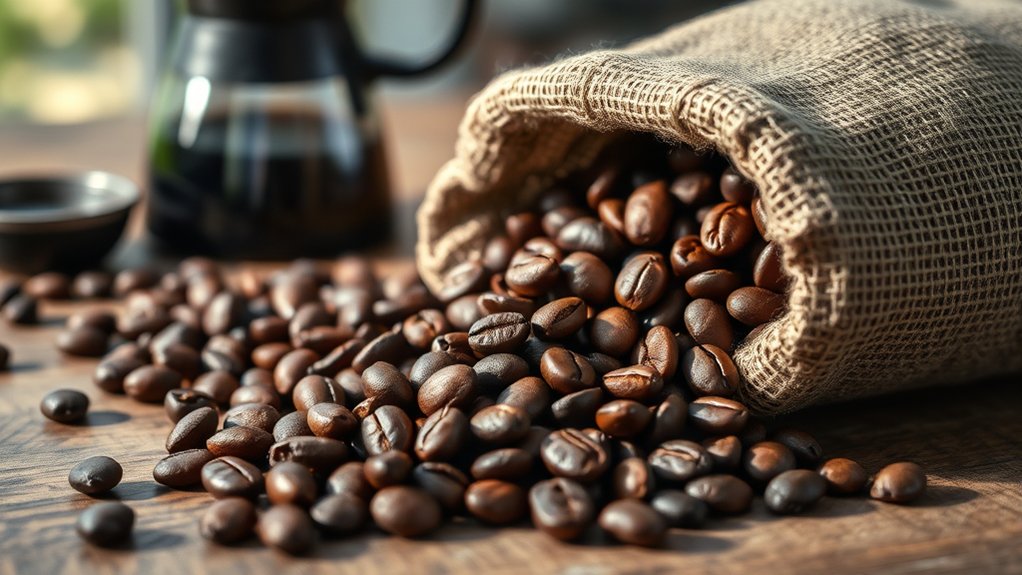
Although personal taste plays a key role, choosing the best beans for black coffee starts with understanding their origin and roast level. You’ll find that beans from different regions offer distinct coffee flavor profiles. Ethiopian beans bring fruity notes, while Brazilian beans are nuttier.
When selecting roast levels, lighter roasts highlight acidity and complexity, which is ideal for black coffee. Darker roasts emphasize bitterness and smokiness instead.
Once you’ve picked your beans, proper bean storage is vital to preserve freshness and flavor. Store beans in an airtight container, away from heat, light, and moisture.
Avoid the fridge or freezer because condensation can degrade flavor. By paying attention to origin, roast, and storage, you’ll guarantee your black coffee delivers a rich, vibrant taste every time.
Why Grind Size Matters For Brewing Black Coffee
Once you’ve selected and stored your beans properly, the next step is to focus on grind size. This can make or break your black coffee’s flavor. Grind size controls how quickly water extracts compounds from the coffee grounds.
Selecting the right grind size is crucial, as it directly impacts how water extracts flavors from your coffee grounds.
If your grind is too coarse, your coffee will taste weak and under-extracted. Too fine, and it becomes bitter and over-extracted. Consistent grind size ensures even extraction, preventing bitterness or sourness.
Different brewing methods require specific grind sizes to optimize coffee flavor: coarse for French press, medium for drip, and fine for espresso. Using a burr grinder helps maintain grind consistency, which is vital for balanced taste.
Paying attention to grind size lets you access your coffee’s fullest flavor potential every single time. It’s a simple step that really makes a difference in your cup.
Overview Of Simple Brewing Methods For Black Coffee
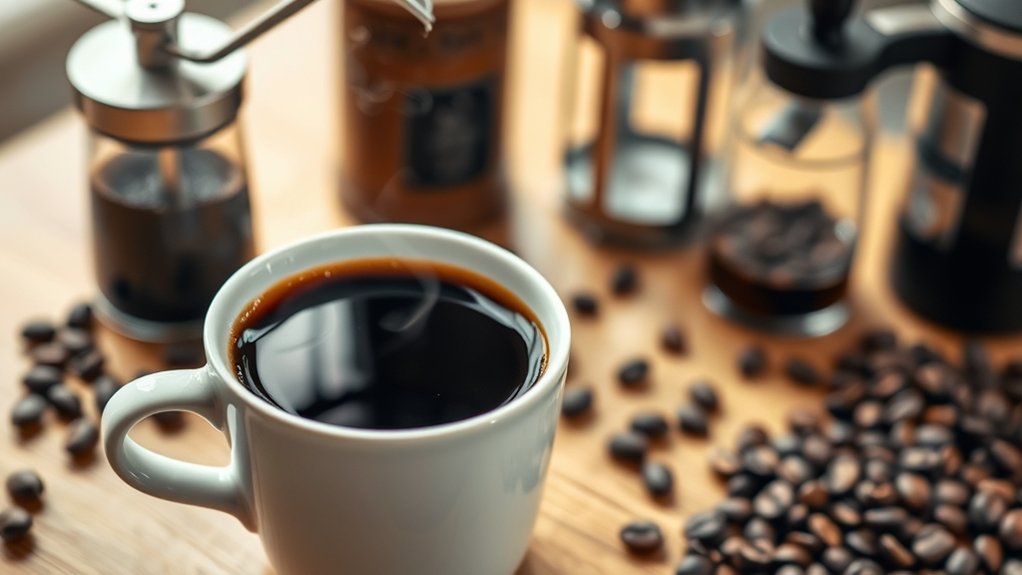
When you’re ready to brew your black coffee, understanding a few simple methods can really elevate your experience and flavor. Each method uses different brewing equipment, which impacts the coffee by extracting unique taste profiles.
| Brewing Method | Key Brewing Equipment |
|---|---|
| Drip Coffee Maker | Automatic drip machine |
| Pour Over | Cone dripper, filter |
| AeroPress | AeroPress device |
Drip coffee makers offer convenience and a consistent flavor. Pour Over lets you control the flow rate and saturation for a more nuanced cup. AeroPress produces a bold, smooth flavor with quick extraction.
Knowing how each method affects your coffee flavor helps you pick the right brewing equipment to match your taste and lifestyle. It’s all about finding what works best for you and enjoying every cup.
How To Use A French Press For Black Coffee
To make the perfect black coffee with a French press, start by choosing a coarse grind. This helps prevent over-extraction and bitterness, which can really affect the taste.
Next, you’ll want to steep the coffee in water heated to around 200°F.
Let it sit for about four minutes—this timing helps bring out balanced flavors.
Once you get the hang of these little details, you’ll be enjoying a rich, smooth cup every time. It’s really worth the effort!
Choosing The Right Grind
How fine should your coffee grind be for a French press? The key is a coarse grind. Think chunky and textured, not powdery. This grind size suits your brewing equipment perfectly, preventing coffee grounds from slipping through the metal filter and muddling your cup.
Choosing the right grind directly impacts coffee flavor. Too fine, and you risk over-extraction, which can make your coffee bitter. Too coarse, and the coffee may taste weak or under-extracted.
Using a burr grinder helps you achieve consistent coarseness, which is essential for extracting balanced, rich flavors. Remember, the French press relies on immersion brewing, so your grind influences the contact time and extraction quality.
Steeping Time And Temperature
Getting the grind just right sets the stage, but nailing the steeping time and water temperature brings out the full character of your black coffee.
For a French press, aim for a water temperature around 195°F to 205°F, just off the boil, to avoid scorching the grounds. Use precise temperature control to maintain this range, ensuring balanced extraction.
As for steeping techniques, let your coffee steep for about four minutes. This duration allows the flavors to develop fully without becoming overly bitter. You can experiment slightly with time, but avoid going beyond five minutes to prevent over-extraction.
How To Brew Black Coffee With A Pour-Over
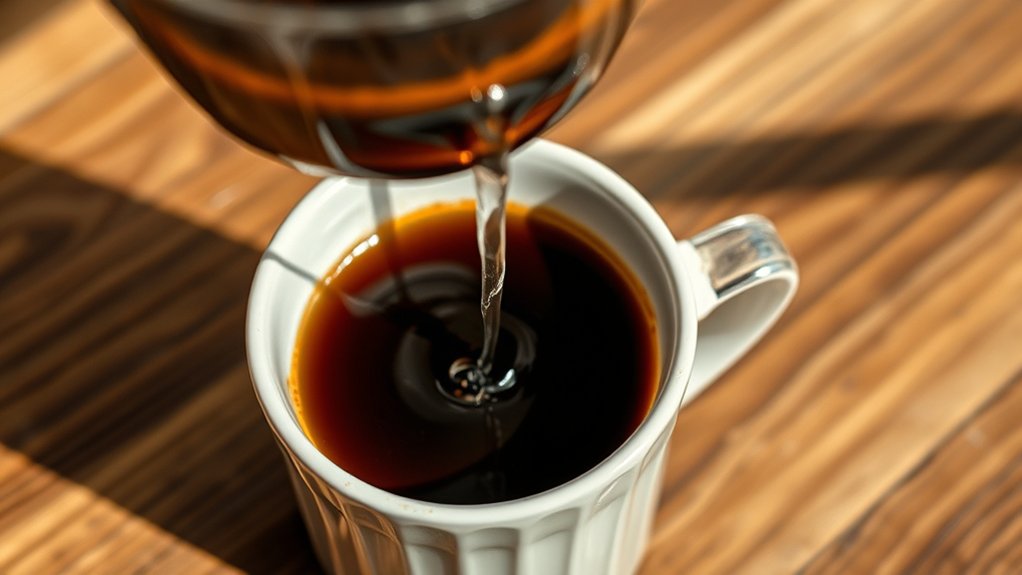
Although it might seem simple, brewing black coffee with a pour-over requires careful attention to technique and timing to get the best flavors. The quality of your brewing equipment and your method directly influence the coffee flavor. So really, this process is both an art and a science.
Start by heating water to about 200°F. Then wet the coffee grounds evenly to bloom them and release trapped gases.
Pour slowly in a circular motion to keep the extraction consistent.
Here are some key tips: use freshly ground coffee for maximum flavor. Keep a steady water flow so you don’t over or under-extract. And pick a high-quality filter and pour-over dripper to get the best brewing performance.
Mastering these steps makes it easy to enjoy a clean, nuanced cup every time.
How To Brew Black Coffee With A Drip Coffee Maker
To brew black coffee with a drip coffee maker, start by choosing the right coffee. Go for a medium grind and make sure your beans are fresh—that really makes a difference in flavor.
Next, take a moment to adjust your brew settings. Controlling the water temperature and extraction time helps you get a balanced cup every time.
Choosing The Right Coffee
When you choose the right coffee beans, you set the foundation for a great cup of black coffee brewed with your drip coffee maker. Start by selecting fresh beans, as bean freshness directly influences flavor and aroma. Look for coffee roasted within the last two weeks and avoid pre-ground options if possible.
Proper coffee storage is essential. Keep beans in an airtight container away from light, heat, and moisture to maintain their quality.
Consider these factors when choosing coffee:
- Roast level: Light roasts highlight origin flavors; medium and dark roasts offer bolder tastes.
- Origin: Different regions produce distinct flavor profiles.
- Whole beans vs. pre-ground: Whole beans preserve freshness longer.
Optimizing Brew Settings
Since the quality of your black coffee hinges on more than just the beans, dialing in your drip coffee maker’s brew settings is essential. Start by adjusting the grind size. A medium grind often works best for drip brewing, ensuring balanced extraction and superior coffee flavor.
Next, calibrate your water temperature. Aim for 195°F to 205°F to avoid under or over-extraction.
Pay attention to the coffee-to-water ratio. A standard 1:16 ratio helps maintain consistency.
Also, ensure your brewing equipment is clean and functioning properly. Residue or malfunctions can alter taste.
By fine-tuning these settings, you’ll maximize your drip coffee maker’s potential, delivering a richer, more nuanced cup every time.
Enhancing brew settings transforms simple black coffee into an expertly crafted experience.
How To Brew Black Coffee Using An AeroPress
How exactly do you brew a rich, smooth cup of black coffee using an AeroPress? This versatile brewing equipment lets you control extraction to highlight your coffee flavor perfectly.
Start by assembling your AeroPress and inserting a filter.
Next, add freshly ground coffee, then pour hot water over it. Stir the mixture gently to ensure even saturation.
Press down slowly to extract rich oils without bitterness.
Finally, clean the AeroPress immediately to maintain ideal brewing conditions. This way, your next cup will taste just as good.
It’s pretty simple once you get the hang of it!
How To Get Water Temperature And Coffee Ratio Right
You’ll want to heat your water to between 195°F and 205°F. This range helps you get the best extraction without any bitterness sneaking in.
When it comes to the coffee-to-water ratio, aim for somewhere around 1:15 to 1:17. That usually gives you a nice balance of flavor and strength.
But hey, don’t be afraid to tweak the ratio a bit to suit your own taste. Everyone’s preference is a little different, so make it your own!
Ideal Water Temperature Range
Although many factors influence the perfect cup of black coffee, controlling the water temperature is essential for extracting the ideal flavors. To get it right, you should aim for a temperature range between 195°F and 205°F (90°C to 96°C).
Water filtration plays a key role here; pure, filtered water ensures no off-flavors interfere during extraction.
Also, proper coffee storage keeps beans fresh, preserving their flavor profile. This interacts with water temperature to produce the best taste.
Keep these tips in mind:
- Use a thermometer or temperature-controlled kettle to maintain consistency.
- Avoid boiling water directly over coffee grounds to prevent bitterness.
- Adjust temperature slightly depending on your roast level. Lower for light roasts, higher for dark.
Mastering this balance elevates your black coffee experience every time.
Optimal Coffee-to-Water Ratio
When dialing in your black coffee, balancing the coffee-to-water ratio with the right water temperature is crucial for extracting the full spectrum of flavors. Getting this ratio right ensures brewing consistency and highlights the coffee flavor you want. Too little coffee yields weak taste; too much can overpower.
Typically, a ratio between 1:15 and 1:18 (coffee to water) works best, but exact amounts depend on your brew method and personal preference.
| Coffee (grams) | Water (ml) |
|---|---|
| 15 | 225 |
| 16 | 240 |
| 17 | 255 |
| 18 | 270 |
| 20 | 300 |
Use this table as a starting point. Feel free to adjust slightly to keep your brewing consistent and get the most flavor out of your coffee.
Adjusting Ratio For Taste
Since achieving the perfect black coffee depends heavily on both water temperature and coffee-to-water ratio, you’ll want to fine-tune these factors to suit your taste. Adjusting the ratio influences extraction and flavor profiling, while water temperature affects how those flavors develop.
Fresh beans typically demand slightly different parameters for an ideal cup.
Here’s how to adjust for your ideal brew:
Use cooler water (around 195°F) with a higher coffee dose to highlight delicate, fruity notes.
Increase water temperature (up to 205°F) with a lighter dose to reduce bitterness in older beans.
Experiment with ratios between 1:15 and 1:18 to balance strength and clarity depending on bean freshness and flavor profile.
How To Adjust Brewing Time For Your Ideal Black Coffee
Mastering the brewing time is essential to crafting black coffee that suits your taste perfectly. If your coffee tastes too bitter or strong, decrease the brewing time slightly. Conversely, if it feels weak or under-extracted, extend the time.
Remember, different brewing equipment demands adjustments. A French press typically requires 4-5 minutes, while a pour-over might take 2-3 minutes.
Also, consider your coffee storage. Beans exposed to air or moisture can alter extraction, affecting ideal brewing time.
Freshly ground beans usually extract faster, so you might shorten your brew.
Experiment incrementally—small changes in seconds can markedly impact flavor.
Common Black Coffee Mistakes To Avoid
Although brewing black coffee seems straightforward, many common mistakes can undermine its flavor and aroma. To truly enjoy your cup, you should pay attention to proper brewing etiquette and avoid errors that dull coffee flavor.
Here are three common pitfalls to watch out for:
- Using stale or poorly stored beans, which leads to flat, lifeless coffee.
- Neglecting water quality and temperature. Water that’s too hot or impure can burn coffee grounds or mask delicate notes.
- Overlooking grind size suitability for your brewing method, resulting in under-extraction or bitterness.
Frequently Asked Questions
What Are the Health Benefits of Drinking Black Coffee?
You’ll enjoy several health benefits from drinking black coffee. It’s packed with coffee antioxidants that help fight free radicals, reducing inflammation and boosting your immune system.
Plus, it sharpens your mental alertness, helping you stay focused and energized throughout the day.
Since you’re skipping sugar and cream, you avoid extra calories, making it a smart choice for weight management and overall health. Just don’t overdo it!
How Long Can Brewed Black Coffee Be Stored?
Ever wondered how long your brewed black coffee stays fresh? You can store it in airtight storage containers for up to 12 hours at room temperature to maintain ideal coffee freshness.
If you want to keep it longer, refrigerate the coffee. It’ll last up to 3 days, though the flavor may decline a bit. Always use sealed containers to prevent oxidation and preserve the aroma.
Reheating? Just do it gently to avoid bitterness and enjoy your brew’s best taste.
Can Black Coffee Help With Weight Loss?
Yes, black coffee can help with weight loss because its low calorie content means you’re not adding extra calories when you drink it.
Plus, caffeine in black coffee can boost your metabolism and promote appetite suppression, helping you eat less throughout the day.
Just remember not to add sugar or cream, as that increases calories and counteracts the benefits.
Drinking it in moderation supports your weight loss goals effectively.
What Are the Differences Between Black Coffee and Espresso?
Like comparing a classic novel to a thrilling short story, black coffee and espresso differ fundamentally.
You’ll notice coffee bean varieties influence their flavor profiles, but espresso uses finely ground beans brewed at high pressure and a hotter brewing temperature, around 190–200°F.
Black coffee, on the other hand, involves a gentler extraction with coarser grounds and slightly cooler water.
This method preserves nuanced tastes and gives you a smoother finish you’ll appreciate.
How Does Altitude Affect Coffee Bean Flavor?
Altitude influence plays a big role in flavor variation. When you grow coffee beans at higher altitudes, cooler temperatures slow their maturation. This results in denser beans with brighter acidity and complex flavors.
On the other hand, lower altitudes produce beans that mature faster. These often yield milder, less vibrant profiles.
So, if you want coffee with distinct fruity or floral notes, you’ll appreciate beans grown at higher elevations.
That’s because altitude influence enhances flavor variation considerably. It really makes a difference in how your coffee tastes.
Conclusion
Now that you know the essentials, brewing the perfect black coffee is within your reach. Did you know that 54% of coffee drinkers prefer black coffee for its pure flavor and health benefits?
By choosing the right beans, grind size, and brewing method, you can craft a cup that suits your taste perfectly. Remember, small adjustments in water temperature and brewing time make all the difference.
So keep experimenting and enjoy every sip!