
Are Coffee Filters Compostable – Eco Friendly Disposal Guide
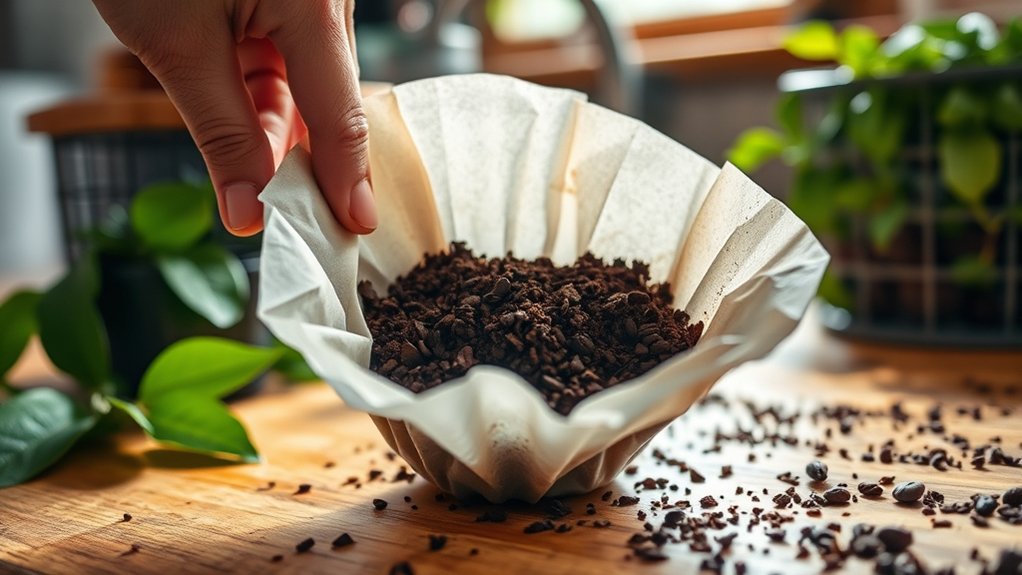
Yes, you can compost most coffee filters, especially unbleached paper ones. These break down faster and avoid harmful chemical residues. Tear or crumple the filters and mix them with nitrogen-rich coffee grounds for a balanced compost.
Just be sure to avoid synthetic or plastic-reinforced filters since they don’t decompose and can pollute your soil. Proper preparation and burying the filters deeply can help prevent pests like fruit flies.
Knowing these simple methods makes it easy to create eco-friendly disposal that enriches your garden soil efficiently. It’s a great way to reduce waste and give back to nature.
Can You Compost Coffee Filters?
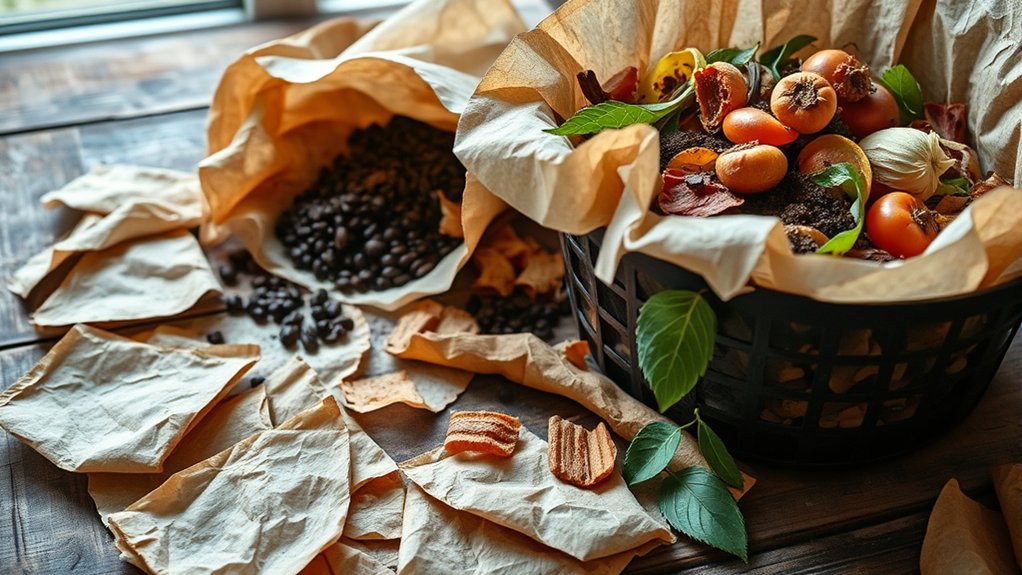
Wondering if you can compost coffee filters? The coffee filter history shows that most filters are made from natural fibers, primarily paper pulp, making them generally compostable.
Filter manufacturing typically involves either unbleached brown paper or bleached white paper.
Unbleached filters break down faster in compost, usually within 2-6 months, since they don’t have chemicals used in bleaching.
When you compost filters with used coffee grounds, you provide a balanced mix of carbon and nitrogen, which helps decomposition.
However, synthetic or plastic-reinforced filters that some manufacturers use aren’t compostable.
So, if you want to be eco-friendly, it’s best to avoid those types.
To speed up composting, tear or crumple the filters before adding them to your compost bin. This helps with aeration and boosts microbial activity.
Types of Coffee Filters That Are Compostable
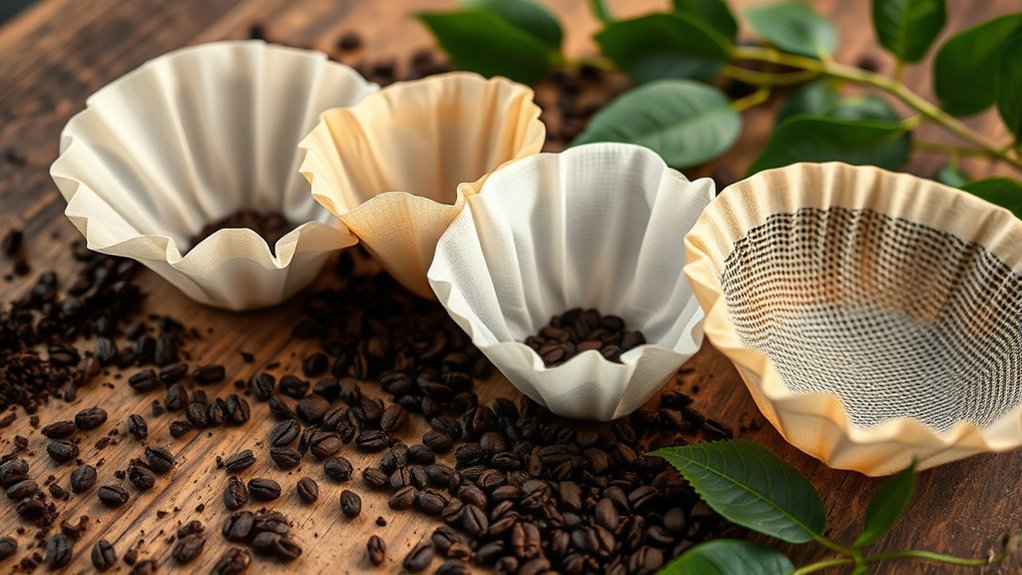
Although not all coffee filters are created equal, many types readily break down in compost environments. Unbleached brown paper filters, free from chemical bleaching and coffee filter dyes, fully decompose within 2 to 6 months, making them highly compostable.
Many coffee filters, especially unbleached brown ones, break down naturally in compost within a few months.
White paper filters, processed via oxygen-bleached, TCF, or ECF methods, are also safe for composting and commonly used by major brands. Although chlorine-bleached white filters technically compost, they may leave chlorine residues harmful to soil health.
Hemp or bamboo-based paper filters decompose even faster, offering eco-friendly alternatives. Avoid plastic mesh and metal filters, as they resist natural breakdown and don’t belong in compost.
For sustainable disposal, consider filter recycling programs where available, but composting remains the preferred route for most paper-based coffee filters without synthetic dyes or coatings.
Why Unbleached Coffee Filters Are Better for Composting
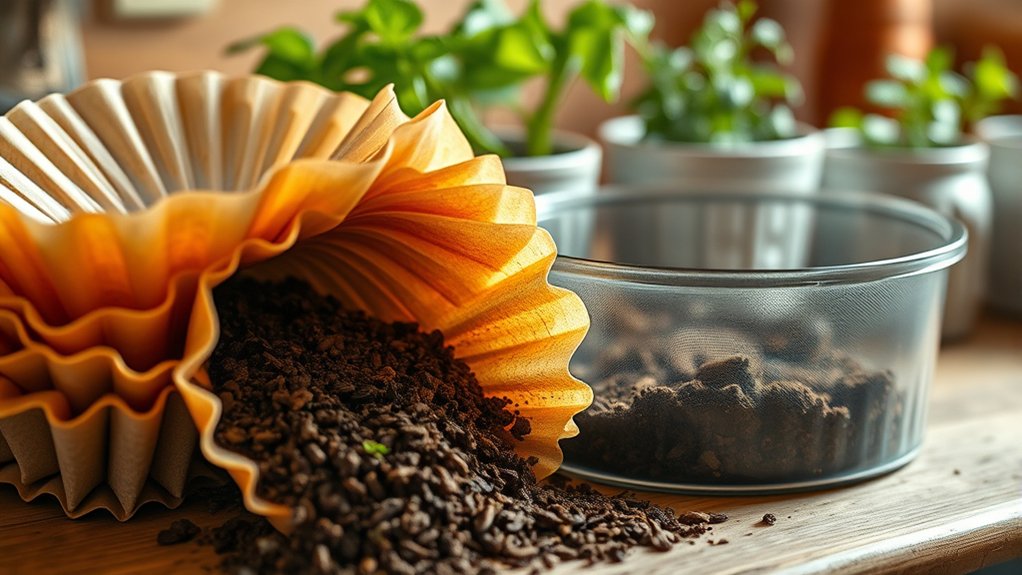
You’ll want to go with unbleached coffee filters because they break down faster—usually within 2 to 6 months—and they don’t introduce any harmful chemicals into your compost.
Since they’re made from natural fibers, they decompose cleanly. This means they help create healthier soil by avoiding the toxins you often find in bleached filters.
Plus, because they’re chemical-free, the whole process speeds up and actually improves the quality of your compost.
Chemical-Free Decomposition Benefits
Because unbleached coffee filters are made from natural fibers without chlorine or bleaching chemicals, they offer significant advantages for composting. Unlike bleached filters, which may contain coffee filter dyes and residual chemicals from harsh filter manufacturing processes, unbleached filters avoid introducing toxins like dioxins into your compost.
This chemical-free composition guarantees safer decomposition, reducing the risk of harmful residues accumulating in the soil. When you compost unbleached filters, you support a cleaner nutrient cycle, as these filters break down thoroughly without leaving trace contaminants.
Faster Breakdown Times
Unbleached coffee filters break down considerably faster in compost compared to their bleached counterparts. They decompose within 2 to 6 months because they don’t have chlorine and bleaching chemicals. Those chemicals usually leave residues that slow down microbial activity.
The natural brown color and unprocessed fibers in unbleached filters help microbes break them down quicker. Studies show that simpler chemical compositions speed up decay. So, it’s not just about the color—it’s what’s inside the filter that counts.
When you add unbleached filters to your coffee filter recycling along with coffee grounds, you get a more efficient composting process. This combo keeps the microbes active and helps nutrients cycle faster without any chemical interference.
Choosing unbleached filters means your compost pile will process materials quickly and effectively, making the most of your coffee grounds enrichment in your garden or compost system.
Soil Health Impact
Although both bleached and unbleached coffee filters break down in compost, using those free from chlorine and bleach chemicals greatly benefits soil health. Unbleached filters lack coffee filter dyes and harmful residues, ensuring microbial activity isn’t disrupted. This aligns with filter disposal regulations encouraging chemical-free composting to promote nutrient cycling and soil fertility.
| Aspect | Unbleached Filters |
|---|---|
| Chemicals | Free from chlorine and bleach |
| Decomposition Speed | Faster, natural fiber breakdown |
| Soil Microbial Impact | Supports healthy microbial life |
| Nutrient Contribution | Adds essential organic matter |
| Environmental Safety | Reduces chemical contamination |
Choosing unbleached filters enhances compost quality without introducing toxins. This makes them a superior eco-friendly option for soil health.
How to Prepare Coffee Filters and Grounds for Composting
When preparing coffee filters and grounds for composting, you should first rinse the used filters to remove excess oils that can inhibit microbial activity and cause mold growth. This step is essential because residues from coffee preparation, especially oils, slow down decomposition.
Next, handle the filter materials carefully to optimize composting efficiency.
Be gentle with filter materials to ensure your composting process is as efficient and effective as possible.
To prepare your coffee filters and grounds effectively:
- Tear or crumple filters into smaller pieces to increase surface area.
- Remove any plastic clips or non-compostable components.
- Make certain filters are fully used and free from contaminants.
- Mix the grounds and torn filters evenly into your compost to balance green and brown materials.
Following these steps promotes healthy microbial activity and speeds up the breakdown process. It really helps your compost break down faster and keeps things healthy in there.
Can You Compost Coffee Grounds and Filters Together?
Since coffee grounds are rich in nitrogen and filters provide carbon, you can compost them together to create a balanced and efficient compost mixture. This combination optimizes the green-to-brown ratio, preventing acidity or compaction issues.
Paper-based filters, even with coffee filter additives, break down naturally alongside grounds, making separation unnecessary.
Composting coffee stains from the grounds and filters also enriches the compost with organic matter, further enhancing microbial activity. To speed decomposition, tear or crumple the filters, increasing their surface area.
Under proper conditions, this mix decomposes within 2-6 months.
Best Methods for Composting Coffee Filters at Home
To compost coffee filters effectively at home, you’ll need to prepare them properly to speed up decomposition. Start by tearing or crumpling the filters into smaller pieces, which increases surface area and helps them break down faster. Since some coffee filter dyes can affect compost quality, make sure you use unbleached, dye-free filters to keep your compost healthy.
Prepare coffee filters by tearing into small pieces and choosing unbleached, dye-free options to ensure healthy compost.
Combine these pieces with nitrogen-rich coffee grounds and other kitchen scraps for balanced composting.
Proper placement is really important too. Bury the filters beneath the surface to prevent pests and improve airflow.
- Tear filters into smaller pieces
- Mix with coffee grounds and kitchen scraps
- Bury beneath compost pile’s surface
- Maintain moisture and aerate regularly
These methods line up well with filter paper recycling principles, so you’re ensuring eco-friendly disposal and efficient composting at the same time.
How Long Does It Take Coffee Filters to Break Down?
Although the breakdown time for coffee filters varies, unbleached filters typically decompose within 2 to 6 months under ideal composting conditions. Filter material durability plays a key role here. Unbleached paper breaks down faster due to its less processed fibers.
White oxygen-bleached filters, influenced by coffee filter dyes and chemical treatments, generally take 4 to 8 months to decompose. These additives slow microbial action. So, they just take a bit longer to break down.
Factors like moisture, temperature, and aeration directly affect this timeline. Torn or crumpled filters, with increased surface area, break down more rapidly, often within a few months.
Including coffee grounds in your compost further speeds up decomposition by boosting microbial activity.
Understanding these variables helps you optimize composting and minimize waste effectively. It’s all about creating the right environment for those filters to break down quicker.
Risks of Composting Chemically Bleached Coffee Filters
You should know that chemically bleached coffee filters can leave behind chlorine residues, which might harm soil health over time. These leftover chemicals don’t always break down completely during composting, and that could affect how well your plants grow.
Chlorine Residue Concerns
How safe is it to compost chemically bleached coffee filters? These filters may contain chemical residues, including trace chlorine left from the bleaching process. When composted, you risk introducing these residues into your compost pile, which could contaminate the soil.
Even more concerning is dioxin formation, a toxic byproduct produced during chlorine bleaching. This can build up in the environment over time.
Here are some key concerns to keep in mind: the presence of residual chlorine and other chemical residues, the potential release of harmful dioxins during decomposition, and environmental contamination risks from chemical leaching.
Plus, chemically bleached filters are less eco-friendly compared to unbleached alternatives.
While you can compost them, chemically bleached filters come with risks you should think about. Choosing unbleached or oxygen-bleached filters helps you reduce chemical exposure in your compost.
It’s a safer and more sustainable way to dispose of your coffee filters.
Impact on Soil Health
When chemically bleached coffee filters break down in compost, they can release trace chlorine and other bleaching agents that stick around in the soil. This can be a problem because these chemicals might affect soil microbial activity and plant health.
Plus, the leftover chemicals from the dyes in coffee filters can mess with the nutrient balance and even harm helpful creatures like earthworms.
Composting rules usually recommend avoiding synthetic additives to keep the soil healthy. But bleached filters don’t really fit with those guidelines since they can introduce contaminants.
It’s important to know that just because these filters break down, it doesn’t mean the chemical residues disappear completely.
This could lead to buildup over time in your compost. So, if you want to protect your soil and follow composting rules, think twice before tossing chemically bleached coffee filters into your compost pile.
Alternatives to Bleached Filters
Although chemically bleached coffee filters are widely available, they can introduce harmful chlorine compounds into compost. This poses significant risks to soil quality and plant health.
The bleaching process often leaves behind residual chlorine or chlorine dioxide, which can contaminate your compost with synthetic chemicals.
Instead, you should consider alternatives that minimize these risks. Choose unbleached, natural brown filters for safer, quicker decomposition. You can also opt for oxygen-bleached filters, which avoid harsh chlorine-based chemicals.
Make sure to avoid coffee filter dyes that may introduce non-biodegradable elements.
Another great option is to explore filter recycling programs to reduce waste and chemical exposure. These choices help protect your garden and the environment.
Why Avoid Plastic or Nylon Coffee Filters in Compost
Because plastic or nylon coffee filters are made from petroleum-based materials, they don’t break down in compost like paper filters do.
Plastic and nylon coffee filters, made from petroleum, don’t decompose in compost like paper ones.
When you use synthetic coffee filter materials, you risk introducing persistent waste that fragments into microplastics, contaminating soil and water.
A common composting misconception is assuming all coffee filters decompose equally. Unlike paper, plastic or nylon filters remain intact indefinitely, disrupting nutrient recycling and potentially releasing harmful chemicals as they degrade.
To maintain a healthy compost system, avoid these non-biodegradable filters. Instead, choose reusable metal or mesh filters, which prevent plastic contamination and support eco-friendly disposal.
Understanding the differences in coffee filter materials helps you make informed decisions that protect both your compost quality and the environment.
Balancing Coffee Filters With Greens and Browns in Compost
To sustain an effective composting process, you need to balance coffee filters as carbon-rich “browns” with nitrogen-dense “greens” like coffee grounds or food scraps. Coffee filter durability is key. Torn or shredded filters break down faster, helping composting microorganisms thrive.
Aim for a green-to-brown ratio near 1:3 to optimize microbial activity and decomposition rates. This balance also regulates moisture, preventing soggy, compacted compost.
Consider these points:
- Tear coffee filters to speed decomposition and avoid compaction
- Combine with fresh greens to supply nitrogen for microbes
- Monitor moisture to maintain an ideal environment for composting microorganisms
- Use a consistent ratio to ensure efficient nutrient cycling
Balancing these elements results in nutrient-rich, well-structured compost. It’s really about finding the right mix that keeps everything working smoothly.
Composting Coffee Filter Paper Bags and Pods: What You Need to Know
Managing coffee filters effectively in your compost pile sets the stage for including related items like coffee filter paper bags and pods. When composting paper bags, make sure they’re unbleached or oxygen-bleached without plastic linings or heavy coffee filter dyes. These can hinder decomposition.
Filter manufacturing methods impact compostability, so avoid bags with synthetic additives.
For coffee pods, check product labels carefully. Many use compostable bioplastics certified for home composting and break down within six months.
However, non-compostable shells or frames must be removed to prevent contamination. Choosing reusable or biodegradable pods minimizes waste further. Always verify certification to confirm suitability for your home compost system.
Tips to Prevent Fruit Flies and Use Coffee Filter Compost in Your Garden
To keep fruit flies at bay, be sure to bury your used coffee filters and grounds deep inside your compost pile. Then, cover them up with some dry materials like shredded leaves. It’s best not to leave any organic waste sitting out on the surface where flies can easily find it.
Also, remember to keep your compost well-aerated and moist—this helps prevent those pesky infestations from taking hold.
When you use coffee filter compost correctly, it adds a nice boost of nitrogen to your garden soil, which really helps your plants grow strong and healthy.
Preventing Fruit Fly Attraction
Although coffee filters and grounds enrich your compost, improper handling can attract fruit flies. These pests disrupt the composting process and garden health. To prevent this, manage your compost strategically, especially when dealing with damp coffee filters or grounds that can become breeding grounds for pests.
Proper coffee stain removal before composting and filter recycling through shredding can minimize these risks. Consider these evidence-based tips:
- Bury coffee filters and grounds deep in the compost pile to reduce exposure.
- Avoid leaving damp filters or grounds on the compost surface.
- Shred filters to accelerate decomposition and lower fruit fly attraction.
- Add a dry, carbon-rich layer like leaves or cardboard on top to deter pests.
Maintaining good aeration and balanced moisture also discourages fruit fly breeding effectively. Just keep these simple steps in mind, and your compost will stay healthy and pest-free!
Proper Compost Burying
Keeping fruit flies at bay starts with how you handle coffee filters in your compost. To optimize coffee filter recycling, bury filters at least 6 inches deep to block fruit fly access.
Different filter material types, such as paper or biodegradable variants, decompose faster when torn or crumpled and mixed thoroughly with other compost ingredients. This promotes microbial activity and reduces fly attraction.
Covering the buried filters with finished compost or mulch maintains proper moisture and further deters pests. Avoid adding large quantities of coffee filters at once; instead, incorporate them gradually to balance nitrogen and carbon ratios.
These precise practices enhance decomposition efficiency and minimize fly infestation risks. This way, your coffee filter recycling contributes effectively to a healthy compost system. It’s all about keeping things balanced and pest-free!
Using Compost In Gardens
When you incorporate coffee filter compost into your garden, bury it deeply in the soil to prevent fruit flies from accessing decomposing organic matter. This practice aligns with composting regulations that emphasize pest control and environmental safety.
To optimize your garden’s health and minimize pest issues, consider these tips: mix coffee filter compost thoroughly with soil or mulch for better aeration and reduced pest attraction. Adding dry materials like straw or shredded leaves can help repel fruit flies during decomposition.
Using a sealed compost bin will contain odors and prevent fruit fly breeding. Also, handle coffee stains promptly with coffee stain removal techniques to avoid residue buildup on garden tools.
Following these evidence-based strategies ensures your compost enriches your garden efficiently while keeping pests at bay. It’s a simple way to maintain a healthy, thriving garden without unwanted critters hanging around.
Frequently Asked Questions
Can Composted Coffee Filters Affect Soil pH Levels?
You won’t see significant pH balance changes from composted coffee filters because they maintain neutral pH. Using natural filters supports soil health by adding organic matter without disrupting your garden’s delicate chemical environment.
It’s a simple way to enrich your soil without worrying about messing up its chemistry. So go ahead, toss those used coffee filters into your compost pile—they’re doing more good than you might think!
Are Compostable Coffee Filters Safe for Worm Bins?
Ironically, not all coffee filter types are worm bin superheroes. You’ve got to avoid plastic-lined ones to keep your worm bin clean and healthy.
Stick to unbleached, compostable filters. They break down quickly and support your worms’ balanced diet safely.
It’s really about choosing what’s best for your worms and the bin environment. That way, you help them thrive while reducing waste.
How Do Coffee Filter Compost Benefits Compare to Other Paper Products?
You’ll find coffee filter alternatives break down faster and add valuable carbon, which helps reduce composting challenges compared to thicker paper products.
They have minimal oils and a thinner structure, making them more eco-friendly and efficient for composting.
Can You Reuse Coffee Filters Before Composting Them?
You can reuse coffee filters depending on their durability and filter material comparison. Durable metal or cloth filters last longer, while single-use paper filters can be reused a few times if intact. This helps reduce waste before composting.
Do Coffee Filters Attract Pests Outside of Compost Bins?
You’d think coffee filters could summon an army of pests! Yes, pest attraction is real, especially outdoors.
Damp filters and exposed grounds increase outdoor risks. So, you should bury or compost them promptly to avoid unwanted critters.
Conclusion
You might worry that composting coffee filters takes extra effort, but it’s actually simple and highly beneficial. Unbleached, paper-based filters break down quickly and enrich your soil without harmful chemicals. Avoid plastic or nylon filters to keep your compost healthy.
By balancing your coffee filters with greens and browns, you’ll create nutrient-rich compost that supports plant growth. Composting coffee filters is an easy, eco-friendly step you can take to reduce waste and improve your garden.