Does Coffee Liqueur Have Caffeine – Facts Explained
Yes, coffee liqueur does contain caffeine, but in much smaller amounts than brewed coffee. You get about 5 mg of caffeine per 1.5 oz serving, since the caffeine naturally in the real coffee beans is diluted during infusion with spirits like vodka or rum.
This results in a smooth, flavorful drink with minimal stimulant effects. It’s unlikely to disrupt your sleep.
If you want to understand brand differences or explore decaf options, there’s more detailed info ahead.
What Is Coffee Liqueur and How Is It Made
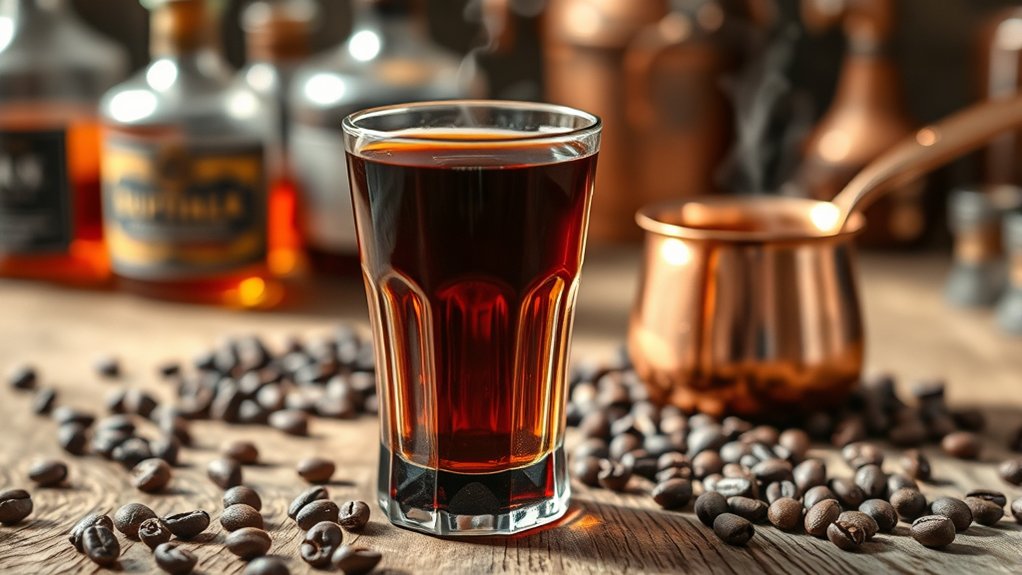
What exactly is coffee liqueur, and how does it get its distinctive flavor? Coffee liqueur is an alcoholic beverage crafted by combining spirits such as vodka or rum with coffee flavor. The key lies in the infusion process, where real coffee beans are either soaked directly in alcohol or brewed with sugar and water before blending.
Coffee liqueur blends spirits like vodka or rum with real coffee beans through a careful infusion process.
This method extracts the rich, complex flavors from the coffee bean, creating a balanced taste profile. Brands like Kahlúa and Mr. Black emphasize using authentic coffee beans to guarantee genuine coffee notes.
The infusion process allows the alcohol to absorb the coffee’s essence without overwhelming bitterness, resulting in a smooth, flavorful liqueur.
This precise technique distinguishes coffee liqueur from simple coffee-flavored spirits by maximizing depth and aroma from the coffee bean. It’s what makes coffee liqueur stand out and keeps people coming back for more.
Does Coffee Liqueur Contain Caffeine?
Since coffee liqueur is made by infusing real coffee beans or coffee extracts into alcohol, it naturally contains some caffeine. However, the caffeine content is minimal compared to brewed coffee, balancing flavor profiles with alcohol content to create a distinct beverage. Here’s what you should know:
Most coffee liqueurs, like Kahlúa, have caffeine due to real coffee infusion. Caffeine levels are diluted during production, resulting in low stimulant effects. A typical 1.5 oz serving contains about 5 mg of caffeine.
This is considerably less than the 200 mg in a standard brewed coffee cup. Decaffeinated coffee liqueurs exist for those avoiding caffeine but wanting coffee flavor.
How Much Caffeine Is in Coffee Liqueur?
You’ll find that a standard 1.5 oz serving of coffee liqueur contains about 5 mg of caffeine. That’s quite a bit less than the 200 mg you’d get from an 8 oz cup of brewed coffee.
Caffeine levels usually hover around 100 mg per liter because of the coffee infusion process, but this can vary depending on the brand and how it’s made.
And if you’re sensitive to caffeine, some coffee liqueur options even come in decaffeinated versions with barely any caffeine at all.
Caffeine Content Overview
A typical 1.5 oz serving of coffee liqueur like Kahlúa contains about 5 mg of caffeine, which is markedly less than the roughly 200 mg found in an 8 oz cup of brewed coffee. This low caffeine concentration results from the production process, where infusion and dilution reduce caffeine levels while preserving flavor profiles and alcohol content balance.
When you consider caffeine in coffee liqueur, keep these points in mind:
- Made with real coffee beans, caffeine averages around 100 ppm (mg/L).
- Infusion and dilution considerably lower caffeine concentration.
- Alcohol content remains consistent, influencing flavor and mouthfeel.
- Decaf variants offer minimal to no caffeine for sensitive consumers.
- The modest caffeine amount complements the liqueur’s rich taste, not overpowering it.
This overview helps you understand caffeine’s subtle presence in coffee liqueurs. It’s pretty interesting how the caffeine is kept low without losing that deep coffee flavor we enjoy.
Comparison With Brewed Coffee
Understanding the caffeine content in coffee liqueur sets the stage for comparing it directly with brewed coffee. A standard 1.5 oz serving of coffee liqueur contains about 5 mg of caffeine, while an 8 oz cup of brewed coffee can reach up to 200 mg.
This stark difference arises because caffeine is diluted during coffee liqueur production, resulting in roughly 1/40th to 1/50th the caffeine content per serving.
When you think about flavor profiles, coffee liqueur offers a sweet, smooth alternative with subtle coffee notes. It’s quite different from the robust bitterness you get with brewed coffee.
Plus, in mixing techniques, this mild caffeine presence allows coffee liqueur to blend well in cocktails without overwhelming stimulant effects.
That makes it ideal for those who want that coffee flavor but with minimal caffeine impact.
Brand Variations And Levels
While coffee liqueurs generally contain lower caffeine levels than brewed coffee, the amount can vary a lot between brands. This depends on flavor profiles, ingredient sourcing, and how much coffee bean they use.
For example, Kahlúa usually has about 5 mg of caffeine per 1.5 oz serving. Mr. Black, on the other hand, contains roughly 1100 mg per liter, which is nearly ten times more than Kahlúa.
Decaffeinated options like Richardos provide little to no caffeine.
Premium brands often share caffeine content on their labels, so you can make informed choices. The type and amount of coffee beans used really influence the caffeine levels too.
Knowing these differences helps you pick a coffee liqueur that fits your caffeine sensitivity and flavor preferences just right.
Coffee Liqueur vs. Brewed Coffee: Caffeine Comparison
Because coffee liqueur contains only about 5 mg of caffeine per 1.5 oz serving, compared to up to 200 mg in an 8 oz cup of brewed coffee, you won’t get the same stimulating effect from the liqueur.
Coffee liqueur has significantly less caffeine than brewed coffee, so it won’t provide the same energy boost.
This stark difference arises because brewing extracts a high caffeine concentration from coffee beans, whereas coffee liqueur dilutes caffeine with alcohol and other ingredients.
The flavor profiles also differ. Brewed coffee delivers a robust, pure coffee taste with high caffeine, while coffee liqueur balances subtle coffee notes with sweetness and alcohol content, reducing the caffeine impact.
When comparing caffeine levels, brewed coffee provides roughly 40 times more caffeine per volume than coffee liqueur. So, the liqueur is more of a flavorful alcoholic beverage than a caffeine source.
Is Kahlúa Coffee Liqueur High in Caffeine?
When comparing coffee liqueurs, Kahlúa stands out as a popular choice, but it doesn’t pack much caffeine punch. Its caffeine content measures about 5 mg per 1.5 oz serving, which is far lower than brewed coffee. This moderate caffeine level means it’s unlikely to markedly affect your caffeine metabolism or cause noticeable stimulant effects.
Kahlúa’s rich coffee flavor comes from real coffee, yet the dilution process reduces caffeine concentration substantially. Here’s what you should know:
- Contains roughly 100 mg caffeine per liter (100 ppm)
- Offers much less caffeine than a typical brewed coffee
- Moderate caffeine level among coffee liqueurs, not high
- Minimal impact on alertness or sleep disruption at normal serving sizes
- Coffee flavor remains robust despite low caffeine content
Why Mr. Black Coffee Liqueur Has More Caffeine
You’ll find Mr. Black Coffee Liqueur contains considerably more caffeine because it uses a higher concentration of Arabica coffee beans in its formula.
What’s interesting is its unique production process, which infuses a more potent coffee extract into the alcohol base. This method really boosts the caffeine levels.
So, if you enjoy cocktails that pack a stronger caffeine punch, this liqueur is designed just for that.
Just a heads-up—you’ll want to enjoy it mindfully because of the extra caffeine kick.
Higher Coffee Bean Content
Three premium Arabica coffee beans form the backbone of Mr. Black Coffee Liqueur. This directly influences its elevated caffeine levels and robust coffee flavor. The higher coffee bean content really sets it apart from other liqueurs, making it especially potent.
Here’s why: it uses a blend of three top-grade Arabica beans. Each batch of beans is roasted separately to retain caffeine and flavor. Because of this, it contains about ten times more caffeine than standard liqueurs like Kahlúa.
Mr. Black is crafted to emphasize pure coffee flavor over sweetness. The coffee bean infusion is markedly higher than in competitors, giving it that rich, bold taste you don’t often find elsewhere.
Unique Production Process
Building on the higher coffee bean content, Mr. Black’s unique production process notably elevates caffeine levels. It employs advanced production techniques, including the separate roasting of three distinct Arabica bean varieties. This intensifies the coffee flavor and preserves natural caffeine.
Unlike typical liqueurs, Mr. Black infuses its spirit with freshly roasted beans, maximizing caffeine extraction during distillation. This method results in a liqueur with approximately ten times the caffeine found in competitors like Kahlúa.
By focusing on precise roasting and infusion processes, Mr. Black guarantees a potent caffeine concentration without compromising taste. These production choices show a deliberate strategy to enhance both coffee flavor and stimulant effects.
It’s what makes Mr. Black stand out as a more caffeinated and flavorful coffee liqueur.
Intended Cocktail Use
Because Mr. Black Coffee Liqueur contains about ten times more caffeine than traditional liqueurs, its formulation targets a specific cocktail experience. You’ll notice this elevated caffeine level enhances flavor pairing and balances its alcohol content. This creates a unique profile suited for caffeinated cocktails.
This design supports drinks that demand both robust coffee notes and an energizing kick.
Consider these key points about Mr. Black’s intended cocktail use:
- Contains approximately 1100 mg of caffeine per liter
- Uses a higher coffee concentration for bold flavor pairing
- Designed for coffee-forward cocktails like cold fashioneds
- Balances significant caffeine with moderate alcohol content
- Caters to consumers seeking both flavor depth and stimulation
This evidence-based approach really clarifies why Mr. Black stands out in cocktail applications.
How Does Coffee Liqueur’s Caffeine Affect You Compared to Coffee?
Although coffee liqueur contains caffeine, its impact on your alertness is much weaker than that of brewed coffee. The caffeine content in a 1.5 oz shot of coffee liqueur is about 5 mg, compared to roughly 200 mg in an 8 oz cup of coffee.
This minimal caffeine presence, diluted by alcohol content and flavor pairing ingredients, means you won’t experience the same stimulating effects. Coffee liqueur’s caffeine is a residual byproduct, not an intended stimulant, so its influence on energy levels is subtle at best.
| Aspect | Coffee Liqueur |
|---|---|
| Caffeine per serving | ~5 mg |
| Alcohol content | Typically 15-25% ABV |
| Effect on alertness | Mild to negligible |
Who Should Watch Their Caffeine Intake in Coffee Liqueur?
If you’re sensitive to caffeine, even a little bit in coffee liqueur can make a difference. So, it’s a good idea to keep an eye on how much you’re drinking.
One easy way to cut down on caffeine is to go for decaf coffee liqueur, especially if you like to enjoy it in the evening. That way, you’re less likely to have trouble sleeping later on.
Knowing these simple tips can help you enjoy your drink without worrying about too much caffeine.
Caffeine Sensitivity Considerations
When you have heightened caffeine sensitivity or certain health conditions like anxiety, insomnia, or heart issues, monitoring your intake of coffee liqueur becomes essential.
Though coffee liqueurs contain lower caffeine (about 5 mg per 1.5 oz serving) compared to brewed coffee, their flavor variations and alcohol content can still impact you.
Keep in mind that small caffeine amounts may add up if you have multiple servings.
Also, the alcohol content can interact with medications or make health problems worse.
If you suffer from anxiety or insomnia, you might notice your symptoms getting worse.
People with heart conditions should be especially cautious because of the combined stimulant and depressant effects.
Plus, different flavor variations sometimes have different caffeine levels.
It’s a good idea to talk to your healthcare provider to weigh the risks based on your sensitivity and health status before enjoying coffee liqueur.
Decaf Coffee Liqueur Options
Because caffeine sensitivity varies widely, choosing decaf coffee liqueurs offers a practical solution for those needing to limit stimulant intake. Decaf options like Richardos provide notably reduced or negligible caffeine compared to regular liqueurs such as Kahlúa or Mr. Black.
If you’re sensitive to caffeine or have health restrictions, opting for decaf minimizes unwanted stimulant effects without compromising enjoyment.
While decaf coffee liqueurs maintain rich flavor profiles resembling their caffeinated counterparts, you can enjoy a similar sensory experience with far less caffeine.
For serving suggestions, use decaf coffee liqueurs in cocktails or desserts where traditional coffee notes enhance the dish, ensuring caffeine intake stays controlled.
Always verify product labels or manufacturer information to confirm caffeine content before consumption to match your dietary needs. This way, you can enjoy your drinks worry-free and tailored to your preferences.
Nighttime Consumption Effects
Although coffee liqueur contains considerably less caffeine than brewed coffee, about 5 mg per 1.5 oz serving, you should still consider your sensitivity before consuming it at night.
For most people, this low caffeine amount won’t cause significant sleep disruption. But individual caffeine sensitivity varies.
If you’re prone to sleep difficulties or have health conditions affected by caffeine, monitoring your intake is really important.
You should watch your caffeine intake in coffee liqueur at night if you:
- Experience sleep disruption or trouble falling asleep
- Have heightened caffeine sensitivity
- Suffer from anxiety or heart-related health issues
- Are taking medications that interact with caffeine
- Prefer to avoid stimulants before bedtime
Understanding your personal tolerance helps prevent unwanted alertness and guarantees restful sleep after evening consumption.
Choosing Coffee Liqueurs If You Are Sensitive to Caffeine
Since caffeine sensitivity varies widely, choosing the right coffee liqueur means paying close attention to its caffeine content. You’ll want to focus on flavor profiles and serving suggestions so you can enjoy your drink without any unpleasant effects.
Decaffeinated options like Richardos offer rich coffee notes without any caffeine. Meanwhile, regular liqueurs like Kahlúa have about 5 mg of caffeine per serving, which is much less than brewed coffee.
It’s always a good idea to check labels or reach out to manufacturers to confirm caffeine levels.
| Liqueur | Caffeine Content (mg/1.5 oz) | Flavor Profile |
|---|---|---|
| Richardos | 0 (Decaf) | Smooth, mild coffee |
| Kahlúa | ~5 | Rich, sweet, chocolate |
| Other Brands | Varies | Varies |
Choosing low-caffeine or decaf liqueurs works well with tailored serving suggestions for those who are sensitive.
Can Coffee Liqueur Keep You Awake at Night?
How likely is coffee liqueur to keep you awake at night? Given its low caffeine content, about 5 mg per 1.5 oz serving, coffee liqueur is unlikely to cause significant sleep disruption.
The caffeine absorption from this small amount rarely produces noticeable stimulant effects.
Think about it this way: caffeine in coffee liqueur is minimal compared to brewed coffee. Most people don’t experience any sleep disruption after moderate consumption.
Caffeine in coffee liqueur is minimal, so moderate consumption rarely disrupts sleep.
Even if you’re sensitive to caffeine, you might only feel a mild alertness but not full-blown insomnia.
The caffeine absorption rate is just too low to strongly impact your nervous system.
Decaf Coffee Liqueur Options to Consider
If you want to enjoy the rich coffee flavor without caffeine’s stimulating effects, decaf coffee liqueurs provide a well-formulated alternative. Decaf options, such as Richardos, use decaffeinated coffee beans, resulting in negligible caffeine, typically under 2 mg per 1.5 oz serving. This makes them suitable for caffeine-sensitive individuals or those avoiding stimulants late at night.
These liqueurs maintain robust flavor profiles that closely mimic their caffeinated counterparts, so you don’t have to sacrifice taste. Brands often label caffeine content clearly, allowing you to make informed choices.
How to Find Coffee Liqueurs That Fit Your Caffeine Needs
When selecting a coffee liqueur that suits your caffeine preferences, you’ll need to carefully examine product labels and official sources for accurate caffeine content. Different brands vary considerably in caffeine levels, so precise data is essential.
To find a coffee liqueur that fits your needs, consider these points:
To find the perfect coffee liqueur, consider caffeine content, flavor profiles, and storage tips.
Check labels or websites for caffeine content; Kahlúa has about 5 mg per 1.5 oz serving. Opt for decaffeinated options like Richardos decaf if you want to avoid caffeine. You can also choose brands like Mr. Black, which specify higher caffeine levels (~1100 mg/L).
Make sure to match the caffeine content to your daily intake limits.
Also, take a look at flavor pairing suggestions and storage tips to keep the taste and potency just right. That way, you’ll enjoy your coffee liqueur exactly how you like it.
Frequently Asked Questions
Can Coffee Liqueur Be Used in Cooking and Baking Recipes?
Yes, you can use coffee liqueur in cooking and baking recipes. Its coffee infusion provides flavor enhancement, enriches moisture, and adds complexity. The alcohol mostly evaporates during cooking, leaving behind a subtle caffeine kick and aromatic depth.
What Are the Best Mixers for Coffee Liqueur Cocktails?
Imagine a symphony of flavors where vodka, whiskey, or rum create vibrant cocktail variations. You’ll find the best mixers for coffee liqueur balance sweetness and bitterness, enhancing flavor pairing and crafting precise, evidence-based drink experiences.
It’s all about finding that perfect combo that hits just right. When you get it, the flavors really come alive, making each sip more enjoyable than the last. So, whether you’re mixing at home or bartending, understanding these mixers is key.
How Long Does Coffee Liqueur Last After Opening?
You’ll find coffee liqueur’s shelf life lasts 1 to 2 years after opening. For best results, follow storage tips: keep it sealed tightly, store in a cool, dark place, and avoid exposure to air and light.
Doing this helps maintain the flavor and quality for as long as possible. So, just make sure to close the bottle well after each use. That way, you can enjoy your coffee liqueur at its best!
Are There Sugar-Free Coffee Liqueur Options Available?
Yes, you’ll find sugar-free coffee liqueur options using sugar alternatives like stevia or erythritol. These offer flavor variations that maintain coffee’s essence while reducing calories.
They’re perfect if you’re looking to keep things low-carb or stick with keto-friendly choices. So, you don’t have to miss out on your favorite coffee liqueur just because you’re avoiding sugar.
Does Coffee Liqueur Have Any Health Benefits or Risks?
You should know coffee liqueur’s caffeine content offers mild antioxidant benefits but also poses health risks like sleep disturbances and increased heart rate. Balancing intake helps manage these health effects without severe adverse outcomes.
Just remember, enjoying coffee liqueur in moderation is key. Too much can mess with your sleep or make your heart race. So, keep an eye on how much you’re having to stay on the safe side.
Conclusion
If you’re wondering about caffeine in coffee liqueur, know it typically contains about 10-20 mg per serving. That’s significantly less than a brewed cup’s 95 mg. So, it’s unlikely to keep you awake unless you consume large amounts.
Choosing decaf options or checking labels can help you manage your intake precisely. Understanding these differences lets you enjoy coffee liqueurs without unexpected caffeine jolts. This way, you can make informed choices based on your sensitivity.