Can You Use A Paper Towel As A Coffee Filter – Practical Brewing Tips
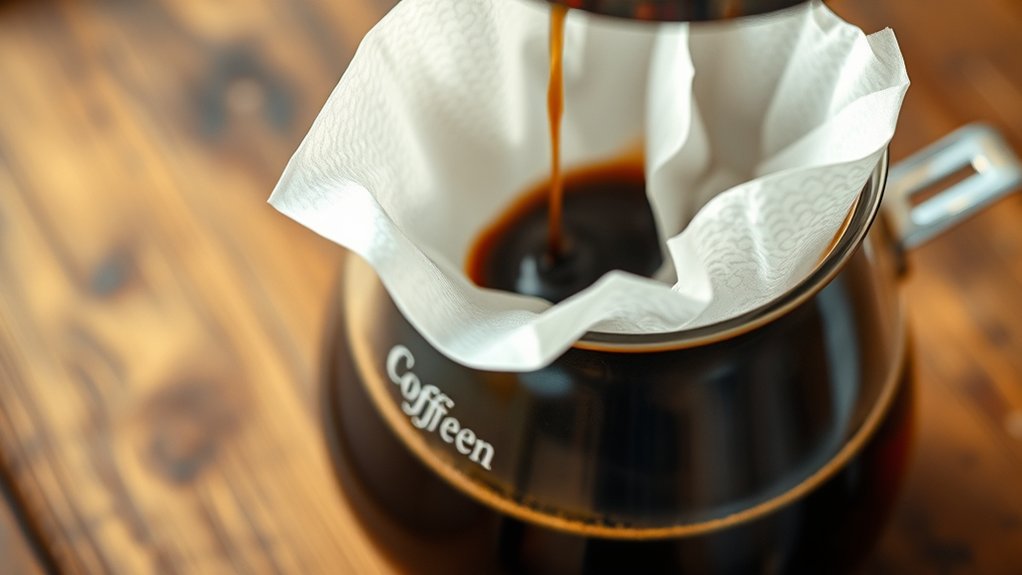
You can use a paper towel as a coffee filter in a pinch, but choose an unbleached, scent-free type to avoid chemical and flavor contamination. Fold it tightly into a cone and secure it well to prevent tearing and grounds slipping through.
Be cautious of risks like chemical leaching and uneven extraction, especially with hot water. For safer, better-tasting options, consider alternatives or techniques that enhance brewing quality.
More insights await to help you brew smarter.
Is It Safe to Use Paper Towels as Coffee Filters?
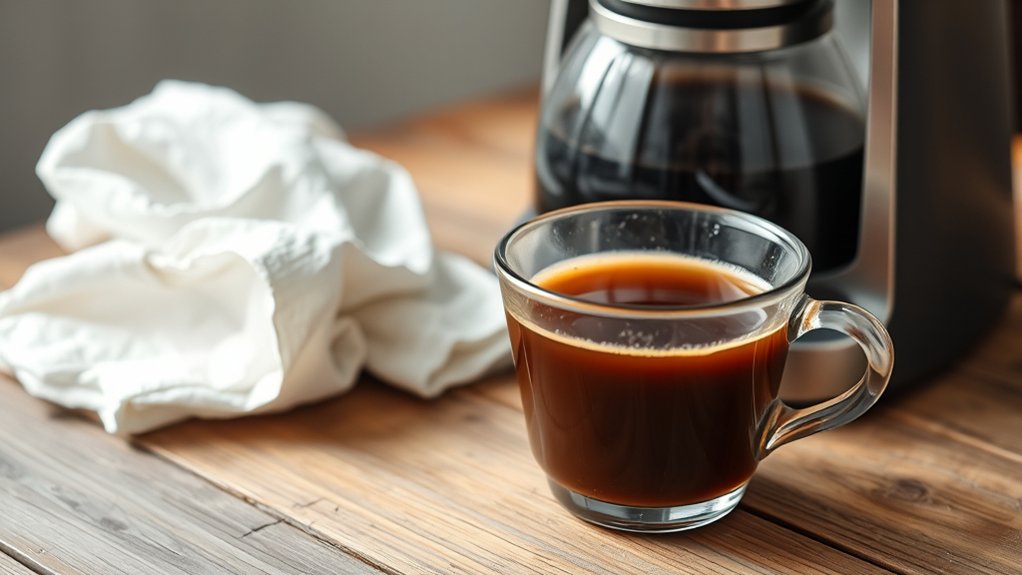
When considering whether you can safely use paper towels as coffee filters, the key issue lies in their composition. Many paper towels contain bleach, perfumes, or inks that may leach harmful chemicals into your coffee when heated.
Unbleached, food-grade paper towels reduce this risk but aren’t guaranteed safe for hot food contact.
From an environmental impact standpoint, using paper towels instead of dedicated coffee filters may seem economical, but it can lead to increased waste due to their non-food-safe treatments.
Cost comparison shows paper towels might be cheaper upfront, yet the potential health risks and environmental downsides outweigh these savings.
Ultimately, while tempting, using paper towels as filters isn’t officially recommended by food safety experts due to possible chemical transfer and health concerns.
What Types of Paper Towels Work Best for Brewing Coffee?
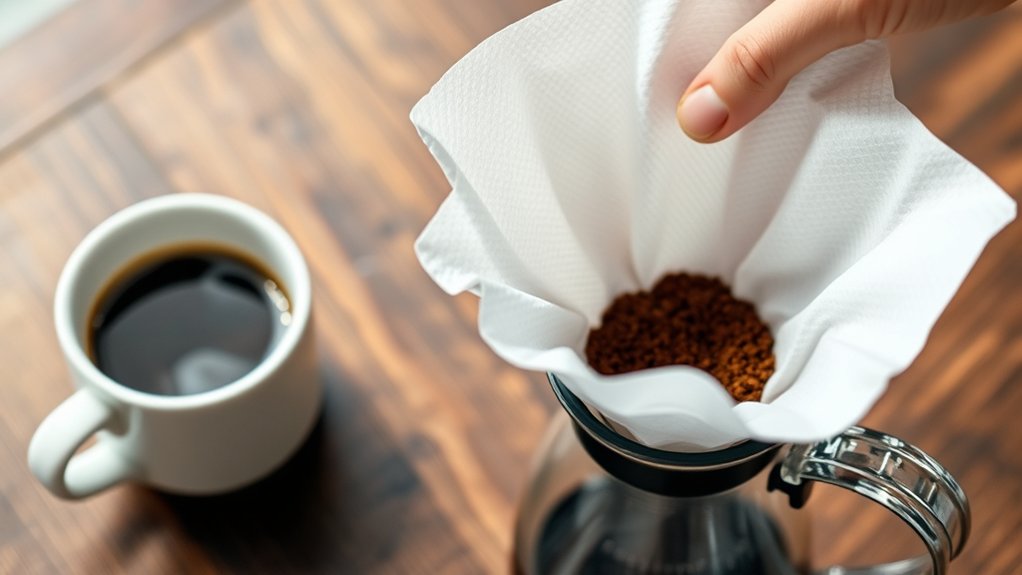
Although paper towels aren’t designed specifically for brewing coffee, choosing the right type can make a significant difference in your cup’s clarity and safety. You want unbleached brown paper towels since they contain fewer chemicals and dyes than bleached white ones. This helps preserve your coffee flavor.
Thin, tightly woven towels excel at brewing efficiency by preventing grounds from slipping through, ensuring a cleaner brew. Avoid towels with fragrances, inks, or decorative patterns because these can leach unwanted chemicals into your cup.
High-quality, food-grade paper towels labeled safe for food contact are your best bet. It’s a good idea to steer clear of recycled or colored towels since they often carry dyes and chemicals that aren’t suitable for brewing.
Picking the right paper towel really enhances both the safety and taste of your coffee.
How to Prepare a Paper Towel Filter for Your Coffee Maker
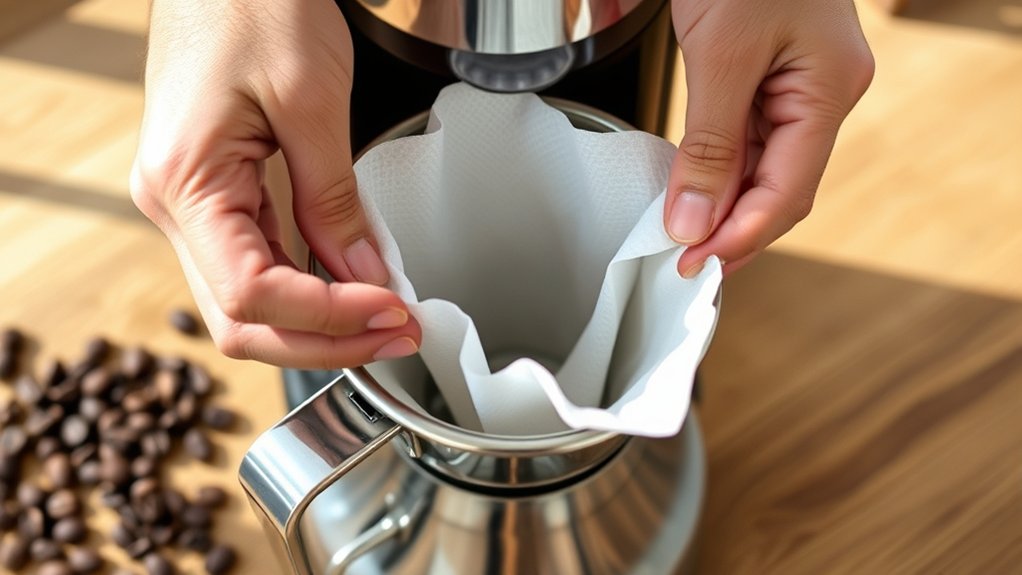
You’ll want to start by choosing an unbleached, scent-free paper towel to avoid any unwanted flavors.
Then, fold it into a cone shape that fits snugly into your coffee basket or dripper. Make sure it fits nicely so it doesn’t move around.
Finally, secure the filter firmly to prevent it from slipping during brewing. This way, you’ll get a clean and efficient extraction every time.
Selecting Suitable Paper Towels
Since selecting the right paper towel directly impacts your coffee’s flavor and safety, choose unbleached, brown paper towels to minimize chemical exposure. Focus on paper quality.
Opt for towels that are durable enough to hold grounds without tearing but still porous enough to allow water flow.
Avoid scented or printed varieties, as inks and fragrances can leach into your brew, compromising taste and safety.
If you’re eco conscious, look for eco friendly options made from recycled materials or sustainably sourced fibers to reduce environmental impact.
Selecting a suitable paper towel guarantees a clean, safe brew without unwanted flavors or chemicals, making your improvised filter both practical and responsible.
With the right paper towel, you’re setting the foundation for a great cup of coffee.
Folding Techniques For Filters
When preparing a paper towel filter for your coffee maker, folding it correctly guarantees both durability and proper water flow. Creative folding techniques, combined with careful material selection, enhance the filter’s effectiveness. Start by folding the paper towel diagonally into a cone that fits snugly into the basket.
Tuck the pointed end in, keeping edges open for even water flow. Fold the sides inward to reinforce durability and reduce tearing. Pre-wet the towel slightly to help it conform to the basket shape and prevent leakage.
Adjust folds for a secure, yet breathable fit that allows ideal filtration. It might take a little practice, but once you get the hang of it, your coffee will taste even better!
| Step | Purpose |
|---|---|
| Diagonal fold | Forms cone shape |
| Tuck pointed end | Ensures snug fit |
| Fold sides inward | Adds stability and strength |
| Pre-wet paper towel | Helps conform, reduces leakage |
| Adjust folds | Balances snugness and flow |
Securing The Filter Properly
Folding your paper towel into the right shape sets the stage, but securing it properly keeps everything in place during brewing. Start by folding the towel into a cone or square that fits snugly in your coffee maker’s filter basket.
To enhance filter durability and prevent slipping, fasten the edges with a rubber band or clip.
Gently place the paper towel so it covers the basket’s sides, creating a stable barrier for the coffee grounds. Support the filter from underneath with a small object to hold it steady while pouring.
Avoid overfilling with grounds because too much weight can tear the towel and negatively impact coffee flavor.
Proper securing ensures a smooth brew and preserves your paper towel filter’s integrity. It might feel a bit tricky at first, but once you get the hang of it, you’ll find it’s pretty simple to keep everything in place while brewing.
Just take your time and adjust as needed!
Brewing Methods That Work With Paper Towel Filters
Although paper towels aren’t designed as coffee filters, you can effectively use them with drip coffee makers or pour-over setups if you provide proper support. Choose unbleached, unscented paper towels to avoid altering the flavor of your chosen coffee bean varieties.
Keep your brewing temperature around 195–205°F for ideal extraction. Fold the towel carefully to fit cone-shaped holders or create a stable makeshift support to prevent tearing and uneven water flow.
| Method | Ease of Use | Flavor Impact |
|---|---|---|
| Drip Coffee | Moderate | Mild |
| Pour-Over | Requires Care | Balanced |
| Cone Holder | Simple | Clean |
| Makeshift Support | Tricky | Variable |
With attention to these details, you can enjoy a decent cup even in a pinch. Just take your time setting things up, and you’ll be surprised at how well it works!
What Are the Chemical Risks of Using Paper Towels for Coffee?
Because paper towels aren’t made for food contact with hot liquids, using them as coffee filters introduces chemical risks you should consider. The high temperature during brewing can increase chemical migration from the paper towel into your coffee.
Bleached towels may leach residual chlorine and dioxins, while scented or dyed varieties often contain perfumes, inks, and adhesives not intended for ingestion.
Even unbleached, natural brown towels carry some production residues. These substances pose potential health implications since they aren’t designed for consumption and could introduce harmful chemicals into your drink.
If you want to minimize these risks, it’s best to avoid paper towels and use filters specifically made for coffee. This way, you can keep your brewing process both safe and enjoyable.
How Do Paper Towels Affect Coffee Taste and Flavor?
When you use paper towels as coffee filters, you often sacrifice the clean, balanced flavors that proper filters preserve. Paper towels can introduce flavor contamination through chemical leaching and material inconsistencies, which takes away from your brew’s natural profile.
Think about it this way: bleached towels may give your coffee a bleach-like taste, which changes the authentic flavor. On the other hand, unbleached towels often add earthy or paper-like notes that can overpower those delicate coffee nuances.
Bleached towels can taint coffee with a bleach taste, while unbleached ones add overpowering earthy notes.
Scented towels are another no-go because they bring in artificial aromas that mask coffee’s true scent.
Plus, inconsistent porosity in paper towels leads to uneven extraction, which results in muddled or off-tastes.
Don’t forget that manufacturing chemicals, including inks and adhesives, can leach into your coffee and subtly degrade the flavor quality.
Knowing these factors helps you keep your coffee pure and enjoyable, without any unwanted flavor contamination.
How Do Paper Towels Compare to Standard Coffee Filters?
If you want a consistently clean and balanced cup, standard coffee filters outperform paper towels in several key ways. Thanks to coffee filter history, these filters are crafted from food-grade materials with controlled chemical content, ensuring no unwanted residues affect your brew.
In contrast, paper towel manufacturing focuses on absorbency and durability for cleaning, not ingestion. This often leaves chemicals, inks, or fragrances behind.
Coffee filters have a uniform weave and pore size, delivering predictable flow rates and extraction.
Paper towels vary widely, risking uneven brewing and sediment. Their sturdy design holds up under hot water without tearing, unlike paper towels that tend to collapse.
How to Prevent Paper Towels From Tearing During Brewing
To keep your paper towels from tearing while brewing, start by picking a sturdy, thick towel. If you don’t have one, folding a thinner towel can help make it stronger.
Next, be sure to support the towel with a mesh or basket. This helps spread out the weight evenly and stops any weak spots from getting too much pressure.
With these simple folding tricks and some good support, you can brew away without stressing about your paper towel ripping.
Proper Support Techniques
Because paper towels aren’t made to hold heavy, wet grounds, you’ll need solid support underneath to keep them from tearing. Proper support makes sure the paper towel can handle the weight of the coffee grounds and the heat from brewing without falling apart.
To keep your filter intact during brewing, try these simple tips: Use a sturdy holder or drip basket to hold the paper towel from beneath. Folding the towel into multiple layers gives it extra strength against wet grounds. Pour water gently and steadily to avoid stressing the towel fabric.
Make sure the support is even all around the edges so the weight spreads out nicely. Also, don’t overload with too many coffee grounds or pour in too much water at once—that just ups the chance of tearing.
Following these steps helps you brew great coffee while protecting your makeshift filter. It really makes a difference!
Choosing Durable Towels
While using paper towels as coffee filters can be a clever hack, choosing the right kind is essential to prevent tearing during brewing. Opt for thicker, high-quality paper towels. They offer superior strength and durability, reducing the chance of ripping under hot water and coffee grounds.
Unbleached or brown paper towels often have stronger fibers and fewer chemicals. This makes them more tear-resistant and better for the environment. Plus, they align with sustainability goals and lower your environmental impact.
Avoid thin, low-quality options that easily fall apart. You can also support durability by reinforcing towels with multiple folds or placing them within a sturdy frame or mesh holder. This not only keeps the structure intact during extraction but also helps minimize waste.
That way, your brewing experience is both reliable and eco-conscious.
Folding Methods
If you want your paper towel filter to hold up during brewing, folding it correctly is essential. Proper folding minimizes weak points where the paper texture might tear, especially once wet and stained with coffee.
Start by creating a tight cone or square shape to ensure stability. To reinforce strength, use multiple layers, which better withstand the weight of coffee grounds and hot water without ripping or developing a coffee stain mess.
Here are key folding tips:
- Fold paper towel into a compact cone or square
- Layer multiple sheets for added strength
- Reinforce edges with a paper clip or twist tie
- Place the filter inside a sturdy, heat-resistant holder
- Avoid overfilling to reduce pressure and tearing risks
These steps protect your filter from tearing, ensuring a clean brew. Just follow them, and you’ll have a much better brewing experience.
What Are Alternatives to Paper Towels as Coffee Filters in Emergencies?
How can you brew a great cup of coffee when paper towels aren’t available? Consider reusable cloth filters made from cotton or cheesecloth. They’re eco-friendly, easy to wash, and reduce waste, which helps minimize environmental impact.
Fine mesh metal or silicone strainers provide durable filtration without chemicals. This keeps your kitchen safe while effectively separating the grounds.
Durable fine mesh metal or silicone strainers offer chemical-free filtration, ensuring safety and effective coffee grounds separation.
You can also try DIY fabric pouches or unbleached natural fiber cloths. These options cut down on chemical exposure during brewing.
In a pinch, lining a sieve or colander with a clean cloth lets you strain coffee grounds efficiently without paper products. These alternatives not only protect your health but also help you stick to an eco-conscious brewing routine when emergencies strike.
How to Clean up After Brewing With a Paper Towel Filter
After you’re done brewing, go ahead and toss the used paper towel carefully to keep those coffee grounds from making a mess. Just a heads up—don’t flush it down the drain. Instead, throw it in the trash or compost it if you can.
Then, it’s a good idea to rinse your equipment and surfaces right away. That way, you’ll stop any stains or leftover residue from sticking around.
Disposal Of Used Towels
While brewing coffee with a paper towel filter offers convenience, proper disposal is essential to avoid plumbing issues and messes. You want to minimize the environmental impact and consider cost implications when discarding used towels. Here’s how to clean up responsibly:
Dispose of used towels in the trash; avoid flushing to prevent blockages. Compost unbleached, chemical-free towels if your local guidelines allow. Wipe down the brewing area to remove any coffee residue and prevent stains.
Think about switching to reusable filters to cut waste and recurring costs. Keep disposal habits consistent to maintain a clean, efficient brewing space.
Taking these steps ensures you manage waste smartly while enjoying your coffee routine. It’s a small effort that makes a big difference!
Managing Coffee Grounds Mess
Because coffee grounds can easily spill and create a mess, you’ll want to lift the paper towel filter carefully and dispose of it right away. If coffee grounds have soaked into the paper fibers, gently tap the filter to shake loose any lingering particles before discarding.
Afterward, rinse your brewing equipment thoroughly with hot water to wash away residual coffee grounds and paper fibers clinging to surfaces. Use a damp cloth or sponge to wipe down the dripper or container, making sure no grounds or paper residues remain.
Regularly check and replace your paper towel filter to prevent clogging or buildup that could cause leaks or messes during brewing. This routine keeps cleanup manageable and your brewing setup spotless.
When Should You Avoid Using Paper Towels as Coffee Filters?
If you want to keep your coffee safe and flavorful, steer clear of using bleached, scented, or recycled paper towels as filters. These types can leach harmful chemicals into your brew, which messes with both the taste and the safety of the material. It’s best to avoid using them every day to cut down on the risk of chemical buildup from manufacturing residues.
Also, fragile paper towels that tear easily can mess up your filtration and create a big mess. When you’re brewing with high heat, the chances of chemicals migrating into your coffee go up, so paper towels just aren’t a good choice then.
Specifically, you should avoid using paper towels as coffee filters when:
- They’re bleached, scented, or recycled
- You plan to brew coffee daily
- The paper towel feels fragile or tears easily
- You’re using high-heat brewing techniques
- The paper contains dyes or unknown additives
What Are Reusable Coffee Filter Options to Consider?
Several durable and eco-friendly reusable coffee filter options can elevate your brewing experience while reducing waste. Coffee filter materials like stainless steel or gold-plated metal mesh offer long-lasting durability and guarantee consistent extraction quality.
Alternatively, cloth filters made from cotton or hemp provide a rich, full-bodied flavor and are biodegradable. Although reusable filters usually have a higher upfront cost, they save money over time compared to disposable paper filters.
These options also reduce environmental impact and eliminate concerns about chemical leaching, making them a health-conscious choice.
To maintain your brewing equipment’s performance, clean and dry reusable filters regularly to prevent mold buildup. Choosing the right reusable filter balances taste, sustainability, and convenience, enhancing your coffee routine effectively.
Frequently Asked Questions
Can Paper Towels Alter the Caffeine Content in Brewed Coffee?
You won’t notice a significant caffeine impact using paper towels, though they might cause slight flavor alteration by affecting extraction rates.
How Long Can You Store Brewed Coffee Filtered With a Paper Towel?
You can store brewed coffee filtered with a paper towel for up to 2 hours at room temperature without losing flavor. After that, the taste might start to change.
To keep it fresh longer, refrigerate it promptly in an airtight container. Just remember, the way you brew your coffee also affects how long it stays fresh. So, it’s a good idea to enjoy it sooner rather than later!
Are Paper Towel Filters Environmentally Friendly Compared to Regular Filters?
Imagine tossing a paper towel into the trash after one use. It’s like planting a tree, then chopping it down immediately.
Paper towels actually have a worse environmental impact and lower biodegradability compared to regular coffee filters you can compost.
Can You Reuse a Paper Towel Filter for Multiple Brews?
You can’t reliably reuse a paper towel filter for multiple brews because its filter durability drops quickly. This risks tears and grounds ending up in your cup.
Plus, it dulls the coffee aroma, which really diminishes your brew’s quality each time. So, it’s best to use a fresh filter for every brew if you want the best taste.
What Is the Ideal Thickness for a Paper Towel Used as a Filter?
Don’t grab a paper towel thick enough to stop Niagara Falls! You want a single, thin layer, just enough paper towel thickness to let water flow smoothly.
Compared to coffee filters, it’s better to choose a uniform, food-safe filter material for the best results. That way, you get consistent filtering without any surprises.
Conclusion
While a paper towel can step in as a coffee filter in a pinch, it’s more of a charming understudy than a lead performer. You’ll want to choose the right towel, prepare it carefully, and keep an eye on potential chemical surprises.
For a smoother, safer brew, consider reliable alternatives or reusable filters. After all, your perfect cup deserves a partner that knows the role inside and out, no improvisation needed.