Does Donald Trump Drink Coffee – Facts And Insights
You might assume Donald Trump drinks coffee, but he doesn’t drink it regularly. He has avoided it for personal and family health reasons. Instead, he relies heavily on Diet Coke, consuming about 12 cans daily. That actually gives him more caffeine than four cups of coffee.
His brief coffee sip during the 2016 campaign was more symbolic than habitual. Understanding Trump’s unique beverage choices gives us some insight into his lifestyle and political strategy. It also helps explain how these choices shape public perception.
Does Donald Trump Drink Coffee Regularly?
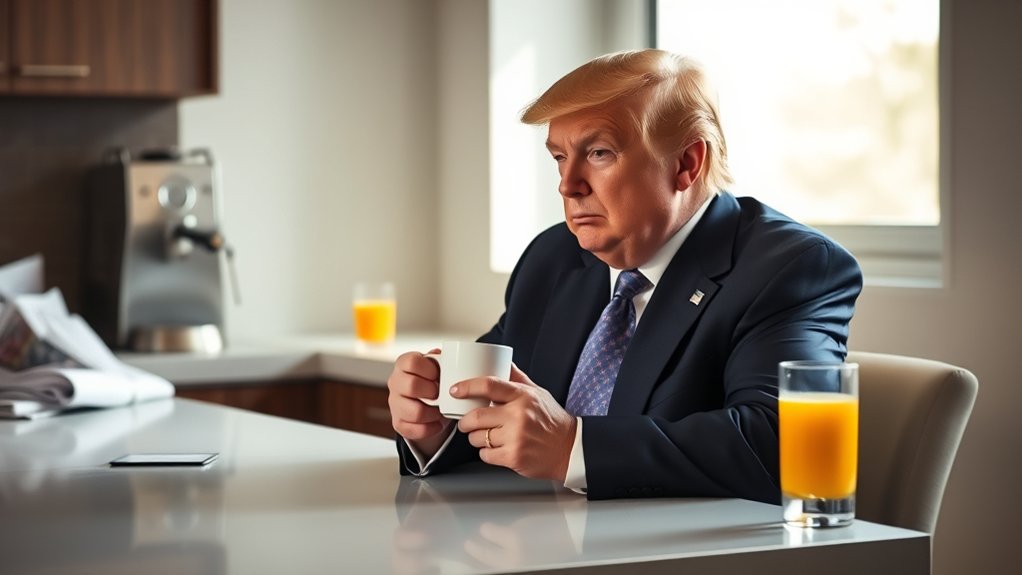
How often does Donald Trump drink coffee? The answer is that he doesn’t drink coffee regularly. Despite common coffee myths suggesting otherwise, Trump has publicly stated multiple times that he’s never had a cup of coffee.
As far back as 2000, he mentioned never tasting coffee and has maintained this position. He cites family health history as a reason for avoiding stimulants including coffee.
Instead, his beverage choices focus heavily on Diet Coke, which he consumes daily, reportedly around 12 cans.
This clear preference highlights his distinct avoidance of coffee. Understanding this helps dispel popular misconceptions about his beverage habits.
When Did Trump Try Coffee During His 2016 Campaign?
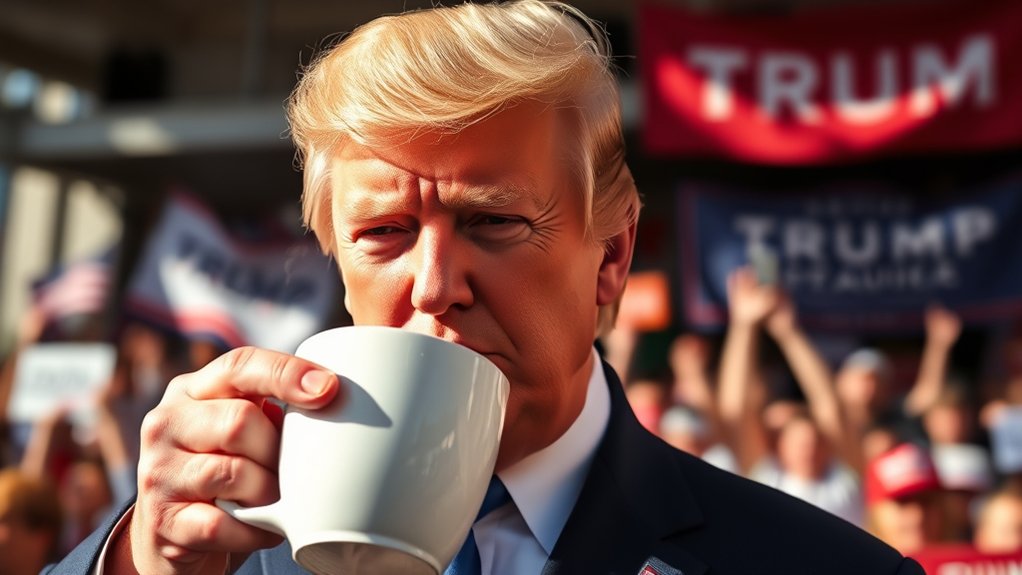
You saw Trump try coffee during his 2016 campaign stop in Miami’s Little Havana. There, he ordered a cafecito at the Versailles restaurant.
Photographs captured him briefly sipping the espresso, which he described as “strong.”
This moment was a strategic effort to connect with Hispanic voters and shape his campaign image.
Miami Little Havana Visit
Although Donald Trump’s primary focus during his 2016 campaign was on policy and voter outreach, his visit to Miami’s Little Havana included a notable moment when he tried a cafecito espresso. This gesture intersected with the local coffee culture, highlighting beverage choices as part of cultural engagement.
You’ll note:
- Trump briefly sipped the strong coffee, commenting on its intensity.
- Photographs captured this moment, underscoring its symbolic value.
- The visit aimed to connect with Hispanic voters, using coffee as a cultural touchpoint.
This coffee try appeared more strategic than a reflection of Trump’s personal preference. Understanding this moment gives us insight into how political figures may adopt local customs tactically.
They weave aspects like coffee culture into their campaign narratives to appeal to specific communities.
Versailles Restaurant Coffee
When Donald Trump visited Versailles Restaurant in Miami during his 2016 campaign, he ordered a cafecito espresso and briefly sipped it. This suggested either a first-time try or a staged photo moment. His reaction, calling the coffee strong, revealed his unfamiliarity with Cuban-style coffee.
It really reflected more on beverage preferences shaped by coffee culture than habitual consumption. This visit aimed to connect culturally with Hispanic voters in Miami. So, the coffee was more of a symbolic gesture rather than a personal choice.
| Aspect | Observation | Implication |
|---|---|---|
| Coffee Type | Cafecito espresso | Strong Cuban-style coffee |
| Trump’s Reaction | Brief sip, called it strong | Possible first-time try or staged |
| Campaign Context | Versailles visit in Miami’s Little Havana | Cultural connection with voters |
Campaign Image Strategy
Since Donald Trump’s coffee attempt during his 2016 campaign happened at Miami’s Versailles Restaurant, it was more about a carefully crafted image strategy than personal taste.
The moment used coffee symbolism to boost campaign branding, especially to connect with Hispanic voters in a key swing state.
You can see this approach in a few ways. There was a staged photo op highlighting cultural engagement by ordering a traditional Cuban cafecito espresso.
He took a brief sip and made a comment on the coffee’s strength, signaling toughness and relatability rather than genuine preference.
The timing was strategic too, aiming to get maximum media coverage and link with local communities while on the campaign trail.
This shows how political figures use everyday rituals for symbolic messaging, not necessarily because they actually prefer those habits.
Why Does Trump Avoid Coffee and Other Stimulants?
You’ll notice that Trump avoids coffee and other stimulants, and it’s mostly because of his family history with alcoholism and smoking. That background really influences the health choices he makes.
So, he’s decided to stay away from caffeine altogether.
Knowing this helps us understand why he sticks to this routine, even when there’s social or political pressure to go along with the crowd. It’s a personal choice that makes sense once you consider where he’s coming from.
Family History Influence
Although many people enjoy coffee as part of their daily routine, Donald Trump avoids it because of his family’s history with alcoholism and substance abuse. This family influence plays a big role in how he stays away from addiction.
You can see how personal experience shapes behavior. For example, his older brother Fred Trump struggled with alcohol addiction, which shows the risks in the family.
Trump also publicly says he’s never had coffee, linking this choice to both family and health reasons.
His avoidance doesn’t stop at alcohol; it includes stimulants like coffee too. This reflects a wider lifestyle choice that he sticks to.
Personal Health Choices
When considering Donald Trump’s personal health choices, his avoidance of coffee and other stimulants stands out as a deliberate effort to maintain well-being. You might hear coffee myths suggesting everyone benefits from caffeine, but Trump counters this by steering clear of stimulants due to family history concerns.
His decision isn’t about taste or trend; it’s a calculated move to protect his health, especially given his brother’s struggles with alcoholism.
Instead of coffee, Trump opts for beverage alternatives that don’t compromise his stimulant-free lifestyle. This approach reflects a broader commitment to abstaining from substances like alcohol and tobacco.
Stimulant Abstinence Reasons
Because of his family’s history with addiction, Donald Trump deliberately avoids coffee and other stimulants. His stance reflects a conscious decision influenced by personal health and family experiences, particularly his brother Fred Trump’s struggle with alcoholism.
This choice aligns with a broader avoidance of caffeine and related substances despite the prevalence of coffee culture.
You’ll notice Trump’s abstinence reasons revolve around mitigating health risks linked to hereditary addiction tendencies.
He also steers clear of caffeine’s stimulating effects and opts for stimulant alternatives to maintain alertness without coffee.
What Drinks Does Trump Prefer Instead of Coffee?
While many politicians rely on coffee to stay alert, Donald Trump consistently chooses Diet Coke as his preferred beverage, consuming about 12 cans daily. His beverage preferences clearly favor soda over traditional coffee alternatives, highlighting a unique approach to caffeine intake.
Unlike most who turn to coffee for stimulation, Trump avoids it entirely, citing family history and personal abstinence from caffeine and alcohol. This choice positions Diet Coke as his primary hydration source during his presidency and campaigns.
How Much Caffeine Does Trump Get From Diet Coke Daily?
So, you’re drinking about 12 cans of Diet Coke every day. Each can has roughly 34 mg of caffeine in it.
When you add it all up, that’s around 408 mg of caffeine daily. To put it in perspective, that’s about the same as drinking four cups of coffee.
This amount is a little bit above what health experts usually recommend as a safe daily caffeine limit. So, it’s something to keep in mind!
Daily Diet Coke Intake
Although many people rely on coffee for their caffeine fix, Donald Trump gets most of his daily caffeine from Diet Coke. He drinks about 12 cans every day, which is quite a lot.
Each 12-ounce can contains roughly 34 mg of caffeine.
That adds up to approximately 408 mg daily. Interestingly, this amount exceeds the generally recommended safe limit of 400 mg for healthy adults. So, you could say he’s pushing the caffeine boundaries a bit.
To sum it up: Trump drinks 12 cans of Diet Coke daily. Each can delivers 34 mg of caffeine. This means his total caffeine intake from Diet Coke is around 408 mg per day.
Basically, Diet Coke forms the bulk of his caffeine consumption, not coffee or other sources. It’s pretty clear where most of his caffeine comes from!
Caffeine Content Comparison
Because Donald Trump drinks about 12 cans of Diet Coke daily, his caffeine intake from this source reaches approximately 408 mg. This slightly surpasses the recommended safe limit of 400 mg for most adults.
Each can contains 34 mg of caffeine, totaling more than the caffeine found in a standard 8-ounce cup of coffee, which has around 95 mg.
When you compare caffeine content, Trump’s beverage preferences clearly favor Diet Coke over coffee, resulting in a higher daily caffeine dose.
This intake level may impact caffeine metabolism differently than coffee due to the slower absorption rate in soda.
Understanding this comparison helps you grasp how Trump’s caffeine consumption from Diet Coke alone exceeds typical caffeine sources.
It also raises questions about the effects of sustained high caffeine intake on health and alertness.
What Health Effects Come From Trump’s Caffeine and Beverage Habits?
While moderate caffeine intake can be safe for most adults, Donald Trump’s reported daily consumption of about 408 mg from Diet Coke actually surpasses recommended limits. This level of intake may increase your risk of caffeine dependency, which can affect sleep and cognitive function.
Donald Trump’s 408 mg daily caffeine intake exceeds safe limits, risking dependency and impaired sleep.
You might also experience side effects like insomnia, anxiety, or dehydration.
Considering healthier beverage alternatives could reduce these risks.
Key health effects to take into account include increased heart rate and potential sleep disturbances linked to excessive caffeine.
There’s also the risk of long-term dependency impacting overall health.
Choosing non-caffeinated or lower-caffeine options can help mitigate these adverse effects.
Understanding these factors can really help you assess the impact of high caffeine consumption on your well-being.
How Did Trump’s Coffee Habits Influence His Campaign Image?
Examining Donald Trump’s coffee habits reveals how they shaped his public persona during the 2016 campaign. Though he personally abstained from coffee, his brief attempt to try it during a Miami visit was a strategic move to engage Hispanic voters and tap into coffee culture.
This gesture highlighted his beverage preferences as distinct yet adaptable, signaling cultural awareness without compromising his unique lifestyle image.
The campaign’s use of a photo showing Trump sipping coffee aimed to humanize him, fostering a relatable and approachable image.
By contrasting his distaste for coffee with this rare public act, the campaign reinforced a narrative of Trump as both an everyday figure and an unconventional leader.
It showed how beverage choices can influence political branding and help connect with voters.
How Do Trump’s Coffee Preferences Compare With Past Presidents?
Though many past presidents embraced coffee as a daily ritual, Donald Trump stands out by abstaining from it entirely. His unique stance contrasts sharply with the established coffee culture embedded in presidential habits.
You’ll notice these differences:
Presidents like George Washington, Theodore Roosevelt, and John F. Kennedy regularly consumed coffee, making it a symbol of their routine. Figures such as George H.W. Bush reportedly drank multiple cups daily, reinforcing coffee as a presidential staple.
Trump, conversely, avoids coffee due to family history and health reasons, opting for Diet Coke instead. This divergence highlights how Trump’s personal preferences and considerations shape his approach, setting him apart from traditional presidential coffee culture and habits.
How Do Trump’s Family History and Health Concerns Shape His Choices?
Because of his family’s history with addiction, especially his brother Fred’s struggles with alcoholism, Donald Trump chooses to avoid caffeine and alcohol entirely. You can see how genetic predisposition plays a big role in shaping his lifestyle decisions.
His awareness of addiction, heightened by early exposure to substance issues within his family, motivates a cautious approach to stimulants like coffee.
Trump’s personal health concerns reinforce this stance. They lead him to abstain from these substances despite their common use among politicians.
This careful avoidance shows a deliberate effort to manage potential health risks linked to addiction tendencies.
What Role Does Coffee Play in Political Campaign Culture?
While Donald Trump avoids coffee due to personal and family health factors, many politicians embrace it as a deliberate tool during campaigns.
Coffee plays a significant role in political campaign culture by serving as a symbol of approachability and normalcy. Campaigns use brewing strategies to create relatable moments that resonate with voters, despite occasional coffee controversies over perceived authenticity or health implications.
Coffee embodies approachability and relatability in campaigns, crafting moments that connect with voters despite occasional controversies.
You’ll notice candidates often leverage coffee to humanize themselves through informal, photographed coffee stops. They also foster community ties and informal dialogue with supporters.
Plus, coffee signals camaraderie and approachability during public events.
These brewing strategies help politicians build connection and trust, making coffee more than just a beverage. It becomes a strategic element in campaigning.
Understanding this dynamic clarifies why coffee remains a staple in political imagery, even when some figures, like Trump, abstain.
How Do Trump’s Hydration and Diet Habits Work Without Coffee?
Even without coffee, Donald Trump maintains his energy and hydration through a high intake of Diet Coke. He consumes about 12 cans daily to meet his caffeine needs. This hydration strategy relies heavily on soda rather than water, making Diet Coke his primary fluid source.
His dietary choices include fast food, large steaks, and salads. He emphasizes calorie-dense and high-fat options that support sustained energy levels.
By avoiding coffee and alcohol due to family health concerns, Trump substitutes caffeine intake with Diet Coke to stay alert.
His approach shows a unique combination of hydration strategy and dietary choices that compensate for the absence of traditional coffee consumption. He manages to maintain both hydration and energy through soda and food rather than water and coffee.
Which Politicians Are Known for Their Coffee Preferences, and How Does Trump Differ?
Though many politicians use coffee to connect with voters and keep their energy up during long campaigns, Donald Trump stands apart because he completely avoids the beverage. His drink preferences are quite different from the coffee culture many others in politics embrace.
For example, John McCain and Hillary Clinton often drank coffee in public to seem more relatable. Bernie Sanders liked coffee with cream, which reflects his Vermont roots and supports the dairy industry. Marco Rubio preferred strong black Cuban coffee, highlighting simplicity and strength.
Trump’s choice to abstain comes from a family history of alcoholism and his own health decisions. This sets him apart in a political world where coffee often symbolizes connection and stamina.
It’s interesting how these drink choices can reveal a lot about personal background and political image strategies.
Frequently Asked Questions
What Brand of Coffee Does Donald Trump Prefer?
You’ll find Donald Trump prefers Dunkin’ coffee, reflecting popular celebrity endorsements. He’s mentioned this choice repeatedly, showing a preference aligned with his straightforward coffee brewing methods.
He favors convenience and familiarity over specialty brands or complex techniques. It’s all about keeping things simple and easy for him. That’s why Dunkin’ fits perfectly with his style.
Does Trump Drink Coffee During Interviews or Speeches?
You won’t usually see Trump drinking coffee during interviews or speeches. His celebrity habits and political routines tend to favor water or no drink at all.
This choice seems to reflect a focus on clear communication and maintaining energy without distractions. It’s like he wants to keep things straightforward and to the point.
Has Trump Ever Mentioned His Favorite Coffee Shop?
Like a rare gem in celebrity endorsements, Trump hasn’t explicitly named a favorite coffee shop.
Your analysis of his coffee beverage choices reveals a focus more on personal preference than promoting specific brands or establishments publicly.
Does Trump Drink Coffee With or Without Sugar?
You’ll find Trump’s coffee preferences lean toward no sugar, reflecting a low sugar intake. This choice aligns with his overall dietary habits. He prefers his coffee plain rather than sweetened or flavored.
It’s pretty straightforward—he likes to keep it simple. So, no sugar or fancy add-ins for him. Just plain coffee, as is.
How Does Trump’s Coffee Routine Start His Day?
You’ll find Trump starts his day with coffee as part of his celebrity habits, blending it into his morning routines. He typically drinks it black or with minimal sugar, focusing on quick, efficient preparation.
It’s all about getting his caffeine fix without any fuss. He likes to keep things simple and fast so he can move on with his day. That’s pretty much the key to his coffee routine.
Conclusion
You might think Donald Trump’s avoidance of coffee is unusual given its political campaign popularity, but the facts show it’s a deliberate choice shaped by health concerns and personal preference.
Despite trying coffee during his 2016 run, he sticks to Diet Coke for caffeine, balancing his hydration and diet accordingly.
This challenges the assumption that political success depends on coffee consumption, proving that individual habits can defy common campaign culture norms without sacrificing energy or focus.