Is There Caffeine In Coffee Ice Cream – Facts Explained
Yes, coffee ice cream contains caffeine because it’s made from real coffee or coffee extracts, though levels vary widely. Typically, a half-cup has between 19 and 45 mg, which is much less than an average brewed coffee’s 95 to 165 mg per cup.
Artificial flavorings usually lack caffeine, and some brands add extra caffeine intentionally. Understanding ingredient differences and portion sizes helps you manage your intake safely.
Keep exploring to find out how caffeine impacts your sleep and who should be cautious about it.
What Is Caffeine and How It Gets Into Coffee Ice Cream
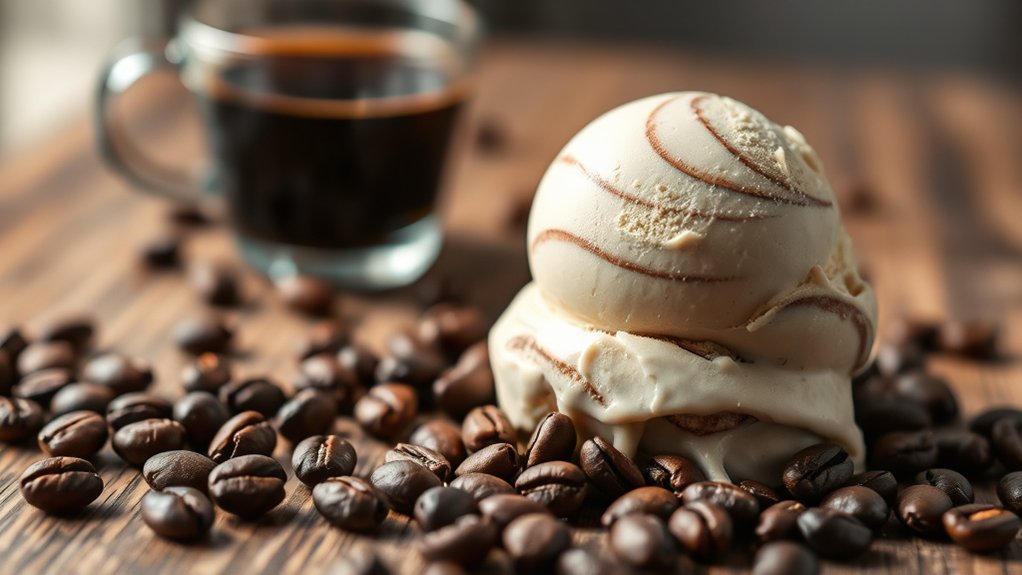
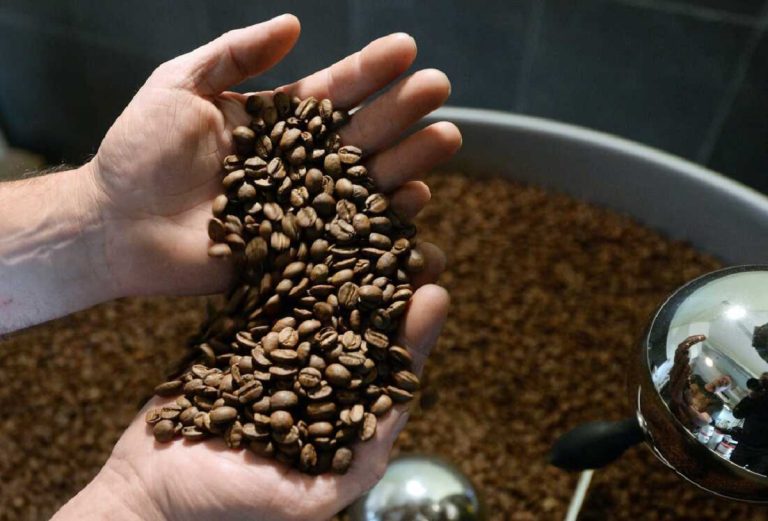
How does caffeine find its way into coffee ice cream? It primarily comes from the coffee bean, where caffeine naturally occurs. When manufacturers use brewed coffee, coffee extract, or ground coffee beans in the recipe, caffeine transfers during the flavor extraction process.
You should know that the caffeine content depends on the type and quantity of coffee-based ingredients added. Even natural or artificial flavorings derived from real coffee beans can contain caffeine because of this extraction.
While every coffee ice cream contains some caffeine traces, the actual amount varies considerably.
Some brands use decaffeinated coffee or flavorings, which reduces caffeine to minimal or undetectable levels. Understanding how caffeine enters through coffee bean-derived components helps you assess your caffeine intake from coffee ice cream accurately.
Does Coffee Ice Cream Always Contain Real Coffee?
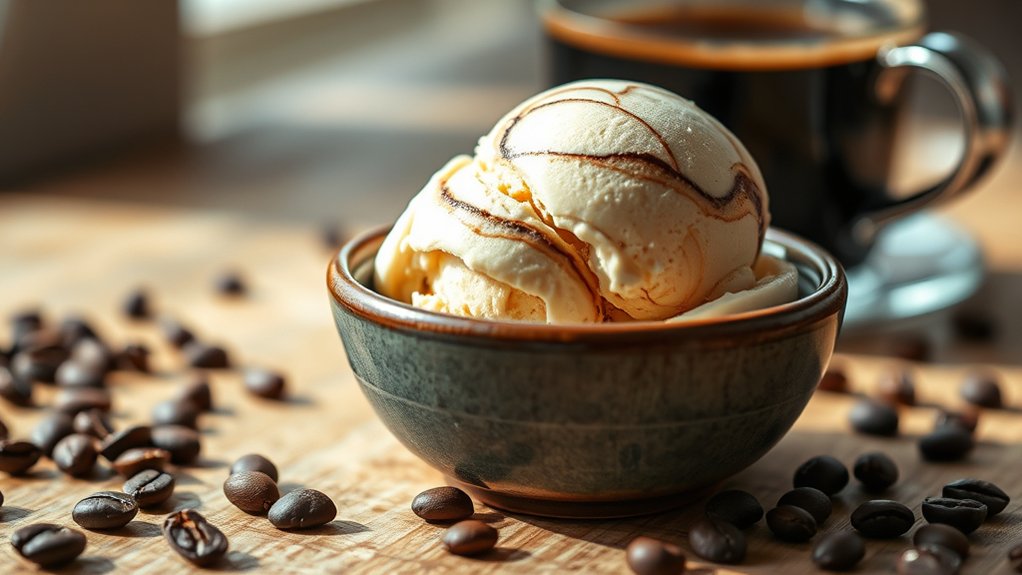
Why do some coffee ice creams contain real coffee while others don’t? It mainly depends on the ingredients and the desired ice cream flavors. Here’s what you need to know:
Many coffee ice creams use real coffee through coffee brewing or coffee extracts. This adds an authentic taste and a bit of caffeine. It’s what gives those ice creams their true coffee kick.
Real coffee or extracts give coffee ice cream its authentic taste and a true caffeine kick.
Some recipes even include whole or ground coffee beans. This bumps up the caffeine content and adds more flavor complexity. It’s a way to make the coffee flavor richer and more intense.
Other brands choose artificial coffee flavoring instead. It mimics the taste but doesn’t have any caffeine. This option is often cheaper and easier to work with.
Which one gets used usually comes down to cost, the target market, and what the makers want to achieve with the flavor. So, whether your coffee ice cream has real coffee or not depends on all these factors.
How Much Caffeine Is Typically in Coffee Ice Cream?
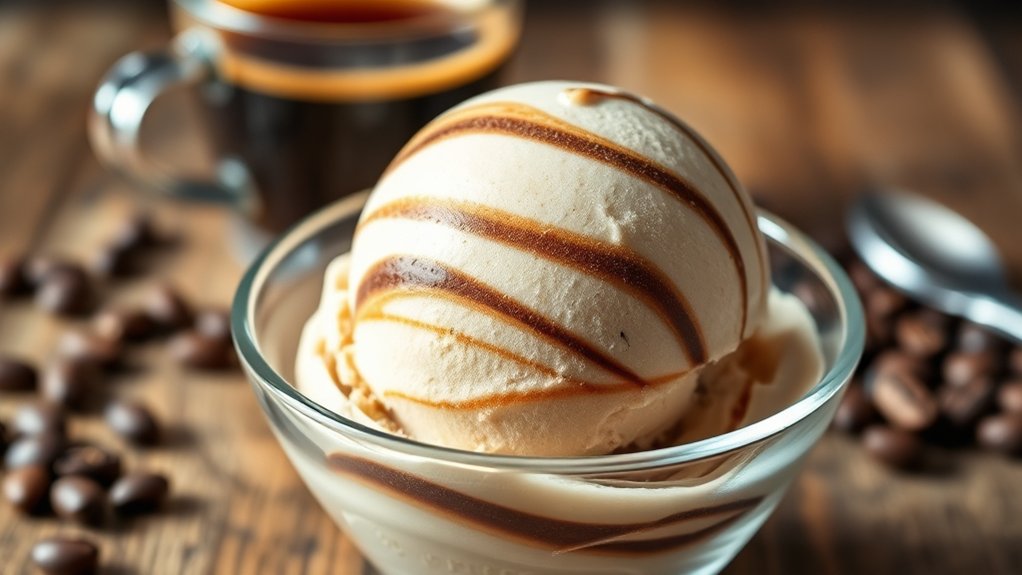
Although caffeine levels vary widely among different brands and recipes, you can generally expect a half-cup serving of coffee ice cream to contain between 19 and 45 milligrams of caffeine. This range reflects variations in flavor combinations and ingredient sourcing, with some brands using stronger brewed coffee or espresso, while others rely on decaffeinated coffee or flavor extracts.
For instance, Häagen-Dazs typically contains about 21.6 mg per serving, whereas Ben & Jerry’s coffee varieties can reach around 45 mg.
Homemade versions often have higher caffeine, sometimes exceeding 75 mg per half-cup, depending on coffee strength.
Understanding these factors helps you gauge caffeine intake accurately. It also highlights how ingredient sourcing and formulation choices influence the final caffeine content in your coffee ice cream.
Comparing Caffeine Levels Across Popular Coffee Ice Cream Brands
When comparing caffeine levels across popular coffee ice cream brands, you’ll find significant variation driven by their unique recipes and ingredient choices. Flavor variations and branding differences play a vital role in the caffeine content you get per serving.
Consider these examples:
Consider these examples to see how caffeine content varies widely among popular coffee ice cream brands.
Häagen-Dazs offers about 21.6 mg of caffeine per half-cup, with 75.6 mg in a full 14 oz carton.
Ben & Jerry’s Coffee BuzzBuzzBuzz delivers roughly 45 mg per half-cup and 180 mg per pint.
Talenti’s Coffee Chocolate Chip and Coffee Toffee flavors contain the lowest caffeine, between 5-8 mg per half-cup.
Other brands like Graeters Vienna Coffee can reach 50-100 mg per serving.
So, this data really shows how flavor variations and branding differences impact caffeine levels in coffee ice cream.
It’s interesting to see how much these factors can change what you’re actually getting in a serving.
How Caffeine in Coffee Ice Cream Compares to Brewed Coffee
You’ll find that an 8-ounce serving of coffee ice cream contains only about 30 to 45 mg of caffeine, which is much less than the 95 to 165 mg you’d usually get in the same amount of brewed coffee.
That’s because coffee ice cream has a lower concentration of coffee extract compared to pure brewed coffee. So, when you think about it, the serving size really plays a role in how much caffeine you take in.
This is why coffee ice cream tends to give you a gentler caffeine kick than a cup of brewed coffee.
Caffeine Levels Comparison
Since coffee ice cream contains caffeine, it’s important to understand how its levels compare to brewed coffee. Here’s a clear breakdown:
A half-cup serving of coffee ice cream contains 20 to 45 mg of caffeine, which is markedly less than an 8-ounce brewed coffee’s 95+ mg. Häagen-Dazs offers around 21.6 mg per half-cup, while Ben & Jerry’s can reach 45 mg, showing variability in flavor combinations and caffeine content.
Brewed coffee typically provides 2 to 10 times more caffeine than coffee ice cream, so it affects stimulant effects more strongly. Brand transparency varies as well, so checking labels helps you gauge caffeine content accurately.
Understanding these differences helps you choose between the subtle caffeine kick of coffee ice cream and the stronger alertness from brewed coffee. It’s all about what kind of boost you want!
Serving Size Impact
How does serving size influence your caffeine intake from coffee ice cream compared to brewed coffee? An 8-ounce serving of coffee ice cream delivers about 30-45 mg of caffeine, which is less than half the 95 mg found in an 8-ounce brewed coffee.
Since caffeine content scales with serving size, smaller portions of coffee ice cream, with its rich flavor combinations and creamy textures, offer a subtle caffeine boost similar to decaf coffee.
For example, a pint of Häagen-Dazs coffee ice cream (four half-cup servings) contains roughly 70 mg of caffeine. That’s far below the 380 mg in a 12-ounce brewed coffee.
Adjusting your serving size allows precise control over caffeine intake.
This makes coffee ice cream a lower-caffeine alternative that balances indulgence with moderate caffeine consumption. So, whether you want just a little caffeine or a more noticeable perk, tweaking your portion size can help you enjoy both flavor and caffeine in the way that suits you best.
How Caffeine in Coffee Ice Cream Affects Sleep and Alertness
You mightn’t notice much difference in alertness after having some coffee ice cream, since it doesn’t have as much caffeine as a cup of brewed coffee.
But, if you’re sensitive to caffeine or eat it late at night, even a little can mess with your sleep.
Caffeine’s Impact On Sleep
What effect does the caffeine in coffee ice cream have on your sleep? While its caffeine dose is lower than brewed coffee, it can still influence your rest because of how caffeine is metabolized and its half-life of 3 to 5 hours.
Here’s how it impacts you: Coffee ice cream’s caffeine temporarily boosts alertness but may delay sleep onset if eaten near bedtime. Caffeine metabolism varies from person to person, but residual caffeine can disrupt your sleep cycle for several hours.
If you have trouble sleeping, it’s best to avoid coffee-flavored ice cream in the evening to prevent sleep disruption. Since the caffeine content is lower, it’s less likely to cause full-blown insomnia, but it still poses a risk depending on timing and your sensitivity.
Understanding these factors helps you manage your caffeine intake and protect your sleep quality more effectively. It’s all about timing and knowing how your body reacts.
Individual Sensitivity Variations
Although coffee ice cream contains less caffeine than brewed coffee, its effects on sleep and alertness can vary a lot depending on how sensitive you are. If you’re sensitive, even 20-30 mg of caffeine per serving might cause jitters, insomnia, or a faster heart rate, especially later in the day.
Your age, genetics, and how much caffeine you usually consume all play a role in how strongly caffeine affects you. People who drink caffeine regularly often build up a tolerance, which lessens these effects.
When picking coffee ice cream, think about flavor pairings that suit your caffeine sensitivity. That way, you can enjoy the treat without feeling overstimulated.
Also, choosing brands that focus on sustainable packaging fits well with mindful consumption. It supports both your health and your environmental values.
Knowing how caffeine affects you personally helps you find the right balance between enjoying your ice cream and maintaining good sleep and alertness.
Managing Evening Consumption
Understanding your caffeine sensitivity sets the stage for managing when and how you consume coffee ice cream, especially in the evening.
While caffeine content is lower than brewed coffee, its 3-5 hour effect can disrupt sleep for sensitive individuals.
To manage evening consumption effectively, limit portions to under half a cup to avoid excessive caffeine intake.
Also, avoid eating coffee ice cream within 3-5 hours before bedtime.
You might want to explore flavor combinations with decaf or non-caffeinated ice cream to reduce caffeine load without sacrificing taste.
And don’t forget to follow proper storage tips to maintain flavor quality, so you can enjoy the ice cream without rushing.
Ingredients That Influence Caffeine Levels in Coffee Ice Cream
Since the caffeine content in coffee ice cream varies widely, it’s essential to look at the specific ingredients that contribute to its levels. The type and amount of coffee components like brewed coffee, espresso concentrates, coffee extract, or ground coffee beans directly influence how much caffeine you get.
Flavor differences come from where the ingredients are sourced. Ice creams with whole or broken coffee beans usually have much more caffeine than those using artificial or decaffeinated extracts.
Also, some producers add extra caffeine to boost flavor or give an energizing effect, which raises the caffeine content even more. Knowing these ingredient differences helps you guess how much caffeine you might get from different brands.
Why Some Coffee Ice Creams Are Caffeine-Free
When you choose coffee ice cream, you might assume it always contains caffeine, but that’s not the case. Some brands and homemade recipes use decaffeinated coffee or coffee extracts with minimal caffeine. This happens because of specific flavor variations and ingredient sourcing.
Here’s why some coffee ice creams are caffeine-free:
- Producers select decaf coffee beans or extracts to reduce caffeine content.
- Ingredient sourcing prioritizes naturally caffeine-free coffee substitutes for flavor.
- Recipes adjust coffee extract quantity to control caffeine levels precisely.
- Labeling requirements ensure transparency about caffeine presence or absence.
Understanding these factors helps you identify caffeine-free coffee ice creams. Not all coffee flavors equal caffeine content. It really depends on how manufacturers balance taste and ingredient choices.
Can Coffee Ice Cream Replace Your Morning Coffee for Caffeine?
You won’t get the same caffeine kick from coffee ice cream as you do from your morning brew. That’s because its caffeine content can vary a lot—usually it’s much lower than what you find in a standard cup of coffee.
So, if you’re hoping to get the same energy boost, you’d have to eat several servings, which just isn’t practical.
Even if you make it at home with brewed coffee, the caffeine levels still don’t quite measure up to a regular cup.
Caffeine Levels Compared
Although coffee ice cream contains caffeine, its levels are generally much lower than those in a standard cup of brewed coffee. You should consider these points when comparing caffeine levels:
- A typical serving of coffee ice cream has 20-45 mg of caffeine, while an 8 oz cup of brewed coffee contains about 95 mg.
- Flavor variations and ingredient sourcing cause caffeine content to range from as low as 5 mg to as high as 80 mg per half-cup.
- Homemade coffee ice cream made with espresso can increase caffeine but rarely reaches coffee’s caffeine concentration.
Because of the lower caffeine levels, coffee ice cream isn’t a reliable substitute if you need the same stimulant effect as your morning coffee.
This evidence shows coffee ice cream can’t fully replace brewed coffee for caffeine intake.
Energy Boost Potential
Since coffee ice cream contains considerably less caffeine per serving than brewed coffee, it can’t fully replace your morning cup for a reliable energy boost. A half-cup serving offers only 20-45 mg of caffeine, compared to about 95 mg in a standard coffee cup.
While eating a pint approaches the caffeine in one to two coffees, relying on that quantity daily isn’t practical. However, coffee ice cream excels in flavor pairing and texture enhancement, providing a pleasurable caffeine supplement rather than a primary stimulant.
Its creamy texture combined with coffee’s rich flavor creates an enjoyable alternative that can complement your caffeine intake. So, while it won’t deliver the same alertness as brewed coffee, coffee ice cream can add a satisfying twist to your morning routine without replacing your usual energy source.
Portion Size Impact
While coffee ice cream offers a flavorful caffeine supplement, its impact on your overall caffeine intake depends heavily on portion size. You should consider these key points:
- A half-cup serving contains about 20-45 mg of caffeine, much less than a standard coffee.
- Eating a whole pint provides roughly 180 mg, close to two cups of brewed coffee.
Despite flavor pairing and texture variation enhancing enjoyment, coffee ice cream alone won’t match your morning coffee’s caffeine kick unless consumed in impractically large amounts.
Larger portions increase caffeine proportionally but still fall short compared to a typical coffee mug.
How to Control Caffeine When Making Homemade Coffee Ice Cream
When you want to control caffeine levels in your homemade coffee ice cream, choosing the right coffee ingredients is essential. Using decaffeinated coffee or coffee extract allows you to considerably reduce or eliminate caffeine content. Brewed coffee made with decaf beans offers authentic flavor while keeping caffeine low.
Adjusting ingredient quantities directly influences caffeine levels. Using less coffee or concentrate means less caffeine in your ice cream. You can experiment with flavor variations by substituting regular coffee with decaf Arabica or caffeine-free alternatives without compromising taste.
Homemade recipes give you the flexibility to calculate caffeine intake accurately, so you get precise control. Ingredient substitutions and measured adjustments help you tailor caffeine content to your preference.
That way, you balance flavor and stimulant levels effectively. This thoughtful approach guarantees both an enjoyable taste and controlled caffeine in your ice cream. It’s all about finding the right mix that works for you.
Tips for Choosing Coffee Ice Cream by Caffeine Content
Although coffee ice cream offers a delightful treat, you’ll want to assess its caffeine content carefully to match your tolerance and preferences. Conducting a nutritional analysis helps you make informed choices and optimize flavor pairing with your dessert.
- Check the ingredient list for coffee or espresso extracts. These often signal higher caffeine levels.
- Review brand disclosures. Premium brands like Häagen-Dazs often list caffeine content, which helps you control your intake more precisely.
- Opt for decaffeinated or caffeine-free varieties to considerably reduce your caffeine consumption.
- Consider portion size, as caffeine can range from 5 to 23 mg per half-cup serving. This influences your overall caffeine load.
Taking a little time to check these details can make your coffee ice cream experience even better. That way, you enjoy the flavor without any caffeine surprises!
Who Should Be Careful About Caffeine in Coffee Ice Cream?
Understanding the caffeine content in coffee ice cream helps you make informed choices, but it’s also important to know who should be careful. If you’re sensitive to caffeine because of pregnancy, anxiety, sleep problems, or heart conditions, you should watch your intake closely. Even small amounts from the coffee flavor can cause jitters or mess with your sleep.
Young kids and teenagers have a lower tolerance for caffeine, so they should limit or avoid coffee ice cream.
Also, since dairy affects how caffeine is absorbed, you might feel different effects depending on the product.
If you’re trying to cut back on caffeine for health reasons, always check the labels. Caffeine levels can vary a lot between brands. Paying attention to these details helps you enjoy coffee ice cream safely without risking your health.
Frequently Asked Questions
Does Caffeine in Coffee Ice Cream Affect Children Differently?
Yes, children’s sensitivity to caffeine absorption means coffee ice cream can affect them more strongly, causing nervousness or sleep issues.
You should monitor intake carefully, as even small amounts impact their developing systems differently than adults. It’s important to keep an eye on how much they consume to avoid any unwanted effects.
Can Caffeine in Coffee Ice Cream Cause Allergies?
“Better safe than sorry.” You might experience allergy symptoms if you have caffeine sensitivity, but true caffeine allergies are rare.
Most reactions to coffee ice cream stem from coffee proteins or dairy, not caffeine itself. So, if you’re worried about caffeine causing an allergy, it’s probably something else in the ice cream. Just something to keep in mind!
How Does Caffeine in Coffee Ice Cream Interact With Medications?
Caffeine absorption from coffee ice cream can change how your medication works by causing metabolic interactions. It can affect liver enzymes and the levels of drugs in your body.
This might lead to less effective treatment or unwanted side effects. So, it’s always a good idea to check with your healthcare provider.
They can help you avoid any problems and make sure your medications do their job properly.
Is Caffeine in Coffee Ice Cream Safe During Pregnancy?
You might think coffee ice cream’s caffeine is harmless during pregnancy, but pregnancy safety means you need to watch your caffeine intake carefully.
Usually, moderate servings are within safe limits. But going over those limits could cause problems.
It’s always best to check with your healthcare provider first. That way, you can enjoy your treat without worry.
Does Freezing Coffee Ice Cream Reduce Its Caffeine Content?
Freezing coffee ice cream doesn’t reduce its caffeine content; caffeine remains chemically stable. You’ll notice that the flavor stays pretty much the same, but the texture can change a bit.
If you want to lower the caffeine, the only way is to use decaffeinated ingredients. Just freezing the ice cream won’t make the caffeine any less potent. So, freezing keeps the caffeine locked in but might mess with how it feels when you eat it.
Conclusion
Think of coffee ice cream as a gentle sunrise, offering a mild caffeine glow rather than the sharp jolt of brewed coffee. While it usually contains some caffeine from real coffee or extracts, the levels are modest and vary by brand.
If you want a caffeine boost, it won’t replace your morning cup, but it’s a tasty way to enjoy caffeine with control. Stay mindful of your intake, especially if you’re sensitive or avoiding caffeine altogether.