Is A Chai Latte Coffee – Differences Explained
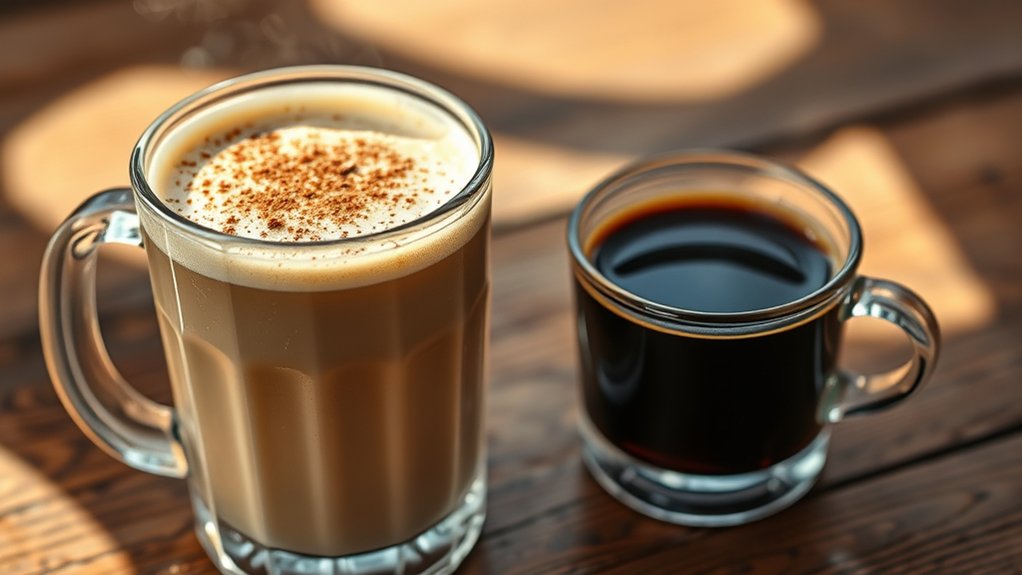
You might be wondering if a chai latte is coffee, but it’s actually a spiced black tea mixed with steamed milk, not brewed coffee beans. It offers a smoother, creamier flavor with less caffeine, about half that of a typical coffee.
While both energize you, chai’s blend of warming spices sets it apart from coffee’s robust bitterness. If you’re curious about their origins, ingredients, and which suits your taste, there’s plenty more to explore.
Chai Latte: Definition and Preparation

What exactly makes a chai latte so comforting and flavorful? It’s the artful spice blending combined with creamy milk steaming. You start by infusing black tea with a fragrant mix of cinnamon, cardamom, ginger, cloves, and black pepper. Each spice adds warmth and depth.
Whether you use a pre-made chai concentrate or craft your own blend, this spice base is key. Then, the magic continues as you steam milk until velvety and frothy, creating that smooth, milky texture that defines a chai latte.
The steaming process not only heats the milk but enhances its sweetness and creaminess. This perfectly balances the bold spices.
Served hot or iced, this harmonious blend makes every sip a soothing, flavorful experience.
Key Differences Between Coffee and Tea
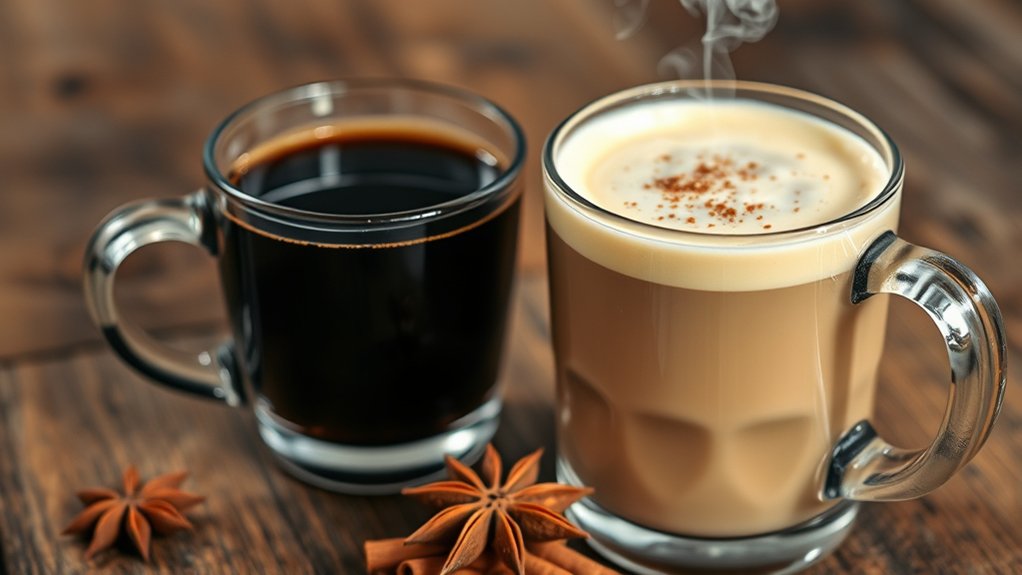
While a chai latte charms you with its rich spices and creamy texture, coffee offers a distinctly different experience rooted in its unique origins and preparation. Coffee cultivation involves harvesting and roasting coffee beans, yielding a robust, bitter flavor and higher caffeine content, about 95 mg per cup.
In contrast, tea harvesting gathers leaves from the Camellia sinensis plant, producing a gentler taste that ranges from floral to earthy, with caffeine levels typically between 20-60 mg.
Brewing methods also set them apart: coffee is brewed through drip or espresso techniques, while tea relies on steeping leaves in hot water.
These differences affect not just flavor and caffeine but also health impact, with coffee boosting alertness and tea providing antioxidants and calming effects. It’s pretty interesting how both beverages offer unique perks, depending on what you’re in the mood for.
Origins and Cultural Background of Chai Latte and Coffee
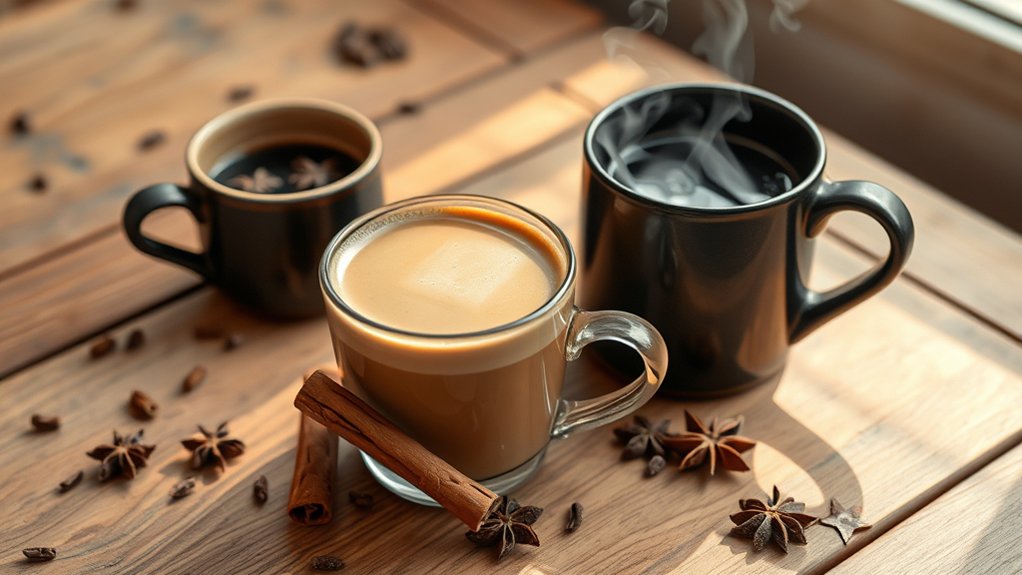
Because chai latte and coffee both have rich histories, understanding their origins reveals a lot about their cultural significance today. Chai latte stems from traditional Indian masala chai, enjoyed for over 5,000 years, while coffee’s roots trace back to 9th-century Ethiopia. These historical influences shape their distinct identities.
Chai’s blend of brewed black tea and spices reflects India’s vibrant cultural rituals, often prepared by street vendors or at home. In contrast, coffee’s journey highlights its association with Middle Eastern and European coffeehouses from the 15th century onward.
When chai latte entered Western culture in the 1990s, it fused Indian spice traditions with modern coffeehouse trends, sparking global popularity.
Key Ingredients in Chai Latte vs Coffee Drinks
When you compare chai lattes and coffee drinks, their core ingredients immediately set them apart. Chai lattes rely on spiced black tea blended with steamed milk, while coffee drinks are brewed from roasted beans or espresso shots. Here’s what you’ll find:
Chai lattes blend spiced black tea with steamed milk, while coffee drinks are brewed from roasted beans or espresso shots.
- Base Ingredient: Chai uses black tea; coffee drinks use roasted coffee beans or espresso.
- Spice Combinations: Chai features warming spices like cinnamon, cardamom, and ginger, creating a sweet, aromatic profile absent in coffee.
- Serving Temperatures & Texture: Both are served hot, but chai lattes get their creamy texture from steamed milk, contrasting with coffee’s varying milk usage or black form.
Understanding these key ingredients helps you appreciate how chai lattes and coffee offer distinctly different flavor experiences. It’s pretty cool how the basics can shape such unique drinks, right?
Caffeine Content: Chai Latte Compared to Coffee
You’ll notice that a typical chai latte has about half the caffeine of a standard cup of coffee. So, it’s kind of a gentler pick-me-up.
But here’s the twist—if you add an espresso shot, like in a dirty chai, the caffeine can actually surpass what you get from regular coffee.
Knowing this difference helps you pick the right caffeine boost for your day.
Caffeine Levels Comparison
Although chai lattes and coffee both offer a caffeine boost, their caffeine content differs considerably. If you’re mindful of caffeine sensitivity or exploring herbal alternatives, understanding these differences can help you choose wisely.
Here’s a quick caffeine comparison:
- A typical 8 oz chai latte contains about 48 mg of caffeine, roughly half that of the same size drip coffee.
- Coffee’s caffeine content usually ranges around 95 mg per 8 oz cup, making it a stronger pick-me-up.
- Decaffeinated chai lattes and teas offer less than 5 mg, ideal if you want flavor without much caffeine.
Impact of Espresso Addition
If you’re looking to boost the caffeine kick of your chai latte, adding espresso is a popular way to do it. The espresso impact on caffeine content is significant.
While a standard chai latte contains about 40-50 mg of caffeine per 8 oz, a single shot of espresso can raise this to around 100-120 mg.
This caffeine boost transforms your chai latte into a “dirty chai,” delivering a stronger, more coffee-like stimulant effect.
Depending on how many espresso shots you add, your chai latte can easily surpass the caffeine level of a regular brewed coffee.
Flavor Profiles of Chai Latte and Coffee-Based Lattes
When you savor a chai latte, you’ll notice how the warm spices like cinnamon, cardamom, and ginger blend seamlessly with steamed milk to create a mellow, fragrant experience. The spice aroma dominates, delivering an herbal, less bitter profile compared to coffee.
The milk texture adds creaminess that softens the spices, making each sip smooth and comforting.
In contrast, coffee-based lattes emphasize bold, roasted espresso flavors balanced by sweet syrups and milk. Here’s what sets them apart:
- Chai lattes offer a naturally sweet, aromatic spice aroma.
- Coffee lattes boast an intense, robust coffee flavor.
- Both rely on steamed milk, but chai focuses on gentle creaminess while coffee highlights a richer milk texture.
Understanding these differences helps you appreciate each latte’s unique flavor journey.
How Brewing Changes Chai Latte and Coffee
Because brewing methods shape every aspect of your chai latte or coffee, understanding their differences can transform how you prepare and enjoy these drinks.
For chai, spice infusion is key. You simmer spices and tea leaves together, extracting deep, earthy flavors. This method relies on precise brewing temperature and timing to balance intensity without bitterness.
When making a chai latte, you add steamed, frothed milk after brewing, creating a creamy, velvety texture and softer taste.
Coffee brewing, in contrast, often involves higher temperatures and quick extraction, emphasizing bold, robust flavors. The milk in coffee lattes is typically steamed separately, affecting texture and color differently than in chai lattes.
These brewing nuances define each drink’s flavor, appearance, and mouthfeel. So, your choice of method is essential to the final experience.
Popular Chai Latte Variations and Coffee-Chai Hybrids
Though traditional chai lattes hold a timeless appeal, exploring popular variations and coffee-chai hybrids lets you tailor your drink to suit any mood or taste. You can enjoy beverage customization through signature spice blends or different milk options like almond or oat milk.
Here are three popular options to try:
- A “dirty chai” pairs chai’s aromatic spices with a shot of espresso, boosting caffeine and flavor complexity.
- Try iced chai lattes or those flavored with vanilla or caramel for an invigorating twist.
- For a bold experience, some blends include coffee extracts or even amaretto for an alcohol-infused chai hybrid.
These variations showcase how flexible chai lattes are, letting you customize every sip to your liking.
Health Impacts of Sugar, Milk, and Caffeine
When you enjoy a chai latte, the sugar, milk, and caffeine all play a part in how it affects your health.
Too much sugar can increase your risk of weight gain and blood sugar problems.
On the other hand, milk adds calories but also provides some important nutrients, so it’s good to keep that balance in mind.
And then there’s caffeine, which can give you a boost of energy but might also impact your sleep.
Knowing how each of these ingredients affects you can help you make smarter choices when sipping your favorite drink.
Sugar Content Concerns
How much sugar is really in your chai latte? Many commercial options pack a surprising punch, often exceeding daily recommended sugar limits. Here’s what you should know:
Some chai lattes contain up to 30 grams of sugar per serving, about the same as a candy bar. Adding flavored syrups or powders can spike sugar levels and increase health risks.
Excess sugar intake links to obesity, type 2 diabetes, and heart disease.
To manage these risks, focus on sugar reduction by choosing homemade chai lattes or those sweetened with natural sweeteners like honey or stevia. This way, you enjoy the rich flavors without compromising your health.
Being mindful of sugar content helps you savor your chai latte while keeping your wellness goals on track.
Milk’s Nutritional Role
What role does the milk in your chai latte play beyond flavor? Milk nutrition is essential, as it supplies calcium, vitamin D, and protein, all vital for supporting your bone health and muscle function. These nutrients help maintain strong bones, which is especially important if you enjoy chai lattes regularly.
Choosing plant-based alternatives like almond or soy milk can change this nutritional balance. They often reduce saturated fats but also alter vitamin content. So, if you switch, keep in mind the differences in nutrition.
While the creamy texture of milk enriches your chai, it’s good to remember that the milk’s nutritional benefits contribute positively to your overall diet.
Next time you sip your chai latte, you’re not just enjoying taste, you’re also nourishing your body’s structural foundation through milk nutrition.
Caffeine Effects Comparison
Beyond the nutritional benefits milk adds to your chai latte, the combination of caffeine, sugar, and milk considerably shapes how the drink affects your body. When comparing its caffeine effects, keep these points in mind:
Caffeine absorption in a chai latte is slower due to milk, which can mellow stimulant effects compared to espresso.
Added sugar may cause blood sugar spikes and crashes, influencing your energy and mood unpredictably.
Excessive sugar and saturated fats from milk can increase risks of weight gain, insulin resistance, and heart issues.
Balancing these factors helps you enjoy steady energy without the jitters or crashes typical of high-caffeine or sugary drinks.
Understanding this interplay lets you make smarter choices for your health and energy management. So, it’s really about knowing what’s in your cup and how it works with your body.
The Growing Popularity of Chai Latte in Coffee Shops
Why has the chai latte become a staple in coffee shops around the world? You’ll find it’s all about the unique spice combinations that offer a flavorful, aromatic alternative to traditional coffee.
Since the 1990s, Western consumers have embraced chai latte’s milder profile, prompting coffee shops to craft their own versions.
Since the 1990s, chai latte’s gentle flavors have inspired coffee shops to create unique, personalized blends.
These cultural adaptations blend classic spices with syrups or even alcohol infusions, appealing to a wide range of tastes.
As specialty and flavored drinks grow in demand, chai latte menus expand globally, becoming as common as espresso-based options.
When you visit your local café, expect innovative twists designed to satisfy health-conscious and flavor-seeking customers alike.
It just goes to show how chai latte’s popularity keeps growing in the ever-evolving coffee culture.
Choosing Between Chai Latte and Coffee: What Suits You?
When deciding between a chai latte and coffee, your choice depends largely on your flavor preferences and caffeine needs. Consider these three factors:
- Flavor pairing: If you enjoy aromatic spices and creamy textures, chai latte’s blend of cinnamon, cardamom, and milk offers a soothing alternative to coffee’s bold, bitter notes.
- Caffeine content: Coffee delivers a stronger caffeine kick, perfect if you need a sharp energy boost. Chai latte provides moderate caffeine, especially if made with decaf or herbal tea.
- Serving temperature: Both drinks are typically served hot, but chai latte’s creamy warmth feels softer on the palate. It’s ideal for those who prefer milder, comforting beverages.
Future Trends in Chai Latte and Coffee Drinks
You’ll start to see chai lattes changing up with bold new flavors. Think exotic spices and a variety of plant-based milks that really match your taste and health goals.
Coffee shops and brands are paying attention, too. They’re responding to what you want—like drinks with less sugar and added functional ingredients such as adaptogens.
As these trends keep growing, chai-based drinks are going to play a bigger part in the worldwide market for specialty beverages. It’s an exciting time if you love trying new and healthier options!
Flavor Innovation Trends
As consumers become more adventurous and health-conscious, chai lattes and coffee drinks are evolving with bold new flavors and ingredients. You’ll notice innovative spice combinations featuring exotic additions like saffron, turmeric, and lemongrass that bring global flair to your cup.
Plus, beverage presentation is stepping up, making each drink a visually enticing experience.
Expect these key trends: customizable spice intensities and flavor boosters let you tailor your chai latte just the way you like it. Alternative sweeteners such as agave and plant-based syrups offer new, natural taste profiles.
Ready-to-drink chai lattes with inventive blends cater to your on-the-go lifestyle without sacrificing quality.
These flavor innovations promise to transform your chai and coffee experience with excitement and personalization. It’s all about making your drink uniquely yours while enjoying some seriously tasty twists.
Health-Conscious Formulations
Although chai lattes have long been enjoyed for their rich flavors, health-conscious formulations are reshaping how these drinks are crafted. You’ll find future chai lattes embracing herbal infusions and innovative flavor pairings that not only delight your palate but also support your well-being.
Expect reduced sugar or natural sweeteners to replace traditional sweeteners, catering to those mindful of sugar intake. Plant-based milks like oat or almond will become standard, enhancing both taste and nutrition.
Additionally, functional ingredients such as adaptogens, antioxidants, and probiotics are making their way into recipes, boosting health benefits. Cafes are also offering customizable options like decaf, reduced caffeine, or alternative spice blends, so you can tailor your chai latte to fit your lifestyle while enjoying every sip.
Market Growth Dynamics
Because consumers crave bold, aromatic beverages, the global chai latte market is booming. This growth brings exciting opportunities for coffee shops and producers alike.
You’ll notice increased market penetration as chai lattes become staples in Western cafés, especially among younger consumers. These customers tend to prefer innovative, flavorful drinks.
Future trends include expanding adoption of plant-based milks and reduced sugar options to meet health-conscious demands. There’s also growing diversity in flavor profiles that appeal to adventurous palates.
Specialty coffee shops are integrating chai lattes alongside traditional coffee offerings, which helps boost overall sales. It’s a win-win for both businesses and customers looking for something new.
Frequently Asked Questions
Can I Make a Chai Latte at Home Without Special Equipment?
You can easily make a chai latte at home without special equipment by tea brewing and spice blending. Just steep your chai spices and tea, then mix with warmed milk. No fancy tools needed for this cozy, flavorful treat.
It’s super simple and perfect for a relaxing moment at home. Plus, you can adjust the spices to your taste. Give it a try and enjoy your homemade chai latte!
What Types of Milk Work Best in Chai Lattes?
You’ll find milk alternatives like oat, almond, or coconut work best in chai lattes, offering unique flavor enhancements. Oat milk’s sweetness and creaminess especially complement spices.
Trying different kinds is a fun way to discover your perfect balance and texture. Give them a go and see what you like best!
How Long Does a Chai Latte Stay Fresh After Preparation?
You want freshness, you want flavor. A chai latte’s shelf life lasts about 24 hours refrigerated. Store it airtight and avoid leaving it at room temperature beyond 2 hours.
Are Chai Lattes Suitable for People With Caffeine Sensitivity?
If you have caffeine sensitivity, chai lattes might not suit you due to their black tea or espresso content.
For better health considerations, opt for decaffeinated or herbal chai lattes to avoid unwanted caffeine effects.
It’s a simple swap that can make a big difference if you want to enjoy the flavor without the jitters.
Can Chai Lattes Be Made Vegan or Dairy-Free Easily?
Like swapping paint colors, you can easily make chai lattes vegan by using vegan milk options like almond or oat milk and dairy-free sweeteners such as maple syrup.
This way, you keep the rich, spicy flavor intact without any dairy compromise.
It’s a simple switch that doesn’t change the deliciousness at all.
Conclusion
Now that you know the differences between chai latte and coffee, which one suits your taste and lifestyle better? Whether you crave the spicy warmth of chai or the bold punch of coffee, both offer unique flavors and benefits.
As you explore these drinks, consider your caffeine needs, health goals, and flavor preferences. Embrace the variety, and don’t hesitate to switch it up. After all, your perfect cup is waiting to be discovered.