Does Mocha Have Coffee – Ingredients And Caffeine Facts
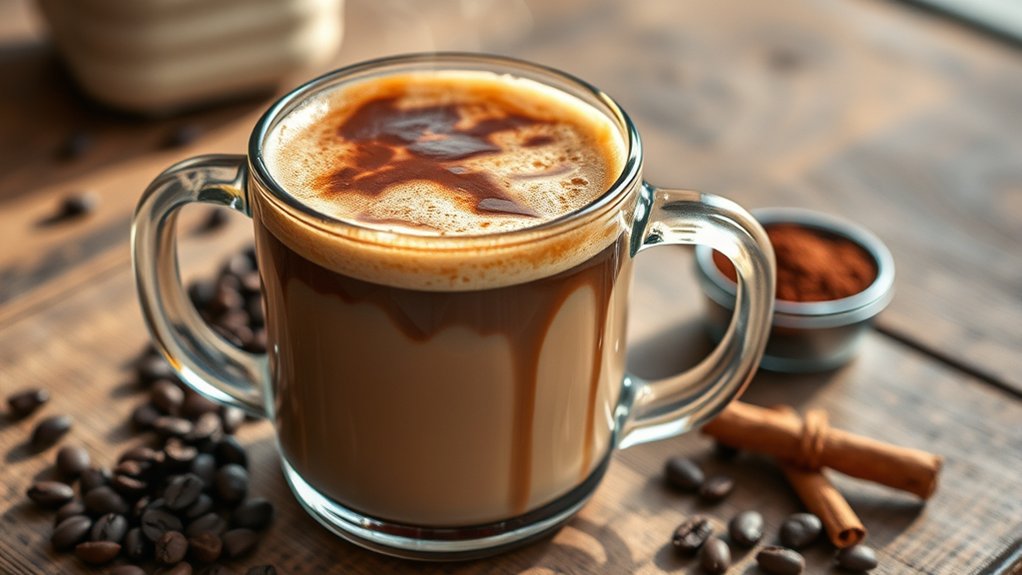
Yes, mocha contains real coffee through a shot of espresso, which provides about 63 mg of caffeine per serving. Its primary ingredients include espresso, steamed milk, and chocolate, either cocoa powder or melted chocolate. This combo balances bitterness with sweetness and creaminess.
The exact caffeine content varies slightly with the type of chocolate and how it’s prepared, ensuring a moderate caffeine level. Understanding how mocha’s components interact can give you deeper insights into its distinctive flavor and caffeine profile.
What Is a Mocha and How Is It Made
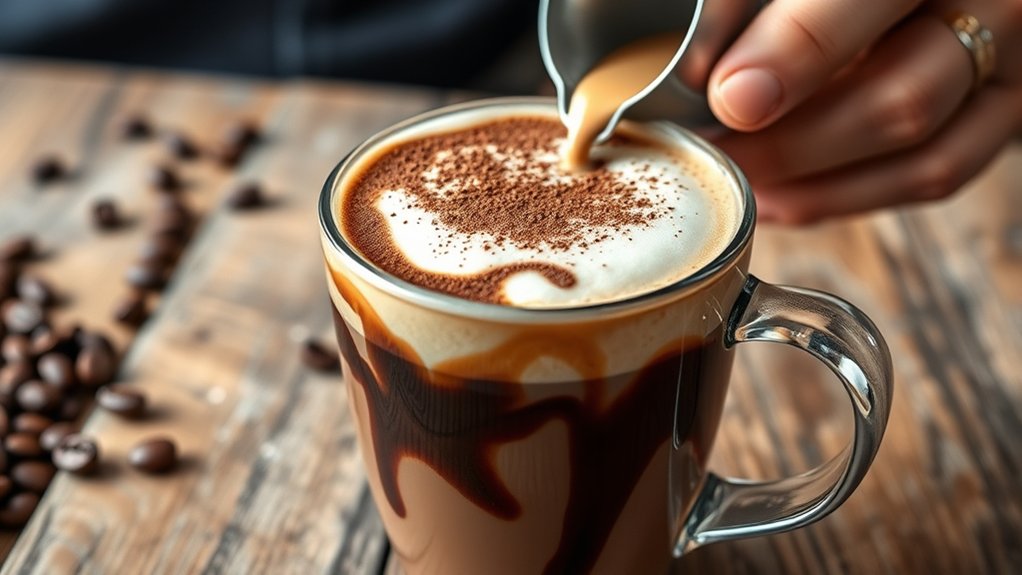
Although often mistaken for just a flavored coffee, a mocha is a carefully crafted beverage that combines espresso, steamed milk, and chocolate, typically in the form of cocoa powder or syrup. Understanding its historical origins helps you appreciate its complexity.
A mocha is more than flavored coffee—it’s a blend of espresso, steamed milk, and chocolate with rich historical roots.
The mocha traces back to the port city of Mocha in Yemen, renowned for its distinctive coffee beans.
Over time, cultural variations emerged, influencing preparation methods and flavor profiles worldwide. For instance, Italian versions emphasize rich, thick chocolate, while American adaptations may use sweeter syrups and whipped cream.
When you analyze these variations, you see how regional preferences and ingredient availability shape the mocha’s evolution.
What Ingredients Are in a Mocha?
Understanding the cultural and historical nuances of a mocha sets the stage for examining its specific components. When you analyze a mocha, you’ll find it comprises a precise blend of ingredients that define its character.
These components include:
- Espresso. The foundation relies on expertly executed coffee brewing, typically using finely ground Arabica beans to produce a concentrated shot with rich flavor and crema.
- Chocolate. Various chocolate varieties come into play, ranging from cocoa powder to melted dark or milk chocolate. This contributes sweetness and depth.
- Milk. Steamed milk adds creaminess and balances bitterness. It’s often topped with foam to enhance texture.
Each ingredient’s quality and ratio critically influence the mocha’s sensory profile. This reflects the interplay between coffee brewing precision and chocolate selection.
Does Mocha Contain Real Coffee or Just Chocolate?
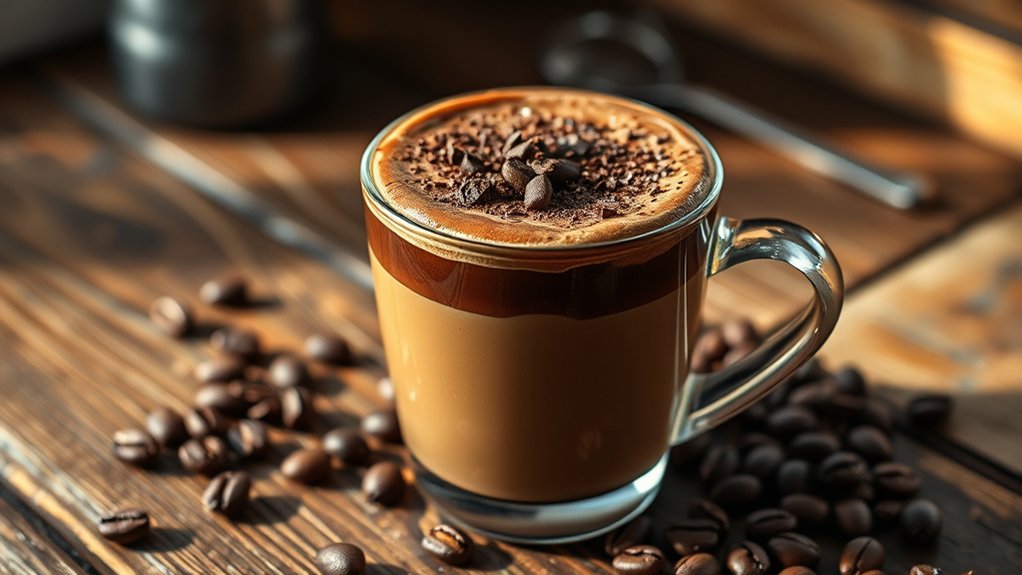
You’ll find that mocha is actually a blend of real coffee and chocolate, not just a chocolate-flavored drink. The main ingredient here is espresso, which gives mocha its strong coffee base.
When you think about how espresso mixes with chocolate, it really helps you get what mocha’s flavor is all about.
Mocha Coffee Composition
Because many people associate mocha with chocolate, you might wonder if it actually contains real coffee or is simply a chocolate-flavored drink.
Technically, mocha is a precise blend of espresso, steamed milk, and chocolate. It brings together both flavor pairing and presentation styles to achieve balance.
Here’s what defines mocha coffee composition:
- Espresso Base: Real mocha uses a shot of espresso, providing authentic coffee flavor and caffeine content.
- Chocolate Element: Typically in the form of cocoa powder or chocolate syrup, it complements the espresso without overpowering it.
- Milk Component: Steamed milk enhances texture and flavor integration, supporting the overall sensory experience.
Chocolate and Coffee Blend
Although mocha is often mistaken for a purely chocolate drink, it actually contains real coffee in the form of espresso. This combination leverages a strategic flavor pairing where the bitterness of coffee complements the sweetness of chocolate, creating a balanced sensory profile.
Brewing techniques matter here. The espresso extraction intensity influences how well these flavors meld. High-quality chocolate and precise espresso shots are essential to avoid overpowering one another.
| Component | Role | Impact on Flavor |
|---|---|---|
| Espresso | Coffee base | Adds bitterness, depth |
| Chocolate | Sweetener and flavor | Provides sweetness |
| Milk | Texture and balance | Smooths flavor profile |
| Brewing method | Extraction control | Determines strength |
| Temperature | Ideal mixing condition | Enhances aroma release |
Understanding this blend clarifies mocha’s authentic coffee content.
Espresso’s Role in Mocha
When you look closely at mocha’s composition, espresso emerges as the definitive coffee element that distinguishes it from a simple chocolate beverage. The espresso extraction process concentrates coffee’s essential compounds, ensuring mocha contains authentic coffee flavor rather than just chocolate notes.
Understanding espresso’s role involves three key factors:
- Espresso extraction: High-pressure extraction pulls out soluble solids, oils, and aromatic compounds from finely ground coffee, forming mocha’s coffee base.
- Coffee bean origin: The flavor profile of mocha depends on the selected coffee beans, with origin influencing acidity, bitterness, and aroma.
- Balance with chocolate: Proper integration of espresso and chocolate maintains mocha’s characteristic taste, emphasizing real coffee presence.
Can You Order a Mocha Without Coffee?
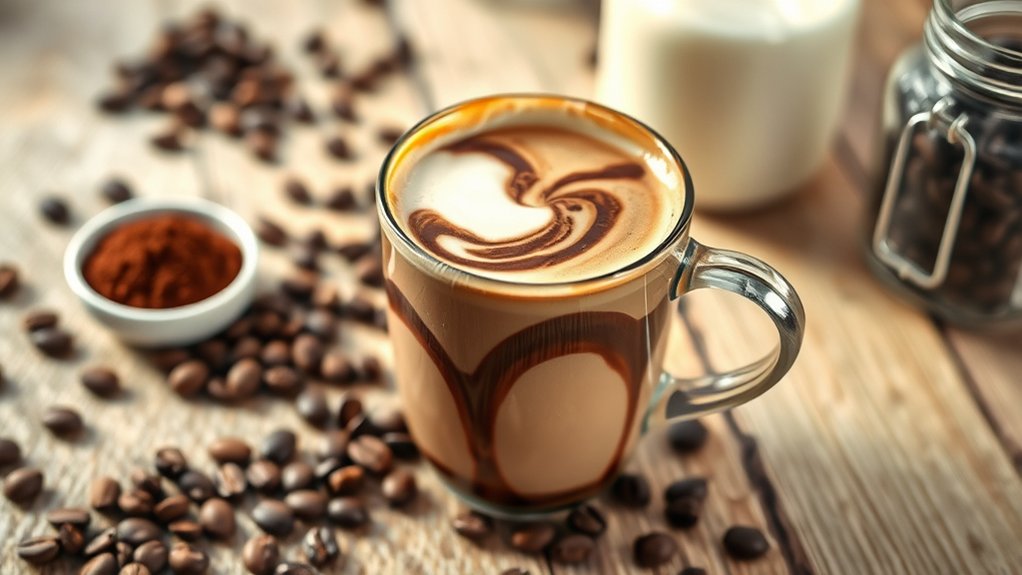
You can totally order a mocha without the traditional coffee by going for decaf options that still keep that classic flavor you love.
Or, if you want to skip coffee altogether, there are coffee-free mocha versions that use chocolate and milk to mimic the taste—no caffeine needed.
Knowing about these alternatives is a great way to enjoy your mocha while keeping your caffeine intake in check.
Decaf Mocha Options
Since many coffee drinkers are looking for lower caffeine alternatives, exploring decaf mocha options is a smart move. You can order a mocha made with decaffeinated coffee, which goes through special brewing processes to remove most of the caffeine while keeping the flavor intact.
When you’re thinking about decaf mocha, there are a few things to keep in mind.
- Decaf Coffee Quality: The way the coffee is brewed affects both the taste and how much caffeine is left. So, it’s a good idea to pick brands that have reliable decaffeination methods.
- Chocolate Component: The cocoa solids in mocha add only a tiny bit of caffeine. This means most of the caffeine reduction comes from using decaf coffee.
- Frozen Desserts Integration: Some frozen desserts use mocha flavoring made with decaf coffee extracts. This gives you tasty, low-caffeine options in dessert form.
Coffee-Free Mocha Alternatives
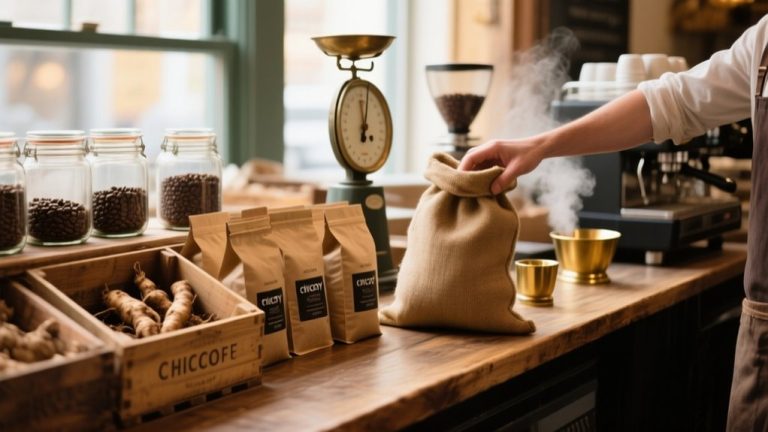
Although traditional mochas rely on espresso as a base, coffee-free mocha alternatives have emerged to accommodate those avoiding caffeine or coffee altogether. You can opt for tea infusions, such as roasted barley or chicory blends, which mimic the roasted profile of coffee without caffeine.
Herbal remedies like carob powder offer a naturally sweet, chocolate-like flavor, serving as an effective substitute for cocoa in mochas. These alternatives maintain the characteristic mocha flavor while eliminating coffee’s stimulating effects.
When ordering, just specify your preference for a coffee-free base, and baristas can mix in these tea infusions or herbal components with steamed milk and chocolate syrup.
This way, you get to enjoy a mocha-like beverage with less caffeine, perfect if you have dietary restrictions or sensitivity, without losing any of the great taste.
What Type of Chocolate Is Used in a Mocha?
Three primary types of chocolate commonly appear in mochas: dark, milk, and cocoa powder. Each impacts chocolate purity and flavor enhancement differently.
- Dark Chocolate: High cocoa content ensures greater chocolate purity. This delivers intense, rich notes that elevate the mocha’s complexity.
- Milk Chocolate: Contains added milk solids and sugar. This reduces purity but increases sweetness and creaminess, creating a smoother flavor profile.
- Cocoa Powder: Unsweetened and minimally processed. It offers a concentrated chocolate essence that enhances bitterness and depth without added sugars.
When you choose chocolate for your mocha, think about how its purity influences flavor balance. Higher purity chocolates tend to provide sharper, more robust flavor enhancement.
On the other hand, lower purity options soften the mocha’s taste, catering to different palates and preferences.
How Does Espresso Shape Mocha’s Flavor?
You’ll notice that espresso brings in distinct bitter notes that really shape mocha’s overall flavor. It’s pretty intense, which helps balance out the sweetness of the chocolate.
This mix creates a complex flavor that’s just right. When you understand how these two interact, you start to appreciate how espresso really defines the mocha experience.
Espresso’s Bitter Notes
How exactly does espresso influence the flavor profile of a mocha? Espresso’s bitter notes play a crucial role. They come mainly from the coffee aroma and the bean roasting process.
When you extract espresso, the intense heat and pressure create compounds that add bitterness. This bitterness shapes the mocha’s complexity. So, it’s really about balancing these flavors.
Consider these factors:
- Bean Roasting Level: Darker roasts bring out more bitter compounds. This amps up espresso’s sharpness in the mocha.
- Extraction Time: The longer you extract, the more bitter solubles get pulled out. That changes the mocha’s balance.
- Coffee Aroma Compounds: Volatile oils released during brewing add to the bitter-sweet sensory experience. They make the flavor more interesting and layered.
Espresso And Chocolate Balance
While espresso provides the bitter backbone of a mocha, its interaction with chocolate defines the drink’s overall flavor harmony. When you consider bean origin, you realize how subtle variations in acidity and roast profile influence the espresso’s compatibility with different types of chocolate.
For instance, a single-origin Ethiopian espresso with floral and fruity notes pairs well with dark, slightly bitter chocolate, enhancing complexity without overwhelming sweetness.
In coffee art, balancing these elements is vital. The espresso’s concentrated extraction must cut through the chocolate’s richness to prevent cloying flavors.
You’ll find that precise control over espresso parameters—grind size, water temperature, and pressure—shapes how the bitter, sweet, and acidic components meld, ultimately determining the mocha’s nuanced taste profile.
This balance is essential for crafting an expertly layered mocha.
How Much Caffeine Is in a Typical Mocha?
Exactly how much caffeine does a typical mocha contain? Understanding this requires insights from mocha history and brewing techniques, as both influence caffeine levels. Traditionally, mochas combine espresso shots with chocolate, which affects caffeine concentration.
A single shot of espresso, the base for mochas, contains about 63 mg of caffeine. The amount of chocolate added varies, contributing approximately 5-20 mg of caffeine depending on cocoa content.
Brewing techniques, such as extraction time and pressure, can slightly alter caffeine yield in the espresso used.
How Does Mocha’s Caffeine Compare to Other Coffee Drinks?
When comparing caffeine content across coffee beverages, you’ll find that mochas occupy a middle ground. Their caffeine level primarily depends on the espresso shot, which historically traces back to coffee origin in Yemen’s port city, Mocha, renowned for its distinctive beans.
Unlike black coffee or espresso, mochas blend chocolate, diluting caffeine concentration per volume.
Compared to a standard drip coffee, which usually contains more caffeine due to larger serving sizes and extraction methods, mochas provide a balanced caffeine experience. This balance reflects Mocha history, where chocolate’s introduction moderated the intense caffeine profile of pure coffee.
So, when you choose a mocha, you’re opting for a drink with moderate caffeine influenced by both coffee origin and its traditional formulation.
It’s not about getting the highest caffeine kick like straight espresso or drip coffee. Instead, a mocha offers a smoother, mellow caffeine buzz thanks to that chocolate mix. Pretty neat, right?
How Mocha Variations Affect Coffee and Chocolate Flavors
Understanding caffeine content sets the stage for examining how variations in mocha recipes influence the interplay between coffee and chocolate flavors. In coffee culture, subtle changes affect flavor pairing considerably. You’ll notice these key factors:
Understanding caffeine content is essential before exploring how mocha variations shape coffee and chocolate flavor harmony.
First, the type of chocolate matters. Dark, milk, or white chocolate changes the bitterness and sweetness balance. This impacts how coffee’s acidity complements the chocolate.
Next, the coffee roast level plays a big role. Light roasts highlight acidity and fruity notes, which enhances chocolate complexity. On the other hand, dark roasts bring out more bitterness and change the overall flavor harmony.
Finally, milk ratio and temperature are important too. Adjusting the amount of milk and the frothing temperature shifts texture and sweetness. This influences how chocolate and coffee meld on your palate.
Tips for Making Your Own Mocha With the Right Coffee Content
Although crafting a perfect mocha requires balancing multiple elements, focusing on the right coffee content is crucial to achieving the ideal flavor and caffeine level. Start by selecting a high-quality espresso shot, as its concentration directly influences mocha intensity and caffeine dosage.
Keep a coffee-to-chocolate ratio that preserves the coffee’s robustness without letting the sweetness take over. For milk frothing, use steamed milk at 60–65°C to create a creamy texture that blends smoothly with coffee and chocolate. This helps enhance the mouthfeel and balances the flavors nicely.
Precise milk frothing also affects temperature, which is key for ideal flavor extraction. To maximize flavor, use freshly ground beans and be careful not to over-extract, since that can bring out bitterness.
Frequently Asked Questions
Can Mocha Be Made Dairy-Free or Vegan?
Yes, you can make mocha dairy-free or vegan by substituting traditional milk with plant-based options like almond, oat, or soy. It’s pretty simple and still tastes great.
Also, swap out regular whipped cream for a dairy-free version to keep that creamy texture and flavor. These alternatives help keep the mocha smooth and delicious without any animal products.
Just make sure to check the ingredients for added sugars or other additives. That way, your drink fits your dietary needs and preferences perfectly.
What Is the History of Mocha Coffee?
You’ll find that mocha flavor origins trace back to the historical coffee trade centered in the Yemeni port of Mocha during the 15th century. This port was pivotal in exporting coffee beans known for their distinctive chocolaty notes.
As trade expanded, these flavor characteristics influenced the development of mocha coffee, blending coffee with chocolate.
Understanding this historical context helps you appreciate mocha’s unique taste profile and its enduring popularity in coffee culture.
How Should Mocha Be Stored to Maintain Freshness?
Want to keep your mocha fresh and flavorful? For secure mocha storage, you should store it in an airtight container away from heat, light, and moisture. This prevents oxidation and staling, which degrade freshness.
If it’s pre-mixed or liquid, refrigeration is essential to inhibit bacterial growth.
For dry mocha powder, a cool, dark pantry spot works best. Proper freshness preservation ensures you enjoy every sip at peak quality.
Are There Health Benefits to Drinking Mocha?
You’ll find health benefits in drinking mocha, thanks to its unique flavor pairings of coffee and cocoa. Both ingredients contain antioxidants that reduce inflammation and improve heart health.
When you choose precise brewing techniques, like espresso extraction, you maximize these compounds’ bioavailability.
However, be mindful of added sugars and dairy, which can offset benefits. So, by controlling preparation, you can enjoy mocha’s rich flavors while gaining moderate health advantages.
It’s all about balance and making smart choices with how you prepare your drink.
What Are Popular Mocha Toppings or Garnishes?
Ever wondered what makes a mocha visually irresistible? You’ll often find whipped cream crowning it, providing a creamy texture contrast.
A precise chocolate drizzle adds both aesthetic appeal and a concentrated cocoa burst, enhancing flavor complexity.
Some variations include cocoa powder dusting or chocolate shavings. But whipped cream and chocolate drizzle remain the most popular garnishes.
They balance sweetness and bitterness while maximizing sensory engagement through texture and appearance.
Conclusion
Like a finely tuned instrument, a mocha perfectly balances coffee and chocolate to deliver a distinct flavor and caffeine content. You now understand that mocha includes real coffee, typically espresso, combined with chocolate to create its signature taste and moderate caffeine levels.
Whether you want to customize caffeine strength or chocolate intensity, knowing the ingredients and variations lets you craft the ideal mocha tailored precisely to your preferences and needs. It’s all about finding the right mix for you.