Can You Make Cold Brew With Ground Coffee – Easy Brewing Guide
You can make cold brew easily with coarsely ground coffee, ideally medium-coarse for balanced extraction over 12 to 24 hours. Use a coffee-to-water ratio around 1:8 for smooth flavor or 1:4.5 for concentrate.
Saturate grounds fully, steep slowly, then filter with paper filters or cheesecloth to remove sediment. Store your brew airtight and chilled for up to 10 days.
For best results, fine-tune grind size, ratios, and serving options. More detailed steps and tips follow.
Choosing the Best Ground Coffee for Cold Brew
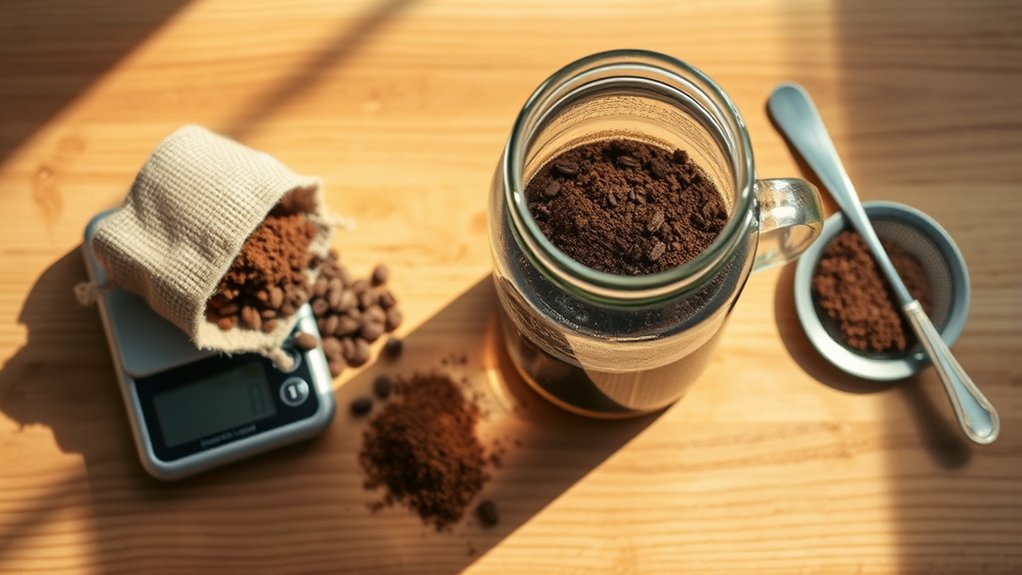
When choosing the best ground coffee for cold brew, you should prioritize coarsely ground beans with a grind size around 7 on a 1-10 scale to avoid bitterness.
Selecting medium roast coffee beans enhances the cold brew coffee’s flavor profile, offering balance without overpowering acidity.
High-quality coffee is essential; beans from reputable sources guarantee consistent taste and ideal extraction during the brewing process.
A coarse grind maximizes surface area for controlled extraction, preventing over-extraction and harsh flavors.
The coffee-to-water ratio, typically 1:8, complements this grind size to yield smooth, rich cold brew.
Preparing Your Coffee Grounds for Brewing
You’ll want to use a coarse grind, around level 7 on a 1-10 scale, to get the best extraction and avoid bitterness in your cold brew.
Grinding your own beans with an adjustable burr grinder is ideal because it gives you precise control over the particle size.
Think of it this way: the grind should be a bit coarser than what you’d use for pour-over.
Choosing The Right Grind
Although selecting the right grind size might seem straightforward, it critically influences the extraction and flavor profile of your cold brew. For cold brew coffee, you want to use coarsely ground coffee, around a 7 on a 1-10 grind scale, slightly finer than pour-over to avoid over-extraction and bitterness.
Achieving a medium-coarse consistency guarantees peak flavor extraction during brewing coffee. Your grind size must balance with the coffee-to-water ratio, which ranges from 1:4.5 for concentrate to 1:8 for ready-to-drink.
Here’s what to keep in mind:
- Use an adjustable burr grinder for uniform grind size.
- Avoid finer grinds that cause sourness from over-extraction.
- Avoid too coarse grinds that produce weak brews.
- Experiment within medium-coarse range to refine flavor.
Grinding Tips For Cold Brew
Since grind size directly impacts extraction, you must prepare your coffee grounds with precision for cold brew. Use a coarse grind around 7 on a 1-10 scale to prevent bitterness and allow ideal flavor extraction.
An adjustable burr grinder guarantees consistent medium-coarse ground coffee beans, essential for balanced flavors of the coffee. Grind just before brewing to preserve freshness. Avoid fine grinds that cause over-extraction and sourness.
Maintain a 1:1 coffee-to-water ratio by weight for perfect strength. When filtering, use appropriate coffee filters to retain grounds while allowing smooth flow.
| Grind Size | Extraction Impact | Flavor Outcome |
|---|---|---|
| Fine | Over-extraction | Sour, bitter |
| Medium-Coarse | Balanced extraction | Smooth, rich |
| Coarse (7/10) | Ideal extraction | Clean, full-bodied |
Brewing Cold Brew Coffee: Step-by-Step
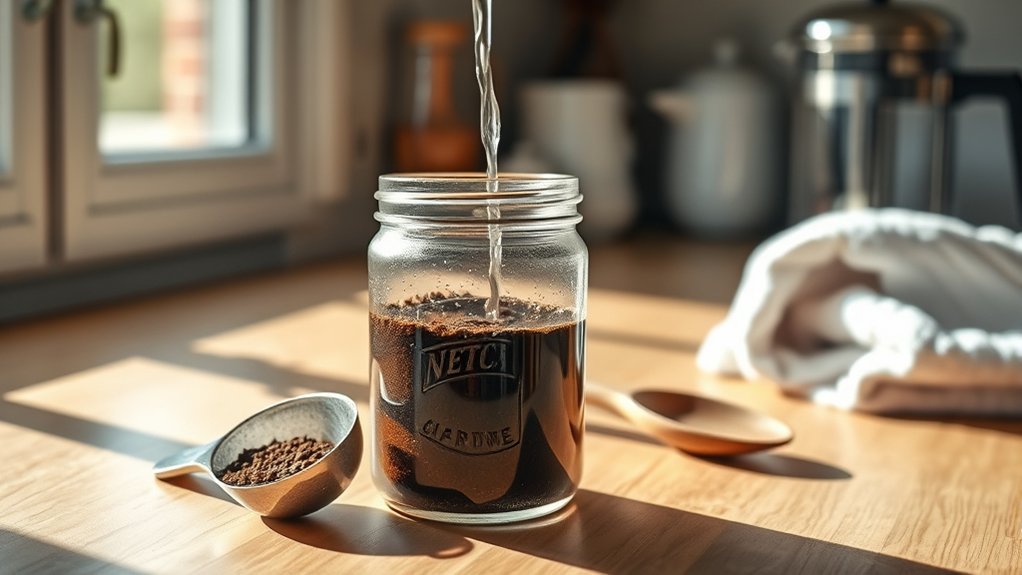
You’ll start by choosing coarsely ground coffee—this helps get the best extraction during the 12 to 24-hour brewing time.
You can tweak the steeping time depending on how strong you like your cold brew.
Next, make sure the coffee grounds are fully saturated and keep the steeping environment consistent to get a balanced flavor every time.
Finally, filter your brew carefully using a paper filter or cheesecloth.
This step removes any sediment, leaving you with a smooth cold brew concentrate that’s perfect for diluting or storing.
Choosing Coffee Grounds
When selecting coffee grounds for cold brew, choosing a coarse grind, approximately a 7 on a 1-to-10 scale, is vital to prevent over-extraction and bitterness.
Your grind size directly affects extraction during cold brewing, so aim for consistency to enhance flavor.
Use medium to medium-dark roasts to amplify deep, rich notes while minimizing acidity.
Always opt for high-quality beans, as low-grade coffee grounds compromise your cold brew coffee’s taste.
Grinding your own beans provides precise control over grind size, which is essential for balancing the coffee to water ratio, typically 1:8.
This ratio influences both strength and clarity.
- Use coarsely ground coffee to avoid bitterness.
- Select medium-dark roasts for peak flavor.
- Maintain a 1:8 coffee to water ratio.
- Choose high-quality beans for superior cold brew.
Brewing Timeframes
Selecting the right grind and coffee-to-water ratio sets the foundation, but extracting the full spectrum of flavors depends heavily on the brewing timeframe. For cold brew coffee, the typical brewing timeframes range from 12 to 24 hours.
You’ll steep coarsely ground coffee in water at a coffee-to-water ratio of about 1:8, guaranteeing all grounds are fully saturated to avoid uneven extraction.
Place the mixture in the refrigerator during the steeping process to maintain a consistent temperature.
For ideal balance, steep for approximately 14 hours. Extending brewing time intensifies the flavor, but over-extraction can lead to bitterness.
After steeping, remove the filter to separate the grounds from the concentrate.
Properly managing these brewing timeframes guarantees a smooth, rich cold brew coffee with a well-rounded flavor profile.
Filtering Techniques
How do you guarantee your cold brew coffee achieves a smooth texture and clean flavor after steeping?
Filtering is essential to separate coffee grounds from the liquid, ensuring clarity and preventing sediment in your cup.
Choose your filter based on the texture you want. A paper filter offers superior clarity by removing fine particles, while cheesecloth lets more oils through, enhancing mouthfeel.
Use a fine mesh strainer to help with the initial straining, then pass the brew through your chosen filter into a clean container.
Remember to saturate all coffee grounds thoroughly during brewing to avoid uneven extraction. Proper straining preserves the nuanced flavors of your cold brew, delivering a balanced, sediment-free experience.
- Use a paper filter for maximum clarity
- Cheesecloth adds texture and oils
- Fine mesh strainer aids initial filtering
- Pour slowly to prevent overflow and sediment
Filtering and Straining Your Cold Brew
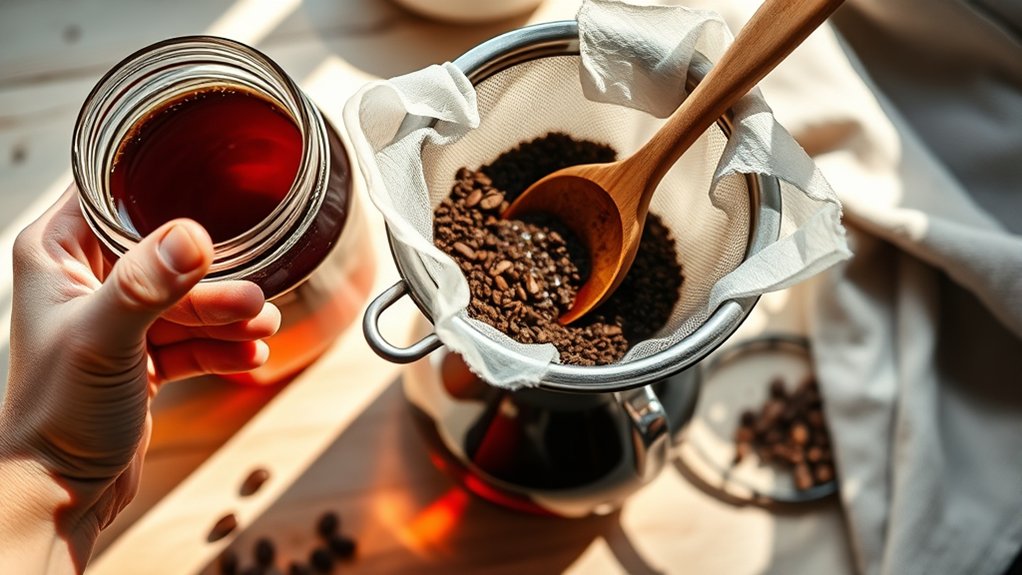
Although steeping your cold brew for 12 to 24 hours extracts the full depth of flavor, you must carefully filter the mixture to remove all coffee grounds and sediment.
Start by pouring the cold brew slowly through your chosen filter, like paper filters, cheesecloth, or a fine mesh strainer. This helps strain out grounds effectively without clogging.
Pour cold brew slowly through filters like paper, cheesecloth, or fine mesh to strain grounds without clogging.
Paper filters excel in enhancing clarity, producing a cleaner taste by trapping fine sediment. Alternatives like cheesecloth retain more oils, enriching texture.
Thorough filtering is essential to achieve a smooth final product free of grit.
Once filtered, transfer the cold brew into a sealed container and refrigerate. Properly strained cold brew maintains its freshness and flavor for up to 10 days, so you can consistently enjoy a balanced, sediment-free beverage.
Finding the Right Coffee-to-Water Ratio
When you determine the coffee-to-water ratio, you directly control the strength, flavor, and extraction efficiency of your cold brew. The ideal ratio balances the extraction of coffee beans in cold water, ensuring a smooth, less acidic profile.
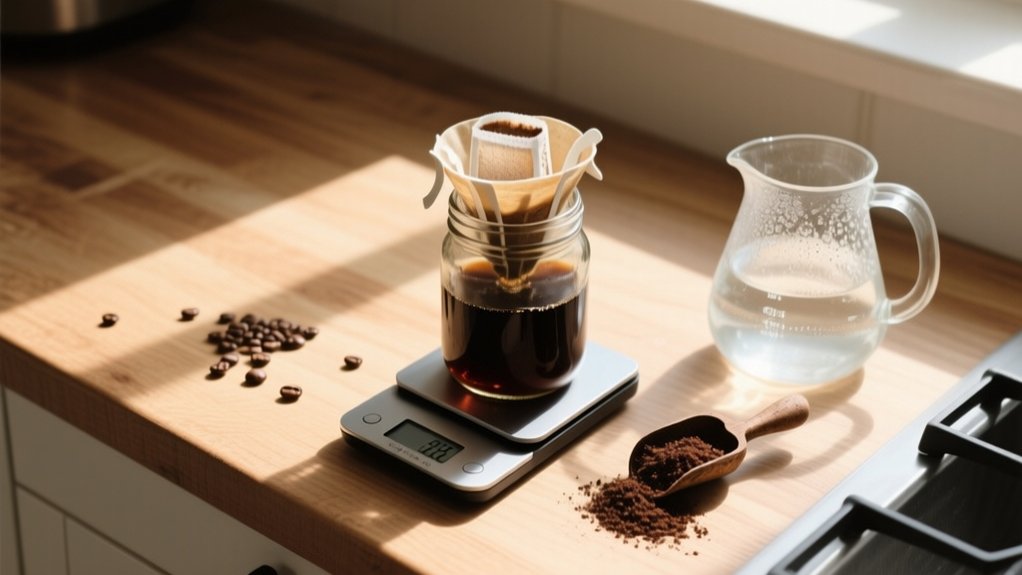
For making cold brew at home, precision matters. You’ll want to measure grams of water and coffee accurately to replicate results.
Consider these ratios:
- 1:8 ratio for balanced flavor (125 grams of coffee per 1 liter of water)
- 1:4.5 ratio for a strong cold brew concentrate
- 1:11 ratio for a lighter, ready-to-drink brew
Consistent measurements to maintain flavor across batches.
Adjusting these allows you to control acidity and intensity, perfecting your cold brew every time.
Serving Suggestions for Homemade Cold Brew
Once you’ve nailed the ideal coffee-to-water ratio, focus on serving your cold brew to maximize its flavor and texture. Always serve over ice to keep it cold and refreshing without diluting it right away.
If you’ve prepared a concentrate, use a precise dilution ratio, typically 1:1 or 1:2 with water or milk, to balance strength and smoothness.
Try adding sweeteners like pure maple syrup or flavored syrups such as vanilla or lavender for a tasty twist.
Experiment with creamer choices including heavy cream, half-and-half, or non-dairy options like almond or oat milk to get your preferred creaminess.
For an elevated touch, garnish with a sprinkle of cocoa powder, a dash of cinnamon, or a few coffee beans.
These techniques help ensure your iced coffee delivers a consistent, rich, and tailored cold brew experience.
Storing Cold Brew to Keep It Fresh
To keep your cold brew at peak freshness, store it immediately after brewing in an airtight container within the refrigerator. This minimizes bacterial growth and preserves the cold brew coffee’s flavor profile.
Use dark glass or opaque airtight containers to reduce light exposure, which can degrade quality over time. Always label your container with the brewing date to track freshness effectively.
- Store cold brew in an airtight container to maintain flavor and prevent contamination.
- Refrigerate promptly and keep cold brew coffee chilled for up to 10 days.
- Use dark or opaque containers to limit light exposure and preserve quality.
- Dilute the concentrate only before serving to retain maximum freshness.
Following these steps guarantees your cold brew stays fresh and flavorful longer.
Frequently Asked Questions
Can I Use Flavored Ground Coffee for Cold Brew?
Yes, you can use flavored coffee for cold brew, but you’ll want to adjust your brewing techniques. Start with standard coffee ratios, about 1:8, but tweak as needed since flavored coffee can vary in intensity.
Pay attention to steeping time because oils or sugars may affect extraction. Experiment with infusion methods to balance taste profiles.
Opt for coarsely ground beans from popular brands to maintain a smooth texture and guarantee a well-rounded cold brew experience.
How Long Does Cold Brew Coffee Last in the Fridge?
Think your cold brew’s an immortal elixir? It’s not. Cold brew storage in your fridge maintains coffee freshness for up to 10 days.
Beyond that, shelf life dwindles, flavor retention drops, and bitterness sneaks in.
Use airtight containers to limit temperature effects and odors.
Brewing methods matter, but once brewed, keep concentrates separate from dilution to preserve quality.
Serve chilled within this window for ideal taste and texture every time.
Is Cold Brew Coffee Less Acidic Than Hot Brewed Coffee?
Yes, cold brew coffee is less acidic than hot brewed coffee. The cold brewing method extracts flavors slowly without heat, reducing acidity and bitterness in the flavor profiles.
This acidity comparison highlights cold brew benefits, such as gentler health impacts on your stomach. Different brewing methods influence acid levels, so cold brew suits those sensitive to acidity.
For serving suggestions and storage tips, keep your cold brew refrigerated up to two weeks to maintain ideal taste.
Can I Make Cold Brew Without a Refrigerator?
Yes, you can make cold brew without a refrigerator by adjusting your brewing methods. Use cold brew tips like steeping ground coffee in water below 70°F for 8-12 hours to prevent spoilage.
Maintain consistent coffee ratios, typically 1:4.5, and use airtight storage containers to limit oxidation.
After steeping, strain promptly to preserve balanced flavor profiles.
This technique guarantees safe extraction and a smooth taste even without chilled water temperature or refrigeration.
Does Grind Size Affect Caffeine Content in Cold Brew?
You want boldness, clarity, and smoothness. Grind size directly impacts caffeine content in cold brew. A coarser grind slows the extraction rate, balancing the flavor profile and reducing bitterness.
Finer grinds increase surface area, enhancing extraction but risking over-extraction and bitterness.
Your brewing method, steeping time, water temperature, and grind size all interact to define coffee strength.
Adjust these precisely to control caffeine levels and tailor your cold brew to your preference.
Conclusion
You might think making cold brew with ground coffee is rocket science, but it’s actually a breeze when you know the right grind, ratio, and brewing time. Follow these precise steps, and you’ll craft a smooth, rich cold brew that could rival your favorite café’s masterpiece.
With proper filtering and storage, you’ll keep your batch fresh for days, making you the ultimate cold brew expert in your kitchen, no barista degree required!