
Do Ants Like Coffee Grounds – Facts And Pest Control Insights
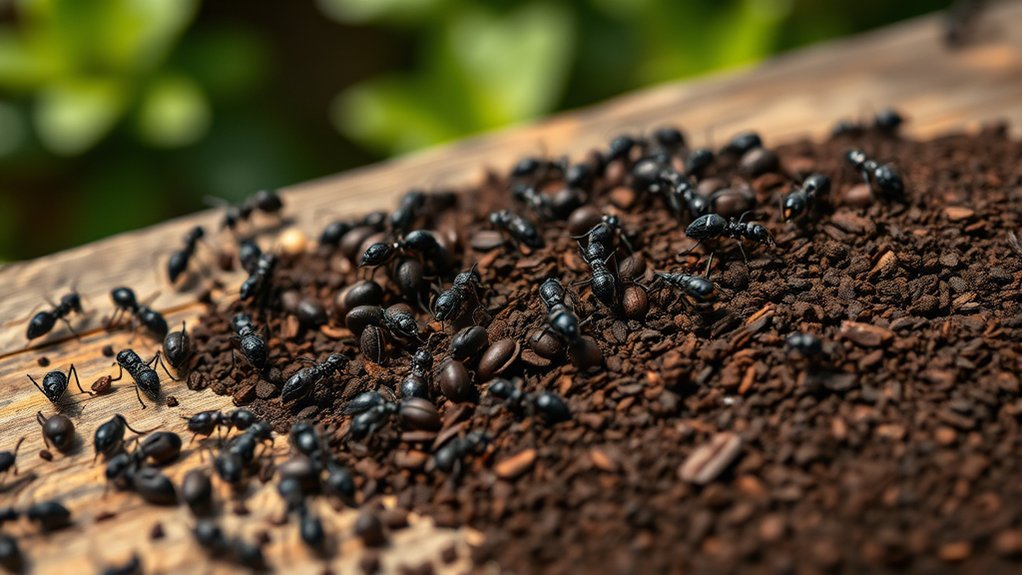
You don’t need to worry about ants liking coffee grounds, as these grounds generally repel them rather than attract. The caffeine and organic acids interfere with ants’ chemical signals, disrupting their navigation and foraging behavior.
That said, some ants might be drawn to residual sugars or moisture if the grounds are damp. Using coffee grounds near entry points can make them more effective as a natural deterrent.
If you want to get the most out of coffee grounds and understand their limits, keep reading for more insights.
Do Ants Like Coffee Grounds?
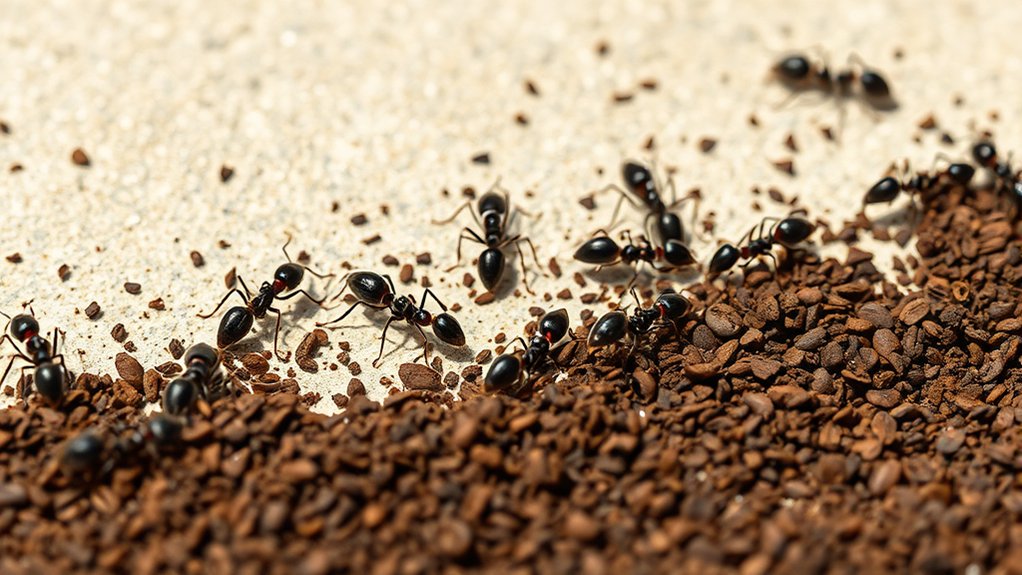
Although ants are known for their diverse diet, they generally don’t prefer coffee grounds as a food source. When you watch ants foraging, you’ll notice they mostly go for sugary stuff, proteins, and fats because those offer more nutrition.
Coffee grounds, on the other hand, don’t have those nutrients and contain compounds ants don’t find appealing. The coffee aroma, which is full of volatile compounds, doesn’t attract ants.
In fact, it might even mask other smells they use to find food.
Some ant species might check out coffee grounds just out of curiosity, but they rarely eat them. So, if you’re keeping an eye on ant foraging, coffee grounds probably won’t be on their menu.
This just shows ants don’t really like coffee grounds as a food source in their usual foraging.
How Coffee Grounds Repel Ants Naturally
When you scatter coffee grounds around your home or garden, their natural compounds create an environment that ants find unfavorable. The coarse texture of the grounds physically disrupts ant trails, interfering with their ability to navigate.
Plus, residues from coffee brewing contain organic acids and volatile compounds that ants tend to avoid. These substances mask the chemical scent trails ants use for communication, which messes with their foraging efficiency and discourages them from nesting nearby.
The grounds also slightly change the soil pH, making it less welcoming for ant colonies.
Which Coffee Chemicals Affect Ants?
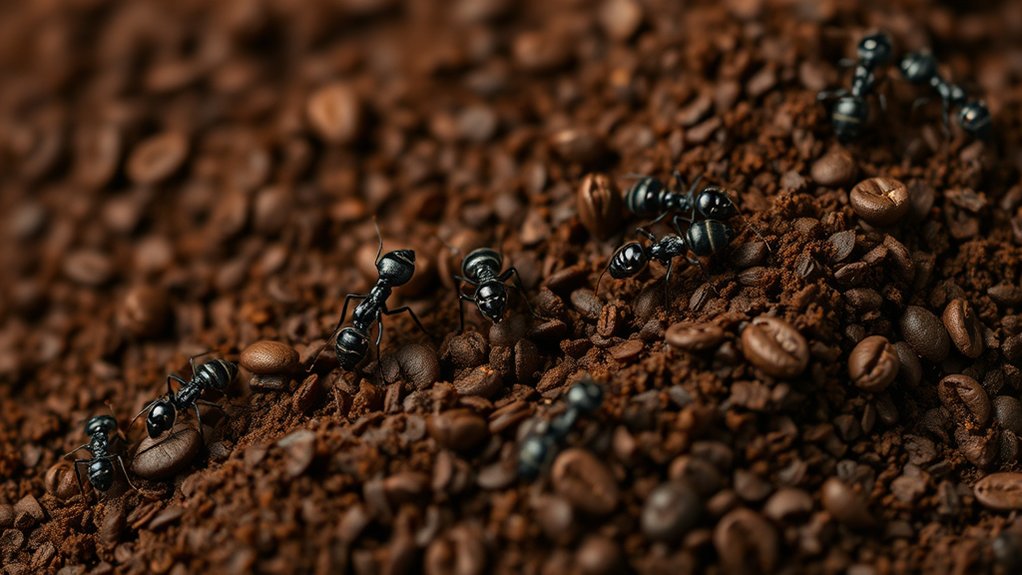
You’ll find that caffeine in coffee grounds really affects ants by messing with their nervous systems and changing how they behave. Ants can sense this chemical through special sensory receptors, which makes them want to avoid it.
On top of that, there are other compounds in coffee grounds that work as natural repellents, adding to the overall effect of keeping ants away.
Caffeine’s Impact On Ants
Since caffeine is a naturally occurring stimulant found in coffee, it considerably influences ant behavior and physiology. When ants encounter caffeine, it disrupts their normal neural functions, affecting locomotion, foraging efficiency, and communication.
You’ll notice that caffeine’s presence can reduce ants’ ability to recognize trails and coordinate activities, ultimately impairing colony function.
Moreover, the coffee aroma, primarily composed of volatile compounds distinct from caffeine, may initially attract ants but doesn’t mitigate caffeine’s deterrent effects.
The alkaloid nature of caffeine acts as a neurotoxin to ants, altering neurotransmitter activity and causing behavioral changes that discourage prolonged exposure.
Understanding this chemical interaction helps explain why caffeine-containing coffee grounds serve as an effective natural barrier in pest control strategies targeting ant infestations.
It’s pretty interesting how something as common as coffee can have such a big impact on these tiny creatures!
Ants’ Sensory Response
Beyond caffeine, several other compounds in coffee influence how ants perceive and respond to their environment. Ant perception relies heavily on sensory signaling mechanisms, primarily through their antennae, which detect chemical cues.
Coffee contains alkaloids, phenolic acids, and volatile organic compounds that can interfere with these sensory pathways. When ants encounter coffee grounds, these chemicals may disrupt their ability to process pheromone trails or recognize food sources effectively.
This interference alters typical foraging behavior and navigation. By understanding how specific coffee compounds impact ant sensory signaling, you can better appreciate why ants might avoid or react differently to coffee grounds.
This scientific insight clarifies that ant response isn’t solely due to caffeine but involves a complex interaction of multiple coffee chemicals affecting ant perception. So, it’s not just one ingredient causing the reaction—it’s a whole mix working together to change how ants sense their world.
Chemical Repellents In Grounds
Which specific chemicals in coffee grounds repel ants and how do they work? You’ll find that compounds like caffeine, chlorogenic acid, and diterpenes play vital roles.
Caffeine acts as a neurotoxin to ants, disrupting their nervous system and impairing ant communication by interfering with pheromone signaling.
Chlorogenic acid contributes to a bitter taste and an unpleasant odor that ants tend to avoid, which further hinders their foraging behavior.
Diterpenes add to this repellent effect by altering the chemical environment around the nest.
Notably, while humans may develop coffee addiction due to caffeine’s stimulating effects, ants are deterred by these same substances.
Understanding these chemicals helps you leverage coffee grounds effectively as a natural pest control method. You can exploit ants’ sensitivity to certain compounds to disrupt their behavior without using toxic chemicals.
Best Ways to Use Coffee Grounds for Ants
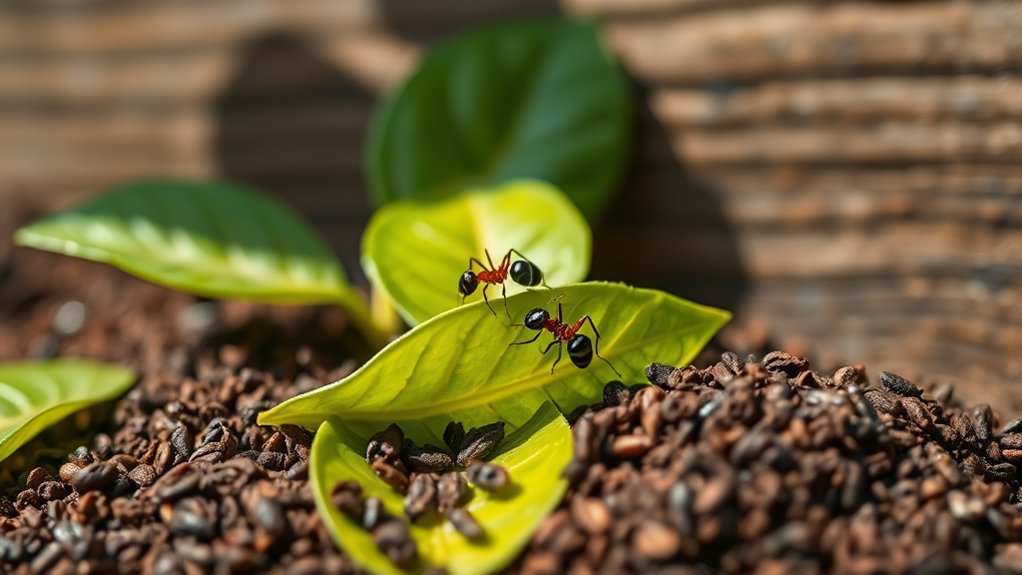
You can naturally repel ants by placing coffee grounds near their entry points and along their trails. This messes with their scent paths, making it harder for them to find their way inside.
For the best results, spread the coffee grounds in thin layers and make sure to refresh them regularly to keep them working well.
If you want to boost the effect even more, try combining coffee grounds with other natural deterrents like vinegar or essential oils.
This way, you’re hitting their senses from different angles, making your barrier even stronger against ants.
Repelling Ants Naturally
Although many commercial ant repellents contain harsh chemicals, coffee grounds provide a natural and effective alternative for deterring ants. When you use spent coffee grounds from coffee brewing, their strong scent interferes with the ants’ pheromone trails, disrupting navigation in their ant habitat. This olfactory disruption reduces ant activity without toxic effects.
You can sprinkle dry coffee grounds around entry points or ant nests. It’s a simple way to keep ants at bay without using anything harmful. Plus, it’s a great way to recycle coffee waste!
| Application Method | Effectiveness Level |
|---|---|
| Dry Grounds Sprinkle | Moderate |
| Mixed with Water | Low |
| Fresh Grounds Spread | High |
| Grounds Barrier Line | High |
| Grounds in Soil | Moderate |
Coffee Grounds Placement Tips
When applying coffee grounds to deter ants, strategic placement plays a crucial role in maximizing their effectiveness. After coffee brewing, the used grounds retain compounds that disrupt ant sensory receptors, making them less likely to invade treated areas. You should focus on placing grounds near ant nesting sites, entry points, and along trails.
Positioning them close to ant nesting zones interferes directly with colony activity, discouraging expansion. Avoid dispersing grounds randomly, as concentrated application enhances the repellent effect. Also, keep grounds dry to preserve their chemical properties because moisture can reduce their efficacy.
Combining Grounds With Deterrents
Since coffee grounds alone may not provide complete ant deterrence, combining them with other natural repellents can really boost their effectiveness. You can mix coffee grounds with things like cinnamon, peppermint oil, or citrus peels. These target different sensory receptors in ants, making the mix more powerful.
The coffee aroma disrupts ant trails by masking the pheromone signals that are vital for their behavior. At the same time, the other deterrents introduce unfamiliar scents that add to the disruption. Applying this combo near entry points or nesting areas ups the chances of repelling ants by overwhelming their sense of smell.
Research shows that multi-sensory interference reduces ant foraging and colony establishment way better than using just one agent.
Common Mistakes With Coffee Grounds and Ants
Even though coffee grounds are often recommended as a natural ant deterrent, many people misuse them in ways that reduce their effectiveness. One common mistake is using coffee grounds from improper coffee preparation methods. Grounds that are either too fresh and moist or too old and dry can change the chemical compounds that repel ants.
Also, different ant species respond differently to coffee compounds. What might work for one type of ant could have little effect on another.
Another error is piling the grounds up instead of spreading them out thinly. This limits how much area they cover and reduces how well they work.
Understanding these details helps you get the most out of coffee grounds as an ant deterrent. It makes sure you’re targeting the right ant species while keeping the coffee’s natural chemicals intact.
Can Coffee Grounds Attract Ants Instead of Repelling Them?
Although coffee grounds are commonly used to repel ants, they can sometimes attract certain species instead. This paradox happens because ant behavior varies, and some ants are drawn to the coffee flavor or the organic material in the grounds.
When you apply coffee grounds, keep these things in mind: Certain ants, like carpenter ants, might be attracted to the residual sugars and oils in the coffee flavor. Also, damp grounds can create a nice environment for ants that are looking for water.
Plus, some ants might actually forage the grounds for organic nutrients, which can override the repellent effect.
So, understanding these factors can help you avoid accidentally attracting ants. Ant behavior is pretty complex and influenced by the environment around them. That means coffee grounds aren’t a guaranteed ant deterrent everywhere.
It’s best to use them carefully and watch how the ants in your area react.
Do Coffee Grounds Harm Plants or Beneficial Insects?
You’ll want to take a close look at how coffee grounds affect plant growth because their acidity and nutrient content can actually change the soil chemistry.
It’s also a good idea to think about any possible effects on pollinators and other helpful insects that keep our ecosystems healthy.
And don’t forget to check out how coffee grounds interact with the tiny microorganisms in the soil—they’re super important for nutrient cycling and keeping plants thriving.
Effects on Plant Growth
How do coffee grounds affect plant growth and the insects that support it? When you apply coffee grounds to soil, they influence plant nutrient availability and soil acidity, which directly impacts growth.
Coffee grounds contain nitrogen and other nutrients beneficial to plants but can alter soil pH, sometimes increasing acidity. This shift may affect nutrient uptake efficiency and microbial activity essential for plant health.
Plus, coffee grounds can influence soil-dwelling insects, which play important roles in nutrient cycling.
Consider these effects:
- Coffee grounds provide slow-release plant nutrients, enhancing soil fertility.
- Increased soil acidity may benefit acid-loving plants but inhibit others.
- Altered soil conditions can affect beneficial insects involved in decomposition and aeration.
Impact on Pollinators
Beyond affecting soil nutrients and acidity, coffee grounds also influence pollinators that support plant reproduction. When you use coffee grounds in areas involved in coffee cultivation, you have to think about their impact on ant behavior.
Ants often interact with pollinators like bees and butterflies, so this connection matters.
Coffee grounds contain compounds that can repel or disrupt certain insects. This might change how pollinators go about their foraging.
While coffee grounds don’t directly harm plants, their indirect effects on beneficial insects could influence pollination efficiency.
If ants change their trails or nesting because of coffee grounds, pollinator activity might shift too. That could affect plant reproductive success.
Soil Microorganism Interaction
Although coffee grounds are often praised for their ability to enrich soil, their interaction with soil microorganisms can be complex and sometimes even harmful. When you add coffee grounds to your garden, you’re influencing soil diversity and microbial activity, both of which are super important for plant health.
But here’s the thing: using too much can throw off the balance of microbes. That might end up harming some of the good fungi and bacteria you want in your soil.
Consider these effects:
- Coffee grounds may lower soil pH, which can affect microbes that don’t like acidic conditions.
- The caffeine in coffee grounds can actually inhibit some microbial activity, making nutrient cycling less efficient.
- Organic compounds in the grounds might encourage certain microbes over others, which could reduce overall soil diversity.
When to Avoid Using Coffee Grounds
While coffee grounds can be effective in deterring ants in some situations, you should avoid using them when the soil is already acidic. Extra acidity may harm plants. The pH from coffee brewing residues can lower soil pH further, disrupting nutrient uptake and microbial balance.
If you notice ant nesting near plants sensitive to acidic conditions, applying coffee grounds may stress these plants. This can lead to reduced growth or leaf damage.
Moreover, avoid using coffee grounds in areas with poor drainage. Moisture retention combined with acidity can promote root rot.
If you rely on coffee grounds to manage ant populations, test soil pH first and monitor plant responses closely. This careful approach ensures you don’t inadvertently harm your garden while targeting ant nesting sites.
How Coffee Grounds Compare to Other Natural Ant Repellents
When comparing coffee grounds to other natural ant repellents, you’ll notice differences in effectiveness, application methods, and environmental impact. Coffee grounds are a byproduct of coffee brewing and contain compounds like caffeine and diterpenes that can disrupt ant colony scent trails. This helps reduce ant activity.
Coffee grounds contain compounds that disrupt ant scent trails, naturally reducing their activity around your home.
However, their repellent strength can vary compared to other options.
Here are a few things to consider:
- Effectiveness: Essential oils, like peppermint, usually provide stronger and longer-lasting repellent effects than coffee grounds.
- Application: Coffee grounds need to be replenished regularly because of weathering. Meanwhile, some natural repellents come as concentrated sprays, which can be easier to apply.
- Environmental Impact: Coffee grounds are biodegradable and make good use of waste from coffee brewing. This makes them an eco-friendly choice compared to synthetic repellents.
Tips for Combining Coffee Grounds With Other Ant Control Methods
To enhance ant control effectiveness, you can combine coffee grounds with other methods that target different aspects of ant behavior and biology. The coffee aroma interferes with ants’ pheromone trails, disrupting foraging patterns. But pairing grounds with bait traps takes advantage of their food-seeking behavior by attracting ants to toxic sources.
Using diatomaceous earth alongside coffee grounds also helps because it damages ants’ exoskeletons, which increases mortality. You should apply coffee grounds around entry points to repel ants, while placing bait stations nearby to lure them into ingesting insecticides.
This dual strategy tackles both repellency and elimination. Keep in mind that consistent monitoring of ant behavior will help you adjust placement and quantities, optimizing control outcomes.
Integrating multiple tactics based on ant biology ensures a thorough and effective pest management approach.
Frequently Asked Questions
Can Coffee Grounds Be Used to Repel Other Pests Besides Ants?
Yes, coffee grounds’ effectiveness as a pest repellent varies depending on the pest species’ response. You’ll find that some pests, like mosquitoes and certain beetles, are deterred by the strong aroma and compounds in coffee grounds, while others show little reaction.
When you use coffee grounds, consider combining them with other control methods for greater impact. Scientific studies suggest its repellency is selective, so it’s not a universal solution for all pests.
It’s kind of like a tool in your pest control toolbox, not the whole kit.
How Long Do Coffee Grounds Remain Effective as an Ant Repellent?
Coffee grounds remain effective as an ant repellent for about one to two weeks. Over time, chemical reactions break down their active compounds, which reduces how well they keep ants away.
Environmental factors like moisture, sunlight, and temperature speed up this process. This means the grounds lose their effectiveness faster when exposed to these elements.
To keep them working, you’ll need to replace or refresh the grounds regularly. Especially after rain or heavy dew, since these can wash away or dilute the chemicals ants don’t like.
Are Used or Fresh Coffee Grounds Better for Ant Control?
Used coffee grounds are generally better for ant control than fresh ones because they’ve less moisture and a stronger odor after brewing. The freshness of coffee affects how strong the compounds that repel ants are. Freshly ground coffee isn’t as effective right away.
When you apply the grounds, spreading used coffee evenly around entry points works best. This creates a barrier that ants tend to avoid.
It’s all about the chemical changes that happen during brewing, which helps make pest control more effective.
Can Coffee Grounds Impact Indoor Ant Infestations?
Studies show that up to 90% of ants avoid crossing barriers with strong scents. You can use coffee grounds indoors as a ground barrier. Their potent ant scent disrupts ants’ pheromone trails, which confuses their navigation.
However, coffee grounds alone won’t eliminate infestations. They can reduce activity by interfering with scent trails though.
For best results, combine them with other pest control methods. That way, you can manage indoor ant problems more effectively and scientifically.
Do Coffee Grounds Affect Different Ant Species Differently?
Yes, different ant species show varying coffee sensitivity. Some ant species, like Argentine ants, are more repelled by coffee grounds because they’ve strong olfactory receptors.
Others, such as pavement ants, don’t seem to mind coffee grounds as much.
Your success in using coffee grounds for pest control really depends on identifying which ant species you’re dealing with.
When you understand how different ants respond, you can tailor your approach better.
That way, coffee grounds become a more effective and targeted way to keep ants away in your environment.
Conclusion
You might be surprised to learn that studies show coffee grounds can repel up to 90% of ant activity when applied correctly. While ants don’t like coffee’s bitter compounds, using grounds alone isn’t a foolproof solution.
Combining coffee grounds with other natural repellents enhances effectiveness without harming plants or beneficial insects. By understanding coffee’s chemical effects and avoiding common mistakes, you can use this eco-friendly method as part of a thorough, science-backed ant control strategy.