
Does Flavored Coffee Have Calories – Nutrition Facts Explained
Flavored coffee itself has minimal calories, just like plain black coffee, which contains only 1-2 calories per cup. Most of the calories come from added syrups, creamers, and sweeteners. These can really boost the calorie count depending on how much and what type you use.
Sugar adds calories, but sugar-free alternatives add almost none. Choosing natural flavorings and watching your serving sizes can help you manage your intake. If you want to understand how each additive affects your coffee’s nutrition, there’s more to explore.
What Calories Are in Plain Black Coffee?
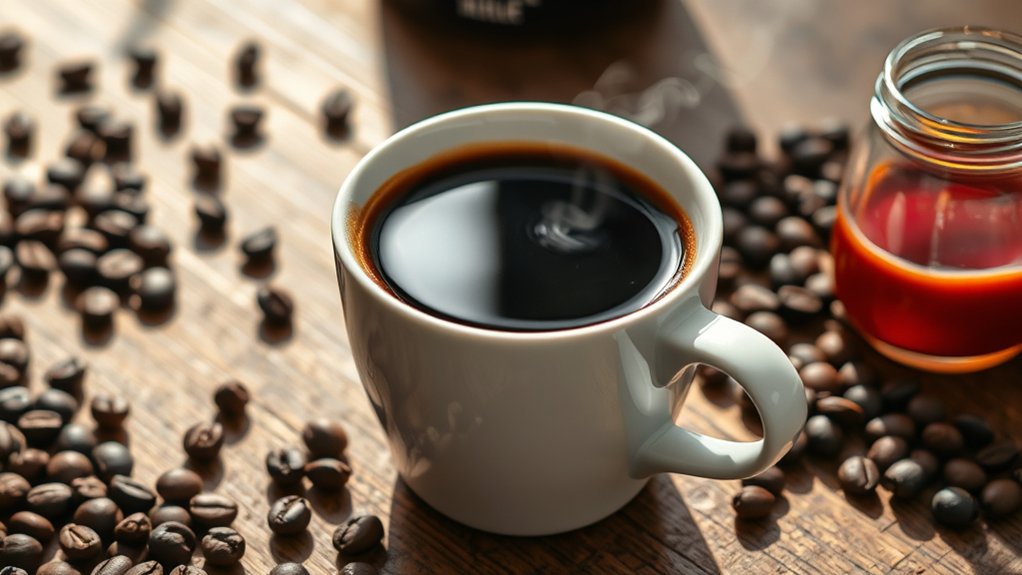
Although it might surprise you, plain black coffee contains almost no calories. It typically has just 1 to 2 calories per 8-ounce cup. When you brew coffee, the process extracts caffeine and flavor compounds without adding significant calories.
The minimal calories come from trace amounts of oils and proteins naturally present in coffee beans. Since you’re not adding sugar, milk, or cream, black coffee stays virtually calorie-free.
The caffeine content varies depending on the brewing method and bean type, but this doesn’t really affect the calorie count.
How Different Flavorings Add Calories to Coffee
When you add flavorings to your coffee, you introduce extra calories that can quickly change its nutritional profile. Different flavorings, like syrups, creams, or sweetened powders, contain sugars and fats that increase calorie content.
Adding flavorings like syrups and creams adds sugars and fats, boosting your coffee’s calorie count.
The way you store coffee can also affect flavor absorption. Poorly stored coffee might require stronger flavorings to mask stale notes, which adds more calories.
Plus, brewing methods impact how flavorings blend with coffee. For example, espresso’s concentrated form may need less added flavor than drip coffee, which is lighter.
If you want to manage calorie intake, think about how your chosen flavorings work with your brewing method and storage habits. Being mindful of these things helps you enjoy flavored coffee without unintentionally consuming extra calories.
Calories in Popular Flavored Coffee Syrups
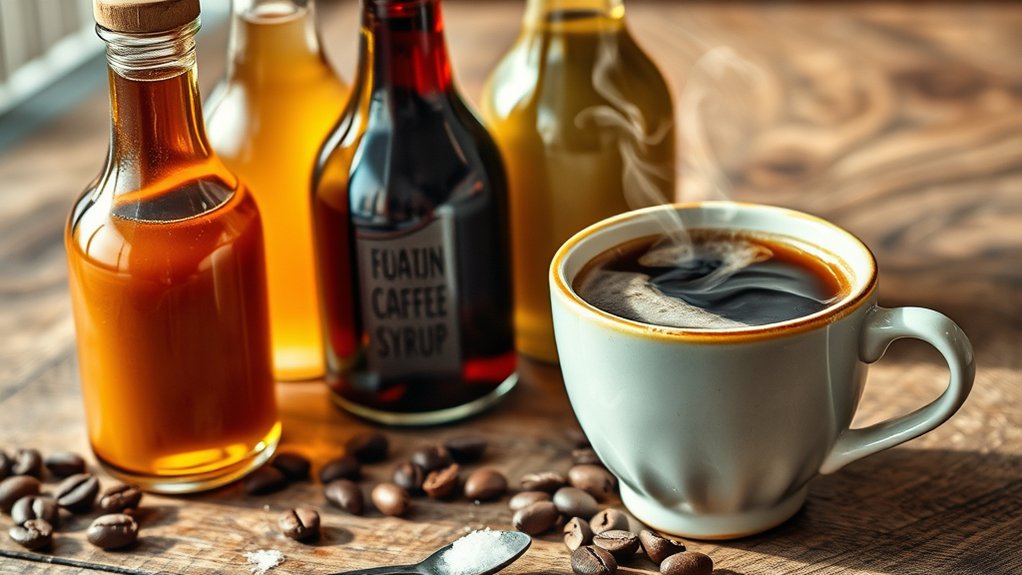
Three popular flavored coffee syrups, vanilla, caramel, and hazelnut, each add a distinct calorie count to your drink. They usually range from 20 to 80 calories per serving. When you add these syrups after brewing your coffee, they bring in simple sugars and flavor compounds that boost the total calories.
This doesn’t affect the coffee’s extraction process, though. Brewing coffee extracts natural flavors and oils from the grounds, but syrups add concentrated flavors through extra ingredients. These are mostly sugars and either artificial or natural flavorings.
For example, a standard 1-ounce serving of vanilla syrup has about 50 calories. Caramel syrup can be higher, up to 80 calories, because it contains more sugar. Hazelnut syrup generally falls between 20 and 60 calories.
Knowing these numbers can help you keep track of your daily calorie intake while still enjoying your flavored coffee. It’s a simple way to balance flavor and nutrition without giving up your favorite treat.
How Creamy Additives Increase Coffee Calories
You’ll find that different creamy additives—like dairy cream, non-dairy creamers, and half-and-half—can vary quite a bit in calories. It mostly comes down to their sugar and fat content.
These ingredients can really add up and boost your coffee’s calorie count more than you might expect. Knowing this can help you make smarter choices when you’re customizing your coffee.
Types Of Creamy Additives
Although creaminess enhances your coffee’s texture and flavor, adding creamy additives considerably boosts the calorie content. Common creamy additives include whole milk, half-and-half, heavy cream, and plant-based alternatives like coconut or almond milk. Each varies in fat and sugar content, directly influencing calories.
During coffee brewing, the process of flavor extraction captures oils and soluble compounds, but these additives introduce extra fats and sugars post-brewing.
For example, whole milk adds about 18 calories per tablespoon, while heavy cream can exceed 50 calories. Plant-based creamers often contain added sugars, further increasing calories.
Understanding these differences helps you control your coffee’s calorie count while enjoying the rich texture creamy additives provide.
Choosing additives wisely balances flavor enhancement with calorie management.
Calorie Impact Of Creamers
How much do creamers really add to your coffee’s calorie count? While coffee roasting and bean varieties influence flavor and aroma, they contribute minimal calories. The real calorie boost comes from the creamy additives you mix in.
Creamers, whether dairy or plant-based, contain fats and sugars that considerably increase calorie content. For example, a tablespoon of heavy cream adds about 50 calories. Flavored creamers often carry added sugars, raising calories even further.
If you’re mindful of your intake, measuring creamer amounts is key. Remember, the roasted beans themselves offer negligible calories. So, it’s the creamy additives that alter your coffee’s nutrition profile.
Understanding this helps you enjoy your brew without any unintended calorie surprises. Just keep an eye on what you add, and you can still indulge in your favorite cup guilt-free.
Sugar And Fat Content
Creamy additives pack a significant amount of sugar and fat, which directly increase the calorie count of your coffee. While the coffee brewing methods and coffee bean origin influence flavor and antioxidant levels, the addition of sugar-laden syrups or high-fat creamers can add 50 to 100 calories per serving.
For example, a single tablespoon of flavored creamer often contains 5 grams of sugar and 3 to 5 grams of fat, contributing extra calories beyond black coffee’s negligible count. If you’re mindful of your calorie intake, consider how these additives affect your daily total.
Choosing lower-calorie alternatives or controlling portion sizes helps maintain your coffee’s health benefits without compromising flavor. Understanding these elements guarantees you make informed choices in your coffee routine.
Choosing Between Sugar and Sugar-Free Coffee Flavorings
When you’re deciding between sugar and sugar-free coffee flavorings, it’s good to think about the calorie differences and how they fit into your daily intake. Sugar adds more calories, which can add up quickly.
On the other hand, sugar-free options usually have little to no calories, making them a helpful choice if you’re watching your weight.
Also, it’s important to consider how each option might affect your overall health. For example, if you have diabetes, sugar-free flavorings could be a better fit for you.
Sugar vs. Sugar-Free
Why choose between sugar and sugar-free coffee flavorings? Your choice impacts taste, calorie content, and health. Sugar adds sweetness but also increases calories. Sugar-free options often use sweetening alternatives like stevia or sucralose, which give you sweetness without the calories.
Natural flavorings can boost your coffee’s taste without adding sugar or extra calories. Think about these points when you’re deciding:
- Sugar offers familiar sweetness but adds calories.
- Sugar-free flavorings use sweetening alternatives, reducing calorie intake.
- Natural flavorings can complement either option without added sugars.
- Your preference for taste and dietary needs should guide your choice.
Balancing these factors helps you enjoy flavored coffee that fits your lifestyle and nutritional goals. It’s all about what works best for you!
Calorie Impact Comparison
Although both sugar and sugar-free coffee flavorings add sweetness, their calorie impact differs notably. When you choose sugar in your coffee brewing process, you introduce simple carbohydrates that increase the calorie count considerably. Sugar contains about 16 calories per teaspoon, which accumulates quickly depending on your serving size.
Conversely, sugar-free flavorings rely on artificial or natural non-caloric sweeteners, contributing little to no calories. These options allow you to enjoy enhanced flavor extraction without the added energy load.
While sugar affects the coffee’s body and mouthfeel, sugar-free alternatives maintain sweetness without altering calorie intake.
Health Considerations
Since your choice between sugar and sugar-free coffee flavorings directly affects your health, it’s important to take into account factors beyond just calorie content. When considering flavored coffee, remember that coffee brewing methods and caffeine content also influence your overall experience and health.
Sugar adds calories and can spike blood sugar levels, which impacts your energy and weight management. On the other hand, sugar-free flavorings often contain artificial sweeteners. These may affect gut health or cause sensitivity in some people.
Some sugar-free options can change the taste, which might affect how much you enjoy your coffee brewing ritual. Caffeine content stays pretty much the same no matter what flavorings you use. But keep in mind, too much caffeine can cause jitters or mess with your sleep.
Balancing these factors helps you make an informed choice that fits your health needs and coffee preferences. So, think about what works best for you and enjoy your cup!
Calories in Flavored Coffee Beans: What You Should Know
When you choose flavored coffee beans, you might wonder how their calorie content compares to regular beans. Typically, the process of coffee bean processing involves roasting and sometimes coating beans with flavor-infused oils or extracts.
These flavor infusion techniques can add minimal calories, but the difference is usually negligible.
Most flavored coffee beans contain about the same calories as standard roasted beans, roughly 2 calories per gram, because the flavoring doesn’t substantially alter their macronutrient profile.
However, if the flavoring involves sugary syrups or added fats during processing, calorie content may increase slightly.
Overall, unless you consume the beans directly in large amounts, flavored coffee beans won’t meaningfully impact your caloric intake compared to regular beans.
How Serving Size Affects Calories in Flavored Coffee
How much does your serving size influence the calories in flavored coffee? It plays a significant role. Even slight variations can impact your calorie intake, especially when flavor additives or sweeteners are involved.
When you brew coffee, the amount of flavored coffee beans you use and the brewing method affect the concentration of calories per serving. Proper coffee storage preserves flavor without altering calorie content, but serving size remains essential.
The amount of coffee beans and brewing method shape calorie concentration, while proper storage preserves flavor without adding calories.
Consider these points:
- Larger servings increase calorie intake proportionally.
- Adding milk or sweeteners multiplies calories based on volume.
- Brewing strength influences flavor intensity but not calorie count.
- Storing coffee correctly maintains flavor consistency, preventing you from adding more to compensate.
Being mindful of serving size helps control your calorie consumption effectively. It’s a simple way to keep your flavored coffee enjoyable without overdoing the calories.
How to Track Calories When Ordering Flavored Coffee
When you’re ordering flavored coffee, the first thing to do is figure out where most of the calories are coming from—usually syrups, milk, and whipped cream.
Most coffee shops actually provide nutrition info, so you can check those out to get a good estimate of your total calorie intake.
Keeping track of these little details makes it easier to make smarter choices without giving up on the flavors you love.
Identifying Calorie Sources
Although flavored coffee may seem like a simple choice, its calorie content can vary widely depending on the ingredients added. Understanding the sources of calories helps you make informed choices without compromising on your enjoyment or the caffeine effects from coffee brewing.
Here’s how to identify calorie sources in flavored coffee:
- Added syrups and flavorings: These often contain sugars or artificial sweeteners that add calories.
- Milk and cream: Different dairy or non-dairy options vary in fat and calorie content.
- Sugar and sweeteners: Even small amounts of sugar can markedly increase calories.
- Toppings: Whipped cream, chocolate shavings, or caramel drizzle add extra calories.
Keeping an eye on these can help you enjoy your coffee without any surprises when it comes to calories. Just a little awareness goes a long way!
Using Nutrition Information
Since flavored coffee ingredients can vary greatly, using nutrition information lets you accurately track the calories in your drink. When ordering, check for details on added syrups, creamers, and sweeteners. These ingredients can really change the calorie count.
Understanding coffee brewing and flavor development also helps you anticipate how additives impact nutrition.
| Ingredient | Approximate Calories (per serving) |
|---|---|
| Flavored Syrup | 20–80 |
| Milk (2 tbsp) | 15–30 |
| Whipped Cream | 50–70 |
| Sugar (1 tsp) | 16 |
Use this data to estimate your intake. Many cafes provide nutritional info online or on-site, so just ask or look it up before ordering. This way, you stay informed and can keep on track with your dietary goals.
Tips for Enjoying Flavored Coffee Without Extra Calories
To enjoy flavored coffee without adding extra calories, you should focus on choosing natural flavorings and limiting high-calorie additives like sugar and cream. Using ideal coffee brewing methods such as drip or pour-over can enhance flavor without extra ingredients.
Enhance your coffee’s flavor naturally by choosing spices and brewing methods that avoid added calories.
Proper coffee storage tips, like keeping beans airtight and away from light, preserve flavor intensity, reducing the need for added sweeteners.
- Use natural spices like cinnamon or nutmeg instead of sugary syrups.
- Opt for unsweetened almond or oat milk to cut calories.
- Brew coffee fresh using methods that highlight natural flavors.
- Store coffee properly to maintain taste and avoid stale coffee that prompts added sweeteners.
These strategies keep your flavored coffee enjoyable and low-calorie. Give them a try, and you might be surprised by how tasty your coffee can be without all the extra stuff!
Fitting Flavored Coffee Calories Into Your Diet Plan
When you include flavored coffee in your diet, paying attention to its calorie content helps you stay on track with your nutrition goals. The coffee brewing method and flavor extraction significantly affect the calorie count. For instance, adding syrups or creamers increases calories, while black flavored coffee keeps them low.
By understanding these factors, you can better fit flavored coffee into your diet plan without overconsuming calories.
| Coffee Type | Approximate Calories per 8 oz |
|---|---|
| Black Flavored Coffee | 0-5 |
| Coffee with Syrup | 50-80 |
| Coffee with Creamer | 70-100 |
| Specialty Drinks | 150+ |
Choose your brewing and flavor extraction methods wisely to maintain a balanced calorie intake. It’s all about making smart choices that fit your lifestyle.
Frequently Asked Questions
Does Flavored Coffee Affect Blood Sugar Levels?
Flavored coffee itself usually doesn’t cause significant blood sugar fluctuations unless it contains added sugars or creamers.
When you drink plain flavored coffee, your insulin response remains stable, so your blood sugar levels shouldn’t spike.
However, if the flavorings include syrups or sweeteners, they can raise your blood sugar.
To keep your levels steady, choose unsweetened options and monitor how your body reacts after consumption.
Are There Any Health Benefits of Flavored Coffee?
Yes, you can enjoy some health benefits from flavored coffee, especially if the flavor additives are natural and low in calories. These additives usually don’t add much calorie content, so your coffee stays a low-calorie beverage.
Flavored coffee still delivers antioxidants and caffeine, which can boost alertness and metabolism.
Just watch out for added sugars or creamers in some flavorings, as they increase calorie content and reduce health benefits.
How Does Flavored Coffee Impact Dental Health?
Imagine sipping flavored coffee with a quill and parchment. It sounds fun, but dental erosion is not.
Flavored coffee often contains added sugar. This sugar feeds bacteria that produce acids, which wear down your enamel.
Even without sugar, the acidity in flavored coffee can still contribute to erosion over time.
To protect your teeth, try to limit sugary flavored coffee. Rinse your mouth with water afterward. Keeping sugar content low helps maintain better dental health.
Can Flavored Coffee Cause Allergies or Sensitivities?
Yes, flavored coffee can cause allergies or sensitivities, especially if you’re sensitive to certain flavor additives. These additives sometimes include artificial ingredients or natural oils that act as allergy triggers.
If you notice symptoms like itching, swelling, or digestive discomfort after drinking flavored coffee, you might be reacting to these components.
It’s best to check ingredient lists carefully. And if you suspect an allergy or sensitivity, it’s a good idea to consult a healthcare professional. That way, you can enjoy your coffee without any worries.
Is Flavored Coffee Safe During Pregnancy?
Flavored coffee can be safe during pregnancy if you limit your caffeine intake to recommended levels, usually under 200 mg per day.
However, be cautious of flavored syrups or additives that may contain artificial ingredients or allergens.
Pregnancy safety depends largely on moderation and ingredient quality.
Always check labels for added sugars or chemicals.
And it’s a good idea to consult your healthcare provider to avoid any flavored coffee risks that might affect your pregnancy.
Taking these steps can help you enjoy your coffee without worry.
Conclusion
Now that you know flavored coffee can add calories, like a vanilla syrup adding 50 calories, you can make smarter choices. Imagine Sarah, who swapped sugary syrups for sugar-free options and saved 100 calories daily without sacrificing taste.
By tracking ingredients and serving sizes, you’ll enjoy your coffee guilt-free while staying on track with your diet. Remember, small adjustments can make a big difference in your daily calorie intake.