How To Make Coffee Liqueur – Easy Homemade Recipe Guide
To make coffee liqueur at home, start by brewing strong, freshly ground medium to dark roast coffee using heated filtered water. This helps capture rich, bold flavors.
Next, blend the coffee with a complementary spirit like whiskey, rum, or vodka. You want to balance intensity and smoothness here.
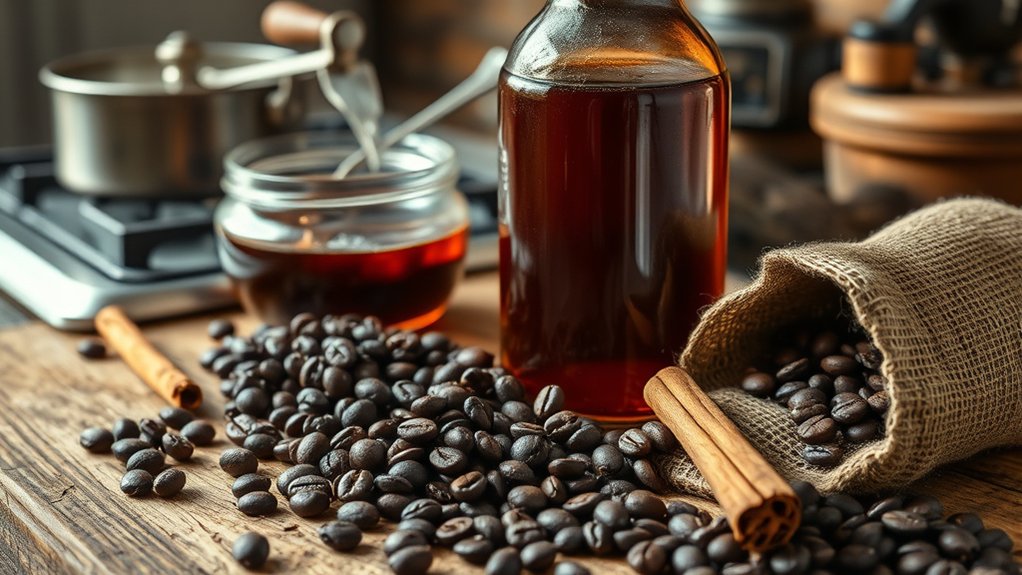
Sweeten naturally with honey or maple syrup. Adding spices or vanilla can really enhance the complexity.
Then, let the mixture age for weeks in a tightly sealed dark bottle to deepen the flavors.
Keep going—you’ll find plenty of tips for perfecting and creatively using your liqueur along the way.
Choosing the Best Coffee for Coffee Liqueur
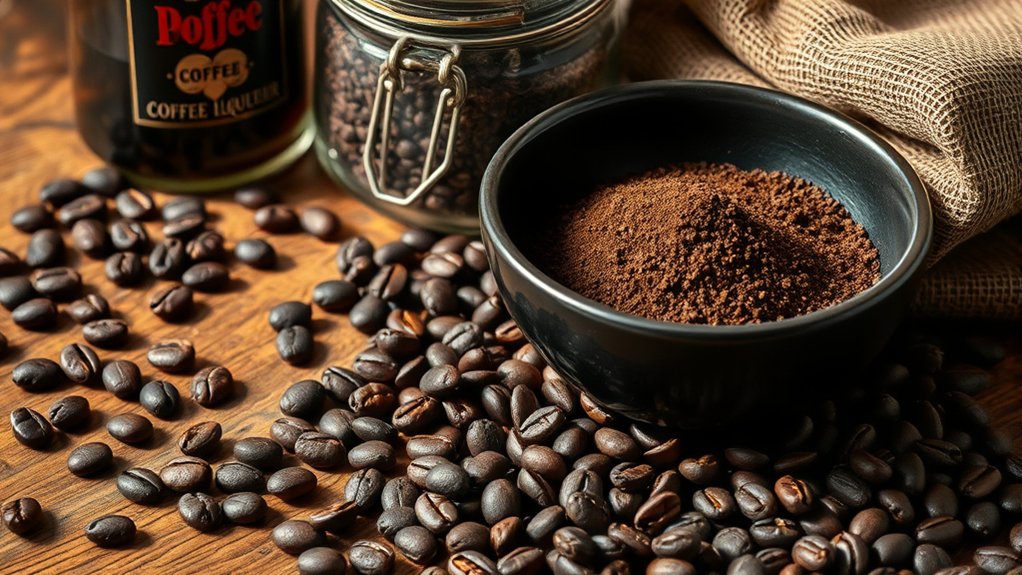
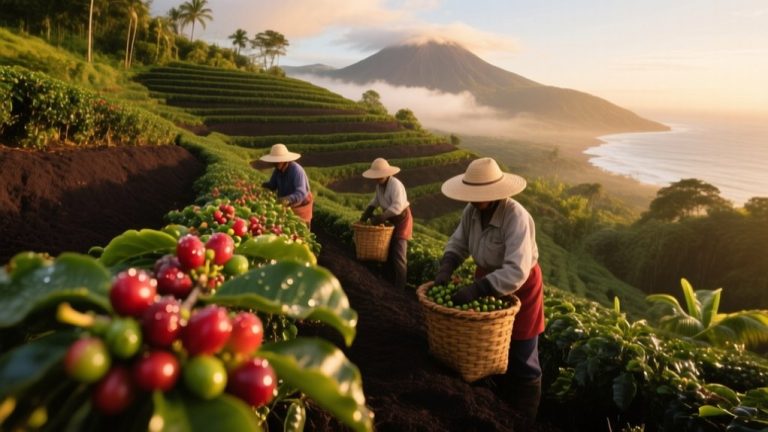
How do you pick the perfect coffee to create a rich, flavorful coffee liqueur? Start by choosing high-quality coffee beans, as they form the foundation of your liqueur’s taste. Opt for freshly roasted beans with bold, complex profiles. Think medium to dark roast varieties, which bring out deep, robust flavors.
When brewing, focus on maximizing flavor extraction to capture those rich coffee notes without bitterness. Use slightly coarser grounds and control brewing time to balance acidity and sweetness.
Remember, the coffee’s origin also matters. Beans from regions like Colombia or Ethiopia offer unique fruity and chocolatey undertones that enhance your liqueur’s complexity.
Selecting the Right Spirit for Coffee Liqueur
You’ll want to start by picking a base alcohol that complements your coffee’s rich flavors. Rum, vodka, or whiskey each bring something different to the table.
Think about how their unique flavor profiles and alcohol content will shape the final taste and strength of your liqueur. Making the right choice here really sets the stage for a perfectly balanced coffee liqueur.
Choosing Base Alcohol
Although the flavor of your coffee liqueur largely depends on the coffee beans, selecting the right base alcohol plays a crucial role in shaping its overall character. You’ll want a spirit that complements and enhances the coffee aroma without overpowering it.
Vodka is a popular choice thanks to its neutral profile, letting the coffee’s rich notes shine.
Rum adds a subtle sweetness and warmth, boosting complexity. Consider the alcohol strength too; a higher proof can extract more flavor but might mask delicate coffee nuances, while a lower proof offers smoothness and balance.
Whichever you choose, make sure it’s clean and high quality to guarantee your coffee liqueur tastes fresh and vibrant.
Your base alcohol sets the foundation, so pick it thoughtfully for the best result. It really makes all the difference in the end.
Flavor Profiles Comparison
Picking the right spirit for your coffee liqueur shapes its flavor in unique ways, making your choice more than just a base. Vodka offers a clean canvas, allowing the coffee aroma to shine brightly without interference.
Rum, especially dark or spiced varieties, adds a warm sweetness that deepens the flavor intensity, complementing the roasted coffee notes beautifully.
Whiskey introduces subtle smoky and woody undertones, enhancing complexity and giving the liqueur a richer mouthfeel.
Brandy lends fruity, smooth layers that balance the coffee’s bitterness with a gentle warmth.
Consider how each spirit interacts with your chosen coffee beans and sweeteners.
Your selection will define the final profile, from vibrant and crisp to rich and velvety. Choosing carefully ensures your coffee liqueur perfectly matches your taste preferences.
Alcohol Content Considerations
When selecting the right spirit for your coffee liqueur, considering alcohol content is essential to balancing flavor and potency. The alcohol strength influences how well the coffee aroma shines through and how smooth or intense your liqueur tastes.
Here are three key points to guide your choice:
1. Higher Alcohol Strength (40-50%)
Intensifies preservation and adds a bold kick. But it can overpower delicate coffee notes if not balanced well.
2. Moderate Alcohol Strength (30-35%)
Offers a smooth, well-rounded profile that enhances coffee aroma without overwhelming it.
3. Lower Alcohol Strength (20-25%)
Creates a mellow, sweet liqueur but risks under-extraction of coffee flavors and shorter shelf life.
Choose a spirit that complements your desired flavor balance and highlights that rich coffee aroma perfectly.
Brewing the Perfect Coffee Base at Home
Since the coffee base forms the heart of your liqueur, you’ll want to brew it with care and precision. Start by selecting high-quality coffee bean varieties. Arabica beans offer a smooth, rich flavor, while Robusta provides a bold, intense kick. Your choice will shape the final taste, so pick what suits your palate.
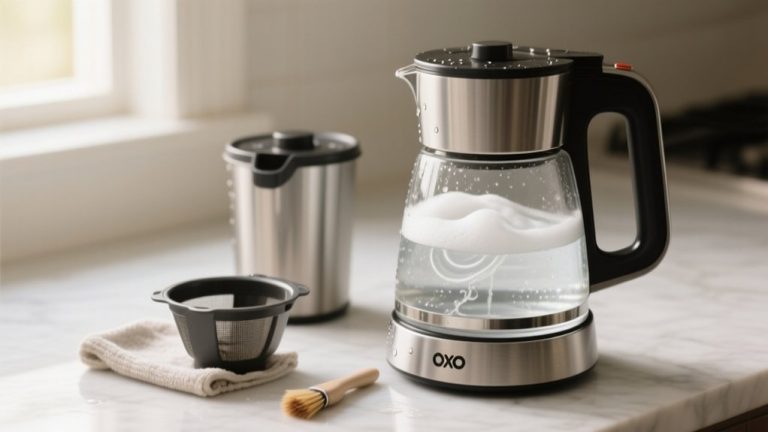
Next, consider your brewing equipment. A French press extracts deep, full-bodied flavors, while an espresso machine delivers a concentrated, robust shot. Pour-over methods highlight subtle notes but require steady hands.
Grind your beans just before brewing to preserve freshness. Use filtered water heated to about 200°F for ideal extraction. Brew strong coffee, as it will be diluted later when mixed with alcohol and sweeteners.
Perfecting this base sets the stage for an unforgettable coffee liqueur.
Sweeteners and Flavorings for Coffee Liqueur
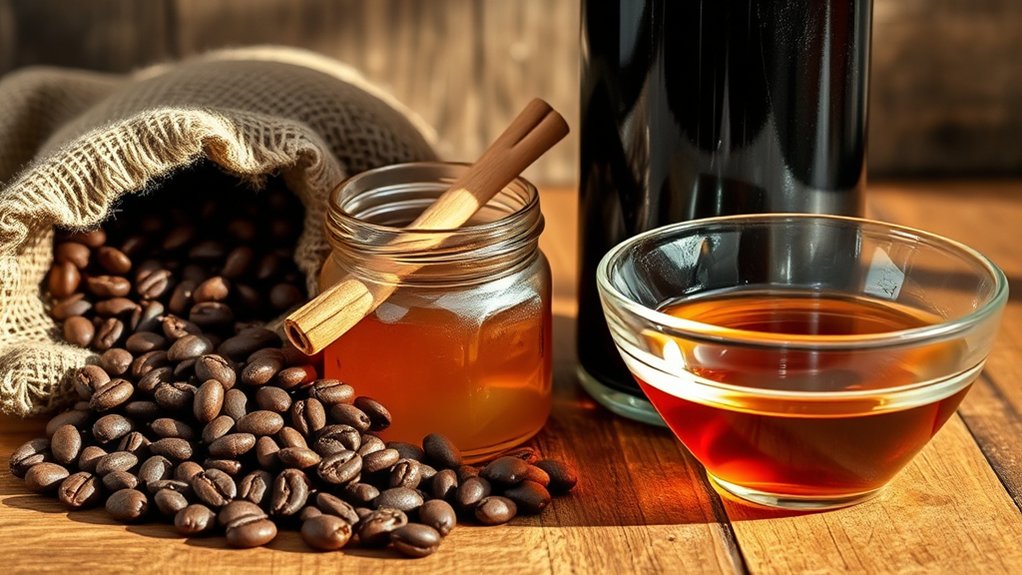
Although the coffee base provides a rich foundation, sweeteners and flavorings bring your coffee liqueur to life by adding depth and balance. Choosing the right sweetener alternatives can really transform your blend. Whether you prefer honey, maple syrup, or agave nectar for natural sweetness, there’s a lot of room to play around.
To elevate your recipe, explore these flavor enhancement techniques:
- Infuse vanilla beans or cinnamon sticks during steeping to introduce warm, aromatic notes.
- Add a splash of dark chocolate or caramel extract for a luscious, dessert-like quality.
- Experiment with a hint of orange zest or almond extract to create a unique, complex profile.
Give these a try and see how your coffee liqueur turns out!
Mixing Your Coffee Liqueur Step-by-Step
Now that you’ve gathered your ingredients, it’s time to get them ready for the perfect blend. You’ll see how to combine each element smoothly so the flavors come together just right.
Just follow these step-by-step mixing techniques, and you’ll create a rich, balanced coffee liqueur every time. Easy, right? Let’s dive in!
Ingredient Preparation Tips
How exactly do you guarantee each ingredient blends perfectly to create a smooth, rich coffee liqueur? Start by focusing on your coffee bean choice. Freshly ground beans release the richest aroma and deepen the flavor profile.
Next, think about flavor pairing. Vanilla, caramel, or cinnamon can elevate the complexity of your liqueur beautifully.
To prep your ingredients efficiently: grind your coffee beans just before use to preserve freshness and maximize extraction. Measure your sugar and spirits precisely to maintain balance. Too much sweetness or alcohol can overpower the coffee notes.
Also, infuse complementary spices or vanilla beans separately. This way, they meld harmoniously without masking the core coffee flavor.
Following these tips sets a solid foundation for a delightful coffee liqueur that sings with every sip.
Blending Techniques Explained
When you combine your carefully prepared ingredients, paying close attention to blending techniques guarantees your coffee liqueur achieves the perfect balance of flavor and texture. Start by gently stirring to preserve the coffee aroma. Avoid vigorous mixing that can dull delicate notes.
Incorporate your brewed coffee using consistent brewing techniques for uniformity. Then, gradually blend in the sweetener and spirit, allowing each element to harmonize.
| Step | Action | Tip |
|---|---|---|
| 1 | Pour brewed coffee | Use fresh, strong coffee |
| 2 | Add sugar syrup | Stir gently |
| 3 | Mix in alcohol | Blend slowly |
| 4 | Stir continuously | Avoid frothing |
| 5 | Let rest before bottling | Develops richer aroma |
Follow these steps, and your coffee liqueur will be smooth and aromatic. It’s really that simple!
Maturing Your Coffee Liqueur
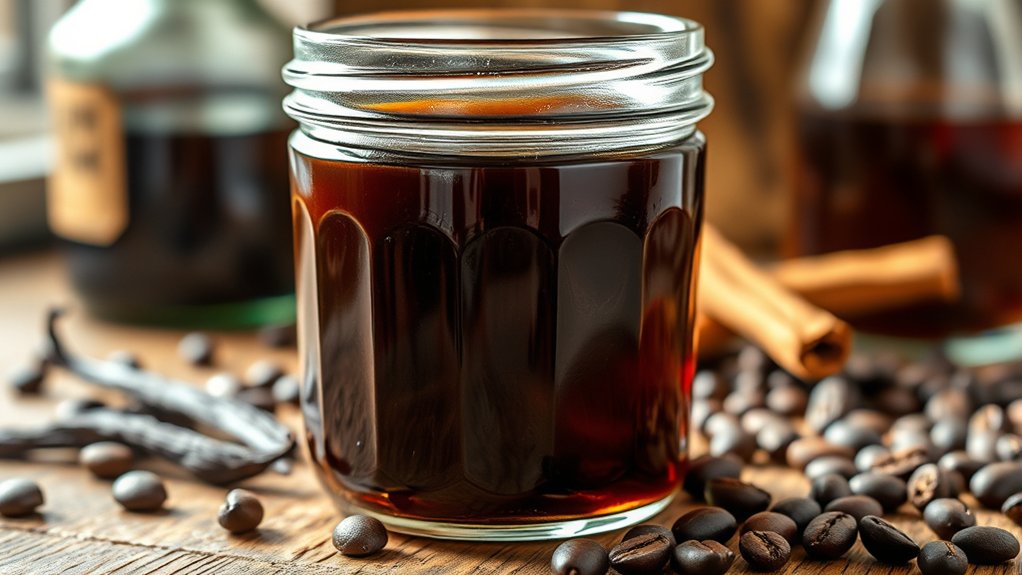
Although the initial blending brings your coffee liqueur together, allowing it to mature releases its full depth and complexity. Liqueur aging is essential to soften harsh edges and meld flavors, especially those from the coffee bean infusion.
Here’s how to get the most out of this stage:
- Store your liqueur in a cool, dark place to prevent flavor degradation.
- Let it age for at least 4 weeks, tasting periodically to track flavor development.
- Gently swirl the bottle every few days to redistribute the coffee bean oils and other ingredients evenly.
This patient process transforms sharp notes into a smooth, rich profile that defines exceptional homemade coffee liqueur.
Embrace the wait. It’s well worth the reward.
Bottling and Storing Homemade Coffee Liqueur
You’ll want to pick bottles that seal tightly to keep all those rich coffee flavors locked in.
Dark glass bottles work best because they protect your liqueur from light, which can mess with its quality over time.
And when it comes to storing, just find a cool, dark spot to keep your homemade brew fresh and tasty for months on end.
Easy, right?
Choosing The Right Bottles
Since the flavor and freshness of your homemade coffee liqueur depend heavily on how you store it, choosing the right bottles is essential. Picking bottles that complement your brew not only preserves quality but also elevates presentation.
Here’s what to think about:
- Material: Opt for dark glass bottles to protect your liqueur from light. Light can degrade the flavor, so keeping it safe is key.
- Bottle aesthetics: Choose shapes and finishes that reflect the rich, bold character of your coffee liqueur. Whether sleek, vintage, or rustic, pick what feels right for your brew.
- Label design: Create clear, attractive labels that include ingredients, the date bottled, and a personal touch. This will make your liqueur stand out.
With the right bottle, you guarantee your coffee liqueur tastes as good as it looks every time you pour a glass.
Optimal Storage Conditions
When bottling and storing your homemade coffee liqueur, maintaining ideal conditions guarantees its rich flavors stay vibrant and fresh. First, choose a cool, dark spot to store your bottles. Temperature stability is essential. Avoid areas prone to heat fluctuations, like near ovens or windows.
Consistent coolness preserves the liqueur’s aroma and prevents flavor degradation. Secondly, limit light exposure by using dark glass bottles or wrapping clear ones in cloth. Light can break down delicate compounds, dulling taste and color over time.
Keep the bottles sealed tightly to avoid oxidation, which can alter the flavor profile. By controlling temperature stability and minimizing light exposure, you ensure your coffee liqueur remains smooth, aromatic, and delicious for months to come.
Fixing Common Coffee Liqueur Problems
Although crafting the perfect coffee liqueur can be rewarding, you might encounter issues like bitterness, cloudiness, or imbalance in flavor. To fix these common problems, start by considering your coffee bean varieties. Opt for milder beans to reduce bitterness and enhance smoothness.
Next, adjust your flavor pairing. Balancing sweetness and alcohol content can really elevate your liqueur’s taste.
Finally, make sure you filter properly to avoid cloudiness. Here’s how to tackle these challenges:
- Use medium-roast coffee beans for balanced bitterness and rich aroma.
- Sweeten gradually, tasting as you go to maintain harmony in flavor pairing.
- Filter the mixture through fine mesh or cheesecloth to clear any sediment.
These steps help you perfect your coffee liqueur’s texture and taste. That way, you get a smooth, enjoyable sip every time.
Creative Ways to Use Your Coffee Liqueur
Now that you’ve nailed the perfect coffee liqueur, it’s time to explore how it can elevate more than just a simple sip. Start by drizzling it over desserts like vanilla ice cream or rich chocolate cake. Its deep notes, influenced by your coffee bean selection, add complexity and warmth.
You can also stir it into your morning latte for a boozy twist or blend it into cocktails for a unique alcohol infusion that wakes up the palate.
Experiment by soaking cherries or nuts in your liqueur for flavorful garnishes.
Even baking benefits from it; swap part of the liquid in recipes with your coffee liqueur to impart a subtly sweet, roasted depth.
With these creative uses, your homemade coffee liqueur becomes a versatile ingredient, enhancing both drinks and dishes.
Variations to Try: Spiced, Vanilla, and More
If you want to personalize your coffee liqueur even further, experimenting with variations like spiced or vanilla-infused versions can completely transform its flavor profile.
Start by thinking about the coffee bean origins. Beans from Ethiopia offer fruity notes, while those from Brazil provide nuttier undertones.
Consider coffee bean origins: Ethiopian beans bring fruity notes, Brazilian beans add rich, nutty undertones.
Next, try applying these flavor infusion techniques to elevate your liqueur:
- Spiced Twist: Add cinnamon sticks, star anise, or cloves during the infusion to introduce warm, aromatic layers.
- Vanilla Infusion: Split a vanilla bean and steep it with your coffee for a smooth, creamy sweetness.
- Citrus Zest: Incorporate orange or lemon peel for a vibrant, invigorating contrast.
These variations let you tailor your homemade coffee liqueur to your taste, making each batch uniquely yours.
Give them a shot and find your favorite!
Frequently Asked Questions
Can I Make Coffee Liqueur Without Alcohol?
Yes, you can make coffee liqueur without alcohol by using non-alcoholic alternatives like brewed coffee, vanilla extract, and a sweetener like sugar or maple syrup. This lets you enjoy that rich, smooth coffee flavor without the booze.
Plus, you can experiment with flavor customization. Try adding cinnamon, cocoa, or even a hint of caramel to create your perfect blend.
It’s a fun way to craft a delicious, alcohol-free treat.
How Long Does Homemade Coffee Liqueur Last Unopened?
Like a hidden treasure, your homemade coffee liqueur’s shelf life can last up to a year when unopened.
To keep it at its best, store it in a cool, dark place away from sunlight and temperature swings.
Proper storage tips include using airtight bottles to preserve flavor and prevent evaporation.
With these simple steps, your liqueur stays rich and smooth.
It’s ready to delight you whenever you’re craving that perfect coffee kick.
Is Coffee Liqueur Gluten-Free?
Yes, coffee liqueur can be gluten-free if you use gluten-free ingredients like pure coffee, sugar, and gluten-free vodka or rum.
You’ll want to double-check labels to avoid any hidden gluten sources.
Also, be mindful of cross-contamination concerns during preparation, especially if you share equipment with gluten-containing products.
Can I Use Instant Coffee for Coffee Liqueur?
Yes, you can use instant coffee for coffee liqueur, and it’s a convenient option. Instant coffee dissolves quickly, helping you achieve a smooth blend without brewing.
To get the best flavor enhancement, choose a high-quality instant coffee with a rich, bold taste.
Just be mindful that the flavor might be less complex than freshly brewed coffee. But it still creates a delicious, easy-to-make coffee liqueur you’ll enjoy.
Give it a try—it’s a great shortcut when you want something quick and tasty!
What’s the Best Glassware for Serving Coffee Liqueur?
You’ll want to choose glassware styles that highlight coffee liqueur’s rich aroma and flavor. Small, stemmed glasses like a cordial or shot glass work perfectly, letting you sip slowly.
Since coffee liqueur is usually served at room temperature or slightly chilled, these glasses help maintain the ideal serving temperature.
Their narrow shape directs the aroma to your nose, enhancing every sip. So, pick elegant, cozy glasses for the best experience.
It’s all about enjoying those deep coffee notes to the fullest.
Conclusion
Crafting your own coffee liqueur is like planting a coffee seed that blossoms into rich, warm comfort with every sip. You’ve blended bold flavors and sweet whispers into a bottle of liquid gold, ready to brighten quiet moments or lively gatherings.
As you savor your creation, remember it’s more than a drink; it’s a symbol of your creativity and care. It’s a delicious reminder that the best things in life are made by hand and shared with heart.