
How Long Does It Take To Grow Coffee Beans – Growth Timeline Explained
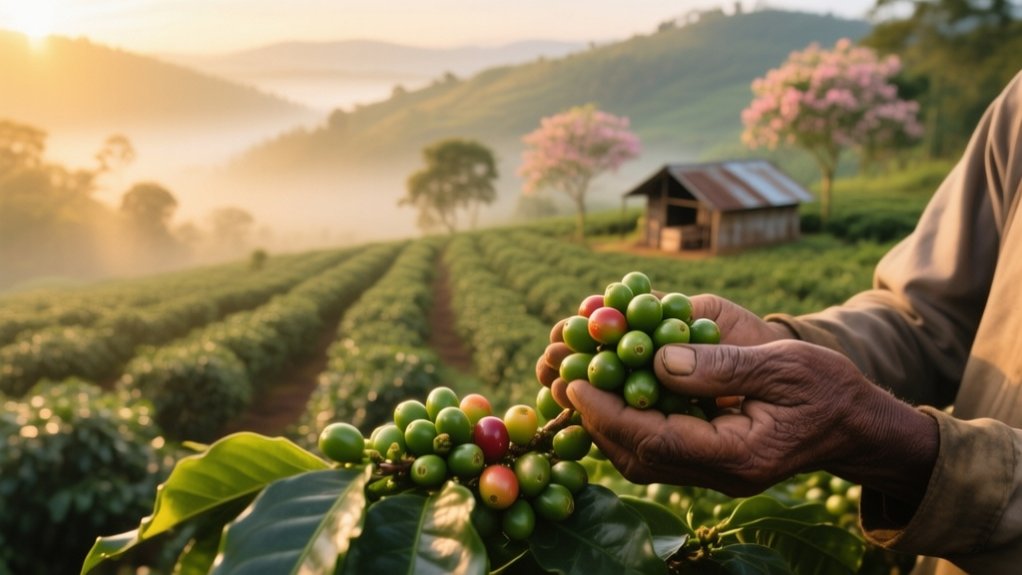
You’ll spend over three years growing coffee beans from seed to harvest. Seeds generally take 5-6 months to germinate, followed by 9-18 months nurturing seedlings.
Coffee plants start flowering after 3-4 years, with cherries ripening in about 8 weeks. You’ll harvest cherries multiple times over a 4-6 month season.
Pruning and processing methods also influence growth and quality. Stick around, and you’ll uncover how each stage impacts your coffee’s journey to your cup.
How Long Does It Take for Coffee Seeds to Germinate?
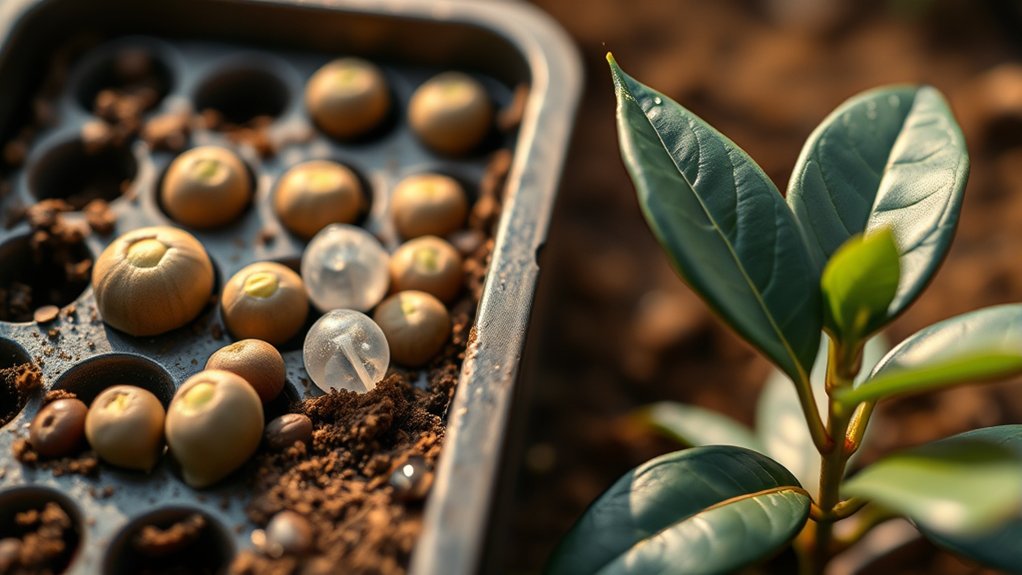
How long does it take for coffee seeds to germinate? Typically, coffee seeds take about 5-6 months to germinate when you protect them in nurseries from harsh weather.
Coffee seeds generally require 5-6 months to germinate when shielded from harsh conditions in nurseries.
In these controlled environments, you’ll provide the high humidity and consistent warmth coffee seeds need to sprout successfully.
Germination begins as the seed sprouts, and within 4-8 weeks, you’ll notice the first leaves, called Orelbas de Onca or panther ears.
Nurseries play an essential role, offering the ideal climate for this delicate stage.
After germination, you’ll continue nurturing the young seedlings in the nursery for 9-18 months before they’re ready for transplanting.
What Happens During the Coffee Seedling Stage?
Once your coffee seeds sprout, you’ll start nurturing the seedlings in shaded nurseries for up to 18 months. During this time, you’ll carefully manage their growth and water needs to keep them healthy.
You’ll begin to notice their distinctive leaves, called Orelbas de Onca, popping up within just a few weeks. This is a good sign that your seedlings are developing well.
As they grow stronger, you’ll slowly expose the seedlings to sunlight. This helps toughen them up, so they’re ready when it’s time to transplant them into the field.
Seedling Growth Process
Anyone nurturing coffee plants knows the seedling stage is critical for their future success. During seedling growth, you’ll start by keeping young coffee trees in shaded nurseries for 5-6 months, protecting them from harsh weather.
You’ll water them frequently and gradually expose them to sunlight to prepare for transplanting. After 9-18 months, seedlings grow to about 24 inches tall and are ready for planting in raised beds or containers.
Remember, coffee trees generally take three to four years from planting to flower and produce cherries. Proper care at this stage greatly impacts yield and bean quality.
| Stage | Duration | Key Activity |
|---|---|---|
| Nursery Shade | 5-6 months | Protect seedlings |
| Gradual Sunlight | Throughout nursery | Hardening process |
| Transplanting | 9-18 months | Move to beds or containers |
Sunlight Exposure Hardening
Although coffee seedlings start their lives shielded by shade trees to avoid sunburn, you’ll gradually expose them to sunlight after 9-18 months to help them harden. This sunlight exposure is essential for strengthening the coffee plants, preparing them for transplanting into full sun.
As you harden the seedlings, their stems and leaves grow stronger, boosting photosynthesis and overall health. Proper hardening affects future coffee cherry yield and quality considerably.
When you carefully manage sunlight exposure, you’ll witness your coffee plants develop resilience and vigor. You’ll also feel the satisfaction of nurturing healthy, thriving seedlings and anticipate a richer, more abundant coffee harvest.
This process is key to turning fragile seedlings into robust coffee plants ready for the next growth phase.
When Do Coffee Plants Start Flowering?
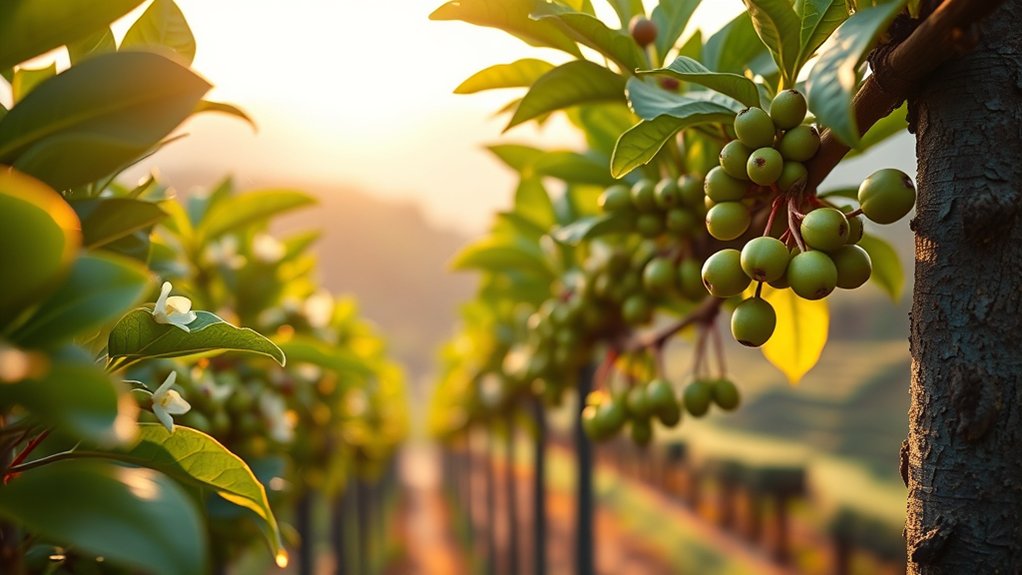
When do coffee plants start flowering? Typically, coffee plants begin to flower around 3-4 years after planting. During this 3-4 week flowering period, you’ll see white, fragrant blossoms that signal the start of cherry development.
Each flower can turn into coffee cherries, which grow in tight green bunches soon after flowering. Environmental factors like temperature, humidity, and rainfall can affect when and how well your coffee plants flower. Here’s a quick overview:
| Factor | Timing | Notes |
|---|---|---|
| Age | 3-4 years | Depends on coffee variety |
| Flower Duration | 3-4 weeks | White fragrant blossoms |
| Cherry Formation | After flowering | Green bunches of cherries |
| Environment | Variable | Temperature, humidity, rainfall |
| Importance | High | Flowers lead to coffee cherries |
How Long Do Coffee Cherries Take to Fully Ripen?
Once coffee plants start flowering, you’ll wait about eight weeks for the cherries to ripen.
They change from green to vibrant colors like red or yellow during this time. The exact timing can shift depending on the coffee variety and growing conditions.
Ripening Duration Overview
Coffee cherries take about 8 weeks to fully ripen after flowering, shifting from green to vibrant red or other colors during this time.
Once the trees mature after 3 to 4 years, you can expect one major harvest annually.
Ripe cherries don’t all mature simultaneously, so you’ll need to pick them by hand every 8-10 days. This careful timing is essential since the processing method depends on cherry quality and ripeness.
Here’s what you should keep in mind:
- Hand-picking ripe cherries guarantees the best flavor.
- The harvest season can last 4 to 6 months, requiring patience.
- Proper timing affects the beans inside each cherry and the final coffee taste.
Understanding this ripening duration helps you appreciate the effort behind each cup.
Color Changes Timeline
It takes about eight weeks for cherries to shift from green to their ripe colors: red, orange, yellow, or pink after flowering. This color changes timeline marks a crucial part of the coffee cherries’ ripening process.
You’ll notice green cherries hanging tightly in bunches before they gradually transform. This signals when they’re ready for harvest. Properly ripened cherries guarantee the best flavor and quality in your coffee beans.
| Week | Cherry Color | Indicator |
|---|---|---|
| 1-2 | Green | Formation stage |
| 3-4 | Pale green/yellow | Early ripening signs |
| 5-6 | Yellow/orange | Mid ripening process |
| 7 | Pink | Near full ripeness |
| 8 | Red/purplish | Fully ripe, ready to pick |
Following this timeline helps you understand when coffee cherries reach peak quality.
Factors Affecting Ripening
Although ripening times vary, coffee cherries generally take between six to eight months to fully mature after flowering. The ripening time depends heavily on environmental conditions, which influence how quickly or slowly the fruit is left to develop.
For instance, higher altitudes with cooler temperatures slow down ripening, allowing flavors to deepen. Meanwhile, consistent rainfall and proper shade guarantee cherries mature evenly and healthily.
You’ll notice these key factors affect ripening:
- Temperature and humidity levels shape the speed of cherry development.
- Altitude impacts how long the fruit is left on the tree, affecting taste complexity.
- Adequate shade and rainfall protect cherries, promoting ideal ripening time.
Understanding these helps you appreciate the delicate balance needed for perfect coffee cherries.
How Often Are Coffee Cherries Harvested Each Year?
How often do farmers harvest coffee cherries each year? Usually, one major harvest season lasts 4-6 months, depending on the region and climate. In places like Colombia, farmers may get a second, smaller harvest because coffee plants produce two flowering cycles.
During harvest, picked cherries that turn red or deep purple are laid out carefully to guarantee quality.
Skilled pickers often return every 8-10 days to gather only the ripe cherries, making multiple passes over the same trees. This labor-intensive process helps maintain the flavor and quality of the coffee.
What Factors Influence Coffee Plant Growth Speed?
You’ll notice that climate conditions, like temperature and humidity, play a big role in how fast your coffee plants grow.
Keeping the plants within the ideal temperature range of 18-23°C really helps them thrive.
Plus, using nutrient-rich, well-draining soil gives your coffee plants the strong foundation they need for healthy growth.
It’s all about creating the right environment so your plants can flourish.
Climate Conditions
When you grow coffee plants, their speed of growth depends heavily on climate conditions. The right temperature, moisture content, and humidity create an environment where coffee beans can thrive and develop flavor.
You’ll need to pay close attention to these factors to guarantee healthy growth.
Consider these key climate conditions:
- Temperatures between 18-23°C keep your coffee plants comfortable and productive.
- Consistent rainfall of 40-100 inches annually maintains ideal moisture content for fruit development.
- Shade from taller trees protects young seedlings from harsh sunlight, promoting steady growth.
Soil Quality
Although climate plays a major role in coffee plant growth, soil quality directly affects how fast your coffee beans develop. You need well-draining, nutrient-rich soils with a pH between 6 and 6.5 to support ideal growth.
Soil organic matter is vital because it improves moisture retention and fertility, helping your plants thrive. Essential minerals like nitrogen, phosphorus, and potassium fuel healthy growth and fruit production.
You should also protect your soil from erosion by using cover crops and mulching. These practices maintain soil structure and boost growth speed.
Moreover, keeping soil temperatures between 20 and 25°C promotes strong root development and overall plant health.
How Does Pruning Affect the Coffee Growth Timeline?
Because pruning directly impacts how much sunlight reaches your coffee plants, it plays an essential role in speeding up their growth. This pruning process, usually done every five years, helps manage bushy growth and promotes better air circulation.
When you prune correctly, your coffee plants get enough light to thrive, and their roots become firmly established. This leads to faster development and earlier fruit production.
By pruning, you can:
- Encourage healthier plants that produce quality coffee beans sooner
- Prevent overcrowding, which stifles growth and delays harvest
- Adapt to changing conditions by observing growth patterns and adjusting techniques
Taking care with pruning not only boosts your coffee yield but also shortens the overall timeline for growing coffee beans successfully.
How Do Processing Methods Affect the Coffee Production Timeline?
Processing methods play an essential role in determining how quickly coffee beans move from harvest to market.
When you process coffee using the wet method, you must quickly remove the skin and pulp within hours to prevent spoilage, speeding up the timeline.
Wet processing requires rapid removal of skin and pulp to prevent spoilage and accelerate drying time.
In contrast, the dry method takes longer since the cherries sun-dry for several days before hulling, extending production time.
The honey process blends these approaches by retaining some mucilage, impacting drying time and influencing the coffee’s flavor profile.
Each method not only affects how fast coffee is ready but also shapes its taste, with wet processing often producing cleaner, more delicate flavors.
Understanding these differences helps you appreciate how processing affects both the timeline and quality of your coffee beans.
How Long Does It Take to Prepare Coffee for Export?
Once coffee beans finish processing, preparing them for export involves several careful steps to preserve quality and meet market standards.
You’ll start by removing the husk through hulling, especially important for dry-processed beans, while wet-processed ones need less hulling. Then, beans undergo final processing: cleaning, sorting by size and density, and grading to discard flawed beans.
Proper storage is vital; beans are kept in sisal or jute bags to maintain moisture and prevent spoilage.
To get your coffee ready for export, you’ll sort and grade beans meticulously to guarantee premium quality.
You’ll also store beans in breathable bags that preserve freshness.
And you’ll package beans meeting specialty coffee standards to appeal globally.
This careful preparation safeguards your coffee’s flavor and market value.
When Can You Expect a Mature Coffee Plant’s First Yield?
Although growing coffee requires patience, you can expect a mature coffee plant to produce its first cherries about 3 to 4 years after planting, depending on the variety and conditions.
Once flowering begins, it takes roughly 8 weeks for the fruit to ripen.
After around 5 years, your coffee plant can yield about one pound of roasted coffee annually.
Keep in mind, harvesting is labor-intensive and done by hand, mostly during a 4 to 6-month season.
The first significant yield comes once the plant reaches full maturity, which means you’ll need to care for your coffee plant carefully over these years.
Understanding this timeline helps set realistic expectations for the years it takes for the coffee tree to reward you with its fruit.
Frequently Asked Questions
What Soil Conditions Are Best for Growing Coffee Plants?
You’ll want soil with a pH between 6 and 6.5 for the best coffee plant growth.
Make sure it has good moisture retention but doesn’t stay waterlogged, as that can harm roots. Loamy or sandy soils work great here.
Also, keep an eye on nutrient requirements. Nitrogen, phosphorus, and potassium are essential.
Regular soil testing helps you maintain these levels, ensuring your coffee plants thrive and produce quality beans.
How Does Altitude Affect Coffee Flavor and Growth?
Altitude affects coffee flavor and growth by creating distinct altitude zones that influence growth rates and flavor profiles.
When you grow coffee at higher altitudes, the cooler temperatures slow growth rates, allowing beans to develop richer, more complex flavor profiles with higher acidity.
In lower altitude zones, coffee grows faster, producing beans with stronger, more bitter flavors.
Understanding these altitude effects helps you choose the right zone to achieve your desired coffee taste.
What Pests Commonly Threaten Coffee Crops?
You’ll often face threats like the coffee borer beetle, which tunnels into beans and lowers your yield.
Leaf rust can defoliate your plants, hitting their health and productivity hard.
Nematode damage attacks roots, stunting growth and making your crop vulnerable to other problems.
To protect your coffee, you’ll need to monitor your plants regularly and use integrated pest management to control these pests effectively without relying too much on harmful chemicals.
Can Coffee Plants Grow Without Shade?
Yes, coffee plants can grow without shade, but they’ve specific sunlight requirements. Without shade, they face more direct sun exposure, which can stress the plants and limit their shade tolerance.
You’ll notice slower growth and lower yields since the plants lack the growth benefits shade provides, like cooler soil and reduced water loss.
To get the best harvest, it’s smart to provide some shade to protect your coffee plants and improve bean quality.
How Do Climate Changes Impact Coffee Production?
Climate variability can hit your coffee crops like a hurricane, drastically lowering yields and quality. Rising temperatures and erratic rainfall patterns challenge your plants’ health, increasing pests and diseases.
To protect your harvest, you’ll need to adopt sustainable practices that boost coffee resilience, like choosing hardier varieties and adjusting planting schedules.
Without these changes, climate shifts could make your coffee farm a risky gamble rather than a thriving business.
Conclusion
So, you’re keen to sip that perfect cup, but remember it takes years before your coffee plant even thinks about yielding beans. You might expect instant gratification, but coffee isn’t a fast-food crop.
From slow germination to patient pruning, every step demands time and care. Ironically, the wait is part of the charm. So, brew some patience along with your beans—you’ll appreciate that final cup even more.