Can You Use Espresso Beans For Drip Coffee – Brewing Tips Explained
You can definitely use espresso beans for drip coffee by adjusting the grind size to a coarser texture, about 600-800 microns. This helps prevent bitterness and keeps the filter from clogging. Choosing a medium roast is a good idea too, as it balances boldness and reduces harshness.
Keep your water temperature between 195°F and 205°F for the best extraction. And don’t forget to store your beans airtight to keep them fresh. It’s also important to clean your equipment regularly since espresso beans have more oils.
With these simple tips, you’ll get a rich, flavorful drip brew from espresso beans. Give it a try and enjoy the difference!
What Makes Espresso Beans Different From Regular Coffee Beans?
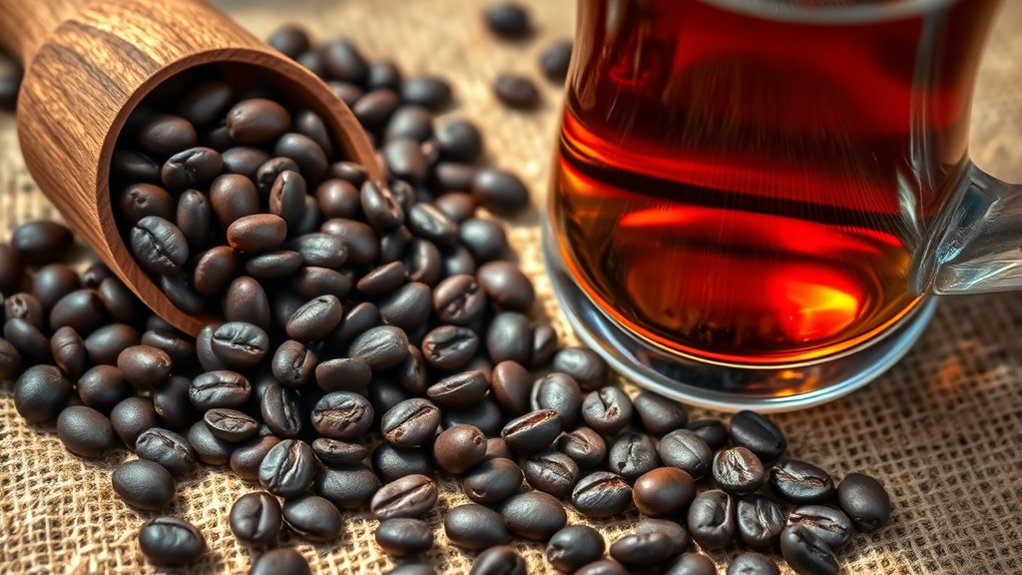
Although espresso beans come from the same species as regular coffee beans, their distinct roasting and grinding processes set them apart. The coffee plant produces identical beans, but bean processing tailors them for specific brewing methods.
Espresso and regular coffee beans share origins but differ through unique roasting and grinding techniques.
Espresso beans undergo a darker, longer roast at higher temperatures, which deepens their flavor and increases oil content. This results in a richer, bolder profile. This roasting style contrasts with regular coffee beans, which can be lighter roasted to preserve subtle flavors.
While the term “espresso beans” doesn’t denote a unique bean variety, it reflects the processing choices made to optimize extraction under high pressure.
Understanding these differences helps you appreciate why espresso beans behave uniquely, especially when brewed outside their typical method.
Why Grind Size Matters for Drip Coffee and Espresso Beans
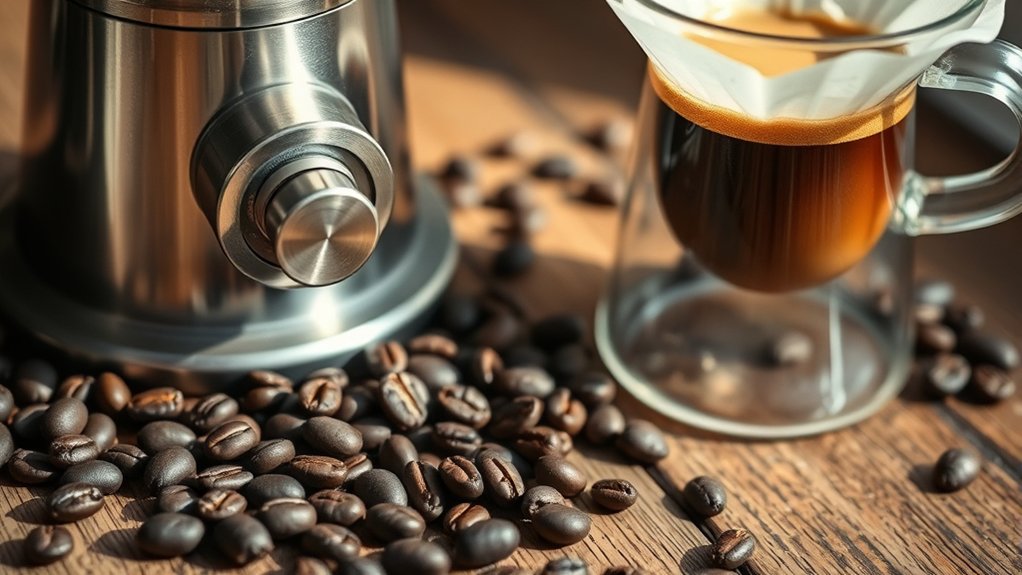
You need to adjust the grind size because espresso calls for a very fine grind, while drip coffee does better with a coarser texture. This helps avoid over-extraction.
See, the grind directly affects how quickly water passes through the coffee and pulls out flavors, which in turn impacts the taste and balance.
So, when you’re using espresso beans for drip coffee, it’s important to coarsen the grind. This ensures proper extraction and helps prevent bitterness or clogged filters.
It’s all about getting the right texture for the brewing method you’re using.
Grind Size Differences
When brewing drip coffee, choosing the right grind size plays a crucial role in achieving balanced flavor and proper extraction. Espresso beans are ground very fine, around 200-400 microns, to suit high-pressure espresso machines. However, this fine grinding consistency is too compact for drip coffee, which needs a coarser texture, similar to coarse sand or breadcrumbs.
This difference matters because drip brewing relies on gravity and longer contact time. So, a coarser grind allows water to flow properly without clogging filters.
Regardless of your bean origin, adjusting the grind size from fine espresso to coarser drip prevents over-extraction and bitterness while ensuring consistent extraction.
If you use espresso grind in drip machines, expect slow water flow and a strong, bitter cup. Alter your grind size accordingly for ideal results.
Extraction Impact On Flavor
Since grind size directly influences how water interacts with coffee grounds, it plays a pivotal role in the extraction process and ultimately shapes the flavor profile of your brew.
When using espresso beans for drip coffee, a grind that’s too fine slows water flow, causing over-extraction and bitterness. This excessive extraction diminishes coffee aroma and masks delicate notes tied to bean freshness.
On the other hand, coarser grounds allow water to pass smoothly, promoting balanced extraction and preserving the vibrant, nuanced flavors you want to highlight.
Espresso extraction relies on pressure to quickly release flavors from fine grounds, but drip brewing depends on gravity, making grind size vital.
Adjusting grind size properly guarantees you capture the full spectrum of your beans’ freshness and aroma without overwhelming bitterness.
It’s all about finding that sweet spot so your coffee tastes just right every time.
Adjusting Grind For Drip
Grind size directly controls how quickly water moves through coffee grounds, so adjusting it becomes key when brewing drip coffee with espresso beans. Since espresso beans are typically ground very fine, you’ll need to adapt to a coarser grind, about the texture of coarse sand (600-800 microns), to guarantee proper extraction and avoid clogging filters. Fine espresso grounds slow water flow, causing bitterness and burnt flavors.
Maintaining grind consistency is essential for balanced brewing and ideal flavor. Also, remember that proper coffee storage preserves grind quality and freshness, which impacts extraction. Use the table below to visualize grind adjustments:
| Grind Size | Effect on Drip Coffee |
|---|---|
| Fine (espresso) | Slow flow, over-extraction, bitterness |
| Medium-Coarse | Suitable flow, balanced flavor |
| Too Coarse | Fast flow, under-extraction, weak |
Can You Use Espresso Beans for Drip Coffee?
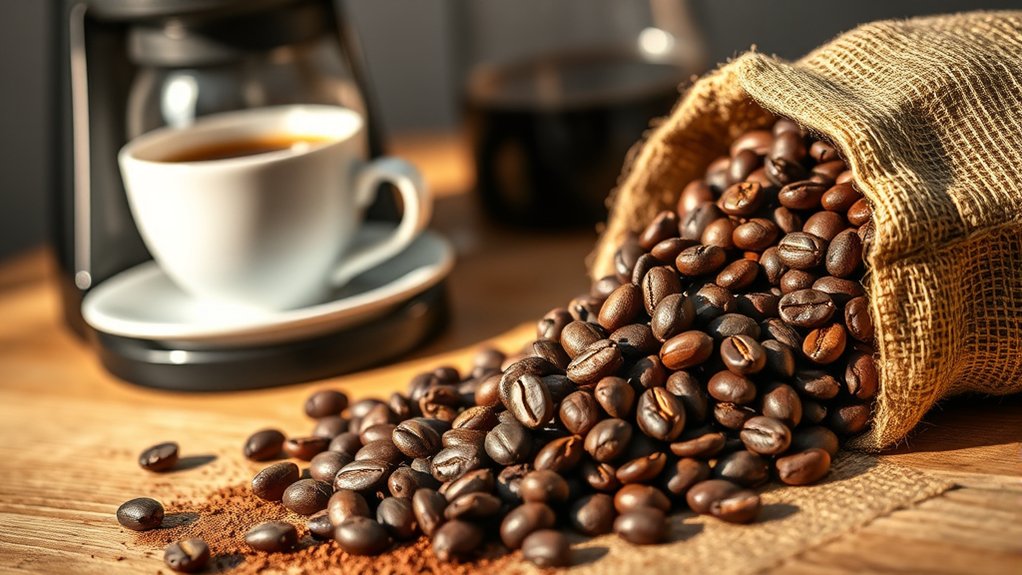
You can definitely use espresso beans for drip coffee, but there’s a catch—you’ll want to grind them a bit coarser. Think of a texture similar to coarse sand.
If you use the fine grind that’s meant for espresso, your drip coffee maker might pull out too much flavor, leading to bitterness.
So, by adjusting the grind size to match your brewing method, you’ll actually bring out the bold and intense flavors that espresso beans have to offer in your drip coffee.
It’s a simple tweak that makes a big difference!
Espresso Beans Compatibility
Although espresso beans are typically ground fine for espresso machines, you can absolutely use them for drip coffee if you adjust the grind size appropriately. The compatibility hinges on understanding that espresso beans, often sourced from specific coffee plant varieties and harvested at peak ripeness, are roasted and prepared to deliver concentrated flavor.
When using these beans for drip coffee, a coarser grind prevents filter clogging and avoids over-extraction, which can cause bitterness. The unique profile developed through coffee bean harvesting and roasting techniques means espresso beans yield a stronger, more intense cup in drip brewing.
Adjusting Grind Size
When brewing drip coffee with espresso beans, adjusting the grind size is super important to get the right extraction and flavor balance. Espresso beans actually need a coarser grind than usual to avoid over-extraction and prevent the filter from clogging. Using a fine espresso grind in drip machines slows down the water flow, which can lead to bitterness and harsh flavors.
A burr grinder is your best friend here because it helps you achieve a consistent coarser grind, improving water flow and taste. Also, don’t forget that proper coffee storage preserves bean freshness, and that freshness directly affects extraction quality.
So, adjusting your grind size while keeping coffee storage in mind is the key to brewing a balanced cup with espresso beans.
| Grind Size | Water Flow | Flavor Outcome |
|---|---|---|
| Fine (Espresso) | Slow, clogged | Bitter, harsh |
| Medium-Coarse | Optimal, smooth | Balanced, vibrant |
| Too Coarse | Fast, weak | Under-extracted |
How to Adjust Grind Size When Brewing Drip Coffee With Espresso Beans
Since espresso beans are roasted and meant for fine grinding, you’ll need to adjust their grind size quite a bit for drip coffee brewing. To get the best flavor and keep your beans fresh, grind your espresso beans a bit coarser. Aim for a particle size between 600-800 microns.
This helps avoid over-extraction and stops the filter from clogging, which can happen when using espresso’s usual fine grind. Using a burr grinder is a smart move because it gives you consistent granules. That consistency is key for balanced extraction and bringing out the best flavors.
If the grind is too fine, water flow slows down and you’ll end up with bitterness and astringency. By making the grind coarser than espresso’s typical fine setting, water flows smoothly through the grounds. This lets you extract more nuanced flavors and keeps your beans tasting fresh.
Adjusting your grind properly is really important for brewing great drip coffee with espresso beans.
How Roast Level Affects Drip Coffee Made With Espresso Beans
Because roast level directly affects the chemical makeup and flavor release of espresso beans, it plays an essential role in shaping your drip coffee’s taste profile. The roasting process transforms compounds developed during coffee bean cultivation, influencing solubility and oil content.
Dark roast espresso beans, with their extended roasting process, yield a bolder, oilier coffee that extracts quickly, often emphasizing smoky and bitter notes.
In contrast, lighter roasts preserve more acidity and intricate flavors, producing a brighter, fruitier drip coffee.
Keep in mind, darker roasts’ increased oiliness can impact brewing by clogging filters, requiring more diligent equipment cleaning.
Understanding how the roast level alters flavor extraction helps you select the right espresso beans to match your preferred drip coffee taste, balancing intensity and complexity effectively.
How to Prevent Bitterness When Brewing Drip Coffee With Espresso Beans
Although espresso beans bring rich flavors to your drip coffee, preventing bitterness requires careful adjustments. Start by choosing the right coffee bean roasting level. Medium roasts tend to produce less bitterness than very dark ones.
Next, adjust the grind size to a coarser texture, similar to sand, to avoid over-extraction that’s common with fine espresso grinds. Control water temperature between 195°F and 205°F to extract flavors effectively without pulling bitter compounds.
Limiting the contact time between water and grounds also helps because darker roasts release oils quickly. Additionally, try a brief pre-infusion by adding a small amount of water before full brewing to reduce harshness.
These precise steps ensure smooth, balanced drip coffee using espresso beans without bitterness.
Best Brewing Techniques for Drip Coffee Using Espresso Beans
Mastering the best brewing techniques when using espresso beans for drip coffee starts with adjusting your grind size to a coarser consistency, roughly the texture of breadcrumbs (600-800 microns). This prevents over-extraction and bitterness, which are often misunderstood in coffee myths.
Start with a coarser grind, like breadcrumbs, to avoid bitterness and over-extraction when brewing espresso beans.
Next, select a concentrate or strong brew setting on your drip machine to balance the dark roast’s intense flavor. Use slightly less coffee, about 50-55 grams for a 10-cup pot, to avoid overpowering your brew.
High-quality paper or mesh filters are essential to stop fine espresso grounds from slipping through. This helps debunk the brewing myth that all filters perform equally.
Finally, experiment with water temperature and brew time since espresso beans extract faster. This way, you ensure a bold yet balanced cup without bitterness.
How to Measure Coffee and Water When Brewing Drip Coffee With Espresso Beans
You’ll want to start with a standard ratio of about 1 to 2 tablespoons of espresso beans per 6 ounces of water.
Of course, you can adjust this depending on how strong you like your coffee.
Since espresso beans are often darker and more concentrated, it’s a good idea to reduce the amount slightly to avoid any bitterness.
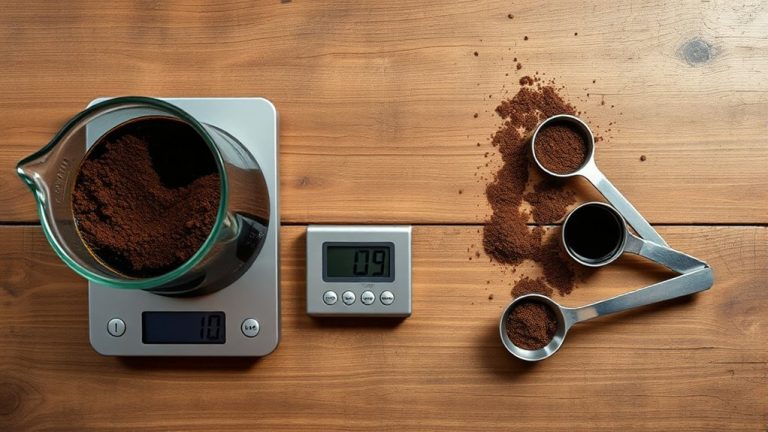
If you want to be more precise, using a scale to weigh around 10-12 grams of beans per 6 ounces of water is a great way to guarantee accuracy and consistency every time.
Coffee-To-Water Ratio
How do you measure the right amount of coffee and water when brewing drip coffee with espresso beans? Start with 1 to 2 tablespoons of coarsely ground espresso beans per 6 ounces of water.
Since espresso beans vary by coffee bean origins and roast level, reduce the coffee amount slightly for dark roasts to avoid bitterness.
Use a kitchen scale or measuring cup to guarantee precise water volume. This is essential for brewing equipment compatibility and consistent extraction.
Maintaining this coffee-to-water ratio helps balance flavor and prevents over- or under-extraction.
You can adjust the coffee quantity slightly depending on your preferred strength. But always keep measurements consistent to achieve ideal flavor when using espresso beans for drip coffee.
Adjusting Brew Strength
Once you’ve established the right coffee-to-water ratio for your drip coffee using espresso beans, fine-tuning the brew strength becomes the next step. Start by measuring about 50-55 grams of coffee for a standard 10-cup pot, since espresso beans are more concentrated.
Use a coarser grind, breadcrumb consistency, to guarantee proper water flow and avoid clogging.
Pay close attention to grind consistency, because uneven grounds can lead to over-extraction or bitterness. Adjust your water ratio aiming for a coffee mass around 1.35-1.5% relative to water, depending on roast level and grind size.
Precise measurement with a scale is key to maintaining consistent strength.
Also, store your coffee properly to preserve freshness since that directly impacts flavor.
Experiment with small batches to find your ideal balance of boldness and smoothness. It might take a few tries, but you’ll get there!
Cleaning Tips for Dark Espresso Beans in Drip Coffee Makers
Because dark espresso beans release more oils during brewing, maintaining your drip coffee maker means you need to clean it diligently to prevent buildup. These oils come from the roasting process after the beans are harvested. They can accumulate in the filters and internal parts, causing clogs and rancidity.
To keep your machine running smoothly, regularly descale it using a solution of water and vinegar or a commercial descaler. This helps break down those oily residues effectively.
After each brew, make sure to thoroughly clean the filter basket and carafe. This prevents oil transfer that dulls the flavor and harms your machine’s performance.
Consistent cleaning doesn’t just preserve your drip coffee maker’s integrity; it also guarantees that every cup you brew truly reflects the essence of those carefully harvested espresso beans from the coffee plant.
Flavor Profiles to Expect From Drip Coffee Made With Espresso Beans
When you brew drip coffee with espresso beans, you’ll notice a bolder and more intense flavor profile compared to lighter roasts. The darker roast and higher oil content in espresso beans create a richer, fuller-bodied cup with pronounced chocolate and caramel notes.
Expect a slightly smoky or roasted taste, accompanied by increased bitterness and reduced acidity.
These characteristics vary with bean origin, influencing subtle undertones that can elevate your flavor pairing choices. For instance, beans from Latin America might add nutty or fruity hints, balancing the robust espresso base.
The concentrated oils and longer roasting process also contribute to a lingering, robust aftertaste.
All of this makes your drip coffee distinctively complex and satisfying compared to traditional drip brews. It’s a great way to enjoy the depth of espresso beans in a different brewing style. Give it a try if you’re looking to switch things up!
When to Choose Espresso Beans vs. Regular Coffee Beans for Drip Brewing
Although both espresso and regular coffee beans can work in drip brewing, choosing between them depends largely on the flavor intensity and brewing adjustments you’re willing to make. Espresso beans are dark roasted and bold. They need a coarser grind to avoid over-extraction, while regular beans offer a lighter, more versatile profile with minimal grind changes.
Think about your coffee shop ambiance and how you maintain your brewing equipment. Espresso beans might demand more frequent cleaning because of the oils.
| Bean Type | Flavor Intensity | Brewing Adjustment |
|---|---|---|
| Espresso Beans | Bold, intense | Coarser grind, frequent maintenance |
| Regular Beans | Milder, balanced | Standard grind, less maintenance |
| Both | Versatile | Adjust grind size accordingly |
Choose based on your desired taste and how ready you are to tweak your drip setup.
How to Store Espresso Beans to Keep Them Fresh for Drip Coffee
To preserve the bold flavor of espresso beans for drip coffee, you should store them in an airtight container placed in a cool, dark spot like a pantry or cupboard.
After bean harvesting from the coffee plant, these beans retain oils vital for flavor. These oils degrade when exposed to light, heat, or moisture.
Avoid refrigeration since fluctuating temperatures and moisture accelerate staling.
Instead, use a vacuum-sealed bag or an airtight container with a one-way valve to maintain freshness. This valve allows CO2 release without oxygen entry.
Grind your espresso beans just before brewing to lock in the aroma and richness essential for drip coffee.
Proper storage guarantees your espresso beans maintain their robust profile. It ideally bridges the gap between coffee plant harvesting and your daily brew.
Frequently Asked Questions
Can Espresso Beans Be Used for Cold Brew Coffee?
Yes, you can use espresso beans for cold brew. To get the best flavor, grind them coarsely and make sure the beans are fresh. This helps with a smoother extraction.
You’ll get a bold, intense taste from espresso beans. Just remember to steep the coffee longer. This balances out the bitterness and gives you a nice smooth finish.
Do Espresso Beans Require Different Water Temperature for Drip Coffee?
You don’t have to reinvent the wheel. Espresso beans don’t need different water temperatures for drip coffee.
Instead, focus on adjusting grind size and brew time to balance extraction. This helps ensure rich flavor without over- or under-extracting. It’s all about finding the right balance to get the best taste.
How Does Altitude Affect Brewing Drip Coffee With Espresso Beans?
Altitude effects lower water boiling points, so you’ll need to adjust brewing time and temperature. Because espresso beans have higher bean density, under-extraction risks increase.
You’ll want to compensate carefully to maintain flavor and optimize your drip coffee brew. It’s all about finding that sweet spot where everything comes together just right.
Are Espresso Blends Better Than Single-Origin for Drip Coffee?
You’ll find single-origin beans better for drip coffee since their unique flavor profile shines through, offering nuanced, vibrant tastes.
Espresso blends often mask these subtleties with darker, more uniform flavors, which is less ideal for drip brewing. So, if you want those distinct flavors to stand out, single-origin is usually the way to go.
Can Flavored Espresso Beans Be Used in Drip Coffee Makers?
If you try flavored espresso beans in your drip machine, like a cinnamon-chocolate blend, adjust the bean grind coarser to preserve flavor profiles and prevent clogging. This keeps your brew smooth and aromatic without overpowering bitterness.
It’s a simple tweak but makes a big difference. You’ll enjoy those unique flavors without any hassle. Give it a shot and see how your coffee changes!
Conclusion
You can absolutely use espresso beans for drip coffee, but it’s all about the grind and roast. Think of it like tuning an instrument. Adjust your grind coarseness to reveal the best flavors without bitterness.
Darker roasts bring boldness but need careful cleaning to avoid buildup. With the right tweaks and storage, espresso beans can shine in your drip brew. They add a rich, robust twist that’s worth experimenting with every time.