How Many Grams Of Coffee In A Tablespoon – Measurement Guide Explained
You’ll find that one tablespoon of coffee typically weighs between 5 to 7 grams, depending on grind size and how tightly it’s packed. Finer grounds weigh more per tablespoon because they pack more densely, while coarser ones weigh less.
Using weight instead of volume guarantees more consistent flavor and extraction. So, for reliable brewing, it’s best to measure by grams with a scale.
Keep going to explore how grind size, packing, and tools can further refine your coffee measurements.
Grams of Coffee in a Tablespoon: What to Know
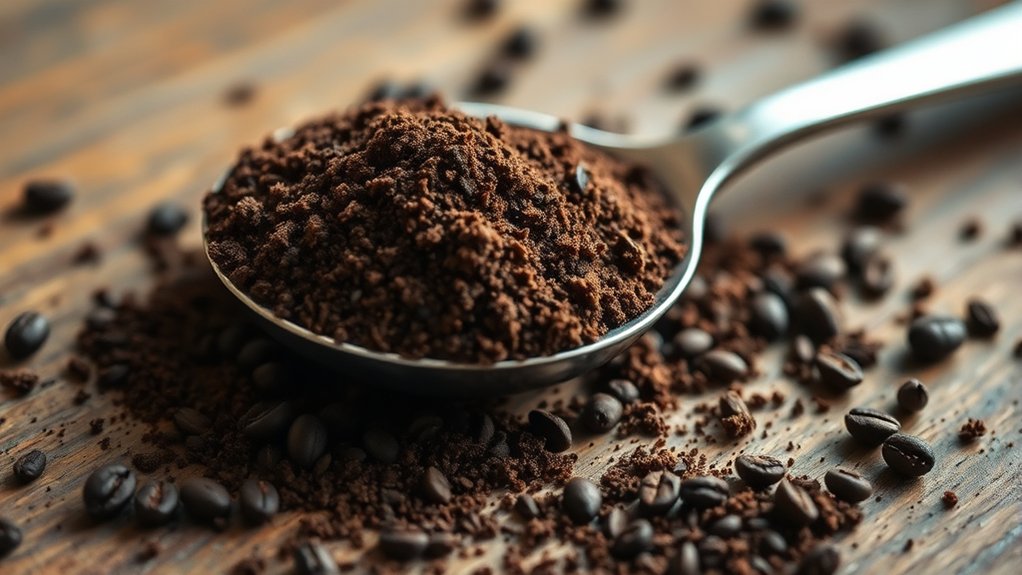
Although it may seem straightforward, measuring coffee by tablespoons requires understanding that the weight varies depending on the grind size and coffee type.
Measuring coffee by tablespoons isn’t simple—grind size and coffee type affect the weight significantly.
For example, a tablespoon of finely ground coffee weighs more than the same volume of coarser grounds. This variation directly impacts coffee flavor because the amount of coffee affects extraction.
If you use too little or too much, your brewing temperature mightn’t optimize flavor development. When you measure carefully, you guarantee the right coffee-to-water ratio, which helps maintain consistent brewing temperature and extraction.
Knowing that a tablespoon typically holds about 5 to 7 grams, depending on grind, lets you adjust your recipe precisely.
This attention to detail enhances your ability to control the final taste and aroma of your brew.
Measuring Coffee by Volume vs. Weight: Which Is Better?
Why does it matter whether you measure coffee by volume or weight? Measuring by weight gives you consistency, which directly impacts coffee flavor. Volume measurements like tablespoons can vary because of grind size or how densely the coffee is packed, leading to inconsistent extraction.
When you weigh your coffee, you control the exact amount of coffee solids interacting with water. This lets you fine-tune brewing temperature and extraction time for the ideal flavor. That precision helps you replicate your favorite brew every time, avoiding bitterness or under-extraction.
While volume measurements are convenient, relying on weight is better if you want to master your coffee’s taste and maintain brewing temperature control.
Ultimately, weighing your coffee ensures a more predictable and enjoyable cup.
Why Coffee Grind Size Affects Tablespoon Weight
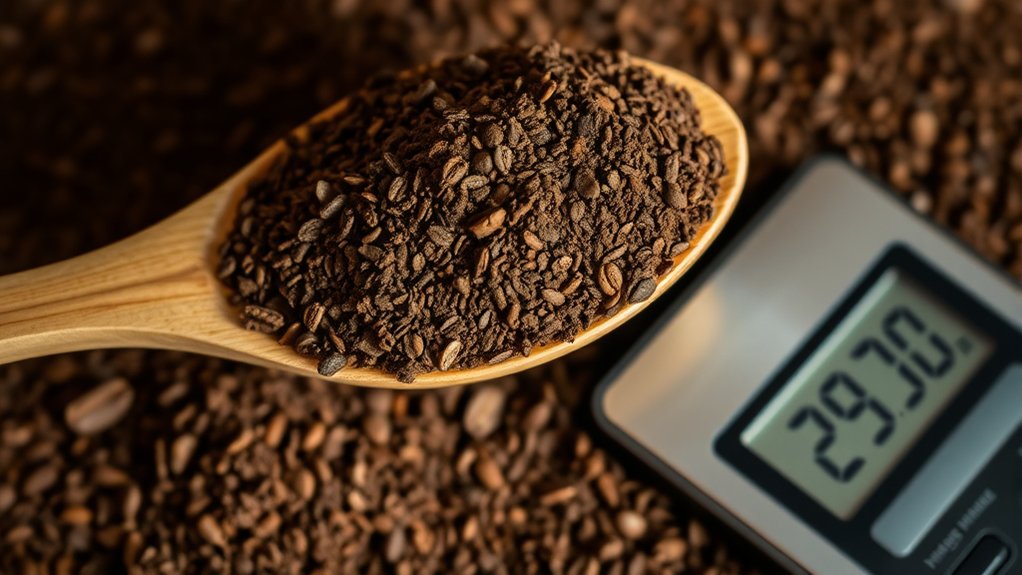
Since grind size changes how coffee grounds settle, it directly affects how much coffee fits into a tablespoon. When you grind coffee finer, the particles pack more densely, increasing weight per tablespoon.
Conversely, coarser grinds are chunkier, leaving more air gaps and reducing weight.
This matters because factors like coffee bean origin influence bean density and hardness, affecting grind consistency.
Plus, brewing temperature interacts with grind size to extract flavors effectively. So, precise measurement guarantees balance.
Consider these points: fine grinds weigh more per tablespoon due to compactness. Coarse grinds occupy more space but weigh less. Variations in coffee bean origin alter grind behavior and density.
Understanding this helps you measure accurately for consistent brewing results.
How Coffee Packing Density Affects Your Measurement
When you scoop coffee into a tablespoon, how tightly you pack it changes the actual amount of coffee you’re measuring. Denser packing means more grams per tablespoon, while a loose scoop weighs less. This variance is important because coffee bean origin can influence density. Beans from higher altitudes often have different moisture content and size, which affects how tightly they settle.
Also, brewing temperature interacts with your coffee’s density. A precise dose guarantees consistent extraction and ideal flavor at your chosen temperature. To get consistent results, avoid guessing and use a scale when you can.
Understanding packing density helps you control your brew strength and taste. It makes it easier to replicate your favorite cup regardless of bean origin or changes in brewing temperature.
What Are the Gram-to-Tablespoon Ratios for Common Coffee Types?
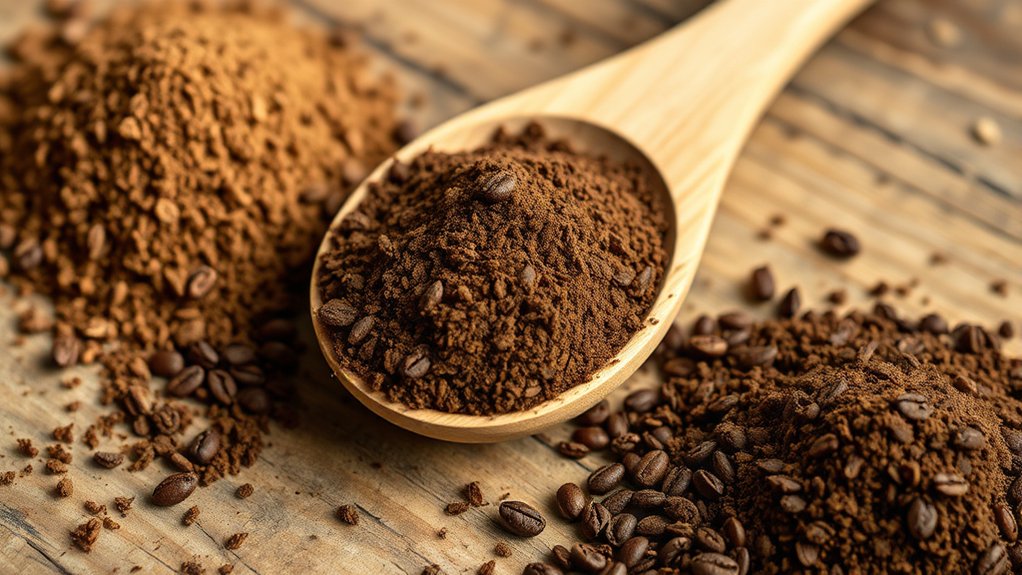
Knowing how packing density influences your coffee measurement sets the stage for understanding specific gram-to-tablespoon ratios across different coffee types. These ratios are essential because they impact extraction, affecting both coffee flavor and brewing temperature balance.
Here’s a quick guide:
– Ground Coffee (medium grind): Approximately 5 grams per tablespoon.
Ideal for drip or pour-over, it allows consistent extraction and balanced flavor.
- Espresso Grind (fine): About 7 grams per tablespoon due to finer particles, which absorb more water and require precise brewing temperature control.
- Coarse Grind (for French press): Roughly 4 grams per tablespoon, ensuring proper steeping time and extraction to avoid bitterness.
Converting Tablespoons to Grams for Popular Coffee Recipes
To convert tablespoons to grams accurately, you’ll want to keep in mind that the weight of a coffee spoon can vary depending on the grind size and roast.
So, it’s important to use a consistent method when measuring your ground coffee. That way, your recipe stays precise every time.
From there, you can easily adjust the grams to match your preferred brew strength and enjoy the perfect cup every time.
Standard Coffee Spoon Weight
Although measuring coffee by tablespoons is common, converting those measurements into grams guarantees consistency and accuracy in your brewing. The standard coffee spoon weight typically equals about 5 to 7 grams of ground coffee. This precision helps you maintain the ideal coffee flavor and ensures your brewing temperature extracts the best from each batch.
Keep these points in mind:
- A level tablespoon usually weighs around 5 grams, but scoops can vary by grind size.
- Adjusting grams rather than tablespoons helps you control strength and flavor consistency.
- Using grams lets you fine-tune brewing temperature effects, optimizing extraction.
Measuring Ground Coffee
When you convert tablespoons to grams for popular coffee recipes, you gain greater control over your brew’s strength and flavor. Measuring ground coffee by weight guarantees consistency, as volume can vary depending on grind size and density.
Typically, one tablespoon of ground coffee equals about 5 to 7 grams, but this fluctuates with factors like coffee bean origin. That origin influences grind texture and density.
Precise measurement helps you replicate favorite recipes accurately.
Adjusting For Brew Strength
Understanding the exact weight of your coffee grounds lets you fine-tune the brew strength just the way you like it. When you convert tablespoons to grams, you can tweak your recipe more precisely by thinking about more than just the amount.
For example, brewing temperature plays a big role in extraction. So, matching the right coffee weight with the ideal temperature helps you get a balanced cup.
Also, how you store your coffee affects freshness and consistency, which changes how strong your coffee tastes.
To adjust brew strength effectively:
- Increase grams per tablespoon for a bolder flavor without over-extracting.
- Keep your brewing temperature steady to avoid bitterness or sourness.
- Store your coffee in airtight containers to keep grind quality and strength intact.
How Different Brewing Methods Change Coffee Measurement
Since each brewing method extracts flavors differently, you’ll need to adjust your coffee measurement to achieve the best taste.
For example, espresso requires a finer grind and a precise dose, usually less than a tablespoon, because high brewing temperature and pressure extract flavors rapidly.
French press, by contrast, uses coarser grounds and a longer steep time.
So you’ll need more coffee per tablespoon to balance extraction.
Keep in mind, coffee bean origin also affects measurement.
Denser beans from high-altitude regions may weigh more per tablespoon than lighter beans.
Pour-over methods demand careful calibration of coffee amount and brewing temperature to optimize clarity and brightness.
How to Weigh Coffee Accurately Without a Scale
Although using a scale is the most accurate way to measure coffee, you can still achieve consistent results without one by relying on volume measurements and simple tools.
To control coffee flavor and maintain proper brewing temperature, you need to keep your coffee-to-water ratio consistent.
Here’s how you can weigh coffee accurately without a scale:
Use a standard tablespoon to level your coffee grounds. One tablespoon typically holds about 5-7 grams of medium ground coffee.
Adjust the grind size to influence extraction, since finer grounds may require slightly less volume for balanced flavor.
Keep your brewing temperature steady because fluctuations can alter the extraction process and affect taste.
Tips to Measure Coffee Consistently Every Time
To measure coffee consistently every time, you need to establish a straightforward routine and stick to it. Begin by leveling your tablespoon to avoid compacting grounds, which can alter coffee flavor. Use the same spoon and filling method each time. Scooping gently and leveling off with a knife works well.
Keep in mind that grind size affects volume, so maintain a consistent grind for balanced extraction. Also, control your brewing temperature because fluctuations here impact how flavors develop.
Pairing consistent measurement with stable brewing temperature ensures repeatable results.
Finally, avoid guessing. Document your process and only adjust when changing beans or brewing methods. This disciplined approach helps you achieve the coffee flavor you want, cup after cup.
Easy Tools and Tricks for Measuring Coffee Accurately
When you want to measure coffee accurately, relying solely on a tablespoon can lead to inconsistent results. This happens because grind size and how tightly the coffee is packed can vary a lot. To get the best flavor and keep your brewing temperature just right, precise measurement is key.
Here are some easy tools and tricks to help you out:
- Use a digital kitchen scale to measure coffee by weight. This way, you get consistent dosing no matter the grind density.
- Invest in a coffee measuring scoop designed to hold a specific gram amount. It cuts down on guesswork and makes your routine easier.
- Stir the grounds lightly before measuring. This helps avoid compacted coffee, which can change how your coffee extracts and tastes.
Frequently Asked Questions
Can I Use Tablespoons to Measure Coffee for Espresso?
You can use tablespoons to measure coffee for espresso, but it’s not the most precise method. Espresso demands accuracy to achieve the right coffee flavor profiles, so weighing your grounds with a scale is better.
Tablespoons vary in how much coffee they hold, which can affect extraction and taste.
For consistent coffee brewing techniques, invest in a digital scale. This way, you control the dose and get the best espresso every time.
It’s a small step that makes a big difference in your cup.
How Does Water Temperature Affect Coffee Measurement?
Imagine brewing coffee like painting. Water temperature is your brush. If it’s too hot or cold, you’ll change the coffee flavor a lot.
When water’s between 195°F and 205°F, it pulls out flavors evenly. This helps keep your brewing consistent.
Using the right temperature stops sour notes from under-extraction or bitterness from over-extraction.
Does Altitude Impact Coffee Weight or Volume?
Yes, altitude effects can impact measurement accuracy when weighing or measuring coffee.
At higher altitudes, air pressure decreases, which might slightly affect how coffee grounds settle. This can potentially alter volume but not the actual weight.
If you rely on volume measurements like tablespoons, this can cause inconsistency.
So, to guarantee precision, it’s best to use a scale to measure coffee by weight.
This is especially true if you’re brewing in varied altitudes.
What Is the Ideal Coffee-To-Water Ratio for Cold Brew?
The ideal coffee-to-water ratio for cold brew is typically 1:4 to 1:8, depending on how strong you like your coffee flavor. Starting with 1 part coffee grounds to 4 parts water gives you a bold, rich brew.
Adjusting this ratio helps maintain brewing consistency, ensuring each batch tastes just right.
Experiment within this range to find your perfect balance for smooth, flavorful cold brew every time.
How Long Should I Store Coffee After Measuring?
You want to store your coffee after measuring quickly, and you want it fresh. Coffee freshness lasts best when you keep your grounds in airtight storage containers. This slows oxidation right away.
Ideally, use the coffee within one to two weeks after measuring to enjoy maximum flavor. Beyond that, stale notes creep in.
Keep containers in a cool, dark place, and avoid moisture.
That way, every cup tastes as vibrant as you expect.
Conclusion
Now that you know how coffee’s weight dances with grind size and packing, you’re set to brew with confidence. Measuring by weight is like having a trusty compass in your coffee adventure, guiding you to consistency and flavor clarity.
Even without a scale, a few smart tricks keep you on track. So, embrace these subtle nuances, and watch your daily cup transform from a simple routine into a refined ritual of taste and precision.