How Many Tablespoons Of Coffee For 4 Cups – Perfect Brewing Ratio Guide
You’ll want about 8 tablespoons of ground coffee to brew 4 standard cups, balancing strength and flavor perfectly. Accurate measurement matters, so using a kitchen scale or level tablespoons helps you avoid weak or bitter brews.
Adjust the amount slightly depending on your brewing method, whether it’s French press, drip, or espresso, to match your taste. Proper grind size and water temperature also play a big role.
Keep going to discover tips on customizing strength and storing coffee for freshness.
Ideal Tablespoons of Coffee for 4 Cups
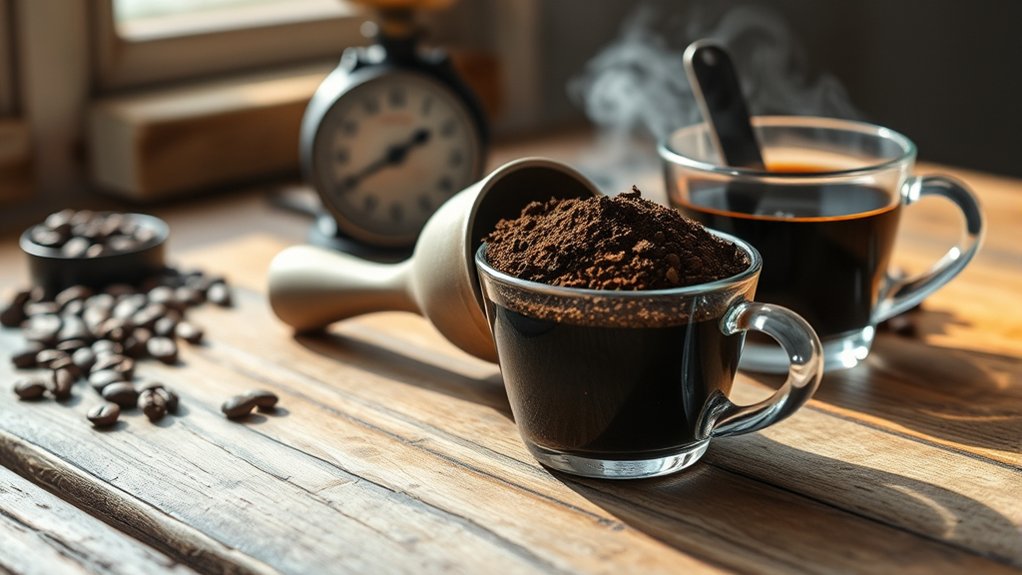
When brewing 4 cups of coffee, you’ll want to use about 8 tablespoons of ground coffee to achieve a balanced flavor. This amount guarantees your brew isn’t too weak or overpowering. Using the right quantity maximizes the coffee aroma, allowing those rich, inviting scents to develop fully during extraction.
Pay close attention to your brewing temperature, ideally between 195°F and 205°F, as it influences how well the coffee grounds release their flavors and aromas. If the temperature is too low, your coffee might taste flat and lack depth. Too high, and it could become bitter.
Why Coffee-to-Water Ratio Matters for 4 Cups
You need the right coffee-to-water ratio to get the perfect brew for 4 cups. It’s all about balance. When you nail the ratio, your coffee won’t taste too weak or too bitter.
And here’s the thing—once you’ve got that down, you can consistently enjoy a rich, satisfying cup every single time.
Easy, right?
Brewing Balance Essentials
Because the coffee-to-water ratio directly influences the strength and flavor of your brew, getting it right is crucial when making 4 cups. The balance ensures you extract ideal flavors from coffee plantations’ beans, respecting their complexity without overpowering your palate.
Using precise measurements with appropriate brewing accessories, like a digital scale or calibrated scoop, helps maintain consistency. If you add too much coffee, your drink becomes bitter and heavy. Too little, and it tastes weak and flat.
Impact On Flavor
How exactly does the coffee-to-water ratio shape the flavor of your 4-cup brew? The balance directly influences extraction from your coffee beans, affecting taste and brewing aroma. Too little coffee leads to under-extraction, making your brew weak and sour.
Too much, and you risk over-extraction, resulting in bitterness and a harsh aroma.
| Ratio (Tbsp per 4 cups) | Flavor Profile | Brewing Aroma |
|---|---|---|
| 4 | Weak, underdeveloped | Faint, muted |
| 6 | Balanced, smooth | Bright, inviting |
| 8 | Strong, intense | Bold, rich |
| 10 | Overpowering, bitter | Harsh, overwhelming |
Adjusting the ratio guarantees you access the full potential of your coffee beans every time.
How to Measure Coffee for 4 Cups Exactly

Wondering exactly how much coffee you need for 4 cups? Start by considering your coffee beans’ roast and grind size, since these affect extraction and flavor.
Typically, use 1 to 1.5 tablespoons of ground coffee per 6-ounce cup, so for 4 cups, measure between 4 to 6 tablespoons.
To guarantee precision, scoop level tablespoons rather than heaping.
Remember, water temperature should stay between 195°F and 205°F during brewing. This range optimizes extraction without bitterness.
Using fresh coffee beans and grinding just before brewing enhances aroma and taste.
By measuring your coffee carefully and controlling brewing temperature, you’ll consistently brew a balanced cup for 4 servings every time.
This method ensures efficiency and flavor precision without guesswork.
Kitchen Scale or Tablespoons: Which Is More Accurate?
Measuring coffee by tablespoons can work well for everyday brewing, but if you want the most consistent results, a kitchen scale offers greater accuracy. Tablespoons vary in size and can’t account for differences in coffee grind size or bean density, which depend heavily on coffee origins.
A scale ensures you use the exact weight needed, allowing your brewing equipment to perform at its best. Whether you’re using a French press or espresso machine, precise measurement influences extraction and flavor balance.
By weighing your coffee, you maintain consistency cup after cup, regardless of variations in bean roast or origin.
While tablespoons are convenient, a scale is the best tool to respect your coffee’s unique profile and get the most from your brewing equipment every time. It might take a little extra effort, but it’s worth it if you want to enjoy your coffee at its fullest.
Adjusting Coffee for 4 Cups by Brewing Method
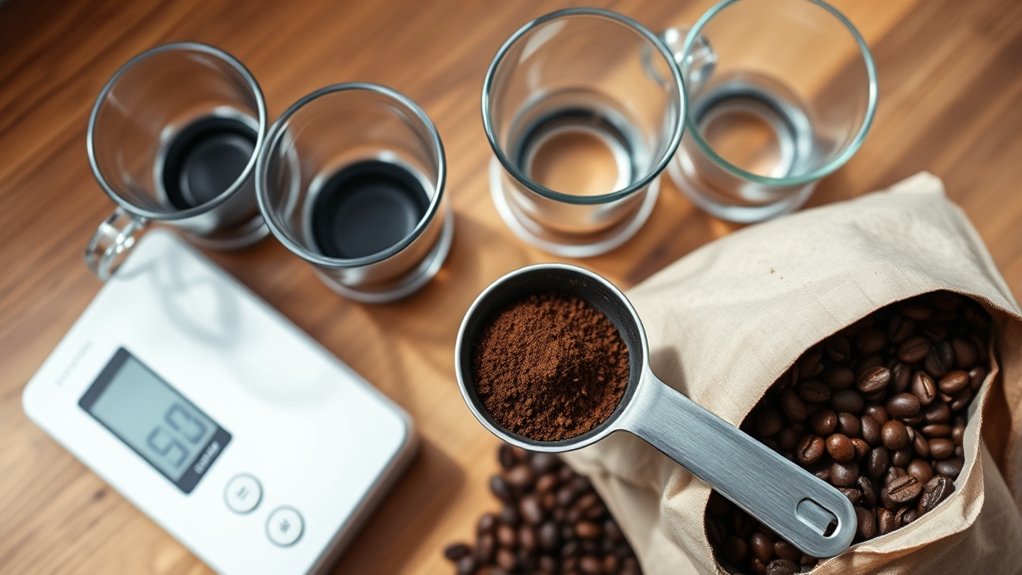
Although the general guideline suggests around 4 tablespoons of coffee for 4 cups, you’ll need to adjust the amount based on your brewing method to achieve ideal flavor. Different methods extract coffee compounds uniquely, influencing the taste and intensity.
General guidelines suggest 4 tablespoons per 4 cups, but adjust by brewing method for optimal flavor and intensity.
Consider these adjustments:
- Drip Coffee Maker: Stick close to 4 tablespoons, but tweak slightly to highlight your bean origin’s nuances and enhance coffee art in your cup.
- French Press: Use 5 tablespoons for a richer, fuller-bodied brew that showcases bold flavors and texture.
- Espresso Machine: Use 7 to 8 tablespoons for concentrated shots. Precision here is key to coffee art and capturing subtle bean origin notes.
- Pour Over: Adjust between 3.5 to 4.5 tablespoons, balancing extraction and clarity to bring out the bean origin’s distinct profile.
Tailor your coffee amount to each method for the perfect cup every time.
How Grind Size Affects Coffee for 4 Cups
Adjusting the amount of coffee for different brewing methods sets the stage for another key factor: grind size. The particle size directly impacts extraction, influencing flavor balance and strength.
When brewing 4 cups, you need a grind consistency that matches your method—coarser for French press, medium for drip, and fine for espresso.
Inconsistent grind sizes cause uneven extraction, leading to bitterness or weak taste. So, using a quality grinder that produces uniform particles guarantees you get a clean, balanced cup every time.
Remember, even a slight variation in particle size can alter brewing time and flavor intensity.
Common Mistakes When Measuring Coffee for 4 Cups
You might be overestimating how much coffee you need for 4 cups. That can easily lead to a bitter brew.
Another mistake people often make is ignoring the grind size. It really matters because it affects how the coffee extracts and, ultimately, the flavor.
Overestimating Coffee Quantity
Why do so many people overestimate the amount of coffee needed for 4 cups? It often comes down to assumptions about coffee beans and brewing equipment. Here’s why you might be using too much:
First, people assume all coffee beans have the same density, which leads to inconsistent scoop sizes. Then there’s the issue of using brewing equipment without calibrating its measurements. That often causes you to add extra coffee “just in case.”
Also, relying on tablespoons without leveling them can inflate the actual coffee quantity. And sometimes, ignoring the brewing method’s specific ratio recommendations pushes you to add more than necessary.
It’s easy to see how these little habits add up. But once you get a handle on them, your coffee will taste just right without any waste!
Ignoring Grind Size
Although measuring coffee by tablespoons seems straightforward, ignoring grind size can throw off your brew’s balance. A coarse grind extracts differently than a fine grind, affecting both flavor and strength. When you use the same tablespoon amount regardless of grind, you risk under- or over-extraction, leading to bitter or weak coffee.
To keep things consistent, adjust your coffee quantity based on grind size. Also, always consider brewing temperature because hotter water extracts more quickly.
Proper coffee storage matters too; stale grounds won’t brew properly no matter how precise your measurements are.
By factoring in grind size along with storage and brewing temperature, you’ll get a more accurate coffee-to-water ratio. This means a perfectly balanced cup every time you brew four cups.
Don’t let grind size be the overlooked variable in your coffee routine.
Tips for Brewing a Perfect Pot of 4 Cups
When aiming for a perfect pot of 4 cups, paying attention to water temperature and coffee grind size makes all the difference. To achieve ideal flavor, follow these key tips:
Use water heated between 195°F and 205°F to avoid bitterness or under-extraction. Choose a medium grind to balance extraction time and flavor clarity.
Select beans based on origin for distinct flavor profiles. Fresh, high-quality beans really enhance your coffee art.
Measure coffee precisely—about 8 tablespoons for 4 cups—to maintain consistency. It’s a simple step that makes a big difference.
How to Customize Coffee Strength When Brewing 4 Cups
Since everyone’s taste preferences vary, you can easily customize the strength of your 4-cup brew by adjusting the amount of coffee grounds. Start by increasing or decreasing the tablespoons of coffee based on your desired intensity.
Adjust your 4-cup brew’s strength by simply varying the tablespoons of coffee grounds to suit your taste.
For a bolder flavor, add an extra half tablespoon per cup; for a milder taste, reduce it slightly.
Remember, coffee bean origins impact strength. Beans from regions like Sumatra offer a heavier body, while Ethiopian beans tend to be brighter and lighter.
Your brewing equipment also plays a role. A drip coffee maker extracts differently than a French press, so adjust grounds accordingly.
Give it a try and experiment within these parameters to find your perfect balance. That way, each 4-cup brew matches your taste without compromising the overall extraction and flavor profile.
How to Store Coffee to Keep It Fresh for Accurate Measurement
To keep your coffee fresh and make sure you get accurate measurements, store it in an airtight container. It’s best to keep that container away from heat and light.
Try to find a cool, stable spot to help preserve the flavor and stop your coffee from going stale.
Also, be careful to avoid moisture and exposure to air, since both can quickly ruin the quality of your coffee.
Keeping these things in mind will help you enjoy every cup just the way you like it.
Optimal Coffee Storage Methods
Although measuring the right amount of coffee is essential, storing it properly plays an equally important role in maintaining its freshness for accurate measurement. When you master ideal coffee storage methods, your coffee brewing results improve greatly.
Follow these storage techniques: Use an airtight container to prevent exposure to oxygen, which degrades freshness. Store your coffee in a cool, dark place to avoid light and heat, which accelerate staling.
Keep whole beans intact until brewing; grind just before use to preserve flavor and aroma.
Also, avoid moisture by keeping the container dry. Humidity damages coffee quality quickly, so it’s best to keep things dry.
Ideal Temperature For Freshness
Proper storage goes beyond just keeping your coffee in an airtight container away from light and moisture. Temperature plays a big role in preserving freshness. You should store your coffee at a cool, stable temperature, ideally between 50°F and 70°F.
Avoid extremes like heat or cold because they can degrade the coffee’s aroma and change its natural oils. While it might seem logical to refrigerate coffee, the fridge’s fluctuating temperatures cause condensation. That moisture can harm freshness and make it harder to measure your coffee accurately.
Instead, keep your coffee in a dark, dry cupboard away from heat sources. Maintaining this ideal temperature helps preserve the coffee’s volatile compounds. That way, your brewing temperature can extract the best flavors.
Avoiding Moisture And Air
Since moisture and air can quickly deteriorate your coffee’s quality, you need to store it in airtight containers that block out humidity and oxygen. Proper coffee storage guarantees accurate measurement and preserves flavor.
To maintain moisture control, follow these steps:
- Use opaque, airtight containers to prevent light and air exposure.
- Store your coffee in a cool, dry place away from heat sources.
- Avoid frequent opening to minimize air exchange and moisture buildup.
- Only grind coffee just before brewing to limit exposure to air and moisture.
Keeping your coffee fresh isn’t that hard once you get the hang of it. Just a few simple habits can make a big difference in taste.
Frequently Asked Questions
Can I Use Instant Coffee Instead of Ground Coffee for 4 Cups?
Yes, you can use instant coffee instead of ground coffee for 4 cups, but keep in mind the flavor will differ.
Instant coffee substitution works best when you prioritize convenience over rich taste.
Since coffee bean selection affects flavor depth, instant coffee won’t deliver the same freshness or complexity as freshly ground beans.
Use about 2 teaspoons of instant coffee per cup and adjust to your preference for a quick, easy brew.
What Type of Coffee Beans Are Best for Brewing 4 Cups?
You’ll want to choose freshly roasted Arabica beans for the best coffee flavor when brewing 4 cups. Arabica offers balanced acidity and a rich aroma, which really brings out your brew’s complexity.
Always check the bean freshness. Look for a roast date within the past two weeks to guarantee the ideal flavor.
Avoid pre-ground coffee if you can. Grinding just before brewing preserves essential oils and maximizes taste. This way, you get a full-bodied, vibrant cup every time.
How Long Should I Brew Coffee for 4 Cups?
You should brew coffee for 4 cups about 4 to 5 minutes, depending on your coffee grind size. A medium grind works best for drip brewing, balancing extraction within this time frame.
If your grind is finer, reduce brewing time slightly to avoid bitterness. Coarser grinds need a bit longer.
Keep an eye on brewing time to make certain your coffee’s flavor is balanced and not over- or under-extracted.
Does Water Temperature Affect Brewing 4 Cups of Coffee?
Yes, water temperature profoundly affects brewing 4 cups of coffee. You should aim for a brewing temperature between 195°F and 205°F to extract the best flavors.
Water quality also plays an essential role; clean, filtered water guarantees a balanced taste without unwanted minerals.
If the temperature’s too low, your coffee will taste weak. Too high, and it’ll turn bitter.
Controlling these factors assures a perfect cup every time.
Can I Make Iced Coffee Using the 4-Cup Brewing Ratio?
Of course, you can make iced coffee using the 4-cup brewing ratio because who doesn’t love a splash of lukewarm disappointment? But seriously, brewing hot coffee with that ratio then cooling it down works fine. Just expect some dilution from the ice.
For a bolder, smoother experience, try cold brew instead. It uses coarser grounds and longer steeping, giving you rich, less acidic iced coffee that’s worth the wait.
Conclusion
Brewing the perfect 4 cups of coffee isn’t just about tossing in a random scoop. It’s a science. When you measure carefully, you get a richer, more balanced flavor every time.
Think of your coffee-to-water ratio as the secret handshake between you and your brew. Master it, and you’ll never settle for bitter or weak coffee again. So grab your tablespoons or a kitchen scale and start crafting coffee that truly wakes you up.