How Much Caffeine In A Cold Brew – Complete Caffeine Guide
You can expect a 16-ounce cold brew to pack between 200 and 300 mg of caffeine, depending on brewing methods, bean type, and coffee-to-water ratio. Using coarsely ground beans and longer steep times (12-24 hours) boosts caffeine while keeping bitterness low.
Robusta beans contain nearly twice the caffeine of Arabica, which affects the strength. Cold brew generally offers more caffeine than iced coffee and espresso. Keep exploring to discover how different factors fine-tune your caffeine kick.
What Is Cold Brew and How Is Caffeine Extracted?
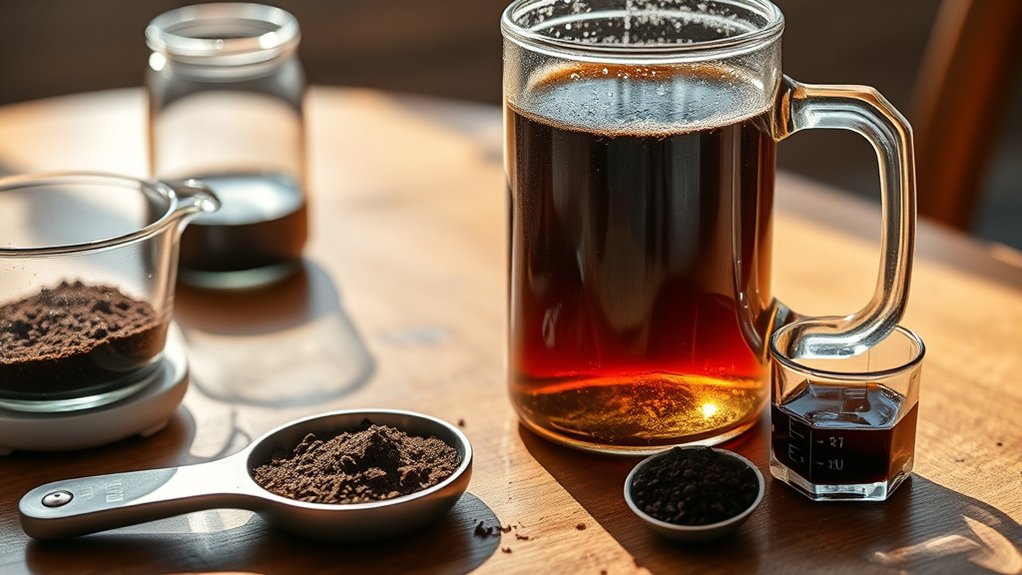
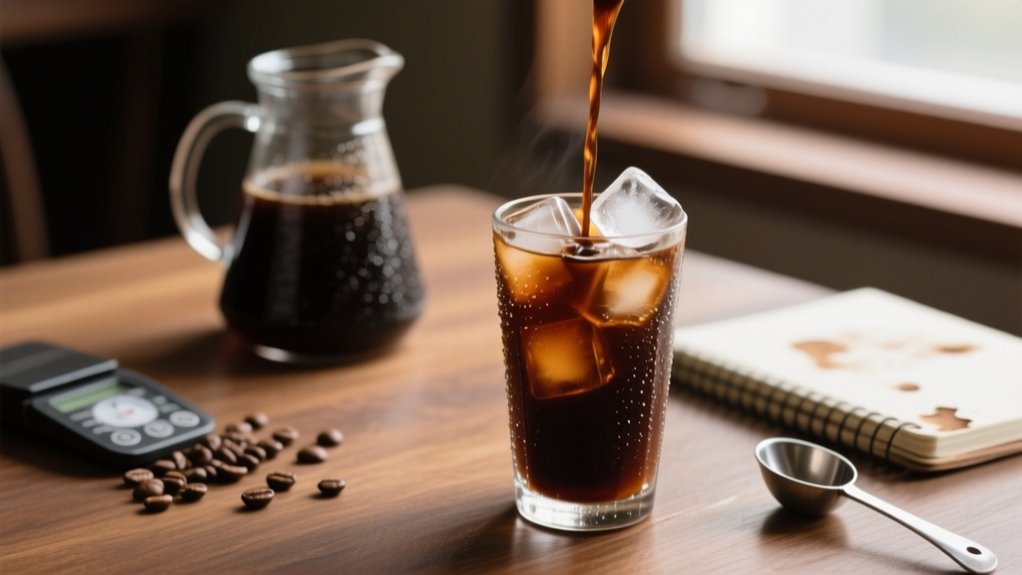
Although cold brew doesn’t use heat, it still extracts caffeine by steeping coarsely ground coffee in cold or room-temperature water for 12 to 24 hours. This brewing method relies on a slower caffeine extraction process, which the extended steeping time compensates for, resulting in notable caffeine levels.
You’ll want to use a coffee-to-water ratio between 1:4 and 1:8 to control strength and caffeine concentration. Using coarsely ground coffee is key; finer grounds can lead to over-extraction and bitterness.
Adjust your coffee-to-water ratio and use coarse grounds to balance flavor and avoid bitterness.
The type of beans also matters. Robusta beans contain nearly twice the caffeine compared to Arabica beans, greatly affecting your cold brew’s caffeine content.
Understanding these factors helps you craft a smooth, potent cold brew tailored to your taste and caffeine needs.
Typical Caffeine Levels in Cold Brew
You’ll find that a typical 16-ounce cold brew packs about 200-300 mg of caffeine. That makes it stronger than most iced coffees.
Brands like Starbucks and Dunkin’ Donuts each offer different caffeine levels, so it definitely pays to check their numbers.
Plus, things like brewing time and the coffee-to-water ratio can change the caffeine content quite a bit.
Average Caffeine Content
When you choose cold brew, you’re opting for a coffee that packs a serious caffeine punch, typically between 200 and 300 mg per 16-ounce serving.
Cold brew coffee contains more caffeine per 16 ounces than many other coffee types, thanks to a brewing ratio that usually ranges from 1:4 to 1:8.
The amount of caffeine extracted when coffee steeps is influenced by factors like steeping time, which can last between 12 to 24 hours, and the coffee beans used.
This slow, cold extraction method pulls out a higher caffeine concentration, resulting in a stronger typical serving.
Understanding the average caffeine content helps you gauge your intake, especially since cold brew often surpasses iced coffee in caffeine strength.
Brand Variations
Since caffeine content varies widely among brands, knowing what to expect can help you choose the right cold brew for your needs. Cold brew caffeine levels differ due to brand variations, brewing methods, and the coffee-to-water ratio.
For instance, Starbucks cold brew contains about 205 mg of caffeine per 16 oz, offering a moderate boost. Dunkin’ Donuts cold brew is stronger, with roughly 260 mg caffeine per serving. Some brands push even higher, reaching up to 300 mg per 16 oz, depending on their brewing techniques and coffee bean type.
Typically, cold brew coffee delivers between 200 and 300 mg caffeine per serving, making it more potent than iced coffee.
Understanding these brand variations helps you pick a cold brew that matches your caffeine needs.
Brewing Influences
Although cold brew coffee typically contains between 200 and 300 mg of caffeine per 16 oz serving, the exact amount depends heavily on how it’s brewed.
The caffeine content varies with coffee beans; Robusta beans can nearly double caffeine compared to Arabica.
Brewing ratios play a key role. Using a 1:4 water-to-coffee ratio results in a stronger cold brew concentrate than a 1:8 ratio.
Steeping time also matters; longer steeping times, usually between 12 to 24 hours, help extract caffeine more effectively.
Using coarsely ground beans guarantees peak extraction without bitterness.
Comparing Cold Brew Caffeine to Hot Coffee, Iced Coffee, and Espresso
If you’re curious about how cold brew stacks up against other coffee types in caffeine content, it packs a significant punch. A 16-ounce cold brew typically contains 200-260 mg of caffeine, depending on the brewing method and steeping time.
Cold brew delivers a strong caffeine kick, with 200-260 mg per 16-ounce serving.
Hot coffee usually offers a higher caffeine content, ranging from 210 to 360 mg per 16 ounces, thanks to its shorter brewing process and hotter water that enhance caffeine extraction.
Iced coffee, by contrast, has about 165 mg per 16-ounce serving, making it less potent than cold brew.
Espresso, served in smaller 1.5-ounce shots, averages 150 mg of caffeine, so cold brew’s larger serving size means more caffeine overall.
Understanding these differences helps you choose the right caffeine boost for your preference.
How Brew Time and Coffee-to-Water Ratio Affect Cold Brew Caffeine
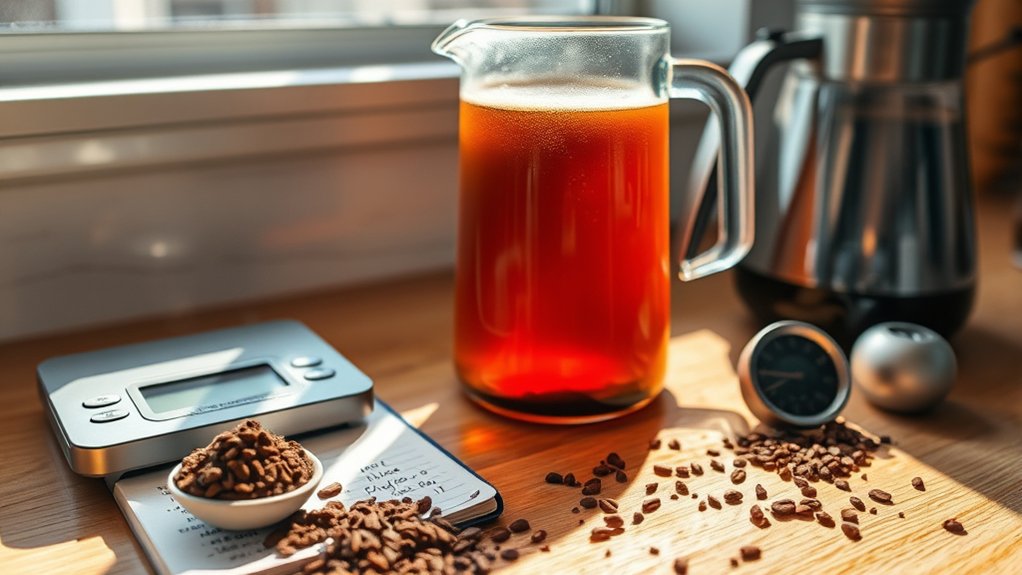
When you adjust the brew time and coffee-to-water ratio, you directly influence how much caffeine ends up in your cold brew. The caffeine content depends largely on how long you let the coffee grounds steep and the ratio you use during brewing. Here’s what you should know:
- Brew Time: Longer steeping times, usually 12 to 24 hours, increase caffeine extraction, giving you a stronger cold brew.
- Coffee-to-Water Ratio: A 1:4 ratio yields higher caffeine content compared to a 1:8 ratio, making your drink more potent.
- Coffee Grounds: Using coarsely ground coffee helps optimize caffeine extraction without over-extracting bitter flavors.
How Bean Type and Grind Size Influence Cold Brew Caffeine
You’ll notice that choosing Robusta or Arabica beans actually changes your cold brew’s caffeine kick.
Robusta packs nearly twice the caffeine compared to Arabica, so it definitely makes a difference.
Grind size also plays a big role in how your cold brew turns out.
Coarser grounds work best because they pull out caffeine without bringing in bitterness.
Bean Varieties Impact
Although many factors influence the caffeine content in cold brew, the type of coffee bean and grind size play an essential role. Choosing your coffee beans impacts both caffeine extraction and flavor profile. Here’s what you should know:
- Robusta beans pack nearly twice the caffeine content compared to Arabica beans, making them ideal if you want a stronger cold brew.
- Coarser grind sizes suit cold brew to prevent over-extraction, which maintains a balanced flavor without excessive bitterness.
- Adjusting your brewing ratio and steeping time, like using a 1:4 ratio and steeping 18-24 hours, can boost caffeine extraction further.
Grind Size Effects
Since grind size directly impacts caffeine extraction, choosing the right grind is essential for crafting your ideal cold brew. Coarser grinds release caffeine more slowly, producing smoother flavors and balanced caffeine content.
A finer grind boosts caffeine extraction but risks bitterness from over-extraction. The coffee bean type also influences caffeine content. Robusta beans nearly double Arabica’s caffeine, affecting the final brew strength.
Combining grind size with the coffee-to-water ratio helps you control caffeine levels during steeping. Aim for a grind size around 1.0 to 1.5 mm for peak extraction.
| Grind Size | Effect on Cold Brew |
|---|---|
| Coarser Grinds | Smoother flavor, lower caffeine |
| Medium Grind | Balanced caffeine and flavor |
| Finer Grind | Higher caffeine, risk bitterness |
Caffeine Extraction Rates
Understanding how caffeine extraction rates vary with bean type and grind size helps you craft the perfect cold brew.
Your choice of beans impacts caffeine content greatly, with Robusta beans nearly doubling Arabica’s caffeine levels.
Grind size also matters. Coarsely ground coffee balances flavor profile and caffeine extraction during steeping.
To optimize caffeine extraction, consider these key factors:
- Use Robusta beans for higher caffeine content.
- Adjust grind size. Coarsely ground is standard, but finer grounds increase caffeine extraction at the risk of bitterness.
- Control steeping time and coffee-to-water ratio. Longer steeping (18–24 hours) and a higher ratio (like 1:4) boost caffeine content in your cold brew coffee.
How to Customize Your Cold Brew’s Caffeine Content
If you want to boost your cold brew’s caffeine punch, start by adjusting the coffee-to-water ratio. Using 1:4 will give you a stronger concentrate than the standard 1:8.
You can also customize your cold brew’s caffeine content by choosing Robusta beans. They’ve nearly double the caffeine of Arabica, which enhances the overall strength.
Pay attention to brewing time; steeping coffee grounds for 18 to 24 hours extracts more caffeine than shorter periods.
Adjust grind size to a coarser texture to improve extraction efficiency, ensuring you get the most caffeine out of your coffee.
Finally, experiment with dilution by adding water or milk to control the caffeine content, tailoring your cold brew exactly to your taste and caffeine needs.
Brewing Techniques That Affect Cold Brew Caffeine Levels
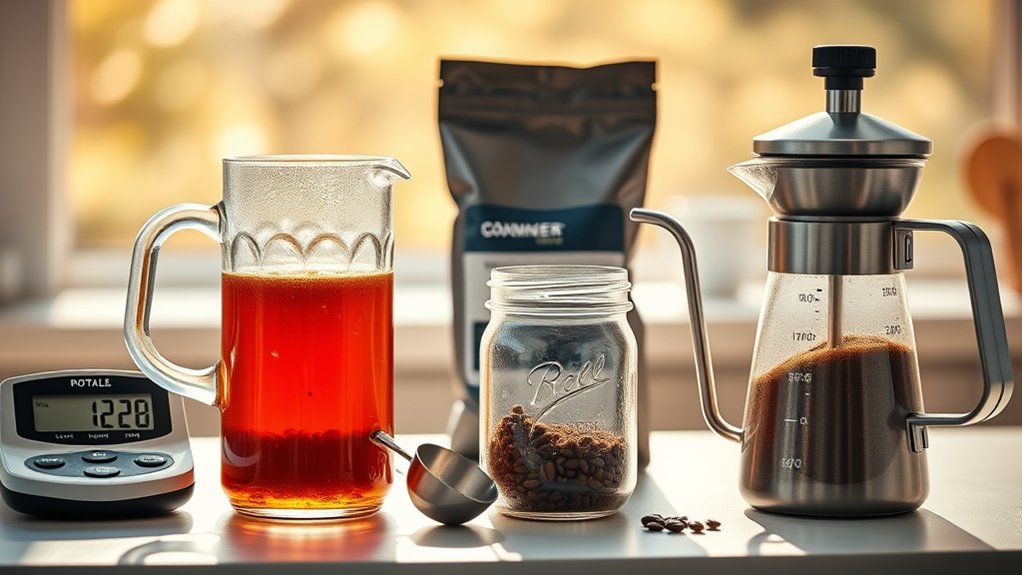
While cold brew relies on cold or room temperature water, the brewing techniques you choose directly impact the caffeine levels in your cup.
To maximize caffeine extraction, consider these key factors:
- Coffee-to-water ratio: A stronger ratio like 1:4 boosts caffeine concentration compared to a weaker 1:8 ratio. This affects overall extraction efficiency.
- Steeping time: Longer steeping (18-24 hours) allows more caffeine to dissolve, which helps make up for the lower temperature’s slower extraction.
- Grind size and bean type: Coarser grounds optimize extraction, but using Robusta beans, which have nearly double the caffeine of Arabica, can greatly raise caffeine content.
Health Benefits and Risks of Cold Brew Caffeine
Caffeine in cold brew offers both health benefits and potential risks that you should consider.
Cold brew’s low acidity makes it easier on your stomach and teeth, especially if you have gastrointestinal sensitivities. It also packs antioxidants like chlorogenic acid, which help fight oxidative stress and support your overall health.
Cold brew’s gentle acidity and antioxidants promote digestive comfort and protect against oxidative stress.
Thanks to its caffeine content, cold brew boosts mental alertness and focus, making it a great pick-me-up. However, consuming too much can cause side effects such as anxiety, jitters, and sleep problems.
To stay safe, stick to the recommended caffeine intake, about 400 mg daily or 1-2 cups of diluted cold brew concentrate.
When served iced, cold brew can be hydrating, but always listen to your body’s tolerance to avoid negative effects.
Managing Your Caffeine Intake With Cold Brew
You can easily control how much caffeine you get from cold brew by adjusting things like the type of beans, the grind size, and how long you steep it.
Try experimenting with diluting your brew or tweaking the coffee-to-water ratio to fit your caffeine needs.
Caffeine Control Strategies
If you want to manage your caffeine intake from cold brew, several straightforward strategies can help you tailor its strength.
Adjusting the coffee-to-water ratio is key. A 1:4 ratio boosts caffeine content, while 1:8 creates a milder brew.
Steeping time also matters. Shorter steeping (around 12 hours) lowers caffeine, whereas longer steeping (up to 24 hours) increases it.
Choosing Arabica beans instead of Robusta reduces caffeine since Arabica naturally contains less.
Here are three effective caffeine control strategies:
- Modify the coffee-to-water ratio to control caffeine levels.
- Shorten steeping time to reduce caffeine extraction.
- Dilute your cold brew with water or milk to lower caffeine concentration.
Don’t forget to monitor serving sizes, as larger servings considerably increase caffeine intake.
Customizing Cold Brew
While crafting your perfect cold brew, you can easily manage caffeine levels by tweaking a few key factors.
Customizing cold brew starts with adjusting the coffee-to-water ratio; a 1:4 ratio delivers higher caffeine strength, while 1:8 lowers it.
Steeping time also plays a vital role. Longer steeping (18-24 hours) enhances caffeine extraction compared to shorter periods.
Choosing your beans matters, too. Robusta beans pack nearly twice the caffeine of Arabica beans, ideal for a stronger kick.
Use a coarser grind size to optimize extraction and balance flavor with caffeine content.
Finally, dilution methods like adding water or milk let you control caffeine strength after brewing, ensuring your cold brew suits your caffeine needs perfectly.
Top Cold Brew Brands and Their Caffeine Content Guide
How much caffeine can you expect from your favorite cold brew brand? The caffeine content varies widely due to brewing time, coffee bean type, and water-to-coffee ratios.
Here’s a quick guide to popular options:
- Starbucks cold brew offers about 205 mg of caffeine per 16 oz, perfect if you want a moderate boost.
- Dunkin’ Donuts cold brew packs 260 mg per 16 oz, delivering a stronger caffeine punch.
- Stumptown Coffee Roasters leads with roughly 280 mg per 16 oz, ideal for those seeking an extra kick.
On the milder side, Blue Bottle Coffee’s cold brew has around 200 mg caffeine per 16 oz.
Knowing these differences helps you choose the perfect cold brew to match your caffeine needs.
Frequently Asked Questions
Can Cold Brew Coffee Go Bad if Left Unrefrigerated?
Yes, cold brew coffee can go bad if left unrefrigerated beyond its cold brew shelf life.
Different brewing methods impact coffee concentration and flavor profile, but improper storage containers and exposure to room temperature speed up spoilage.
You’ll notice taste differences and potential health risks. To keep the health benefits and ideal taste, refrigerate your cold brew promptly.
Dilution from milk or sweeteners also shortens freshness, so serve it chilled and consume within a few days.
What Is the Best Water Temperature for Making Cold Brew?
Think of the perfect water temperature as a gentle morning breeze that coaxes the best from your coffee.
You’ll want cold water between 35°F to 70°F to balance cold brew ratios and maximize flavor profiles.
This temperature, combined with a coarse coffee grind and a long brewing time of 12-24 hours, highlights smoothness and health benefits.
Don’t forget water quality, steeping methods, and storage tips to keep your brew fresh and delicious for serving suggestions.
How Long Does Cold Brew Coffee Stay Fresh After Brewing?
Your cold brew shelf life typically lasts up to two weeks in ideal storage conditions: airtight container, refrigerated, and away from light.
For best flavor preservation, consume homemade cold brew within 7 to 10 days.
Brewing batch size affects freshness; smaller batches stay fresher.
Remember, cold brew dilution shortens shelf life compared to concentrate.
Use fresh coffee beans for maximum taste.
Follow serving recommendations by labeling your brew date to enjoy your cold brew concentrate at its best.
Is Cold Brew Coffee Acidic Compared to Hot Coffee?
Cold brew acidity is much lower compared to hot coffee, thanks to its cold brewing method. This reduces acid extraction, resulting in a smoother flavor profile that many prefer for its mild taste.
You’ll notice less bitterness and acidity, which can benefit your stomach and teeth.
Serving temperatures and ingredient variations also affect taste, but overall, cold brew offers a gentler option.
This aligns with consumer perceptions favoring health benefits and flavor differences.
Can You Use the Same Coffee Grounds for Multiple Cold Brews?
Yes, you can reuse coffee grounds for multiple cold brews, but expect lower caffeine content and weaker flavor extraction each time.
The brewing process with reused grounds needs a shorter steep, around 6-12 hours, to avoid bitterness.
Adjust your brewing ratio to maintain strength.
For the best cold brew, fresh coffee grounds deliver richer taste.
Proper storage tips help preserve grounds between brews, but reusing grounds always means a strength comparison favors the first batch.
Conclusion
When it comes to cold brew, knowing your caffeine content helps you sip smarter. Since “slow and steady wins the race,” remember longer brew times and higher coffee ratios pack more caffeine punch.
Whether you prefer a mild boost or a strong kick, understanding factors like bean type and grind size puts you in control. So, enjoy your cold brew confidently, balancing energy and health with every invigorating cup.