How Much Caffeine In A Pot Of Coffee – Complete Breakdown
You get roughly 700 to 800 mg of caffeine from a typical 12-cup pot of brewed coffee, depending on bean type, grind size, and brew time. Finer grinds, longer brewing, and hotter water boost caffeine extraction. Robusta beans have nearly twice the caffeine of Arabica.
While milk or creamer changes flavor and concentration, total caffeine stays the same. Understanding these factors helps you adjust your coffee strength and caffeine intake effectively. Explore how brewing methods and serving sizes make a difference.
Understanding Average Caffeine Content in a Pot of Coffee
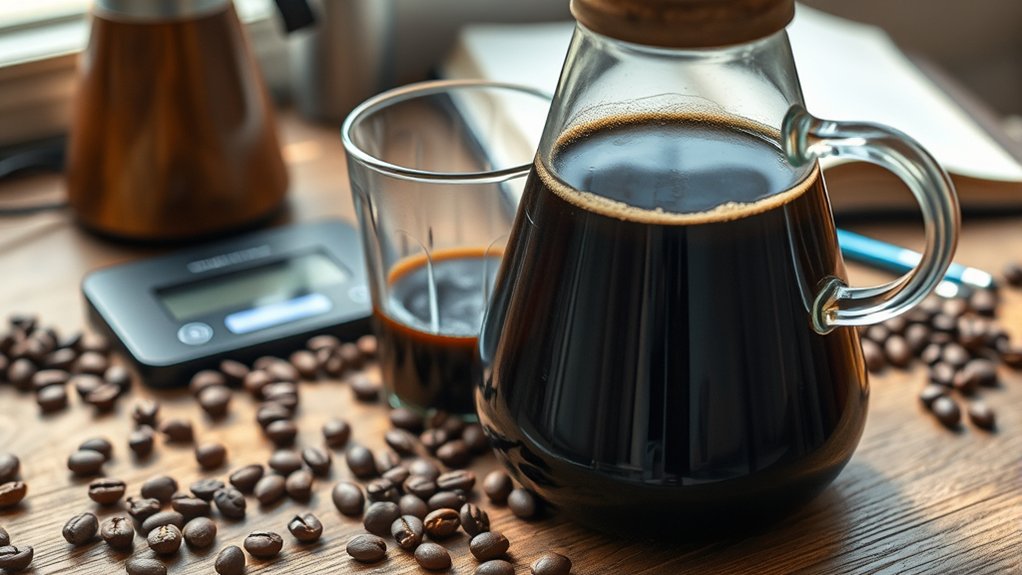
While the caffeine content in a pot of coffee can vary, an 8-cup drip coffee maker usually brews about 60 ounces containing roughly 710 mg of caffeine. This estimate comes from the average caffeine found in a standard 6 oz cup, which is around 71 mg, multiplied by eight.
An 8-cup drip coffee pot typically contains about 710 mg of caffeine, based on average cup measurements.
You should know, though, that caffeine stability isn’t absolute. Factors like grind size, brewing time, and water temperature influence the final levels. Coffee bean varieties also play a role. For example, Robusta beans typically contain more caffeine than Arabica.
However, these variations only affect the total caffeine marginally under normal brewing conditions. So, while 710 mg serves as a solid guideline, actual caffeine content in your pot may fluctuate based on these variables.
This helps you better understand what you’re consuming with each brew.
How Coffee Bean Types Change Caffeine Levels
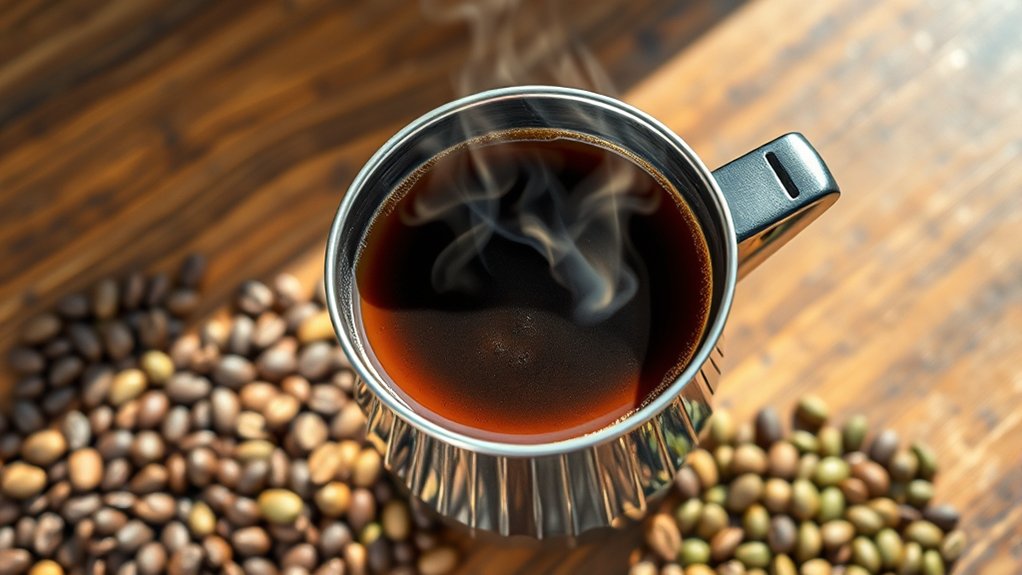
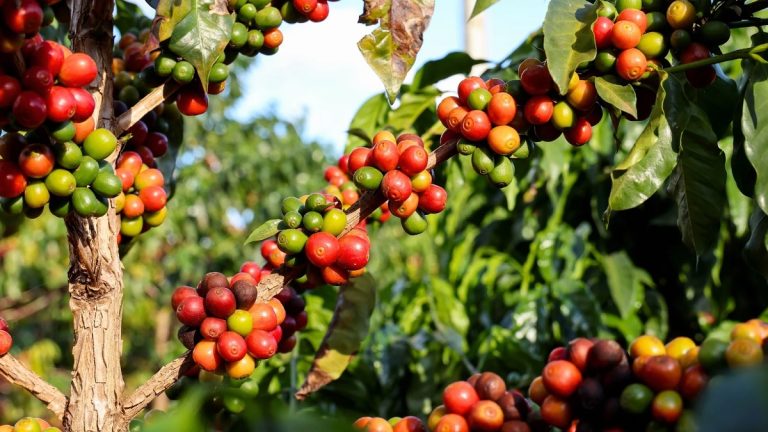
Because the type of coffee bean you choose directly impacts caffeine content, understanding the differences between Arabica and Robusta beans is essential. Coffee bean varieties vary considerably in caffeine levels, with Robusta beans containing nearly twice the caffeine (~2.2%) compared to Arabica (~1.2%). This difference heavily influences caffeine extraction when brewing, affecting both strength and flavor.
| Coffee Bean Variety | Caffeine Content (%) | Flavor Profile |
|---|---|---|
| Arabica | ~1.2 | Smooth, mild |
| Robusta | ~2.2 | Strong, bitter |
| Mixed Blends | Varies | Balanced |
Choosing Robusta means you get higher caffeine extraction per bean, leading to a stronger cup, while Arabica offers a milder caffeine impact with nuanced flavors. So, if you want a bold, energizing brew, Robusta is your go-to. But if you prefer something gentler with more subtle taste notes, Arabica might be the better choice.
Why Grind Size and Brew Time Affect Caffeine Extraction
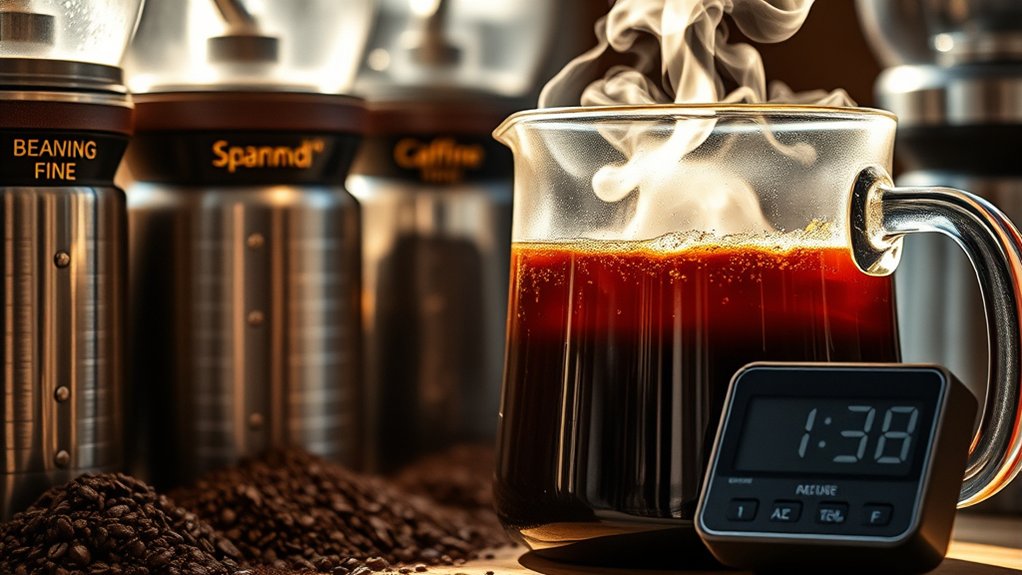
You’ll find that grind size directly affects how much caffeine your coffee releases. Finer grounds increase extraction because they’ve more surface area.
Brew time also plays a key role. The longer you brew, the more caffeine the water pulls from the grounds.
Grind Size Impact
Since grind size directly influences the surface area exposed to water, it plays a crucial role in caffeine extraction during brewing. When you adjust grind size, you change how much caffeine your coffee releases.
Finer grind size increases particle fineness, exposing more surface area to water. More surface area means higher caffeine extraction, making your coffee stronger.
Coarser grounds have less surface area, resulting in less caffeine extracted.
But be careful—using overly fine particles risks over-extraction. That can cause bitterness and elevated caffeine levels.
Brewing Duration Effects
Grind size sets the stage for how quickly caffeine can be extracted during brewing, but brew time determines how much caffeine ultimately ends up in your cup. Finer grinds expose more surface area, speeding up extraction, yet if you don’t allow enough brew time, caffeine levels remain low.
Longer brewing durations, like those in French press or cold brew methods, let water pull considerably more caffeine from the grounds. Cold brew’s extended steeping, often 12 to 24 hours, yields especially high caffeine content.
Your choice of brewing equipment also matters; certain devices control brew time more precisely, affecting extraction.
Additionally, proper coffee storage preserves freshness, ensuring consistent caffeine extraction.
Balancing grind size with brewing duration helps you tailor caffeine strength without compromising flavor. It’s all about finding the right combo that works for your taste and caffeine needs.
Extraction Efficiency Factors
Although brew time plays a crucial role, the size of the coffee grounds directly impacts how efficiently caffeine is extracted during brewing. Finer grounds increase surface area, allowing water to pull more caffeine and influence flavor profiles. Here’s what you should know about extraction efficiency:
- Finer grind size boosts caffeine extraction but can lead to bitterness if overdone.
- Longer brew times let water contact grounds longer, raising caffeine content.
- Brewing equipment matters. Methods like French press or cold brew use extended steeping, yielding more caffeine than quick drip brewing.
- Hotter water speeds caffeine solubility, optimizing extraction without compromising flavor.
Balancing grind size and brew time ensures you get maximum caffeine while preserving enjoyable flavor profiles from your brewing equipment.
How Water Temperature Influences Coffee Caffeine
When you brew coffee, the water temperature plays a crucial role in how much caffeine ends up in your cup. Higher water temperatures increase caffeine solubility, allowing more caffeine to be extracted from the coffee grounds. Brewing with water above 195°F (90°C) optimizes caffeine extraction, giving you a stronger caffeine kick.
Using boiling water (212°F or 100°C) can slightly boost caffeine levels but risks over-extraction, which may cause bitterness. On the other hand, water below 195°F dissolves less caffeine, producing a milder coffee with lower caffeine content.
Cold brew uses cold water over a long time, initially extracting less caffeine but concentrating it through extended steeping.
Understanding how water temperature influences caffeine solubility helps you control the caffeine strength in your coffee precisely.
How Coffee Serving Size Impacts Your Caffeine Intake
Because caffeine content scales with volume, your coffee serving size directly impacts how much caffeine you consume. When you pour a larger cup, you’re not just getting more coffee flavor but also considerably more caffeine.
Consider these points: A 16 oz serving can contain 200-330 mg of caffeine, much higher than an 8 oz cup.
A full 8-cup pot (60 oz) averages about 710 mg caffeine total, so portion size matters.
Coffee shop sizes like a 20 oz Venti hit up to 410 mg caffeine, over four times an 8 oz cup.
Serving temperature can affect your perception of coffee flavor but doesn’t change caffeine content.
Adjusting your serving size lets you control caffeine intake precisely while enjoying your preferred coffee flavor.
Brewing Methods That Change Caffeine Content in Coffee
You’ll find that brewing time plays a key role in caffeine extraction. The longer your coffee steeps, the more caffeine ends up in your cup.
Grind size also matters—finer grounds increase surface area, which boosts caffeine release during brewing.
Brewing Time Effects
Although brewing time varies widely across methods, it plays a crucial role in determining how much caffeine ends up in your cup. You’ll want to consider how coffee storage and brewing temperature interact with time to maximize caffeine extraction without compromising flavor.
Cold brew steeped for 12-24 hours extracts considerably more caffeine due to prolonged contact.
French press and percolation methods use longer steeping, boosting caffeine levels versus drip coffee.
AeroPress or espresso see smaller caffeine increases when brewing time extends slightly.
Over-extraction from excessive brewing time can introduce bitterness, so aim for ideal contact time.
Ultimately, the longer water interacts with your coffee grounds, the more caffeine you’ll get until flavor balance tips toward bitterness.
Grind Size Impact
How does grind size influence the caffeine content in your coffee? The particle size and grind consistency directly affect caffeine extraction. Finer grinds increase the surface area of coffee particles, allowing water to extract more caffeine quickly.
Brewing methods like espresso and Turkish coffee use fine grinds, resulting in higher caffeine concentration per ounce. Conversely, coarser grinds, typical in French press or percolators, reduce surface contact with water, limiting caffeine extraction.
You can adjust grind size to control caffeine levels: very fine grinds maximize caffeine release, while coarse grinds minimize it. However, in longer brew times, such as drip coffee, the difference in caffeine content lessens as extraction nears saturation.
Comparing Caffeine in Brewed Coffee, Espresso, and Instant Coffee
When comparing caffeine levels, brewed coffee, espresso, and instant coffee each deliver distinct amounts that affect your total intake. Your choice of brewing equipment and flavor profiles also influence caffeine content.
Here’s how they stack up:
Brewed coffee offers about 95-120 mg of caffeine per 8-ounce cup, with a full 12-cup pot containing roughly 700-800 mg.
Espresso packs 63-127 mg per 1-2 ounce shot, providing a higher concentration despite smaller volume.
Instant coffee typically has less caffeine, around 60-80 mg per 8-ounce cup, varying by brand and prep.
Caffeine varies by brewing method, serving size, and bean roast, so understanding these factors helps you manage intake precisely.
This clear comparison lets you tailor your coffee choices based on desired caffeine and flavor profiles.
Why Black Insomnia Coffee Has Much More Caffeine
If you’re looking for a coffee that delivers a much stronger caffeine kick than typical brewed or espresso options, Black Insomnia Coffee stands out. It contains about 702 mg of caffeine per 12 oz cup, which is roughly six times more than your average coffee.
This high caffeine content comes from using Robusta beans. These beans naturally have nearly twice the caffeine of Arabica beans.
The coffee’s unique blend and brewing process involve finer grinding and longer brew times. These steps maximize caffeine extraction while keeping the caffeine stable.
Despite the high caffeine, Black Insomnia still manages to maintain a bold coffee flavor. It balances intensity without crossing into bitterness.
By sourcing beans with elevated caffeine levels and optimizing the brewing, Black Insomnia offers one of the most potent caffeine experiences available.
How Roasting Level Affects Coffee’s Caffeine Content
Although roasting changes the flavor and acidity of coffee beans, it has minimal impact on their caffeine content. You might expect darker roasts to have less caffeine, but the difference is slight and not enough to affect your caffeine intake considerably.
Here’s what you should know:
- Light roasts are denser, so they contain slightly more caffeine per scoop compared to dark roasts.
- Dark roasts lose more water and mass, resulting in marginally less caffeine by volume.
- When measured by weight, caffeine content is nearly identical across roast levels.
- Roasting causes only about 5.4% caffeine loss, so bean origin and coffee flavor affect your cup more than roast level.
How Milk and Creamer Affect Coffee’s Perceived Strength
When you add milk or creamer to your coffee, it dilutes the concentration, so the flavor tastes milder. But interestingly, this doesn’t really reduce the caffeine content by much.
Also, the fat and protein in milk can slow down how quickly caffeine gets into your bloodstream, which changes how soon you feel its effects.
Plus, if your creamer has sugar, it can mask some of the bitterness, making the coffee seem less strong to your taste buds.
Milk’s Impact On Perception
How does adding milk or creamer change the way you experience your coffee’s strength? While milk won’t reduce caffeine content, it does change your perception quite a bit through flavor masking and temperature effects.
Milk’s fat and protein bind caffeine molecules, which might slow absorption and change how quickly you feel alert. Creamer also masks bitterness, making strong coffee taste milder without lowering the caffeine levels.
The temperature of the milk you add matters too. Warm milk makes your coffee creamier, while cold milk can dull the intensity.
Plus, dilution from milk or creamer weakens the coffee’s flavor concentration, so it seems less strong to your taste buds.
Knowing these things can help you enjoy your coffee just the way you like it, without mixing up how strong it tastes with how much caffeine is actually in it.
Creamer And Caffeine Levels
Adding creamer or milk to your coffee changes more than just its flavor and texture. It can also influence how strong your coffee feels. While creamer slightly dilutes caffeine concentration per ounce, the total caffeine stays the same.
Creamer affects coffee flavor and texture but doesn’t chemically alter caffeine. Also, fats in creamer may slightly impact caffeine metabolism, which could change how quickly caffeine is absorbed. This shifts how strong your coffee tastes, making it seem milder even though the caffeine content hasn’t changed.
| Creamer Type | Effect on Flavor | Impact on Caffeine Metabolism |
|---|---|---|
| Dairy Milk | Creamier, milder | Slightly slows absorption |
| Plant-based | Varies, milder | Minor impact |
| Sweetened Cream | Sweeter, smooth | Similar to dairy |
Dilution Effects On Strength
Although milk and creamer don’t change the total caffeine in your coffee, they dilute its concentration, which makes the drink taste less strong. This dilution affects your sensory perception and how you experience the coffee’s flavor enhancement.
Here’s how milk and creamer influence perceived strength:
- Adding milk or creamer increases volume without adding caffeine, lowering caffeine concentration per ounce.
- The coffee tastes milder and less bitter, which psychologically reduces perceived strength.
- More milk or creamer means less intense flavor, decreasing the coffee’s sensory impact.
- Despite dilution, total caffeine content stays constant, but alertness per sip may be affected.
Understanding dilution helps you balance flavor enhancement with your desired caffeine kick. It’s all about finding the right mix for you.
How to Brew the Strongest Coffee Pot Safely
When you want to brew the strongest pot of coffee safely, choosing beans with higher caffeine content like Robusta is a smart first step. Grinding beans finer and adjusting brewing temperature can maximize caffeine extraction without sacrificing coffee flavor.
Extending brewing time or using methods like French press helps too, but be mindful not to over-extract bitterness. Here’s a quick guide:
| Step | Effect on Caffeine | Impact on Flavor |
|---|---|---|
| Use Robusta beans | High caffeine | Strong, earthy |
| Fine grind | Increased extraction | Richer, bolder |
| Higher brewing temp | More caffeine | Can intensify bitterness |
| Longer brew time | More caffeine | Risk of bitterness |
| French press method | High caffeine | Full-bodied flavor |
Balance strength with safety by monitoring your total caffeine intake to avoid excess. Keep an eye on how much you drink, so you enjoy your coffee without overdoing it.
How Coffee’s Caffeine Compares to Other Popular Drinks
If you want to understand how much caffeine you’re consuming, it helps to compare coffee to other popular drinks. Coffee flavor often indicates its caffeine strength, which impacts your caffeine metabolism. Here’s a quick comparison:
- An 8 oz brewed coffee packs about 95-100 mg of caffeine, much more than a 12 oz cola’s 34 mg.
- A 1 oz espresso shot has roughly 63 mg, delivering potent caffeine in a small volume.
- Energy drinks like an 8.4 oz Red Bull contain about 80 mg, less than coffee but still significant.
- Decaf coffee isn’t caffeine-free. It has 2-15 mg per 8 oz cup, far less than regular coffee.
Understanding these differences helps you manage your caffeine intake effectively. Just keep these numbers in mind next time you reach for your favorite drink!
Frequently Asked Questions
Can Decaffeinated Coffee Pots Still Contain Trace Caffeine Amounts?
Yes, decaffeinated coffee pots still contain trace caffeine because the decaffeination process removes most but not all caffeine. When you brew decaffeinated coffee, small amounts naturally remain.
How Does Altitude Affect Caffeine Content in Coffee Beans?
You’ll find altitude impact boosts caffeine by up to 20% because slower bean growth at high elevations triggers more caffeine production. This natural defense means beans grown higher pack a stronger caffeine punch in every brew you make.
It’s pretty cool how nature works, right? The higher the elevation, the more caffeine the beans develop to protect themselves. So, if you like your coffee with a bit more kick, high-altitude beans might be your go-to.
Does Caffeine Content Change if Coffee Sits on a Hot Plate?
You won’t lose caffeine content if your coffee sits on a hot plate. Thanks to caffeine stability, coffee preservation focuses on flavor, not caffeine levels.
They remain consistent despite prolonged heat exposure. So, leaving your coffee on a hot plate won’t make it any less caffeinated. It might change the taste, but the caffeine stays put.
Are Caffeine Levels Different in Flavored Versus Unflavored Coffee?
You won’t find different caffeine levels between flavored and unflavored coffee. Flavor profiles and aroma differences come from added agents, not caffeine content.
The bean type and brewing method mainly determine caffeine strength. So, whether your coffee is flavored or not, the caffeine kick is pretty much the same. It’s all about how the coffee is made and what kind of beans are used.
How Does Caffeine Affect People With Caffeine Sensitivity or Allergies?
You might feel jittery or anxious unexpectedly because caffeine allergy or sensitivity symptoms can hit even at low doses. Your body reacts differently, so avoid caffeine or choose alternatives to prevent these uncomfortable effects.
It’s all about how your system handles caffeine. Some people just aren’t built to process it well, and that’s okay. Finding the right substitute can make a big difference in how you feel day-to-day.
Conclusion
Now that you know how bean type, grind size, brew time, and temperature all influence caffeine levels, you can brew a pot tailored to your needs. Remember, serving size and additives like milk also change your caffeine intake and the coffee’s strength.
Want the strongest pot without overdoing it? By understanding these factors, you control your caffeine dose safely and enjoyably. So, why settle for guessing when you can brew smart?