
Is Cold Brew Stronger Than Iced Coffee – Key Differences Explained
If you’re wondering whether cold brew is stronger than iced coffee, it usually is. Cold brew steeps coarsely ground beans slowly in cold water, extracting more caffeine and creating a smooth, rich flavor with less bitterness.
Iced coffee brews quickly with hot water, leading to a brighter, more acidic taste. It often has less caffeine per cup because of dilution.
Curious about how brewing methods impact strength and flavor? There’s a lot more to uncover.
What Is Cold Brew? How Is It Made?
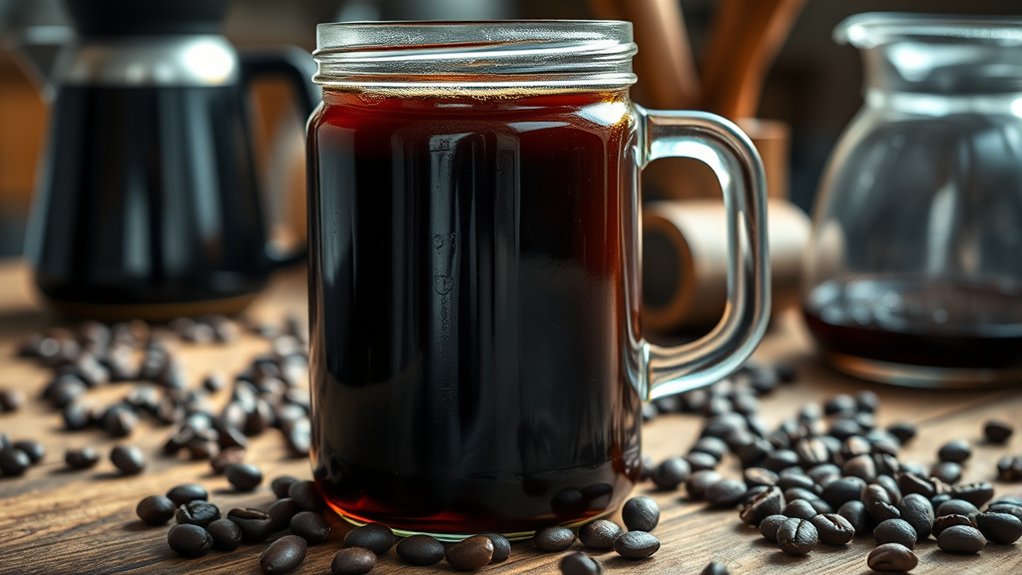
Although it might seem similar to iced coffee, cold brew is made through a completely different process that results in a unique flavor profile. You start by coarsely grinding coffee beans, then steeping them in cold water for 12 to 24 hours.
Cold brew coffee is crafted by steeping coarsely ground beans in cold water for 12 to 24 hours.
This slow extraction lets the coffee’s natural sweetness and subtle notes shine, avoiding the bitterness that heat can bring.
Using the right brewing equipment, like a specialized cold brew maker or a simple jar with a filter, guarantees smooth results.
After brewing, proper coffee storage is essential. Keep your cold brew refrigerated in an airtight container to preserve freshness and flavor.
This method creates a smoother, less acidic coffee experience you’ll appreciate in every sip. It’s a great way to enjoy coffee that’s both refreshing and full of flavor.
How Is Iced Coffee Brewed Differently?
When you brew iced coffee, you’ll use hot water, but the brewing time is much shorter compared to cold brew.
The grind size is usually finer, which helps pull out the flavors quickly because of the heat.
This difference means you get a brighter, more acidic coffee that cools down fast, making it perfect for a refreshing iced drink.
Brewing Time Variations
Since brewing time plays an essential role in defining coffee’s flavor and strength, iced coffee is crafted quite differently than cold brew. When you make iced coffee, you typically brew hot coffee first, taking just a few minutes to extract flavors. This short brewing time means the coffee’s bright and acidic notes really shine through.
After brewing, you immediately cool it down by pouring it over ice or refrigerating it. So, coffee storage becomes pretty important to keep it fresh and prevent bitterness.
In contrast, iced coffee’s brewing temperature is high, but the contact time with water is brief. This is quite different from cold brew, where a long brewing time at a low temperature produces a smoother, less acidic profile.
Knowing these variations helps you appreciate why iced coffee tastes so distinctively different.
Water Temperature Differences
Because water temperature directly impacts extraction, understanding how iced coffee is brewed means paying close attention to the heat involved. Iced coffee uses hot water, typically between 195°F and 205°F, to brew quickly and efficiently. This temperature contrast allows for ideal extraction of flavors within minutes.
Hot water boosts brewing efficiency by dissolving coffee compounds faster, unlike cold brew, which relies on time rather than heat. You’ll notice that the temperature contrast in iced coffee directly affects taste and strength, making it fundamentally different from cold brew’s slow, cold process.
| Parameter | Iced Coffee |
|---|---|
| Water Temperature | 195°F – 205°F (hot) |
| Brewing Efficiency | High due to heat acceleration |
| Extraction Method | Rapid extraction with heat |
Coffee Grind Size
Although both cold brew and iced coffee start with coffee grounds, the grind size you use plays an essential role in how each brew develops flavor and strength.
For iced coffee, you’ll want a medium grind, similar to what you use for drip coffee. This allows hot water to extract flavors quickly without over-extracting bitterness.
Cold brew, on the other hand, requires a coarse grind because it steeps in cold water for hours. This prevents over-extraction and results in a smoother taste.
Remember, proper coffee storage is key to maintaining grind freshness. Always keep your grounds in an airtight container away from light and moisture.
Cold Brew vs. Iced Coffee: Comparing Caffeine Levels
When you compare cold brew and iced coffee, the caffeine content often becomes the deciding factor for many coffee lovers. In coffee culture, caffeine levels depend heavily on brewing techniques.
Cold brew uses a long steeping process with coarse grounds, extracting caffeine slowly over 12 to 24 hours, resulting in a concentrated, caffeine-rich coffee.
Iced coffee, on the other hand, is brewed hot and then cooled quickly. It usually contains less caffeine per ounce since hot water extracts caffeine faster but the brew is diluted with ice.
So, if you’re after a stronger caffeine kick, cold brew typically delivers more punch per serving, but iced coffee offers a lighter alternative.
Understanding these differences helps you choose the perfect brew to fit your caffeine needs and taste preferences. It’s all about what kind of caffeine boost you want and how you like your coffee to taste.
Why Cold Brew Tastes Smoother and Less Bitter Than Iced Coffee

You’ll notice cold brew tastes smoother because it’s brewed slowly with cold water. This method extracts fewer acidic compounds than hot brewing does. So, the process is gentler and reduces bitterness, allowing the natural sweetness to come through.
On the other hand, iced coffee is made by brewing hot coffee first, which pulls out more acids and bitter flavors. That’s why it tends to taste sharper on your palate.
Brewing Process Differences
Because cold brew uses a slow, low-temperature extraction method, it produces a smoother, less bitter flavor compared to iced coffee. When you brew cold brew, the coffee grounds steep in cool water for 12 to 24 hours. This allows the coffee aroma to develop gently without the harsh compounds that heat can extract.
In contrast, iced coffee starts with hot brewing, where high brewing temperature extracts flavors quickly but also pulls out more bitter oils and acids. This rapid extraction at elevated temperatures can mask subtle notes in the coffee aroma and create a sharper taste.
By controlling brewing temperature and time, cold brew emphasizes mellow, rich flavors, making your cup feel smoother and more balanced.
On the other hand, iced coffee offers a brighter, more traditional coffee profile.
Acid and Bitterness Levels
The difference in acid and bitterness levels plays a big role in why cold brew feels smoother and less bitter compared to iced coffee. Cold brew’s brewing techniques involve steeping coffee grounds in cold water for 12 to 24 hours, which extracts fewer acidic compounds. This results in a mellow flavor profile with subtle sweetness and minimal bitterness.
In contrast, iced coffee is brewed hot, quickly extracting stronger acids and bitter oils, which gives it a brighter, more pronounced sharpness. When you taste cold brew, you’ll notice its smooth texture and balanced flavor profile, making it easier on your palate.
How Coffee Bean Types Affect Cold Brew and Iced Coffee Flavor
Although both cold brew and iced coffee start with coffee beans, the type of bean you choose has a big impact on their final flavors. The coffee plant’s origin and bean roasting level shape taste profiles in different ways.
Light roasts highlight fruity, acidic notes that are perfect for iced coffee’s brighter taste. Dark roasts, which are rich and bold, complement cold brew’s smooth, mellow character.
| Coffee Bean Type | Flavor Impact |
|---|---|
| Arabica | Fruity, floral, less bitter |
| Robusta | Stronger, more bitter |
| Light Roast | Bright, acidic, complex |
| Medium Roast | Balanced, nutty, sweet |
| Dark Roast | Bold, smoky, low acidity |
How Brew Time Influences Cold Brew and Iced Coffee Strength
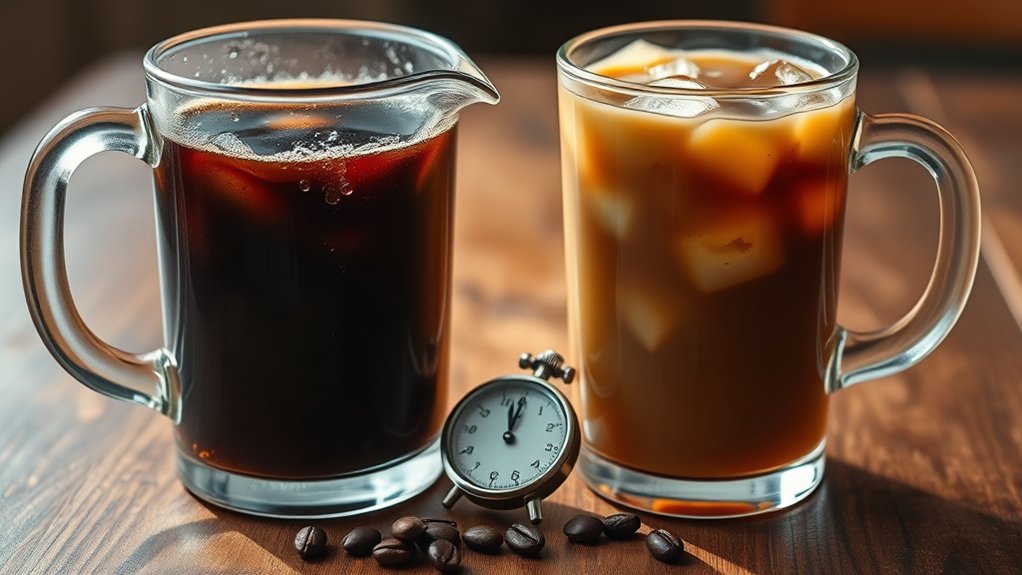
When you adjust the brew time, you directly control how strong your cold brew or iced coffee will taste. Longer brew times in cold brew extraction allow more coffee solubles to infuse, creating a richer, bolder profile.
On the other hand, iced coffee usually has a shorter brew time since it’s brewed hot and then chilled. This results in a brighter, lighter strength that’s easy to enjoy on a warm day.
Your choice of brewing equipment also plays a key role. Using a French press or immersion brewer for cold brew enhances extraction, while drip or pour-over methods work best for iced coffee.
Think about flavor pairing too. Longer cold brew times deepen those chocolatey and nutty notes, while iced coffee’s quicker brew preserves the fruity, acidic highlights.
When you get the brew time right, you can perfectly control both intensity and flavor balance.
How Dilution Affects Cold Brew and Iced Coffee Strength
You’ll notice that cold brew usually begins as a more concentrated coffee. So, how and when you add ice can really change its strength and flavor.
On the other hand, iced coffee is brewed hot and then cooled quickly, which means it tends to dilute faster as the ice melts.
Knowing these differences helps you keep control over the taste and intensity in your glass.
Cold Brew Concentration Levels
Since cold brew is often brewed as a concentrate, its strength depends heavily on how much you dilute it before drinking. When you add water, milk, or ice, you’re not just reducing caffeine levels. You’re also changing the flavor profile.
A cold brew made from a single-origin coffee will showcase distinct notes. But dilution can either mute those nuances or make them smoother, depending on what you like.
Unlike iced coffee, which is brewed hot and then cooled, cold brew concentrate lets you control the intensity more precisely.
So, if you like a bold, rich taste, just use less dilution. If you want a milder, more balanced cup, add more liquid.
Getting this right helps you tailor your cold brew experience to highlight your favorite coffee origin’s unique characteristics.
Ice Impact On Flavor
Although ice seems like a simple addition, it plays a crucial role in shaping the flavor and strength of both cold brew and iced coffee. The ice impact goes beyond just chilling your drink. It dilutes the coffee as it melts, subtly altering its intensity.
With cold brew, which starts out more concentrated, the melting ice can mellow the bold, smooth flavors. This makes it more approachable without losing depth.
In contrast, iced coffee, brewed hot and often less concentrated, may weaken faster as ice dilutes its brightness and acidity. This dilution affects your perception of strength and flavor, balancing bitterness and sweetness.
Dilution Timing Differences
When ice begins to melt, it changes the flavor of cold brew and iced coffee at different rates. This affects how strong each tastes over time. Cold brew is typically brewed strong and served over ice, so dilution happens gradually, softening its bold flavor profiles.
Iced coffee, on the other hand, is brewed hot and cooled quickly. It’s often poured over ice, causing immediate dilution that can weaken its taste faster.
| Coffee Type | Dilution Timing |
|---|---|
| Cold Brew | Slow, gradual |
| Iced Coffee | Fast, immediate |
| Flavor Profiles | Cold brew maintains richness longer |
| Serving Styles | Iced coffee suits quick refreshment |
Knowing these differences helps you pick the right brew for your strength preference and how you like to serve it.
Which Brewing Method Packs a Stronger Caffeine Kick?
Deciding which brewing method delivers a stronger caffeine kick depends on how each extracts and concentrates coffee compounds.
When you brew iced coffee, hot water rapidly extracts caffeine from the coffee bean, thanks to a high brewing temperature. This quick process pulls out caffeine efficiently but can also bring out more acidity and bitterness.
Cold brew, on the other hand, relies on a long steep at low temperatures, extracting caffeine more slowly but steadily. Because cold brew often uses a higher coffee-to-water ratio, it can pack a more concentrated caffeine punch before dilution.
Ultimately, if you want a sharp, immediate caffeine hit, iced coffee’s hot brewing temperature might suit you. For a smoother, potentially stronger caffeine boost, cold brew’s extended extraction and concentration could be your go-to.
When to Choose Cold Brew or Iced Coffee for Your Caffeine Fix
Understanding how cold brew and iced coffee deliver caffeine helps you pick the right brew for your needs. When deciding between the two, consider these factors:
- Caffeine strength: Cold brew usually offers a smoother, stronger caffeine punch. It’s perfect if you want a sustained energy boost.
- Serving temperature: Both are served cold, but cold brew maintains its flavor better at lower temperatures. This makes it ideal for hot days.
- Coffee storage: Cold brew keeps well in the fridge for up to two weeks without significant flavor loss. Iced coffee is best consumed fresh to avoid bitterness.
- Flavor preference: If you prefer a less acidic, mellow taste, cold brew suits you. Iced coffee delivers a brighter, more traditional coffee flavor.
Tips to Customize Strength and Flavor of Your Chilled Coffee
Although cold brew and iced coffee each have their own distinct flavors and strengths, you can easily tailor both to suit your personal taste and caffeine needs. Just adjust the coffee-to-water ratio, steep time, or brew method to control the strength.
Try experimenting with flavor pairing. Adding cinnamon, vanilla, or citrus can really enhance your brew.
Proper coffee storage is key. Keep beans airtight and cool to preserve freshness and aroma.
Here’s a quick guide:
| Customization Aspect | Cold Brew Tips | Iced Coffee Tips |
|---|---|---|
| Strength | Increase steep time | Use a stronger brew |
| Flavor Pairing | Add spices or syrups | Mix with flavored milk |
| Coffee Storage | Store concentrate cold | Store brewed coffee cold |
These tweaks help you enjoy chilled coffee exactly how you like it.
Frequently Asked Questions
Can I Use Regular Coffee Grounds for Cold Brew?
Yes, you can use regular coffee grounds for cold brew, but the grind size matters. Cold brew works best with coarser coffee grind because it allows slow extraction without bitterness.
If you use finely ground coffee, your brew might become over-extracted and muddy.
Different brewing methods demand different grinds, so for cold brew, aim for a coarse grind to get smooth, rich flavor.
Adjust grind size to suit your taste!
How Long Can Cold Brew Be Stored in the Fridge?
Think of cold brew like a delicate treasure chest; you want to keep it fresh and flavorful. You can store cold brew in the fridge for up to two weeks, but for the best taste, aim to finish it within one week.
Use airtight containers and keep it away from strong-smelling foods to preserve its smoothness.
These refrigeration tips will help you enjoy your cold brew’s rich, mellow flavor every time.
Does Cold Brew Have More Antioxidants Than Iced Coffee?
Cold brew generally has higher antioxidant levels than iced coffee because its slow extraction process preserves more compounds.
However, the coffee bean variety you choose plays a big role too. Beans rich in antioxidants will boost your brew’s benefits, no matter the method.
Is Cold Brew Better for Sensitive Stomachs?
Yes, cold brew is often better for sensitive stomachs because it has lower acidity levels compared to traditional iced coffee. When you brew coffee cold, the process reduces the acids that can irritate your digestive health, making it gentler on your stomach.
If you struggle with acid reflux or discomfort from regular coffee, switching to cold brew might help you enjoy your caffeine fix without the usual digestive issues. It’s a simple change that could make a big difference for your tummy.
Give it a try and see how your stomach feels!
Can I Make Iced Coffee Without a Coffee Maker?
Yes, you can make iced coffee without a coffee maker! Simply brew strong coffee using hot water and instant coffee or steep ground coffee in a jar, then strain it.
For even smoother results, try cold brew benefits by steeping coarsely ground coffee in cold water for 12-24 hours, then strain.
This easy coffee brewing method gives you rich, less acidic iced coffee without any special equipment. It’s a great way to enjoy your favorite drink anytime!
Conclusion
Now that you know the difference, imagine starting your day with a bold cold brew that packs a smooth, mellow punch. It’s perfect for a slow morning when you want something rich but easygoing.
Or, picture grabbing a revitalizing iced coffee when you want a brighter, more traditional coffee flavor with a quick caffeine boost. It’s great for those moments when you need a little pick-me-up.
Whether you crave strength or smoothness, you can easily customize your chilled coffee to fit your mood and caffeine needs. That way, every sip is exactly how you like it.