Is Chai Tea Latte Coffee – Ingredients Explained
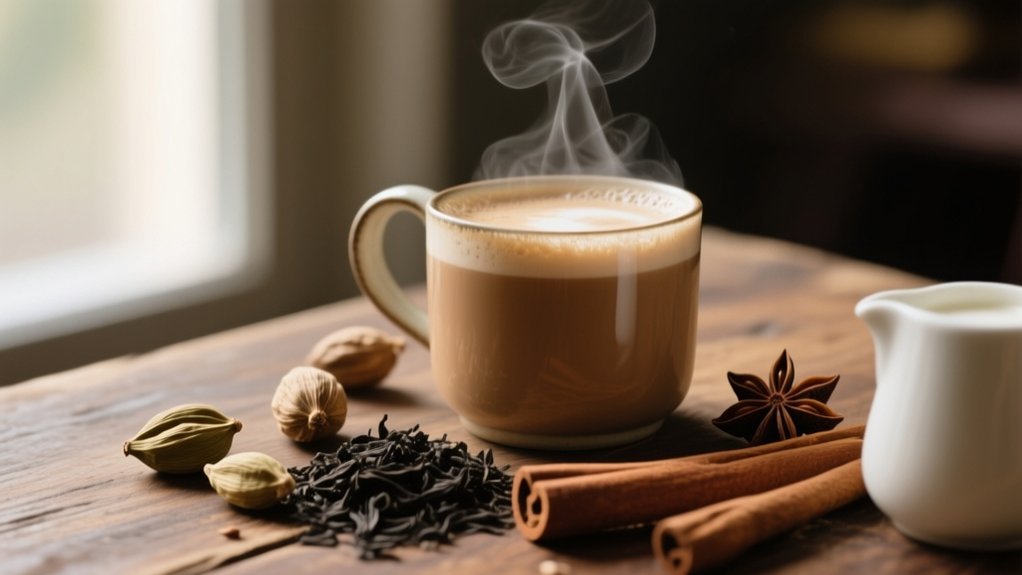
You might think a chai tea latte is coffee, but it’s actually a spiced black tea drink blended with steamed milk and warming spices like cinnamon, cardamom, and ginger. Instead of coffee beans, chai offers caffeine from black tea, giving a unique, aromatic flavor.
While it’s not coffee, chai lattes deliver a smooth, flavorful experience with moderate caffeine. If you want to explore how chai lattes differ and their popular variations, there’s plenty more to uncover.
What Is a Chai Tea Latte and How It Differs From Coffee

A chai tea latte combines spiced black tea with steamed milk, creating a warm, flavorful drink that stands apart from coffee.
When you enjoy a chai tea latte, you’re tasting a blend of black tea infused with aromatic spices like cinnamon, ginger, and cardamom.
Savor a chai tea latte’s blend of black tea and aromatic spices like cinnamon, ginger, and cardamom.
These spices simmer with the tea to form a rich concentrate, which is then mixed with creamy steamed milk and sweeteners to balance the bold flavors.
Unlike coffee lattes made from espresso, chai tea lattes deliver caffeine from black tea, giving you a different kind of energy boost.
The customizable nature of the spices lets you tailor the chai tea latte to your taste, making it a unique experience that’s distinct from any coffee-based beverage you might know.
Why Chai Latte Isn’t Considered Coffee
Three key reasons explain why chai lattes aren’t considered coffee.
First, a chai latte is made from black tea infused with spices and steamed milk, not coffee or espresso.
Second, the chai latte’s flavor comes from the unique spices used like cinnamon, ginger, and cardamom, setting it apart from coffee’s bean-based taste.
Ultimately, the term “chai” means tea, emphasizing its roots in tea culture rather than coffee.
When you order a chai latte, you’re enjoying a beverage centered on tea and milk, enhanced by aromatic spices used for centuries.
While coffee shops now serve chai lattes alongside coffee, their foundation remains distinct, making them a flavorful tea-based alternative instead of a coffee drink.
Key Ingredients in Chai Latte: Tea, Spices, and Milk
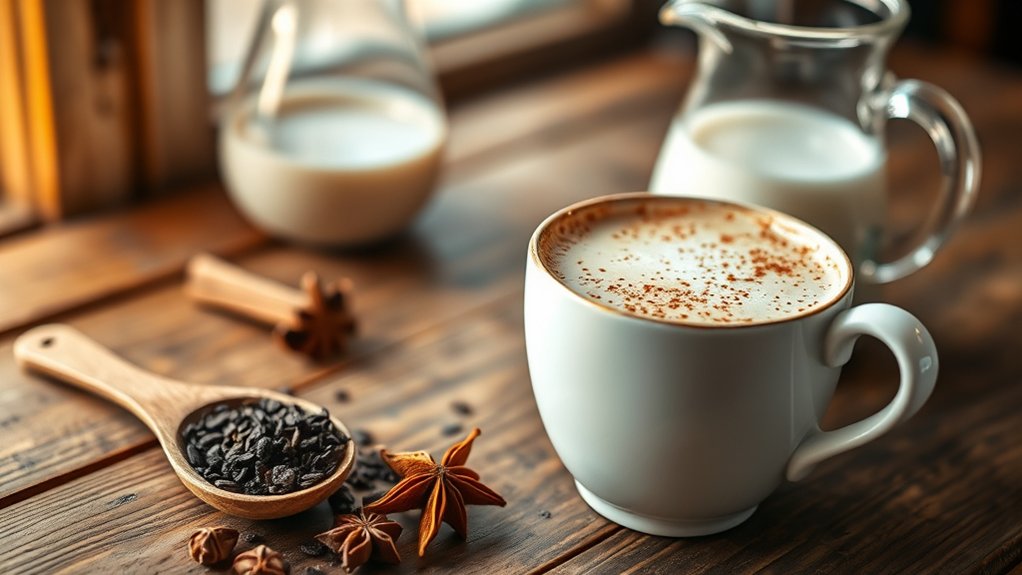
Although chai lattes might resemble coffee drinks, their key ingredients set them apart by focusing on black tea, a blend of warming spices, and creamy steamed milk.
When you sip a chai latte, you’re tasting black tea infused with spices and herbs like cinnamon, ginger, cardamom, cloves, and nutmeg, which give it that signature aromatic warmth.
Experience black tea richly infused with cinnamon, ginger, cardamom, cloves, and nutmeg for warm, aromatic delight.
The milk, whether dairy or non-dairy, is steamed and frothed to create the smooth, velvety texture that distinguishes a chai latte from plain spiced tea.
Unlike coffee-based lattes, chai lattes skip espresso entirely, letting the spices and herbs shine.
This careful balance of chai, spices and herbs, and milk makes every cup comforting and flavorful without the bitterness you find in coffee.
How Black Tea Forms the Base of Chai Latte
When you savor a chai latte, the robust flavor of black tea forms its essential foundation. It perfectly complements the blend of warming spices.
Black tea varieties like Assam and English Breakfast provide a strong, malty taste that stands up well to milk’s creaminess and the aromatic spices. The caffeine in black tea gives you a gentle yet effective boost, distinguishing chai latte from coffee, which relies on espresso.
Furthermore, black tea’s tannins balance sweetness, creating a harmonious flavor you’ll appreciate.
| Black Tea Type | Flavor Profile |
|---|---|
| Assam | Bold, malty |
| English Breakfast | Strong, robust |
| Caffeine Content | Moderate, stimulating |
| Tannins | Balance sweetness |
How Spices Give Chai Latte Its Unique Flavor
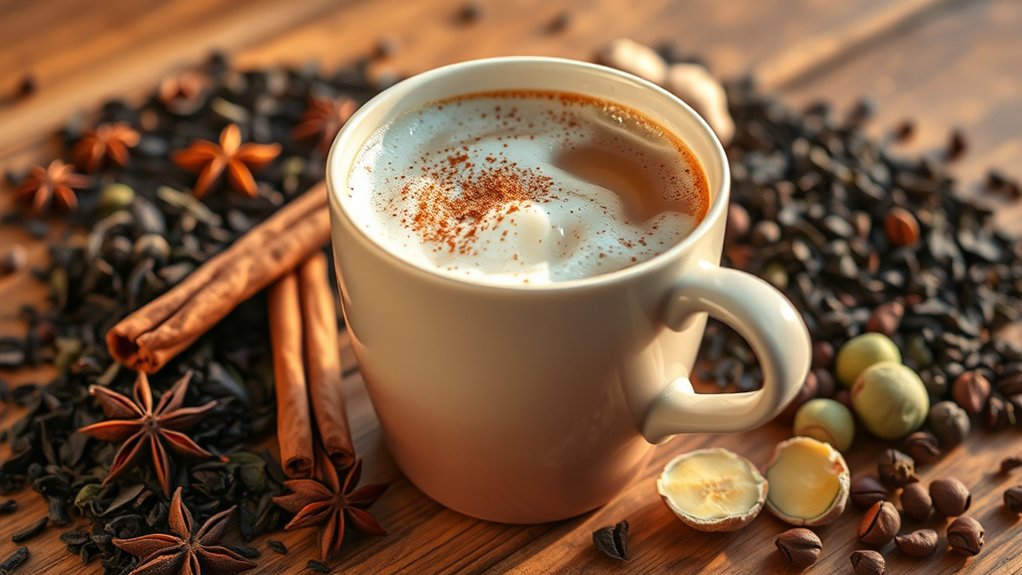
The bold, malty notes of black tea set the stage, but it’s the blend of spices that truly defines chai latte’s signature flavor. You’ll find cinnamon, ginger, cardamom, and cloves infusing warmth and aroma, creating a flavor profile that’s both comforting and invigorating.
Black tea’s bold maltiness meets a warming blend of cinnamon, ginger, cardamom, and cloves for chai’s signature flavor.
Each café often customizes its spice mix with additions like nutmeg or star anise, giving you a unique twist every time.
These spices don’t just add taste; they carry a rich history rooted in Ayurvedic tradition, believed to aid digestion and boost immunity.
When combined with black tea, the spices shine through, making chai latte a distinctive, layered experience that captivates your senses with every sip.
Why Milk and Sweeteners Make Chai Latte Creamy
You’ll notice the milk you pick really makes a difference in how creamy your chai latte turns out. Whether you go for dairy or a plant-based option like oat milk, it adds that smooth richness.
And when you add sweeteners like honey or maple syrup, it’s not just about making it sweeter—they actually help smooth out the texture too. This gives you that lovely, velvety mouthfeel.
Role Of Milk
Although chai lattes start with robust black tea and aromatic spices, it’s the addition of milk and sweeteners that transforms the drink into a creamy, comforting treat.
When you add a cup of milk to chai concentrate, you soften the intensity of the tea and spices, creating a velvety texture that feels indulgent with every sip.
Using a milk frother aerates the milk, turning it light and fluffy, which adds volume and a luxurious mouthfeel.
Whether you choose dairy or plant-based milk, each option affects the flavor and creaminess differently, letting you customize your chai latte experience.
This smooth, rich base balances the chai’s bold spices, making every cup a warm, satisfying delight you’ll want to savor again and again.
Sweetener Impact
When you blend milk with sweeteners like honey or maple syrup, you create more than just a sweet drink. You craft a creamy, balanced chai latte that soothes your palate. The steamed milk adds richness and a frothy texture, while sweeteners balance the bold spices, enhancing the creamy mouthfeel.
Different milk choices influence texture, and the sugar content from sweeteners helps achieve that smooth consistency you love. Here’s a quick look at how milk and sweeteners contribute:
| Component | Impact on Chai Latte |
|---|---|
| Steamed Milk | Adds richness and frothiness |
| Honey | Provides natural sweetness |
| Maple Syrup | Balances spices smoothly |
| Sugar Content | Enhances creamy mouthfeel |
| Milk Varieties | Influence texture and flavor |
Caffeine Content in Chai Latte vs Coffee
You might notice that a chai latte usually has less caffeine than your typical cup of coffee.
It generally contains about 50-70 mg, while coffee has around 95 mg per 8-ounce serving.
This difference comes from the black tea base in chai compared to brewed coffee beans.
Knowing these caffeine levels can help you pick the right boost for your day.
Chai Latte Caffeine Levels
Since chai lattes get their caffeine primarily from black tea, they usually contain about 50-70 mg of caffeine per 8-ounce serving. This is less than the 95 mg found in a standard cup of brewed coffee.
If you’re curious about chai latte caffeine levels, here’s what you should know:
- The caffeine varies depending on the tea type, amount, and steeping time.
- A dirty chai adds a shot of espresso, boosting caffeine to coffee-like or higher levels.
- Tea lovers enjoy chai lattes for a moderate caffeine lift with rich spices and creamy texture.
Coffee Caffeine Comparison
Although both chai lattes and coffee provide a caffeine boost, their caffeine content differs notably.
When you compare chai latte and coffee caffeine levels, an 8-ounce chai tea latte typically offers 50-70 mg of caffeine, coming mostly from black tea.
In contrast, the same size brewed coffee can pack 95-200 mg, depending on the beans and brewing method. This coffee caffeine comparison shows coffee usually delivers a stronger kick.
Keep in mind, chai latte caffeine can vary with the number of tea bags or steeping time, while coffee’s caffeine depends on the coffee-to-water ratio.
If you try a dirty chai latte, chai with espresso, you might even surpass regular coffee’s caffeine punch.
How to Make an Authentic Chai Latte at Home
When crafting an authentic chai latte at home, start by simmering a blend of aromatic spices like cinnamon, ginger, and cardamom in water to build a rich chai concentrate.
Once the spices infuse, add black tea bags and your preferred sweetener, then simmer again before straining.
To make a chai latte, combine this chai concentrate with hot milk frothed until creamy. Here’s a quick guide:
- Simmer spices in water for 5 minutes, add black tea and sweetener, simmer 5 more minutes, then strain.
- Heat and froth your choice of hot milk (dairy or non-dairy) until creamy.
- Mix hot milk with chai concentrate and garnish with a pinch of cinnamon.
This method guarantees a flavorful, authentic chai latte you can enjoy anytime.
Differences Between Dirty Chai and Regular Chai Latte?
If you’re deciding between a dirty chai and a regular chai latte, understanding their key differences will help you pick the perfect drink.
A regular chai latte combines chai concentrate, steamed milk, and sometimes sweeteners, delivering sweet, spiced tea flavors without any coffee.
In contrast, a dirty chai adds a shot of espresso, introduced in London’s 1990s coffee scene, infusing the drink with a rich, robust coffee note alongside the traditional chai spices.
This espresso boost not only amps up the caffeine but also deepens the flavor profile, giving you a bolder taste experience.
Popular Chai Latte Variations in Cafés
As you explore café menus, you’ll notice chai lattes come in a variety of exciting twists beyond the classic recipe.
Popular chai latte variations offer unique flavors and textures to suit different tastes and seasons. Here are three favorites you might encounter:
1. Dirty Chai
This variation adds a shot of espresso to the traditional chai latte, blending spicy chai flavors with rich coffee. It’s perfect if you want an extra caffeine kick.
2. Iced Chai Lattes
Served cold over ice, these invigoratingly spiced drinks are ideal for warmer weather. They maintain the signature chai blend with a cool twist.
3. Seasonal and House-Made Blends
Many cafés use pumpkin spice or custom spice mixes, sometimes adding syrups like vanilla or almond to create distinct regional flavors.
These variations keep the chai latte experience fresh and exciting.
How Chai Latte Concentrates Are Made Commercially
Exploring the variety of chai latte options in cafés might make you wonder how these flavorful drinks are prepared on a larger scale.
Commercially, chai latte concentrates are crafted by brewing a robust blend of Assam black tea with warming spices like cinnamon, ginger, and cardamom in large batches to guarantee consistent flavor.
Chai latte concentrates are made by brewing strong Assam black tea with spices in large batches for consistent flavor.
These concentrates often include sweeteners such as sugar or honey and undergo pasteurization to extend shelf life.
When you’re ready to enjoy, the concentrate is typically mixed 1:1 with milk or milk alternatives, creating that signature creamy texture without brewing each cup individually.
Some brands add preservatives or extra flavorings to maintain taste and stability, offering convenience while capturing the essence of traditional chai latte flavors in each serving.
Health Risks: Sugar and Additives in Chai vs Coffee
You might be surprised at how much sugar hides in a typical chai latte—often more than 30 grams per serving.
On the other hand, black coffee usually contains none at all.
Plus, commercial chai concentrates often have additives and preservatives that can impact your health differently compared to the natural ingredients you’d find in homemade versions.
Knowing these differences can help you decide whether you’re in the mood for a sweet treat or a low-calorie daily drink.
Sugar Content Comparison
Many chai lattes pack over 40 grams of sugar per serving, which can pose serious health risks like obesity and diabetes if consumed regularly. Understanding sugar content helps you make smarter choices between chai latte and coffee.
- A typical chai latte often contains sweetened syrups or powders, driving sugar content high, unlike homemade versions with natural sweeteners.
- Black coffee, by comparison, naturally has zero grams of sugar, making it a healthier daily option without added sweeteners.
- Health experts advise treating chai lattes as occasional indulgences due to their sugar levels, while plain coffee fits well into a low-sugar diet.
Being aware of sugar content in chai latte drinks is key to managing health risks and balancing flavor with wellbeing.
Additives Impact On Health
Two key factors greatly impact your health when choosing between chai lattes and coffee: sugar and additives. Many commercial chai lattes contain high levels of added sugars, often topping 30 grams per serving. This can lead to weight gain, blood sugar spikes, and increased diabetes risk.
These high-sugar drinks may also raise your chances of heart disease and dental issues over time. Moreover, some chai lattes include artificial flavorings and preservatives, which further intensify the additives’ impact on health.
In contrast, plain coffee usually has negligible calories and fewer additives, making it a cleaner choice.
If you enjoy chai, opting for homemade chai lattes lets you control sugar levels by using natural sweeteners like honey, reducing health risks tied to excess sugar and additives.
Natural Ingredients Vs Processed
Although chai lattes often feature natural ingredients like black tea, spices, and milk, the health risks can increase substantially when processed additives and high sugar levels come into play.
When you choose a chai latte, be aware that many contain sweetened syrups or powders with artificial flavors and preservatives.
Compared to coffee, which is often consumed black with minimal additives, chai lattes can pack in a surprising amount of sugar.
Consider these points:
- A standard chai latte may have up to 50 grams of sugar, far exceeding a plain black coffee.
- Processed additives in chai concentrates can introduce unwanted chemicals.
- Health experts suggest treating flavored drinks like chai lattes as occasional indulgences, not daily staples.
Understanding this helps you make healthier beverage choices.
Frequently Asked Questions
Can Chai Tea Latte Be Made With Non-Dairy Milk Alternatives?
Yes, you can make a chai tea latte with non-dairy options like almond, oat, soy, or coconut milk. Each alternative offers unique flavor variations. Coconut adds a tropical twist, while oat milk brings creamy richness.
Just remember to adjust your preparation methods because frothing times and temperatures differ from dairy.
Choosing unsweetened non-dairy milk helps control sweetness and lets the chai spices truly shine in your latte.
What Is the History of Chai Tea Latte in Different Cultures?
You’ll find chai tea latte’s history rich with cultural variations, each shaping preparation methods and flavor profiles.
In India, traditional masala chai blends robust spices with black tea and milk. British influence added frothed milk, creating the latte style.
Western cafes sweeten it further, appealing broadly.
Across cultures, you’ll notice unique spice mixes and milk choices, making every cup a flavorful reflection of local tastes and traditions.
How Long Can You Store Homemade Chai Tea Latte in the Fridge?
You might think your homemade chai tea latte concentrate could last forever, but it actually keeps fresh in the fridge for about two weeks.
For the best flavor preservation, store it in an airtight container to lock in those warm spices.
Give it a good shake before each use since the spices tend to settle at the bottom.
Follow these storage tips, and your chai will taste just as delightful week after week.
Are There Caffeine-Free Chai Latte Options Available?
Yes, you can definitely find caffeine-free chai latte options. Many herbal chai blends use caffeine alternatives like rooibos or other herbal teas, offering rich chai variations without caffeine.
You can also find caffeine-free chai concentrates or decaf chai tea bags at coffee shops.
If you’re making your own, swapping black tea for herbal chai lets you enjoy that spicy, warm flavor without the buzz. Just be sure to check labels or ask!
Can Chai Tea Latte Help With Digestion or Other Health Benefits?
Yes, chai tea latte offers digestive benefits thanks to its herbal ingredients like ginger, cardamom, and cinnamon.
These spices help reduce bloating, improve digestion, and have anti-inflammatory effects.
You’ll find many chai variations that balance these herbs to support gut health.
Conclusion
Think of a chai tea latte as a warm, spiced hug, unlike coffee’s bold, bitter punch. You might’ve noticed how chai’s blend of black tea and aromatic spices creates a comforting dance on your palate, while coffee charges you with caffeine’s sharp kick.
Remember, a 2019 study showed chai’s antioxidants offer unique health perks, though watch out for added sugars. So, next time you sip chai, savor its story; it’s more than just “tea with milk.”