Is There A Difference Between Coffee And Espresso Beans – Explained Simply
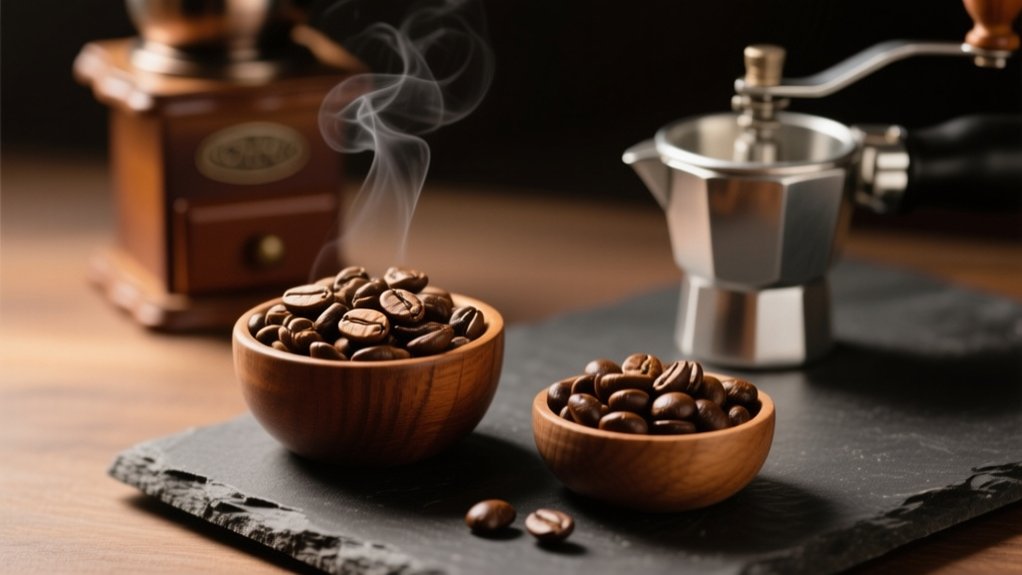
You might think espresso beans are a special type, but they’re actually regular coffee beans roasted longer and darker to bring out bold, intense flavors and natural oils that create a rich crema. They’re ground much finer to extract the concentrated espresso taste under pressure.
While you can use regular coffee beans, the flavor and texture will differ. Understanding roast levels, grind size, and brewing methods is key to mastering your perfect cup.
Espresso Beans: What They Are and How They’re Roasted
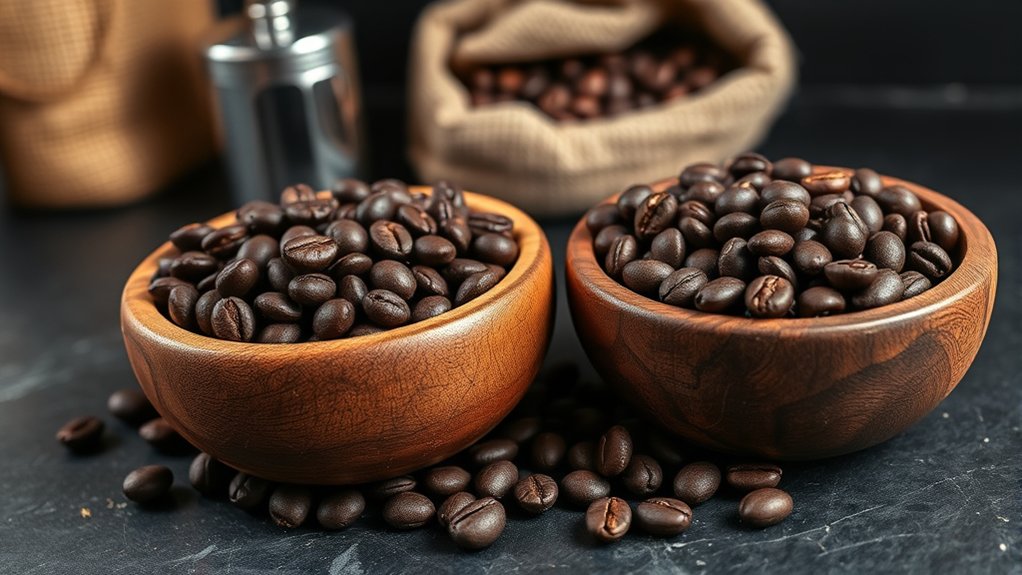
Although espresso beans aren’t a distinct variety, they’re coffee beans roasted longer and at higher temperatures to achieve a darker, richer profile. This darker roast enhances the characteristics of espresso, producing a bold flavor profile with rich chocolate and nutty notes.
Espresso beans are simply coffee beans roasted darker to unlock bold, rich flavors with chocolate and nutty undertones.
During roasting, natural oils surface, giving espresso beans a glossy finish vital for brewing espresso and creating the signature thick crema. You can use any high-quality coffee beans for espresso, but the roasting process is key to revealing its intense flavors.
For brewing espresso, you’ll need a fine grind to guarantee peak extraction under pressure, which is essential for the concentrated taste.
Understanding these factors helps you appreciate why espresso beans stand out despite being the same beans used in other coffee preparations.
Coffee Beans: Roast Levels and Flavor Profiles
When you explore coffee beans, you’ll find that their roast levels, from light to extra dark, play an essential role in shaping flavor and aroma. Each roast level offers distinct flavor profiles suited to different brewing methods and preferences.
Consider these key points:
- Light roasts preserve the coffee cherry’s original flavors, highlighting fruity and floral notes with higher acidity.
- Medium roasts balance acidity and body, enhancing sweetness and complexity without overpowering subtle nuances.
- Dark roasts, often used for espresso, develop an intense flavor with bold, chocolatey tones and a shiny, oily surface.
Understanding these roast levels helps you select beans that match your taste and brewing style, whether you prefer a bright, nuanced cup or a rich, intense espresso experience.
Why Espresso Beans Are Usually Darker Roasted
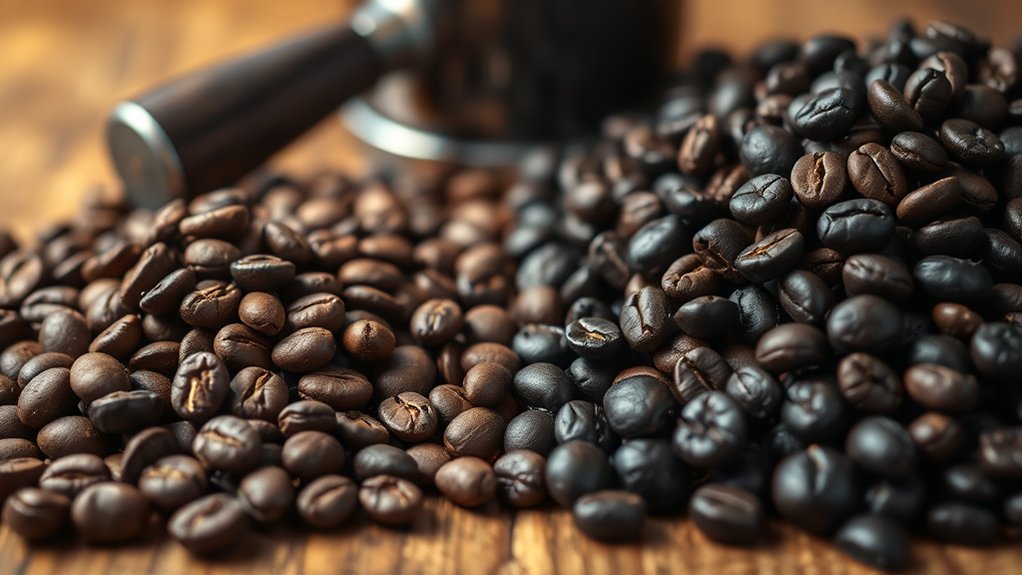
You’ll notice espresso beans are roasted darker to bring out a richer, bolder flavor that really holds up well under the high-pressure brewing process.
This darker roast doesn’t just add strength—it also enhances the sweetness and balance you get in each shot. Plus, it helps extract those oils that create espresso’s signature crema.
Roasting Impact On Flavor
Because espresso demands a bold, rich flavor, roasters typically darken the beans more than they do for regular coffee. This higher roast level creates a different flavor profile that highlights the nuances of espresso beans compared to regular coffee beans.
The roasting impact on flavor is vital for brewing espresso and coffee beans effectively. Here’s why:
- Darker roasted coffee extracts more oils, producing the thick crema essential to espresso’s texture.
- The extended roasting time reduces acidity, balancing sweetness and bitterness in espresso beans.
- This roast level intensifies flavor complexity, aligning with consumer preferences for bold, full-bodied coffee.
Understanding these factors helps you appreciate how roasting shapes the distinct characteristics of espresso versus regular coffee beans.
Dark Roast Characteristics
Roasting deeply influences the flavor and texture that define espresso. Understanding why espresso beans are usually darker roasted sheds light on this process.
Espresso beans are roasted darker to develop a bold and intense flavor while reducing acidity. This roasting extracts oils that create the rich crema and impart chocolate and caramel notes.
You’ll notice dark roast espresso beans have a shiny, oily surface from these oils.
| Characteristic | Effect on Espresso | Why It Matters |
|---|---|---|
| Roasted Darker | Bold and intense flavor | Enhances espresso’s richness |
| Reduced Acidity | Balanced taste | Smoothens sharpness |
| Oil Extraction | Shiny surface, rich crema | Adds texture and aroma |
| Chocolate & Caramel | Complex flavor notes | Appeals to robust coffee lovers |
| Extended Heat | Deeper sweetness | Complements espresso’s strength |
Can You Use Regular Coffee Beans to Make Espresso?
You can definitely use regular coffee beans to make espresso, but keep in mind the flavor might be a bit different.
Espresso beans are usually roasted darker to handle the high-pressure brewing process. So, when you use regular beans, the shot might come out less concentrated.
It’s not a deal breaker though! You just might need to tweak your grind size and brewing technique a little to get the best results from beans that aren’t specifically meant for espresso.
With a bit of adjustment, you can still enjoy a tasty espresso shot.
Flavor Differences Explained
The flavor profile of espresso owes much to the specific roasting and grinding techniques applied to espresso beans, which are roasted longer and at higher temperatures than regular coffee beans.
Using espresso beans guarantees a bolder, more concentrated taste with a rich crema, essential for authentic espresso shots.
If you use regular coffee beans, expect a different flavor profile due to their lighter roast and coarser grind size. This affects oil extraction and crema quality.
Here’s why:
- Espresso beans’ fine grind size maximizes extraction under high brewing pressure.
- Roasted longer, espresso beans develop deeper, caramelized flavors.
- Regular coffee beans usually lack enough oils, producing less crema and a milder taste.
For true espresso flavor, stick with properly roasted espresso beans.
Brewing Challenges Noted
While espresso beans are tailored for a bold, concentrated flavor with a rich crema, using regular coffee beans to brew espresso introduces several challenges. Regular coffee beans are often roasted lighter, which affects the flavor profile and extraction process when using an espresso machine.
Their lower oil content makes achieving the fine grind and crema difficult, resulting in a thinner texture and altered taste. You can experiment, but expect differences.
| Aspect | Espresso Beans | Regular Coffee Beans |
|---|---|---|
| Roast Level | Dark, oily | Lighter, less oily |
| Grind Requirement | Fine, consistent | Coarser, less uniform |
| Crema Production | Rich, thick | Sparse or absent |
| Flavor Profile | Bold, concentrated | Milder, less intense |
For ideal espresso brewing, use beans designed specifically for espresso.
How Grind Size and Brewing Method Affect Flavor
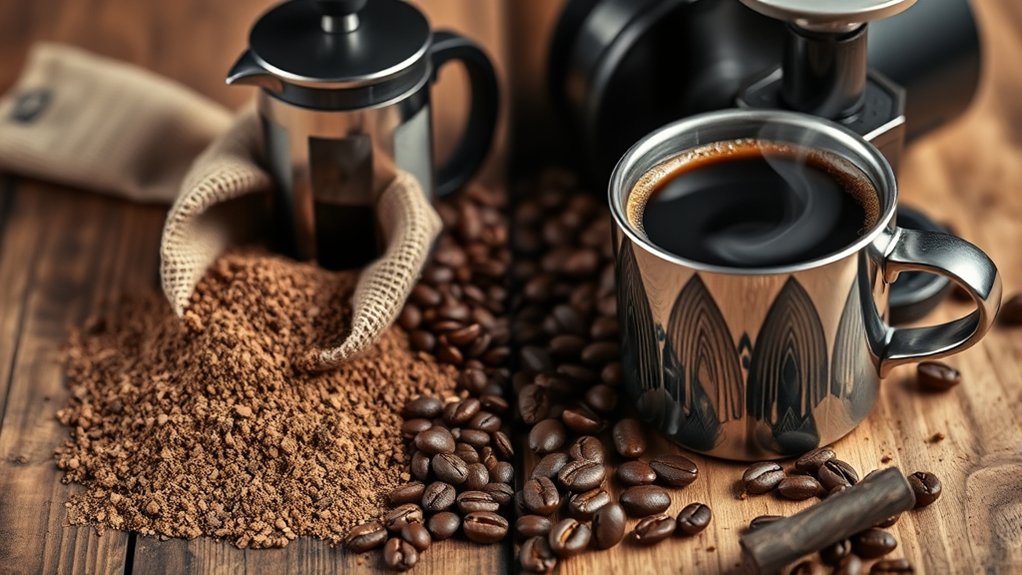
Because grind size directly influences extraction, you’ll notice a distinct difference in flavor between espresso and regular coffee.
Espresso beans require a fine grind to maximize surface area, enabling high-pressure brewing that extracts bold flavors and produces a thick crema.
In contrast, coffee beans ground coarsely suit methods like drip or French press, preserving more nuanced taste profiles. The brewing method you choose also shapes the final flavor.
Consider these points:
- A fine grind for espresso beans allows intense, concentrated extraction under pressure, enhancing bold flavors.
- Coarse grind with regular coffee beans slows extraction, maintaining subtle flavor complexity.
- Consistent grind size is essential; uneven grounds cause under- or over-extraction, compromising flavor balance.
Understanding grind size and brewing method helps you tailor rich, satisfying coffee experiences.
Brewing Espresso at Home Without a Machine
Mastering grind size and brewing methods sets a solid foundation for crafting espresso at home, even without a dedicated machine. When brewing espresso at home, using freshly ground espresso beans with consistent grind size is essential.
A Moka pot is a classic choice, employing stovetop steam pressure to extract a rich and bold coffee concentrate, closely resembling espresso.
Alternatively, the AeroPress offers adjustable pressure and brewing time, allowing you to press finely ground coffee beans through a filter for a concentrated shot.
Both methods excel in producing espresso-based beverages without expensive equipment.
While a French press can mimic espresso by using a fine grind and less water, it won’t create the crema typical of espresso.
Prioritize grind consistency and fresh coffee beans to maximize flavor in these alternative brewing methods.
Choosing Coffee Beans by Brewing Style
How do you choose the right coffee beans for your preferred brewing method? It starts with understanding the interplay between roast, grind size, and flavor profiles. Here’s how to approach it:
Choosing the right coffee beans means balancing roast, grind size, and flavor to suit your brewing method perfectly.
- For espresso, select espresso beans with a dark espresso roast. Their bold, concentrated flavors suit high-pressure brewing and require a fine grind size for ideal extraction.
- For drip, pour-over, cold brew, or French press, opt for whole coffee beans with a roast level matching your taste preference, from light to dark. Use a coarser grind size tailored to each method.
- Experiment! Coffee enthusiasts often try various coffee beans and roast profiles to discover the perfect balance that complements their brewing methods and personal flavor preferences.
This targeted selection guarantees you maximize flavor and brewing efficiency every time.
Frequently Asked Questions
How Does Water Temperature Affect Espresso Extraction?
Water temperature directly impacts espresso extraction by influencing flavor profile and solubility of coffee compounds.
You need stable temperature within 190°F-205°F to avoid under- or over-extraction.
It interacts with grind size, brew ratio, and extraction time, while pressure impact also plays a role.
Water chemistry affects how flavors dissolve, so maintaining temperature stability guarantees consistent results across brewing methods.
Adjusting these factors helps you achieve a balanced, rich espresso shot every time.
What Is Crema and Why Is It Important in Espresso?
Crema is the golden, frothy layer on top of your espresso, formed during crema formation when oils and gases emulsify. Its crema texture should be smooth and velvety, with a rich crema color indicating freshness.
Crema stability matters because it holds the crema aroma and crema flavor, enhancing your espresso’s taste.
You’ll notice crema importance in evaluating extraction quality and bean freshness. Good crema means a well-pulled, flavorful espresso shot.
Can Espresso Beans Be Used for Cold Brew Coffee?
Yes, you can use espresso beans for cold brew, but expect a different flavor profile.
Espresso brewing typically involves darker bean roast and shorter extraction time, creating a bold taste.
Cold brew requires longer extraction and a coarser grind, so using espresso beans may yield a stronger, more intense coffee strength with distinct taste differences.
Adjust your brewing methods and water ratios to balance the flavor and avoid overpowering bitterness in your cold brew.
How Does Bean Origin Influence Espresso Flavor?
Bean varieties paint your espresso’s canvas with vibrant flavor profiles shaped by regional differences and altitude effects.
High-altitude beans often deliver bright acidity, while lower elevations yield fuller body.
Processing methods and roast levels further sculpt taste, highlighting fruity or nutty notes.
Thoughtful sourcing practices and cultural influences guarantee each cup tells a story, letting you savor espresso that’s a vivid reflection of its origin’s unique terroir.
What Equipment Is Best for Grinding Espresso Beans?
You’ll want a burr grinder for espresso beans because it delivers grind consistency essential for a balanced flavor profile.
Unlike a blade grinder, which produces uneven particles, a burr grinder lets you control grind size precisely, usually medium-fine for espresso roast.
Adjusting grind time and dosing method guarantees ideal extraction. This control helps you tailor each shot’s flavor, making a burr grinder the best equipment for grinding espresso beans.
Conclusion
When you choose beans, remember it’s less about strict categories and more about the journey each roast invites you on. Espresso beans, often cloaked in deeper shades, promise bold, intense moments, while regular coffee beans offer a spectrum of lighter adventures.
Your grind and brewing style paint the final picture. So, trust your taste buds to navigate this rich landscape, and don’t hesitate to explore beyond the usual paths to find your perfect cup.